

How Washington Redskins Can Win 2015 NFL Free Agency
How have the splashy signings in free agency turned out for the Washington Redskins under owner Daniel Snyder?
How many "offseason wins" have actually translated to the gridiron?
While these are questions posed, we all already know the answers. The Redskins have one playoff berth in the past seven seasons. And remember, that came on the back of a rookie quarterback and a rookie running back.

.jpg?w=2560 "Rams Eagles Football")
.jpg?w=2560 "Falcons Saints Football")
So if a lesson is to be learned from the success of the 2012 season, from the failures of past signees Albert Haynesworth and Adam Archuleta, it's that new general manager Scot McCloughan shouldn't put too much stock into free agency.
Looking at how he transformed the San Francisco 49ers into contenders, this may already be the case.
Bruce Allen still is his boss, though, and Snyder is still the one writing checks.
With that in mind, let's take a look at a game plan McCloughan can utilize to win in free agency in 2015.
Be Cognizant of a Player's Injury History
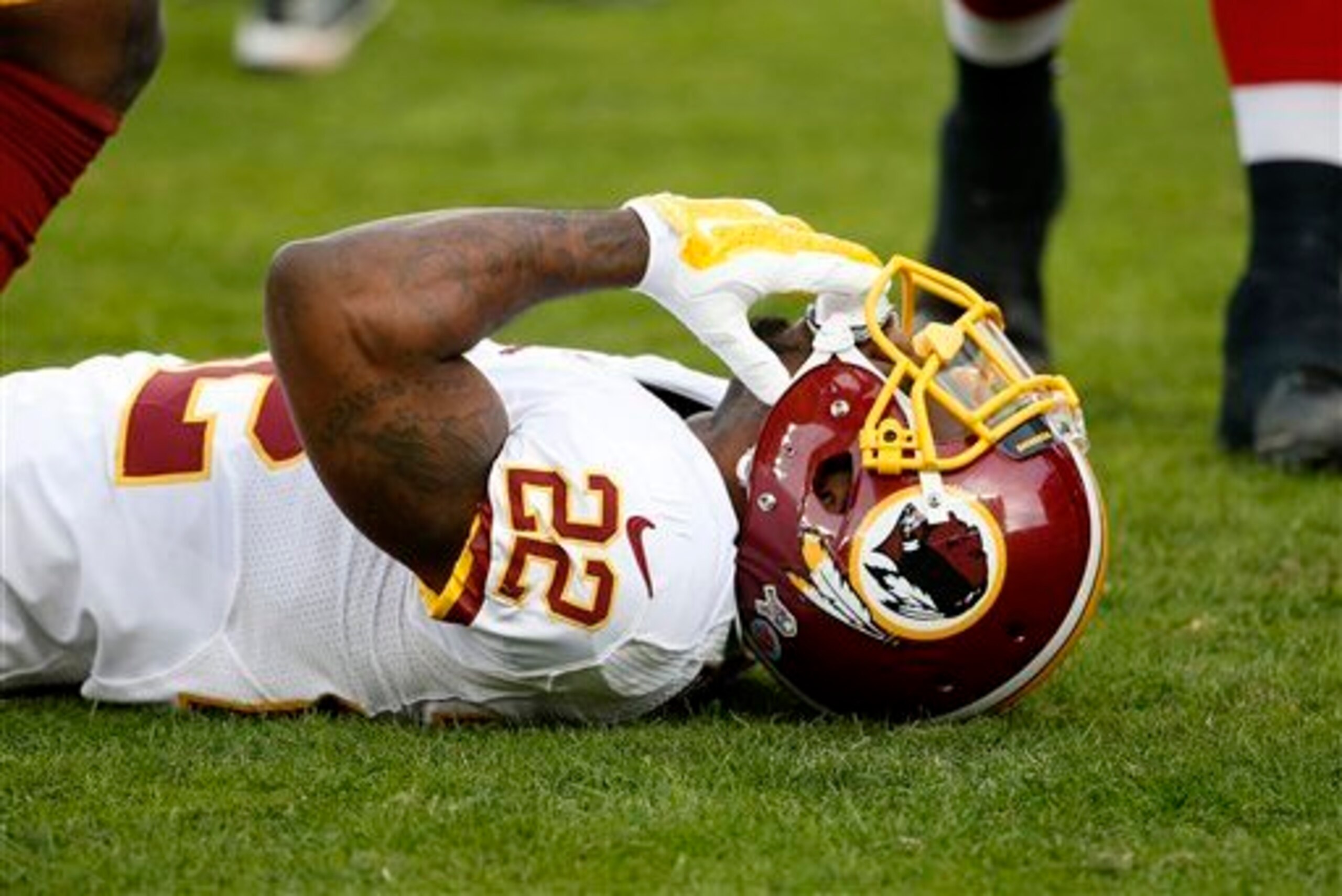
It's a commonly used phrase, but it really rings true when evaluating potential free agents: "The best ability is availability."
This is a reality the Redskins know firsthand because of Brian Orakpo's injury woes. And yet, they didn't live by this motto when it came to signing free agents last offseason.
Tracy Porter was targeted to be the team's nickel corner despite a checkered injury history. In the first six years of his career, Porter missed at least two games in all but one season. Predictably, injuries hampered him in 2014, and he played in just three games.
Looking at the signings of Ryan Clark (35) and Jason Hatcher (32), you see this issue again resurface.
At the backside of their respective careers, Hatcher and Clark were inherent injury risks based on their age alone. The duo missed just three games, but with both being limited by an assortment of injuries throughout the year, Washington didn't get what it paid for.
Don't Be Desperate
Coming off a 4-12 campaign, the Redskins' needs are aplenty. The defense as a whole needs to be revamped, and the offensive line has long been a problem spot. With that in mind, there's one thing you have to realize: One player isn't going to affect the bottom line here—Robert Griffin III ring a bell?
So in other words, don't be desperate. And let the signing of Shawn Lauvao serve as the perfect example why.
Intent on upgrading the offensive line, Washington threw caution to the side and handed Lauvao a four-year, $17 million contract. What caution, you ask?
Well, upon Lauvao's signing in D.C., WalterFootball.com recounted his play with the Cleveland Browns, and the review wasn't a positive one (h/t Keith McMillan of The Washington Post):
"This is an obscene amount of money for someone who should be a reserve lineman. Shawn Lauvao has played three full or near-full seasons in the NFL. He was mediocre in 2011 and 2012, but was downright awful this past year. Perhaps that was because of an ankle injury that knocked him out for the first few games, but the fact remains that Washington is paying him way too much money. Even half of this contract would have been excessive.
"
Judging from Lauvao's performance his first season in Washington, this assessment wasn't too far off.
The 'Skins went from 43 to 58 sacks allowed and dropped from fifth to 19th in rushing offense last season, and Lauvao was the only new starter up front to start the year. After breaking down his deficiencies in pass protection, Mark Bullock of The Washington Post went as far as to call for Lauvao's job:
"Shawn Lauvao shouldn't be starting...
— Mark Bullock (@MarkBullockNFL) December 16, 2014"
With Lauvao being a reach by all accounts, this has to be a lesson learned for the 'Skins.
Looking to this year's free-agent crop of offensive linemen, Mike Iupati and Orlando Franklin should be targets of McCloughan's but only at the right cost.
Trent Williams is the foundation of the Redskins' offensive line, and the salaries of the team's supporting players along it need to fall in line with that. So, an average salary north of $7 million has to be off the table for Washington. According to Spotrac.com, only four guards in the league sported a salary that high, and none of them was paired with a player the caliber of Williams.
It's not to say that Washington shouldn't pursue potentially cheaper options like Clint Boling or James Carpenter, but if it's unable to strike a favorable deal with a player the caliber of Franklin or Iupati, developing or drafting its own offensive lineman is the team's best bet.
Spread the Wealth

The talent on hand overall may be in short supply for the Redskins, but their receiving corps sure looks deep. Right?
There are DeSean Jackson, Pierre Garcon and Andre Roberts at the top of the depth chart and two promising receivers in Ryan Grant and Leonard Hankerson waiting in the wings. Oh, and Santana Moss.
He may be past his prime, but Moss as a fourth or fifth receiver is a luxury many teams would love to have if they could afford it. And therein lies the problem—Washington isn't one of those teams.
Just two teams allocated more funds to the receiver position in 2014 than the Redskins. A number that sat at $18.1 million this past season, the team's cap hit jumps to $23.7 million in 2015.
And this is all for an offense that is predicated on the success of the running game. Confounding as this is, the disparity between what the 'Skins spent on offense and defense last season is even more discouraging.
Despite finishing the 2013 campaign with the 31st-ranked scoring defense, Washington committed just 21 percent of its cap space to the defense in 2014. With the Oakland Raiders and Chicago Bears standing as the only teams to spend less on that side of the ball, the 'Skins aren't exactly in the greatest company.
As for the offense, for a second consecutive year, the team allocated over 44 percent of its cap.
Say what you want about former defensive coordinator Jim Haslett, but this is a clear sign that the team handed him losing deck.
Starting with the ouster of some dead weight on offense—Chris Chester, anyone?—the Redskins have to add onto their existing cap space and do a better job of balancing their cap sheet.
This could prove to be difficult with the team's need to bolster the offensive line. Ultimately, though, upgrading the defense has to be Washington's top priority.
All salary-cap information is via Spotrac.com.

.jpg?w=2560 "Texans-Mixon Released Football")
.jpg?w=2560 "Grading WWE Raw 🔠")


.jpg?w=2560 "2 NFL Officials Suspended")
