

Point Guard Takeover: Why Has It Become the NBA's Premium Position?
The modern NBA point guard has many attributes, but modesty isn't typically foremost among them. In this respect, Mike Conley of the Memphis Grizzlies is something of an exception. When told recently that there were nearly a dozen players at his position worthy of All-Star consideration this season, the seven-year veteran smiled, then laughed.
"I hope I'm one of them," he said.
In seemingly any other NBA era, that would be a guarantee, with Conley averaging 17.4 points, 5.6 assists, 1.2 steals and shooting 41.9 percent from three-point range—all while serving as the engine of a team that ranks near the top of the rugged West.
TOP NEWS

J-Dub, Wallace May Miss Entire Season
Melo's Quote on Confidence 😎
Celtics at Fault for JT-JB Beef? 🤔
But this era isn't like any of the others, and it's quite possible that Conley will be excluded Thursday night when the coaches name their reserves, with Portland's Damian Lillard, Oklahoma City's Russell Westbrook and the Clippers' Chris Paul all in the running to serve as backups to Golden State's Stephen Curry.
"There are about three or four great point guards in the West that are not going to make it," Thunder coach Scott Brooks said. "Maybe even more. You forget about Ty Lawson, Jrue Holiday. And nobody talks about Conley. Conley's one of the best point guards in the league."
Lawson, even while leading the Nuggets in scoring and assists, has almost no chance of making the team, nor does a trio of former All-Stars, New Orleans' Holiday, Dallas' Rajon Rondo and San Antonio's Tony Parker, nor do any of the point/combo guards (Eric Bledsoe, Goran Dragic, Isaiah Thomas) who make Phoenix competitive.
"The West is awesome," Conley said. "It is. You feel good about yourself one night, and you might play very well against a great guard, and then the next night, you look at the schedule, and it's Russell Westbrook or Tony Parker or Damian Lillard, and you're just like, 'Oh man, I got to do it again!' It keeps you focused, it really does. And it keeps you playing your best basketball."
Conley laughed when told he might have a better shot if he switched to the East. Even that wouldn't assure him of anything, not with Washington's John Wall and Toronto's Kyle Lowry already named as starters, and strong seasons from Atlanta's Jeff Teague, Cleveland's Kyrie Irving, Milwaukee's Brandon Knight and, until their recent injuries, Charlotte's Kemba Walker and Detroit's Brandon Jennings. That doesn't even include a former NBA MVP, Chicago's Derrick Rose, who has looked spectacular some nights.

| Russell Westbrook, Thunder | 27.2 | 3 |
| Stephen Curry, Warriors | 27.0 | 4 |
| Chris Paul, Clippers | 24.8 | 7 |
| Jeff Teague, Hawks | 22.5 | 11 |
| Damian Lillard, Trail Blazers | 22.1 | 17 |
| Kyle Lowry, Raptors | 22.0 | 19 |
| John Wall, Wizards | 21.1 | 25 |
| Kyrie Irving, Cavaliers | 20.3 | 31 |
| Mike Conley, Grizzlies | 20.1 | 33 |
| Isaiah Thomas, Suns | 20.0 | 36 |
| Brandon Jennings, Pistons | 19.5 | 43 |
| Eric Bledsoe, Suns | 19.5 | 43 |
| Ty Lawson, Nuggets | 19.3 | 46 |
| Kemba Walker, Hornets | 18.7 | 49 |
| Jrue Holiday, Pelicans | 18.6 | 50 |
It hasn't gone unnoticed by those inside the game.
Rockets coach Kevin McHale: "Years ago, it was kind of a big man's league. It's kind of turned into a little fella's league right now."
Hornets coach Steve Clifford: "It's the premier position in our league right now. A few years ago, it was the wings. ... You look at the All-Star balloting, and it's striking. There's some really good players who have played very well who aren't going to make the All-Star team."
Mavericks coach Rick Carlisle: "There are so many great point guards that if you try to put a rating list together, it's hard ... it's hard coming up with the top six or seven. There's 15 or 20 who all are in the conversation."
Former NBA coach P.J. Carlesimo: "These guys do so much now. There was a time when you were happy if a point guard ran a team and took care of the ball. Now these guys get to the rim and finish. Kyrie and Stephen Curry finish at the rim, and Tony Parker finishes in the paint, against anybody, against big guys. They shoot threes. I mean, you can't defend these guys anymore. There was a time when if a guy scored, it's like, 'Ooh, this is a point guard who can score.' Now if a guy doesn't do everything, you're like, 'He's a good point, but he doesn't shoot threes.' I mean, what do you want?"
Bulls coach Tom Thibodeau: "I think it's the era of the point guard right now. Sometimes it's the era of the wing, or the era of the bigs. Every night, you are facing that challenge of playing against a great point guard."
That's how LeBron James sees it, too: An epidemic of point guards. The product of it simply being the point guard's turn in the NBA's somewhat random rotation of positional dominance.
"It happens like that," James said. "For years, it was wing guys. In the '90s, it was bigs. Obviously, besides [Michael Jordan], Penny Hardaway, Grant Hill, Scottie [Pippen], Reggie [Miller], Mitch Richmond and those guys in the '90s, it was a big-guy league. You had [Patrick] Ewing, you had [Hakeem] Olajuwon, you had Rik Smits, you had Brad Daugherty—that's just to name a few, but in the '90s, it was bigs. In the early 2000s, Kobe [Bryant], Tracy [McGrady], [Allen Iverson], Ray Allen, that's where there was the wings. Now it's the epidemic of the point guards. It's how the game goes."
There are some fairly decent wings now, too, James and Kevin Durant foremost among them. And there's still a slew of solid power forwards, such as Anthony Davis, LaMarcus Aldridge, Blake Griffin and Chris Bosh. And you can find quality players at the center (DeMarcus Cousins, Andre Drummond, Nik Vucevic) and shooting guard (James Harden, DeMar DeRozan, Klay Thompson) positions.
Still, there's no question that point guard is currently the pre-eminent position, as the role has evolved from conductor to playmaker and shot-taker.
"The point guard position is really deep right now because point guards can score," Jennings said prior to his season-ending injury that's left the Pistons scrambling. "And score just like they are shooting guards. When you have a point guard going in that's averaging 20 points a game, or something like that, it's tough. So you've got to be able to compete with that."
Consider the numbers in the middle of each of the past four decades.
In 1984-85, 17 of the top 20 scorers (by average per game) were small forwards or 2-guards, and only three exceptions were centers, with Ralph Sampson and Kareem Abdul-Jabbar sneaking in at 19th and 20th, respectively. There wasn't a single point guard on the list.
In 1994-95, the top three, and five of the top 20, were centers. The only two point guards? Gary Payton and Dana Barros, who ranked 18th and 20th, respectively.
By 2004-05, the perimeter shift had started. Only one center (Shaquille O'Neal) was a top-20 scorer. And there were four small guards in the top 20—Iverson (first), Gilbert Arenas, Stephon Marbury and Steve Francis—with Iverson, Marbury and Francis also ranking in the top seven in assists, though James and others will quarrel with any classification of Iverson as a point guard.
"He was a 2," James said. "Definitely a 2."
That season, another point guard (assist leader Steve Nash) finished No. 1 in the MVP race, but he did so while averaging only 15.5 points.
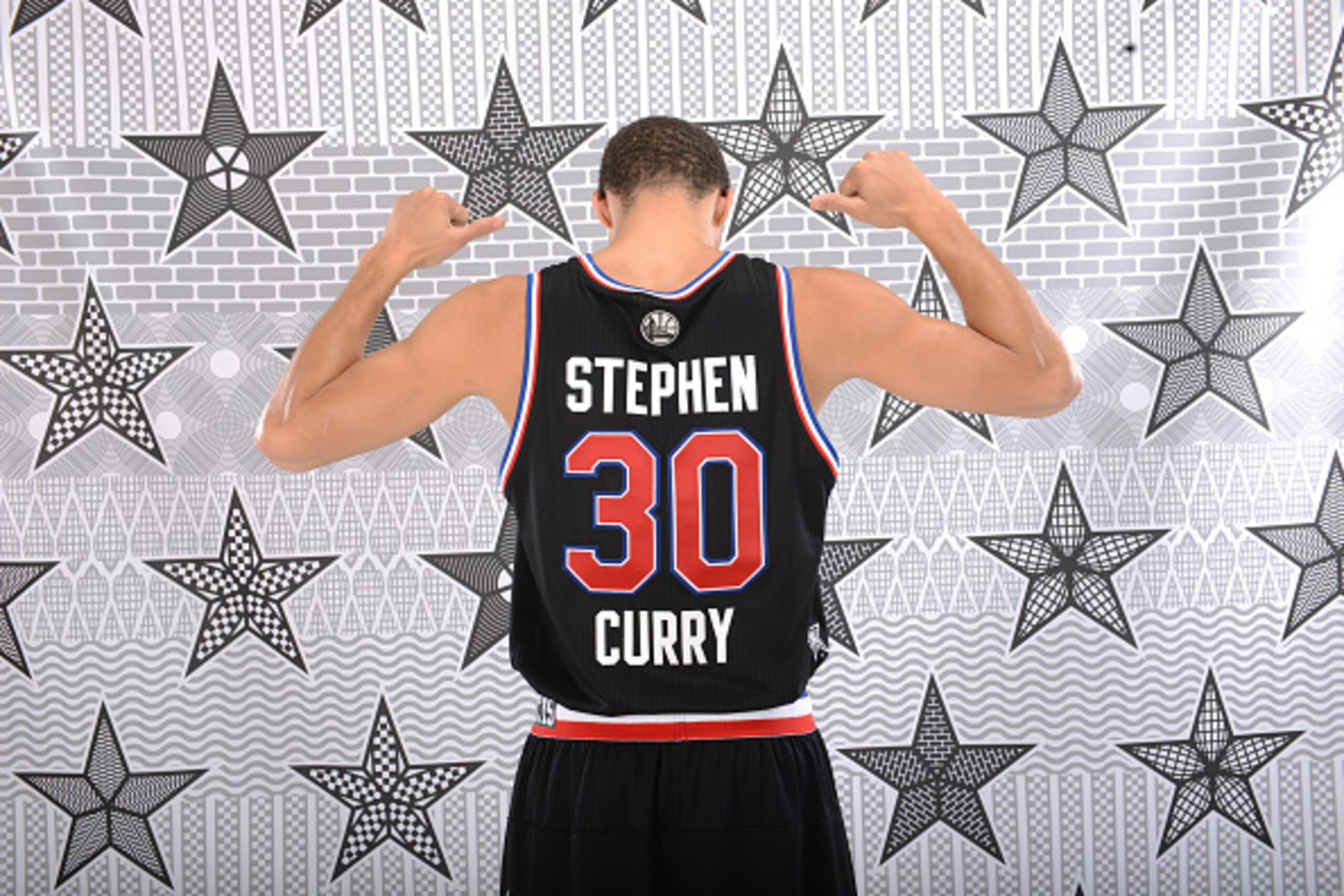
This season? There are five point guards in the top 20 in scoring—Westbrook, Curry, Lillard, Irving, Lowry—even though Westbrook, Lillard and Irving are second to Durant, Aldridge and James on their respective teams. Lowry is one of the nine point guards who are atop their teams' scoring charts, seven of which, somewhat surprisingly, are in the East.
"It's a point guard league," said Grant Hill, one of those great 1990s wings James mentioned.
So, is this just chance? A cycle, as James suggests? Or something else?
"I've been trying to figure that out," Brooks said.
The Thunder coach isn't the only one who's vexed.
"I have no theory," said Carlesimo, now an ESPN analyst. "In my 20 years about in the league ... there's never been a time where there's been this many, not good, but elite point guards in the league. But why? I honestly have no clue. I really don't know."
Others took a shot.
Mike Fratello, another former NBA coach, cited a shortage of skilled size in the American system.
"We've got a lot of great point guards because we've run out of big men in our country," the TNT and YES Network analyst said. "That's the reason why. Everybody who's growing up is 6'1", 6'2", 6'3", and want to be point guards. And we've lost all our seven-footers. And the point guard has evolved into a scoring point guard rather than a traditional run-the-show-type point guard. They dominate the ball so much. And there are some teams who would never score if their point guard didn't dominate the ball and score, because they have nobody else who can score."
Many cited the current predominance of a particular play.
"It's always been a big pick-and-roll league," Thibodeau said. "But never so much as now."
"In pick-and-roll situations, the ball-handler is the first option; he has to be," Thibodeau said. "That's what makes the defense play honest. You're seeing scoring point guards, but you're also seeing point guards that know when the second defender comes, that also creates easy scoring opportunities for others."
"The pick-and-roll game has made point guards so impactful, one way or the other," said Jazz coach Quin Snyder, a former collegiate point guard. "There's probably a focus on that from the time guys are young, their ability to make plays."
Hill noted that, during his prime, the league was interior-oriented.
Now?
"I think really in the last five or 10 years, it's about point guards," Hill said. "Less posting up and more spreading the floor, pick-and-roll, and having your point guard being a playmaker for himself and for his teammates. That's kind of where the game is at. As a result, point guards are going to put up great numbers. I really think Nash and that Suns style really ushered in a new, exciting way of playing. It's fun."
Pistons coach Stan Van Gundy also pointed to that Suns team, but primarily to the sideline. He credits former Phoenix coach Mike D'Antoni, and the "seven seconds or less" style, for changing the game as much as anyone.

"Now virtually everybody plays at least portions of the game small," Van Gundy said. "It's become a pick-and-roll game. Four out, one in. Or sometimes five out. Spread the floor and play pick-and-roll. So point guard play has been at a premium. It's probably to the point now, quite honestly, it's almost like having a quarterback in the NFL. If you want to really be good, you're going to need a high-level point guard. Or you need a guy like LeBron who sort of is the point guard. But you need that high-level guy who can play in pick-and-rolls, create in transition and all of those things. I just don't know if you can be a high-level team without those guys."
That's illustrated by the standings and the 16 teams that ended Tuesday's play above .500. Eleven of those teams have starting point guards who have appeared in an All-Star Game or have already been selected to start the 2015 All-Star Game. That could grow to 13 if Teague and Conley make it as reserves.
That leaves only Milwaukee (Knight has an outside shot), Phoenix and Houston. And the two Western Conference teams have top defenders at the spot, in Bledsoe and Patrick Beverley, with the latter describing his style thusly: "I try to be aggressive with everybody."
But to be considered elite among the elite, the modern point guard must be consistently aggressive on both ends, every quarter of every night.
"They put the ball in the point guard's hands and [let] the point guards make plays," Teague said. "Guys are just flourishing at it. It's fun. It's actually fun. Every night I put my shoes on, I really have to really compete at a high level."
"The game has shifted and molded to a faster-paced game, and the point guards are in control," Conley said. "I think the way the games are called, with the fouls ... people would say it (used to be) a little more physical, you got away with a little bit more. Nowadays, we are able to dictate, get to the free-throw line and get our points a little easier, create for other guys easier maybe than back in the day."
Even if each point guard does it a little differently.
"Each guy has their speciality; each guy has their tendencies," Conley said. "You've got guys who like to be crafty in the paint and finish well around the rim."
Like Rose, when he's right.
"Some guys like to pull up in transition," Conley said.
Like Curry, at any time.
Teague said he steals moves from everyone, but he won't say what he swipes from whom.
"All those point guards, man, it's a talented group," Teague said. "But nah, I'm not going to give anybody too much props. I'm just gonna say they're all pretty good."
The group shouldn't take a step back anytime soon.
"Kids coming up through grade schools and high schools, they are all honing their skills because they see so many great players and they see the importance of the position," Carlisle said. "So I see it being a strong position in this league for a long time, and maybe even getting stronger as time goes on."
There hasn't been, and will likely never be, another Magic Johnson.
The Lakers great, at 6'9", was the ultimate anomaly at the position, impossible to replicate.
That's why Brooks thinks that Isiah Thomas, Mark Price and Kevin Johnson, all 6'1" or under, are actually the antecedents of the new-age point guard.
"Their ability to get into the paint after pick-and-rolls really opened a lot of coaches' eyes," Brooks said. "And players' eyes growing up, that's what they were watching. And now there's just an influx of great offensive point guards."
There is, and the old-timers have noticed.
"When you look at all the teams that are pretty good teams, especially in the Western Conference, the reason they are where they are is because of their point guard play," said Derek Harper, whose solid 16-season career ended in 1999. "Russell, Chris Paul, Steph, Tony Parker, Damian Lillard, Conley, I mean, the list goes on and on and on. I played in an era that was pretty good as well. Magic. Fat Lever. Terry Porter. Kevin Johnson. Sleepy Floyd. There was a lot of parity then, too. But I've just never seen it so point guard heavy the way I've seen it the last couple of years."

Harper calls Rondo the "best pure point guard in the league," but he says that Irving would have been his toughest cover, because he has "more playground in his game than anybody (he's) ever seen." He disputes the notion that some of the current scoring point guards might have actually played the 2-guard spot in his day. "Defensively, it would have been a tough matchup," Harper said, citing Jordan and Clyde Drexler, among others. "Forget about it. Forget about it. There's no way humanly possible. Not even close. With all due respect to these kids."
He thinks a scoring mentality is actually a necessity for point guards today. You need to give as much as you get.
"If I'm playing against Steph Curry and all I'm doing is playing defense, I think I'm at his mercy," Harper said. "And that's what I think the league has become from that point position."
Tim Hardaway, now a Pistons assistant, gave plenty in his day, averaging 18.6 points in his first 11 seasons. He praised the current crop, saying that about eight in each conference deserved to be All-Stars. And he said he sees some of himself in them, since many are playing as if they have something to prove to fans, reporters and peers. "These guys have chips on their shoulders," Hardaway said. "It's the same way I was. That's what brings out the best in them."
So how would he have done against them?
"Oh man. I'm gonna tell you this," Hardaway said. "Without hand-checking, and with what I used to do with the crossover, oh man, I'd average 50. ... I'd take all of them to the low post. I'd kill them all."
He laughed as he listed others—Kevin Johnson, Rod Strickland, Gary Payton and so on—who might do the same.
"No question," Hardaway said. "You can't beat nobody up. You had to have a move back then. You had to know how to maneuver, and how to hold and grab and get around, and all that type of stuff. Now you can just come out and there's no touching."
That makes this debate, then versus now, a slightly touchy subject.
Bucks coach Jason Kidd straddled the eras, starting as a pace-pushing point guard in 1994 before morphing into a standstill shooter by his 2013 retirement. Tuesday, he referred to the point guard position as "very deep and very young, and it's exciting to watch."
But that came after this response to a question seeking an explanation for so many playing at a high level.
"I think it's great that the point guards before played at a high level," Kidd deadpanned, before laughing. "Maybe."
Ethan Skolnick covers the NBA for Bleacher Report.

.jpg?w=2560 "Chiefs, Steelers Eye WR Trades")





.jpg?w=2560 "Raiders Sticking with Cousins")