

Restocked Bench Will Position Houston Rockets as a Title Contender
During the trade season, the media tends to concentrate on whoever gets the biggest names. But the Houston Rockets may have already made the biggest impact by acquiring a cadre of smaller names that have vaulted their bench from one of the worst to one of the best in the NBA.
When the season started, the Rockets were so thin in their second unit that most of the players had barely seen an NBA court. To put things in perspective, apart from Jason Terry, the entire bench had only 2,000 career minutes coming into the season, with Donatas Motiejunas logging 1,515 of them.
TOP NEWS
J-Dub, Wallace May Miss Entire Season
Melo's Quote on Confidence 😎
Celtics at Fault for JT-JB Beef? 🤔
Then four games into the season, Terrence Jones was injured with a peroneal nerve contusion, which moved Motiejunas into the starting lineup. Jones has still not returned.
Terry is on the other end of the spectrum, at 37 years. The only older players to log more time are Tim Duncan and Manu Ginobili of the San Antonio Spurs, according to Basketball-Reference.com.
Through Dec. 18, Houston’s bench was getting outscored by 2.0 points per game, 23rd in the NBA, according to NBA.com/Stats. The bench was last in scoring, notching just 21.4 points per game.
The Rockets were able to roll to a 13-4 record, though, because of the outstanding play of their starting five, who were plus-5.8 per game.
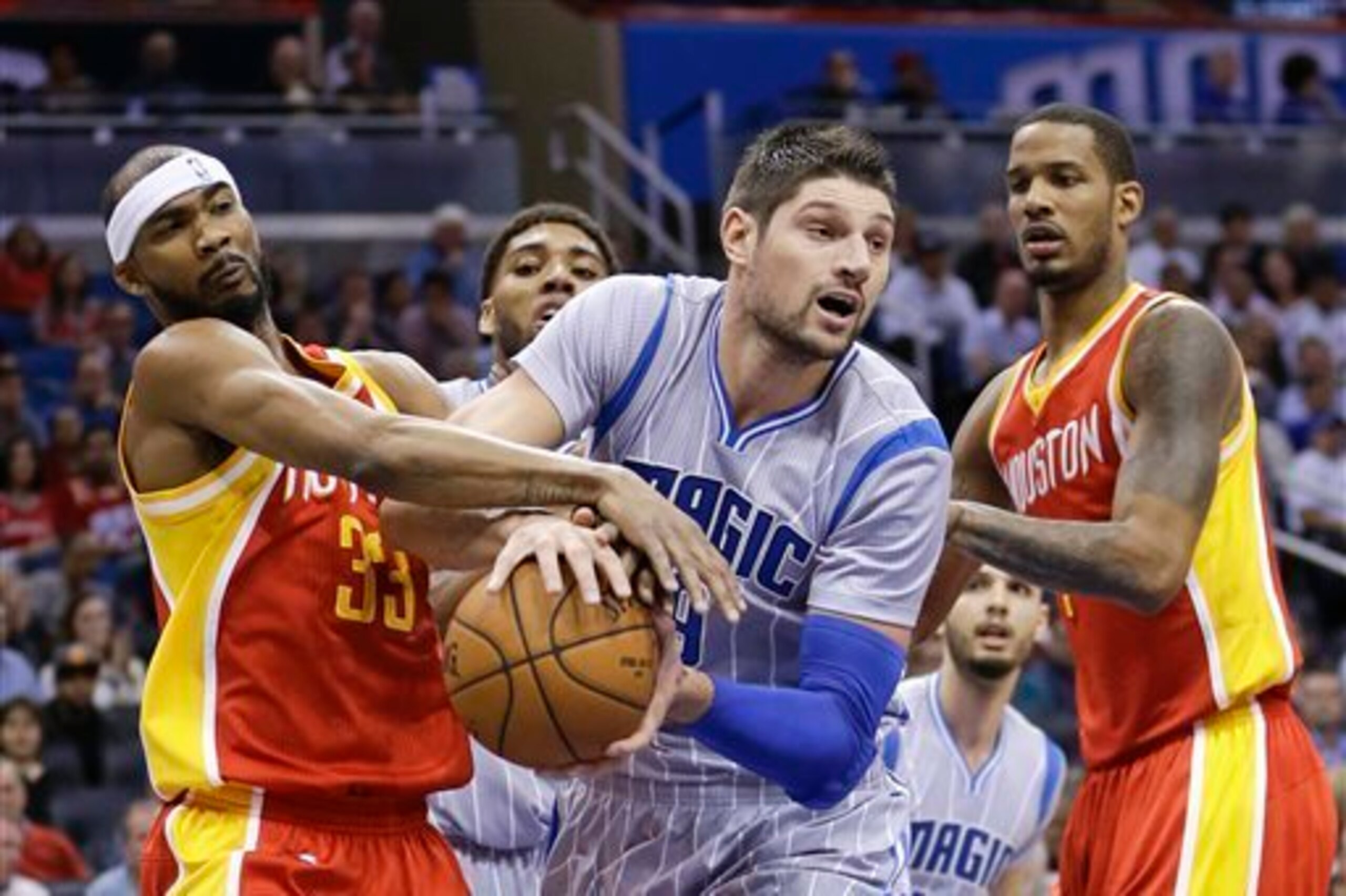
It was evident that Houston needed to do something, and it did. On Dec. 19 it made a three-team deal, sending Troy Daniels and parts in return for veterans Corey Brewer and Alexey Shved.
Meanwhile, Josh Smith had become persona non grata with the Detroit Pistons, who felt they were better off just getting rid of him for nothing, despite his $13.5 million contract. That's a decision the Pistons will be paying for over the next five years, due to applying the stretch provision.
The Rockets picked him up on Dec. 24 as a veritable Christmas gift for them.
After four shaky starts without much time to practice with the team, Smith shifted to the bench. Coach Kevin McHale explained the move to Jenny Dial Creech of the Houston Chronicle:
"It really hasn't been fair to Josh. We just threw him out there, not a lot of practice. I feel bad for him. He is trying but he is not too comfortable and when you aren’t too comfortable, you think too much. He is a very instinctive player. He has to play with his eyes, not his brain. Your eyes just let you make plays and your brain slows you down.
"
In less than two weeks, the Rockets had essentially overhauled their bench. And the difference has been night and day. Since Jan. 3, the bench players have scored 32.0 points, which bumps them all the way up to 16th in the league. In net scoring, they’re plus-3.5, the fourth-best differential.
Brewer has been a spectacular fit for the Rockets and vice versa. While he averaged only 10.5 points in 28.3 minutes with the Minnesota Timberwolves, he has been notching 11.4 in 23.3 minutes with the Rockets. His player efficiency rating was 13.6 but has been 17.0 since donning a Rockets uniform.
The formerly beleaguered Smith is finding a niche off the bench, scoring 12.5 points on 44.4 percent shooting as a reserve, compared to 12.1 points with a 38.4 field-goal percentage as a starter. The Rockets are plus-11.5 per 48 minutes with him in that role.
In the 48 minutes that Brewer and Smith have been on the court together, they’ve outscored their opponents 106-93.
Brewer's energy and quick hands on defense lead to a more active, disruptive-looking group on the second unit. Steals have gone up from 2.7 to 3.4 per game.
Smith is consistently breaking down opponents' defenses, and his passing, an underrated aspect of his game, is making things easier for his teammates. The Rockets can work a better inside-out game with their reserves now, which explains why their three-point shooting is up 35.3 from 32.4.
Kostas Papanikolaou, the rookie combo forward, has looked more comfortable as demands on him have lessened, and his three-point shooting since the new lineup took effect has soared to 40 percent.
The Houston bench is second in threes and, perhaps more importantly, eighth in assists. That’s great for the Rockets because it indicates that the team is getting more shot creation when MVP candidate James Harden sits.
Because of that, Harden has been able to get more rest. Prior to the new arrangement, he was averaging 37.0 minutes per game, a number which has fallen to 33.2 since Jan. 3.
In addition to all that improvement, Jones is still due back at some point. According to Rockets general manager Daryl Morey, Jones is progressing well.
Once Jones does return, it’s unclear what will happen, but the Rockets bench will be even deeper regardless. If he resumes his starting role, Motiejunas would return to the second unit, giving it the one thing it lacks—a true low-post presence.
The lineup of Terry, Brewer, Papanikolaou, Smith and Motiejunas would almost serve as more of a second starting unit than a second unit.
When the absolute slugfest known as the Western Conference playoffs gets underway, that depth could be a huge difference, particularly if Houston progresses deep into the postseason. It’s hard to see which player who might be moved is more important than the Rockets' rebuilding their bench on the fly.
All stats for this article were provided by NBA.com/Stats and Basketball-Reference.com.

.jpg?w=2560 "Chiefs, Steelers Eye WR Trades")





.jpg?w=2560 "Raiders Sticking with Cousins")