


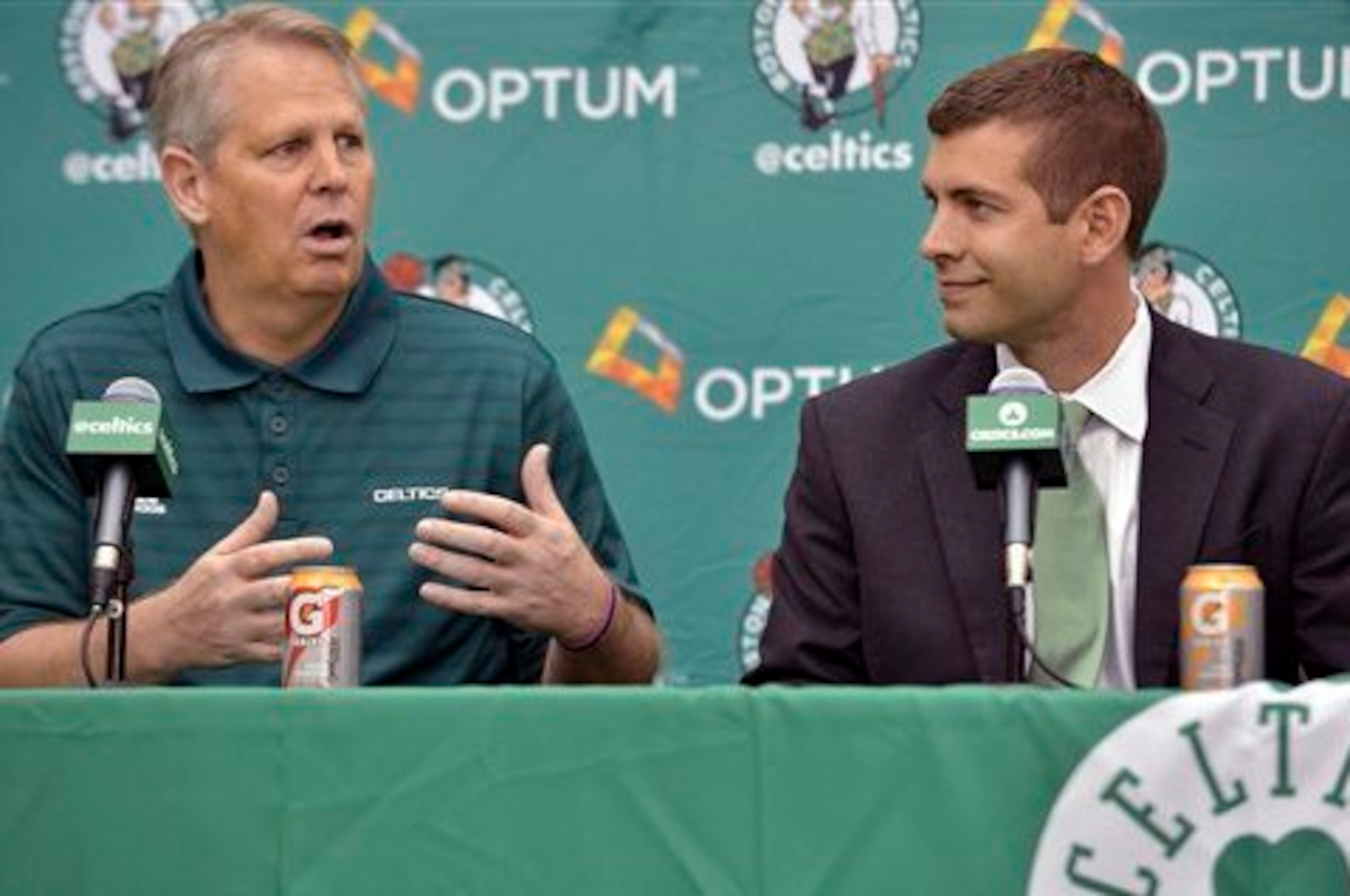
Boston Celtics team president Danny Ainge has been around the NBA long enough to know it's far better to be really bad than pretty good—or anything in between.
That's why the executive signed off on a demolition project that has taken the Celtics from championship contention to being another team hoping to hit a draft-lottery jackpot.
Only, the Celtics aren't conducting business like their fellow cellar dwellers. Rather, they are in a controlled nosedive, set up to reverse trajectory as soon as the right opportunity arises.
TOP NEWS

J-Dub, Wallace May Miss Entire Season
Celtics at Fault for JT-JB Beef? 🤔
Melo's Quote on Confidence 😎
Ainge has traveled this path before. He knows how rewarding it can be. In case he needs a reminder of the potential prize awaiting him, he can just look up at the 2008 championship banner hanging from the TD Garden rafters.
Armed with a similar set of rebuilding tools, the Celtics have the same worst-to-first potential through a combination of shrewd drafting, savvy dealing and smart free-agent signings.
Ainge's First Rags-to-Riches Journey
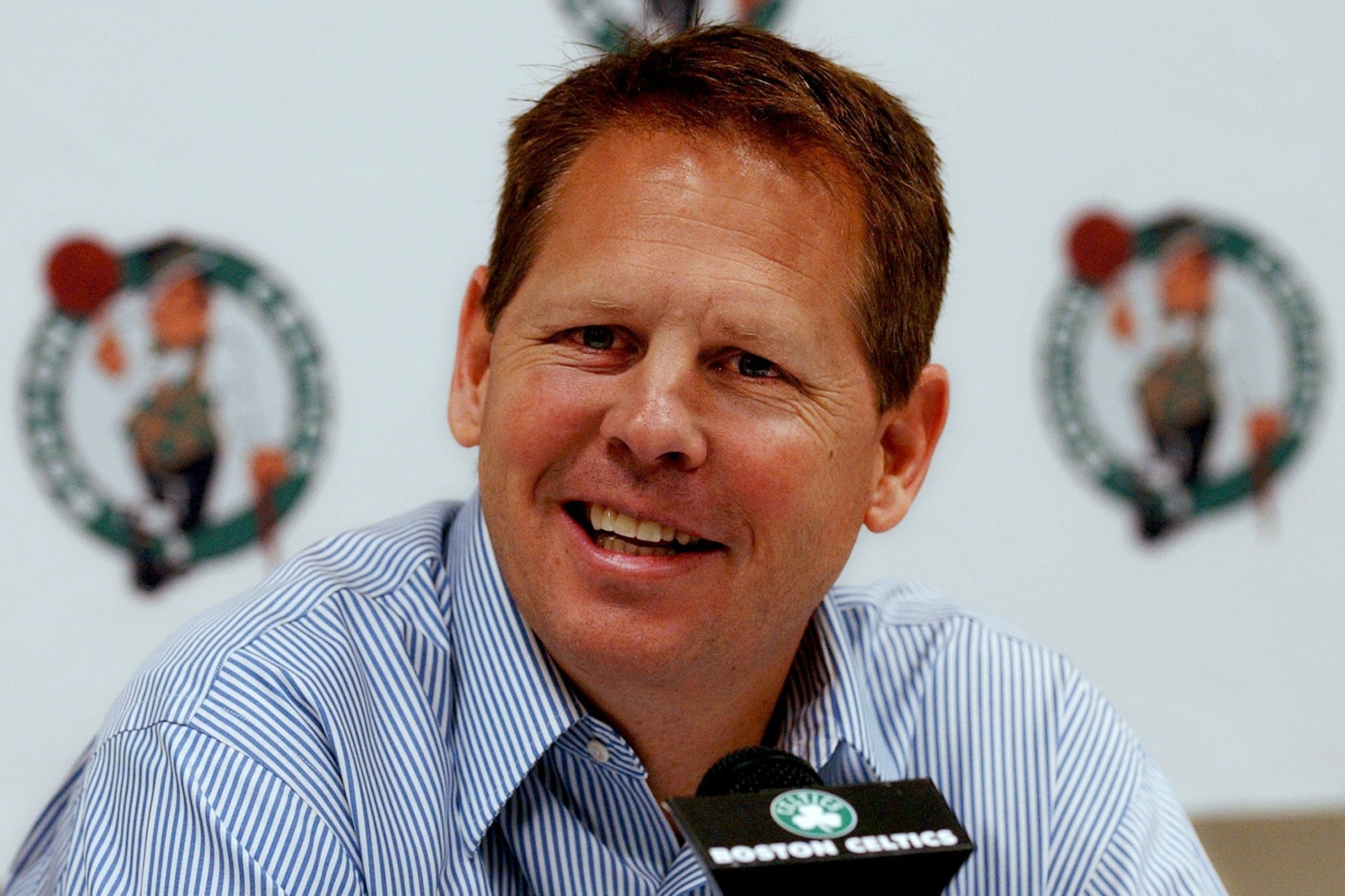
Creativity didn't lead the basketball world to dub Ainge as Trader Danny. Like so many great nicknames, it was born from nothing more than an observation.
Ainge grabbed the reins of the Celtics organization in May 2003. It took him all of about three years to completely overhaul the roster. Of the 19 players who suited up for Boston in 2003-04, only two remained with the team in 2006-07: Paul Pierce and Kendrick Perkins.
Ainge did then what he is doing now—swap out veterans for draft picks and prospects. He grabbed a first-round pick by dealing away Antoine Walker and Tony Delk, then another in a three-team trade involving Mike James and Chris Mills. Ainge turned Chucky Atkins, Jumaine Jones and Chris Mihm into a future first-round pick, then somehow did the same with Jiri Welsch.
The Celtics paid some on-court costs for this flurry of moves, as their win total went from 45 in 2004-05 to only 24 two years later. But Ainge had quietly assembled an intriguing young core, headlined by preps-to-pros leapers Al Jefferson and Gerald Green.
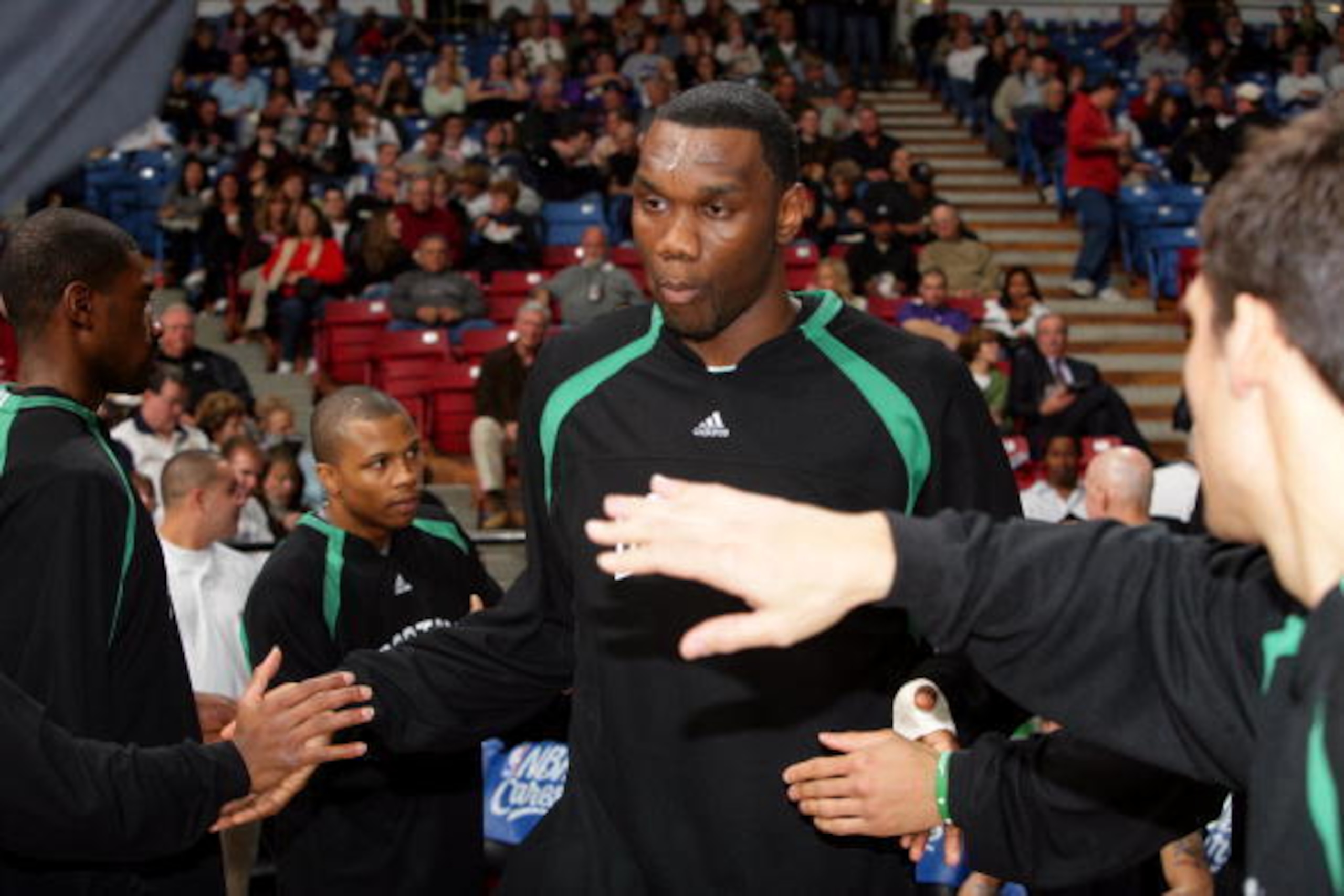
Ainge didn't have a championship core, but he had given himself the tools to construct one. With his cupboard packed to the brim, he waited for his moment to come.
In 2007, he brokered two fortune-altering deals. First, he packaged Jeff Green, Wally Szczerbiak, Delonte West and a future second-round pick for Ray Allen and Glen Davis. Then, Ainge cashed in his remaining assets—including Green, Jefferson and two first-round picks—to pry Kevin Garnett away from the Minnesota Timberwolves.
Behind Pierce, Allen and Garnett, Boston ripped off 66 wins en route to the 2008 world title. Had injuries not held Garnett out of the 2009 playoffs or sidelined Perkins in the 2010 NBA Finals, the Celtics could have added to their jewelry collection.
But Ainge had done his part, proving himself capable of building a champion from the ground up. And Trader Danny has the tools to again fashion something out of nothing.
Boston's New Army of Assets

The disbanding of Boston's banner-raising group started with Allen's free-agency departure in 2012. While the rest of the core has since followed the sharpshooter out the door, it was his exit that could have caused Ainge the most grief.
That isn't due to any sentimental attachments to the sniper or the fact that Allen was the first to go. Rather, it's because Ainge had to watch Allen leave and received nothing in return.
The executive wouldn't let that happen again.
The Celtics landed a 2015 unprotected first-round pick from the Los Angeles Clippers for Doc Rivers. Ainge then sent Pierce and Garnett to the Brooklyn Nets for a package that included three first-round picks (2014, 2016 and 2018), plus the right to swap first-rounders in 2017.
Ainge got two picks out of the Dallas Mavericks for Rajon Rondo (a first-rounder in 2015 and second-rounder in 2016), then one more first-round pick from the Phoenix Suns for Brandan Wright (who Boston acquired in the Rondo deal).
The Celtics picked up a future first-rounder from the Memphis Grizzlies for Jeff Green in a deal that also brought back Austin Rivers. The scoring guard is now reportedly on his way to join his father, Doc, in L.A., and for yet another second-round pick, per Steve Bulpett of the Boston Herald.
A lot of Boston's incoming picks are protected, meaning some could be delayed or eventually turn into second-round selections. That makes it tough to say exactly which and how many assets the Celtics now own, though, Celtics.com's Marc D'Amico painted as clear a picture as can be:
"The C’s currently possess the rights to as many as 12 first-round picks in the next four drafts, including up to eight in the next two drafts. The final number of first-rounders that Boston will own is dependent upon conditions that are attached to many of the picks. Those conditions will also affect the number of second-round picks the Celtics will own over the next few drafts, but suffice to say, they own a lot of them.
"

While it's nearly impossible to imagine the Celtics keeping all of these picks, that doesn't necessarily mean there are too many of them.
"Draft picks are always tradeable; players are not," Ainge explained, per Gary Washburn of The Boston Globe. "Draft picks are always assets until sometimes they're drafted, until they become players, or until they become paid. I don't believe [you can have too many], no."
Ainge's asset collection doesn't stop with picks, either.
This roster features a boatload of recent first-round picks, including: Marcus Smart, Jared Sullinger, Avery Bradley, Kelly Olynyk and James Young. All of those players are under 25 years old, as is developing glue guy Jae Crowder.
And because so many of these players are earning rookie-scale wages, the Celtics are flush with cap space. They could have "as much as $30 million" of it this summer, per WEEI's Ben Rohrbach.
If a recipe for a quick fix exists, Boston already owns its key ingredients: picks, prospects and financial flexibility.
The Blueprint for Boston's Next Playoff Run
Assuming Ainge is done dealing (or close to finished), this roster has two immediate areas of concern: wing depth and rim protection.
The Celtics should be able to address at least one of those voids in the upcoming draft. Boston might opt to fill the latter with two Kentucky products promising to bolster the frontcourt: athletic 7-footers Karl-Anthony Towns and Willie Cauley-Stein. Towns has the higher ceiling of the two, so he would be the preferred pick.
With their other pick, the Celtics could take a flier on someone like Michigan's Caris LeVert. He would at least another trade chip, if not a permanent rotation piece.
The Celtics aren't likely to ink a big name next summer, but they still need to come away with something. As Bleacher Report's Brian Robb explained, Boston has a few tricks up its sleeve to attack the second-tier crop:
"Teams have the right to match any contract restricted free agents sign on the open market, but Boston’s array of draft picks gives them the option of enticing teams into sign-and-trades. A future first-round pick or two may be enough to coax a team with a high payroll to send one of their young free agents Boston’s way. ...
The Celtics also have a useful building tool with their trade exceptions. Ainge landed a $12.9 million exception in the Rondo deal and just added a $5 million one after shipping Wright to Phoenix. ...
For a franchise looking to trade an expensive player, the Celtics could absorb said contract while sending out significant draft-pick compensation in return.
"
Armed with that information, the Celtics could take a long look at Orlando Magic forward Tobias Harris.
The 22-year-old is set to become a restricted free agent, and Orlando could view him as a key piece of its young core. But the Magic might have a hard time resisting adding a pick to further their rebuilding efforts, especially if it means creating more floor time for high-flying rookie Aaron Gordon.
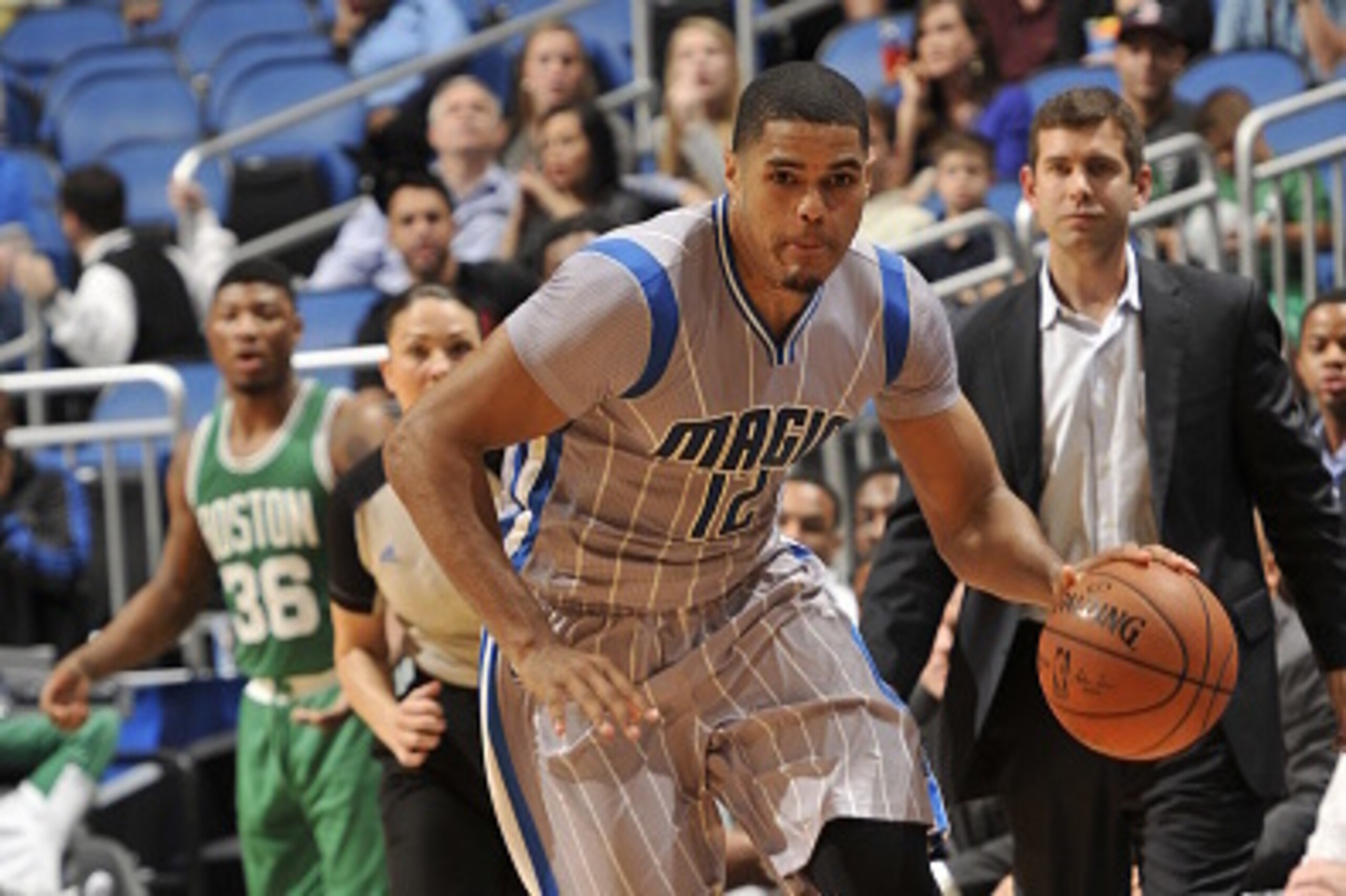
That makes Harris Boston's big splash of this summer, but the Celtics could also take some low-risk fliers on K.J. McDaniels, Kevin Seraphin and/or Kosta Koufos. Boston would still be young, even more athletic and a potential force on the defensive end.
The Celtics are likely to have four first-round picks in 2016: their own, Brooklyn's, Dallas' (top-seven protected, if unused in 2015) and Cleveland's (top-10 protected). By packaging a few together, Boston could climb the draft board and perhaps walk away with two premier players.
For now, the Celtics only have Smart's $8.2 million salary on the books for 2016-17, plus a few more rookie deals and a likely raise for Sullinger (and maybe Tyler Zeller). Even taking into account their 2015 free-agent haul, Boston should have a ton of breathing room—in the same summer the new TV money kicks in, perhaps pushing the salary cap north of $90 million, per Grantland's Zach Lowe.
Now, it's time for Ainge to go big-game hunting. The 2016 class could include Love, Kevin Durant, LeBron James, Anthony Davis, Damian Lillard, Mike Conley, Al Horford, Joakim Noah and Andre Drummond, among others.
Not to kill any dreams here, but it seems unlikely the Celtics would have a shot at James, Durant or Davis. Now that James has gone back home, logic says he probably stays there. If Durant wants out of OKC, his next stop could be a return to the nation's capitol. And Davis is already professing his love for the Big Easy, according to Yahoo Sports' Marc J. Spears, so he might not be a flight risk.
But if the other names listed above are "consolation prizes," it's probably the first and only time they will be looked at as such. The Celtics would be glad to land any of those players, but Love (who was a target of Ainge last summer, per the Boston Globe's Gary Washburn) might be the best fit.

Love is having one of the worst seasons of his career, and he's still one of only four players averaging 17 points, 10 rebounds and two assists.
Think the Celtics could sniff out a playoff spot with a starting five of Smart, Bradley, Harris, Love and Towns? Look at what they could be bringing off the bench by that point: Sullinger, Young, LeVert, McDaniels, Olynyk, Crowder, Zeller/Seraphin/Koufos and whomever they pull from the 2015 draft.
Ainge would still have plenty of pieces left to open the door to the trade market. At that point, the possibilities are almost endless—which is the reason Ainge is addicted to draft picks.
"In a word, what Ainge has done is genius," wrote Basketball Insiders' Moke Hamilton. "He has traded away each and every asset that his team had and has fully embraced rebuilding. The team has a war chest of future draft picks and has put itself in good position to rebuild, and quickly."
Ainge has a full grasp on the state of this franchise. He understands exactly where it is, where it needs to go and how it can get there.
It might look bleak now, but the future in Boston is blindingly bright. Again.
.jpg?w=2560 "Chiefs, Steelers Eye WR Trades")





.jpg?w=2560 "Raiders Sticking with Cousins")