Welcome to the inadvertent golden age of NBA powerhouses.
Fueled by a stacked Western Conference and a select few Eastern Conference teams, the championship race has arguably never been more wide open. Thirteen teams can be counted among those legitimately chasing a title, many of those being preeminent powers prone to provocative performances.
And many of those contenders are outright surprises.
Some weren't supposed to be good at all, yet they find themselves in the thick of a championship chase. Others were supposed to be good, not great. A lone exception was projected to be great, not historical.
But crowded title discussions need to be thinned.
Now, as the regular season approaches its midway point, is a good time to do some sorting and figure out which shocking studs are genuine contenders.
Surprises are, again, relative to preseason expectations. No matter how they're doing it, these teams are exceeding their previously set standards. (You won't see the underachieving Cleveland Cavaliers and San Antonio Spurs or perfectly placed Washington Wizards here.)
Contender status will be determined by a team's present standing, the strength of its schedule and, per usual, subjective analysis that aims to answer the question at hand: Which of these squads have the best chance at winning their respective conferences and nabbing this year's Larry O'Brien Trophy?
Feelings will be hurt and egos bruised, but to heck with sensitivity. Keep your minds open and your fandom armor on, and ready yourself for another fun-filled edition of "Contender or Pretender."
Golden State Warriors
1 of 7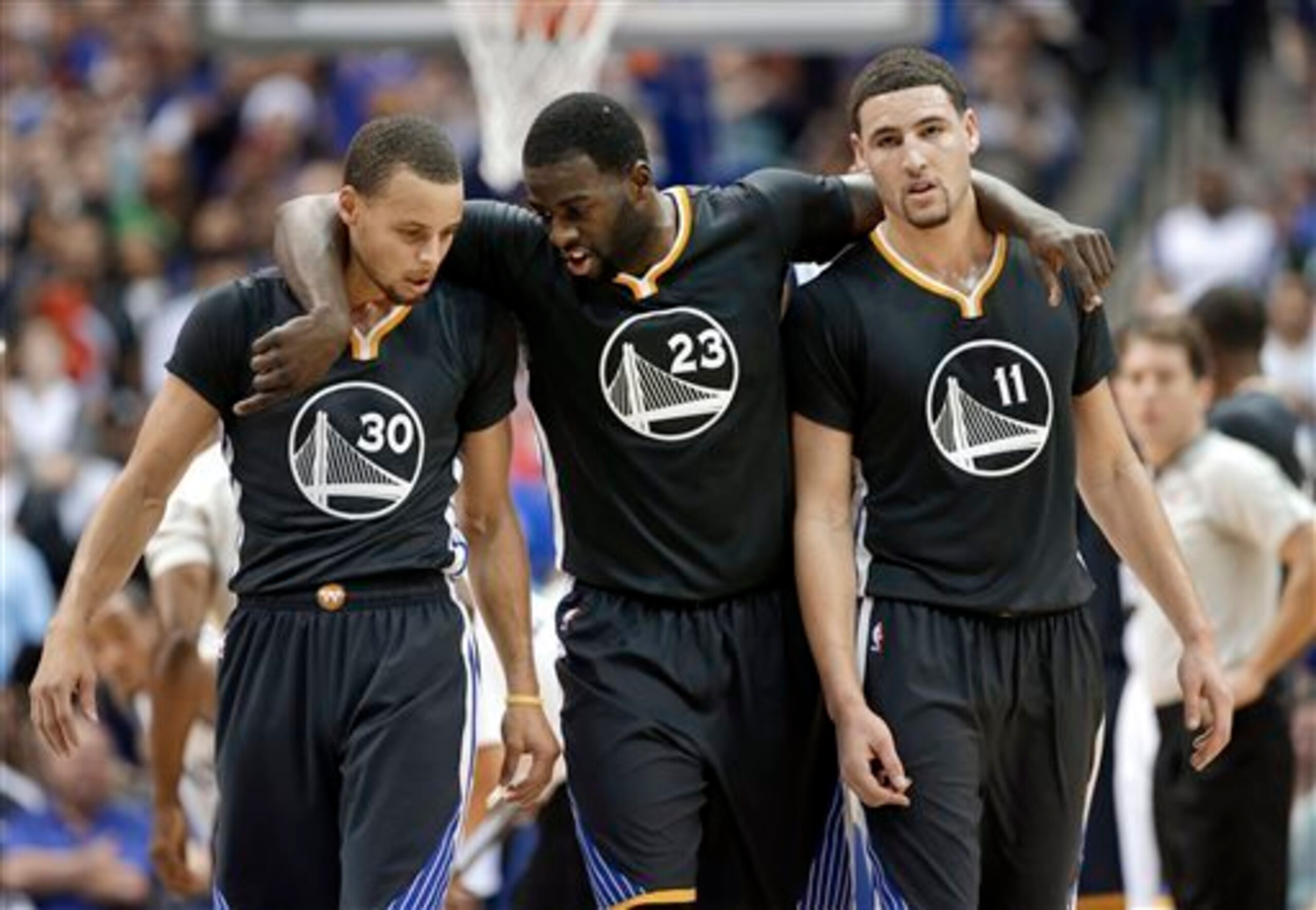
There's no way around it: Armed with extensive firepower and a new coach in Steve Kerr who would exploit and embrace positional mismatches while instilling a more inventive offense, the Golden State Warriors were supposed to be good. Great, even.
Just not this great.
Thanks in part to a franchise-record 16-game winning streak, the Warriors are an NBA-best 29-5. Kerr himself has been every bit as creative as advertised. The Warriors are passing more, and they have ditched the hockey-like, five-on, five-off rotations Mark Jackson fell in love with and predominantly run smaller lineups.
Collective results are already speaking for themselves. Golden State ranks fourth in points scored per 100 possessions—up from 12th last season—in addition to maintaining the association's best defense per 100 possessions.
Most impressive, though, is the roster's seemingly goof-proof structure.
Injuries to David Lee and Andrew Bogut—not to mention inconsistent contributions from Andre Iguodala—should have threatened the Warriors' superiority. Bogut's absence in particular was supposed to impact their two-way wonder.
It didn't:
| Before Bogut's absence | 20 | 107.4 | 5 | 94.5 | 1 |
| During Bogut's absence | 12 | 110.9 | 1 | 98.8 | 4 |
| Since Bogut's return | 2 | 115.5 | 1 | 97.4 | 10 |
Meanwhile, Stephen Curry has established himself as an MVP candidate and, most importantly, the league's best point guard; Klay Thompson has been worth the four-year investment that kicks in next season; Marreese Speights is an under-the-radar Sixth Man of the Year candidate; and this time next year, Draymond Green will be earning at least $10 million annually.
So, no, the Warriors weren't supposed to be this good. But they are this good.
And while they might not go down as the second-winningest team in NBA history—as they are on pace to do—they are the championship cavalcade that other championship cavalcades want to be.
Verdict: Contender (of all contenders)
Toronto Raptors
2 of 7
After a 2013-14 season in which they went from alleged tanker to feared force, the Toronto Raptors were due for an encore. They re-signed Kyle Lowry, traded for Lou Williams and still played in the Atlantic Division, the NBA's provincial equivalent of junior high basketball.
But the Raptors' encore has been especially excellent.
They own the Eastern Conference's second-best record even after suffering a four-game losing streak, have the NBA's second-best offense and are enjoying another MVP performance from their mastermind Lowry.
Yet the defense remains a concern.
The Raptors rank 22nd in points allowed per 100 possessions, 24th in defensive-rebounding percentage, 20th in points allowed in the paint (per TeamRankings) and an unimpressive 18th in three-point prevention. They're also a combined 5-4 against top-six Eastern Conference teams.
DeMar DeRozan's return should help bolster the Raptors' already prolific run. What he won't do is change their predetermined course, which Bleacher Report's Grant Hughes describes thus:
"The most realistic expectation is for DeRozan to improve Toronto on both ends but not enough to appreciably change their fate, which seems to be this: The Raptors are good enough to comfortably snare one of the top four seeds in the East even if their defense stays in the league's bottom third.
What we can't expect, though, is for the Raps to compete with anybody of consequence out West. ...
... DeRozan will be a difference-maker—just not a big enough one to elevate the Raptors from good to great.
"
Pessimistic though that seems, it's accurate.
Emerging from the East will be a difficult task unto itself. The Chicago Bulls, Atlanta Hawks, Washington Wizards and, to a lesser extent, the star-stuffed Cavaliers are all cogent roadblocks.
And, in a bleakly built East, the Raptors are more like an above-average roadblock themselves, rather than a Finals-bound powerhouse.
Verdict: Pretender
Portland Trail Blazers
3 of 7
Last season's Portland Trail Blazers were good. These Blazers are even better.
At 30-8, the Blazers own the NBA's second-best record and are off to the third-best start in franchise history. LaMarcus Aldridge has expanded his offensive armory to include three-point missiles, Damian Lillard's clutch-time steez is beyond compare and Portland is one of just three teams to rank in the top eight of both offensive and defensive efficiency.
Which begs the question: Can the Blazers keep this up?
Detractors are quick to cite their boilerplate bench. The second unit still ranks in the bottom half of offensive and defensive efficiency, per HoopsStats.com, and their rotation stretches seven impact players deep at full strength.
The Blazers have also played the league's second-easiest schedule to date and are a combined 3-4 against fellow top-eight Western Conference teams. That they're maintaining a potent offense while Nicolas Batum plays career-worst basketball and a top-three defense while Robin Lopez watches from the sidelines is fodder for fickleness as well.
Second-place teams aren't standing where they are by chance midway through an entire season, though.
Lillard and Aldridge are megastars, the bench is deep enough thanks to Chris Kaman and Steve Blake, and the defense is predicated on perimeter slickness and reading screens—not the rim protection Lopez provides.
Put bluntly: This team has done enough—long enough—to prove its powerhouse status is not an imitation.
Verdict: Contender

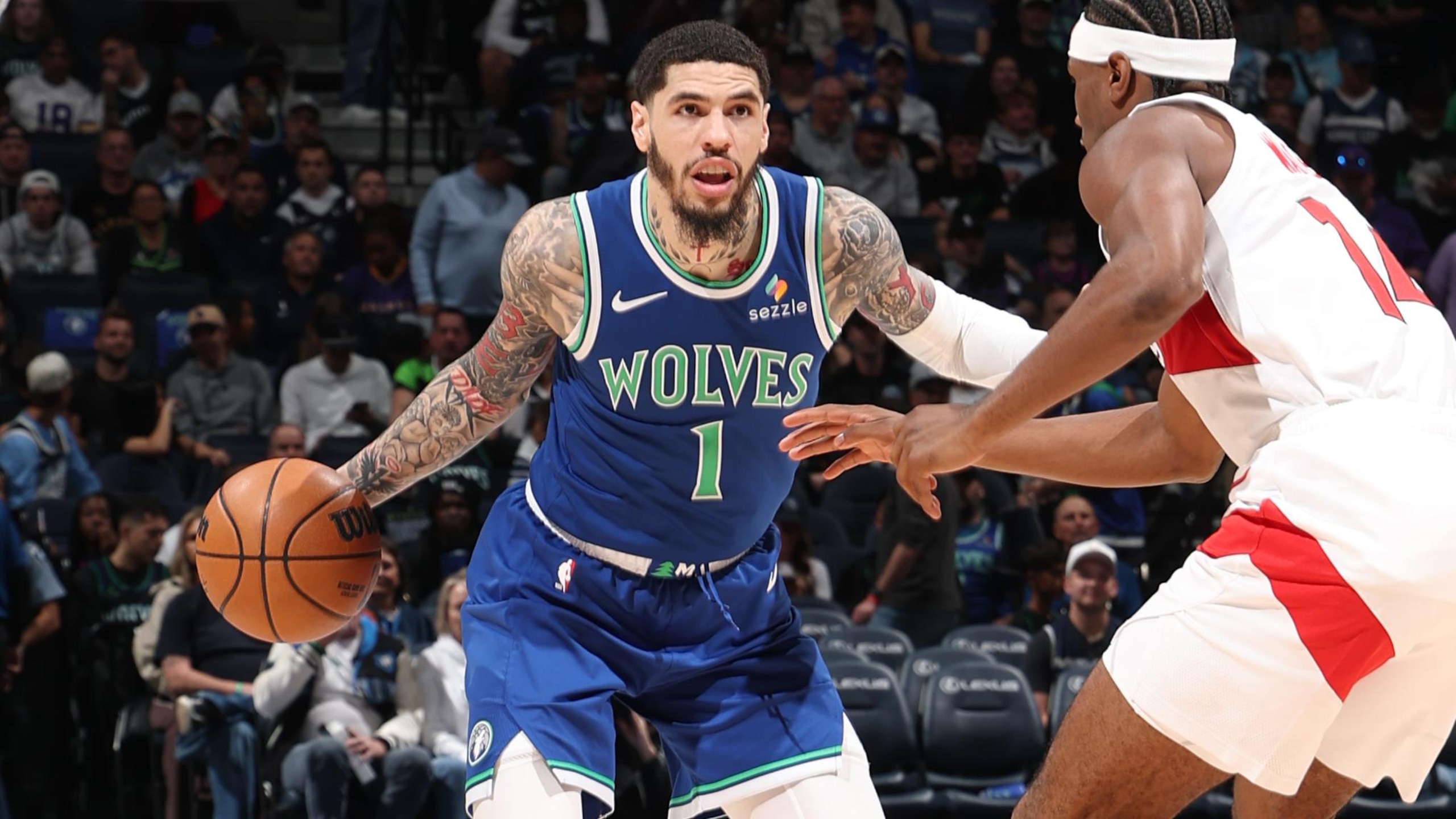
Dallas Mavericks
4 of 7
Offseason aggression suggested the Dallas Mavericks would fare better than they did in 2013-14, perhaps even toeing the line of Western Conference contention.
Under no circumstance were they supposed to be this effective, battling for all the coveted spots below Golden State.
Backed by the league's best offense, Dallas' rise has been further fueled by Rajon Rondo's arrival. Sort of. Most of the Mavericks' defensive concerns have since been dispatched, but the offense remains a work in progress:
| Pre-Rondo | 27 | 113.6 | 1 | 105.1 | 20 | 8.5 | 2 |
| Post-Rondo | 11 | 106.7 | 6 | 100.9 | 11 | 7.7 | 2 |
Post-Rondo performances have been maddeningly inconsistent.
The Mavericks beat the Spurs, then fell to the Atlanta Hawks and Phoenix Suns. They went on a six-game winning streak, then dropped consecutive contests to the surging Detroit Pistons and slumping Los Angeles Clippers.
Who, then, are these Mavericks? Well, that's like asking another question: Is the defensive improvement worth the offensive decline?
In a conference teeming with potent balance, it doesn't really matter.
The Mavericks are, in fact, a dangerous outfit. But they're a troubling 1-8 against the West's top-eight teams, and they slip to bottom-10 defensive status when Rondo's off the floor.
"We're right there, but we haven't beaten the good teams," Dirk Nowitzki said ahead of the Rondo trade, per ESPN Dallas' Tim MacMahon. "We've got to turn that around pretty quick. 'Right there' is just not good enough."
Such sentiments are as true now as they were then. Until the Mavericks prove they can beat the "good teams" on a consistent basis, they're exactly who they were pre-Rondo: exciting pretenders.
Verdict: Pretender
Houston Rockets
5 of 7
Leading into 2014-15, after losing both Chandler Parsons and Jeremy Lin in a botched attempt to land another superstar, the Houston Rockets looked liable to be swallowed whole. The Western Conference is brutal, and they just didn't appear to measure up.
Months later, the Rockets have the West's third-best record, have made a pair of gutsy midseason acquisitions in Josh Smith and Corey Brewer, and are dominating with heavy doses of James Harden and a second-place defense.
Not to say there aren't concerns; there are plenty of those.
Power-forward personnel remains an issue even after landing Smith, the offense ranks a disappointing 18th in points scored per 100 possessions, Harden is the only floor general on the roster and the team's schedule hasn't been particularly trying.
"The Rockets will get two more chances to beef up their record, visiting both Brooklyn and Orlando," wrote Red94's Rahat Huq. "Then they come home for a pair against the Thunder and Warriors. Houston must show it can win against good teams when they are at full health to actually be taken seriously."
Houston is a middle-of-the-road 7-7 against the West's top-10 teams and clawing to an above-.500 record in games Smith plays. The Rockets' record-razing three-point pace is also complemented by a mediocre 34.9 percent conversion rate.
But general manager Daryl Morey is feverishly searching for a way to upgrade the Rockets offense, according to Bleacher Report's Ric Bucher, and any assault charged by Harden has the potential to explode at some point, most notably when it counts most.
In the meantime, the Rockets have an elite defense led by Dwight Howard's reinvigorated rim protection—he ranks seventh among all players who face at least five attempts per game—to ride up the conference ladder.
Verdict: Contender
Memphis Grizzlies
6 of 7
Well, the Memphis Grizzlies are officially scarier.
Yahoo Sports' Adrian Wojnarowski reported that Jeff Green is headed to Memphis. He joins a Grizzlies contingent that ranks 27th in pace and has seen both its offensive and defensive efficiency travel in the wrong direction, despite flirting with dual top-10 status.
Green, though, doesn't address the Grizzlies' greatest need: perimeter shooting. He's shooting just over 34 percent outside of eight feet and only 30.4 percent on catch-and-shoot opportunities.
Memphis, meanwhile, is shooting just 40 percent outside of eight feet itself and ranks 27th in three-point attempts—another area in which Green (30.5 percent from deep on the season) won't help.
Seven of the past eight NBA champions led all playoff teams in three-point attempts and makes, according to ESPN Los Angeles' Baxter Holmes. As currently constructed, the Grizzlies are not equipped to duplicate that type of floor spacing.
Courtney Lee and Mike Conley are both shooting north of 40 percent from beyond the arc, but there's every reason to believe the team's top-10 offense will continue regressing to the mean. And with a defense that's looked less than elite—as in outside the top seven—in recent weeks, there's even more cause for concern.
Marc Gasol remains an MVP candidate, and the Grizzlies are indeed one of the Western Conference's best squads. But their powerhouse status is still something of a mirage—convincing enough for a top-four seed, fragile enough that at least four other West contenders look like better title bets.
Verdict: Pretender
Atlanta Hawks
7 of 7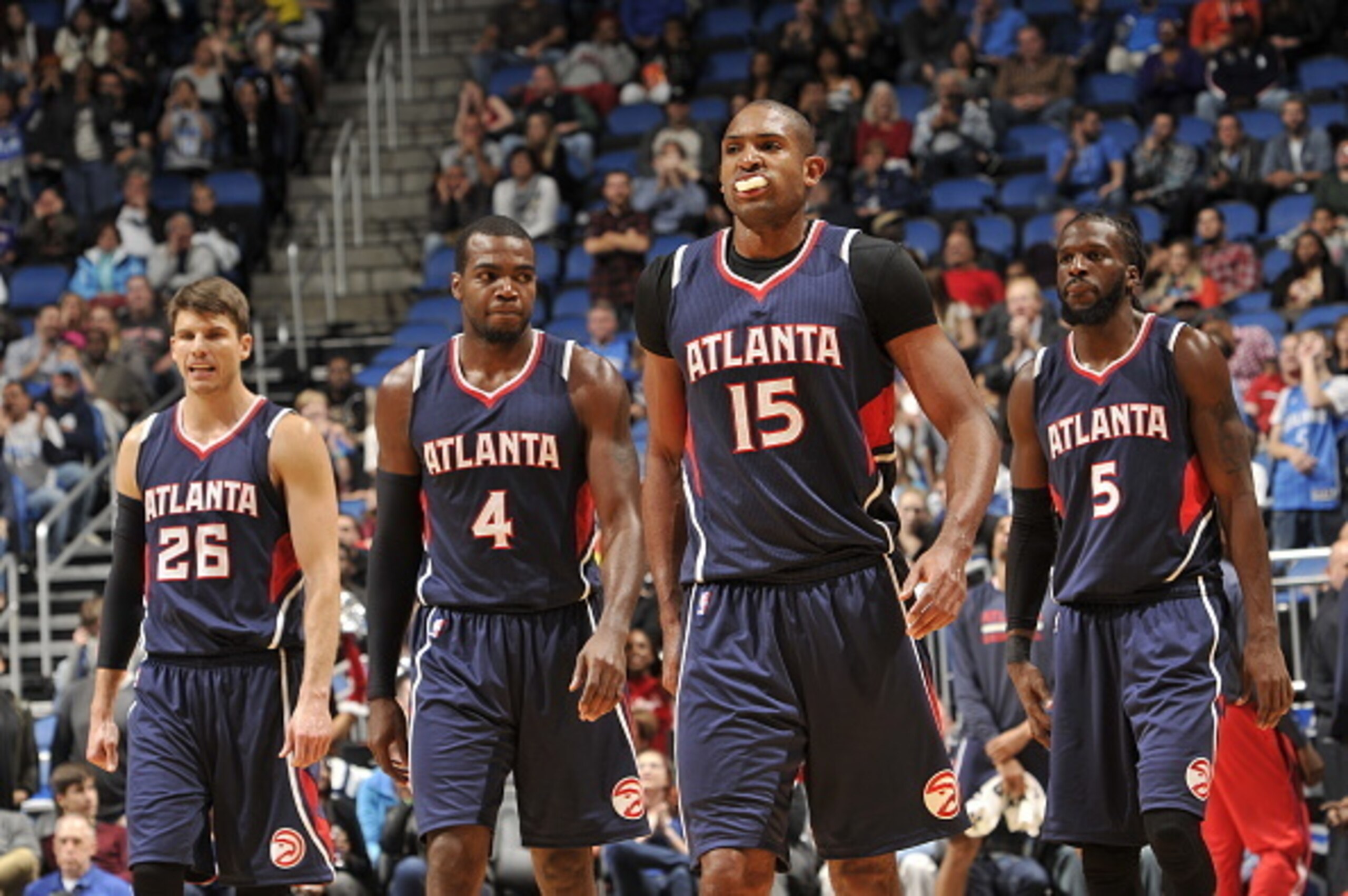
All the Hawks do is win. And win. And win. And win some more.
Four teams were most often associated with the Eastern Conference crown ahead of—and into—2014-15: the Cavaliers, Bulls, Wizards and Raptors. The Hawks were that frequently forgotten middle child, fated to finish as a fringe playoff contender miles outside championship confabs.
That hasn't gone over well in Atlanta.
Midway through the season, the Hawks are lording over the Eastern Conference with the NBA's third-best record. They join the Warriors as the only two teams to rank in the top seven of offensive and defensive efficiency, rank first in assist percentage by a wide margin (2.6 points) and are catching-and-shooting their way to deserved prominence.
Comparisons to the San Antonio Spurs abound—yet have become tired.
Elements of the Spurs' motion-mobbed system are there, but the Hawks are their own team. They don't have three future Hall of Famers schooled in the art of championship-caging; they're a selfless band of elite role players taking a wrecking ball to the NBA's power structure.
Paul Millsap is the league's only player averaging at least 16.0 points, 7.5 rebounds, 3.0 assists and 1.5 steals; Jeff Teague and Dennis Schroder are piloting a steadily paced, meticulously designed offense; Al Horford has been the consummate chameleon, his offensive role forever shifting; and Kyle Korver is on track for the league's second 50/50/90 season ever.
Should these surprisingly 29-8 (16-3 at home, 10-2 against the West), Eastern Conference-controlling Hawks be called legitimate title contenders?
Nah. Deem them Eastern Conference favorites instead.
Verdict: Contender
Stats courtesy of Basketball-Reference and NBA.com unless otherwise cited and are accurate as of games played Jan. 11.
.jpg?w=2560 "Chiefs, Steelers Eye WR Trades")
.jpg?w=2560 "WWE Raw Live Grades 🔠")

.jpg?w=2560 "Multiple NFL Trades Predicted")
.jpg?w=2560 "🚨Jay-Z Headlining Super Bowl")