Biggest Surprises and Disappointments for Detroit Pistons
The 2014-15 season has been marked almost exclusively by letdowns for the Detroit Pistons, but if you squint hard enough there might be a silver lining among the failures.
Even after a win over the Indiana Pacers, the Pistons are just 6-23 (.207) this year. They are quite possibly the biggest disappointment in the league and have dropped to No. 29 in Bleacher Report's power rankings—behind even the New York Knicks and Philadelphia 76ers.
All of the losing culminated in one of the most surprising transactions in the NBA in recent years when head coach and team president Stan Van Gundy announced the release of Josh Smith.
TOP NEWS

Pic of LeBron's Helicopter Commute 🚁

Duren Calls Out 'False' Rumors

NBA Power Rankings Entering Preseason 🔢
Smith had two years and $27 million remaining on his contract after this season.
""Our team has not performed the way we had expected throughout the first third of the season and adjustments need to be made in terms of our focus and direction," Van Gundy said in a press release. "We are shifting priorities to aggressively develop our younger players while also expanding the roles of other players in the current rotation to improve performance and build for our future.
"
In other words: "We are better at tanking than the teams that aren't trying to win. It is time to join them."
By using the stretch provision to space Smith's cap hit over the next five seasons, Van Gundy essentially decided it was worth losing mid-level, exception-type space for the next five years to free the organization of Smith's salary.
Smith's play in Detroit has been nothing but disappointing, but the J-Smoove era of Pistons basketball is officially over. His play hasn't been the only thing that went differently than expected.
Brandon Jennings in December
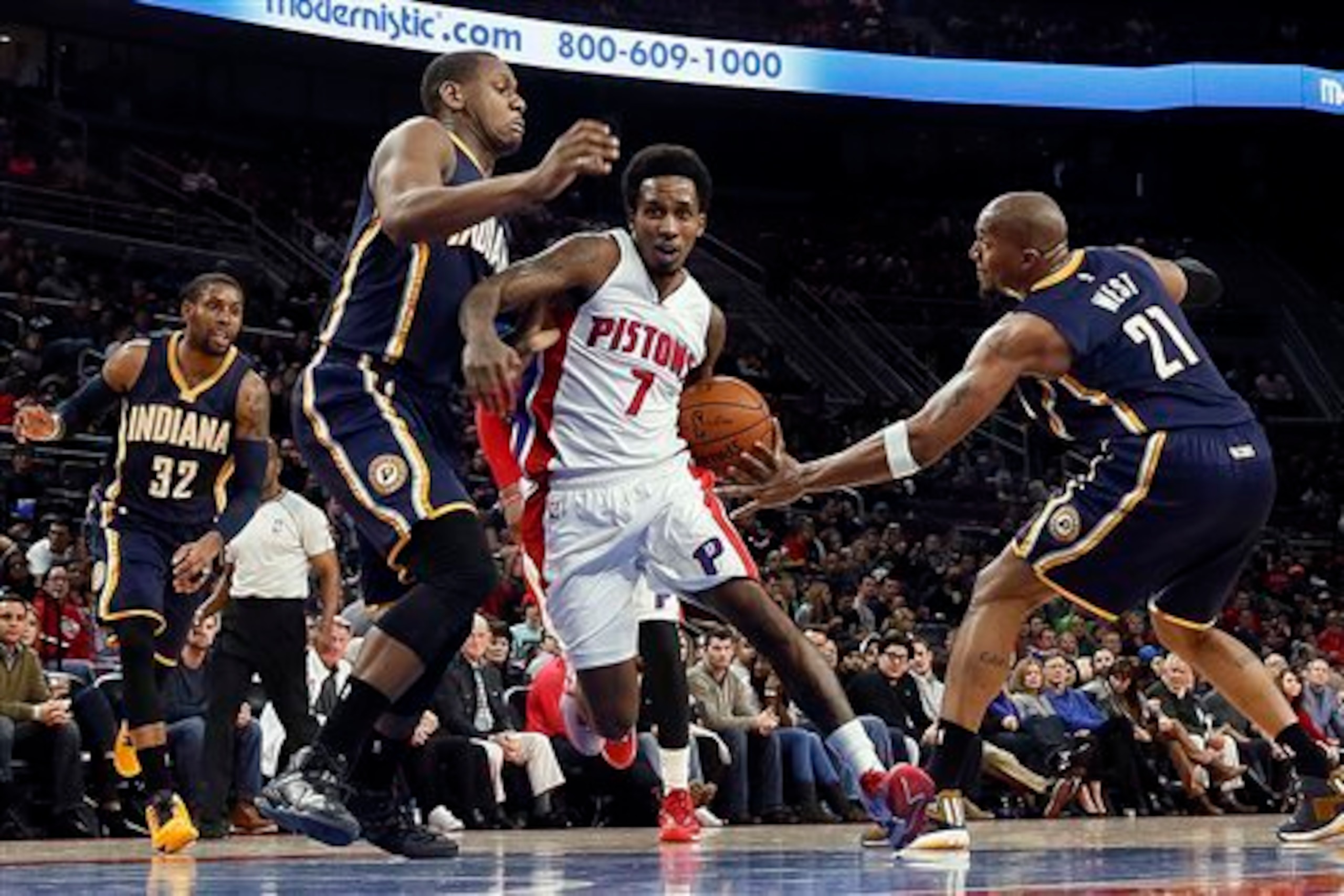
Smith is gone, and the Pistons' other big acquisition from the 2013-14 offseason has also struggled mightily at times.
Brandon Jennings actually played some of the best basketball of his career in November, averaging 18.5 points on 42.1 percent from the field and 39.4 percent from the arc while adding 6.1 assists. His play was so strong he topped the Pistons power rankings at the season's six-week mark.
His performance has gone off a cliff since.
Sure, Jennings has been dealing with a nagging thumb injury, but it doesn't come close to excusing what he's doing on the court.
In December, Jennings is averaging 8.3 points in 27.9 minutes on 28.5 percent shooting from the floor and 22 percent from three. He reached double figures four times in 12 games.
For a guy who makes his money as a scorer, not being able to put the ball in the basket is a serious issue.
And it is not like Jennings is just missing shots because of his thumb. He is also making terrible decisions with the ball—something that has always been an issue but seemed much better in November.
Take his performance during Detroit's 117-106 loss to the Dallas Mavericks in which Jennings shot 5-of-14. Two plays encompass so much of what makes him such an infuriating player.
First is a three-pointer he took in the first quarter with the Pistons leading by four:
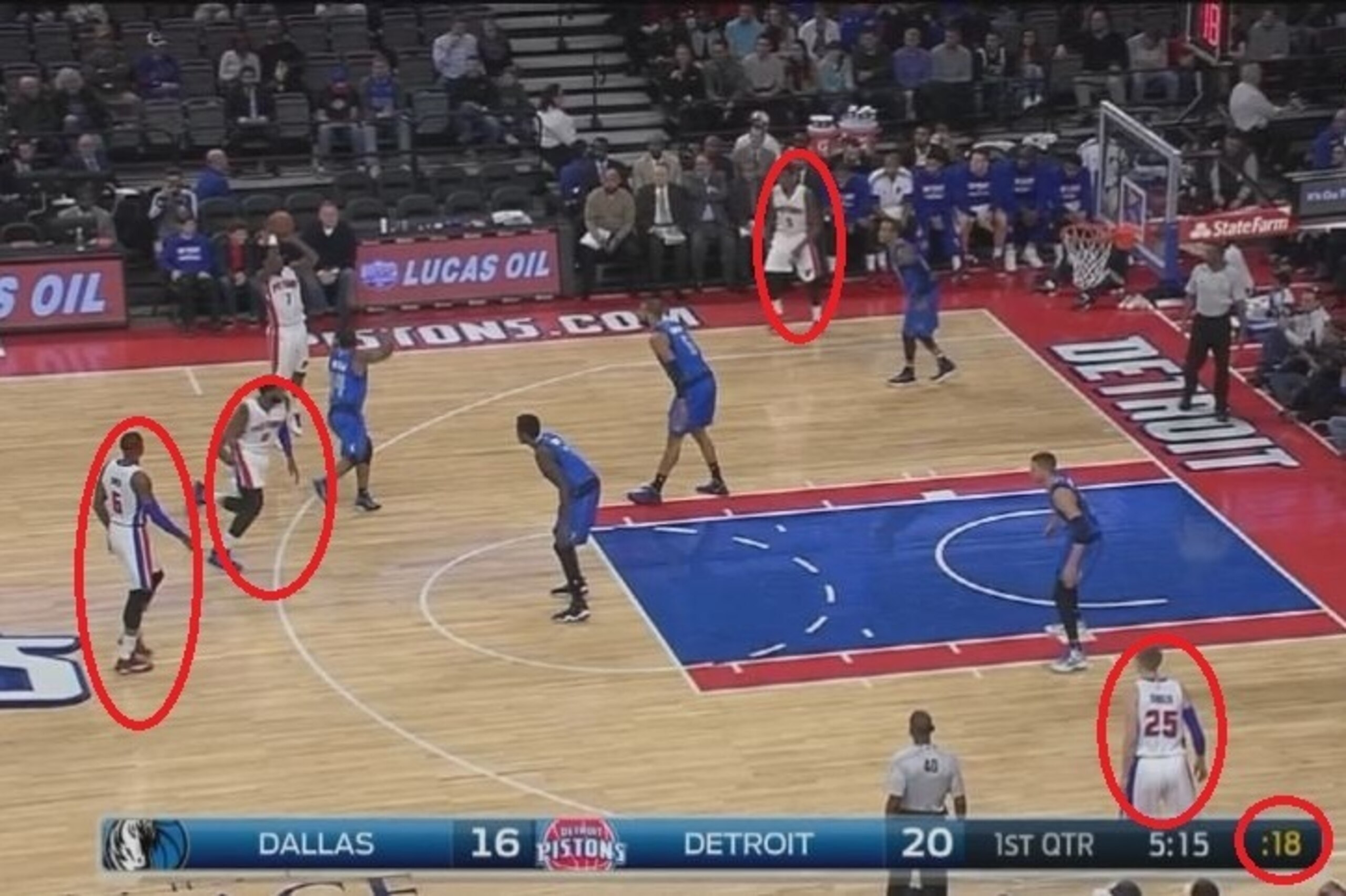
They had scored on six of their seven previous possessions to take an early lead, yet Jennings felt the need to launch a contested triple with 18 seconds on the shot clock. To make it worse, not one of his teammates was inside the arc to try and corral a miss—egregious when Smith and Andre Drummond are both on the court.
It also wasn't a heat-check for Jennings, who was just 1-of-3 with a layup to that point. This type of play just kills offensive rhythm and frustrates teammates and coaches.
And it is a Jennings specialty.
In the third quarter he made an even more perplexing decision:
Caron Butler found him with a great bounce pass for an open layup and...Jennings turned it down in favor of a fadeaway jumper from the baseline (and what should have been called a travel).
The layup would have been with his off hand—and perhaps Tyson Chandler's presence on the court is enough to make most people think twice at the rim—but Jennings looked up at the basket before consciously deciding a layup was the wrong choice.
The play basically sums up his entire month.
Greg Monroe Quietly Starring
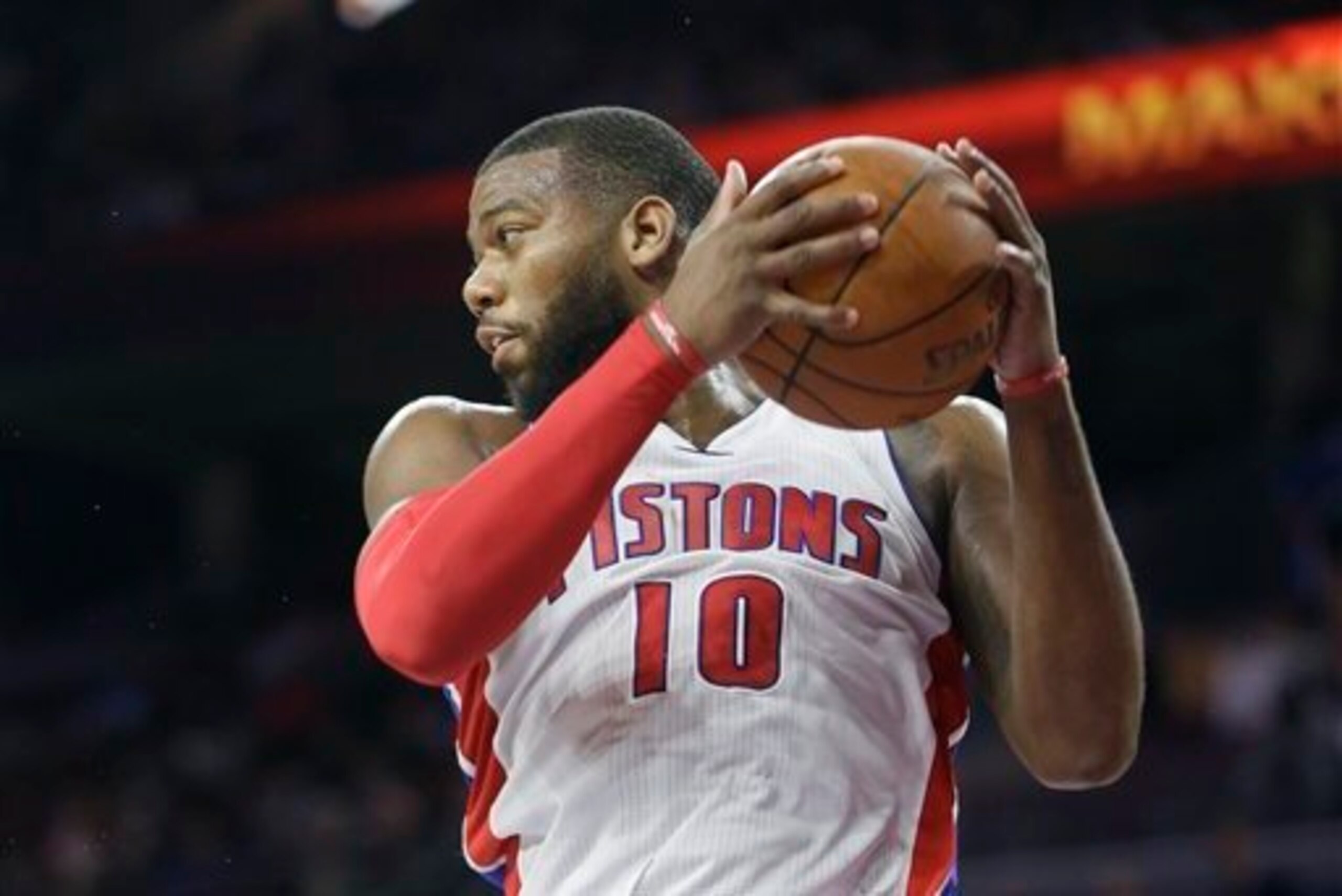
While the Pistons' starting point guard has made fans miss the days of Rodney Stuckey running the show, Greg Monroe has been one of their few players who has not taken a step back.
Despite playing fewer than 30 minutes a game, he has averaged 14.8 points and 9.1 rebounds a game. Those are the highest rates of his career, at 18.4 points and 1.21 rebounds per 36 minutes, according to Basketball-Reference.com.
Monroe hasn't been light years better than in past seasons, and some of his shooting numbers have actually been down slightly. Where he has excelled is aggressively attacking in the post and converting at the line.
He has taken a career-high six free throws per 36 minutes, an improvement for a guy who has settled for mid-range jumpers too often in his career. And his 74.8 percent conversion of them—also a personal best—has rewarded the change in his game.
Van Gundy has played Monroe less than in any season since he was a rookie, but perhaps that will change with Smith's departure. He is still young at 24 and, despite an expiring contract, could be part of the Pistons' future.
They control his Bird Rights, which means Detroit is the only team that can offer him a contract of five years and with annual raises of 7.5 percent. With the 2011 Collective Bargaining Agreement, other teams can only offer him four years and raises of up to 4.5 percent, as explained by Liberty Ballers.
When Monroe accepted the qualifying offer in the offseason, it seemed inevitable his time with the Pistons was nearing an end. With his strong play next to Drummond—and with Smith out of the picture—both sides have reason to continue their relationship.
The Pistons Shooting From...Anywhere
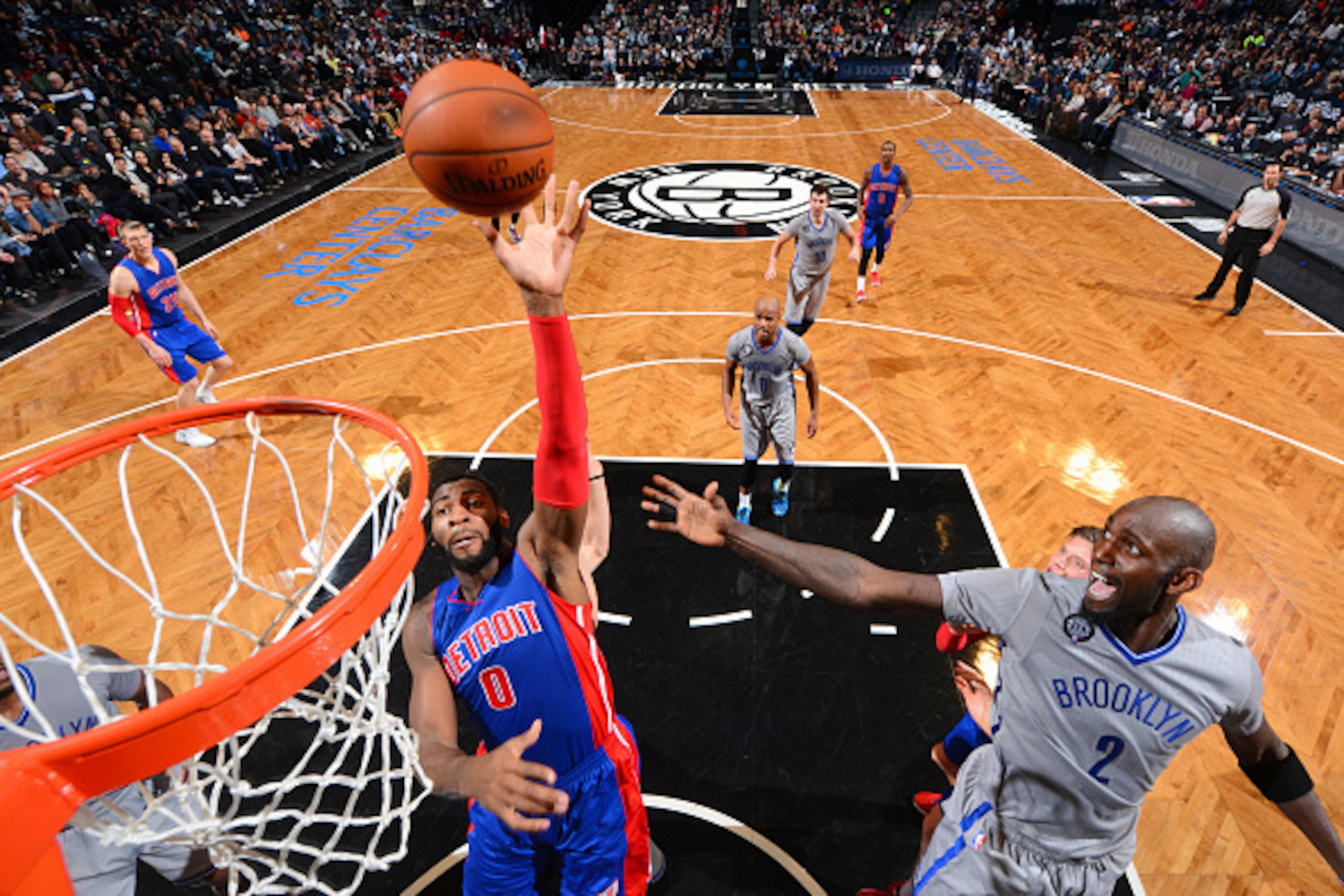
In 2013-14 the Pistons weren't exactly torching defenses, finishing No. 19 in field-goal percentage at 44.7 percent. But that mark is fantastic compared with the 41.3 percent they have shot in 2014-15, dead last in the NBA.
It is especially disappointing given the offseason moves Van Gundy made to improve the offense: signing D.J. Augustin, Caron Butler, Cartier Martin and Jodie Meeks to improve their depth and outside shooting. And although Meeks has missed much of the season, the offensive drop-off has been inexcusable.
The Pistons have been so poor, they are among the bottom seven teams in shooting from the five-foot range out to 24 feet, per NBA.com. Worst of all, they are No. 30 from within five feet and from five-to-nine feet, which seems almost impossible with inside scorers like Drummond, Monroe and Smith.
But Drummond has made just 48.2 percent of his shots after shooting at least 60 percent in his first two seasons. And Smith made just 50.6 percent from within five feet after making 63.2 percent of them in 2013-14.
That certainly made Van Gundy's decision easier.
The Pistons offense did look much better in their first game without Smith, as they scored 119 points—their most since Feb. 8—on 47-of-86 (54.7 percent) shooting. Jennings, Monroe and Drummond in particular looked good, combining for 53 points and making 22-of-35 field goals.
It was just the first of 54 games they will play without Smith on the roster, and it was against a mediocre Indiana Pacers team.
But if the Pistons string together more performances like that, they could surprise some people in the final two-thirds of the season.
All records and statistics accurate through Dec. 26 and are from NBA.com unless otherwise noted. All salary information from Sham Sports.
Jakub Rudnik covers the Detroit Pistons as a Featured Columnist for Bleacher Report. Follow him on Twitter.
.jpg?w=2560 "OBJ Calls Out Giants After Release")



.jpg?w=2560 "NFL investigating referee after viral exchange with player")