


For all the chaos and the "Peyton is finished" chatter that surrounded the Week 16 game against the Cincinnati Bengals—for those who were paying attention—it provided valuable insight as to what adjustments the Denver Broncos need to make in order to get the best out of Peyton Manning this postseason.
Manning's performance against the Bengals was—in many ways—a microcosm of what Manning has become this season—a good quarterback who now needs help to win games.
If Denver is going to have a deep playoff run, it will be imperative that the coaching staff creates a game plan that maximizes Manning's strengths and minimizes his weaknesses.
TOP NEWS
.jpg?w=2560 "Seahawks Chiefs Football")
Chiefs, Steelers Eye WR Trades

New NFL Power Rankings 📊
Rodgers Calls Out Owners After Paris Game
One of the main focuses should be limiting Manning's pass count. In every game that the Broncos have lost this year, Manning has been asked to throw the ball over 40 times. In fact, in those four losses, he is averaging 51 throws a game.
No quarterback should be asked to throw that much in a game—let alone a 38-year-old with questionable arm strength and less-than-desirable pocket mobility.
For comparison's sake, let's look at the impact that throwing more than 40 times a game has had on other quarterbacks. In the 2012 and 2013 seasons, Tony Romo threw over 40 times on 14 separate occasions. His record in those games: 7-7.
This season? He has thrown 40 times or more once, the Cowboys are back in the playoffs for the first time since January 2010, and they finished with a record of 12-4.
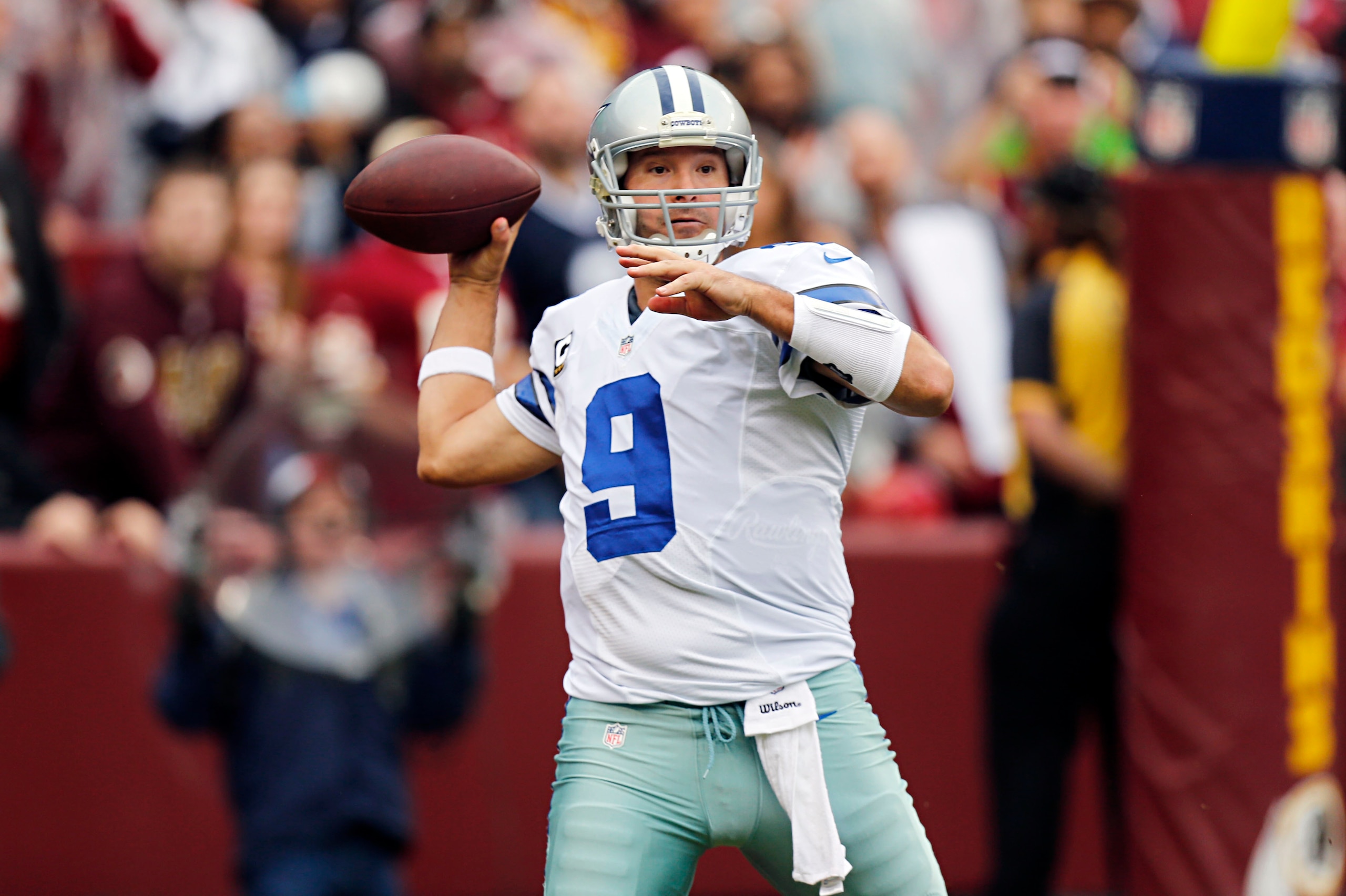
As a final example, let's see how the man to whom Manning is inexorably linked does when asked to throw 40 or more during a game. In the four games this year where Tom Brady has thrown 40 or more passes, his QB rating is 87.17—the exact same as Manning.
However, as Around the NFL Senior Editor Gregg Rosenthal would tell you:
"It's too simple to say that Manning has "lost it" or simply can't push the ball down the field. His arm is obviously weaker, but he had a few pretty deep throws on Monday, including a 46-yard bomb to Demaryius Thomas. The week before against San Diego, Manning completed five passes that traveled at least 25 yards in the air.
"
Rosenthal is right. Arm strength and the amount of passes thrown per game aren't the sole reason behind Manning's poor play. It's the type of throw Manning has been forced to make recently that has been causing issues.
In the past several weeks, defenses have taken away the inside, forcing Manning to beat them outside and/or deep. When Manning has had time in the pocket to sit back and let the play develop, arm strength hasn't been an issue.
However, that, more often than not, hasn't been the case. Due to poor offensive line play, what happens more frequently is that Manning is forced to rush his throws, throw out of the pocket or throw while off-balance. On a night when Manning is throwing 40-plus balls a game, the result looks a lot like Cincinnati.
Even on nights when he throws the ball less and Denver adopts a run-heavy play-calling scheme, like against Buffalo, the results stay the same. In fact, because he's limited on his pass attempts, he's prone to be more aggressive on the pass attempts he does have.
According to Football Outsider's Scott Kacsmar, over the first 10 games of the season, his average yards per attempt was 8.2. In the two games where he threw only 20 passes, his average yards per attempt was 10.9. That's a huge jump, and while he might not be throwing as much, the passes he is throwing are more vertical.
Breaking news: Peyton Manning is not Joe Flacco. He isn't built, nor has he ever been, to play vertically. That doesn't play to Manning's strengths. With that it mind, it makes sense that despite not throwing for as much, he's still making the same—if not more—mistakes that he would if he was throwing 40-plus passes a game.
It is crucial that head coach John Fox and offensive coordinator Adam Gase create a scheme that allows Demaryius Thomas, Emmanuel Sanders, Wes Welker and Julius Thomas to get their looks inside. By doing so, it reduces the pressure on both Manning and the offensive line.
If they want to beat teams like New England in Foxborough or Seattle in a potential Super Bowl rematch, they have to be able to establish passing dominance inside. If they can't do that and Manning has to consistently throw outside or deep while under pressure, they have very little chance of winning.
One last item of concern for the Broncos has been a lack of balance. There has been chatter on social media stating that since the St. Louis game, Denver has done a much better job of implementing a more balanced play-calling scheme.
I couldn't disagree more. One only has to look at the game log for Manning to see the wild variation in his stat line—50 passes one week, 20 the next two and 40 to finish up the season. It's all over the place.
The Broncos need to take a page out of Goldilocks' book. Not too much, not too little. We've seen what can happen when Manning throws too much. However, throwing too little also has had a negative impact, as mentioned earlier when discussing the game against Buffalo.
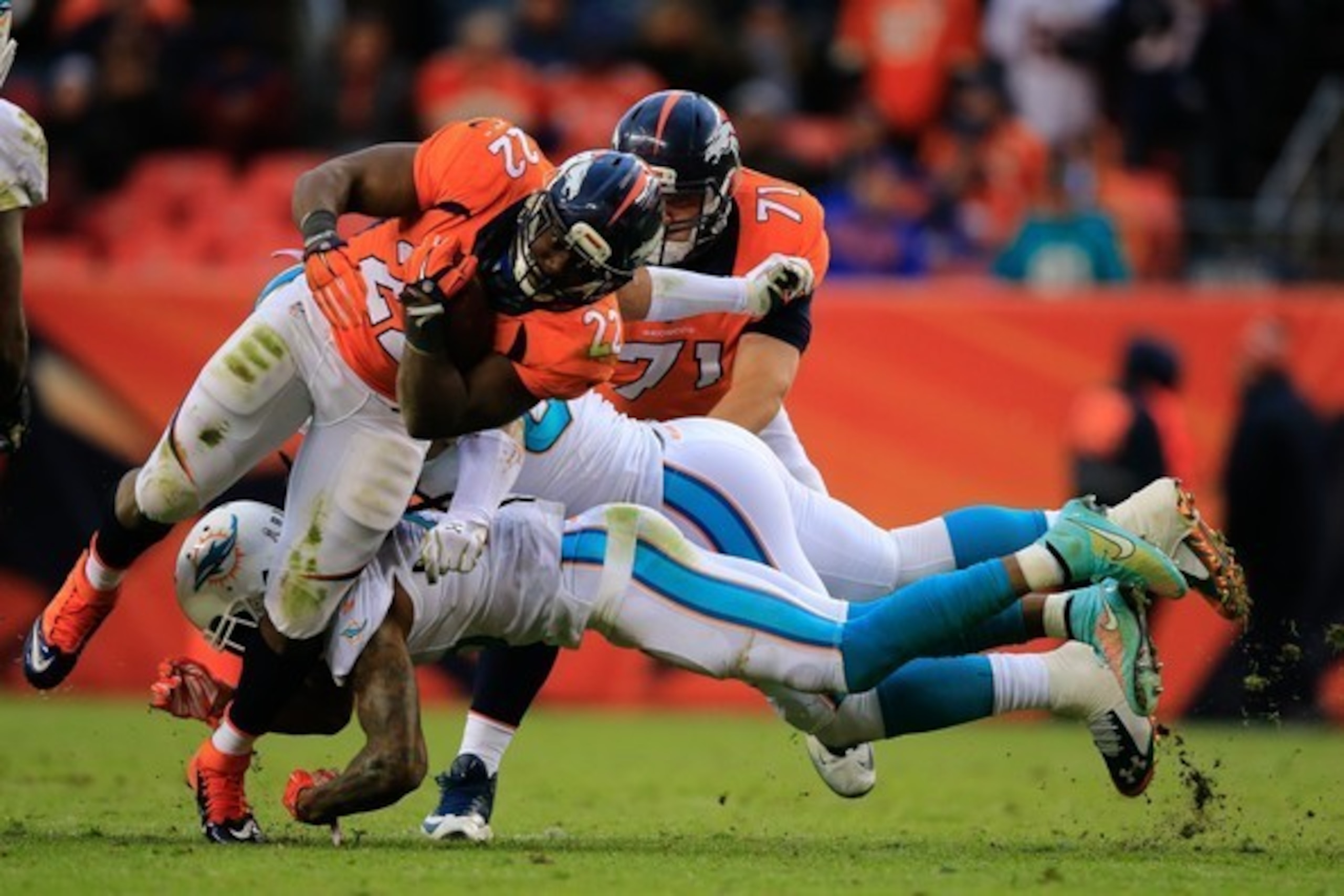
Manning's game is predicated on establishing a rhythm, and averaging five passes a quarter in a Peyton Manning-led offense simply isn't going to cut it. Against Miami, the Broncos were able to achieve perfect balance, and it resulted in a lethal offensive effort.
Denver doesn't need to exactly replicate a performance that saw Manning achieve an 80 percent completion percentage and four touchdowns to go along with a 200-yard rushing day. The chances of that happening are unlikely.
However, if it can look at the game film and discern an approach that gives the offense more balance while maintaining its defensive stability, that would leave it well-positioned for a deep postseason run.
Last year, the Broncos had the luxury of home-field advantage throughout the playoffs. This year, their road to redemption most likely goes through Foxborough. In Manning's time with Denver, the Broncos have lost all three games they've played in New England and in every conceivable fashion.
No one will remember that if they win the fourth.

.jpg?w=2560 "Raiders Saints Football")




.jpg?w=2560 "WWE Raw Live Grades 🔠")