Why Evaluating Rajon Rondo's Worth Has to Go Beyond the Box Score
Rajon Rondo is the most perplexing star in the NBA and will continue to be so until age naturally diminishes his relevance, or he suddenly retires to open the world's first 24-hour Connect Four dojo. Whichever happens first.
On Thursday, he was finally traded from the Boston Celtics to the Dallas Mavericks. That's seismic NBA news, and now is as good a time as any to analyze how the four-time All-Star has played so far this season, and why it's so hard to quantify his value with statistics.
Rondo is both talented and unique in a way where the latter tends to tarnish the former. He's a point guard who doesn't score or threaten the defense from behind the three-point line. But he makes life easier for teammates, puts them in situations to succeed and makes them better.
TOP NEWS

Pic of LeBron's Helicopter Commute 🚁

Duren Calls Out 'False' Rumors

NBA Power Rankings Entering Preseason 🔢

This season, Rondo is attempting just 14 shots per 100 possessions, which is scarce even for him. His usage percentage is the lowest its been since his rookie season, and his turnover rate is a career high. That isn’t a hopeful correlation. While on the Celtics—the seventh-youngest team in the league—he was surrounded by half a roster that barely cut its teeth in the NBA.
Despite averaging more drives per game than Stephen Curry, Kobe Bryant, Jimmy Butler and Derrick Rose, per SportVU, he still needed to be more aggressive with the ball. His situation demanded more action, and he didn't bring it on a nightly basis.
The turnovers are as excusable as turnovers can be for anyone who has the ball as often as he does, but it’s hard to absolve Rondo for taking only three shots in a one-point loss against the Washington Wizards, a six-point loss to the New York Knicks or in an 18-point win over the Philadelphia 76ers.
This play encapsulates how Rondo’s selflessness hurt the Celtics nearly as often as it helped:

Coming off a stagger screen, Rondo has plenty of space to either pull up for a jumper or attack a backpedaling Nikola Vucevic (who recently signed a shoe deal with “cement”) off the dribble. Instead, he blindly throws a pass out of bounds.
He’s still ignoring open shots, hovering around the perimeter and rarely putting pressure on the defense. Despite possessing basketball intelligence that's borderline unparalleled, forcing the issue is not Rondo's thing, even when the issue is in need of a shove. Perhaps it's because he’s no longer talented enough to do so, but there are too many nights where Rondo holds the game’s tempo in the palm of his hand to permanently dismiss his control. There should still be plenty of good years left.
Rondo isn’t on par with Curry, Russell Westbrook or a slew of other point guards right now, but the way he impacts the game is also wildly different. While his porous true shooting percentage is surely a worry, he’s never functioned as a point-maker and never will. Labeling him as an inconsistent, inefficient scorer is true, but it tends to overlook every other skill he brings to the table.

I wrote about Rondo’s incredible rebounding about one month ago. Since then, his averages have fallen back to Earth, but he’s still the top rebounding guard in the entire league. Nobody his size or smaller has ever averaged at least 7.5 rebounds per game for an entire season. What he’s doing on the glass is extremely impressive, and when he snatches an opponent’s missed shot and bursts up the floor, good things usually happen.
Those numbers will go down in Dallas—now that Rondo is responsible for defending the opponent's point guard on a full-time basis—but in the playoffs he could be unleashed as a not-so-secret weapon when the Mavericks go small.
Where Rondo is most useful, of course, is as a passer. Nobody in the NBA is better. Rondo leads all players in assists per game and points created by an assist per 48 minutes. He’s second only to Ty Lawson in assist opportunities—Lawson averages nearly six more minutes per game and leads Rondo by only 0.8.
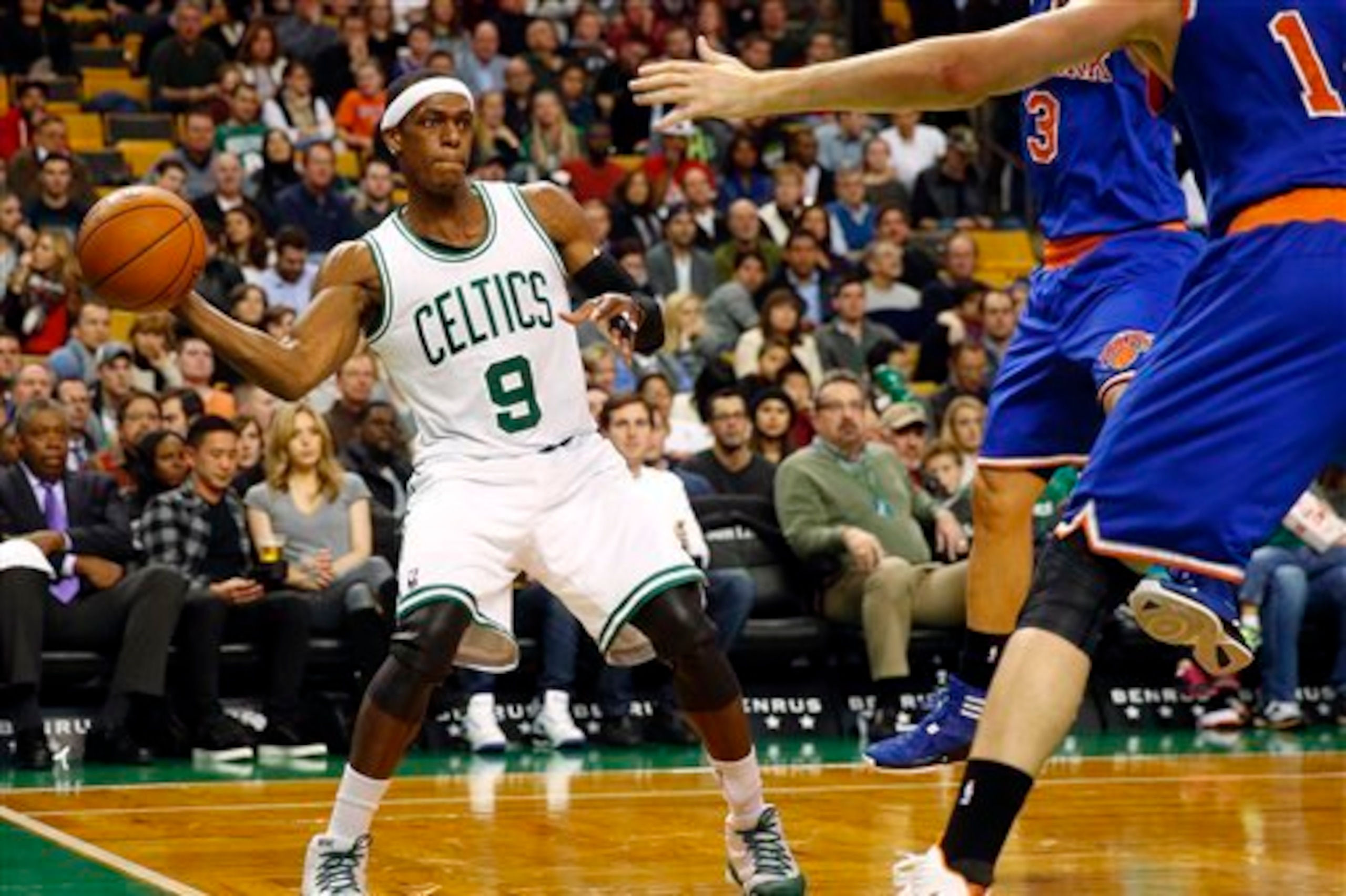
Generally speaking, nobody enjoys passing the ball more. That’s a good thing, right? A few, not all, of his teammates certainly think so. With Rondo on the floor, Tyler Zeller is shooting a scintillating 68.2 percent, as opposed to 50 percent in the 120 minutes he’s by himself, per NBA.com/Stats (subscription required). Rondo sets him up all over the place with open mid-range shots and simple layups. He feeds him in transition and with tricky bounce passes that thread through tight holes in the paint.
The same goes for Jeff Green, who so far this season made 47.8 percent of his field-goal attempts with Rondo by his side, and just 39.4 percent with Rondo on the bench. Rondo fed Green on the break, set him up with open looks behind the three-point line and hit him in the post whenever there was a mismatch.
As a whole, the percentage of Boston’s points that came from the mid-range went up when Rondo wasn't playing, and points from the restricted area went down (where the team is also nearly 4.0 percent less accurate). There’s nearly a 6.0 percent gap in the points Boston got from the free-throw line.
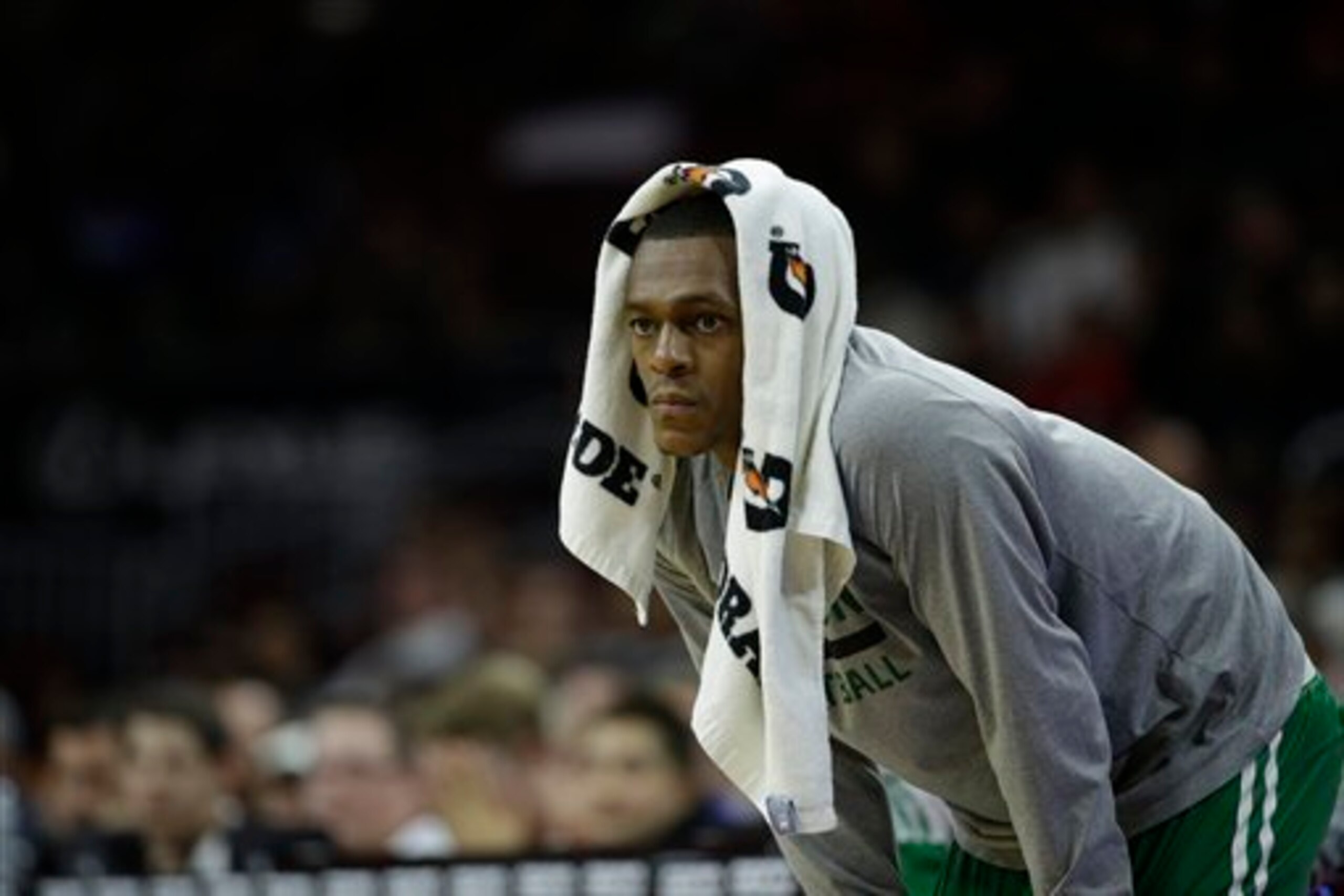
If the sign of a star is he makes those around him better, well, Rondo is second to few. But of course there’s no one marker for superstardom, and deficiencies elsewhere prevent Rondo from having his name thrown around with the league's upper-echelon players.
But thanks to the law of averages, his basic shooting numbers will probably go up—especially from the free-throw line—and his new job description won't be to score. It'll be to get everyone easier looks, rebound and wreak general havoc.
Still, there's no denying his recent struggles, and how evident it's become that context can restrict his production and usefulness. But now that he's back on a championship contender, with some of the league's most threatening weapons at his disposal, it's safe to predict Rondo's re-transformation into an unstoppable monster.
Rondo infuriates and amazes at an incalculable rate. In Boston, his responsibilities did in fact include putting the ball in the hole at an efficient rate, and in 25 games he couldn't do it. But he's only 28 years old and with the Mavericks, once again fighting for a title. Even though his scenery has changed, Rondo's unique ability to positively impact a basketball game never will. Measuring his worth is impossible, regardless of where he plays. But enjoying his work is oh so very easy. Unless you're on the other team.
All statistics are courtesy of Basketball-Reference.com or NBA.com, unless otherwise noted.
Michael Pina is an NBA writer who's been published at Bleacher Report, Sports on Earth, Fox Sports, Grantland and a few other special places. Follow him on Twitter @MichaelVPina.
.jpg?w=2560 "OBJ Calls Out Giants After Release")