
Biggest Early-Season Storylines for the Utah Jazz
If there was a single storyline of the 2014-15 Utah Jazz, and it was categorized into one genre, it would likely be a tragedy. But it's still the first act, and there are multiple threads heading in a brighter direction.
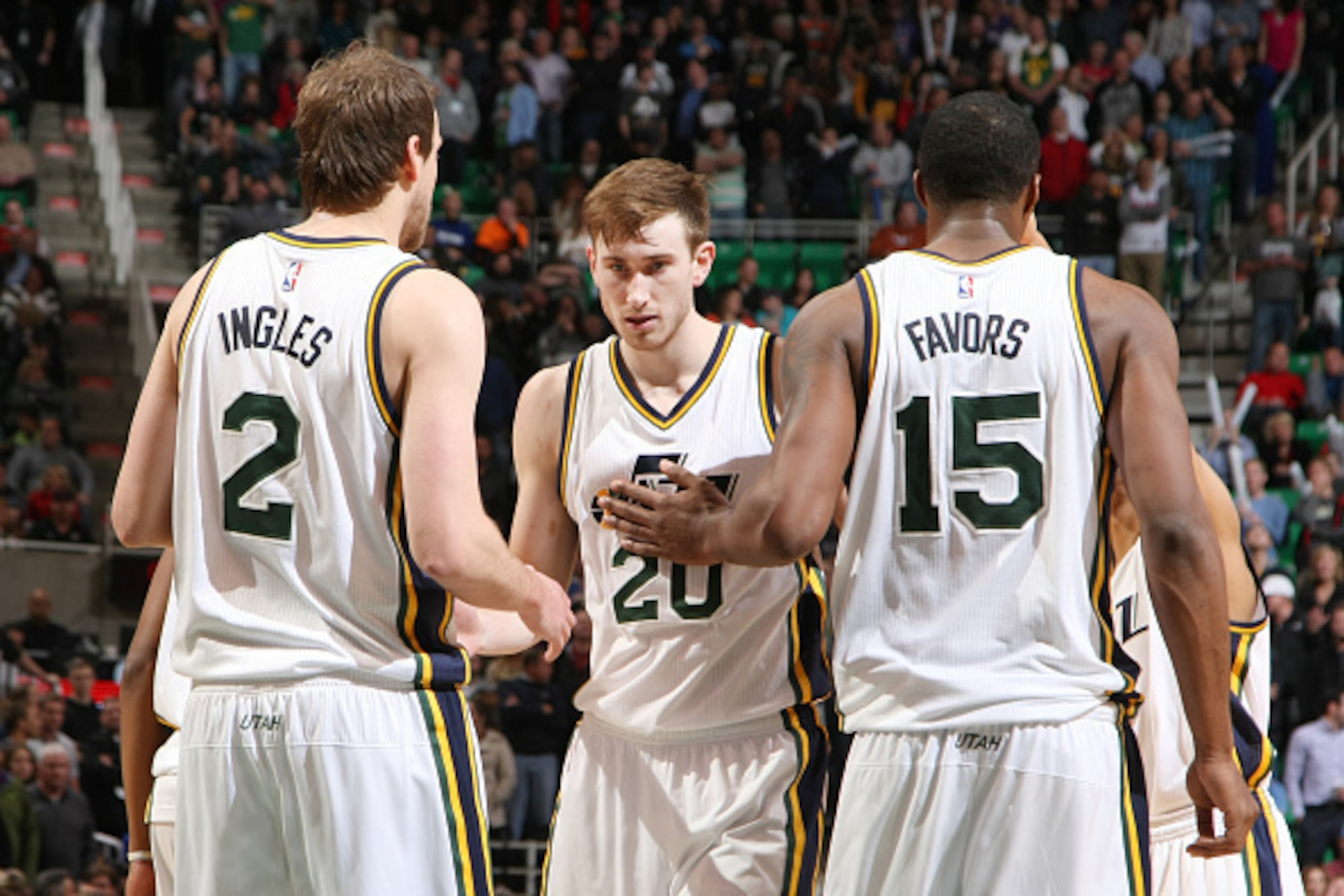
Some of the biggest characters include first-time head coach Quin Snyder, budding stars Gordon Hayward and Derrick Favors, scapegoats Enes Kanter and Trey Burke and unproven talents Dante Exum and Rudy Gobert.
All have captured the attention of various outlets of local and national media at different times throughout the first quarter of the season. All still have plenty of time to change the narrative surrounding them, for better or worse.
Youth Movement
1 of 5
Over the last two offseasons, the Jazz have let every notable veteran on the roster walk in free agency. In 2013, it was Al Jefferson and Paul Millsap. This past summer, it was Richard Jefferson and Marvin Williams.
That left the Jazz with a roster full of players on their first or second NBA contracts. As it stands right now, Utah is the second-youngest team in the league, with the average age of the players at 24.1. That's younger than the D-III college I played for.
Nine of Utah's 10 rotation players were selected with first-round picks from the drafts between 2010 and 2014. Each has unique skills and loads of potential.
With youth comes inexperience, though. At times, Exum and Gobert look light-years away from understanding how to play offense in the NBA. But when they flash their physical potential, it's impossible to ignore.
On the other end, where it's often effort and athleticism as much as understanding, both are already contributing. Tony Jones of The Salt Lake Tribune tweeted, "Once Dante Exum and Rudy Gobert mature, they are going to be so good defensively"
It's the natural talent they already possess that makes their defensive ceilings so high. If your defense is led by an explosive point guard with a 6'9.5" wingspan and anchored by a bouncy center with a 7'8.5" wingspan, you're going to bother a ton of offenses.
Even without a great feel of how to defend—rotations, switches, hedging, etc.—both are already among Utah's best defenders.
The Jazz are 29th in the NBA in defensive rating, giving up 109.6 points per 100 possessions. But it's a different story when one or both of the youngsters are in the game.
Exum and Gobert each have personal defensive ratings of 101.4, meaning that's the amount of points Utah allows when they play. If the team rating was at 101.4, it'd have the ninth-best defense in the league.
Whatever they lack on offense, it's likely not enough to keep them off the floor. Utah's biggest problem is on the other end, and both of these guys can help.
In the short term, while both adapt to the league and grow into their offensive abilities, Utah could take on a similar identity to the Memphis Grizzlies when they first entered their Grit-n-Grind era.
Rely on the defense now, and hope the roster develops talent and continuity on offense over the coming years.
Gordon Hayward and Derrick Favors Are for Real
2 of 5
While Utah works to develop Exum and Gobert, it can rely on a pair of 2010 draftees to lead the team. Hayward and Favors have both proved more than capable.
In a piece penned by ESPN's Kevin Pelton, David Thorpe and Amin Elhassan, Favors and Hayward were listed as the 11th- and 12th-best players in the NBA under the age of 25.
The criteria for the list (subscription required) was simple:
"To be clear: This is a ranking of how we would order these players if we were starting a franchise and would have them for the next several years, not just this season. The overall rankings are based on an aggregate average of the individual rankings of our trio of NBA experts, Amin Elhassan, Kevin Pelton and David Thorpe.
"
Utah has essentially done just that, rebooting this franchise with Hayward and Favors as the two critical pieces of the core already in place. Both are in the first year of four-year deals and are proving to be worth the money.
Favors is currently 15th in the league in player efficiency rating at 22.9. He's become a reliable option in short pick-and-rolls with Hayward or Burke, thanks in large part to a significantly improved mid-range shot. He's at 47.8 percent when he shoots from 10-16 feet, up from 37 percent a year ago.
As for Hayward, he's averaging 18.9 points, 5.4 rebounds and 3.9 assists while shooting 35.6 percent from three-point range. Blake Griffin is the only other player in the league who can claim such numbers, and he's only attempted 10 threes this season. That helps give Hayward the edge in true shooting percentage, 57.7 to 55.7.
| Gordon Hayward | 35.3 | 4.6 | 5.4 | 3.9 | 18.9 | .356 |
| Blake Griffin | 34.3 | 0.5 | 7.7 | 4.0 | 23.7 | .600 |
Hayward and Favors both have another year or two of development before they hit their peak, which should be right around the same time Exum and Gobert are on the verge of their breakouts.
If it reaches its potential, that core—with the addition of Alec Burks and a few role players—could be dangerous.
New System
3 of 5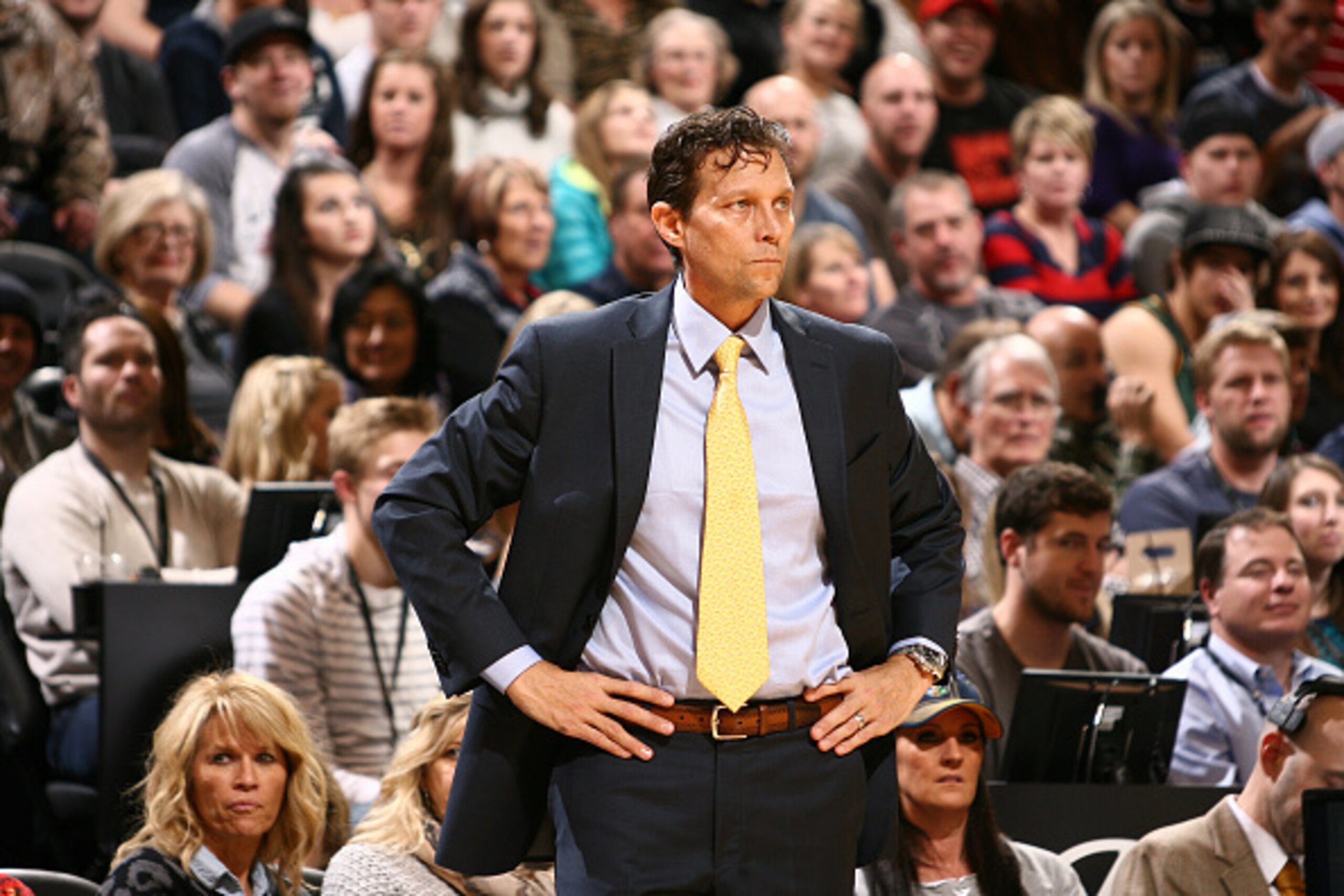
Thanks in large part to Gregg Popovich and the San Antonio Spurs, free-flowing offenses with loads of ball movement are all the rage in the NBA right now.
Snyder got to experience it firsthand as the head coach of San Antonio's D-League affiliate, the Austin Toros. He also helped implement it for the Atlanta Hawks as an assistant to Mike Budenholzer. Now, he's bringing the "flow" to Utah.
There are a few indicators of how the players are adapting to the new system. One positive is that the Jazz lead the league in passes per game by a wide margin. Their 377.7 passes blows the No. 2 New York Knicks' 362.4 out of the water.
The other side of the coin, though, is that the young players often pass too much. Utah's 28th in the league in pace, averaging 93 possessions per 48 minutes. With the ball being flung all over the floor, some of those possessions are simply taking too long.
Players are often passing up good shots, looking for a great one that never comes. It's gotten them into a lot of late shot-clock situations that have led to tough looks.
They also fall into old habits occasionally, reverting back to traditional ways of playing offense. Jody Genessy of the Deseret News shared an interesting tidbit on that from Snyder, who was responding to a question about offensive efficiency:
"So the results of our offense, even with our offensive efficiency being high, I'm focused on the fact that we tried to post Fav up in the middle of the game in a matchup situation, which I want him to get the ball in flow."
When Favors does in fact get the ball "in flow," he's been dynamic. When he catches it around 10-15 feet from the rim, often while already on the move, he's shown the ability to stop and nail a 15-footer or finish his cut, where he's shooting 77.4 percent within three feet of the hoop.
As the young players continue to develop and gain continuity within the new, wide-open system, everyone will be more willing and able to read each other and defenses, with the ultimate goal of looking like the Spurs, Hawks or Dallas Mavericks on offense.



Growing Pains and Losing Streaks
4 of 5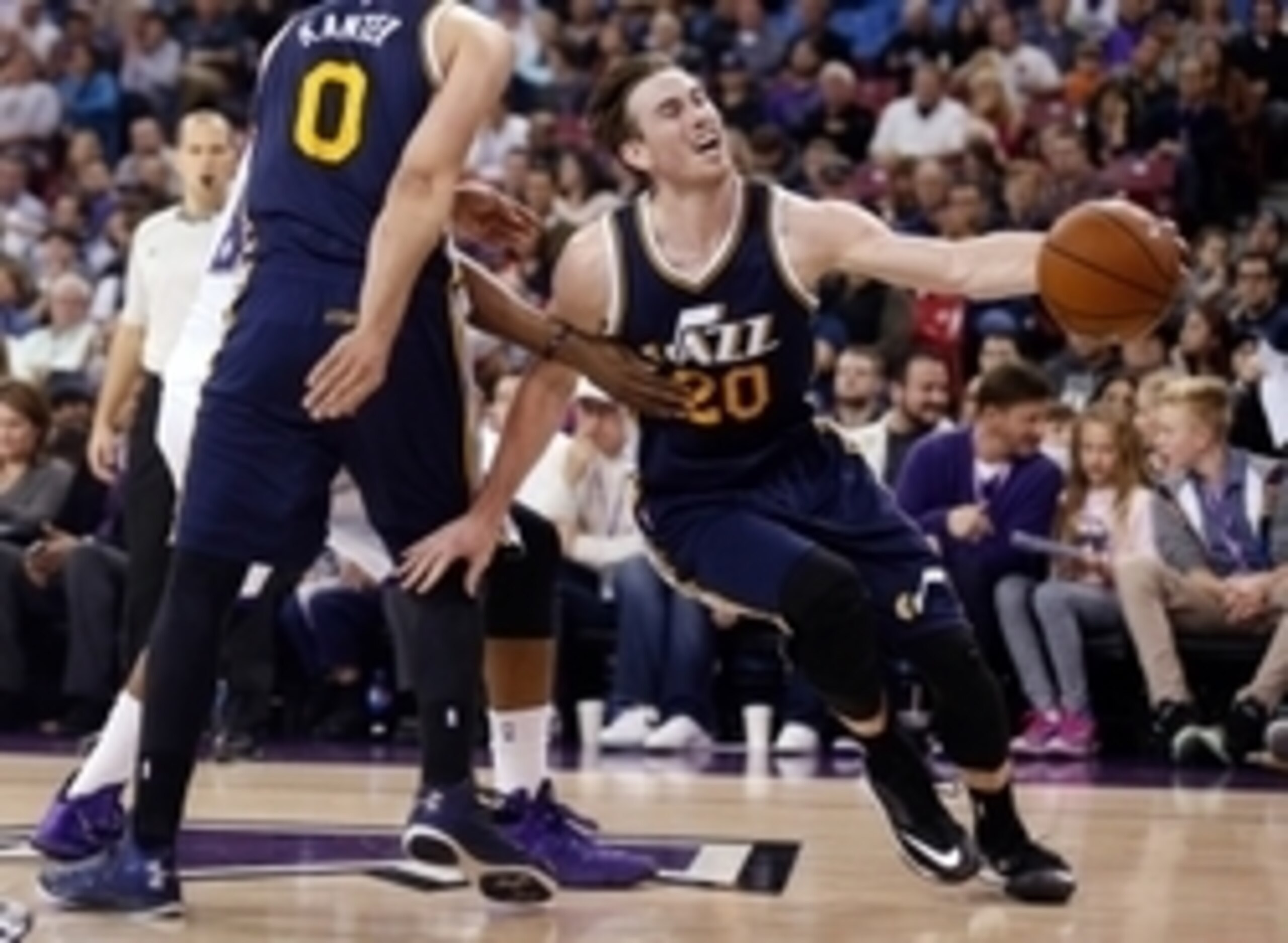
There may be plenty of excitement surrounding Snyder, Hayward, Favors, Gobert and Exum, but the losses are still piling up. And losing is not fun for the players or the fans.
In the midst of a recent nine-game losing streak, Salt City Hoops' Dan Clayton took to Twitter to talk fans hungry for trades off the ledge, saying, "The worst thing the Jazz could do right now is get a weak stomach for the process and try to skip ahead. Find the answers."
He later added, "Nine straight sucks, but what would suck worse is an itchy-trigger-finger move that erases the patience we've had to date."
There may not be another losing streak that long on the horizon, but this will almost certainly be another sub-.500 season. Patience will be crucial for everyone involved. With so many young players who've yet to prove who or what exactly they are at this level, there's no reason to rush a deal.
Enes Kanter and Trey Burke's Defensive Struggles
5 of 5
Which brings me to Kanter and Burke, who are the two most often thrown into ESPN's Trade Machine by anxious Jazz fans.
As previously noted, Utah's defense is its biggest problem, and those two are the primary culprits.
Following the Jazz loss to the Denver Nuggets, Grantland's Zach Lowe shared what most NBA teams seem to have already discovered: "Putting Burke/Kanter combo in a pick-and-roll just kills Jazz."
In his weekly column, Lowe added, "Enes Kanter is bad at just about every part of defense."
Salt City Hoops' Jimbo Rudding tweeted, "I like Trey Burke, but I'd like him even more if he didn't play defense behind his guy all the time."
Follow Jazz writers and fans on Twitter during any game, and you're likely to hear a lot of those same sentiments, though generally in much meaner terms.
Long story short, both players suffer on the defensive end due to physical limitations.
Burke is generously listed at 6'0" in a league where point guards seem to be getting bigger all the time. Most point guards can just muscle their way through Burke on the rare occasions they don't beat him on their first move.
Then there's Kanter, who is a natural center with heavy feet that's being asked to chase nimble power forwards all over the floor. He simply can't keep up with the smaller power forwards most teams have. But you can't simply swap him with Favors, or you give up rim protection.
And as Lowe stated, when teams force those two to come together, things really fall apart. Neither seems to know whether to help and recover or stay with his man. Both are typically in no man's land before the pick is even set, allowing the opposing point guard to attack seams, or more accurately, gaping crevices.
Those issues are reflected in the individual defensive ratings of the two. When Burke's on the floor, Utah's opponents are scoring 114.4 points per 100 possessions. For Kanter, that number is 113.5.
The Los Angeles Lakers have the worst defense in the league, and they're giving up 111.4 points per 100 possessions. Think about that for a minute. Through a quarter of the season, those two players are worse defensively than the dead-last Lakers.
Now might be a good time for me to remind you that Exum and Gobert's defensive ratings are both at 101.4. Granted, they're spending more time against second-unit players, but give it the eye test and you'll quickly see which duo is better equipped physically for defense.
That doesn't necessarily mean a lineup change has to be made now, but if defense remains the biggest reason for losses, the coaching staff will at least have to entertain playing with the rotation.
If and when they do, the overarching storyline of the 2014-15 Jazz could make a very compelling shift.
Unless otherwise noted, all stats and salary figures are courtesy of NBA.com and Basketball-Reference.com and are current as of Dec. 11, 2014.
Andy Bailey covers the NBA for Bleacher Report. Follow him @AndrewDBailey.
.jpg?w=2560 "NFL investigating referee after viral exchange with player")
.jpg?w=2560 "OBJ Calls Out Giants After Release")