Nets or Knicks: Which New York Franchise Is in Bigger Trouble Right Now?
It has a hardwood history unrivaled in both names and places. It has the glitz and the glam and the million-dollar fans. It boasts the brightest lights and wields the mightiest media slights. It has turned as many bums to heroes as the other way around.
New York City has, in more ways than can be counted, a leg up on just about every other major sports city.
What it doesn’t have—between the cash-buried Brooklyn Nets and the long-noxious New York Knicks—are good NBA teams.
TOP NEWS

Duren Calls Out 'False' Rumors

Pic of LeBron's Helicopter Commute 🚁

NBA Power Rankings Entering Preseason 🔢
So which of the two is in bigger trouble?
The devil, for all the nooks he’s known within these two forlorn franchises, is squarely in the details.
Zen and the Art of Triangle Maintenance

Most everyone knew the Knicks would have a tough row to hoe, even if the baseline goal—merely making the Eastern Conference playoffs—seemed like low-hanging fruit.
One month and 15 losses later, the Phil Jackson regime is fast finding out just how steep this road to redemption will be.
Locking down Carmelo Anthony—a stated goal of Jackson’s as far back as his inaugural press conference—was certainly a solid start. It’s the roster’s rounding out that’ll prove the more potent challenge.
The good news: After shedding the onerous contracts of Amar’e Stoudemire and Andrea Bargnani next summer, the Knicks could have close to $30 million in cap space.
Big names are already leaving the woodwork, with Marc Gasol and Tobias Harris being just two of a slew of targets Jackson is expected to pursue, according to Marc Berman of the New York Post.
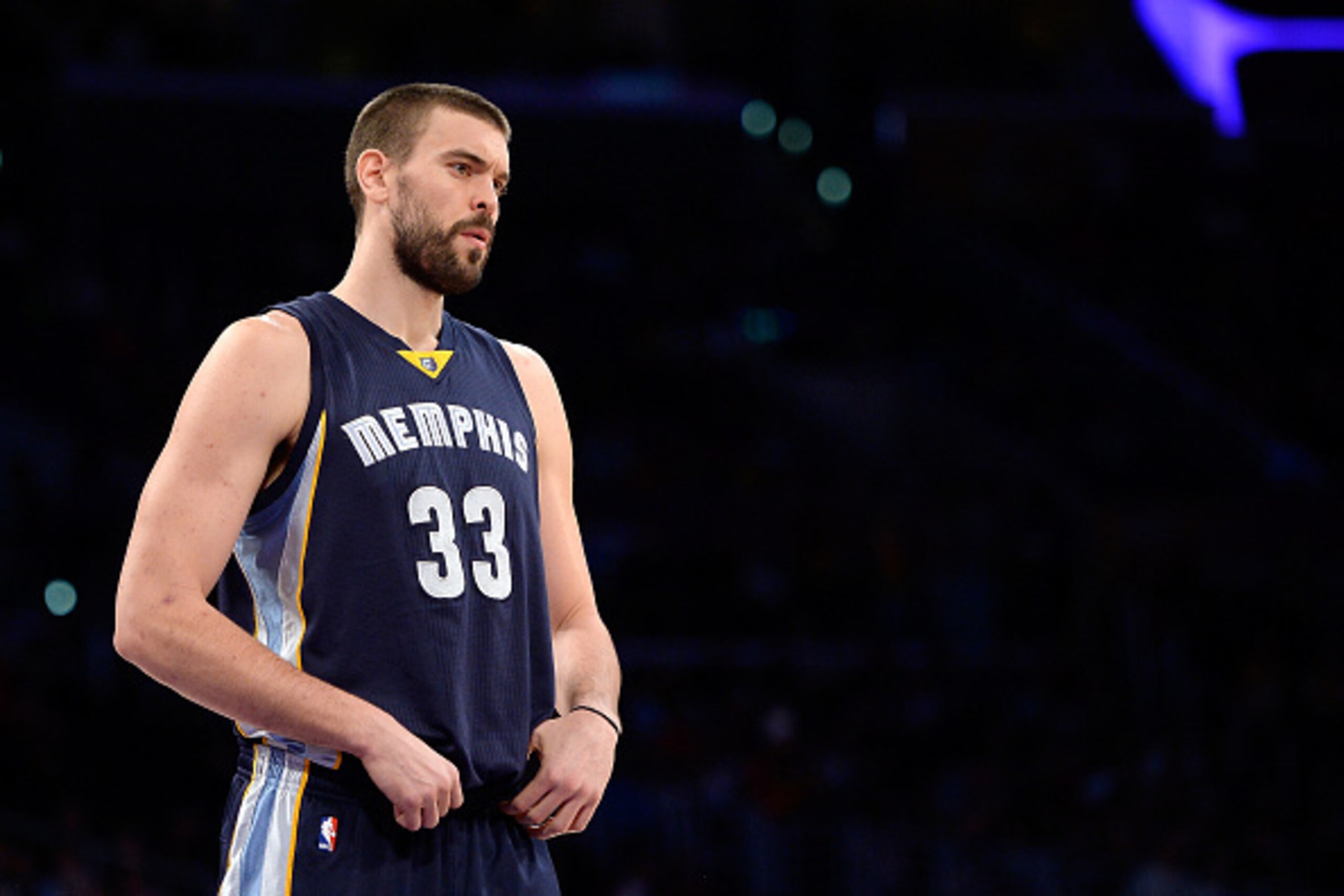
Decades of drear aside, the Knicks remain an attractive free-agent destination. Chalk it up to the glamorous bona fides of the city itself, as well as the wealth of wisdom and wares wielded by their newly anointed Zen president.
But there’s another, more fundamental impediment to New York’s would-be renaissance: the viability of the triangle offense itself.
Shortly after Jackson’s hiring, Knickerblogger’s Taylor Armosino took a deep dive into the philosophical push and pull behind the system Jackson made famous:
"Another concern with the triangle pertains to shot selection. Because it mainly operates out of the post—another name for the system is the 'triple post'—it does generate a lot of mid-range jump shots. With the evolution and increased use of analytics, offenses today are shooting fewer long twos and instead are focusing on three-point shots and securing points at the rim. As defenses have adjusted to encourage offenses to shoot from the mid-range area, long twos are shots that draw a groan from more analytical thinkers.
"
For his part, Jackson has been reluctant to levy the term "triangle" specifically, opting instead for a more nuanced lexicon.
Which suggests an important, if underreported, break from the gospel of Jackson-as-triangle-dictator: that fundamental adjustments to the system aren’t out of the realm of possibility, so long as the more totemic tenets—unselfishness, quick decisions, moving without the ball—remain strategic staples.
We'll eventually see whether Jackson the jefe can muster the magic Jackson the coach made seem so effortless.
Tumult-torn as the tracks may seem, though, the light at tunnel’s end holds something that Jackson—like any true visionary—ultimately yearns for: a blank slate on which to create.
A Tree Falls in Brooklyn

After decades spent playing sad second fiddle from a tunnel and a town away, the Nets’ exodus to Brooklyn ahead of the 2012-13 season was seen as an ironclad boon, both for the league and the borough itself.
From the start, owner Mikhail Prokhorov’s approach to team building was as bold as it was simple—a campaign of commercial shock and awe designed to turn the Nets into an immediate contender while usurping the hearts and minds of those Knicks fans feeling left behind. Just not enough to prevent fomenting the league’s next great rivalry.
"I heard New York audience they know very good our players now. So, like, it's a great fight between two New York teams," Prokhorov said during a 2013 interview with YES Network’s Sarah Kustok (via Nets Daily). "And I think it's coming, a new Golden Age era of New York basketball. So, I'm just, I'm very, very glad for all the fans. For the Nets and for the Knicks. Truly great rivalry."
A pair of playoff appearances later, Brooklyn’s prospects would seem nothing short of promising.
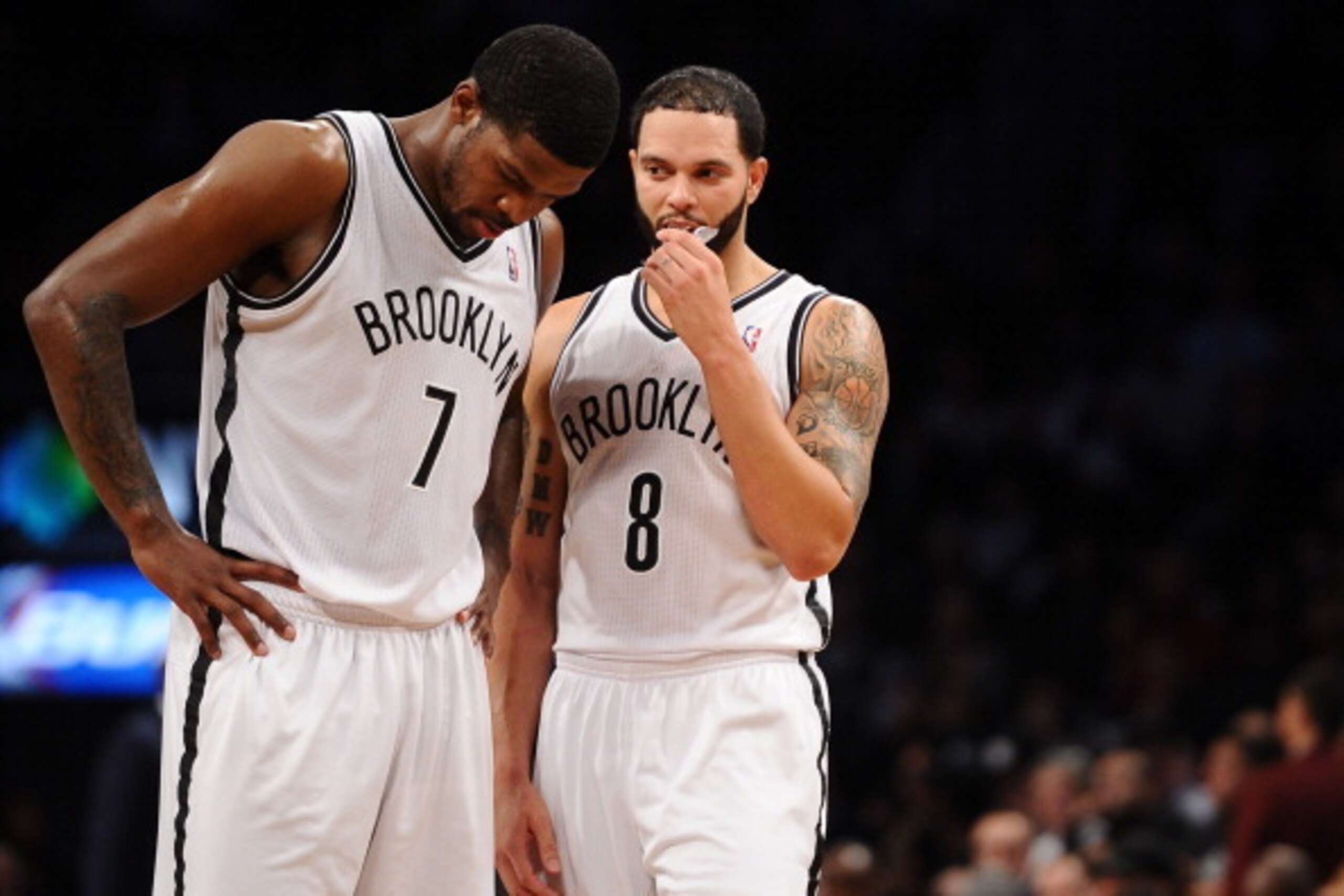
Until, that is, you remember the math. To wit: A $186 million payroll (luxury tax included) for the 2013-14 season, a similarly bank-busting ledger this year and no hope of any real relief until the summer of 2016.
No, Kevin Durant’s concurrent availability isn’t a coincidence.
In the meantime, a weak Eastern Conference will likely allow the Nets to at least save playoff face, regular first-round ousters be damned, with Deron Williams, Joe Johnson and Brook Lopez playing the parts of millionaire martyrs in a billionaire’s string of bad gambles.
Of course, New York’s power of the purse—to say nothing of its enormous media magnetism—doesn’t belong to the Knicks alone. Rooted in righteous digs and buoyed by its black-and-white branding, Brooklyn stands to be a free-agency force for years to come.
The question is whether Prokhorov’s now-nebulous reign can start to heed the hard realities of rebuilding in today’s NBA, where assets and flexibility (the Nets have neither) have replaced stars overpaid (they have many) as the order of the day.
Before the [Blue and Orange] Dawn
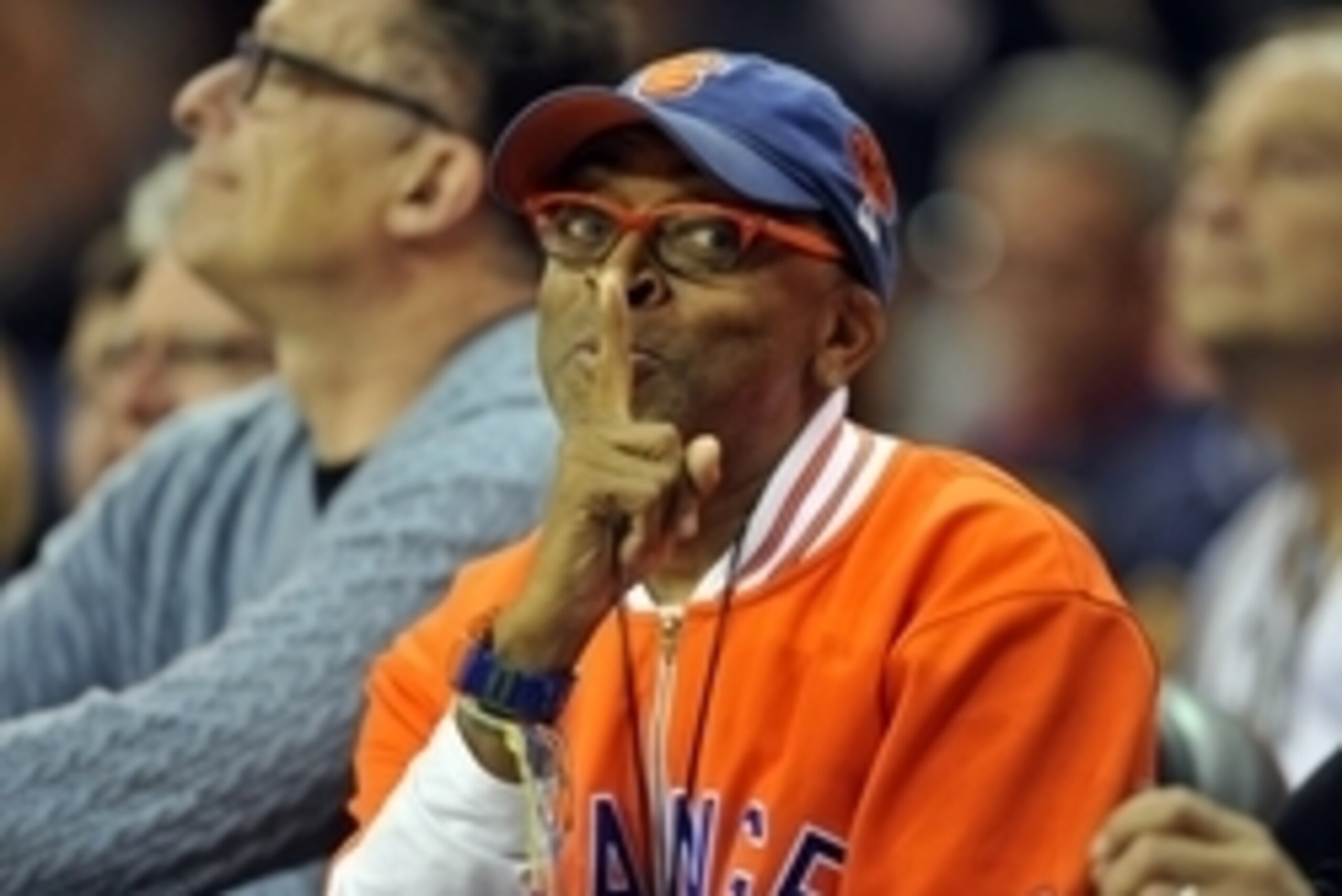
"So yes, Nets fans like myself can gloat all we want about this season’s dominance over our cross-river rivals," CBS New York’s Steve Lichtenstein recently wrote, "but we should be more worried that it will be very short-lived. The future, unfortunately, will likely belong to the Knicks."
This Knicks fan—force-fed failure though I’ve been—couldn’t agree more.
In the short term, New York and Brooklyn stand to occupy disparate rungs on the NBA ladder. The former is simply too shallow, and the latter too loaded with talent (albeit flawed), for the fates to deign otherwise.
The next few years, though, could find the two sides in a big-name slugfest that could boost their mostly nascent rivalry to another level entirely. That is, if the back-and-forth doesn’t break both banks—and both fanbases—first.
In the battle for New York, the Nets have proved themselves much more than a mere pretender in clever costume. The worry's over whether they've blown all their flash one ball too early.
.jpg?w=2560 "NFL investigating referee after viral exchange with player")
.jpg?w=2560 "OBJ Calls Out Giants After Release")