
Cavaliers Still Searching for the Right Combination of Closers Alongside LeBron
WASHINGTON, D.C. — Joe Harris came to Cleveland pure of heart and free of mind. Even prior to the Cavaliers' celebrated infusion of proven talent, the soft-spoken second-round pick from Virginia hadn't been presumptuous enough to set definitive expectations for playing time in his rookie season.
"I was just trying to come in and get better every day, soak up as much as I could from all the veteran guys," Harris said. "I knew I was going to come in and play as hard as I could, every day in practice, every day in our training camp, every preseason game. And then whenever I had an opportunity in the games, whether it was for a minute, for 10, for 20, I was going to try not to make a whole lot of mental mistakes and try as hard as I could."
TOP NEWS
Jaylen Brown Calls Out Tatum 🧢
LeBron on President Trump's Criticism
Report: Knicks to Sign Knecht
So, no, he didn't see Wednesday coming, either.
Down the stretch of a tight game against the defending champion San Antonio Spurs, Harris had an opportunity of unforeseen and rather unbelievable length. The surprise wasn't necessarily that he played 27 minutes; he had logged between 19 and 24 minutes in four appearances since getting his first chance on Nov. 10.
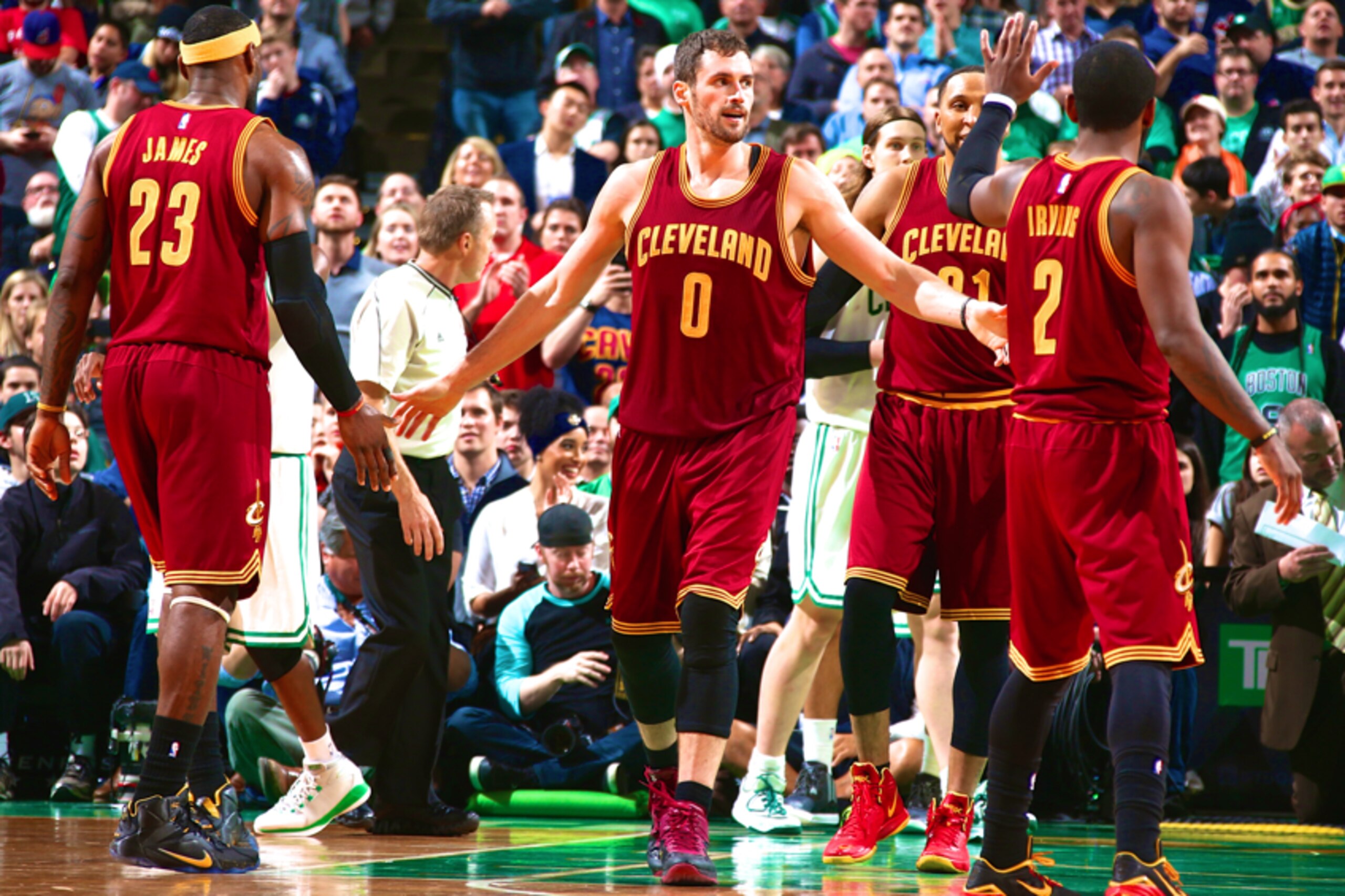
The surprise was that he played all of the final 19 minutes and 28 seconds, from 7:28 left in the third quarter to the final buzzer of a 92-90 loss. That's something that even superstars aren't typically assigned to do, and neither LeBron James nor Kyrie Irving nor Kevin Love did Wednesday. So, while it is a significant feat for Harris to earn the trust of David Blatt so soon, it also suggests that the coach is lacking some confidence in other members of the Cavaliers' supporting cast.
Starting lineups and position designations may not mean much to Blatt, as he has pointed out multiple times, or to many other NBA coaches. But closing lineups in close contests? Those indicate whom the coach believes he can count on.
You knew that the trio of James, Irving and Love would be in the regular quintet, barring injury or disqualification, just as you knew—in Miami from 2010-11 through 2013-14—that James, Dwyane Wade and Chris Bosh would be among the final five.
The trickier part for Erik Spoelstra in Miami then, and Blatt in Cleveland now?
Choosing the other two.
The Miami Heat entered the 2010-11 season touting Mike Miller and Udonis Haslem as part of a closing "Big Five," but neither could stay healthy. That forced Spoelstra to mix and match in late-game situations all season, often at a deficiency at two spots on the floor.
It wasn't until the Eastern Conference Finals against the Chicago Bulls that he could successfully spring his "Big Five." But, even after he did, the Heat didn't stand pat. The next two offseasons, Pat Riley added Shane Battier and Ray Allen, and they typically split the final two spots with Mario Chalmers throughout the rest of the Heat's four-year run.
The Cavaliers will also evolve in terms of their personnel. Their general manager David Griffin has made that quite clear, and he has some assets—such as a trade exception—to achieve some improvement. But, as this season started, it seemed safe to assume that they had enough talent on hand—Anderson Varejao and Tristan Thompson up front, Shawn Marion as a defender, Miller and James Jones as shooters and Dion Waiters as a slasher—to give Blatt an abundance of enticing options.
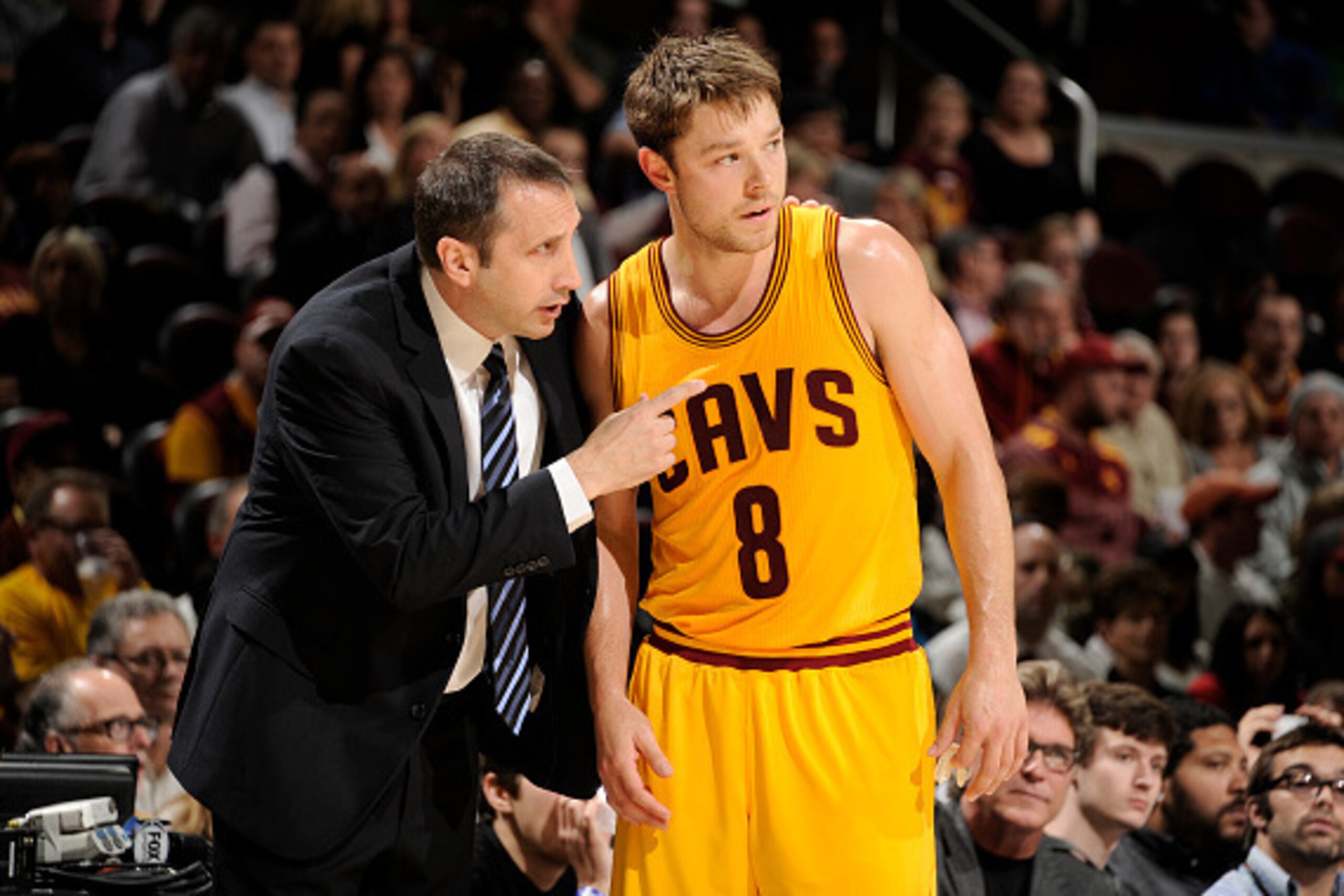
But early on, Blatt as relied heavily on someone much less heralded: Matthew Dellavedova, a second-year guard from Australia by way of St. Mary's University. It was Dellavedova, not Miller, Jones or any of the big men, who got the call for the final 5:22 of the opening night loss to the New York Knicks as part of a three-guard lineup that also included Waiters.
Then Dellavedova played the final 3:22 of regulation, and the entire five minutes of overtime, in a win in Chicago, as Waiters gave way to Thompson as the fifth man in a more physical lineup.
"Good decision-maker," Blatt said of Dellavedova after that win. "Very, very, determined defender. He's the kind of guy who can fit with anybody, any lineup. He just helps the team to function easily and normally without pressure."
Then something happened to increase the pressure on Blatt: Dellavedova hurt his knee in a blowout loss to the Portland Trail Blazers.
With a "significant rotation player" out and Waiters struggling to fit as a starter, Blatt moved Waiters to Dellavedova's backup point guard role and slid Marion into the opening lineup. Still, Miller, Thompson and Varejao got more time than either Marion or Waiters near the end of a two-point loss to the Utah Jazz.

Marion and Waiters did help the Cavaliers' star trio finish off the Nuggets in Denver. Then Harris, in his first NBA game, replaced Miller with 5:35 left and the Cavaliers leading the Pelicans by just three, and helped Cleveland pull away as Thompson got most of the minutes as the fifth man.
Blatt then chose Harris and Marion as the complementary pieces for a comeback one-point win against the Boston Celtics, with Thompson entering in place of Love for the final defensive possession.
Following garbage-time finishes (a win against the Atlanta Hawks, a loss to Denver), Harris was a constant alongside James, Love, Irving (for all but one possession) and Varejao in the competitive struggle against San Antonio. And not just for the final five minutes. He played the final 19:28, as Waiters, Thompson and Marion also got some run.
And while Harris didn't score during that exhausting stint—missing two shots, committing one turnover, recording one assist and getting beat by Manu Ginobili on a critical backdoor play—he didn't embarrass himself either.
So while Blatt's closing lineup is certainly subject to change, his light overall usage of Miller (101 minutes, three made baskets) and his more targeted usage of Waiters (charged with spearheading the second unit) seem to mean that he will be choosing between a fresh face (Harris) and an old head (Marion) on the perimeter, while deploying Varejao or Thompson as the closing big.
Marion, 36, and Harris, 23, are both cheap by NBA standards, combining to make about $2.3 million this season, or roughly what James gets paid for nine games.
The similarities end there, of course.
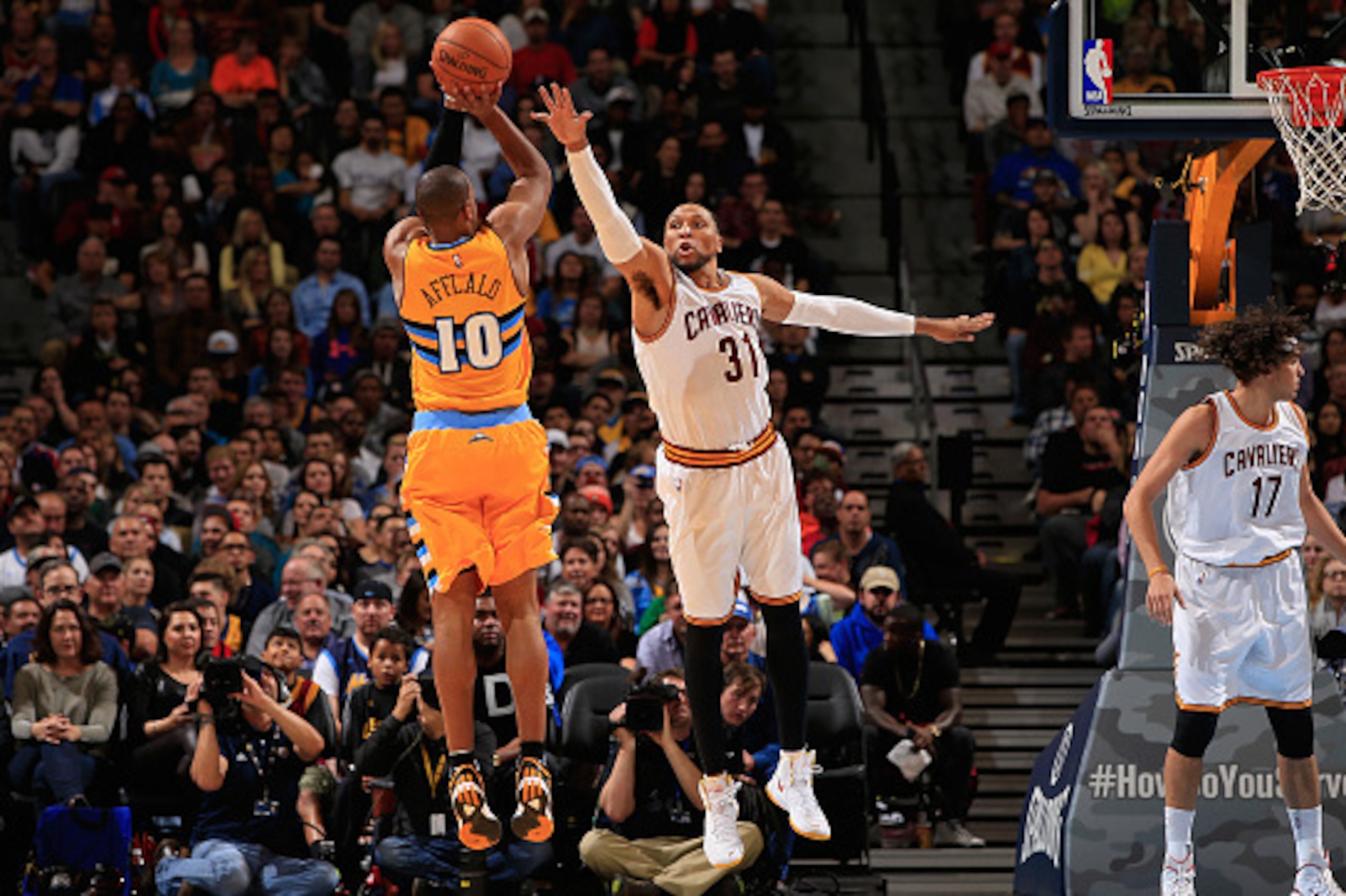
While Marion is not as vertically explosive as in his early years, the UNLV product still has the same long arms and he's refined his defensive technique over time. He illustrated that Wednesday when he cornered and smothered Ginobili, who fell backward and passed into a 24-second violation.
While the four-time All-Star isn't widely regarded as one of the greats of his day, some of the statistics suggest otherwise. Check out his Basketball-Reference page. His closest comparison, in terms of combined offensive and defensive win shares, is Scottie Pippen, with Adrian Dantley, Dominique Wilkins and Paul Pierce among the others on the list.
While he doesn't necessarily believe he's been overlooked, he is proud of his pliability, noting that "everywhere I’ve been I had to change my game." That includes changes during his tenure in Phoenix, before and after the "seven seconds or less" speed-ball era.
"I made my first All-Star Game not playing that way," Marion said. "I've been able to adjust my game throughout my career and be very effective and efficient. I just know how to play the game. I think the game all the time. I anticipate so many different things. That's why I am able to fill up the stat sheet, you know."
He attributes his basketball intelligence partly to his NBA upbringing, playing with Jason Kidd and Penny Hardaway, and learning what was required to compete at their level. And now, at his own advanced NBA age, he knows that stat-stuffing isn't what's required.
"I'm just trying to fill in and do the little intangibles to help us win, you know?" he said.
That means serving as a mentor, the way that older players did for him. Mostly, he's teaming with James to get his new teammates to communicate better, especially on defense.
"It’s huge," Marion said. "We don't talk to each other. That's one of our biggest Achilles' heels. First, we've got to get comfortable with what the system is. And it's coming, slowly but surely. I think we've got to take one game at a time. That's the hardest thing to do. We're great communicators off the floor—everybody laughs and jokes with each other off the court—but as soon as we get on the court, everybody's just quiet with each other. And that can't happen."
Not even in practice.
"We go through shootarounds, [LeBron's] yelling out the pick-and-rolls louder than the bigs are yelling it out," Marion said. "Which is not good. Because he's not guarding the ball. That tells you how much we got to go a little bit further, we got to come along and get comfortable with each other on the floor, and talking and communicating on the floor."
Marion said he'll "yell when it's time," even though he typically goes with the flow. That applies to his career as well. He is on a season-to-season plan now.
"Actually, I don't feel bad at all right now," Marion said. "When you get to this point of your career, you've got to stay in shape. Once it's gone, it's gone. You've got to stay in shape as much as possible."
Harris is at a different point. A native of Washington state, he was a four-year starter at Virginia, averaging 12.6 points, shooting 40.7 percent from three-point range, and earning a reputation as a determined defender and a willing listener.
He exhibited those listening skills at halftime Wednesday, as James, Miller and Jones spent part of the warmup period collectively giving him instruction. They talked about how San Antonio "likes to load up on the strong side," and pointed to places he can get his shots. They again emphasized how he should sprint to the corners on fast breaks to clear space for James and Irving.
"But they were also talking about some of the different defensive rotations and spots that I should have been, stuff that I might have miscommunicated in the first half," Harris said. "They're always talking in my ear. Even before I was even playing any minutes, I would go out and work with James and Mike beforehand, and before and after practices, we would also shoot together as well. They are really good veteran guys, they've been really helpful."
Those guys have been watching, while Harris has helped himself to an occasional spot in the Cavaliers' unexpected but ever-changing final five.


.jpg?w=2560 "Reported Details of Seahawks-K9 Split ⛓️💥")