


LeBron James is not the Miami Heat's missing link.
Losing him to the Cleveland Cavaliers stung. It still stings. There is no upside to parting ways with the NBA's best player—unless the balance of Chris Bosh's bank accounts qualifies as upside. But as soon as he left, the Heat became just like the Association's 28 other James-less teams.
Consider that a testament to their recovery. The Cavaliers wallowed in James' absence for four years, laboring to escape the ubiquitous shadow that proved to be his placeholder.
TOP NEWS
Jaylen Brown Calls Out Tatum 🧢
LeBron on President Trump's Criticism
Knicks Staff Didn't Get Rings 🤔
Different rules immediately applied to the Heat. They steadied their ship following his departure, beginning 2014-15 on a convincing tear that has since subsided. They're 5-5 following their 3-0 start, including a current three-game skid that's seen them drop games to the transitioning Indiana Pacers and Milwaukee Bucks while failing to top 90 points.
Now, as the Heat try to right their course, it's the players they have who are most responsible for the problems at hand—not the one they lost and aren't ever getting back.
Lackluster Defense
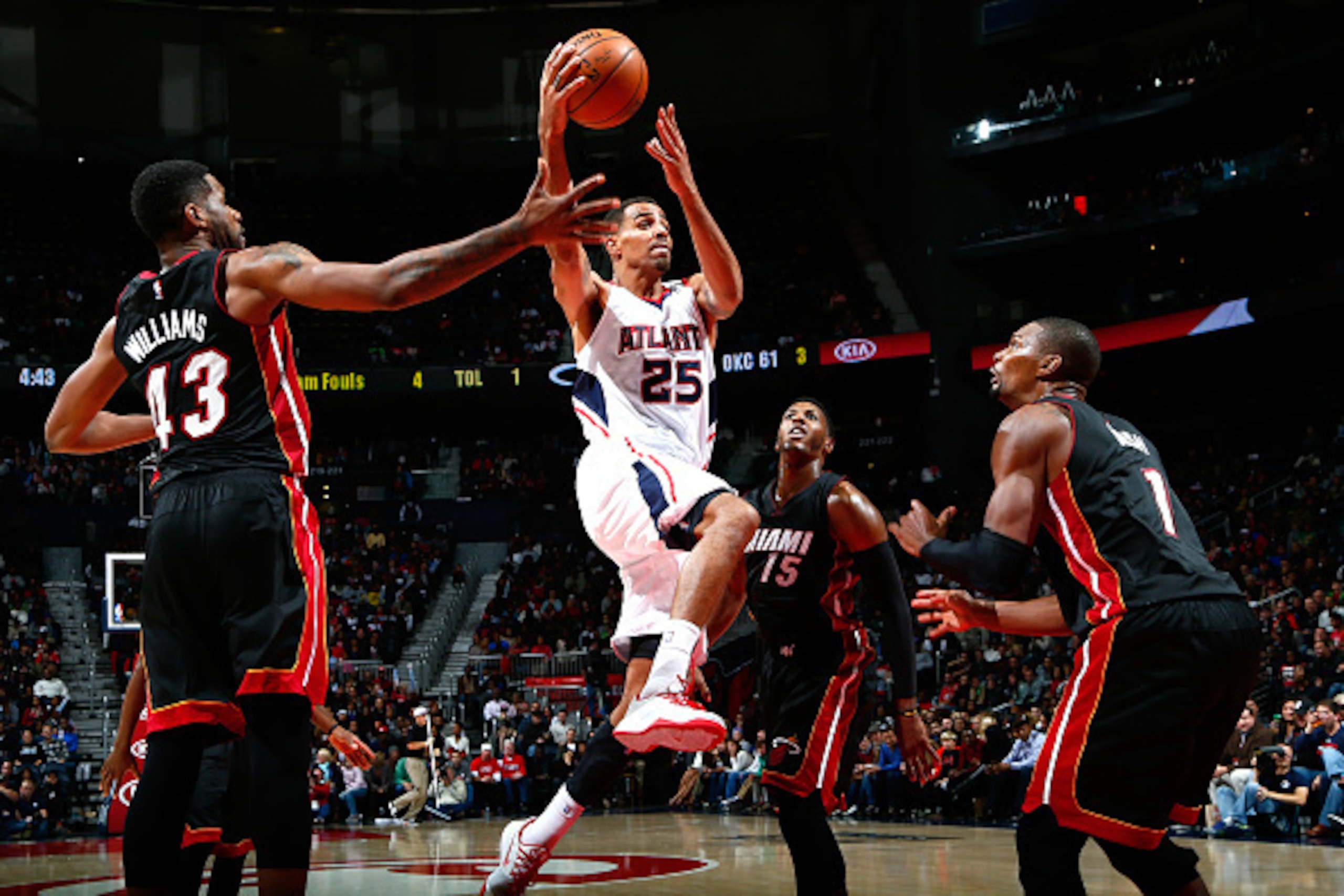
Defense has been at the heart of everything wrong in Miami. The offense has been passable for the most part. They rank 13th in efficiency and continue to get by on the offensive stylings of Bosh, Dwyane Wade, Luol Deng, Mario Chalmers and, surprisingly, Shawne Williams.
Surviving on the defensive end has been a more trying task. They rank 17th in efficiency, which, if it holds, would be their worst defensive showing since 2007-08, when they finished 26th en route to winning just 15 games.
Performances on that end of the floor have been so inconsistent, Bosh was forced to sound the alarm on the heels of Miami's 114-103 loss to the Atlanta Hawks.
"We had too many breakdowns in our coverages," he said, via the Sun Sentinel's Ira Winderman. "I think we guarded the pick-and-roll OK, for the most part. But after they kicked it out, our rotations, we weren't there. It's like we ran out of guys."
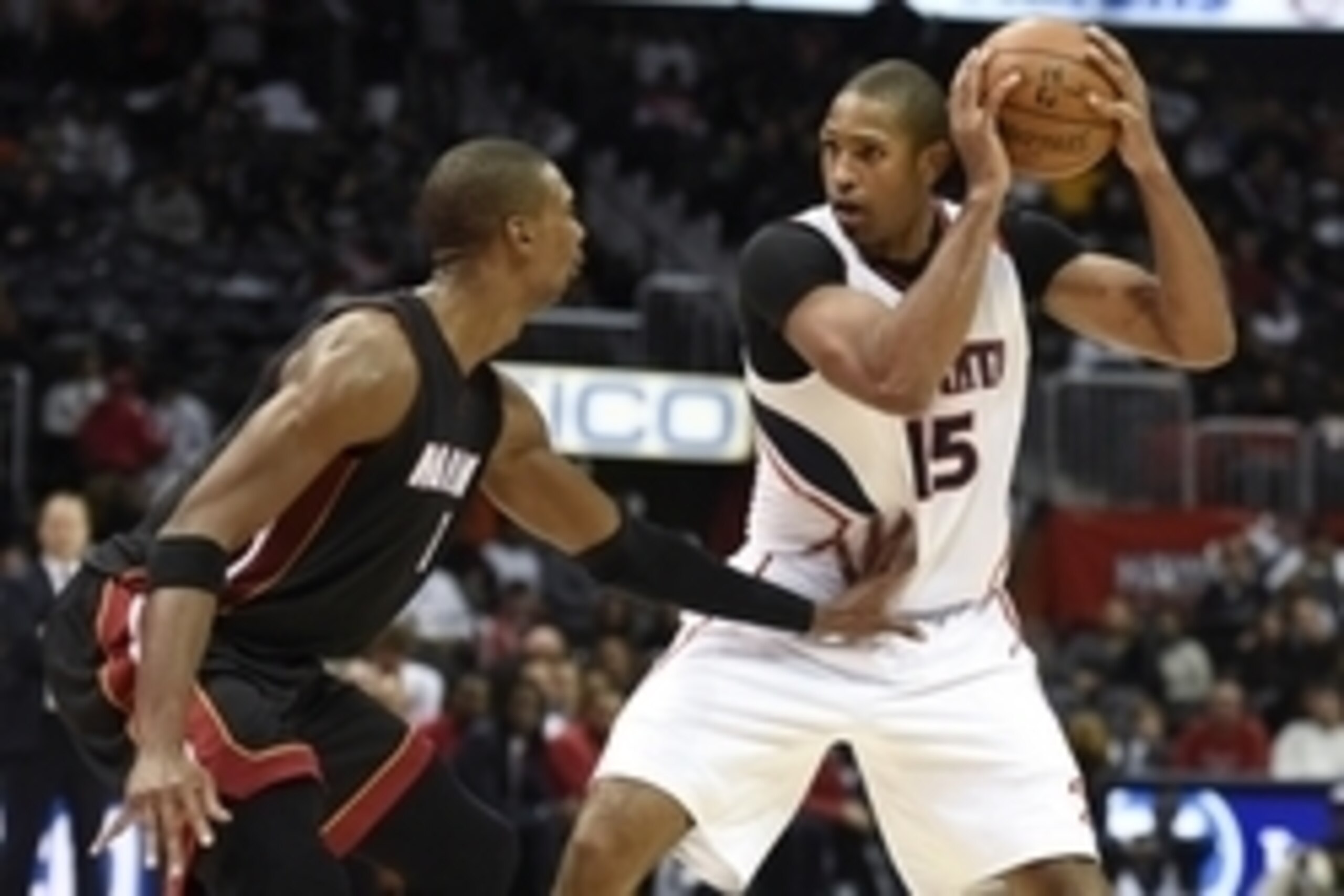
Bosh was spot-on for that game in particular. The Hawks pride themselves on stretching defenses with their rangy lineups and passing-packed offense. They fired away from deep 28 times against Miami and enjoyed a total of 35 uncontested looks at the basket, of which they hit 21.
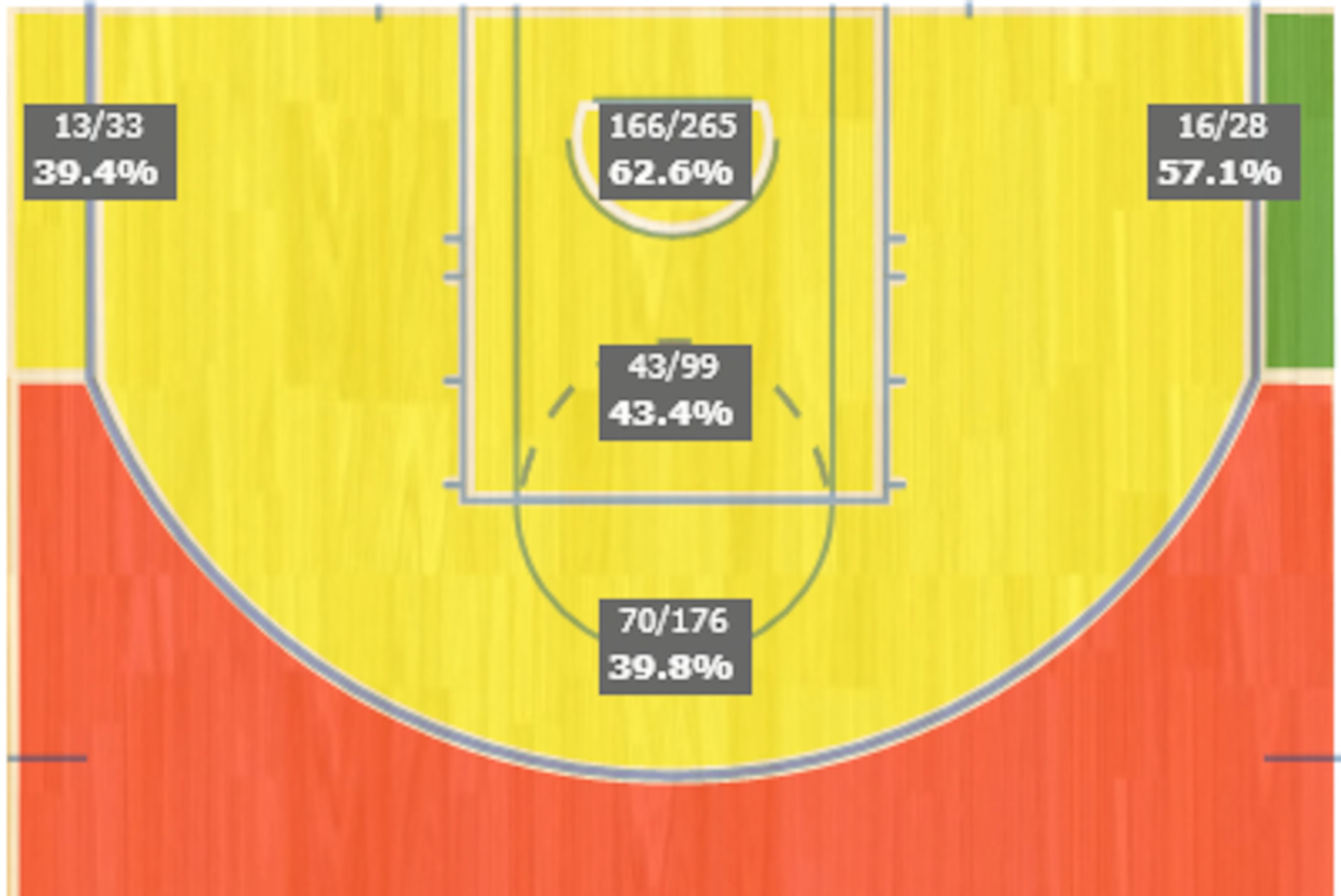
Shooting hasn't been what's killed the Heat, though. They rank in the top 10 of three-point and mid-range defense. Most of their problems lie inside the paint, where they lack a legitimate rim protector.
Opponents are shooting 63.4 percent in the restricted area against them, which ranks 23rd in the league. Offenses are also converting 43.6 percent of their shots in the paint, giving Miami bottom-four protection there.
Rebounding remains an issue as well. The Heat rank dead last in boards collected per game (37) and 28th in rebounding efficiency, which measures the percentage of available rebounds teams grab.
These are not problems James would solve alone. They are, in fact, problems the Heat battled last season, when they ranked in the bottom eight of iron protection and 30th in rebounding. It's the same story now.
Chris Andersen and Bosh are their best—and only—legitimate rim-policers. Neither of them is sending back even one shot per game. Only two players, meanwhile, are grabbing more than five rebounds a night (Bosh and Williams), putting them at a serious disadvantage on both the offense and defensive glass.
“We’re not getting off to good starts defensively, whether it’s the coverages or the man-to-man defenses, they’re blowing by us, we’re not helping each other or we have no weak-side defense,” Bosh said, per the Miami Herald's Joseph Goodman. “It just wasn’t there for the last two games."
Nor will it necessarily be there moving forward.
This team, even after adding a stopper like Deng, has not been gifted the ability to field a top defensive unit. The Heat are small and depend too heavily on perimeter players to prevent dribble penetration and ball movement—just as they did before James even left.
No Depth, Little Chemistry
At the same time, it isn't defense alone that has left the Heat hovering around .500.
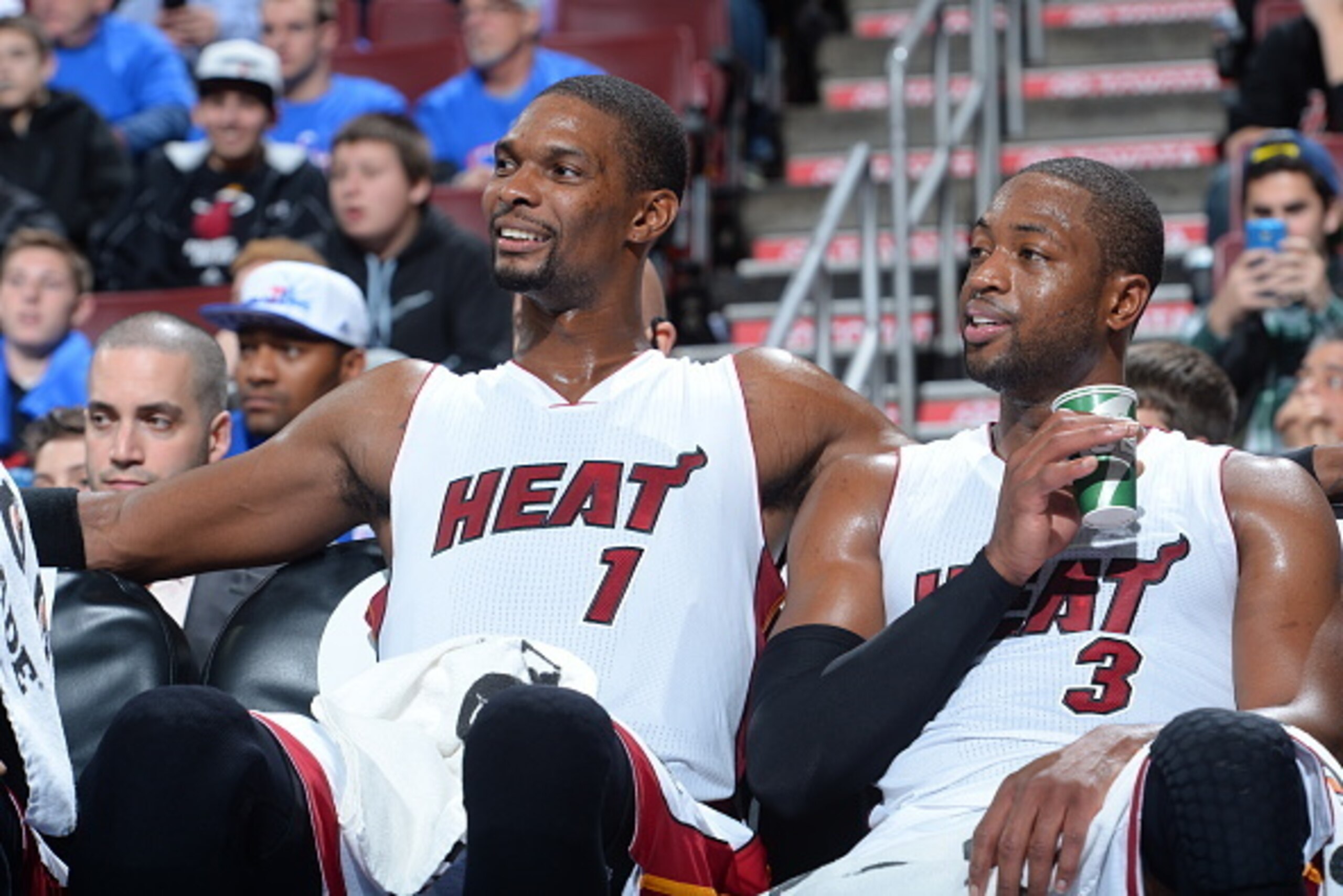
Too much of their offensive livelihood is tied too the health of a few—specifically Wade, who has missed the last two games against Atlanta and Milwaukee. He is their primary playmaker now that James is in Cleveland, and without him, the Heat are susceptible to prolonged stagnancy.
When he's not in the game, they're averaging just 98.8 points per 100 possessions, the equivalent of a bottom-seven offense, according to NBA.com (subscription required). When he's on the floor, however, they're pumping in 110.6 points per 100 possessions, which would rank among the league's top-three point-piling assaults.
Wade's availability has become especially important as it pertains to Bosh's efficiency. The latter is shooting under 40 percent from the field with Wade on the bench, per NBA.com (subscription required). He's hitting just 25 percent (9-of-36) of his field-goal attempts during Wade's two-game absence as well.
Part of that is unavoidable. Defenses have more of an opportunity to double Bosh and force him into more difficult shots with Wade off the floor. But the Heat's offensive (and defensive) unevenness is also the byproduct of a still-shallow roster that lacks chemistry, as Winderman writes:
"The starting point guard used to be the reserve point guard. The former starting point guard is now spending the bulk of his time at shooting guard. The starting shooting guard is temporarily a spectator. The small forward and power forward are new to the system...
...While the Heat's defensive precepts have mostly remained constant from recent seasons, the roster and rotation haven't. Power forward Shawne Williams and small forward Luol Deng are less than 10 games into their Heat tenures. Norris Cole now is the starting point guard, while Mario Chalmers is the reserve shooting guard, perhaps the starting shooting guard, with Dwyane Wade dealing with a strained left hamstring. And offseason free-agent additions Josh McRoberts and Danny Granger are more injured than ambulatory.
"
Chemistry and cohesion are tough—nigh impossible—to forge through inconsistent rotations. The Heat are ill-equipped to handle Wade's required maintenance as it is.
Limited to no availability from key contributors like Danny Granger and Josh McRoberts only weaken a puddle-deep stable of talent. Granger has yet to play in a single game while nursing his hamstring, and McRoberts has sat out the last two losses while tending to a toe injury. There is no exact timetable behind their returns, per CBS Sports. The same goes for Wade.
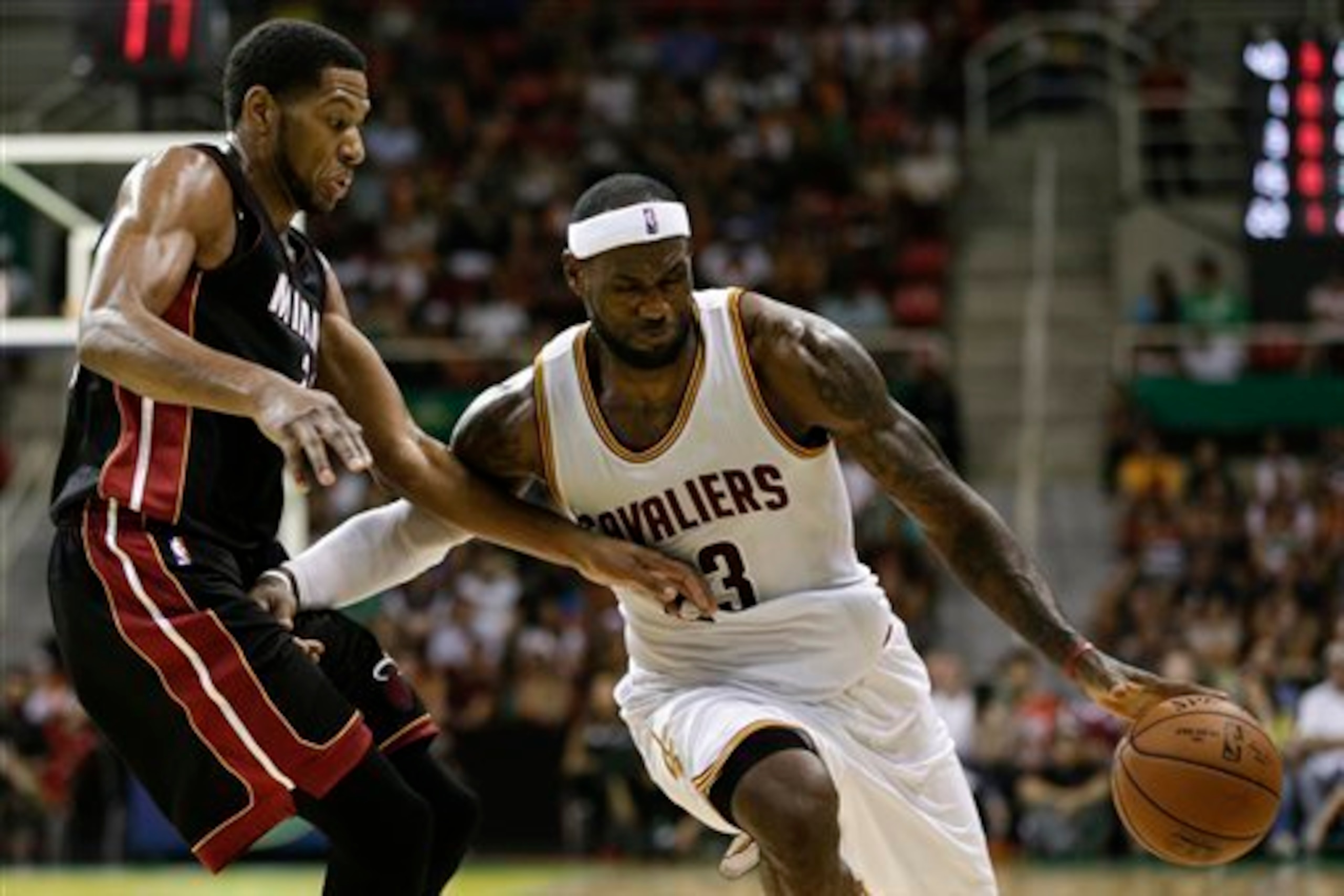
And that's not a direct result of James leaving. He himself told ESPN.com's Michael Wallace last season that playing through Wade's absence was hard given their lack of depth. Those issues weren't going anywhere even if he stayed.
Shane Battier was always going to retire, Udonis Haslem hasn't been a consistent contributor for some time, Mike Miller wasn't going to come back and Ray Allen's return wasn't guaranteed either. Though these shortcomings have been exacerbated in the wake of James' departure, they aren't new.
Miami is merely battling an extension of last year's pitfalls that have been compounded by new faces and a sense of unfamiliarity that will only vanish in time.
Staying the Course
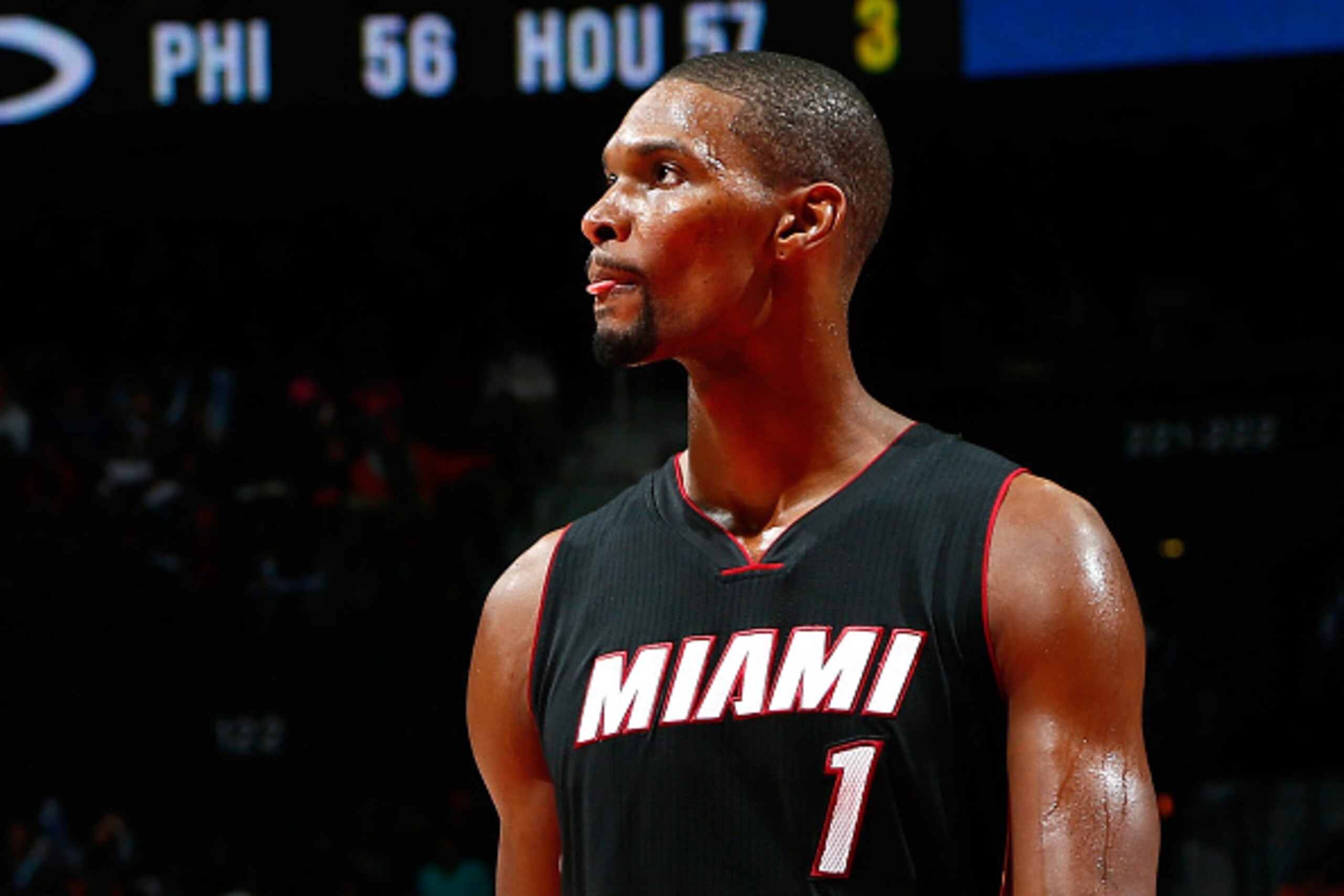
Time is the Heat's greatest weapon.
It won't solve everything, to be sure. Some of their problems won't go away. The Heat are still shallow, and there will still be days—weeks, even—when Wade isn't right and his teammates suffer as a result. But the Heat have shown they can compete in the equally shallow Eastern Conference, even when they aren't at full strength.
They're the league's fourth-best three-point shooting team. They rank sixth in ball movement, even though they lack a true point guard. They have a trio of stars in Deng, Bosh and Wade. Chalmers and Williams look rejuvenated and reinvented. They have beaten the Washington Wizards and Toronto Raptors, two teams that figure to be in the thick of the East's top-four conversation.
The talent—namely the offensive talent—is there. Time will help the Heat sort out the rest.
Defensive rotations will become easier to understand and execute as the season wears on. McRoberts and Granger should find their niches upon returning. Continued exposure should help rookie Shabazz Napier become a more reliable floor general.
Until then, the Heat can only push and press and wait. Mediocre basketball gets you by in the East, where the dead-even Heat hold a top-seven record.
Upcoming games against the Brooklyn Nets, Golden State Warriors and Los Angeles Clippers pose challenging tests—trials the Heat may feasibly fail, but ones that also cannot define them this early into the season.
"It takes experience," Bosh said via Winderman. "I guess it takes getting whooped a couple of times to figure it out."
It took time for the Heat to adapt when James arrived in 2010, and it's going to take time for them to figure it out now. Any bumps and bruises and losses and butt-whoopings they incur are all part of starting fresh and moving on.
*Stats courtesy of Basketball-Reference and NBA.com, and are current as of Nov. 17, 2014.

.jpg?w=2560 "B/R's Expert Week 7 NFL Picks 🔮")