
The Good, Bad and Ugly from Houston Rockets' Early-Season Results
The Houston Rockets couldn’t have hoped for a better start to their season, winning all six of their games by double digits. In fact, almost no one could have anticipated this. There is still good, bad and ugly to derive from that start.
Per Basketball-Reference.com, the only other team in NBA history to match that feat was the 1985-86 Denver Nuggets, who won their first six by 10 or more.
Yes, it’s just five games, and the Rockets’ schedule hasn’t been the most difficult in the league, but we can infer some things from what we’ve seen so far.
There is much more “good” than “bad” or “ugly” from the Rockets in the early going, but they’re not perfect. Here are the early-season takeaways, warts and all, from worst to best.
The Ugly: Bench Scoring Is Atrocious
1 of 5
If there is one major red flag for the Rockets to be worried about, it’s their bench scoring. Per HoopsStats.com, they are giving Space City just 22.3 points but giving up 33.3 points.
That means effectively, the Rockets are spotting their opponents 11 and still winning by more than 10. That’s a big task to maintain over the course of 82 games, though.
There is reason for hope. Apart from Jason Terry, who is the leading scorer off the bench with 8.3 points per game, the Rockets' reserves are extremely young. Donatas Motiejunas and Kostas Papanikolaou, at 24, are the oldest of the group. And the latter of those two is a rookie.
Isaiah Canaan has handles and can penetrate. Troy Daniels' jumper is so deadly, he could hunt flies with it. Papanikolaou keeps reminding me of a young Manu Ginobili. And Motiejunas, if he finally realizes his potential in his third season, could develop into a nice stretch 4.
There is room to grow, and that’s what the season is for.
But until that happens, it’s looking pretty ugly.
The Bad: A Little Help for Harden?
2 of 5
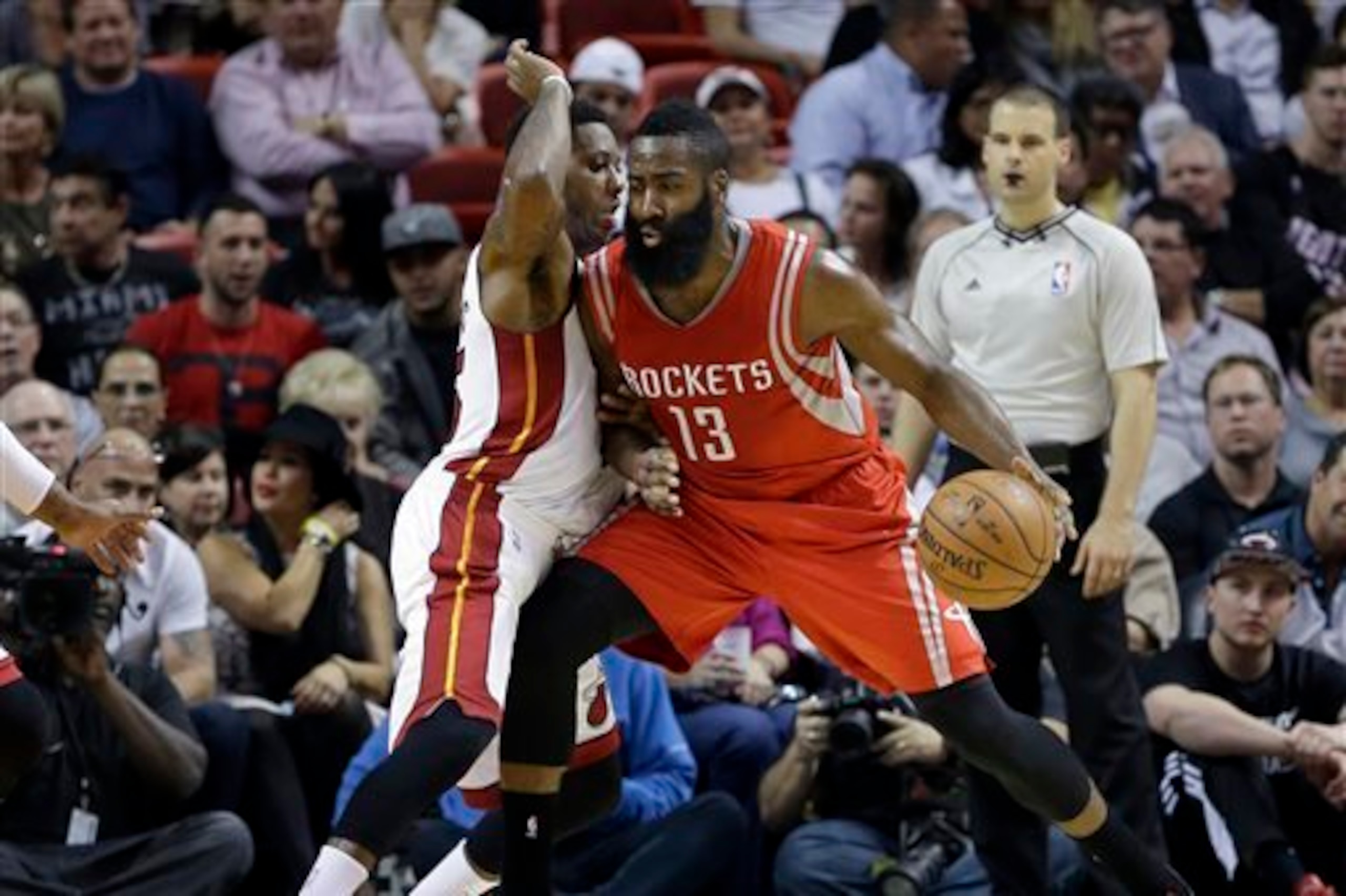
Patrick Beverley, the Rockets' starting point guard, is a great defender, but he's limited offensively. As a result, the scoring burden falls almost entirely on James Harden.
Heading into the Spurs game, according to the Play Index at Basketball-Reference.com, the Rockets made a total of 170 field goals in the first five games. Of those, 101 were assisted, and 69 were unassisted.
Harden accounted for 23 of the unassisted makes and 37 of the assisted ones, which means that he generated 60 of them combined or 35.2 percent.
In addition, he’s scored 61 of the team’s 117 free throws. That’s 52.1 percent.
Between his scoring and points generated off assists, 226 of the Rockets’ 528 points—42.8 percent of them—have come from Harden.
This is a big concern because there’s no easy remedy on the roster. Other players can generate their own offense, but none has shown the ability to facilitate.
For this reason, don’t be surprised if general manager Daryl Morey uses the Jeremy Lin traded-player exception to land a point guard at some point before the trade deadline.
The Bad: More Morey Ball
3 of 5
The Rockets have continued their war with the mid-range area, having just 10 makes from long-two land through the first five games of the season.
“Morey ball” is what Seth Partnow of Nylon Calculus calls Morey’s philosophy of basketball. That’s using the two most efficient areas of the court—the restricted area and the three-point area—to gobble up as many of your shots as possible. Partnow describes how the Rockets use it:
"Still, on a nightly basis, against the full gamut of NBA teams, the Rockets’ strategy can work wonders. Last season overall, Houston finished third in effective field goal percentage, trailing only the two conference champions in Miami and San Antonio. They did this by shooting by far the fewest “Non-MoreyBall” shots in the league — just over 27 percent of their shots came from the donut of despair between the restricted area and the three point arc.
"
So, what could possibly be wrong with that? Partnow explains:
"However, the operative word is “overall.” Championships are not won by taking advantage of the poor individual defenders of the Los Angeles Lakers or the nonsensical schemes of the Detroit Pistons and so forth. When facing the defensive cream of the NBA, the Rockets struggled last season. An offense designed to take advantage of errors but less well-equipped to force defensive breakdowns was less effective against those teams which were less gaffe-prone.
Of course, all teams do worse when being better guarded, that’s what makes high ranking defensive teams rank highly. But Houston’s’ rate of drop off in some key areas was greater, by a large margin in some cases, than the average squad’s drop in production.
"
Partnow corroborates his position with a chart, showing that when the Rockets play elite defenses, their effective field-goal percentage on “Morey ball” shots drops 3.92 percent.
It’s harder to break down an elite defense when you’re refusing to shoot from a large part of the court. The best defenses are the best because they defend those areas well. To break them down you have to make them defend where they don’t want to, and the way to do that is score from that dreaded donut area.
I think of a mid-range game like ambergris. And now you’re probably asking what on earth that is.
Ambergris is whale vomit. It literally smells like feces, and it’s incredibly pungent. It’s also the fixative in perfumes, but nobody wants to know they’re spraying puke on their face, so they gave it a pretty name.
So why whale barf? When there’s just a trace of it mixed with more pleasant fragrances, it magnifies them. You get the pretty scent of those and not the "stink" of the ambergris.
Similarly, a little bit of that mid-range game can make the “Morey ball” areas more effective, but without it causing a stink.
The teams that maintain their effective field-goal percentage in the efficient areas, like the San Antonio Spurs, Miami Heat and Oklahoma City Thunder, have shooters such as Tony Parker, Tim Duncan, LeBron James and Kevin Durant with a good mid-range game.
The Rockets don’t need to go the Byron Scott School of No Threes, but recognizing that sometimes a spot-up 20-footer is better than a pull-up three wouldn’t hurt. Developing Terrence Jones into a poor-man’s LaMarcus Aldridge might help.

The Good: Trevor Ariza Is Money
4 of 5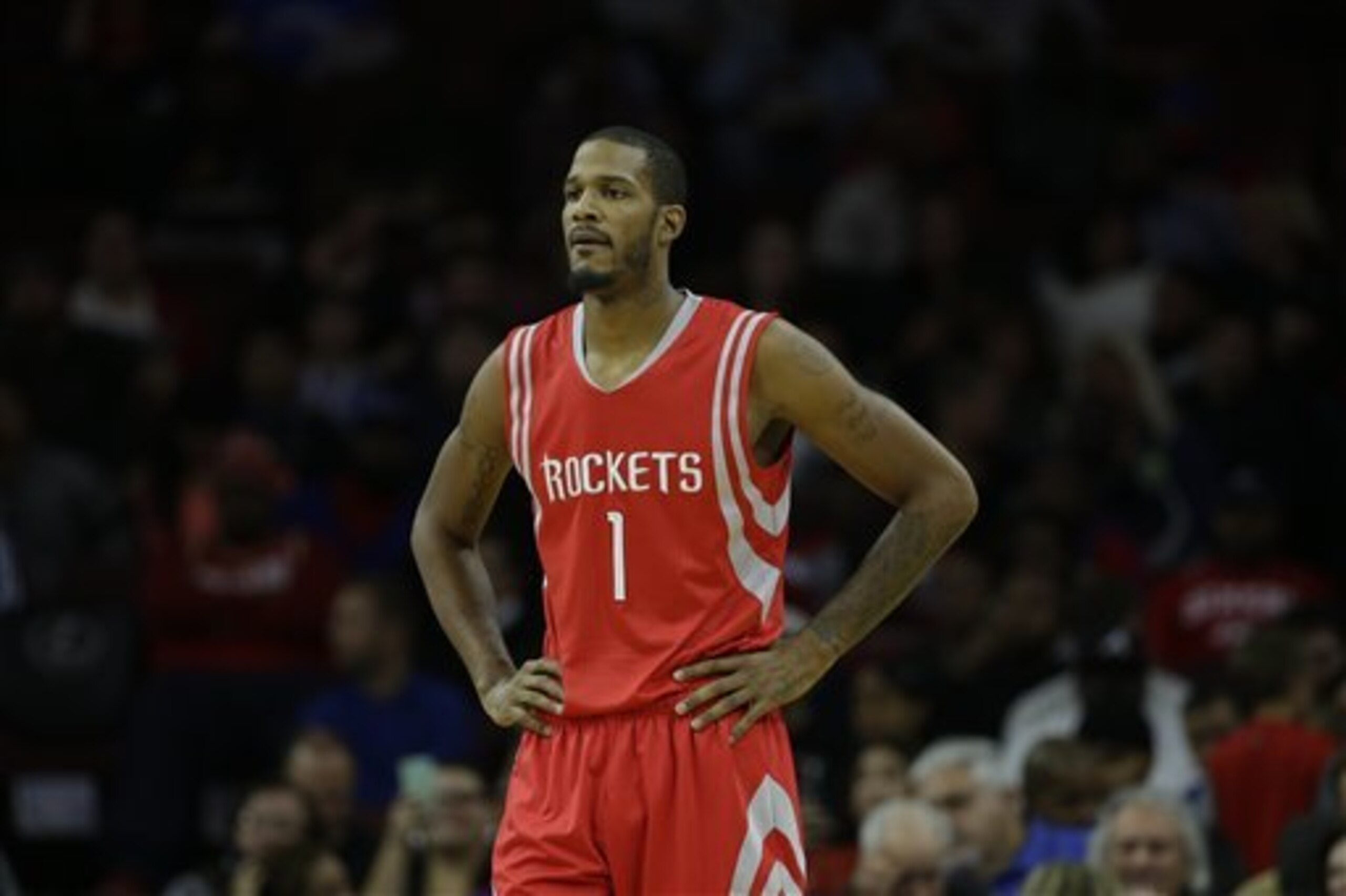
Trevor Ariza has Houston fans wondering why they ever worried over the departure of Chandler Parsons.
Ariza is averaging 15.8 points, 5.0 rebounds and 3.2 assists. Compare that with Parsons’ 16.6 points, 5.5 rebounds and 4.0 assists last year. And while Parsons’ numbers came in 37.6 minutes, Ariza has just played 34.0.
Ariza’s player efficiency rating of 20.76 is significantly higher than Parsons’ 15.9 from last season.
In fact, Ariza is second in win shares—not just on in the team—but in the league!
Offensively, you can argue that Ariza has actually been an upgrade. Although, that’s with a rather large grain of small-sample-size salt. As a result, the Rockets are fourth in the league in offensive rating at 111.8, but that’s expected.
What’s different this year is Houston’s defense. With Ariza, Dwight Howard and Beverley leading the way, the Rockets have the third-most efficient defense in the NBA. No other team is in the top five in both, and only the Chicago Bulls are even in the top 10.
Per the media version of NBA.com/Stats (account required), the Rockets are permitting 10.4 more points per 100 possessions while Ariza sits, so his addition seems to have a lot to do with that success.
If things maintain the way they’re going, Ariza will be the clear bargain of free agency.
The Good: James Harden for MVP?
5 of 5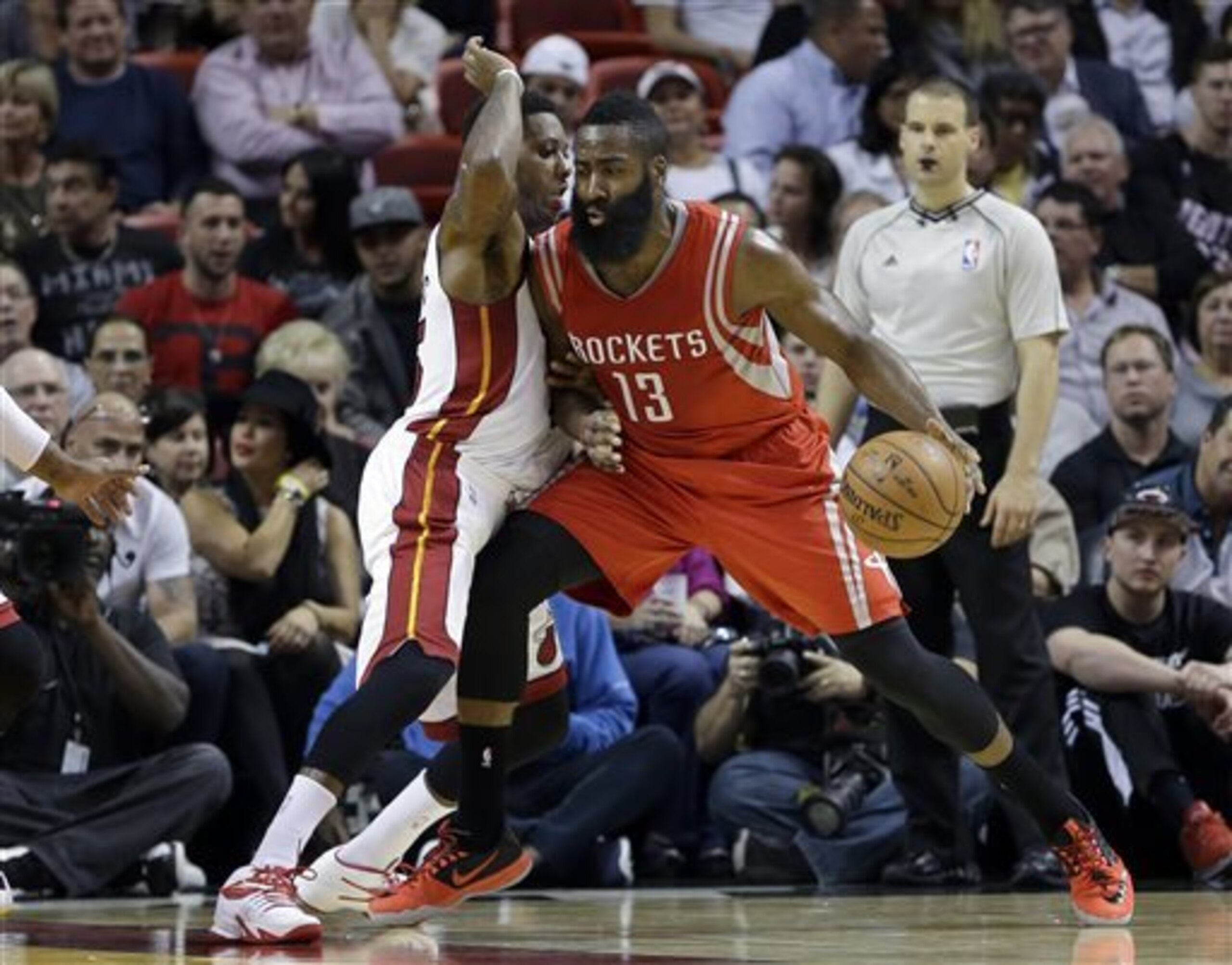
James Harden is quantifiably having an MVP season, and his numbers entering the San Antonio game prove that.
His 1.6 win shares lead the league, per Basketball-Reference. Furthermore, he has nearly 50 percent more than anyone else. Ariza and Kyle Lowry are a distant second at 1.1.
He’s second in scoring with 27.2 points per game. He’s sixth in assists with 7.4. He’s second in player efficiency rating at 31.4.
And, the flip side of those numbers discussed in the second slide is they show just how valuable he is to the Rockets. If that’s not enough to convince you, consider this: When Harden is on the court, the Rockets’ net rating (account required) is plus-25.3, per NBA.com/Stats. When he’s on the bench, they’re minus-12.8. That’s a 38.1 swing in net rating.
There are two foreseeable criticisms to a Harden MVP candidacy: his lack of defense and what some call “ref baiting.” Let’s address those.
First, his defense is not elite. I’m not going to pretend it is. But it is significantly improved. No one is going to create a video of Harden being in position on defense or actually showing effort, and if they did, it certainly wouldn’t go viral. That doesn’t mean it never happens.
And the truth is that this year his defense is significantly better. He’s not an elite stopper, but he’s cognizant of his duties and fulfilling them most of the time. It would be nice to see him risk the foul and try to challenge shots at the rim a little more, but he has been much improved.
He lapses occasionally, but a lapse in effort proves effort is there to be lapsed from, which is a quantum leap forward from last season.
That’s evident from the fact that the Rockets' defensive rating only improves by 1.6 points when Harden sits down. In other words, he’s gotten to the point where he’s not a defensive liability, which is all that really matters for a player who contributes as much on offense as he does.
The other criticism people have is that he’s just a “ref baiter,” which is a derogatory way of saying he draws contact and does a tremendous job of getting to the line. It’s sophistry, pure and simple.
Harden is not getting refs to call fouls; he’s getting defenders to commit them. And to be fair, while there are times where he’s selling the contact pretty hard, there’s actual contact to sell. And he’s usually getting the whistle while charging into the paint, not kicking his leg out on a tortured three-point “attempt.”
He’s quick and strong, forcing opponents to choose between fouling and giving up the easy basket.
If anything, he’s defender baiting, and he’s doing it successfully. As a result, he’s scoring efficiently. Attaching a negative nomenclature to a positive thing doesn’t make the points on the scoreboard count any less. The end result is a .629 true shooting percentage and MVP numbers.
Stats courtesy of Basketball-Reference.com unless otherwise indicated.


.jpg?w=2560 "Every Trade's Best Trade Asset 🔁")
.jpg?w=2560 "Insiders: Cowboys Overpaid for Porter")


.jpg?w=2560 "Top NFL Trade Targets")