Buster Posey, Bruce Bochy Are the Keys to Giants' World Series Comeback
The numbers cannot be ignored.
Before this World Series, 54 of them have been tied 1-1, and of the 54 Game 3 winners, 38 have gone on to win the whole thing, according to Elias Sports Bureau. That is a touch more than 70 percent and quite possibly damning for the San Francisco Giants if necessary changes are not made.
The Kansas City Royals’ 3-2 Game 3 victory Friday night at AT&T Park gave them a 2-1 series advantage, but that obviously isn’t a deathblow. The Giants can still win their third World Series in five years, but a couple of things have to change, and both concern team pillars—manager Bruce Bochy and catcher Buster Posey.
TOP NEWS

MLB Commissioner Defends Salary Cap
Miz Sets WS Record Already ⛽
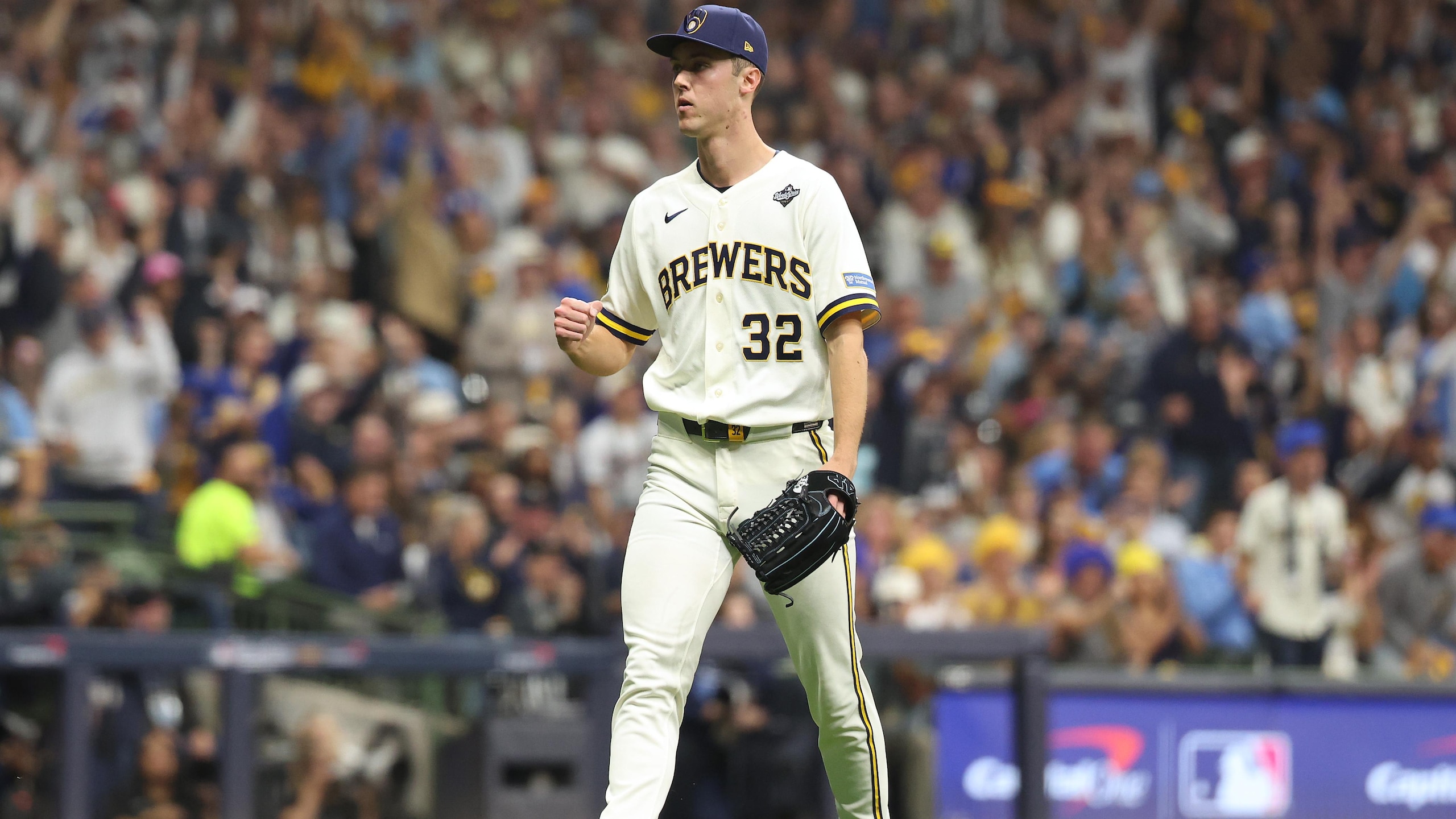
Brewers Get 1st WS Win Since 1982 💪
Bochy is regarded as one of the best managers in the game, and rightfully so. It is a deserved reputation, but he was thoroughly out-managed in Game 2. And in a game full of managerial head-scratchers, his were more costly in Game 3.
For a second consecutive tightly contested game, Bochy stuck with his starting pitcher as he faced the opposing lineup for the third time. And for a second time, it doomed the Giants.
In huge sample sizes, we see starting pitchers are not as effective in sixth innings or anytime they face hitters for the third time in a game. According to Jonah Keri of Grantland.com, major league hitters slashed .270/.330/.426 this season when seeing a starting pitcher for a third time, far and away higher than the first two times a hitter sees a starter.
This trend is nothing new. In his 2007 publication The Book: Playing the Percentages in Baseball, Tom Tango used data from 1999-2002 to show how hitters beat up pitchers when seeing them a third time. In those four seasons, hitters produced a .362 weighted on-base average in their third at-bats, which again was higher than any other time a hitter faced a starting pitcher in a single game.
This is especially true for non-elite guys like Jake Peavy and Tim Hudson, San Francisco’s Game 2 and 3 starters. Each has been hit hard this season the third time through an order. Peavy gave up a .323/.387/.545 slash line in that situation, and Hudson was hit to the tune of .303/.339/.495.
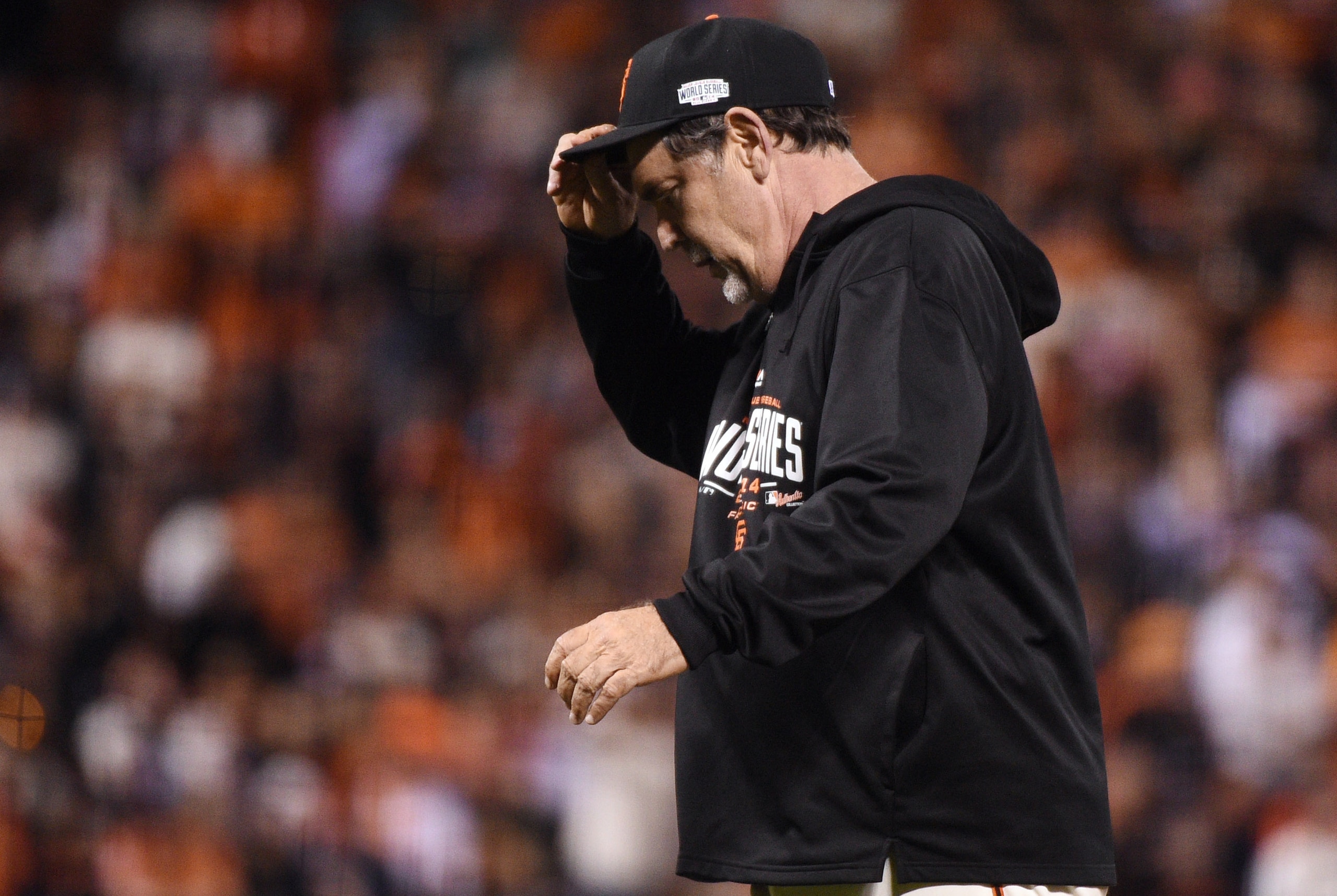
Yet Bochy, despite having reliable arms available in the bullpen—paging Yusmeiro Petit—tried to squeeze more outs out of those two pitchers in the sixth innings. The Royals struck for five runs in the sixth in Game 2, the deciding margin of victory, and for two more in the sixth in Game 3, the deciding runs again.
Bochy must change this thinking going forward when anyone besides ace Madison Bumgarner is pitching, which will be the case in Saturday night’s Game 4 when Ryan Vogelsong will take the ball instead of Bumgarner on short rest.
“We have confidence in all these guys, including Vogey,” Bochy said in his postgame press conference Friday. “We’re not going to change things up just because we lost.”
That is fine. Bochy doesn’t need to go with drastic changes here. He just needs to manage with a sense of urgency, much as he has in his last three postseasons. He had mastered that quality, but lately it has been absent.
Bochy must realize that this is not his 2010 rotation, which had two aces (Tim Lincecum and Matt Cain) and a future one (Bumgarner). This is a different team, and he must manage it accordingly.
That means not being afraid to use Petit, who was dominant as a reliever this season and gave the Giants six shutout innings in that 18-inning game against the Washington Nationals in the National League Division Series. With his ability to go multiple innings, Petit is a wicked weapon, one who hasn’t been scored on in nine October innings. But Bochy has used him only twice in these playoffs and not yet in the World Series.
That must change. And all it takes is a slight shift in Bochy’s thinking.
The Posey problem is more difficult to solve.
Posey has not had an extra-base hit through 56 at-bats in this postseason. He is 2-for-13 (.154) in the World Series and is slugging .268. He has also left eight men on base, three of them in scoring position with two outs.
With the Giants struggling to find offense since smacking around James Shields in Game 1, Posey must produce, ideally for power. The Giants need him to keep coming up with men on base, but if he continues to strand them there, a comeback obviously becomes more improbable.
Going into Game 3, Posey’s minus-0.257 WPA—win probability added measures how a player impacts his team’s chances to win based on past data—was the second-worst mark of the team’s position players, ahead of only Brandon Crawford. That was before he went 0-for-4 Friday, although he did ground out to pick up an RBI.

Posey is 2-for-7 in his career against Kansas City’s Game 4 starter Jason Vargas, and he homered off him in 2012. If the Giants are going to avoid being pushed right up against the wall while the Royals move within a game of their first World Series title since 1985, it is likely Posey will have to play a critical role in Game 4.
Historically, Game 3 is the turning point of the World Series and for most of baseball’s best-of-seven series. But this one is not yet decided. These clubs are too evenly matched, and both managers have proved completely capable of nixing their advantages by oddly managing their bullpens in defiance of logic and data, which they both did with pleasure in Game 3.
If the Giants are to take the initiative in this comeback, Bochy must regain his managerial groove and Posey his crazy-good second-half form. If those things happen, and happen immediately, the Giants are still a serious threat to win this World Series.
If neither man can get it done, the Giants' chances appear grim.
Anthony Witrado covers Major League Baseball for Bleacher Report. He spent the previous three seasons as the national baseball columnist at Sporting News and four years before that as the Brewers beat writer for the Milwaukee Journal Sentinel. Follow Anthony on Twitter @awitrado and talk baseball here.
.png?w=2560)

.jpg?w=2560 "NFL House in Paris Closes for Protests")

.jpg?w=2560 "Trevon Diggs Cut by Seahawks")