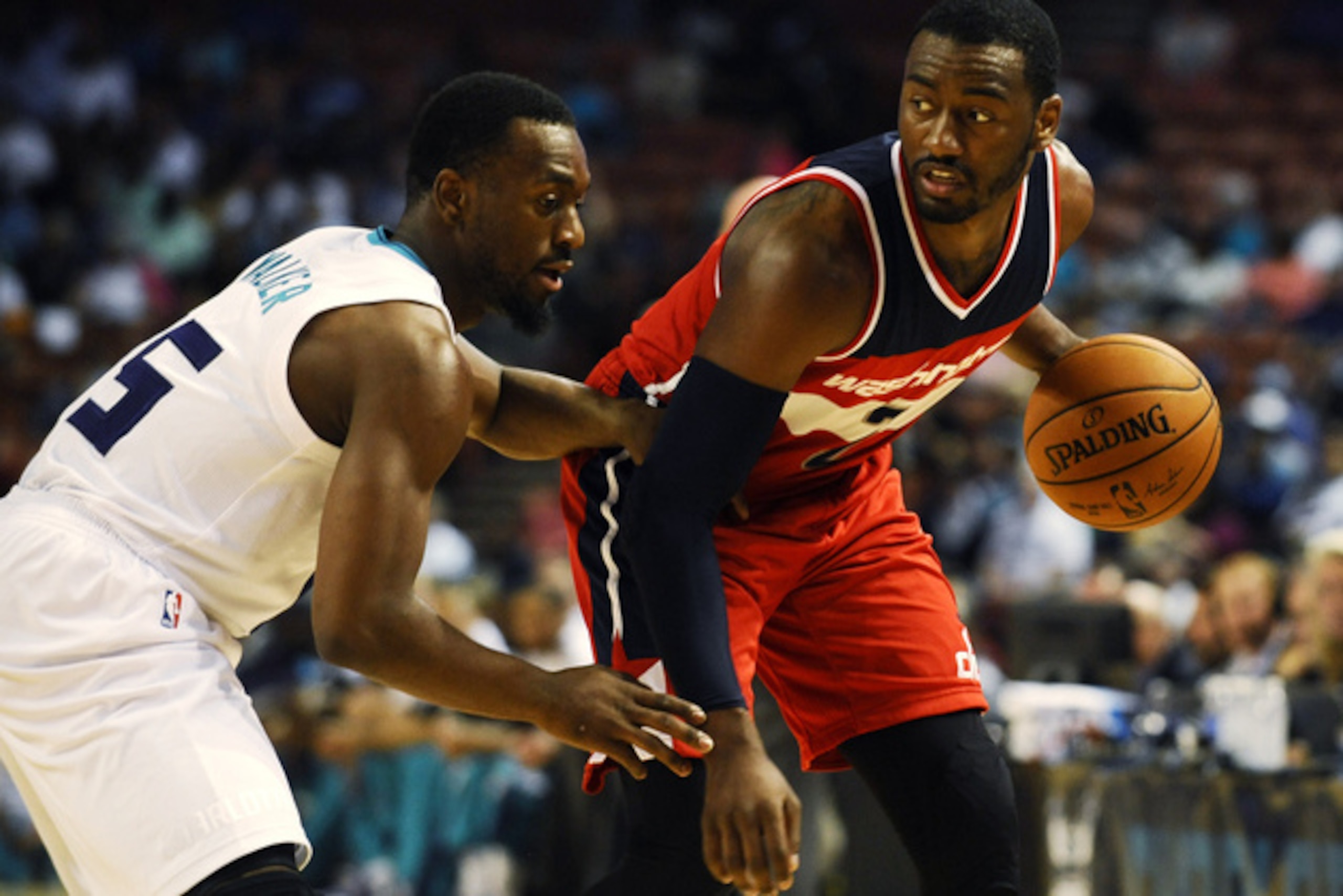

What Washington Wizards Need from John Wall This Season
This is the year for John Wall. He’s entering his fifth year in the league and just turned 24 this September.
And now, he’ll be playing for the first part of the year without Bradley Beal, who just had surgery on his left (non-shooting) wrist and will miss six to eight weeks now. The Washington Wizards are John Wall’s team for the first month, and more, of the season.
Even when Beal comes back, this could be the year that Wall establishes himself as a perennial All-Star. He made his first All-Star game last season and won the dunk contest. If he makes it again this year, there’ll be no doubt that Wall is one of the five best point guards in the league.

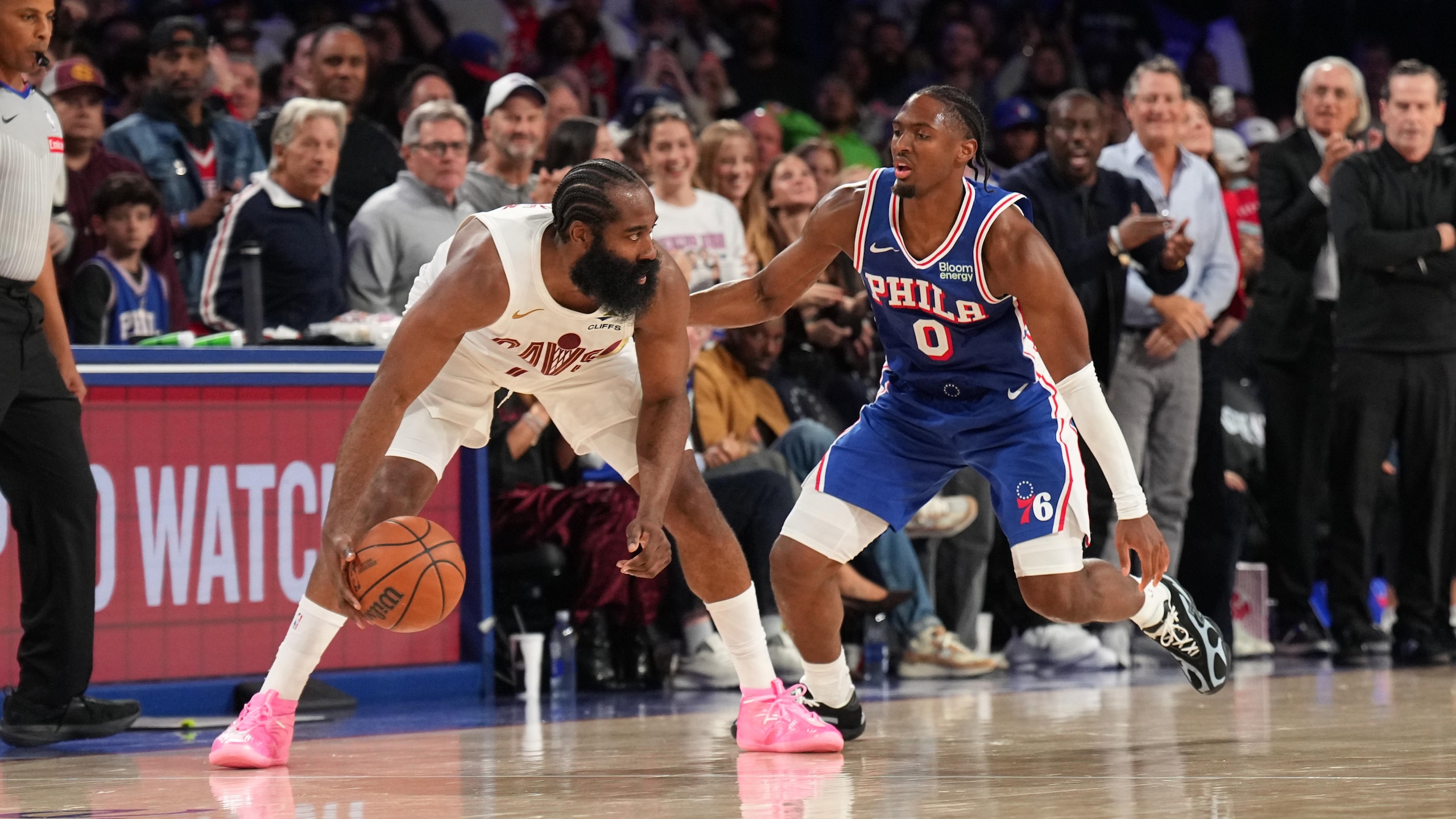
Keeping in mind that Beal will be out for the first part of the year, and that Martell Webster will also be out, this is what the Wizards need out of Wall this season if they want to make a deep push into the playoffs.
Carry the Offense with Beal and Webster Out
To see a full breakdown of Wall’s shooting production with and without Beal on the floor last season, click here.
In short, Wall simply was a worse shooter without Beal. Wall’s strength is driving to the hoop to attempt a layup or draw contact.
When Beal’s on the floor, the opponent can’t afford to commit to defending the lane. Beal and Trevor Ariza would patrol the perimeter, drawing one, if not two, defenders. When Beal’s not on the floor this season, Wall is going to attract the team’s best defender on almost every possession.
Last season, the backcourt of Wall and Webster averaged 1.3 points more per 100 possessions than their opponents, compared to 2.3 for Wall and Beal. The Wall-Beal combination also attempted 3.2 more shots than their opponents per 100 possessions, and Wall-Webster had 2.1 more attempts.
For the portion of the season that Beal misses, Garrett Temple and Glen Rice Jr. will mainly be playing shooting guard, with Rice starting. Rice has had a great summer league and preseason, but he only appeared in 11 NBA games last season, and I’ve already covered how ineffective Temple can be on defense.
Beal also served as a ball-handler last season at times, bringing the ball up the floor and often creating his own shots (though he’s far better as a catch-and-shoot player).
Now, Wall will run the point all the time and won’t have Ariza, a knock-down shooter.
Wall has to get used to being the primary offensive option for the Wizards, and he’ll have to create a lot of his own shots at the elbow, as well as being more effective at shooting threes.
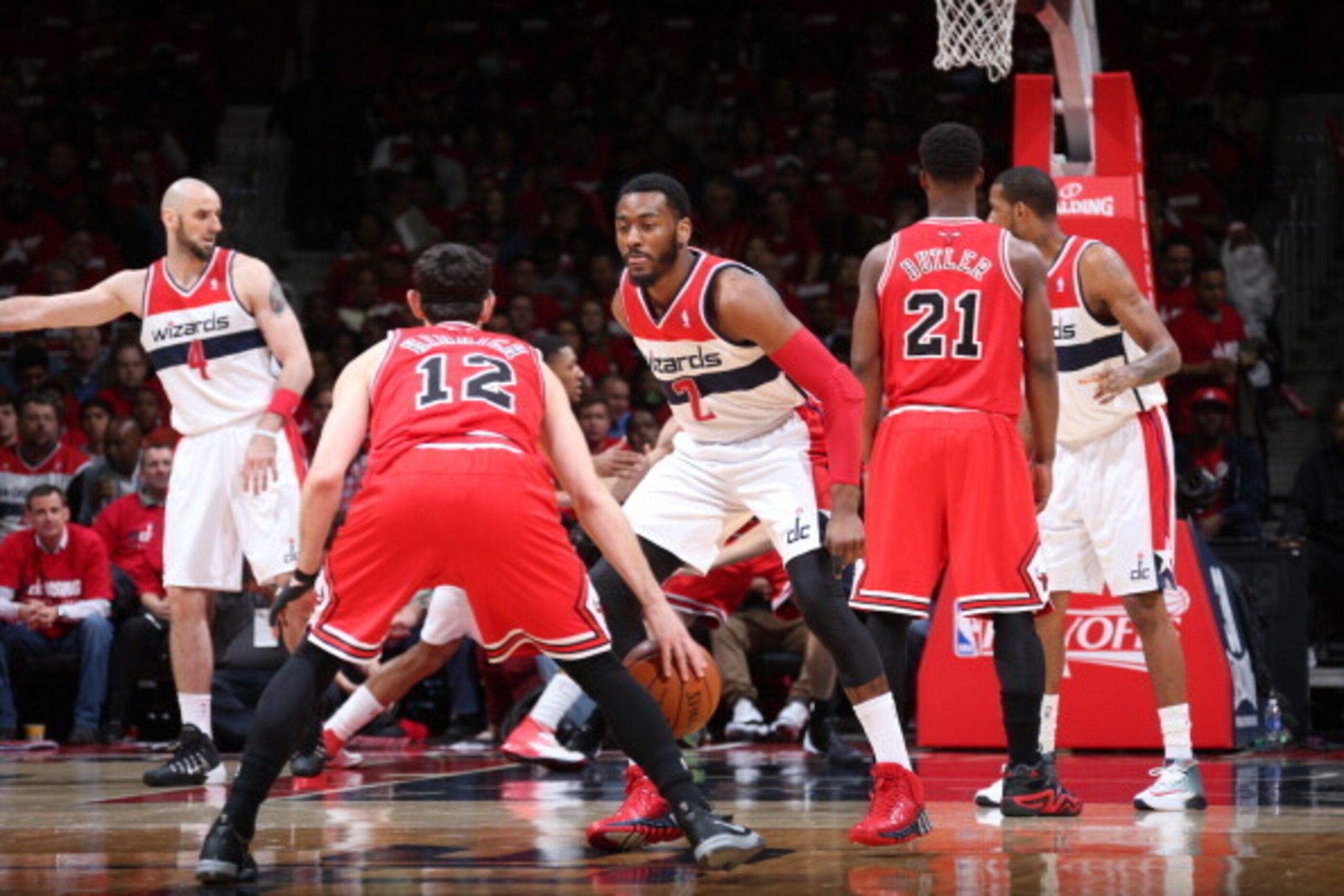
Improve on Defense
Without Ariza, Washington does not have a No. 1 defender. Paul Pierce has the length, but not the speed at his age, to guard the opponent's best offensive player, and Beal just simply isn’t good enough on defense to cover guys the Wizards will face in the East such as LeBron James and Derrick Rose.
Wall will likely begin to cover those guys as the primary defender, but he has some improvements to make on that end of the floor before I feel more confident in Wall being the primary defender. Here’s how Ariza and Wall stacked up in defensive categories last season.
| John Wall | 0.5 | 104 | 4.0 | 11.7 | 2.6 |
| Trevor Ariza | 0.3 | 104 | 3.7 | 16.3 | 2.4 |
From a practical perspective, Wall mainly needs to improve on defending pick-and-rolls. His biggest weakness on defense is his tendency to play under screens and try to run around the pick man.

In this example from a game last November against the Minnesota Timberwolves, Wall sees a screen developing between Ricky Rubio and Nikola Pekovic.
Because Wall plays picks and screens basically the same way every time, the pick man (in this case, Pekovic) adjusts his screen position, and Wall runs straight into Pekovic, allowing Rubio to get off an uncontested pass for an assist.
However, Wall held opponents to 57.7 percent shooting at the rim last season, per NBA.com/Stats, better than his fellow point guards Ty Lawson and Rajon Rondo (albeit Rondo only played in 30 games).
Wall has a tendency to fall asleep on defense at times, as well, as pointed out by SB Nation’s Mike Prada in this video in a transition run by the Brooklyn Nets.
In order to compensate for Ariza’s absence, Wall needs to improve on defense, both from a practical and statistical perspective.
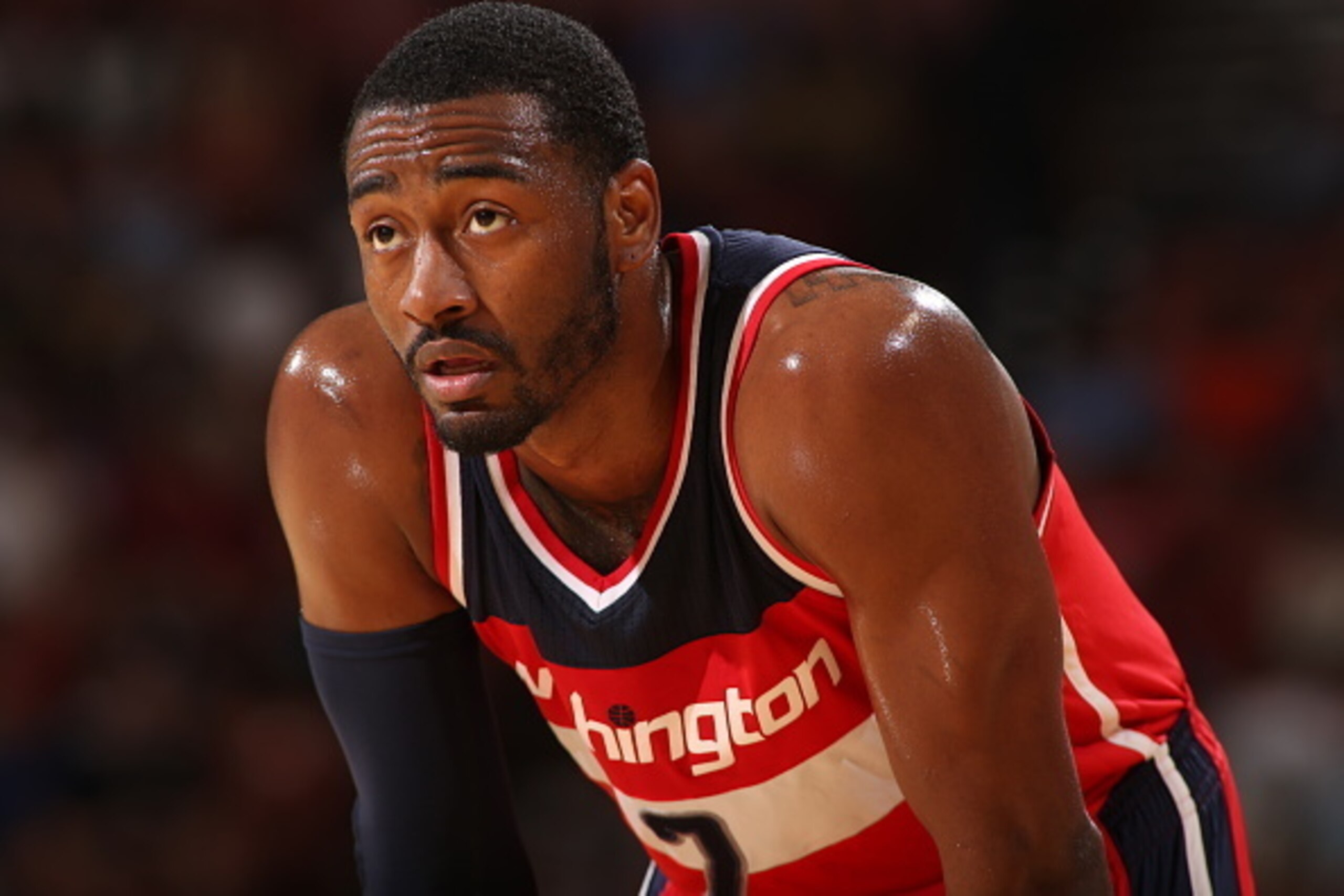
Improve at the End of Games
As John Converse Townsend pointed out in this piece for TrueHoop Network’s Truth About It blog, heading into last season, Wall was actually one of the best closers in the league.
However, last season, there were times when Wall would disappear in the fourth quarter and overtime. With three minutes left in quarters last season, Wall made just 39.9 percent of his shots.
In the fourth quarter, his effective field-goal percentage was 43.1 percent (the lowest of any quarter), and in overtime periods, he made only 13 of his 41 shots.
This was highlighted in the second round of the playoffs against the Indiana Pacers.
In Game 4 of that series, the Wizards entered the fourth quarter leading by a point. With four minute, 39 seconds left in the game, Wall made a three-pointer to go up by five points.
After that, Wall did not make a single basket for the remainder of the game (besides three free throws) and missed a layup with 1:23 left that would have given Washington the lead. The Wizards went on to lose, 95-92.
Then, in Game 6 of the series (the elimination game) Wall did not score a single point in the entire fourth quarter, including missing three three-pointers in the final 2:25.
Wall is, and has been, the leader of this team, but leaders in the NBA come up in the clutch, and don’t get shut out in the final quarter of an elimination game.
If Wall wants to establish himself as a top-tier point guard, he needs to play better in the fourth quarter of games, and he needs to take more of the spotlight should Washington make the postseason.
All stats are from Basketball-Reference.com unless otherwise noted.

.jpg?w=2560 "NFL House in Paris Closes for Protests")
.jpg?w=2560 "Trevon Diggs Cut by Seahawks")