


Every year we see a few prospects slip between the cracks. It's almost hard to believe how many scouts can miss on high-level NBA talent.
The fact that it continues to happen reflects the unpredictability associated with teenage prospects and scouting, especially when it comes to evaluating players from overseas.
Sometimes teams just get lucky and a late bloomer happens to fall into their lap.
The following are the top steals dating back to the 2005 draft. Though there's no black-and-white criteria with regard to who qualifies as a steal, the ones chosen are the guys who completely outproduced the traditional value tied to their draft spot.
Only those taken No. 10 overall or later were considered.
For each steal, I also listed similar prospects who teams took instead and why they might have done so.
Monta Ellis, PG/SG
1 of 22
Drafted: No. 40 overall, 2005 by the Golden State Warriors
Notable guards drafted ahead of Ellis: Raymond Felton, Rashad McCants, Nate Robinson, Julius Hodge, Luther Head, Salim Stoudamire, Travis Diener, Von Wafer
Probable cause for slip/misevaluation: Uncertain NBA position, unproven
Monta Ellis tried to sell himself out of high school instead of college, but apparently his pitch wasn't strong enough to warrant first-round attention.
Scouts certainly knew who he was—Rivals had Ellis as the No. 3 ranked recruit in his class.
Only he underperformed on the predraft showcase circuit, having shot 3-of-10 at the McDonald's All-American game, scored 13 points and turned the ball over five times at the Nike Hoop Summit, pulled out of the Jordan Brand Classic with an injury and undergone knee surgery shortly after.
While this might have caused his stock to dip, the real concern had to be over his position. Ellis was a scorer in a point guard's body. You just don't see too many 6'3" combo guards who can star in shoot-first roles.
But Ellis essentially maximized his shot-making ability as a pro. Some of the ones he hits on a regular basis are simply extraordinary. He's never had trouble getting them off, given his quickness and creativity, but there was obvious skepticism surrounding his ability to connect with any consistency as an undersized 2-guard.
Since being drafted, Ellis has defied the odds. He's averaged at least 17 points in each of his last 10 seasons. And even though he's maintained that same shoot-first mentality, Ellis' playmaking skills have resulted in a career average of 4.9 assists per game.
Out of high school, everything pointed to Ellis being a prospect to avoid. The Warriors were ultimately fortunate that's how the majority of the league viewed him.
Serge Ibaka, PF/C
2 of 22
Drafted: No. 24 overall, 2008 by Seattle SuperSonics
Notable power forwards drafted ahead of Ibaka: J.J. Hickson, Marreese Speights, Jason Thompson, Anthony Randolph
Probable cause for slip/misevaluation: Too raw, unknown/unproven
Serge Ibaka is an example of why teams continue to reach in the draft.
Fortunately for the Seattle Supersonics, nobody did in 2008. They got him 24 picks deep after power forwards like J.J. Hickson, Marreese Speights, Jason Thompson and Anthony Randolph.
It's hard to blame any of those teams that missed on Ibaka—at the time, the appeal to him was fueled strictly by his physical tools and athleticism, which appeared far ahead of his skill level.
Ibaka had only been playing organized basketball for a few years prior to the draft. He spent the season before it in Spain's second division. Chances are he sold the Sonics (now the Oklahoma City Thunder) at the 2008 Reebok Eurocamp or one of the other showcase events (Nike Hoop Summit, Adidas Nations) that evened the playing field by allowing him to compete against prospects his age.
After spending the 2008-09 season stashed away in the competitive Spanish ACB, he came over to the NBA and did the unpredictable—improve his game with each year.
His physical tools (size, length, strength) and athleticism translated to immediate rim protection and easy buckets. But since his rookie year, Ibaka's jumper has gone from capable to reliable. He shot a ridiculous 46.9 percent in the mid-range this past year.
And though there's still room for improvement, his post game has expanded as well.
A three-time all-defensive first-team shot-blocker coming off a 15.1-point-per-game season, Ibaka is just now entering his NBA prime. Again, this is why teams reach on potential. If it pays off, they win big.
Nicolas Batum, SF
3 of 22
Drafted: No. 25 overall, 2008 by the Portland Trail Blazers
Notable wings drafted ahead of Batum: Joe Alexander, Brandon Rush, Courtney Lee
Probable cause for slip/misevaluation: Mental toughness, overexposure
Despite coming from overseas, Nicolas Batum was high profile prior to the 2008 draft. He was even a big name in 2007, which stemmed from his MVP performance at the European Championships in 2006.
Batum actually seemed like a strong candidate to declare in 2007, having been fresh off a 23-point showing at the Nike Hoop Summit.
But he chose to stay overseas for another year, and despite averaging 11.9 points on 51.3 shooting and 35.2 percent from downtown, his weaknesses and flaws were ultimately exposed during a losing season in France.
Back in February 2008, DraftExpress touched on the concerns that had risen regarding Batum and his mental approach:
"Instead, we’re hearing an already familiar tune: inconsistency, a certain lack of character and… perhaps some softness mixed in with stretches of impressive play that only a freakish athlete like him is capable of deliver.
"
Had teams ignored Batum's perceived red flags and focused on the positives—elite physical tools, shooting range, passing instincts, defensive potential—we probably wouldn't have seen guys like Joe Alexander, Brandon Rush and Courtney Lee all taken ahead of him.
Because Batum's predraft strengths blossomed and ultimately translated into ridiculous NBA versatility.



Chandler Parsons, SF
4 of 22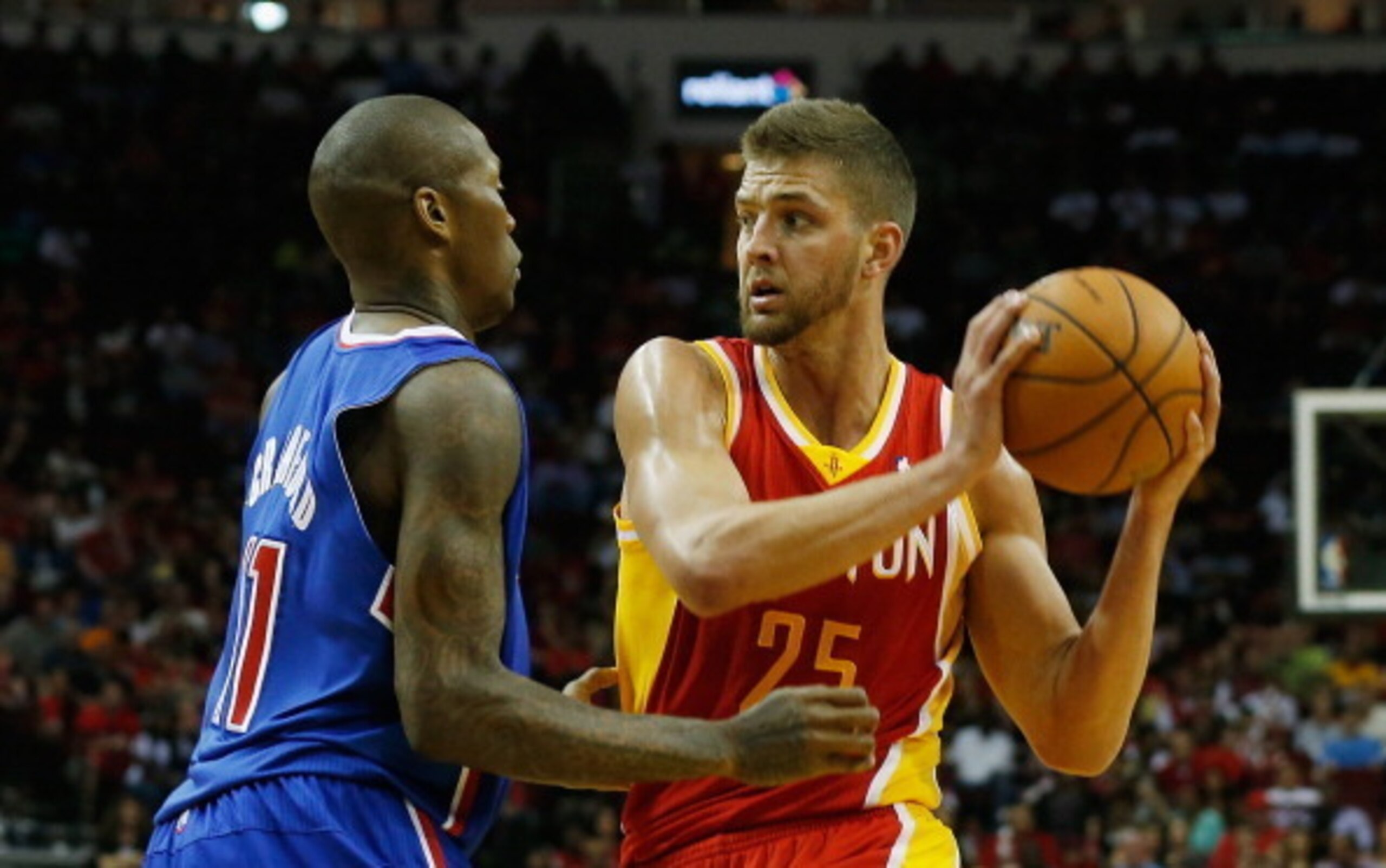
Drafted: No. 38 overall, 2011 by Houston Rockets
Notable forwards drafted ahead of Parsons: Chris Singleton, Kyle Singler, Tyler Honeycutt, Justin Harper, Derrick Williams
Probable cause for slip/misevaluation: Lack of perceived upside, lack of progression, college role
Chandler Parsons seemed like a solid second-round pick at the time of the 2011 draft, but nobody could have seen this type of NBA breakout coming.
A skilled all-around player out of Florida, Parsons' scoring average actually fell from 11.9 points per game as a junior to 11.3 as a senior when many expected his offensive output to increase.
Parsons had a smooth jumper, but he never hit more than 36.8 percent of his three-pointers in four college seasons. He also wasn't a standout athlete at a position typically played by some of the best athletes in the world at the NBA level.
There was a lot to like about Parsons—his basketball IQ, size, polished skills—but there wasn't anything to love.
Fortunately for the Houston Rockets, Parsons' ability to create his own shot might have gone hidden at Florida.
He'd soon become a crafty post scorer after "only 3.2% of Parsons' half-court offense came on post-up opportunities" at Florida, per DraftExpress' Derek Bodner via Synergy Sports Technology. He'd also improve his ability to create and score on the move, whether it's with a pull-up, step-back or floater, while his passing instincts remain a valuable aspect of his game.
Parsons even turned out to be a fairly effective defender and dangerous shooter.
Everything fell into place for Parsons once making the jump to the more open NBA floor. As a second-round pick, he'll go down as arguably one of the biggest steals over the last 10 years.
Goran Dragic, PG
5 of 22
Drafted: No. 45 overall, 2005 by the Phoenix Suns
Notable point guards drafted ahead of Dragic: George Hill, Mario Chalmers, D.J. Augustin, Sean Singletary
Probable cause for slip/misevaluation: Shooting, decision-making, lack of perceived upside
Despite his production in the Adriatic League, Spanish ACB and Eurobasket, Goran Dragic just couldn't sell scouts on his outlook as an NBA point guard.
Even during his best year for Geoplin in 2006, he still averaged 3.2 turnovers to 3.0 assists. Wild decision-making coupled by erratic shooting, along with the fact that few European guards have succeeded in the U.S., likely contributed to the lack of interest shown by NBA teams.
It turned out that Dragic's playmaking ability actually translated pretty darn well, while his jumper—he's shooting 38.5 percent from 16 feet to the arc (sports-reference.com) and 36.5 percent from downtown for his career—has really started to come around.
The kid just has a natural feel for the game with the ability to improvise on the fly. The more freedom he's got, the more effective he's become.
Sure, Dragic can lose control from time to time, but as long as he's averaging 20.3 points a game, I'd imagine the Suns will take it from a former mid-second-round pick.
Marc Gasol, C
6 of 22
Drafted: No. 48 overall, 2007 by the Los Angeles Lakers
Notable center drafted ahead of Gasol: Kyrylo Fesenko, Stanko Barac, Tiago Splitter
Probable cause for slip/misevaluation: Athleticism, conditioning
It's almost funny to think that Marc Gasol could be passed on 47 different times. It's just a reflection of the unpredictability tied to drafting, especially when talking about an international prospect.
Gasol's lack of athleticism and mobility masked the upside he'd eventually offer. While his basketball IQ, passing instincts and toughness were always visible, his fit in the NBA game wasn't.
It turns out that NBA teams might have actually undervalued those intangibles. They also probably didn't peg Gasol for a mid-range shooter or defender, two things he evolved into as his career progressed with the Memphis Grizzlies.
Still, No. 48 overall seemed a bit low, considering how few eligible big men there were outside the 2007 lottery. Tiago Splitter was the only center taken from No. 14 to No. 30.
Marcin Gortat, C
7 of 22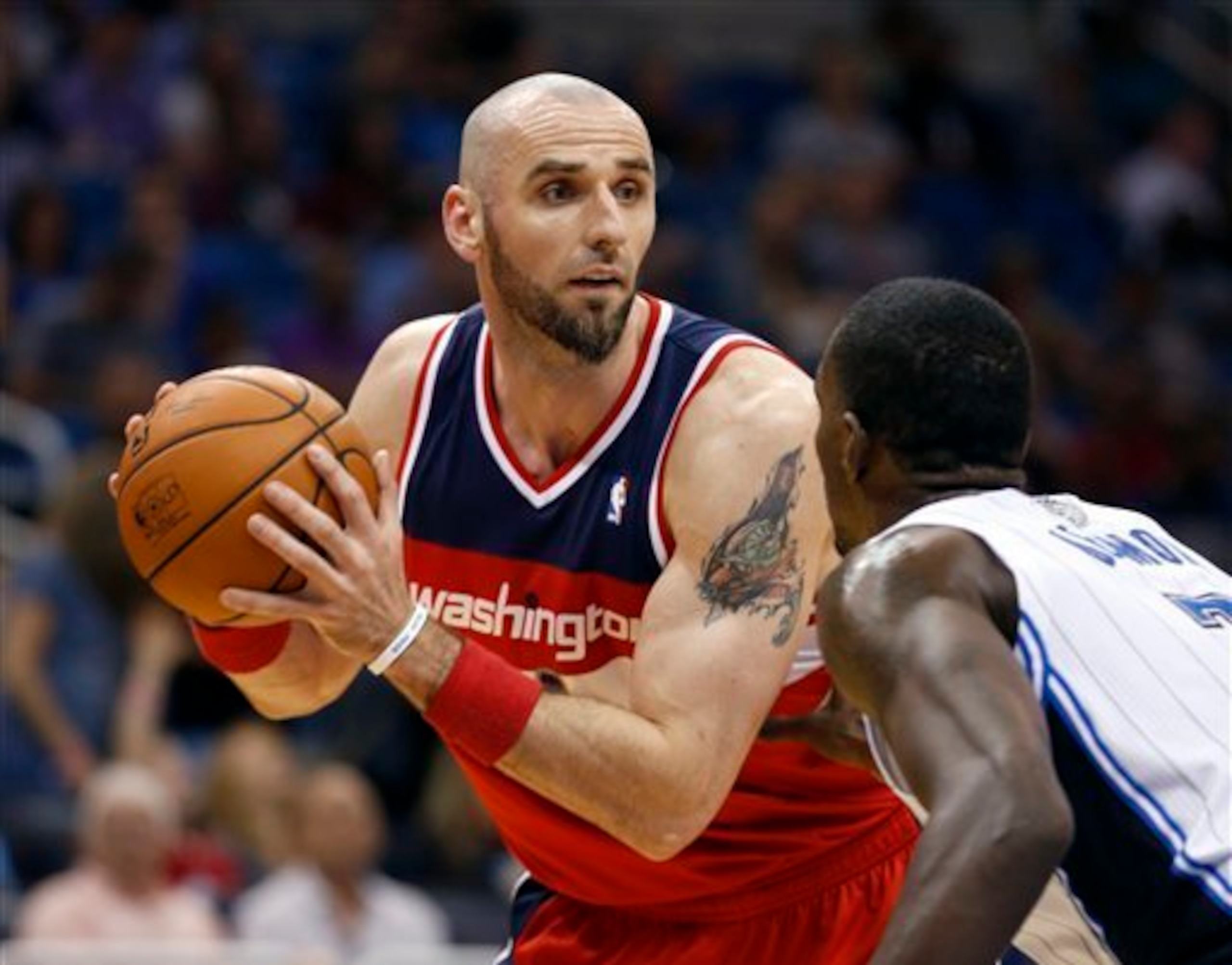
Drafted: No. 57 overall, 2005 by the Phoenix Suns
Notable centers drafted ahead of Gortat: Andrew Bynum, Fran Vazquez, Johan Petro, Ian Mahinmi, Robert Whaley
Probable cause for slip/misevaluation: Raw, unknown/unproven
There's really just no way anyone could have predicted Marcin Gortat's transformation into one top centers in the NBA.
He averaged 5.2 points and 3.8 boards in Germany’s Bundesliga I league prior to being drafted, though his size and presence appeared strong enough to earn him an NBA combine invite.
The Suns took him with the fourth-to-last pick in the 2005 second round, and ended up dealing him to the Orlando Magic, though he'd spend two more years overseas until making his way over.
Without much of a chance playing behind Dwight Howard, the Magic shipped him back to Phoenix, where he pounced on his first real opportunity. And from there, Gortat took off, having improved his skill set, from mid-range shooting to low-post scoring, while maintaining his presence under the boards and at the defensive end.
Now the anchor of the up-and-coming Washington Wizards, Gortat has emerged as one of the biggest second-round steals in today's game.
Kawhi Leonard, SF
8 of 22
Drafted: No. 15 overall, 2011 by the Indiana Pacers (traded to San Antonio Spurs)
Notable forwards drafted ahead of Leonard: Marcus Morris, Jan Vesely, Derrick Williams
Probably cause for slip/misevaluation: Lack of perceived upside
Looking back, Kawhi Leonard would have probably been the No. 2 pick in the 2011 draft behind Kyrie Irving.
Leonard looked like an NBA pro from a physical standpoint since his freshman year at San Diego State. But he lacked ball skills—particularly the ability to create and make shots for himself away from the rim. According to Synergy Sports via DraftExpress, Leonard hit only 28 percent of his pull-up jumpers his sophomore year.
In an off-ball role, he hit only 32 percent of his spot-ups and shot just 27.5 percent from downtown.
Leonard's defensive potential, slashing ability and motor are what ultimately landed him in the mid-first-round conversation.
Luckily for the Spurs, Leonard's college strengths translated extremely well, while his offensive weaknesses have slowly improved since 2011. He's mid-range shooting efficiency from 16 feet to the arc has increased with each season—up to 50.5 percent in 2013-14, per sports-reference.com.
Leonard has also maintained a consistent 37 percent three-point clip in each of his three years with the Spurs.
He's become an elite defender, a reliable complementary scorer, a developing go-to option in San Antonio—and a finals MVP.
Too bad the Indiana Pacers traded him for George Hill.
Paul George, SF
9 of 22
Drafted: No. 10 overall, 2010 by the Indiana Pacers
Notable wings drafted ahead of George: Evan Turner, Wesley Johnson, Al-Farouq Aminu
Probable cause for slip/misevaluation: Unproven track record
You wouldn't normally refer to a No. 10 overall pick as a steal, but when you consider that wings Evan Turner, Wesley Johnson and Al-Farouq Aminu were all drafted before Paul George, it seems safe to say the Pacers got away with robbery.
The NBA and college guys actually both missed the boat on George, who wasn't heavily recruited at all.
He averaged 16.8 points, 7.2 boards on 59 three-point makes his final year at Fresno State, only in two years he didn't play one power-conference school.
His sales pitch to the NBA ultimately centered around his physical tools, athleticism, shot-making ability and defensive potential. George wasn't necessarily a guy you can run your offense through or ask to create.
He is now. George's ball skills have improved dramatically since joining the Indiana Pacers. He's evolved into a legitimate No. 1 scoring option—a guy who can get his own shot from anywhere on the floor. In the meantime, he's maintained the same threatening shooting stroke and become a lockdown defender on the wing.
The Pacers' 2010 draft strategy should be noted—they took George with Danny Granger already occupying the wing, a move that reflects their decision to go with the best player available over best team fit.
That move usually works out for the better. In George, the Pacers ended up with arguably the second-best two-way player in the game.
Lance Stephenson, SG
10 of 22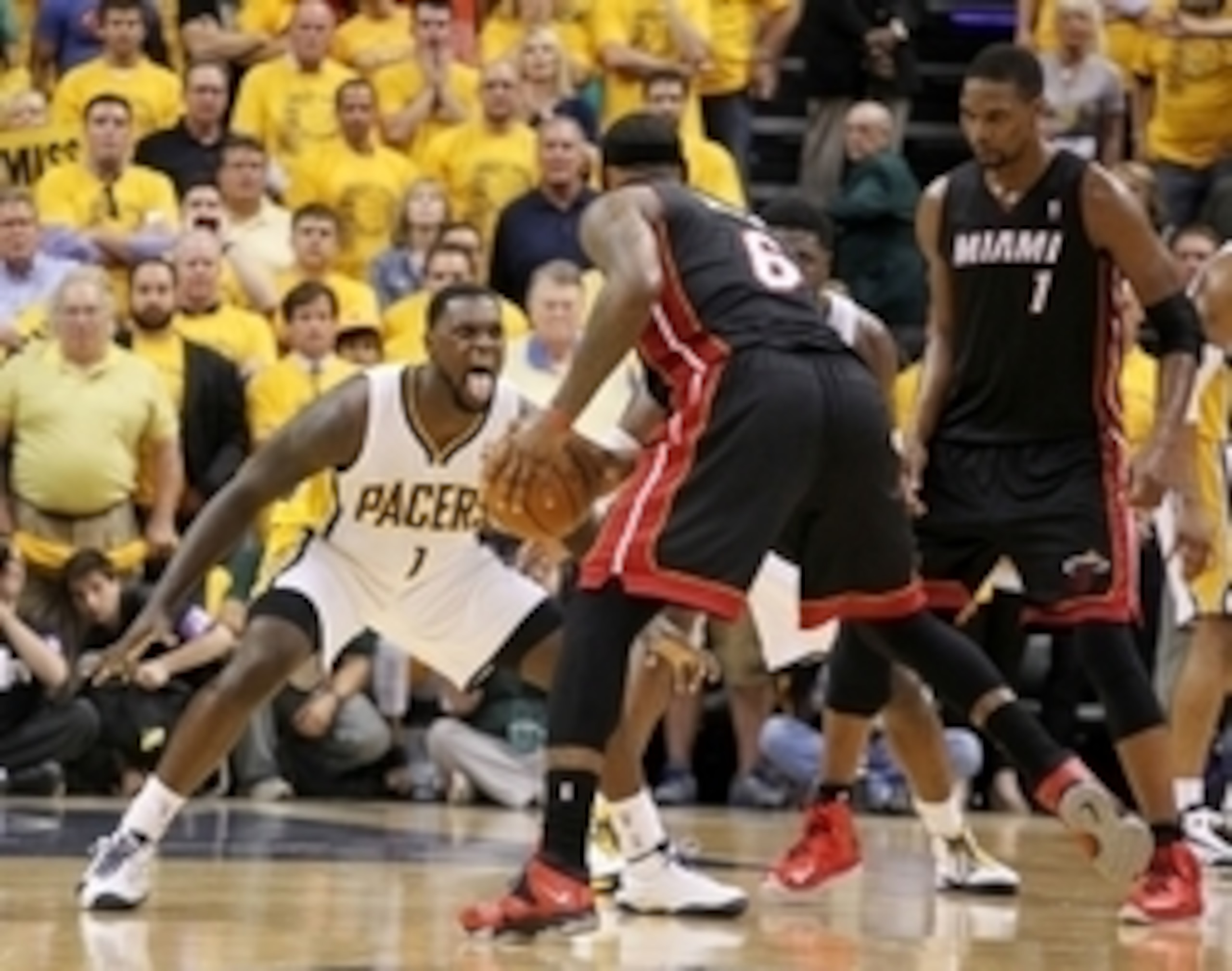
Drafted: No. 40 overall, 2010 by the Indiana Pacers
Notable guards drafted ahead of Stephenson: Landry Fields, Andy Rautins, Jordan Crawford, Elliot Williams, Dominique Jones, James Anderson, Xavier Henry
Probable cause for slip/misevaluation: Attitude, college role
Having faced sexual assault charges and been suspended from high school for fighting a teammate, there had been negative vibes surrounding Lance Stephenson even before he got to Cincinnati.
Though highly touted out of Lincoln High, Stephenson's character issues had been well-documented. DraftExpress highlighted some them from Adidas Nations in 2007:
"Stephenson showed a very questionable attitude throughout the event, picking fights with opposing players, showing questionable body language, and generally looking very immature. He pouted whenever things didn’t go his way, blaming the refs, his teammates, the opposition, or basically anyone besides himself when things went even slightly wrong.
"
Though he stayed out of trouble during his only year as a Bearcat, Stephenson's one-on-one style of play, reliance on strength and reckless mentality weren't very appealing.
Besides, he shot just 21.9 percent from downtown and 66.4 percent from the line.
Stephenson ultimately presented himself as a risk-reward pick. But at No. 40 overall, come on—there really wasn't much risk at all.
On the NBA floor, there was a lot Stephenson had to change, and he did. He's become a willing complementary weapon, having learned to stay effective playing off the ball. He even averaged 4.6 assists a game for the Pacers last season. Stephenson's shooting improved, as has his defensive effort since high school.
He is still a knucklehead, but he's also a two-way asset. Stephenson alone should improve the Charlotte Hornet's toughness moving forward.
Rajon Rondo, PG
11 of 22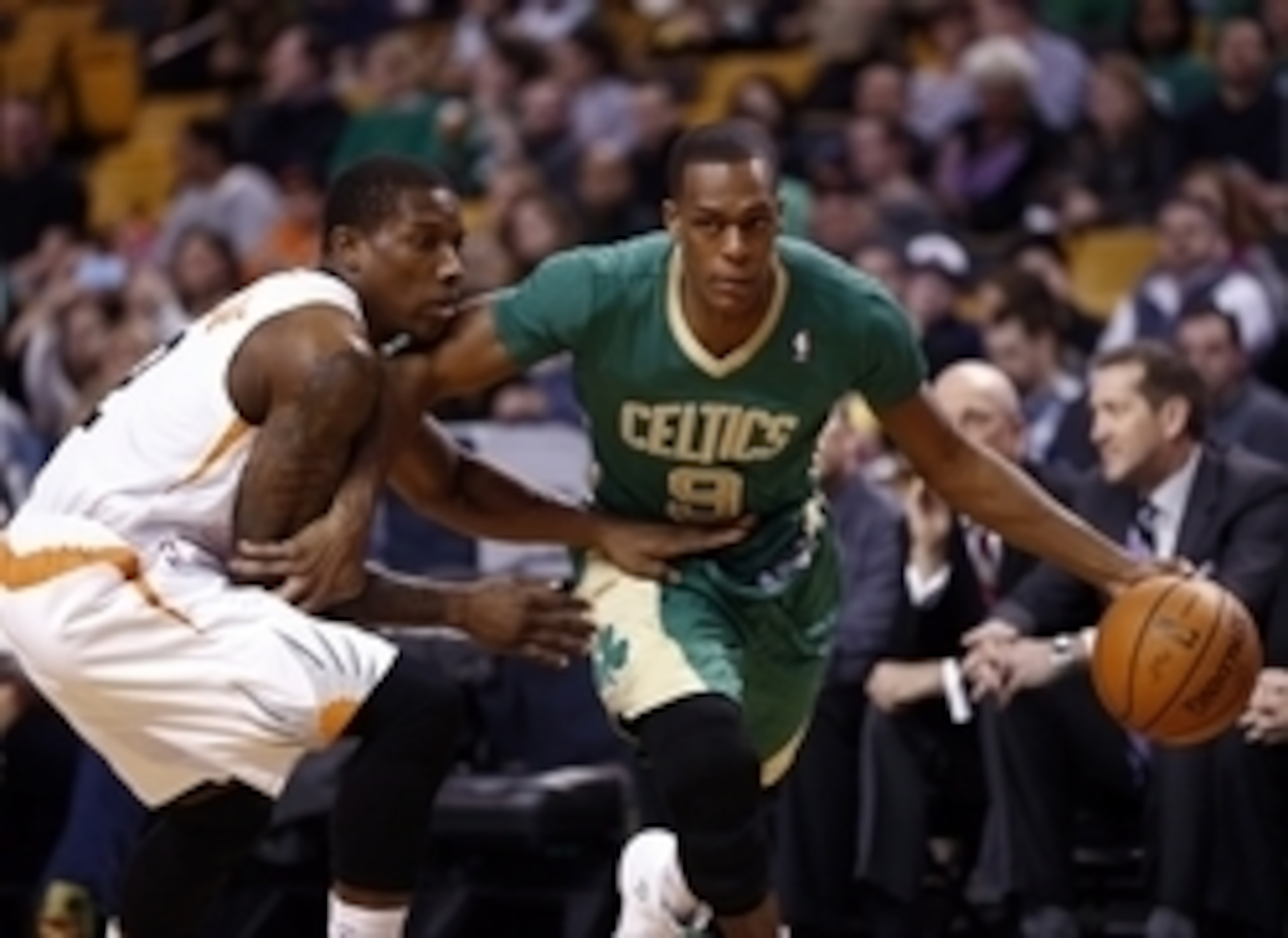
Drafted: No. 21 overall, 2005 by the Phoenix Suns (traded to Boston Celtics)
Notable guards drafted ahead of Rondo: Randy Foye
Probable cause for slip/misevaluation: College role, no jumper
Even in a draft with no other standout point guard prospects (he was the first one off the board), Rajon Rondo still managed to slide down to No. 21 overall.
Some of the blame might deserve to fall on the shoulders of his former college coach Tubby Smith, who used Rondo all over the place, from the off the bench to off the ball.
He averaged just 11.2 points and 4.9 assists his final season.
A severely limited jumper didn't help Rondo's stock either. He hit just 28 total three-pointers (28.3 percent) and shot only 57.7 percent from the line in two years at Kentucky.
Looking back, Rondo has ultimately become the exception to the rule that says point guards need a jumper, given the success he's had in the pros without one. His quickness, playmaking instincts and defensive tools each translated about as well as any strength could.
A true setup man, Rondo's ability to control the pace of a game and create scoring chances for his teammates have allowed him to separate from other point guards at the NBA level.
It's rare to find a franchise floor general this late in a draft, especially one coming from a power-conference school. Fortunately for the Celtics, his flaws and minimal college impact scared everyone off.
Isaiah Thomas, PG
12 of 22
Drafted: No. 60 overall, 2011 by the Sacramento Kings
Notable point guards taken ahead of Thomas: Andrew Goudelock, Charles Jenkins, Darius Morris, Shelvin Mack, Cory Joseph, Nolan Smith, Jimmer Fredette
Probably cause for slip/misevaluation: Size for position
Isaiah Thomas seemed more like a scorer than a point guard over his first two years at Washington, a bad image to project while standing just 5'10". He'd shot 41.5 percent and registered a negative pure point rating as a sophomore. And despite tweaking his game as a junior by upping his assist average from 3.2 to 6.1 a game, general managers apparently still weren't buying in.
They should have. His size limitations and shoot-first mentality haven't prevented him from constantly breaking down defenses and creating scoring opportunities.
Since college, Thomas' pull-up jumper has also become deadly, which has made him an even tougher cover in the pick-and-roll game. And his shooting range now extends beyond the three-point arc where he hit 1.8 shots a game last year.
Thomas' has his limitations, but had teams known his offensive game would translate this well, you wouldn't have seen him get passed on 59 different times in the 2011 draft.
Paul Millsap, PF
13 of 22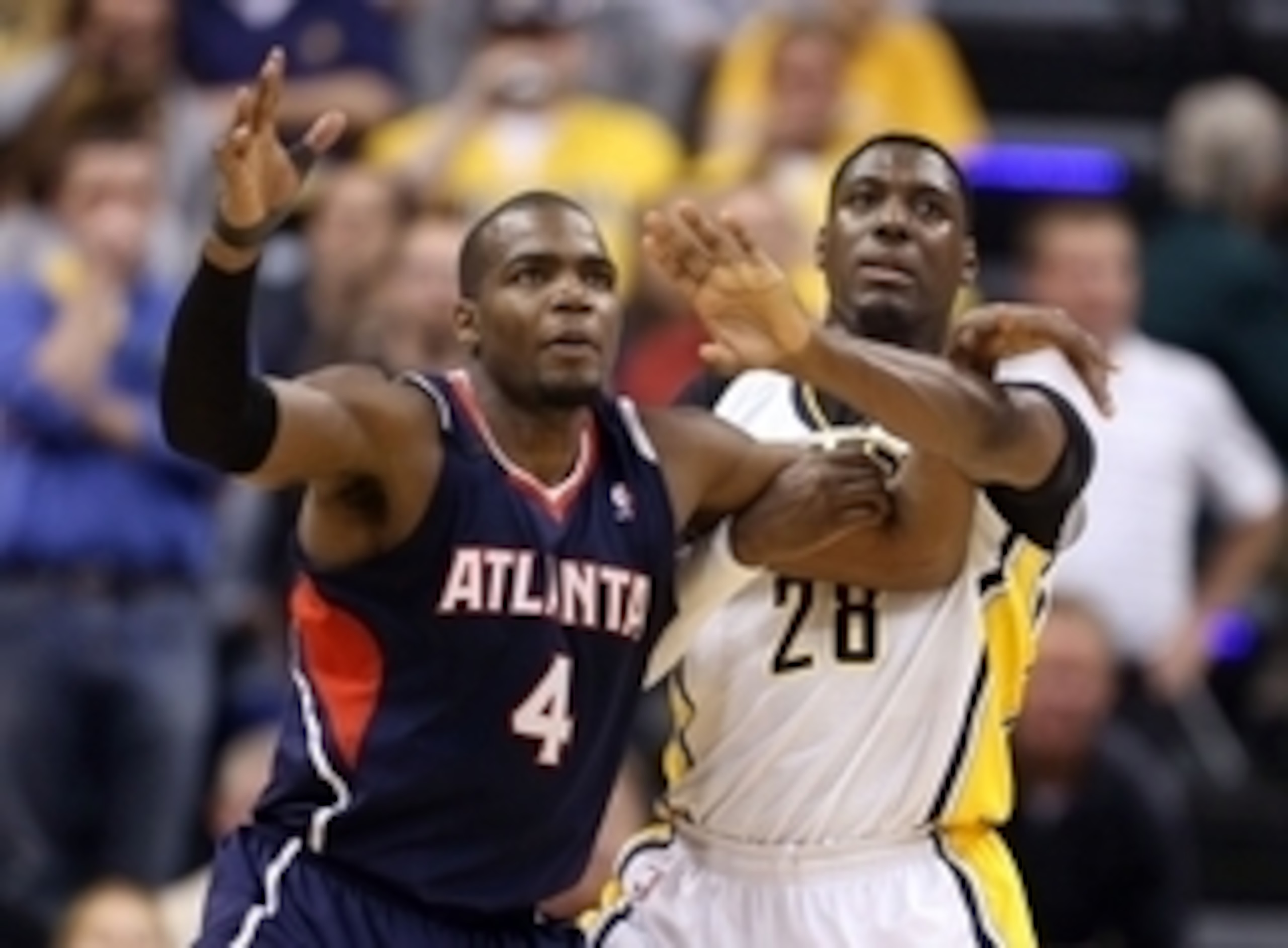
Drafted: No. 47 overall, 2006 by the Utah Jazz
Notable forwards drafted ahead of Millsap: Josh Boone, Craig Smith, Renaldo Balkman, Cedric Simmons, Solomon Jones
Probable cause for slip/misevaluation: Size for position, lack of perceived upside, questionable college competition
It's not like Paul Millsap went hidden at Louisiana Tech—he led the country in rebounding for three straight years and averaged over 19 points a game in each of his final two seasons.
But at just 6'7.25" (NBA combine measurement) without a perimeter game or strong defensive tools, it was fair to question how well his interior-oriented skill set would translate to the pros.
Plus, most of his damage was done against mid-major competition. He rarely ever went up against NBA-caliber big men.
It seemed like Millsap's ceiling topped out at the rebounding specialist level, which apparently wasn't high enough to trigger a bite in the top 46.
He was a gift that fell right into Utah's lap at No. 47. The bigger opportunity he got with the Jazz, the more activity they got from him.
Millsap's game has appeared to have grown with each year to the point where he's now a threat to face his man and either shoot or attack off the dribble. He's coming off his first All-Star appearance after averaging 17.9 points and 8.5 boards a game for the Hawks.
Nikola Pekovic, C
14 of 22
Drafted: No. 31 overall, 2008 by Minnesota Timberwolves
Notable centers drafted ahead of Pekovic: Kosta Koufos, Alexis Ajinca, Robin Lopez
Probable causes for slip/misevaluation: Lack of perceived upside
Nikola Pekovic found the radar back in 2006 with his strong play in the Adriatic League and Euroleague for Partizan, which carried into the Under-20 European Championships, where he was named to the All-Tournament team.
You couldn't miss him—Pekovic looked more like a character in Game of Thrones than a young European basketball prospect.
In 2008, he led Partizan to an Adriatic League championship, having shot 19-of-25 from the floor in the Final Four.
Still, his NBA outlook remained the same—despite Pekovic's monster body and ability to score at will in the paint, he lacked traditional NBA athleticism and ball skills away from the rim. From the surface, the upside just wasn't there. Could his strength and interior-only attack translate to legitimate production in the U.S.?
Apparently. Pekovic has gradually increased his scoring average with each year in Minnesota, where he averaged 17.5 points and 8.7 boards on 54.1 percent shooting a year ago.
He's now arguably the game's most physically overpowering center, only Pekovic has improved his touch and expanded his low-post game.
Omer Asik, C
15 of 22
Drafted: No. 36, 2008 by the Portland Trail Blazers (traded to Chicago Bulls)
Notable centers drafted ahead of Asik: Kosta Koufos, Alexis Ajinca, Robin Lopez
Probable cause for slip/misevaluation: Lack of perceived upside
Omer Asik jumped up draft boards in 2008 while playing for Fenerbahce in Euroleague, but it wasn't due to his offensive game, which was limited, just as it is today.
He ultimately generated interest based on his interior presence as a defender, rebounder and finisher. Only without any real skills or moves, the potential reward attached to Asik didn't seem very high.
The only way Asik would justify lottery or mid-first round value is if he'd maximize his talent as an interior specialist. And wouldn't you know it—he has.
Asik is now making over $8 million a year simply by rebounding, defending and finishing.
His strengths, though not flashy, hold tremendous value in the NBA—particularly for teams lacking toughness inside.
Kenneth Faried, PF
16 of 22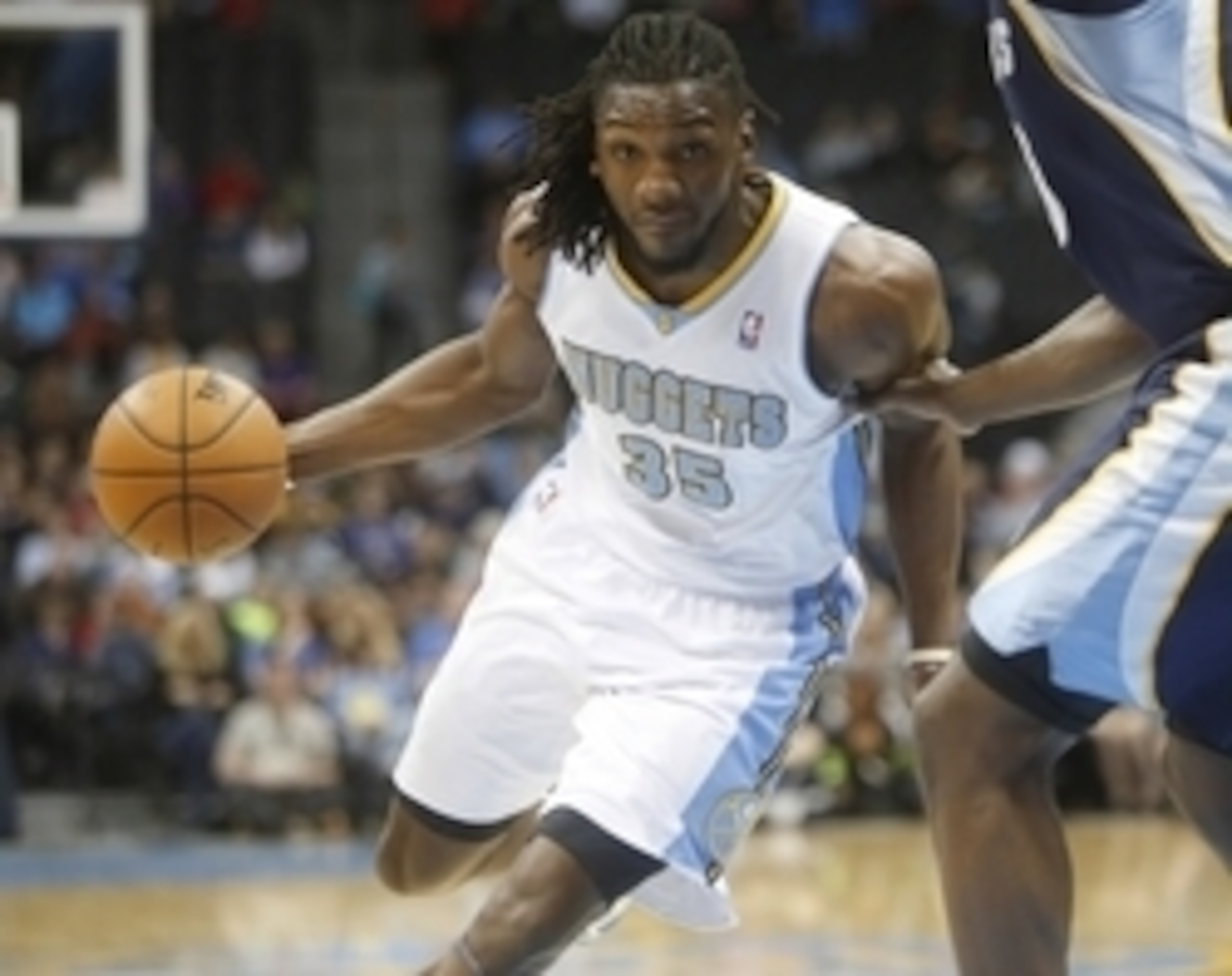
Drafted: No. 22 overall, 2011 by the Denver Nuggets
Notable power forwards drafted ahead of Faried: Derrick Williams, Jan Vesely, Bismack Biyombo, Donatas Motiejunas
Probable cause for slip/misevaluation: Size for position, lack of perceived upside
Kenneth Faried finished top three in the country in rebounding at Morehead State for three straight years before falling to No. 22 overall in the draft. He even went out on a high note, having racked up 17 boards and 12 points in an upset over No. 4 seed Louisville in the NCAA tournament (before double-doubling again in a loss to Richmond).
But Faried's offensive game was fueled more by athleticism, energy and instincts than skill. Most of his points came off finishes, running the floor, putting back misses and attacking open lanes.
And after measuring in at just 6'6" in socks at the NBA combine, the appeal to Faried as a "reach" candidate started to fade. It was clear where his strengths lied—what wasn't clear was whether they'd fully translate or if he'd add anything else to his game.
Thankfully for the Nuggets, the inch or two Faried lacks in height hasn't stopped him from pounding the glass. For his career, he's averaged 16.2 boards per 100 possessions, per sports-reference.com.
And while his offensive game is still a work in progress—he's in the midst of adding a mid-range jumper to his arsenal—Faried's athleticism and motor have translated to routine easy buckets around the rim.
Through three seasons, we can already confirm Faried's strong presence under the boards. But in terms of upside and overall room for growth, it looks like the best has yet to come.
David Lee, PF
17 of 22
Drafted: No. 30 overall, 2005 by the New York Knicks
Notable power forwards drafted ahead of Lee: Wayne Simien, Jason Maxiel, Hakim Warrick, Sean May, Yaroslav Korolev, Ike Diogu, Charlie Villanueva
Probably cause for slip/misevaluation: Lack of perceived upside, lack of year-to-year progression
David Lee was big time out of high school—a McDonald's All-American known for his high-flying athleticism and energy.
But after four years at Florida, we hadn't seen him add much else.
There was even debate as to whether Lee would be able to hold his own in the NBA paint. Lee was never known for his rebounding prior to his senior year. He grabbed less than seven boards a game in each of his first three seasons.
It didn't help that this class was loaded with power forwards. It's just amazing how many crapped out, from Ike Diogu and Sean May to Charlie Villanueva and Hakim Warrick.
With regard to his NBA outlook, arguably the best thing that happened to Lee was being drafted to the Knicks, where he was able to play right away and ultimately build on his skill set.
Before you knew it, Lee had developed a steady elbow jumper and improved his footwork and touch in the post.
Scouts also appeared to have missed on Lee's instincts, particularly his nose for the ball on the glass and team-oriented feel for the game as a passer.
Defense is another story, but at No. 30 overall, Lee still qualifies as a major steal.
Kyle Lowry, PG
18 of 22
Drafted: No. 24 overall, 2006 by the Memphis Grizzlies
Notable guards drafted ahead of Lowry: Randy Foye, Marcus Williams
Probable cause for slip/misevaluation: College role, lack of perceived upside
Through two years at Villanova, Kyle Lowry was never really one of the team's top options playing alongside Randy Foye and Allan Ray. His usage rate stayed below 21 percent in both seasons, an extremely low and rare number for a primary ball-handler, which he was for the Wildcats his sophomore year.
He also left on a pretty low note, having shot just 7-of-25 with a total of 10 assists in four NCAA tournament games.
Lowry's sophomore numbers and averages his final year before the draft: 11.0 points and 3.7 assists a game to go along with eight total three-point makes.
An unproven decision-maker and shooter, Lowry ended up going No. 24 to the Memphis Grizzlies, a couple of picks after fellow point guard fellow Marcus Williams, who accomplished nothing as NBA pro.
Lowry has actually turned out to be a decent shooter, while his dribble creativity, quickness, strength and vision have worked out well for him as a playmaker.
This past season, he emerged as the catalyst for an overachieving Toronto Raptors group. One of the toughest guards in the game, Lowry was a steal in a terribly underwhelming 2006 NBA draft.
Arron Afflalo, SG/SF
19 of 22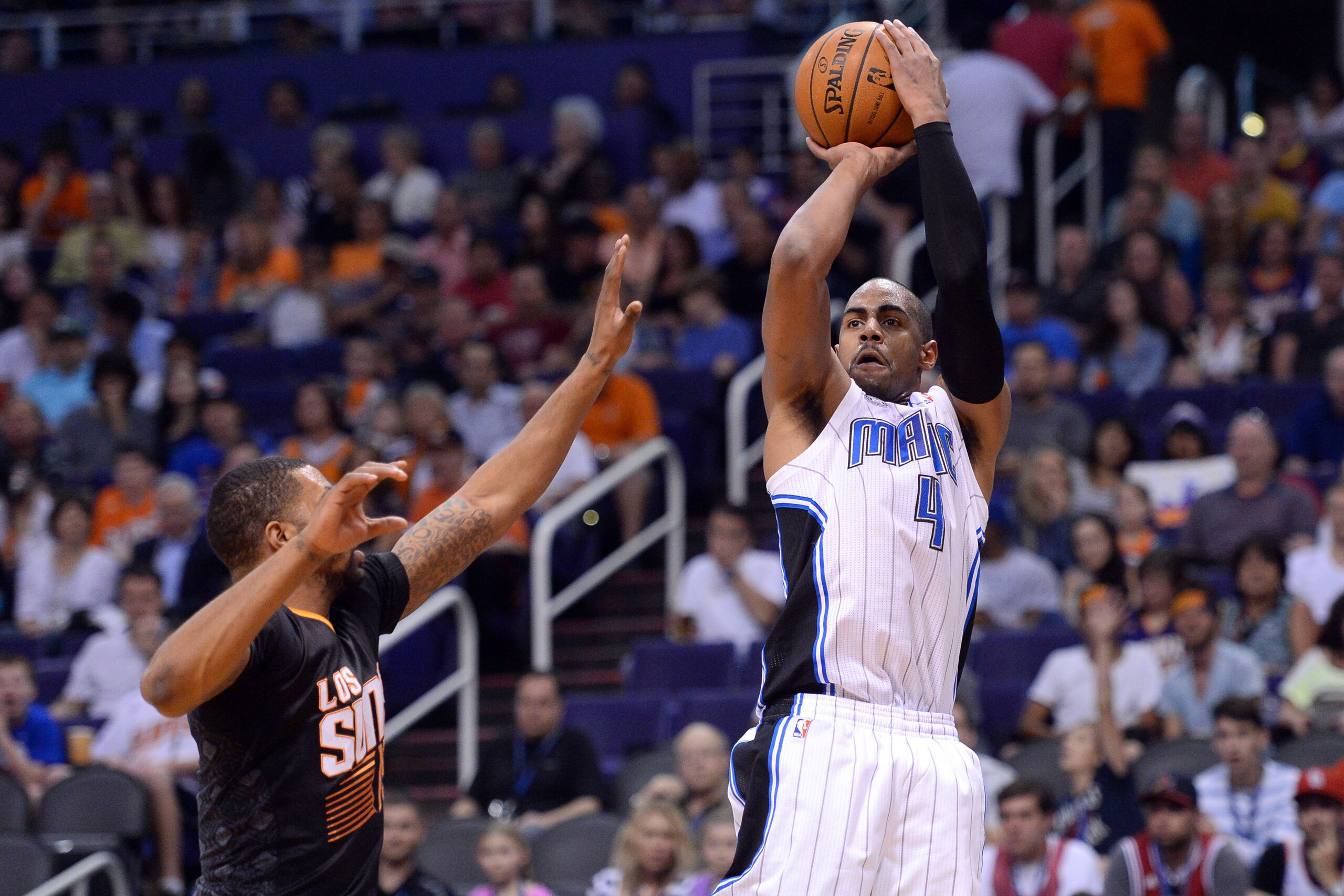
Drafted: No. 27 overall, 2007 by the Detroit Pistons
Notable wings drafted ahead of Afflalo: Morris Almond, Rudy Fernandez, Daequan Cook, Corey Brewer
Probable cause for slip/misevaluation: Lack of perceived upside
With a good-looking jumper, sharp defensive tools and a generally polished overall scoring arsenal, Arron Afflalo's stock was held in check due to two factors: lack of athleticism and a questionable track record under the spotlight.
After disappearing during UCLA's run to the national title game (shot two-of-nine in the Elite Eight, 3-of-11 in the Final Four and 3-of-10 in the title game against Florida) as a sophomore, Afflalo faded once again in another Final Four run. Except for a strong outing against Kansas, he had combined to shoot 5-of-22 against Pittsburgh and Indiana before finishing 5-of-14 in a loss to Florida.
There was just nothing sexy or overly appealing about Afflalo despite his two-way outlook as a defender and shooter.
While he didn't quite become an NBA star, he's certainly outproduced the value attached to his draft position at No. 27 overall.
Since entering the league in 2007, Afflalo has upped his scoring average with every season. He's managed to make a living by knocking down mid-to-long-range jumpers, having connected on 46.6 percent from 10-16 feet, 42.1 percent from 16 feet to the arc and 39.2 percent from downtown for his career, per sports-reference.com.
Eric Bledsoe, PG/SG
20 of 22
Drafted: No. 18 overall, 2011 by the Los Angeles Clippers
Notable prospects drafted ahead of Bledsoe: Luke Babbitt, Patrick Patterson, Xavier Henry, Ed Davis, Cole Aldrich, Al-Farouq Aminu, Epke Udoh
Probable cause for slip/misevaluation: College role, uncertain NBA position
Eric Bledsoe succeeding the way he has goes against traditional logic. At the time of the 2011 draft, you might have even considered No. 18 overall to be reach for Bledsoe, who at 6'1", seemed more like a scorer than a facilitator.
Either way, we didn't get to see what Bledsoe even looked like as a lead guard in college.
On a loaded Kentucky roster that already dressed John Wall at the point, Bledsoe's playmaking opportunities were limited during his one-and-done freshman year. He was used on only 20.4 percent of his team's possessions, while 35 percent of his offense came on spot-up jumpers, per DraftExpress' Scott Nadler.
But Bledsoe chose to bolt school and test his luck in a draft that had a major shortage of guards.
The shortage didn't really help his stock much—Bledsoe still went No. 18 overall overall behind guys like Luke Babbitt, Patrick Patterson, Xavier Henry, Ed Davis, Cole Aldrich, Al-Farouq Aminu and Epke Udoh.
And while it's still up for debate as to what position best suits Bledsoe's strengths, there's no denying the offensive firepower he's capable of unloading.
One of the game's premier athletes, Bledsoe's size and questionable position haven't seemed to hold him back from high-level playmaking.
Though his first year in a full-time role last season was cut short due to injury, he averaged 17.7 points and 5.5 assists through 43 games. And now he's earning roughly $14 million a year.
Ryan Anderson, SF/PF
21 of 22
Drafted: No. 21 overall, 2011 by the New Jersey Nets
Notable forwards drafted ahead of Anderson: J.J. Hickson, Marreese Speights, Anthony Randolph, Jason Thompson, Joe Alexander
Probable cause for slip/misevaluation: Lack of perceived upside
Ryan Anderson was putting up points from the second he put on that California jersey back in 2006-07, when he averaged 16.3 a game as an under-the-radar freshman. Anderson got better as a sophomore, upping his scoring average to 21.1 on 49 percent shooting.
But the obvious appeal to Anderson centered around his jumper—at 6'10", he drilled 122 three-pointers at a 39.6 percent clip in two years in college.
Only the upside tied to a stretch 4 like Anderson apparently wasn't enticing enough to reach on. It's too bad, because outside of the Pacers, who took Roy Hibbert, just about every team drafting from No. 11 to No. 20 whiffed big.
Anderson ultimately fell into the lap of the Nets, but it was with the Orlando Magic that his shot-making career really took off. He's become lethal from just about anywhere on the floor where he's got room to rise and release.
Last season, he was averaging nearly 20 points a game prior to going down with an injury. Now healthy, Anderson could be competing for Sixth Man of the Year honors for the foreseeable future in New Orleans.
Ty Lawson, PG
22 of 22
Drafted: No. 18 overall, 2009 by the Denver Nuggets
Notable guards drafted ahead of Lawson: Jonny Flynn, Brandon Jennings, Tyreke Evans
Probable cause for slip/misevaluation: Size for the position
The Denver Nuggets might want to thank the Minnesota Timberwolves and Milwaukee Bucks for respectively ranking fellow point guards Jonny Flynn and Brandon Jennings higher on their boards.
At the time, Lawson had just sparked North Carolina on a national championship run. He took 35 free throws in the Final Four that year—Lawson was just a nightmare off the dribble and unstoppable at the college level.
But he measured in at 5'11.25" in socks with the smallest wingspan (6'0.75") at the NBA combine.
“It’s my height,” Lawson told Marc Berman of the New York Post (via theknicksblog.com) in 2009 regarding his "mid-first-round draft status." “I don’t think it’s that big of a deal, my height being 6-foot. Hopefully whoever picks me I’ll show I’m a better player than most people think.”
There were also questions as to whether or not Lawson, who seemingly played at 100 miles per hour, could be effective facilitating a half-court set at the NBA level.
In Denver, Lawson's strength and quickness have ultimately helped make up for a few inches in height. And his assist average has gradually risen in each NBA season (so has his scoring average)—up to 8.8 a game in 2013-14.
Even though many of the teams that passed on Lawson already had point guards in place (except the Knicks, who needed a point guard and went with Jordan Hill), their team-needs approach (over drafting the best player available) resulted in picks like Terrence Williams, Tyler Hansbrough, Gerald Henderson, Austin Daye, Earl Clark and James Johnson from No. 11 to No. 16.


.jpg?w=2560 "NFL House in Paris Closes for Protests")
.jpg?w=2560 "Trevon Diggs Cut by Seahawks")


