
Can Doug McDermott Crack the Chicago Bulls' Rotation?
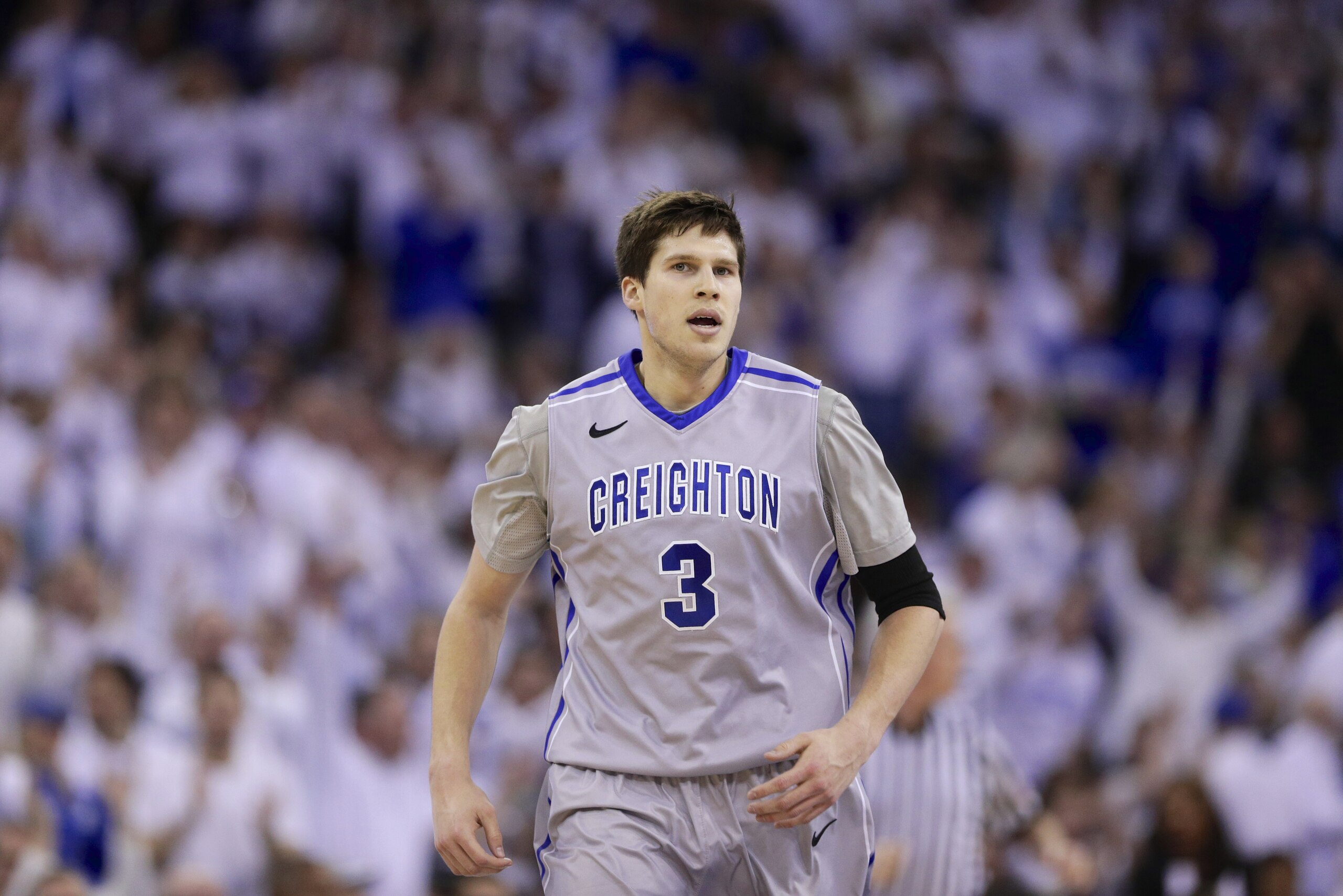
Doug McDermott's college career at Creighton University will go down as one of the greatest ever.
He was twice named an All-American, conference player of the year three times and first team All-Conference in each of his four years. His 3,150 points place him fifth on the all-time college scoring list.
As a rookie on the Chicago Bulls, McDermott is starting from scratch. His college stardom will have no impact on his playing time or success in the NBA, and he'll likely be fighting for scrap minutes on a team with championship hopes.
Considering the depth at the forward position in Chicago, is he even good enough to earn a significant and permanent role in the rotation?
Evaluating how a college player translates to the NBA is more art than science. Great college scorers flame out just as often as nobodies or projects blossom into stars. Players of McDermott's skill set—the volume college scorer—present some of the greatest evaluation difficulties because their statistical profiles appear so intriguing.
Most big-time scorers experience a natural leveling off of efficiency as their offensive burdens increase. With more pressure to put the ball in the hole, point volumes increase, but shooting percentages decline. It's much easier to make five of 10 shots than 10 of 20.
McDermott's college career arc countered this typical curvature of the ratio of scoring volume to efficiency. In fact, it wasn't an arc at all: His usage rates shot up along with his field-goal percentages.
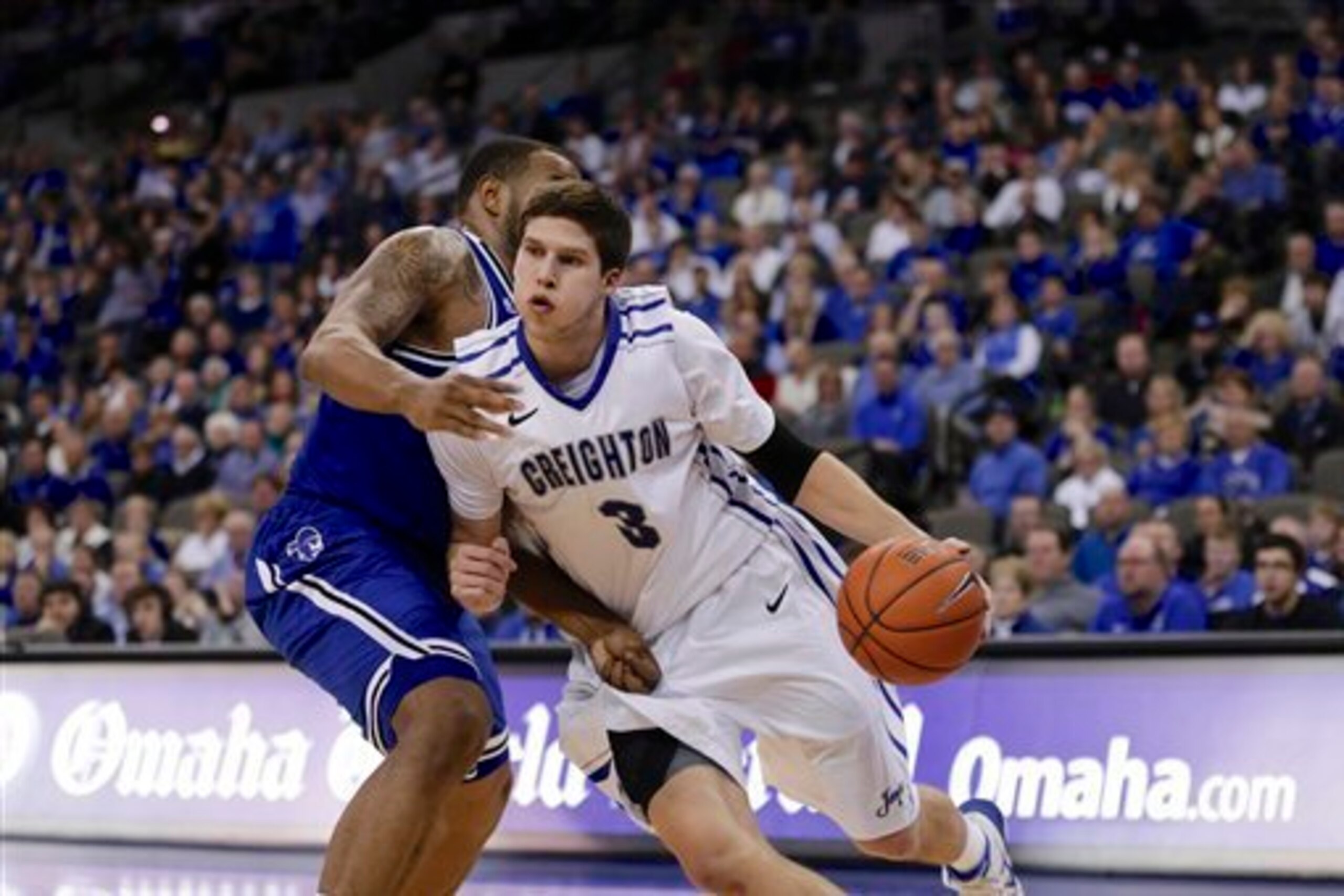
According to Sports-Reference, his usage rate throughout college rose steadily: from 26.6 percent as a freshman to 28.8 as a sophomore, followed by 33.3 and 36.3 in his junior and senior years.
His points naturally followed suit: 14.9 per game as a freshman to 22.9, 23.2 and 26.7 in the ensuing three years.
Yet the extra focus he earned in his latter years at Creighton had no ill effects on his effective field-goal percentages. After posting an impressive 57.9 percent in his freshman year, he followed that up with 62.0, 64.4 and 61.6 in his final three years.
The analytics profile even goes a step further in McDermott's case. His turnover rates fell as his career progressed as well. Despite being relied upon more and more as the team's primary creator and facing a greater share of the focus from opposing defenses, he cut his turnover rate nearly in half from his freshman to senior year (15.4 percent to 7.9).
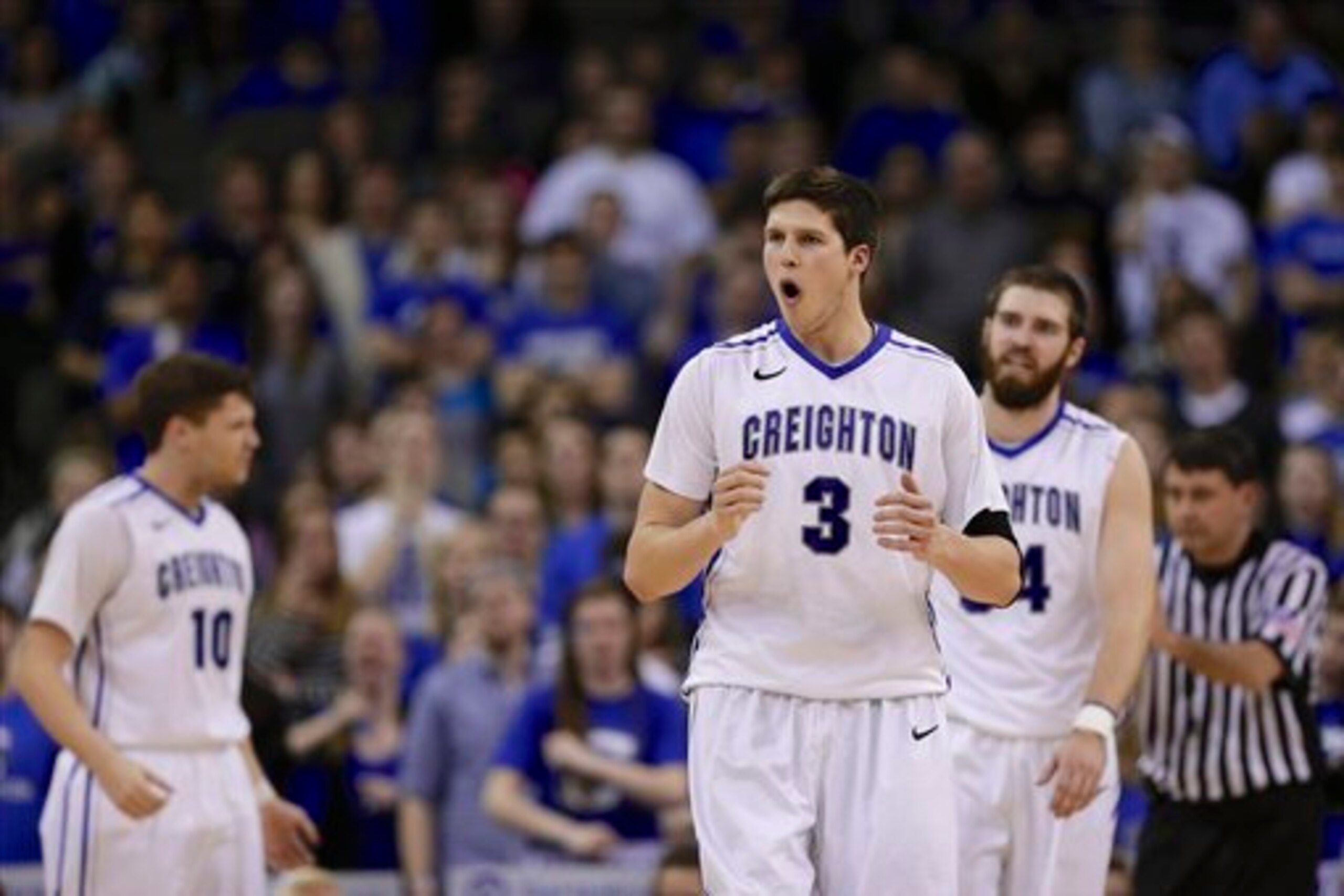
Answering the question of whether McDermott can do it at the next level is mostly guesswork. He certainly won't be afforded the role of primary scorer on the Bulls, what with a former MVP in Derrick Rose leading the charge and a handful of All-Star caliber players peppering the roster.
But can he slide into a more periphery role comfortably after dominating the ball for his entire career? And, more pertinently, is he better than the other Bulls' players at his position?
That's really what it comes down to with McDermott. As an offensive player, his three-point range, off-the-dribble capabilities and clever post-up game provide him with the kind of versatility that makes him valuable to any type of offense.
If he gets matched up against a smaller player, he can walk him down to the block and take advantage with his strength and well-groomed back-to-the-basket repertoire. If he's guarded by a bigger player, his quickness and ability to stretch the floor can cause serious problems.
It's defensively that McDermott might unintentionally handcuff Bulls head coach Tom Thibodeau.
If he slots in as a power forward, his natural power can handle most 4s. Only post players with height will give him serious problems, but they will likely be taken care of by Taj Gibson, Pau Gasol or Joakim Noah.
If he's playing the 3, McDermott will undoubtedly struggle. He does not have the lateral quickness to chase the average NBA small forward, which is now arguably a stronger offensive position in today's game than the 2.
So play him at the 4, right? Well, that poses a few problems. Thibodeau is a defensive mastermind who sticks to two-big lineups, relying on bruisers to protect the paint and set a physical tone. McDermott doesn't fit this mold whatsoever—he's not even 6'8" in shoes, according to Draft Express—and he'll be playing behind Gibson and Gasol.
While he can guard the post in one-on-one situations, he's not a good rim protector or inside helper.
Even if Thibodeau does relent lineup-wise and McDermott seizes an opening behind the team's more prototypical bigs, he'll still face another fight: European free agent Nikola Mirotic, a stretch 4 in his own right who has been one of the best players in Europe since he was drafted in 2011.
That's a pretty big uphill climb at the 4 spot. At the 3, things only look slightly less bleak: Jimmy Butler, Tony Snell and Mike Dunleavy will rotate as the team's wings.
Thibodeau has already acknowledged the long odds his two rookies, Mirotic and McDermott, are facing when it comes to minutes, via the Chicago Tribune (subscription required): "That's not to say [cracking the rotation] can't be done. Both Doug and Nikola have great attitudes and approaches. Where it goes, I don't know. I know there's a steep learning curve."
Still: The Bulls dealt two mid-first-round picks to move up in the draft just to nab McDermott. Their offense was atrocious last year after Rose went down, in particular due to an inability to shoot the ball from deep.
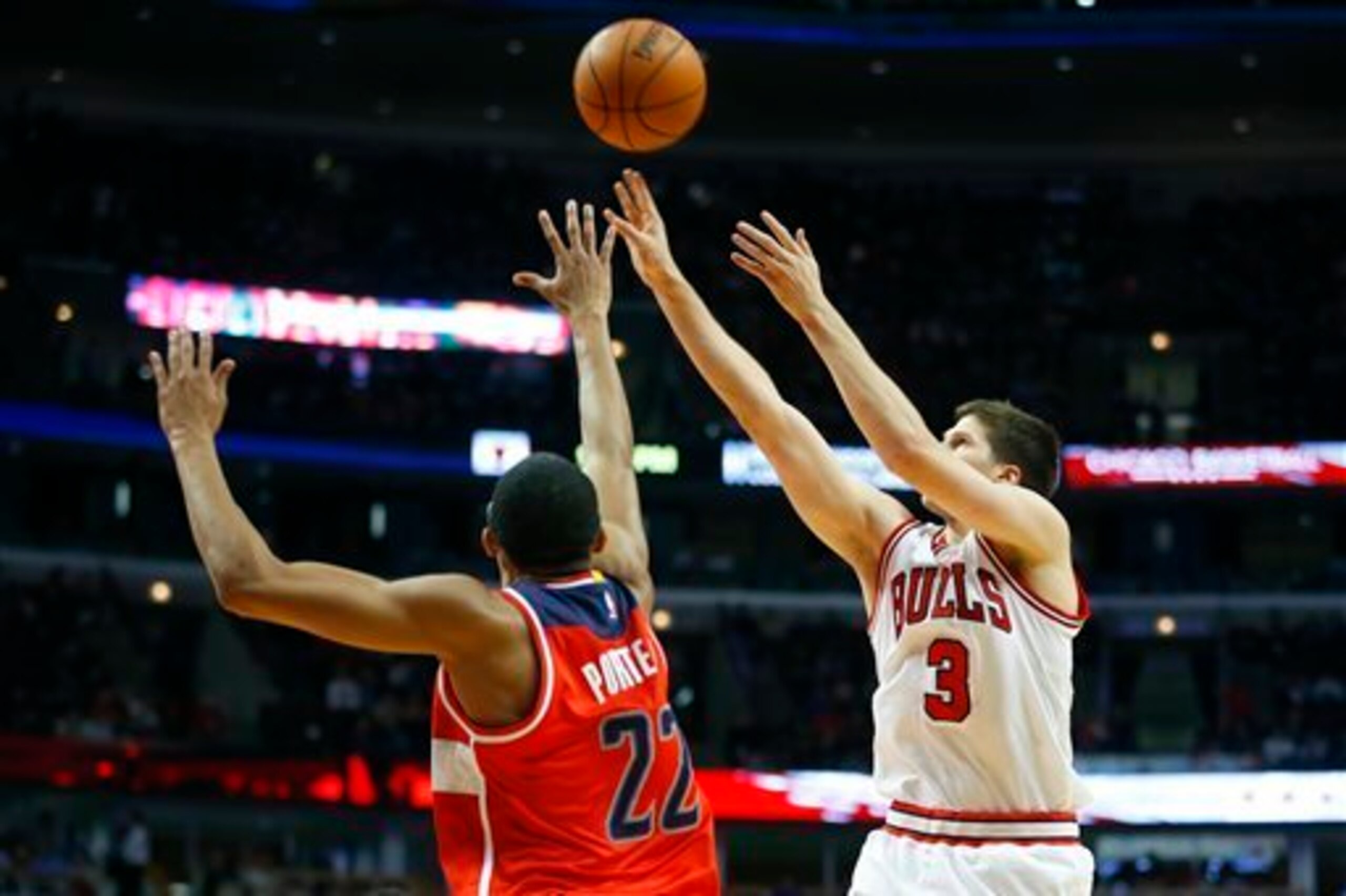
Their 34.8 three-point field-goal percentage ranked 24th in the league, according to NBA.com, and contributed to their mere 17.8 three-point attempts per game, third fewest in the league. Teams simply packed the paint against them and backed off, daring the Bulls to win with a barrage of shots from deep.
The Bulls had no answer for this defensive strategy, and their offensive rating subsequently plummeted to 99.7—only ahead of the woeful Philadelphia 76ers and Orlando Magic, two of the worst teams in the league.
That's why it won't be entirely surprising if McDermott earns an important role within the team as a backup power forward. His shooting is too valuable.
JayPatt over at Blog A Bull believes he'll see somewhere between 15-20 minutes per game: "There are several players in place who have the time in Thibs' system that McDermott lacks, and once again, Snell could have something to say about the minutes the rookie gets. Taking all these factors into account, I'm thinking McDermott plays around 15-20 minutes per game this season."
McDermott's reputation as a poor defender is why most limit his ceiling as an NBA player and his minutes as a rookie, but his physical strength is wildly underrated.
Don't be surprised if his role defensively mirrors that of Carmelo Anthony in New York: battling bigs down low where the crowded real estate limits the importance of quickness.
Simply put, McDermott doesn't get bullied.
Here's an example: Against LaDontae Henton of Providence during last year's Big East Tournament, McDermott gets slightly caught in up in a cross screen and cedes some post position.
Henton makes the catch right on the block, only a few feet from the rim. With a quick power dribble he can pin McDermott under the hoop and lay the ball in.
When he tries to execute the maneuver, McDermott holds his ground admirably. It's a really a combination of both technique and strength: the pure power to withstand the force of Henton's shoulder lowering into his sternum and the technique to keep a wide base to make himself as sturdy as possible.
What's more is that McDermott never dips his arms forward, a common mistake that earns an automatic foul. It's only natural to lean all parts of the body forward in an effort to fight for positioning, but McDermott's lower body and midsection are strong enough to handle the job themselves.
This frees up his upper body to contest the shot appropriately and force a difficult shot from close in.
McDermott's situation on the Bulls is both lucky and unlucky. Being paired with the league's best defensive coach will help to solidify his greatest weakness, and playing alongside All-Stars on a championship-caliber team will only help his future development.
The other side of the coin is that he might not see significant minutes to improve on the floor. No learning in practice can truly replicate game reps.
How Thibodeau manages McDermott, both in this season and in future years, will be an interesting case study on what's best for players adjusting to new roles in the NBA.
But it's not all on Thibodeau. McDermott will have to earn every minute of playing time to solidify his status as an important player in the Chicago rotation.

.jpg?w=2560 "NFL House in Paris Closes for Protests")
.jpg?w=2560 "Trevon Diggs Cut by Seahawks")