

Which Cleveland Cavaliers Superstar Will Take a Back Seat During 2014-15?
Some NBA teams struggle to find one competent primary option at the offensive end.
The new-look Cleveland Cavaliers will not have that issue. In LeBron James, Kevin Love and Kyrie Irving, they have three go-to players on that side of the floor, all of whom finished among the league's top 14 scorers last season.
The combined production of Cleveland's superstar troika is staggering: 74 points, 23 rebounds and 16.8 assists per game. It's also not remotely sustainable, unless the Cavs can successfully petition to have multiple balls in play this season.
TOP NEWS

Buzz: Bron Chopper Part of Deal 🚁

MJ Makes Record-Setting Donation 🙌
Shams: KAT, Hart Could Be Trade Names
With a finite number of touches available, these players will have to sacrifice like never before. All three ranked inside the top nine in usage percentage last season (James at 31.0, fifth; Irving at 29.0, eighth; Love at 28.8, ninth).
Only one team, the Oklahoma City Thunder, had even two players slotted that high: Kevin Durant (31.4, fourth) and Russell Westbrook (33.1, third). And their third scorer, Serge Ibaka, tied for 243rd in the category (18.1).
There is a good chance that each member of Cleveland's Big Three will see decreases in usage and, subsequently, output. But it seems even more likely that one of these three will need to sacrifice more than the others.
According to James, a four-time MVP and two-time world champion, that player won't be Irving.
"I'll probably handle the ball a little bit, but this is Kyrie [Irving]'s show," James told reporters at training camp. "He's our point guard. He's our floor general, and we need him to put us in position to succeed offensively. He has to demand that and command that from us with him handling the ball."
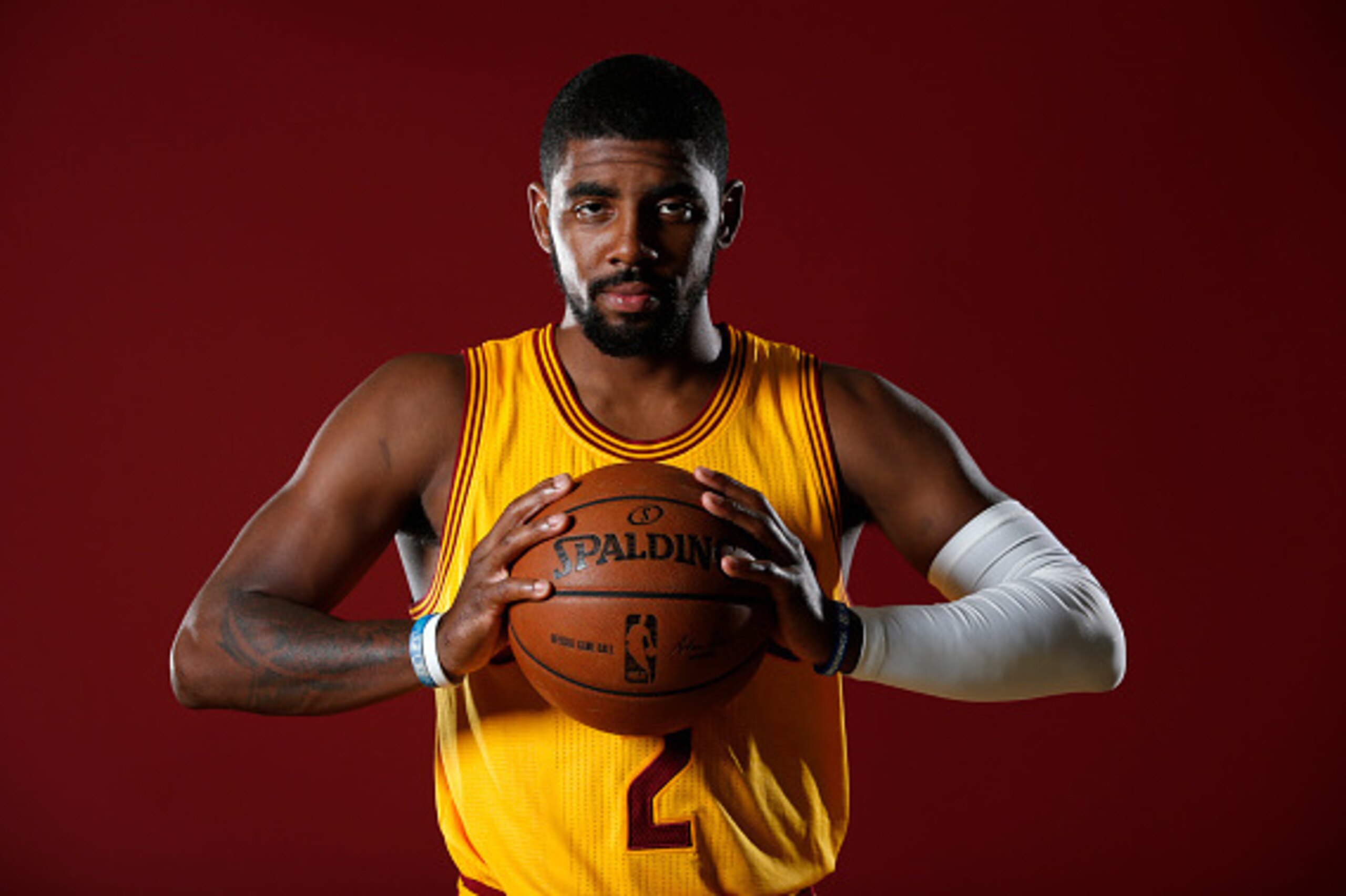
James has never shared the floor with a point guard like Irving, a ball-handling savant capable of creating his own shot and manufacturing clean looks for others.
The 22-year-old has amassed impressive per-game marks over the first three seasons of his career: 20.7 points, 5.8 assists, 3.7 rebounds and 1.4 steals. Efficiency has been his hardest hurdle to climb, as the scoring point guard set career lows in true-shooting percentage (53.3) and player efficiency rating (20.1) in 2013-14.
Of course, he also compiled those numbers on an offensively overmatched 33-win team. As the level of talent around him has improved, so too has the quality of his production. A 31-point, 14-assist effort netted him MVP honors at the 2014 All-Star Game, and a 26-point, 10-of-13 shooting performance in the gold-medal game versus Serbia helped earn him the same award at the 2014 FIBA Basketball World Cup.
Perhaps fueled by that recent success or through simply trusting his supreme talents, Irving stood by James' assessment of his importance to this offense.
"I don't think (James) could've said it any better, honestly," Irving said, per Joe Vardon of Northeast Ohio Media Group. "...For us it's just about making plays. All of us have the ability to make plays out there and I think our offense will be designed around that."
In other words, Irving might initiate a lot of coach David Blatt's sets, but the Cavs are not going to forget about their now-returned prodigal son.
As NBC Sports' Brett Pollakoff observed, James is still the most likely player to have the heaviest hand in this team's success:
"James will be expected to be the primary cog in the Cleveland machine next season, even with Irving and Kevin Love playing right alongside him in the starting lineup. New head coach David Blatt has all kinds of nifty sets available to create easy offense, and with Irving initiating things on the bulk of the possessions, James will have the freedom to play off the ball more than he has at any point in his career.
"
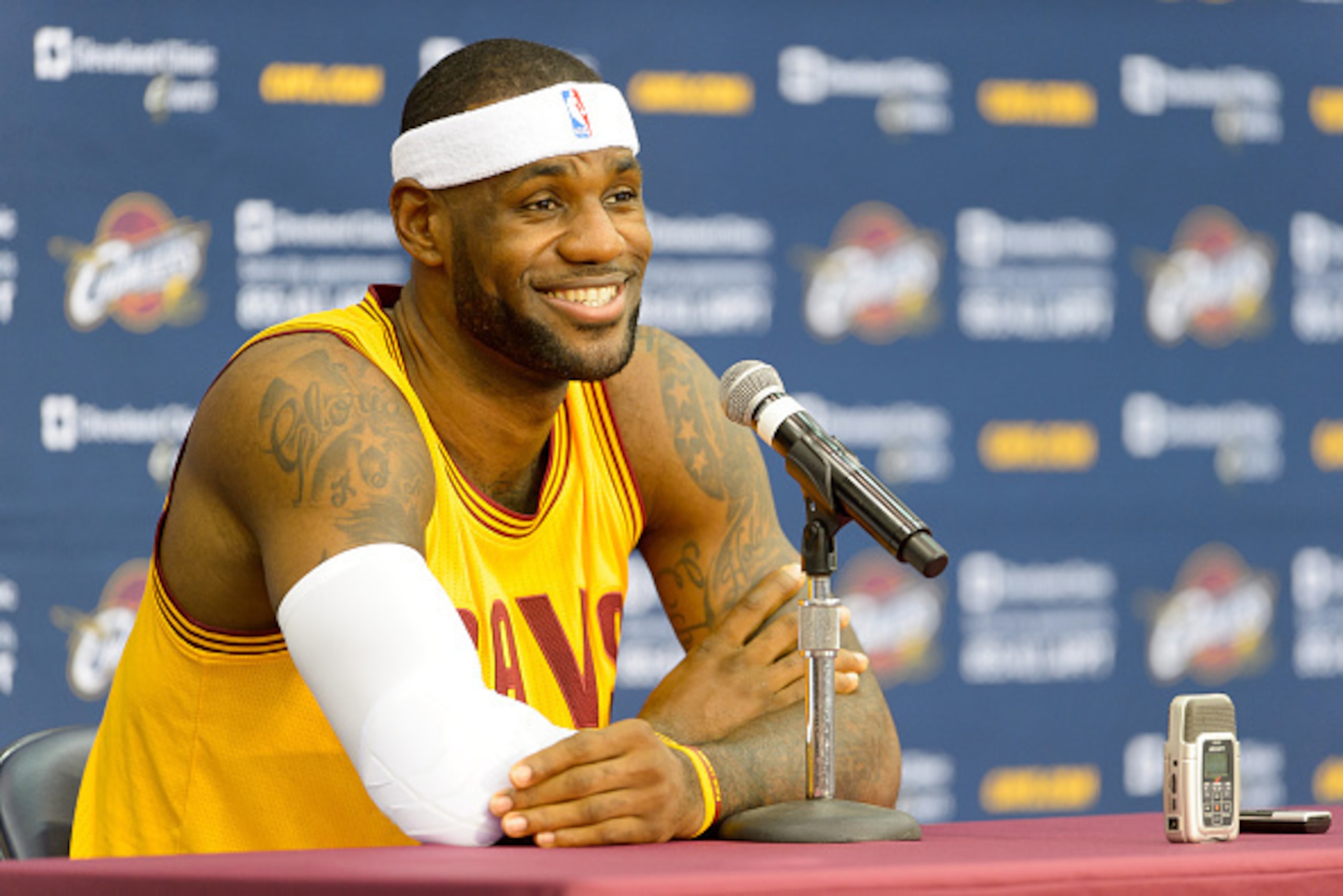
Given James' track record, the Cavs would be foolish not to attempt to soak up every bit of his potential production.
No one in this league has a quantity-plus-quality resume quite like his.
As a scorer alone, he is a devastating force.
Only Durant (30.1) and Carmelo Anthony (28.0) have averaged more points over the past two seasons than James (27.0). Durant was a 50.6 percent shooter from the field over that stretch, while Anthony converted just 45.1 percent of his field-goal attempts. James, meanwhile, ripped the net on 56.6 percent of his shots, which not only topped Durant and Anthony but also bettered the next 24 scorers on that list.
What makes James truly remarkable, though, is that despite all of this point production, it's hard to say if that's even the strongest aspect of his game.
"He's not just a scorer," Grantland's Kirk Goldsberry wrote of James. "He's also one of the NBA's best and most unselfish creators, and it's this trait that's likely to benefit Love and Irving the most."
Last season, James generated 12.0 assist opportunities—passes that would have resulted in an assist had the recipient made the shot—which was the same number as San Antonio Spurs All-Star point guard Tony Parker, via NBA.com's SportVU player tracking data. James' 32.0 assist percentage was more than five points higher than the next non-guard in the category (Durant, 26.7).
So, if Irving is running the bulk of Cleveland's offensive plays and James is controlling them, that leaves Love as the third wheel. Considering the versatile big man finished the 2013-14 campaign ranked third in PER (26.9), fourth in scoring (26.1) and third in offensive win shares (10.6), it seems like such a curious role for someone with his skill set.
However, it makes some sense on a couple of different levels.
For one, it speaks to the embarrassment of riches on this roster. Put three players with this type of talent together, and inevitably one's star won't shine as brightly as the others'.
Chris Bosh averaged 24.0 points on 16.5 field-goal attempts during his last season with the Toronto Raptors. Once he joined James and Dwyane Wade with the Miami Heat, those numbers fell to 18.7 and 13.7, respectively.
This also has the potential to work because of what Love brings inside the lines.
He is perfectly equipped to play the role of Cleveland's offensive safety valve. While it's likely to cost him some volume on the stat sheet, it should send his efficiency soaring—a terrifying thought considering how high it already is.
Love isn't a great isolation scorer. He finished such plays at a rate of 0.80 points per possession, which ranked just 123rd overall, per Synergy Sports (subscription required). But with expert creators like Irving and James now at his side, Love shouldn't need to worry about finding his own shots.
That should work even greater to his strengths. His 7.2 catch-and-shoot points per game were the fifth most in the league. He hit 41.3 percent of those shots overall and 39.9 percent of the ones that came beyond the three-point line—and that came with defenses focusing their efforts on slowing him down.
Love won't see nearly the same type of defensive attention this season.
Not with James and Irving receiving the lion's share of defensive looks, and Cleveland's other shooters (Mike Miller, James Jones), slashers (Dion Waiters, Shawn Marion) and restricted-area finishers (Tristan Thompson, Anderson Varejao) punishing teams for letting them slip through the cracks.
That makes Love dangerous not only for his soft shooting touch but also the other weapons in his arsenal.
He's an expert rebounder. He finished last season ranked third in both rebounds per game (12.5) and defensive rebound percentage (29.5). If teams don't remember to put a body on him—or two or three—he could be a terror on the glass.
Once he secures the rebound, he also possesses arguably the best outlet pass in the business. But it's important to remember he can pick apart a defense with more than just those vertical bombs to streaking receivers. Since becoming a full-time starter in 2010-11, his 14.6 assist percentage is tied for 18th among forwards and centers.
Love's numbers won't be the same, but his impact could feel very similar. He, along with Blatt, will be responsible for keeping this offense humming when James and Irving cannot do it on their own.
If Blatt has his way, James and Irving should never feel like they have to do anything on their own.
"If you make hard cuts, pass the ball on time and make shots, every offense looks good," Blatt told reporters. "The way we want to play with this group, which is a high-IQ group, is to give them a chance to read and react, make good decisions and play off the defense."
So, while James and Irving have the best chance to dominate the ball and Love seems safe to slot in as the No. 3 option, all of those roles are subject to change.
The Cavs do not want to force anything, and with this type of offensive firepower, they should not have to. This offense should be designed to break down a defense, and the ball should find a capable scorer no matter where those openings surface.
"Blatt's concepts encourage ball-sharing and cutting," wrote Bleacher Report's Dylan Murphy. "It's not enough just to screen away from the ball or just to swing it from side to side. Finding a way to seamlessly implement both in an offense is the key."
With players and the basketball moving briskly around the court, it might be up to the defense to decide where they stop.
Over the course of the 2014-15 campaign, both James and Irving should spend the most time carrying this offense's torch. That means Love is likely to log the most minutes in the back seat.
But don't be surprised if he switches spots with Cleveland's other superstars at different points during the season. All three of these players will need to make sacrifices—Love's will just be the easiest to notice.
Unless otherwise noted, statistics used courtesy of NBA.com and Basketball-Reference.com.
.jpg?w=2560 "2 NFL Officials Suspended")


.jpg?w=2560 "Mahomes' Wife Trolls Kubiak 💀")
.jpg?w=2560 "Love's Body Already 'Tired'")
.jpg?w=2560 "Injury-stricken Seahawks signing veteran RB")