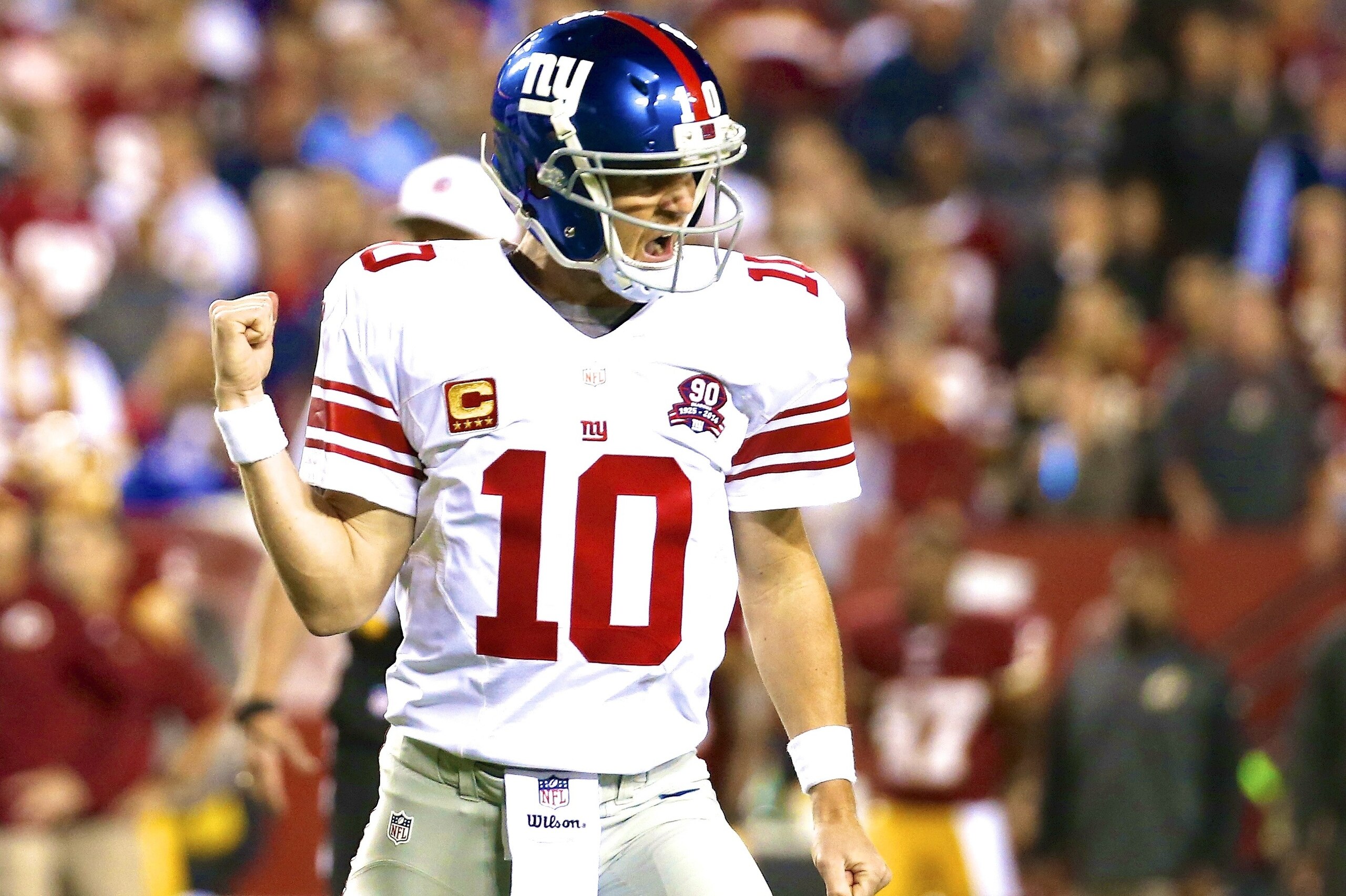

Have Eli Manning, Giants Offense Finally Turned the Corner?
When Eli Manning is rushing for touchdowns, you know he's feeling it.
The New York Giants quarterback was nearly perfect in Week 4 as he led his team to a 45-14 win against Washington, passing for 300 yards on 28 of his 39 attempts. Notably, he found breakout tight end Larry Donnell seven times, and the two linked up for three of Manning's four touchdowns.
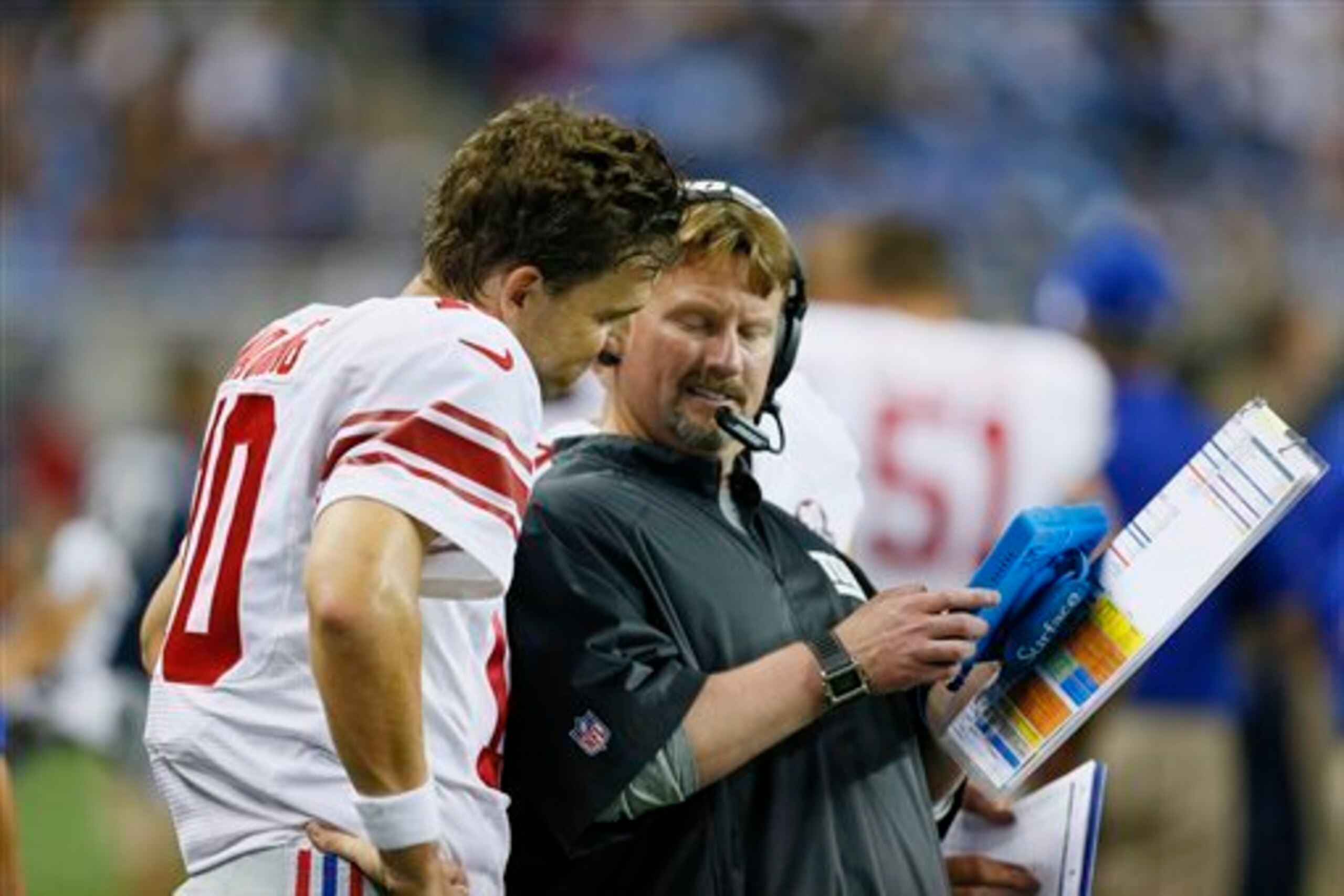
Though many were waiting for Washington QB Kirk Cousins to be the breakout star of the night, it was Manning who gave viewers yet another peek at just how good this new Giants offense can be under offensive coordinator Ben McAdoo.

.jpg?w=2560 "Commanders Eagles Football")

More importantly, just a few days after beating the Houston Texans 30-17, Manning showed that both he and his offense could be more consistent than they've been in the past.
If this is what the Giants offense has become, sign me up for the bandwagon.
This Offense No Longer Lives and Dies with Eli Manning
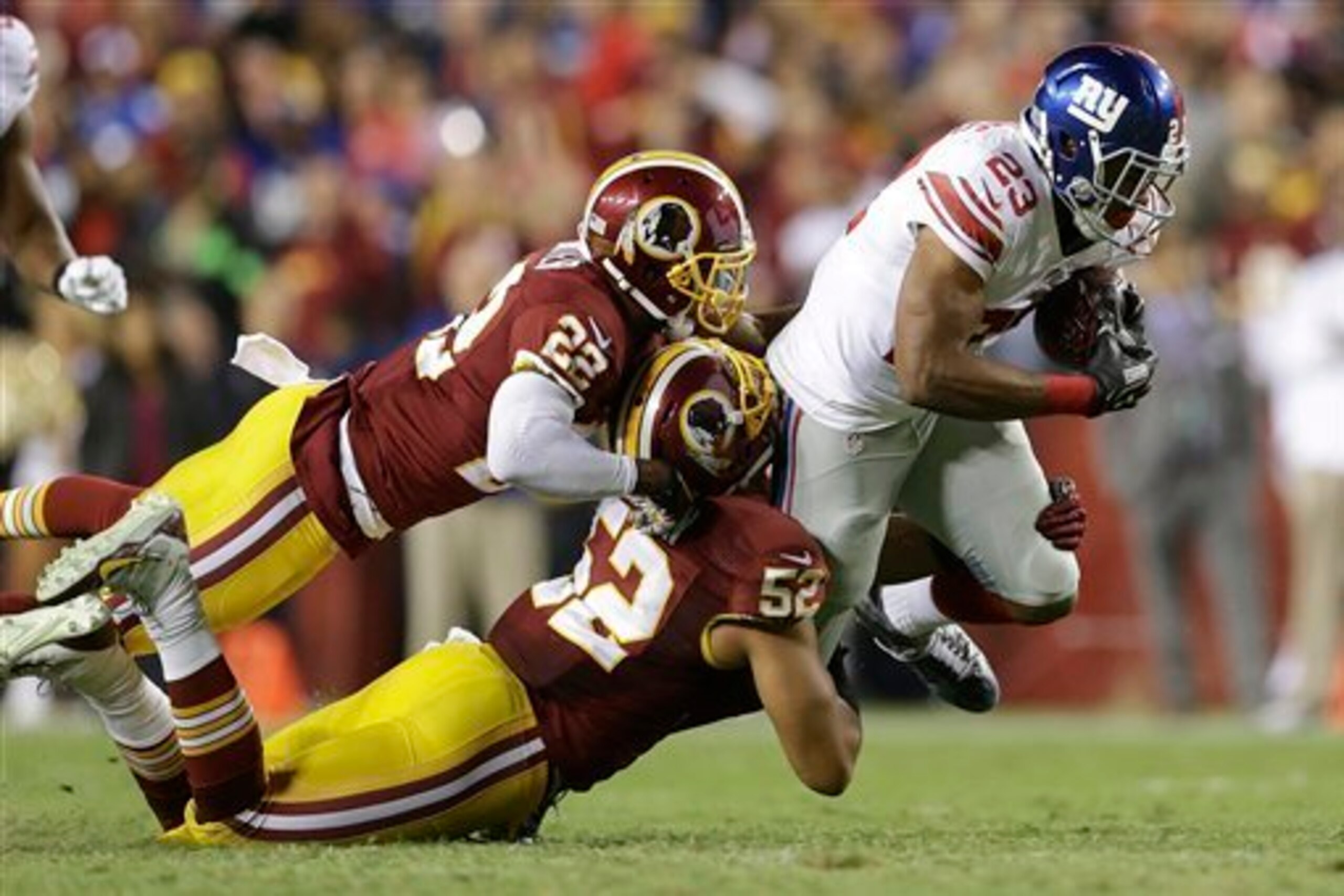
Think back to Week 3's matchup with the Texans, and it's easy to remember that the team won last week relatively independently of Manning. Though he was efficient and mistake-free, Manning's 234 yards through the air were certainly less impressive than Rashad Jennings' 176 on the ground.
This, in large part, is a different situation from years past, in which Manning needed to carry this team to victory. Now, if all Manning has to do is get out of the way and not be the biggest problem at hand, the team can win with him just as well as it can win because of him.
As we recognize Manning's fantastic effort tonight, it's relevant to point out that such performances are superlative to the Giants' success this season, whereas they have been essential in years past.
This team can win in many other ways.
Take Jennings, for instance, and let's throw in rookie running back Andre Williams as well. I'm not sure this tandem will make fans forget about the heyday of Ahmad Bradshaw and Brandon Jacobs—nor Tiki Barber all by himself, for that matter. Still, this is an impressive duo that got it done against a good Washington defense.
Coming into Week 4, Washington ranked third in rushing defense in the entire league, giving up just under 65 yards per game. Per rush, the team was tied for first in the league, allowing only 2.8 yards per carry (YPC).
Those are insane numbers.
They're even more insane when one remembers that Jennings and Williams both posted YPC numbers above 4.0 against that same defense, and even Peyton Hillis managed 31 yards on eight garbage-time carries.
While I don't mean to take credit entirely away from the backs, this kind of even performance across the board usually points to success in the trenches.
Tonight, that maxim bore true, and the Giants found ways to completely stymie a defensive front that has seemed so impressive the past couple of weeks—ironically, using a zone-blocking scheme that Washington should have plenty of practice against, considering it runs it as well.
This is important to note about the Giants' offensive line because, honestly, it's not a good unit overall. It is, however, good at run blocking. If Manning is forced to drop back and the defense is free to tee off on him, knowing the run isn't coming, that's when the line is at its worst and Manning is set up to fail.
To a man, the Giants offense operates better when things are balanced or run-oriented.
Still, When Eli Is on, This Offense Is Going to Hum
That said, this is still a passing league.
There is a stark difference in the NFL between needing to pass and electing to pass. The former is a recipe for doom against even average defenses. The latter can almost be considered a credo for most teams at this point in the NFL's offensive evolution.
When a team has no choice but to pass, because of score, team deficiencies or time, success can be had, but that success is often of the high-risk/high-reward variety, and good defenses can almost always key in on how to stop it eventually.
Letting a defense know what you're going to do is the best way to ensure you'll be unable to do it.
In previous years, the Giants were set up as a Manning-centric team.
Head coach Tom Coughlin didn't always prepare his team that way, and it likely wasn't the intent, but it was the result as some of the aforementioned backs of yore declined and others didn't pan out.
The line, too, became pigeonholed more as a finesse unit than as Coughlin's typical road-graders.
This—coupled with a defense that couldn't buy a stop at times—forced Manning into many no-win situations.
In 2014, the script is essentially flipped. It's true, yes, that the offense can win when Manning isn't on his best level of play, but it's even more true that nights like Thursday's performance against Washington will lead to equally gaudy scoring and passing numbers against even better defenses.
McAdoo's offense is (at its core) a West Coast offense with a variety of slants, screens and shorter timing routes that make life easier on Manning. We see the evidence in Manning's good passing percentage from the last couple of weeks, as NFLN Playbook notes:
Just like with the Green Bay Packers, however, McAdoo understands his personnel and uses plenty more open sets than legendary West Coast architect Bill Walsh may have liked, and McAdoo also understands the evolution of the tight end position. This can put extreme pressure on a team like Washington, which clearly didn't have the healthy personnel to match up with multiple receivers and athletic tight ends on the field.
Each completion—short or long—loosens up the defense for the zone rushing attack. Each successful dropback conditions the opposing defensive linemen into their pass-rushing stance. Each short completion turning into a bigger gain demoralizes the already stress-filled defensive backs.
As impressive as the rest of the team has been, Manning's buy-in and eventual comfort level in the offense is what is going to take this team to the next level.
The Giants are only four weeks in, and a lot can change, but they have a number of good offensive matchups ahead with weak(er) defenses in the Atlanta Falcons, Philadelphia Eagles and Dallas Cowboys. Failing an utter collapse (which, with Manning, is always at least on the table), we should see continued big numbers.
Michael Schottey is an NFL National Lead Writer for Bleacher Report and a member of the Pro Football Writers of America. Find more of his stuff on his archive page and follow him on Twitter.
.jpg?w=2560 "Chiefs Dolphins Football")
.jpg?w=2560 "Texans-Mixon Released Football")



.jpg?w=2560 "Love's Body Already 'Tired'")