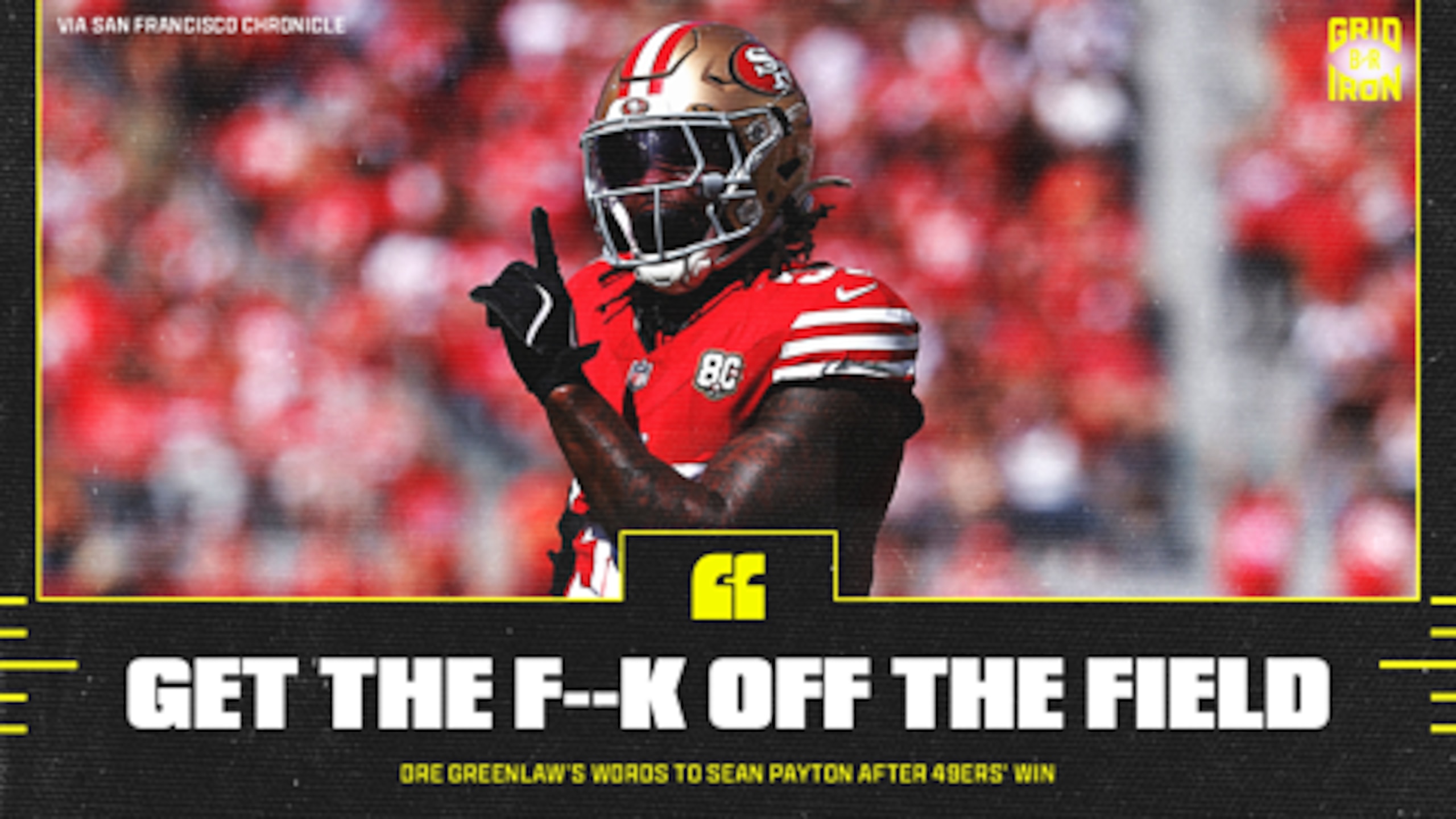
Can Kevin Garnett Play the Role That Brooklyn Nets Desperately Need?
Last season under Brooklyn Nets head coach Jason Kidd, Kevin Garnett's minutes leash was strict. His 20.5 minutes per game average was a career low by far, and he rarely played for stretches of more than six minutes at a time.
Kidd's thinking was simple: A great Garnett for 20 minutes was more valuable than a good Garnett for 30. But is that assumption actually the case? Can Garnett, now a year older at age 38, handle a greater workload for a team that desperately needs his interior presence on the defensive end?
New Brooklyn head coach Lionel Hollins is at least planning to test those waters. The particulars of how far Hollins is willing to push Garnett are unclear, but he's firmly indicating that the kid gloves are coming off (via Nets Daily):
TOP NEWS

LeBron's Special Helicopter Deal

MJ Makes Record-Setting Donation 🙌
Report: Embiid Down to Rookie Weight
"'If [Garnett is] healthy, and producing, he's going to play,' Hollins said. 'How many minutes? I don't know. But he is not going to play 15 or 16 minutes. I can guarantee you that.
'There is nobody in the gym that I would put in his place. He has earned the right to have that opportunity to be the starter from Day One. Somebody has to knock him out, it's got to be like a heavyweight fight. I don't really see that happening.
'He looks good. He looks in great shape, shooting the ball extremely well,' added Hollins. 'He’s working. I would assume that if in fact it is his last year, he would want to make it his best."
"
Hollins' approach appears to fit his blue-collar demeanor and coaching style. We can expect much of the bruising, interior play with Brooklyn that he preferred while coaching the Memphis Grizzlies, and the physical Garnett is a natural centerpiece.
Still, there's a reason why Kidd, and Doc Rivers before him, have kept a close eye on Garnett's minutes as his career has progressed. Even with the Boston Celtics, Garnett's stints on the floor were limited. He was always the first substitution of the game at the six-minute mark.
With each passing year, this question becomes even more pertinent. The wear and tear for a player of Garnett's age is real, and for a team looking to make a postseason run, perhaps holding back on his regular-season playing time could have long-term benefits.
Unfortunately, the Nets roster isn't all that accommodating for this non-intensive minutes approach. The oft-injured Brook Lopez, emerging center Mason Plumlee and Garnett make up the only three viable bigs on the roster.
This leaves Hollins with two choices: Play small for significant chunks of the game with Mirza Teletovic, Alan Anderson or Andrei Kirilenko at the 4, or expand the workload for all three bigs.
Considering Hollins' continued preference for two-big lineups and declaration that Garnett is the starting power forward, it would seem that the latter is the solution he's counting on.
And at least defensively, Garnett is crucial to this Nets team. Lopez has never been a serious rim protector and Plumlee is still growing as a player. That leaves Garnett as the lone defensive specialist in the paint with little support behind him in the rotation.
But past evidence of Garnett playing extended minutes should have Nets fans worried because his ability to move defensively severely declines when he's tired. He no longer has the explosion and second gear of years past, instead trusting his superior powers of anticipation to guide him to the right spots.
His basketball IQ, however, can only take him so far. Sometimes his body has to respond to his brain, and more often than not that communication breakdown is costing him as a player.
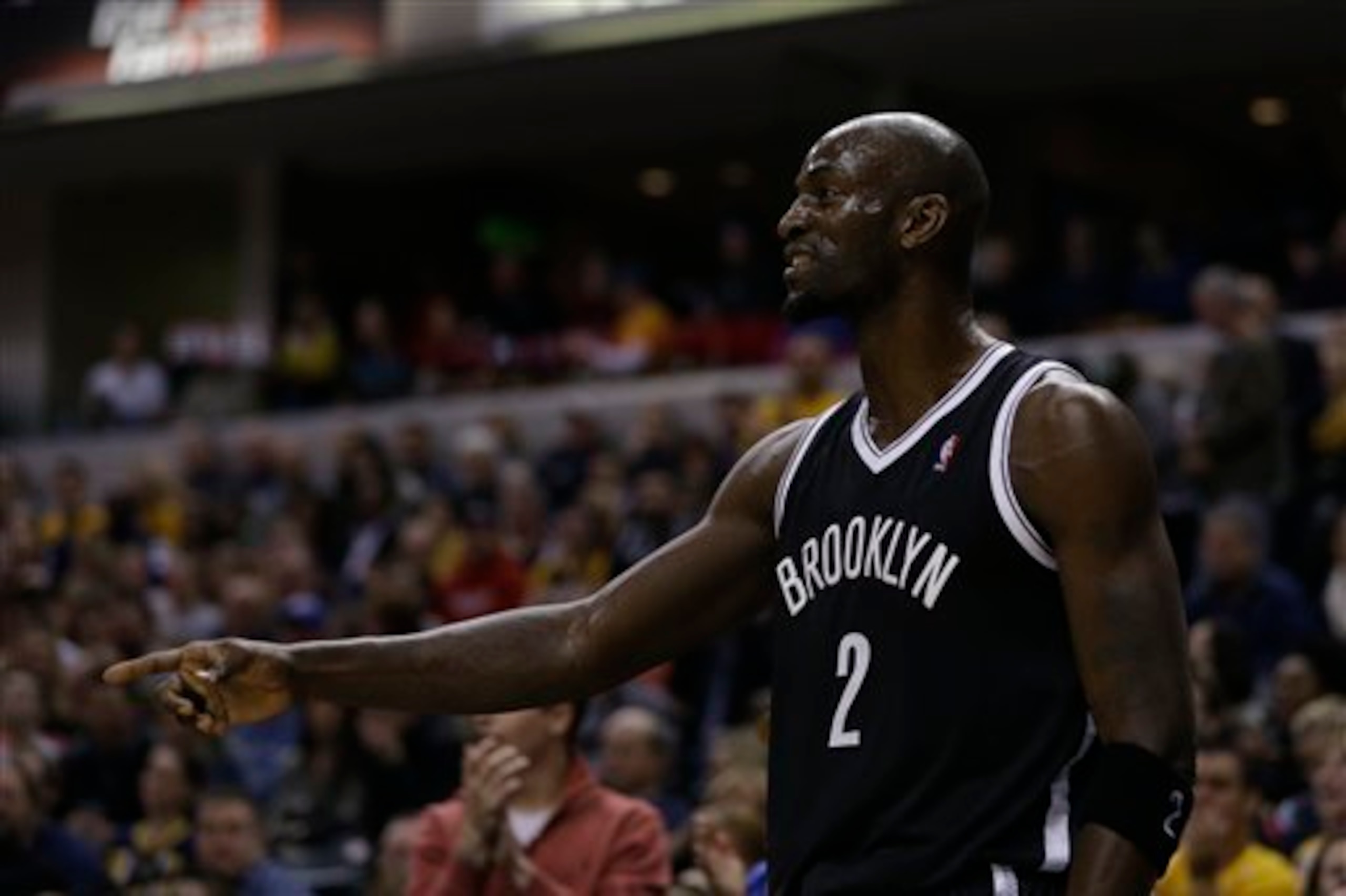
Looking at Garnett's defensive prowess during the fourth quarters of his games with heavier minute loads gives a clear indication of how his defense degrades due to fatigue.
In particular, it's his ability to deal with quicker guards that causes him the most trouble. Whether it's in the pick-and-roll or a help rotation to protect the basket, Garnett is too often getting blown by or willingly giving fouls.
Below we can see Evan Turner of the Philadelphia 76ers coasting by Garnett in a February 4th game last season with less than two minutes to go in the fourth.
Brooklyn's aggressive pick-and-roll scheme is partially to blame as Kidd often had his bigs remaining high to defend the ball-handler, but the secondary part to this type of defense was a slow drop.
Notice on this play how Garnett tries to slide his feet laterally with Turner instead of retreating to the rim. He knows Turner will scoot around him if he is backpedaling and on his heels, so Garnett tries to confront him early and cut off a drive.
Because he's not the athletic Garnett of the early 2000s, he's unable to do so and gets burned. Even though he's in the right position as the pick-and-roll begins, his athletic tools betray him.
This is what fatigue does to NBA players: Instead of playing it safe with solid fundamentals, they'll take bigger risks that require less effort. For guards the main ploy is gambling for steals, and for bigs, it's hanging near the rim or being overaggressive on the perimeter.
Sound and technical defense is the most grueling aspect of basketball, and Garnett doesn't quite have the legs for it anymore.
Also symptomatic of this gambling style of play is recklessly going for blocks, which subsequently leads to fouls and and-1s.
During the play above, Garnett gives up once he's beaten and does not risk compounding his mistake with a foul. The competitor in him, however, doesn't always play with such restraint or caution.
That's why Garnett commits a foul on Brandon Bass of the Celtics on the play below. After Jordan Crawford sneaks by him on the perimeter, Garnett trails the play looking to rectify his blown coverage.
Crawford draws in the defense before dropping it off to the cutting Bass. Bass goes up strong for the finish, and Garnett hacks him wildly.
This last-ditch swat at the ball is a noble undertaking but ultimately risky. Players attacking the rim with such ferocity can sometimes power through the contact and score to earn an and-1. Though giving up a dunk or layup is not ideal, chancing further damage just to put an opponent on the line isn't worth the trouble.
Hollins and the Nets staff face a difficult problem in managing Garnett's minutes. When he's at full strength and energy, the decision to leave him on the floor is easy. His effectiveness as a defensive big is significant, and his skills as a communicator are unparalleled.
But when his energy dips, it free-falls. One of his greatest assets throughout his career has been his effort level, yet that's been his undoing in the latter stages of his time in the NBA. He pushes himself beyond his physical limits and gets stuck on the floor with nothing left in the tank.
It will be up to Hollins to recognize the warning signs and pull Garnett from the game before he's sputtering. In shorter stints he can still be the Garnett of old, but he's no longer able to sustain for lengthy periods of play.
If his minutes are handled properly, he'll once again be an important force on the floor for the Nets.

.jpg?w=2560 "2 NFL Officials Suspended")

.jpg?w=2560 "Injury-stricken Seahawks signing veteran RB")
.jpg?w=2560 "Mahomes' Wife Trolls Kubiak 💀")