


The Philadelphia Eagles have the league's second-highest scoring offense, but something's still been off with that unit three weeks into the 2014 NFL regular season. They've been struggling early in games, backing themselves into comeback corners against inferior opponents with bad defenses.
Last year, quarterback Nick Foles was unstoppable, as were his top three weapons—wide receiver DeSean Jackson, running back LeSean McCoy and receiver Riley Cooper.
Despite the fact Philadelphia is 3-0, none of those three have been major factors this season.
TOP NEWS

Geno Explains Wilson Exchange
.jpg?w=2560 "Chiefs Giants Football")
Mahomes Told Teammate to Leave Meeting
.jpg?w=2560 "Steelers Saints Football")
Rodgers Iced Out on Plane 💎
Jackson, of course, is gone. McCoy has struggled early, but the offensive line has been decimated by injuries and he was stacked up consistently by a good Redskins defensive front in Week 3. We all know McCoy will get back on track as that line becomes healthier and he has a chance to broaden the sample size.
But what about Cooper? What's his excuse?
One year after breaking out in a huge way with 47 catches, 835 yards and eight touchdowns (all career highs by a long shot), the physically imposing 27-year-old has disappeared through the first three weeks of the 2014 campaign.
| 2013 totals | 47 | 835 | 8 |
| 2014 pace | 48 | 379 | 0 |
You'd think that Jackson's departure would have meant more opportunities for Cooper. Sure, veteran receiver Jeremy Maclin is back after missing the entire 2013 season due to a torn ACL, and newbie weapons Jordan Matthews and Darren Sproles are getting their share of reps, but Cooper still had a chance to play an even larger role.
Jackson left a huge void, especially on deep balls and in the end zone. Only seven NFL receivers had five or more touchdown catches that traveled 20-plus yards last season, according to Pro Football Focus (subscription required), and Jackson and Cooper were both on that list. He's a 6'4" target with great range and good speed, and he does a tremendous job adjusting to deep balls.
So, what's wrong with him this year?
Maybe he's just a slow starter?
Cooper didn't break out last year until Week 6, which just so happened to be Foles' first start of the season. The natural assumption was that Cooper and Foles simply had a better connection than Cooper and Michael Vick, but it's possible he just found his own groove in October.
Cooper has just nine catches for 71 yards and has yet to score this season, but he was basically a non-factor for the first five weeks last year:
| First 5 weeks | 1.6 | 18.6 | 1 |
| Final 11 weeks | 3.6 | 67.5 | 7 |
Still, the numbers indicate Foles played a role.
| Nick Foles | 59.6 | 7-0 | 11.8 | 140.6 |
| Michael Vick | 44.4 | 1-1 | 5.2 | 56.0 |
Foles hasn't been himself this year, either, and it's possible Cooper was going to have a slow start last year regardless of who was at quarterback. But if Cooper continues to struggle over the next two or three weeks, that excuse will fly out the window.
No big plays
Yes, second-year tight end Zach Ertz is playing a larger role, and Sproles and Matthews are factoring in, but Cooper hasn't been targeted any less than he was last year. And that even applies if we cut out those first five weeks without Foles:
| Hot stretch, Week 6-17 (2013) | 5.6 | 3.5 | 67.5 |
| First three weeks (2014) | 5.7 | 3.0 | 30.3 |
The thing about Cooper, though, is that if he isn't hitting on deep plays, he really isn't hitting at all. Last year, 34 percent of his 835 receiving yards came on just six passes.
That doesn't necessarily mean deep passes, because Cooper had a sneaky 251 yards after the catch last season. This year, he's been targeted deep five times, per PFF, which puts him on pace to be thrown at beyond 20 yards significantly more in 2014 than he was in 2013.
| 2013 | 1.7 | 0.7 | 0.3 | 1 |
| 2014 | 1.0 | 0.5 | 0.4 | 1 |
Foles hasn't been quite as accurate on those deep passes, but it's a silly small sample size this early. The real difference is that Cooper has yet to bust anything open in a big way. He has only 24 yards after the catch, which puts him on pace to take a 49 percent dip in that area this season.
Have we mentioned it's a small sample size? If Foles was able to find a wide-open Cooper streaking down the left sideline here, he'd have an extra 63 yards and a touchdown and this wouldn't be a discussion:

But there's still been a difference, and it has felt as though he has simply struggled to get open. Some examples...
Three seconds after the snap on a play that ended with Foles getting sacked against Jacksonville:

Same game, second quarter, this time more than three seconds after the snap:
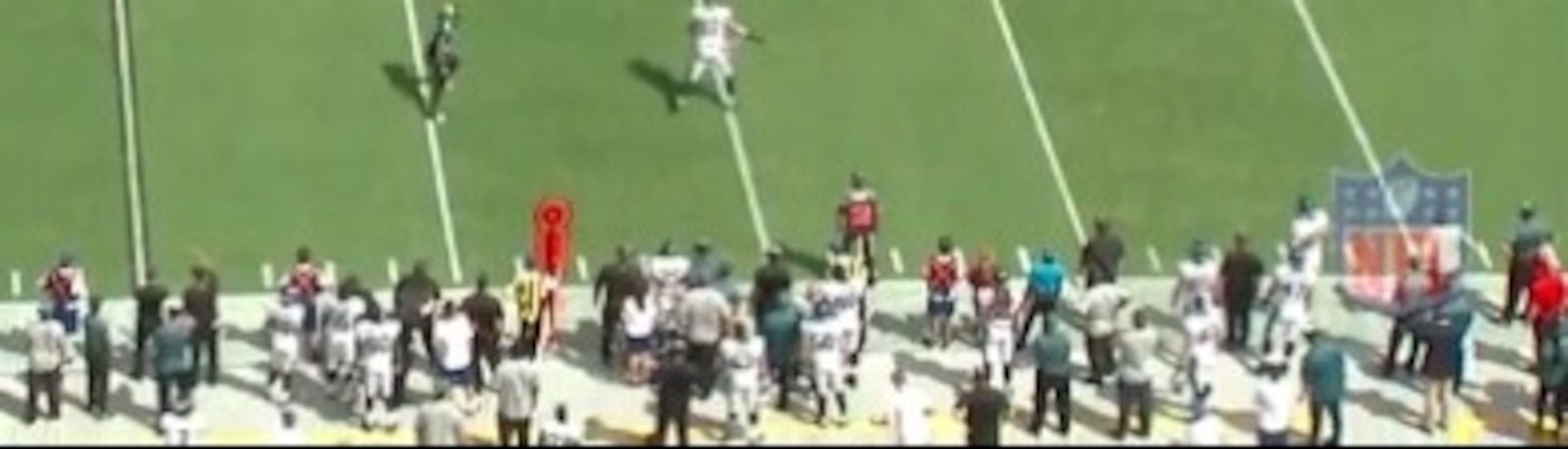
Same game, third quarter, again about three seconds after the snap:
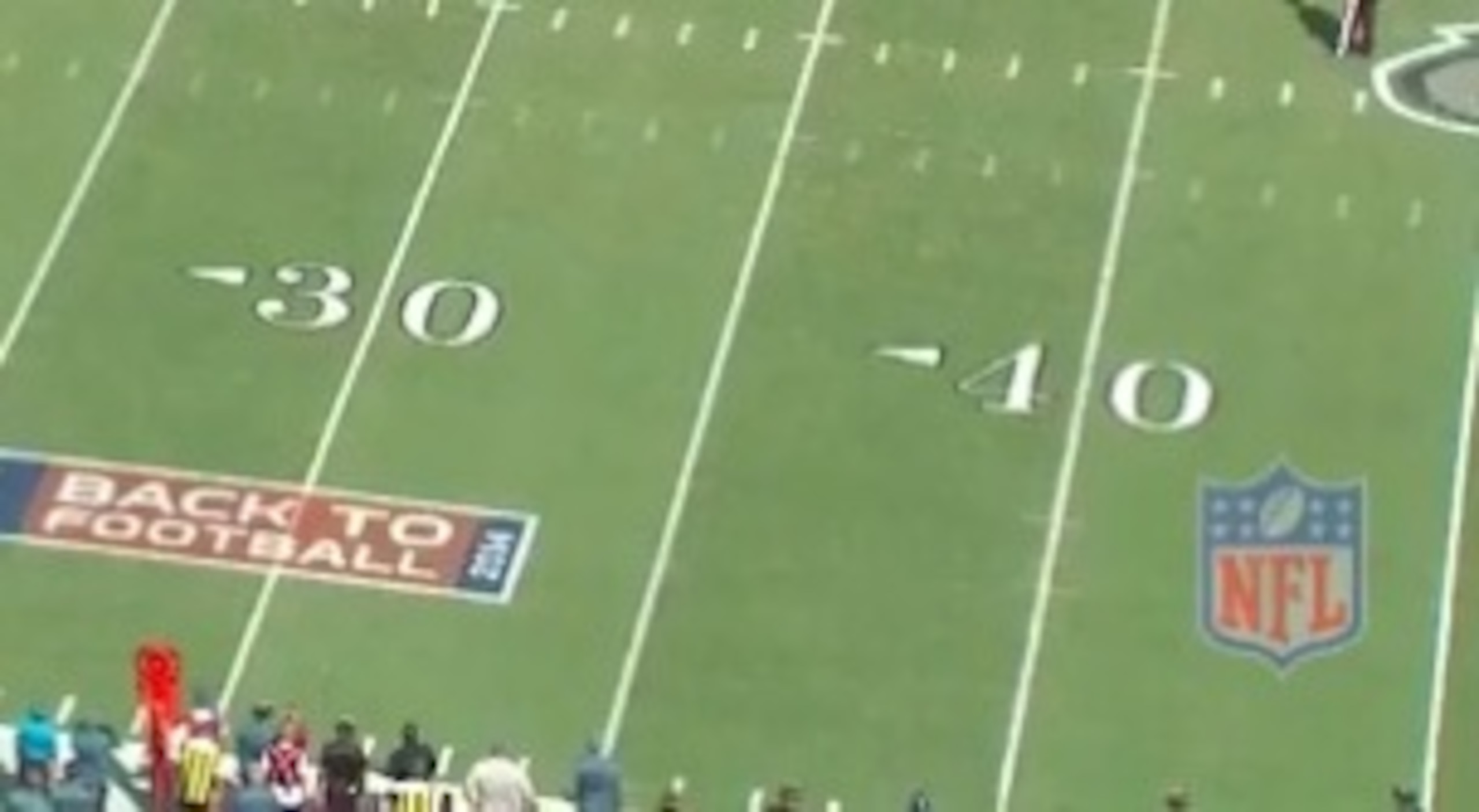
Week 2 against Indianapolis, four seconds after the snap:

Same game, fourth quarter, four seconds after the snap:

Same game, fourth quarter, a good four seconds after the snap and no separation in the end zone:
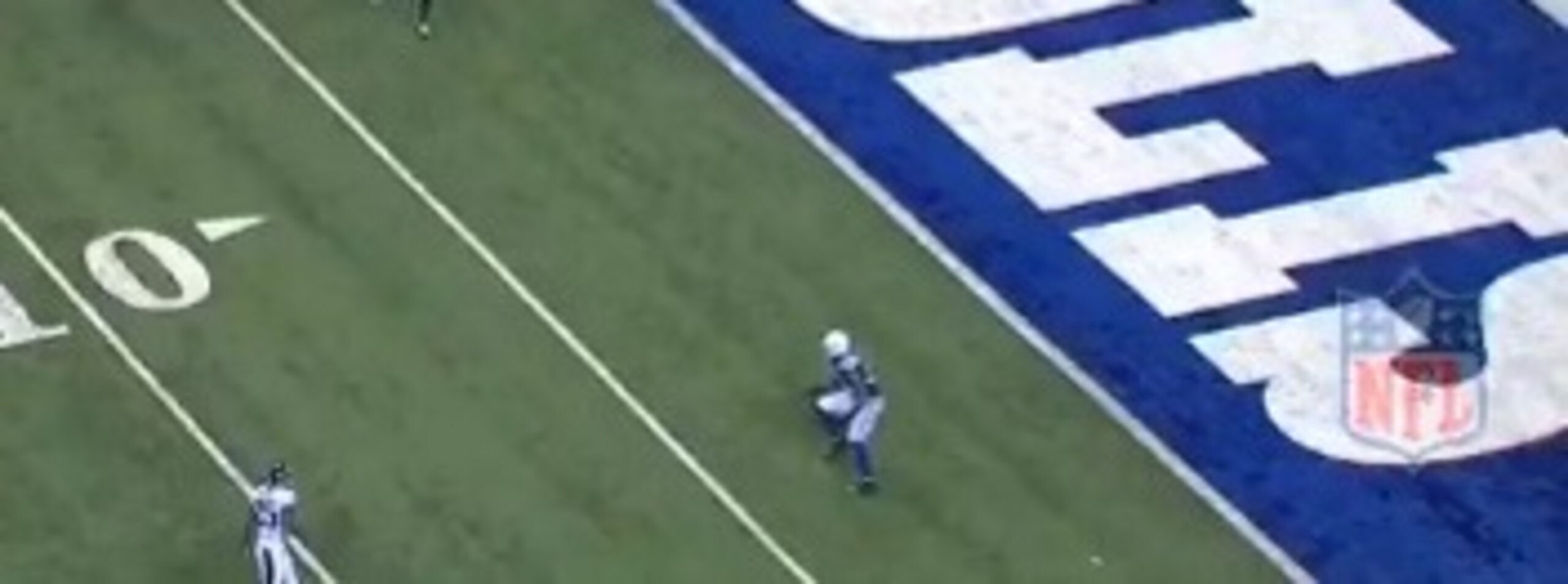
You get the point.
And even when he is getting open and making grabs, it's been the small stuff.
Last year, Cooper ranked in the top 10 among all qualifying receivers with 17.8 yards per reception, according to PFF. But early this season, that number has plummeted to 7.9, ranking 101st among 111 qualifying receivers. That can't happen.
They might not wait long for him
It's possible last season was an anomaly for Cooper. For a big, possession-type guy, it's pretty phenomenal that 30 percent of his yardage came after the catch. He averaged 5.1 yards after the catch per reception, according to PFF, which was firmly ahead of the league average of 4.7. But in 2012, that number was only 3.7 for Cooper. Thus far this year, it's only 2.7. That might be more of a normal range for a player like him.
So his yardage totals might never get back to where they were last year, but the Eagles don't need that. They've got Matthews, who had a breakout game in the slot Sunday with eight catches on eight targets. And they've got Sproles, who was the NFC's Offensive Player of the Week in Week 2. Plus, Ertz ranks third among all qualifying tight ends with 19.7 yards per catch.
Where Philadelphia needs Cooper is in the red zone. Maclin is small, and Ertz and Matthews still lack experience. But Cooper had eight touchdowns last season, and he was the main man in the red zone:
| Riley Cooper | 11 | 7 | 63.6 | 58 | 4 |
| Brent Celek | 10 | 5 | 50.0 | 28 | 4 |
| DeSean Jackson | 11 | 6 | 54.5 | 55 | 3 |
| Zach Ertz | 6 | 4 | 66.7 | 34 | 3 |
| Jason Avant | 11 | 4 | 36.4 | 41 | 1 |
This year, he's yet to make a catch in the red zone and has been targeted only twice. On both occasions, he had a one-on-one matchup in the left corner of the end zone but wasn't able to come down with it.


Matthews, meanwhile, has two red-zone touchdowns.
Of course, it's also possible Cooper is still being affected by the ankle injury that cost him much of training camp and the preseason. That and that five-year, $22.5 million contract he signed in the offseason might explain why his leash will be longer than some might expect.
But if Matthews continues to improve, Ertz keeps flashing and Sproles maintains his pace, Cooper could eventually forfeit snaps. And while it's a good sign that Philly appears to have players capable of filling that void, it's never ideal to have a big, talented, highly paid receiver like Cooper on the sideline.
Brad Gagnon has covered the NFC East for Bleacher Report since 2012.

.jpg?w=2560 "🚨 Week 8 AP Top 25 Poll")

.jpg?w=2560 "Lamar Being Out Shocked Ravens")
.jpg?w=2560 "Raiders Could Start Mendoza")