

Dolphins Outplayed, Outcoached in Second Straight Loss
To look at the Miami Dolphins’ 34-15 loss to the Kansas City Chiefs in Week 3, one could assume the Dolphins were dominated from kickoff to the final whistle. After all, the 19-point loss was the fourth-largest scoring margin across the NFL.
But this game wasn’t decided until Chiefs quarterback Alex Smith delivered a touchdown pass to Joe McKnight with four minutes, 35 seconds left in the fourth quarter. That score put the Chiefs up 27-15 and forced the Dolphins offense to open up, exposing its offensive line to the Chiefs’ fearsome pass rush.
So, what happened that caused the Dolphins to lose a game where they were favorites in Vegas, according to Odds Shark, facing a 0-2 team at home, without a total of eight starters?

.jpg?w=2560 "Steelers Saints Football")
.jpg?w=2560 "Rams Raiders Football")
Just one week after being totally dominated on offense, defense and special teams by the Buffalo Bills, Dolphins players again showed poor execution, and coaches had an ineffective game plan. In all three phases of the game, the Dolphins simply don’t look prepared to attack the opposition’s weaknesses or take away its strengths.
When head coach Joe Philbin relieved close friend Mike Sherman from his offensive coordinator duties this past offseason and brought in Bill Lazor from Philadelphia, there was hope by many that Lazor would be bringing in a fast-paced, explosive attack.
In May a Dolphins player even told the Miami Herald's Barry Jackson (h/t NFL.com's Chris Wesseling) that Lazor’s offense replicated Philadelphia Eagles coach Chip Kelly’s offense.
Through three weeks of dropped passes, elementary route combinations and the lack of progress of quarterback Ryan Tannehill, there is a severe drought of optimism in Miami.

Motion, tempo and spacing were all supposed to be key elements of Lazor’s attack. Instead, he is running the same offense that the University of Virginia employed when he was offensive coordinator there from 2010-2012.
The concepts that are cutting-edge today are rarely seen while watching Miami’s film. Receivers aren’t getting open in a timely manner, and when they do, Tannehill seems to be looking to force-feed receiver Mike Wallace. Tannehill has clearly passed up open receivers to target Wallace, which is different than what was done 2013.
Wallace’s targets have greatly risen so far this season, totaling 31 on the season to this date. This comes at the expense of tight end Charles Clay, who has posted a pedestrian 79 yards through three games. The other Dolphins receivers haven’t been able to get open consistently or drop the ball when they’re targeted.
Entering Week 3, the Dolphins led the league with eight drops. Against the Chiefs, I counted five more to add to that total.
The lack of consistency from the offense is maddening to watch, because something seems to always go wrong. When Tannehill plays well and delivers strikes to the receiver, the ball is dropped 10 percent of the time. The drops stall drives and destroy the confidence of the offense and put the Dolphins’ struggling defense back on the field.
Most disturbingly, Lazor has a way to reduce the strain on Tannehill, but he refuses to take advantage.
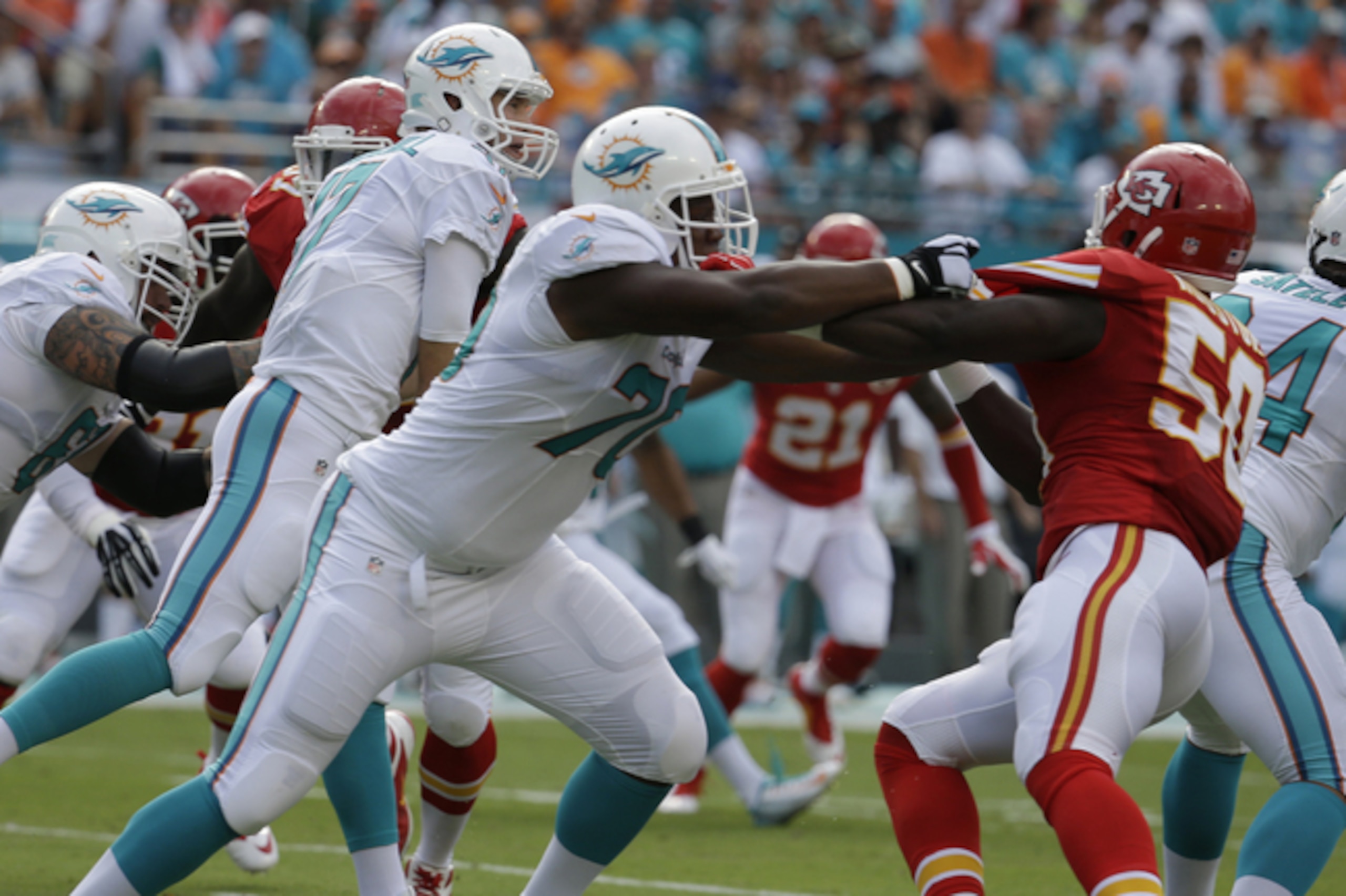
Through the first three games, the Dolphins’ pass-to-run ratio is at 124-to-79, meaning they’re throwing the ball 63.7 percent of all offensive snaps. Even in 2013, when the Dolphins averaged just 4.10 yards per carry, they only threw the ball 62.99 percent, according to FFToday.com.
Yes, that’s right.
Despite a new offensive coordinator who is supposed to be running an offense that caters to Tannehill’s gifts as a play-action passer, he has so far abandoned the run in key situations.
More troubling is that the Dolphins are averaging an impressive 5.2 yards per carry, and Lamar Miller ran 15 times for 108 yards in Week 3. At 7.2 yards per carry, Miller showed the ability to be a bell-cow back this week, but Lazor refused to punish the Chiefs defense in the second half.
Of the five 3rd-and-3 or less situations that occurred in Week 3, the Dolphins ran the ball zero times, instead relying on quick passes four times. Two were dropped, and two were solid throws by Tannehill. All of the routes were within one yard of the first-down marker, which is easy for opponents to pick up on when watching game tape.
The final 3rd-and-short situation occurred when the Dolphins were down 21-15 and driving with nine minutes left in the fourth quarter. On 3rd-and-1, instead of running again with Miller, Lazor called a pass that featured Tannehill dropping seven steps back and only having two receivers and a tight end go out on routes. The play predictably failed, as the Dolphins offensive line collapsed in the middle.
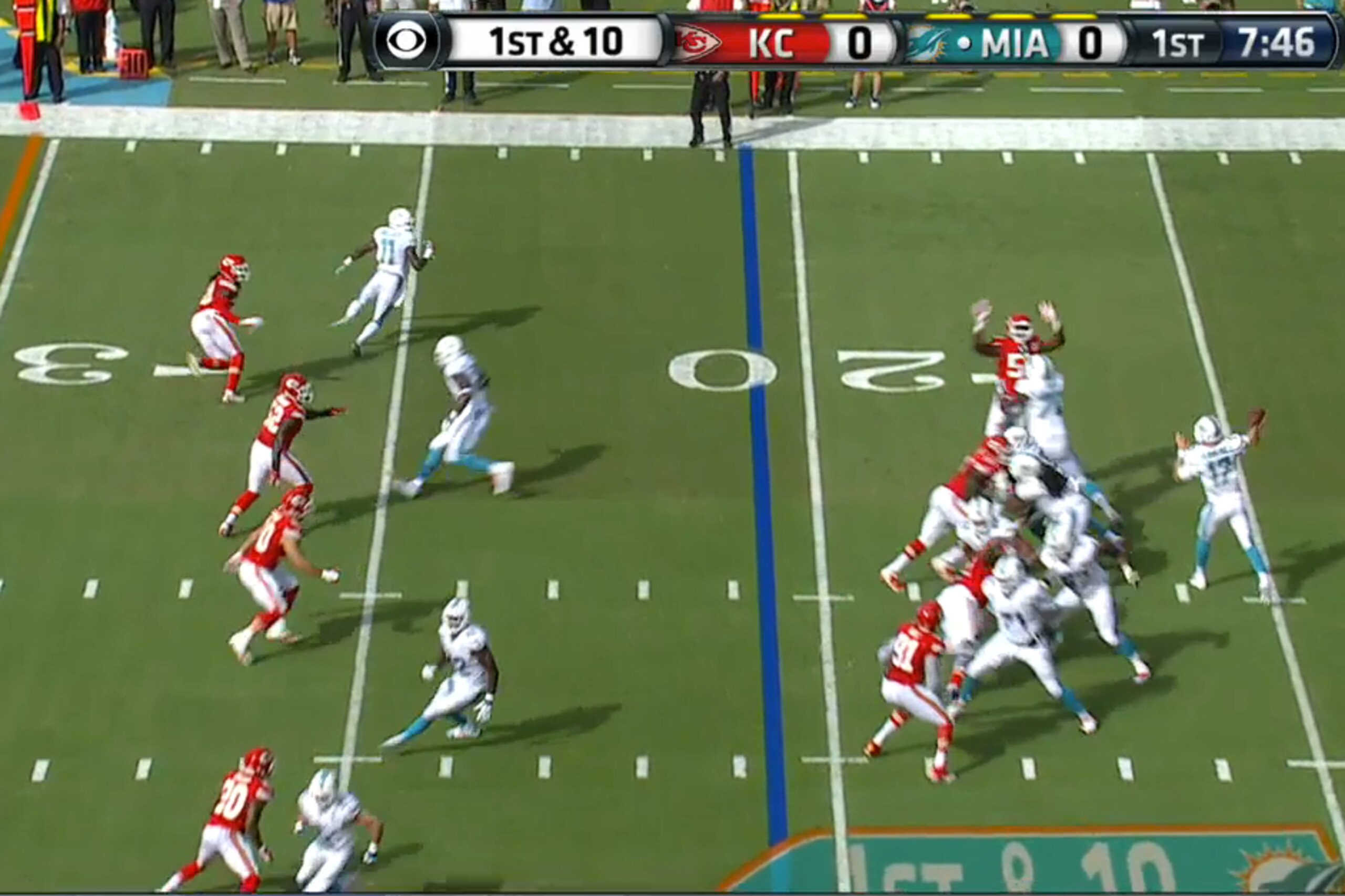
Too often this season, the Dolphins offense isn’t playing to its own strengths. Lazor’s struggles with situational play calls could be due to the fact he’s a first-year NFL offensive coordinator, but the Dolphins didn’t hire him to adjust to the league. He was hired to be the one setting offensive trends.
For Tannehill to progress, he must have a running game. It’s not hard to see that leaguewide, young successful quarterbacks benefit from a consistent running game. Two of the league’s best young quarterbacks are Russell Wilson and Colin Kaepernick. Each of their respective teams ran the ball more than 50 percent of the time in 2013, lowering the burden on their right shoulders.
It’s not an even playing field for Tannehill when defenses can drop their linebackers into coverage, giving them seven defenders in passing lanes, and the receivers aren’t catching the ball. Tannehill must improve his consistency, and he is not blameless either, but Lazor’s job was to develop him and form an offense around the young quarterback.
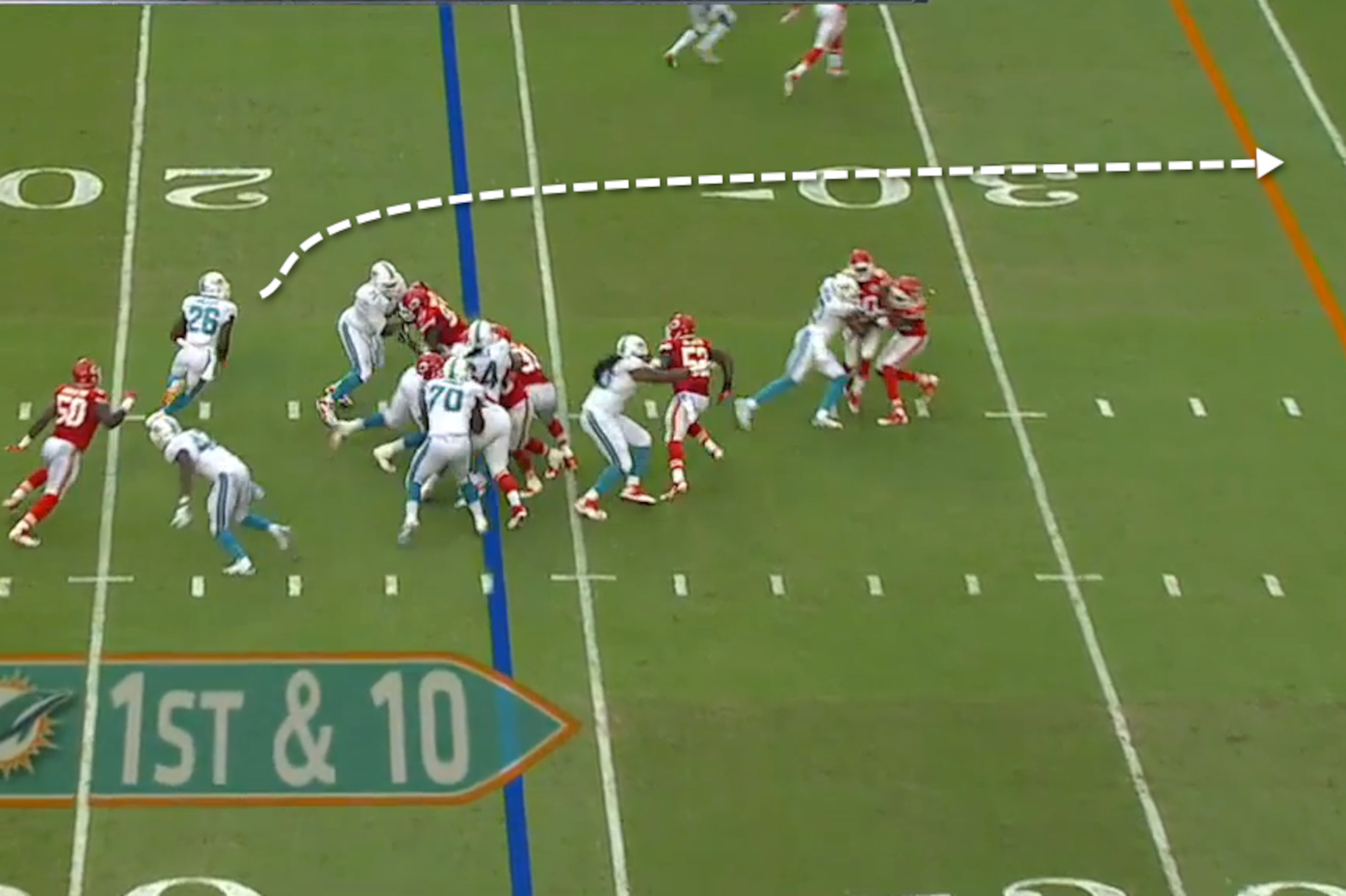
So far, his game plans and play-calling have shown he either is overwhelmed by the position he’s in, or he doesn’t trust Tannehill to open things up. Miami has nothing to gain by limiting Tannehill, so it must see if he can handle full control over the offense.
On defense, coordinator Kevin Coyle hasn’t been able to stop an opposing offense from scoring less than 20 yet.
Despite facing one of the least vertically threatening teams in the league, Coyle continued to have cornerbacks Brent Grimes and Cortland Finnegan line up more than seven yards off their assigned receiver. With the exception of the second half of Week 1 against the New England Patriots, this strategy is getting torched.
Miami has been nickel-and-dimed down the field too often, because teams can easily complete the underneath routes, no matter how well the cornerbacks are playing. The adjustments are clear, and yet Coyle has been unwilling to morph his defense.
One of the most baffling strategies seen this season came in the third quarter, when Chiefs third-string running back Joe McKnight was lined up in the backfield and ran an “angle” route, which is where the back runs right and then cuts back in to the middle of the field.
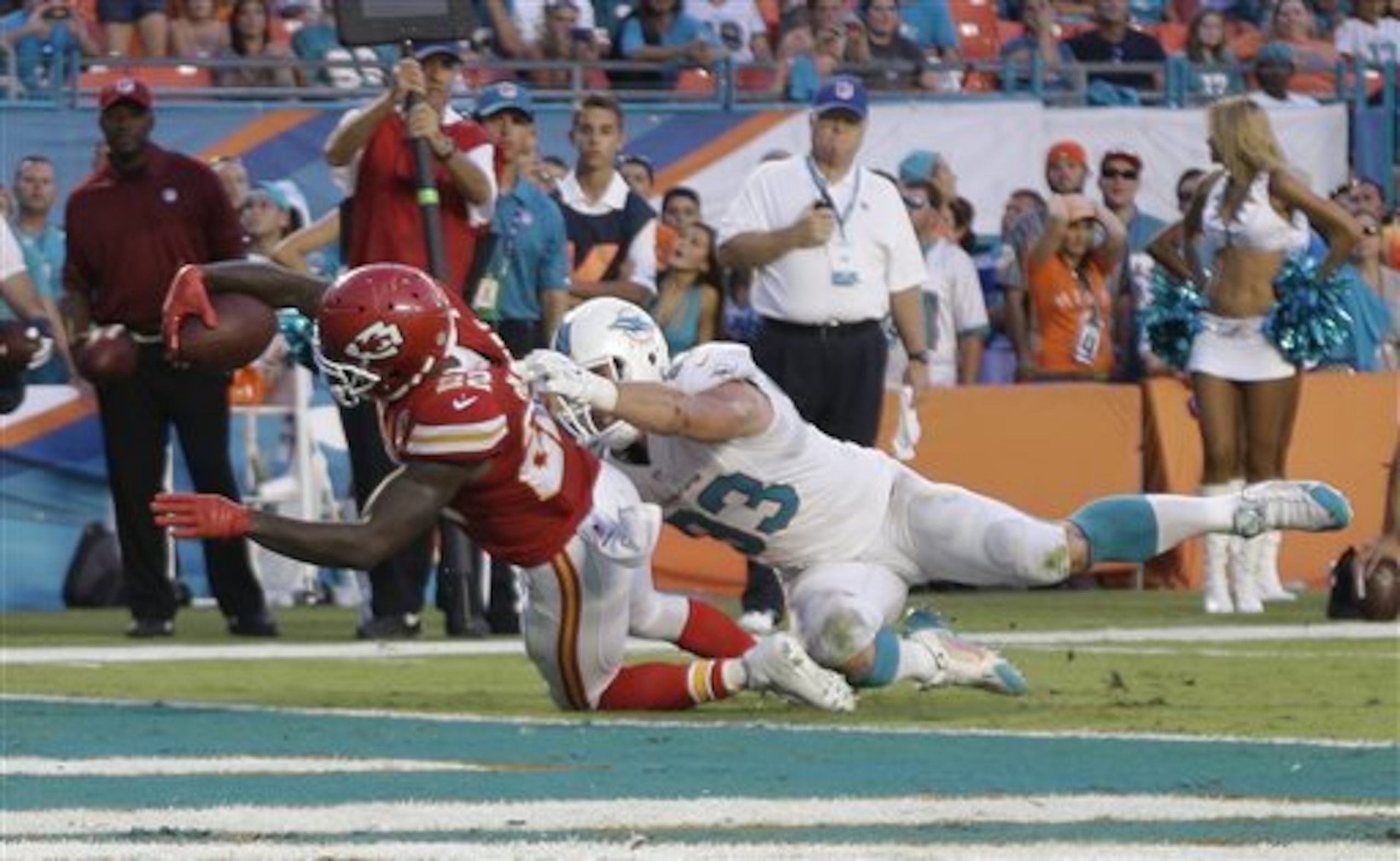
Instead of having a linebacker on McKnight, All-Pro defensive end Cameron Wake dropped back and tried to keep up with him. McKnight easily beat Wake and walked into the end zone.
This touchdown came one quarter after Chiefs tight end Travis Kelce burned Dolphins left end Olivier Vernon on a crossing route for a 20-yard touchdown.
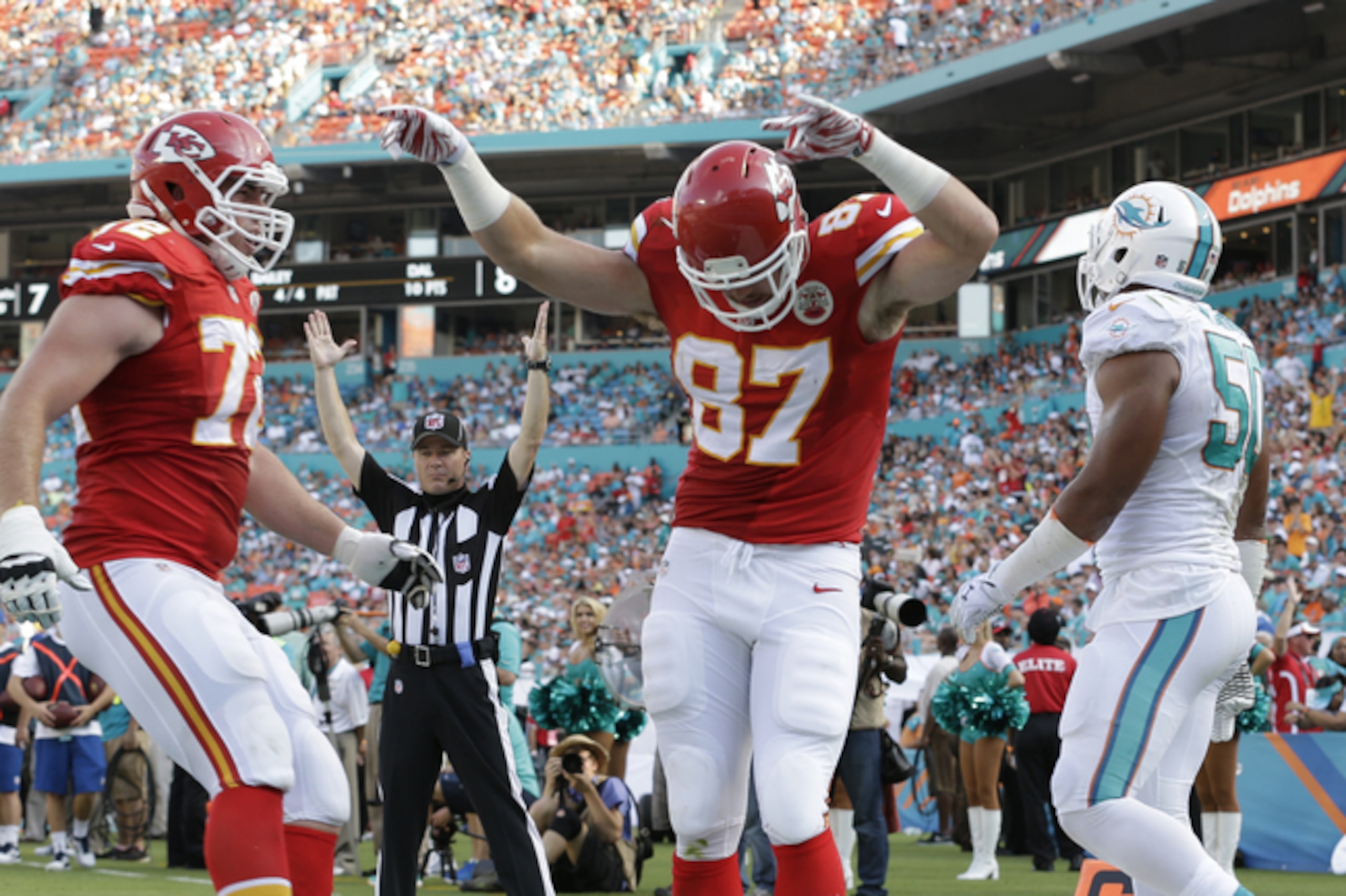
The Dolphins possess one of the few 4-3 defensive ends in the league who can hold his own in open-field coverage, and Dion Jordan is suspended. To put one of the dynamic ends whom Miami has in coverage is a terrible use of personnel. As many great accomplishments as Wake and Vernon have achieved, dropping into coverage and making a play on the ball is not one.
Head coach Joe Philbin hasn’t been impressive, either.
Entering halftime, the Dolphins were driving as Tannehill picked apart the Chiefs secondary in a hurry-up attack. With 45 seconds left, Tannehill completed a 21-yard screen pass to Daniel Thomas. Instead of taking the team’s final timeout and having 40 seconds to attack the end zone, Philbin allowed the clock to wind down to 19; when Tannehill snapped the ball, he threw an incompletion.
Losing 20 seconds caused Miami to be stuck with a chip-shot field goal with two seconds left, after Tannehill scrambled on third down.
The clock management is only the part of the issue for Philbin. His lifeless demeanor doesn’t command respect, and the Dolphins' roster seems to always lack fire early on in games. They’ve been down double digits at halftime of each game so far this season, a sign that the team is ill-prepared and doesn’t adjust as the game develops.
Those issues fall on Philbin. In his third season, he’s on the hot seat to produce a playoff-caliber on-field product. If he doesn’t figure out how to be a leader and help his coordinators improve quickly, he could lose the Dolphins’ locker room. Andrew Abramson of the Palm Beach Post shared a player's comments about some people being on notice regarding job security:
"One #Dolphins player tells me "it isn't time to clean house yet but guys are on notice."
— Andrew Abramson (@AbramsonPBP) September 22, 2014"
The players will eventually turn on a coach if they feel the adjustments aren’t being made throughout the game as they should be, and the way Philbin has seemed outmatched as a head coach through his two-plus years in Miami, that could be happening.
Winning truly cures all in the NFL, and Week 4 against the Oakland Raiders cannot come quickly enough. Miami must swallow its pride and fix its errant ways to get back to winning on Sunday afternoon.
All stats used are from Pro Football Focus' Premium Stats (subscription required), Sporting Charts or Sports-Reference.com, unless noted otherwise. All contract information is courtesy of Spotrac.
Ian Wharton is a Miami Dolphins Featured Columnist for Bleacher Report, contributor for Optimum Scouting, and analyst for FinDepth.
.jpg?w=2560 "Chiefs Giants Football")

.jpg?w=2560 "🚨 Week 8 AP Top 25 Poll")

.jpg?w=2560 "Lamar Being Out Shocked Ravens")
.jpg?w=2560 "Lions Outlast Packers")