

How Will Kobe Bryant's Final Chapter Compare with Michael Jordan's?
If there are any two basketball superstars who have been compared ad nauseam, it is Kobe Bryant and Michael Jordan.
Each were/are ridiculously talented and competitive players. One won six NBA titles with the Chicago Bulls and the other has won five so far with the Los Angeles Lakers. Each could achieve feats on the court of which most mortals only dream.
But time is the avenger, and Jordan and Bryant each approached their final playing days as so many athletes have—older, slower and searching for those elusive last moments of greatness.
TOP NEWS

LeBron's Special Helicopter Deal

MJ Makes Record-Setting Donation 🙌
Report: Embiid Down to Rookie Weight
And of course, wanting more buckets. At age 36, Bryant enters his 19th season in the NBA with 31,700 career points, just 592 behind Jordan’s final tally of 32,292.
Will the Mamba still get his numbers? Per Mark Medina of the Los Angeles Daily News, new Lakers head coach Byron Scott says, “He’s gotten older, but can still get it done. I see a guy who’s going to average 20-something points per game, will have a great year and have a lot of people eating crow.”
How did Jordan do at the end, playing for the Washington Wizards? He averaged 22.9 points during the 2001-02 season and 20 points in 2002-03.
The comparisons between the two players have been mythic over the years. A three-part “identical plays” video series posted on YouTube by Youssef Hannoun showed just how much their games are alike:
As Bryant’s final chapter with the Los Angeles Lakers begins, the inevitable similarities and differences will continue to be fodder for discussion.
Jordan played a total of 15 seasons in the NBA with the interruption of two retirements. The first was a year-long sabbatical from the Bulls to pursue a lifelong dream of playing professional baseball. The second was a three-year retirement after leaving Chicago for good at the end of the 1997-98 season.
That was the last year the Bulls won a title. Their coach, Phil Jackson, took a break of his own and wound up coaching the Lakers and Bryant a year later.
Jordan in turn joined the Wizards as part owner and president of basketball operations in January 2000. And a year and a half later, at age 38, he announced his return as a player—shedding his role as a team executive and taking a minimum salary to play again for a team coming off a dreadful 19-63 season.
Bryant hasn’t yet retired—he’s moving into a contract extension worth $48.5 million over the next two years. He has had time to rest, however, after two serious leg injuries—a ruptured Achilles tendon followed by a broken knee. He appeared in just six games during an unmitigated disaster of a season that ended with a 27-55 record.
The last thing Jordan did as team president before coming back as a player was hire Doug Collins as the new Wizards sideline leader. Collins had been one of his early head coaches with the Bulls, before Jackson took over that position.
And now, Bryant will be making his return for Scott—a former member of the Showtime-era purple and gold—who during his final year as a player mentored a rookie named Kobe.
Neither of these supremely driven players ever needed an excuse for motivation, but the abysmal record Jordan presided over as an executive and the 55-loss season Bryant primarily watched in street clothes had to have hurt.
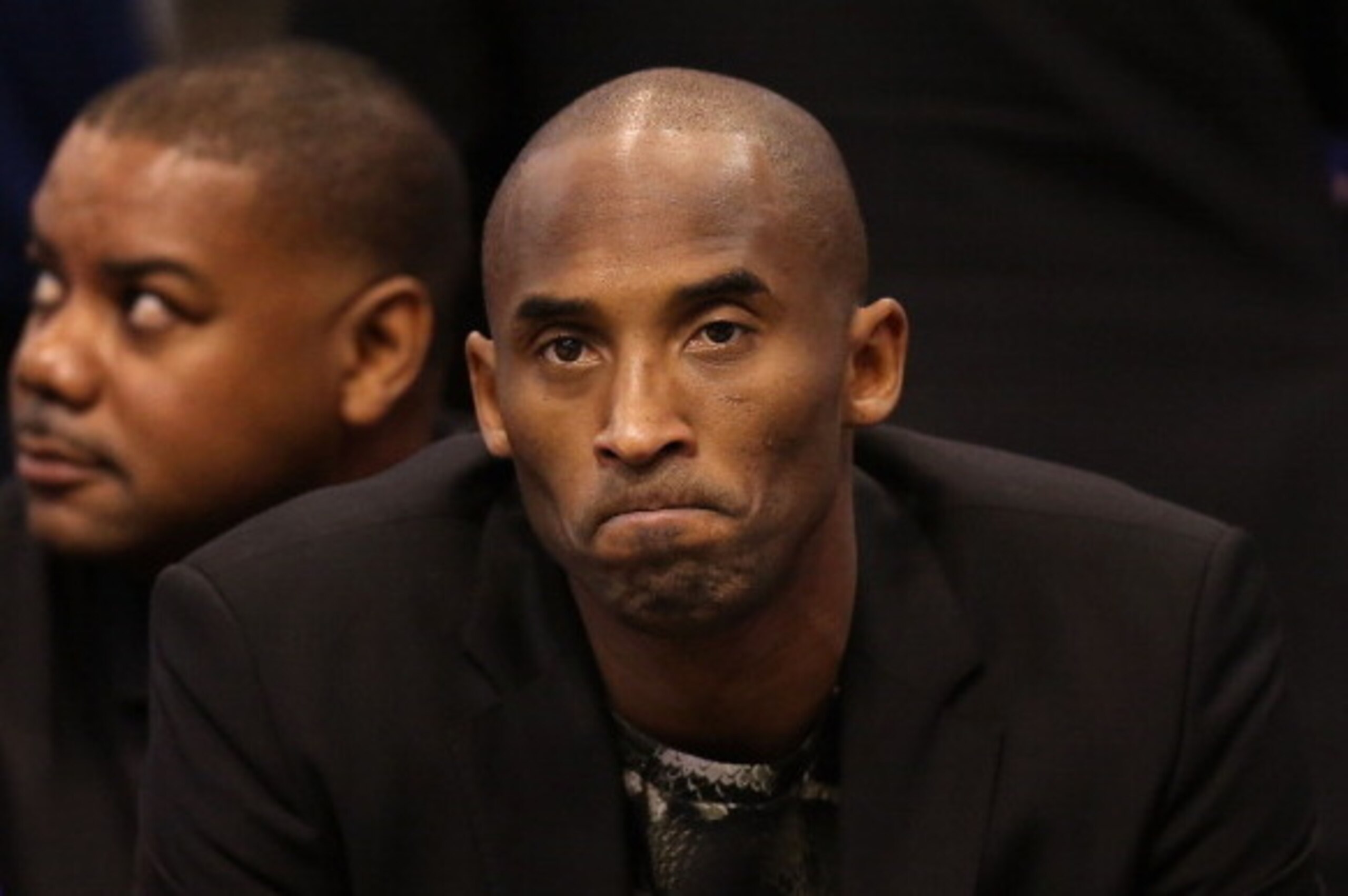
But each returned as a different, more earthbound player than their prime-time championship days. Jordan moved from his natural shooting guard position to small forward, doing a lot of his damage through post-ups and shooting from the elbow.
When Bryant takes the court again, he’ll likely be at his usual two-guard slot but he’ll spend some time at the 3 as well, and regardless, will be posting up, doing his signature jab steps, and shooting from his favorite elbow sweet spots.
But there will be moments when the hands of time seem to turn back for the Lakers’ reigning superstar, just as they did on the night of December 29, 2001, when a 38-year-old Jordan poured in 51 points in a win over the Charlotte Hornets. It was Air Jordan’s first 50-point game since his days as a Bull, and while his fadeaway and pivot step were his main weapons, his legs had a certain lightness to them—this during a season in which he was plagued with knee soreness.
“It's been a long time since someone said that I was hanging in the air," Jordan said, according to Joseph White of the Associated Press. "I felt real good in the first half. My rhythm, my timing was perfect, and I had the defense guessing. It was one of those nights."
How will Bryant’s final chapter compare to the player after whom he patterned so much of his game?
The next two seasons will be played out in the most public of ways—under the bright lights of the basketball court, the mega-media scrutiny that is Los Angeles, and unending fan debate.
Bryant will create space like Jordan created space. He’ll use all the knowledge and craft acquired over 18 regular seasons and countless playoff appearances to make up for any loss in athleticism.
He probably won’t be on the court as much MJ was during his final season—37 minutes per game during 82 appearances.
But the ultimate judgment will come with the success not of the individual, but of the team—that ultimate greater good.
The Wizards went 37-45 in each of Jordan’s final two seasons as a player. That’s not the final mark he wanted to leave on the game and it fueled the discussion of whether he should have come back from greatness to something less.
There were also questions about whether Jordan had been too concerned with his own legend—perhaps to the detriment of the team itself.
As Mike Wise of the New York Times wrote in 2003, “Players who originally bought into Jordan's mystique soon became disenchanted with his constant criticism. That ill will, the officials said, may lead to Jordan's departure.”
Bryant’s final campaign with the only NBA team he has ever played for will also be indelibly colored by public perception. Did he make the team better? Was the price of the extension worth it? How effective was he after devastating injuries?
Ultimately, much will hinge on the team’s overall success. Perhaps an 18-year veteran’s longevity with one team will lend itself to a greater overall unity than Jordan’s last dance in Washington. If Bryant can in fact help the Lakers return to the playoffs in a loaded Western Conference, criticism will turn to praise.
And if the heir to Michael Jordan can somehow pull off the ultimate miracle and win his sixth championship ring, a whole new chapter in the debate of comparative legacies will begin.

.jpg?w=2560 "2 NFL Officials Suspended")
.jpg?w=2560 "Injury-stricken Seahawks signing veteran RB")

.jpg?w=2560 "Mahomes' Wife Trolls Kubiak 💀")