

Breaking Down Washington Wizards' Small Forward Position for 2014-15 Season
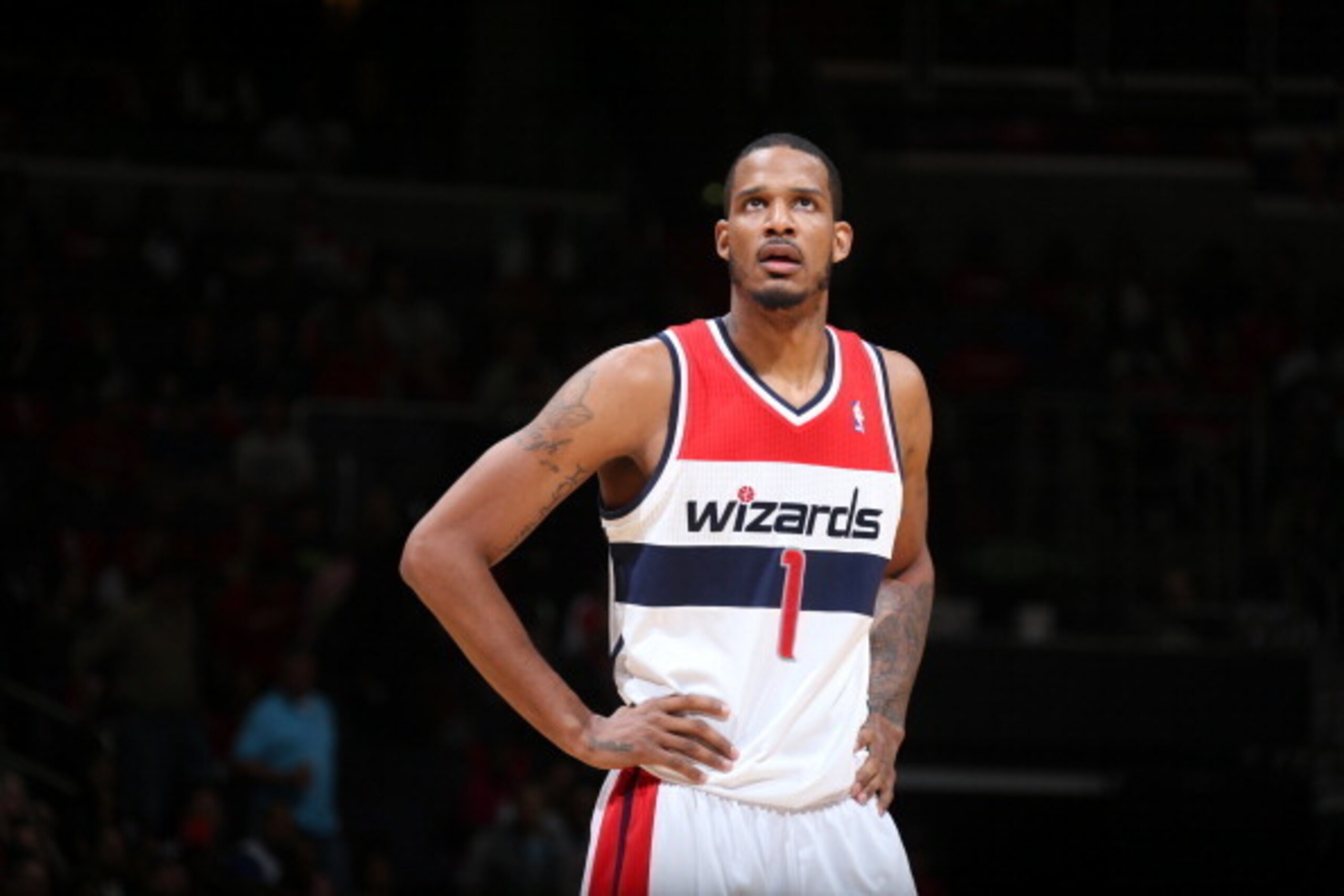
When the offseason started for the Washington Wizards, Paul Pierce might have been the last name fans were thinking to hear associated with the team in free agency.
The expectation was that the Wizards would bring back Trevor Ariza for too much money, but team president Ernie Grunfeld passed and instead brought in the veteran Pierce to play small forward.
While Pierce can’t play as many minutes as Ariza can, he is one of the biggest names Washington has brought in via free agency in the past five (or even more) years, and he brings a veteran presence to help John Wall and Bradley Beal take that next step.
TOP NEWS

LeBron's Special Helicopter Deal

MJ Makes Record-Setting Donation 🙌
Report: Embiid Down to Rookie Weight
Even last season, when Pierce’s Brooklyn Nets played Washington, Pierce sung their praises, according to The Washington Post.
"They’re good. They’re coming into their own. They’re growing up right before our eyes. You’ve seen their struggles over the years, and John Wall has matured as a player, obviously, becoming an all-star this year and taking on more responsibilities and becoming a leader for this ball club. That’s what the Washington Wizards have been waiting on, and you’re seeing it.
"
But Pierce doesn’t make up the entire position, they still have second-year player Otto Porter Jr., and when Martell Webster returns from his back injury, this could be the deepest position on the roster.
Grading Last Year’s Overall Performance
Although Ariza was a home-crowd favorite for his ability to sink threes at the most important juncture of games, he wasn’t actually used all that often in the offense.
His usage rate (a percentage of the plays that the player is involved in when he’s on the floor) was just 16.8, tied for 194th in the league. His usage rate was lower than Marcin Gortat and Kevin Seraphin, according to ESPN.
That’s not knocking his talent, but Ariza was really more of a three-point specialist last season than anything.
He also was the team’s primary defender, guarding the opponent’s best player every night, and for good reason. He finished the year with 3.7 defensive win shares, a 104 defensive rating (the estimated number of points allowed per 100 possessions) and a 16.3 defensive rebounding percentage, per Basketball-Reference.com.
Off the bench, Martell Webster took a step back statistically after losing the starting job to Ariza in the offseason, but he still knocked down threes at a high rate, including shooting almost 51 percent from the right corner, according to NBA.com/Stats’ shot chart. Webster’s shot chart (below) also shows that he hardly ever went inside, and when he did, he wasn’t all that effective.
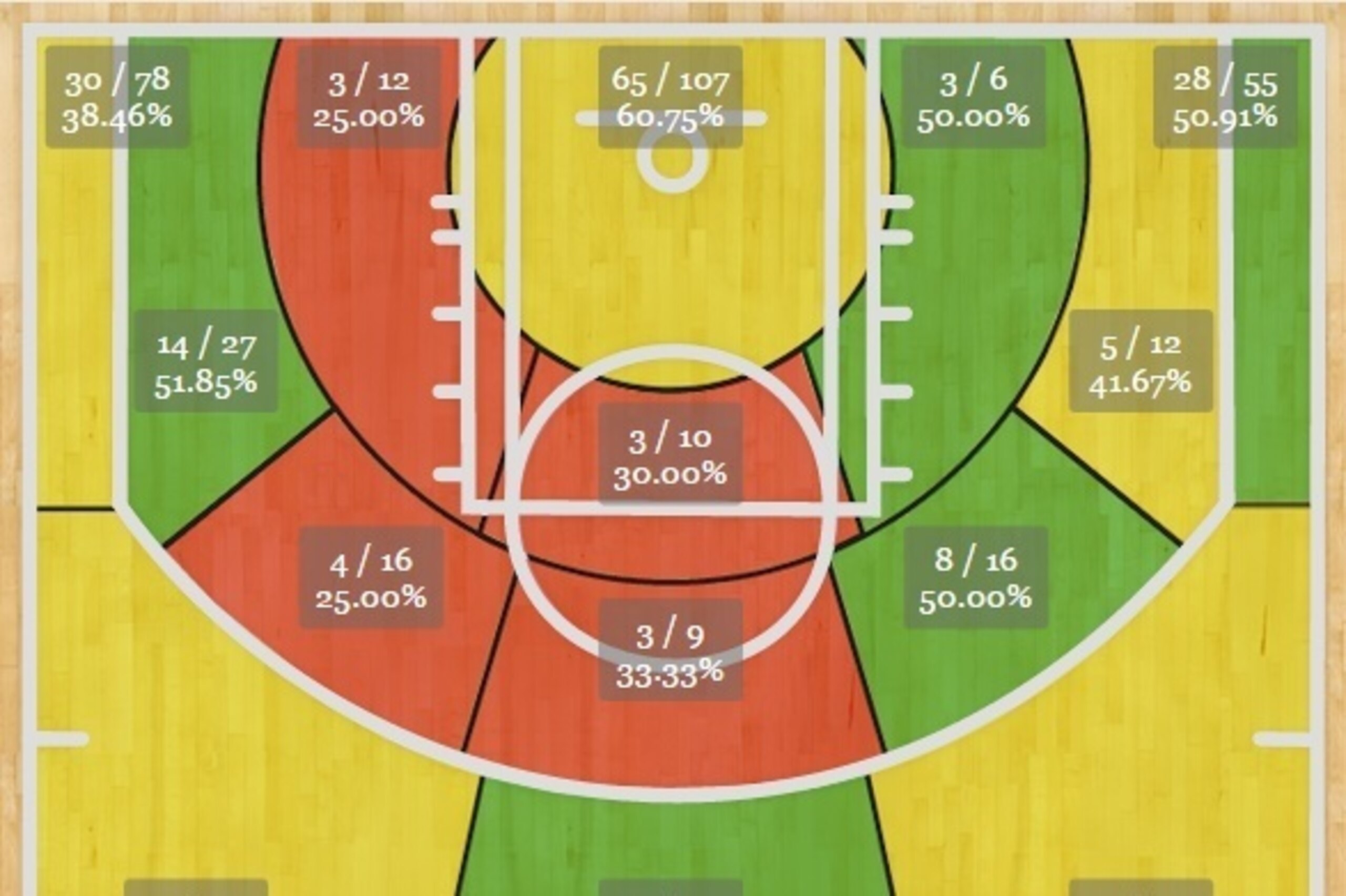
Webster was also a big downgrade on defense when Ariza went off the floor.
As a rookie, Otto Porter Jr. did absolutely nothing. Head coach Randy Wittman seemed to have a grudge against him, giving him several DNPs throughout the year and only using him either in garbage time or when Ariza or Webster took a night off.
Porter’s confidence was shot, and ended the season attempting just 2.5 shots per game, shooting 36.3 percent from the floor.
Here’s the complete rundown of the small forwards for the Wizards last season.
| Ariza | 14.4 | 2.5 | 6.2 | 45.6 | 40.7 | 15.9 |
| Webster | 9.7 | 1.2 | 2.8 | 43.3 | 39.2 | 11.6 |
| Porter | 2.1 | 0.3 | 1.5 | 36.3 | 19.0 | 6.1 |
| Singleton | 3.0 | 0.2 | 2.2 | 37.3 | 36.8 | 8.8 |
Overall, Ariza and Webster were effective enough to keep Washington afloat at this position, but Porter’s lack of involvement and growth as a rookie hold the grade back.
Grade: B+
What’s in Flux this Season
Each night, the biggest question at small forward will be how many minutes Pierce plays.
In each of his past four seasons, Pierce’s per-game minutes have declined, falling to 28 last year with the Nets. In March, Pierce only had four games when he played 33 or more minutes, and even in Brooklyn’s first-round matchup against the Toronto Raptors, he had three games of 25 or fewer minutes.
This will be an even bigger problem for the first two months or so of the season while Martell Webster rehabs his back.
If Porter can’t carry over his production from the Summer League, Pierce may need to take on more of a role on the floor.
The most likely scenario is that with Webster out, Pierce will play in 31 minutes per game, leaving the rest of the time to Porter or even Glen Rice Jr., although he is more of a shooting guard than a small forward.
Besides the minute distribution, the Wizards will need to figure out who will be their primary defender.
Without Ariza, Washington doesn’t have a guy they can stick on Stephen Curry to do this at the end of games.
Wall doesn’t have the length to cover bigger guys, Beal makes too many mental mistakes and Pierce has the length but isn’t as athletic as he used to be to follow guys all over the floor.
Pierce was an underrated defender last season, though, holding opponents to 49.2 percent shooting at the rim, per NBA.com/Stats.
The Wizards likely won’t even have an answer to this question until they test out different matchups and defensive assignments, but it’s something they’ll need to figure out if they want to make a playoff run.
What the Position Will Look Like Heading into the Season
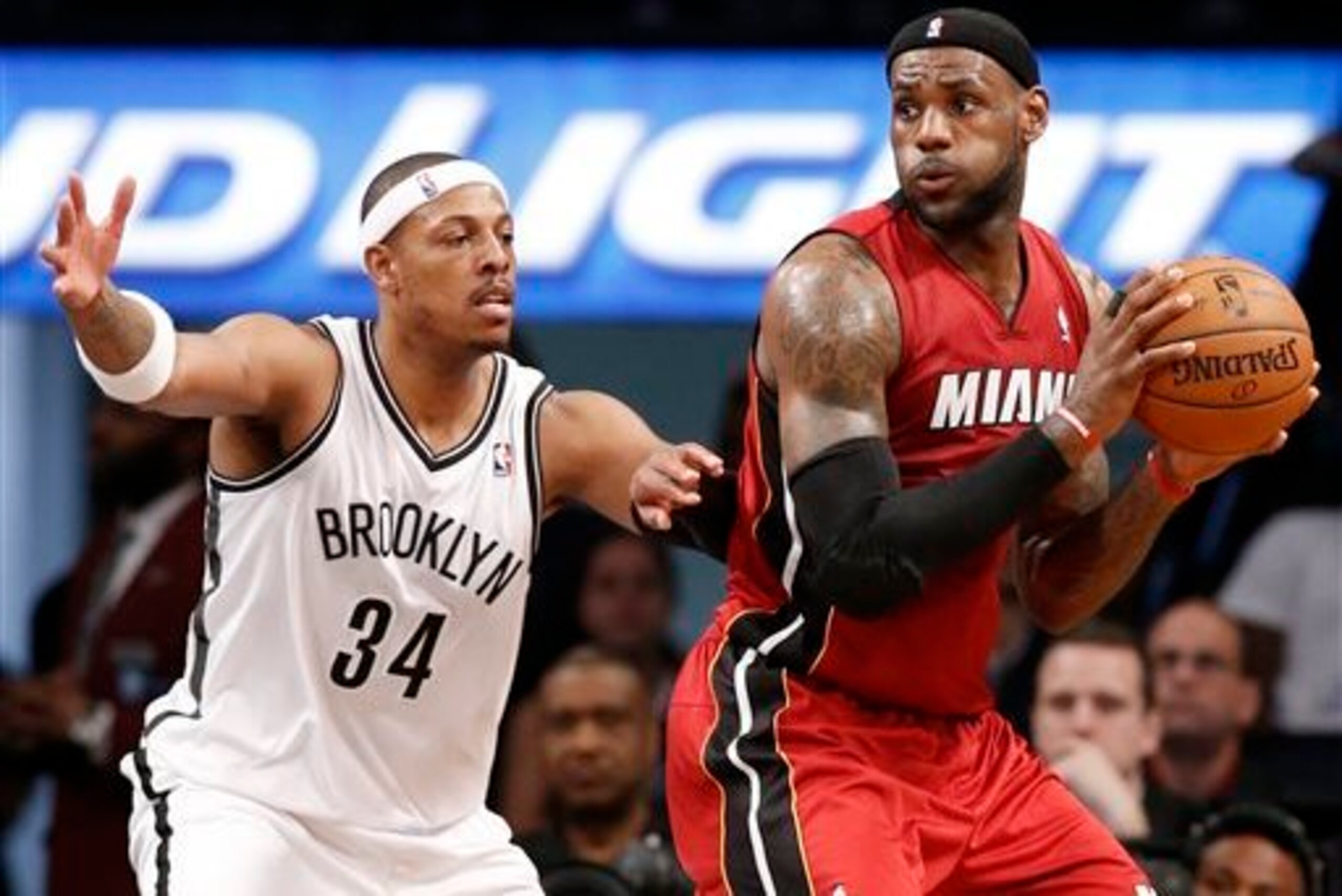
The biggest change between Pierce and Ariza will be how effective Pierce is from mid-range. As fellow featured columnist Jared Dubin wrote on Pierce, he can be almost the anti-Ariza, focusing on taking mid-range shots, something that Wall and Beal struggled with last season.
"But you'll also notice that Pierce is still active in the mid-range area (particularly that right-elbow area Wall loves), certainly far more so than Ariza. The Wizards, presumably, did not bring Pierce in to just do his best Ariza impression; they want to see that herky-jerky off-the-bounce game that has made Pierce a future Hall of Famer as well.
"
Ariza carved out his role on the offense by taking catch-and-shoot jumpers around the perimeter, scoring the seventh most catch-and-shoot points in the league, per NBA.com/Stats. Though Pierce isn’t a catch-and-shoot guy, he did make 40.9 percent of those shots and 40.1 percent on pull-up shots.
Wall and Beal would often settle for mid-range shots last season and would stagnate the offense, and Pierce should help alleviate that.
Using the Basketball-Reference.com player comparison tool, we can compared how Pierce and Ariza stack up.
| Ariza | 14.6 | 2.5 | 6.3 | 45.6 | 2.6 | 10.1 | 113 | 104 |
| Pierce | 17.3 | 3.1 | 6.0 | 45.1 | 5.3 | 9.9 | 109 | 106 |
Per 36 minutes, at eight years older, Pierce averaged more points, assists, blocks, free-throw attempts and defensive rebounds.
There’s a reason he’s going to be in the Hall of Fame soon.
Behind Pierce, Webster will likely stick to being a three-point specialist, especially after another back injury. That’s not necessarily a bad thing, considering how good he is at drawing four-point plays, and he can be the heat-check guy Ariza was last year.
Finally, there’s Porter. He averaged 19 points per game in the Summer League in 31.8 minutes, along with 5.8 rebounds and 1.8 assists. Numbers aside, Porter showed over the summer that he gained some of his confidence back and is not afraid to shoot now, and he and Rice were both attacking the basket and drawing fouls.
If everything breaks right for this position (Pierce stays healthy, Webster recovers on time and Porter takes a step forward) Webster could even become a trade piece halfway through this season, and the Wizards will be ready to move on with Porter after a year under Pierce’s tutelage.


.jpg?w=2560 "2 NFL Officials Suspended")

.jpg?w=2560 "Mahomes' Wife Trolls Kubiak 💀")
.jpg?w=2560 "Injury-stricken Seahawks signing veteran RB")

.jpg?w=2560 "Love's Body Already 'Tired'")