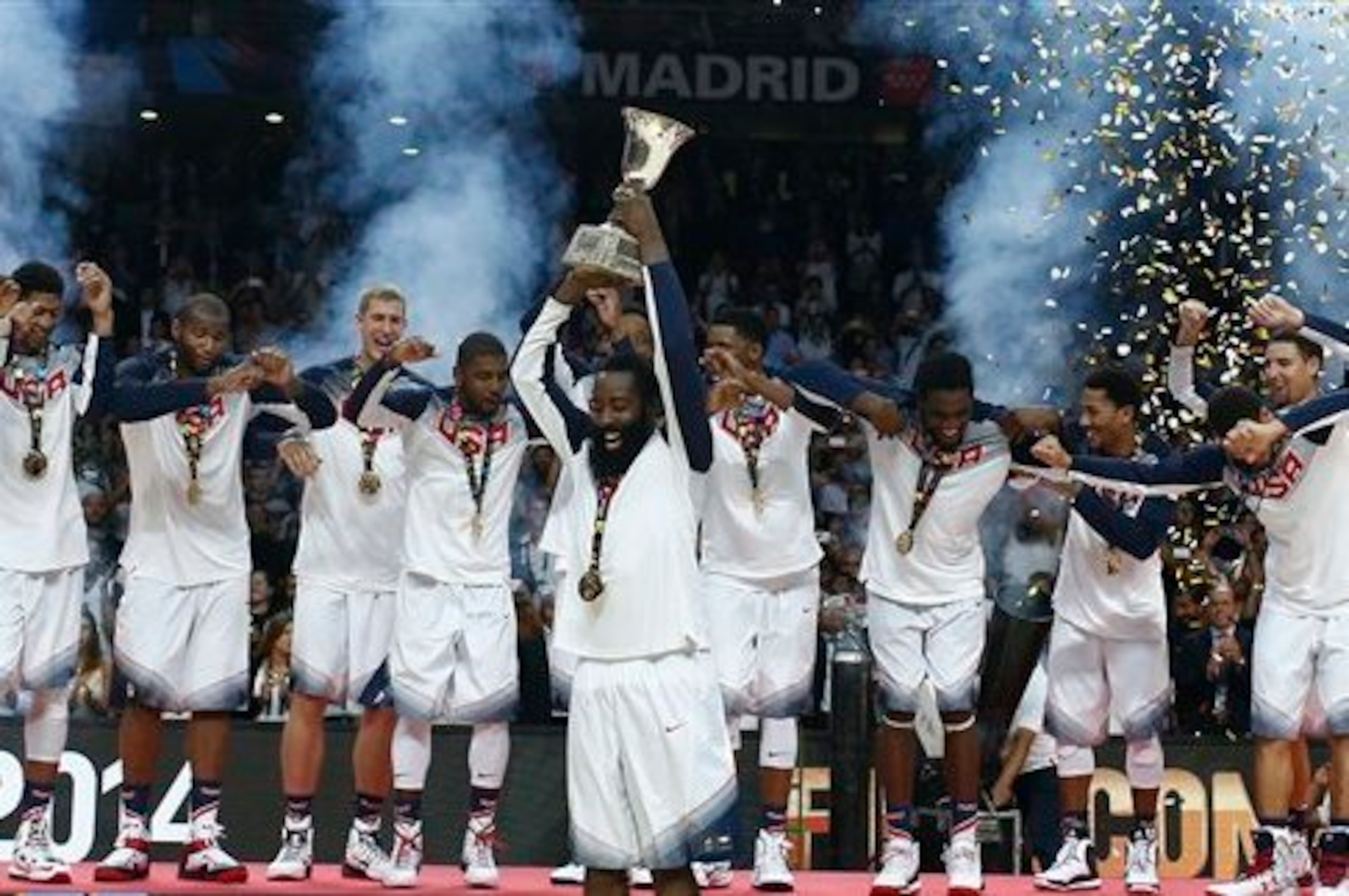

What We Learned About Each Member of Team USA Following FIBA Gold Medal Run
If Team USA’s colossal 129-92 win over Serbia in the 2014 FIBA Basketball World Cup gold-medal game taught us anything, it’s that basketball’s global reach has yet to spawn a serious challenger to the hoops throne.
Try as countries might, even America’s supposed “C Team” proved, in the end, a far more formidable force than anyone could’ve anticipated.
That bodes well for the NBA, many of whose teams about to inherit a wealth of talent and experience from Team USA’s 12 participants.
What follows, then, are the 12 biggest things we’ve learned—one for each player—as we approach the start of NBA training camps.
From the most steadfast of starters to…well, to Mason Plumlee…Everyone brought something unique to the table. However, it’s what each of these players takes away from his FIBA experience that’ll prove the biggest boon to the attendant team.
Let us learn about people learning things!
All stats courtesy of FIBA.com, unless otherwise noted.
Mason Plumlee Could Be a Rebounding Machine
1 of 12
When a player only averages seven minutes a game, it’s a bit difficult to say what, exactly, he could’ve possibly gleaned from the experience.
There will be plenty who chalk up Mason Plumlee’s inclusion on Team USA to his having played under head coach Mike Krzyzewski at Duke. And those accusations wouldn’t be totally off base.
What Plumlee proved, however, is that he can be a supremely valuable defense-and-rebounding guy for a good team—a contending team, even—reliance on per-36 performance aside.
Rubbing shoulders with the likes of DeMarcus Cousins, Andre Drummond, Anthony Davis and Kenneth Faried is bound to yield some helpful dividends as well. Even if Plumlee’s still still carrying their bags from the airport claim.
Andre Drummond Isn't Quite There Yet
2 of 12
With the NBA experiencing a prolonged dearth of All-Star-level centers, Andre Drummond—fresh off a breakout season in which the Detroit Pistons stud posted Dwight Howard-esque numbers—seemed like an obvious fit to forge a decent rotational roll with Team USA.
Instead, the 21-year-old was mostly bolted to the bench in lieu of the more dynamic Cousins and the surprisingly effective Faried, who gave Team USA much of Drummond’s rim protection without all of the offensive baggage (lack of free-throw shooting, lack of an actual post-up game, etc.)
Don’t read too much into Drummond’s sparse play; this kid stands to be a huge piece of Team USA’s future. As much as it would’ve benefited the Pistons to have their cornerstone logging more minutes against dynamic global competition, his time to shine on the international stage is still likely a few more years down the road.
DeMar DeRozan Still Needs to Work on That Three Ball
3 of 12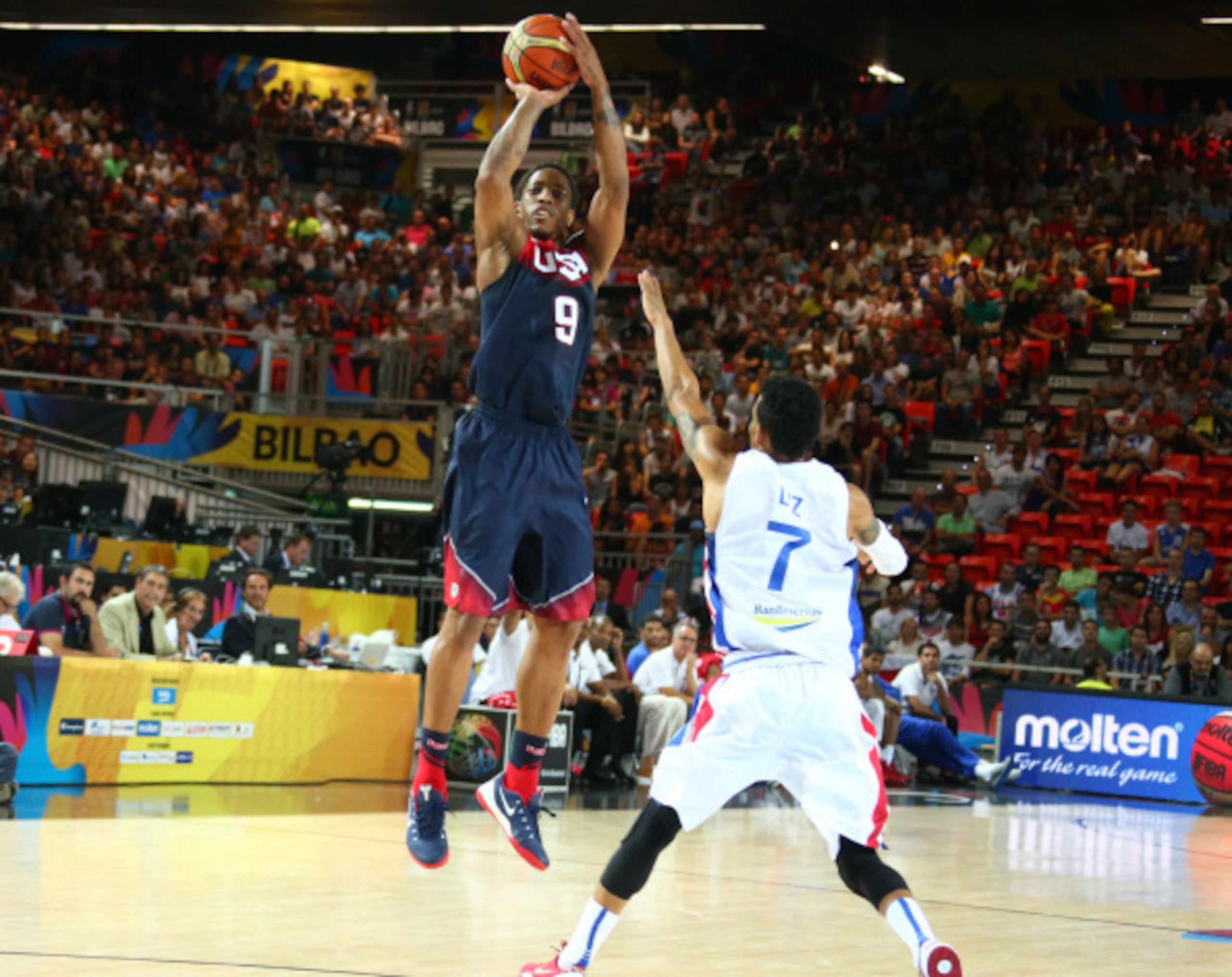
For so many NBA players-turned-international-participants, FIBA’s shortened three-point arc is a great way to gain more confidence as an outside shooter. Case in point: Rudy Gay, whose 41 percent shooting from distance was measures above the 33 percent he registered with the Sacramento Kings last season.
DeMar DeRozan? Not so much. In eight FIBA appearances, the Toronto Raptors swingman hit on just 29 percent of his tries from deep, a full percentage point lower than his mark from a season ago.
To be sure, part of DeRozan’s struggles can be explained by the sheer drop-off in playing time. After all, a guy used to playing starter’s minutes is bound to have his share of struggles when forced into a more spot-minute role—weird FIBA Molten ball be damned.
DeRozan emerged last year as one of the league’s premier up-and-coming 2s. To take his game to still higher heights, however, will require DeRozan spend a little more time hanging out at 23’9”.



Rudy Gay Is a Viable 2016 Olympics Prospect
4 of 12
Speaking of Mr. Gay, what a worthy stand-in he proved to be.
Following Paul George’s gruesome knee injury during a televised inter-squad scrimmage on August 2 (and Kevin Durant subsequent departure), Gay was asked to come aboard as a spot frontcourt fill in—someone who could play a reasonable facsimile of a Durant or Carmelo Anthony, both of whom had emerged as devastating weapons at the 4 spot in Olympics and FIBA World Cups past.
And while Gay would only average 14 minutes a game, his production—six points per on 48 percent shooting (including 41 percent from distance)—proved a key piece of Mike Krzyzewski’s rotational strategy.
Given the NBA’s teeming ranks of versatile 3s, it seems unlikely Gay will be invited back for the 2016 Brazil Olympics. But if George’s injury somehow serves to dissuade the game’s top talents from participating, Krzyzewski and Co. know they have a viable, productive backup plan in Gay.
Klay Thompson Might Be the Best Two-Way Shooting Guard in the NBA
5 of 12
Whoever called Klay Thompson finishing as Team USA’s second leading scorer, please stand up.
Liars!
Everyone knew Thompson would become Krzyzewski’s go-to defender on the perimeter—a guy capable of covering for the deficiencies of James Harden, Kyrie Irving and Golden State Warriors teammate Stephen Curry.
What few could’ve seen coming was how unguardable Thompson himself would prove to be.
As Team USA’s first option off the bench, Thompson registered impressive marks of 12.7 points, 2.2 rebounds and 2.1 assists on 52 percent shooting in a little under 23 minutes per contest. What’s more, he routinely stymied opponents’ possessions in their tracks, using his surprising length and ever-blossoming strength in ways the rest of his backcourt peers simply couldn’t.
That bodes well for the Warriors, who may soon have not just the best backcourt in the NBA at their disposal, but one of the best guard tandems of all time.
DeMarcus Cousins Cares
6 of 12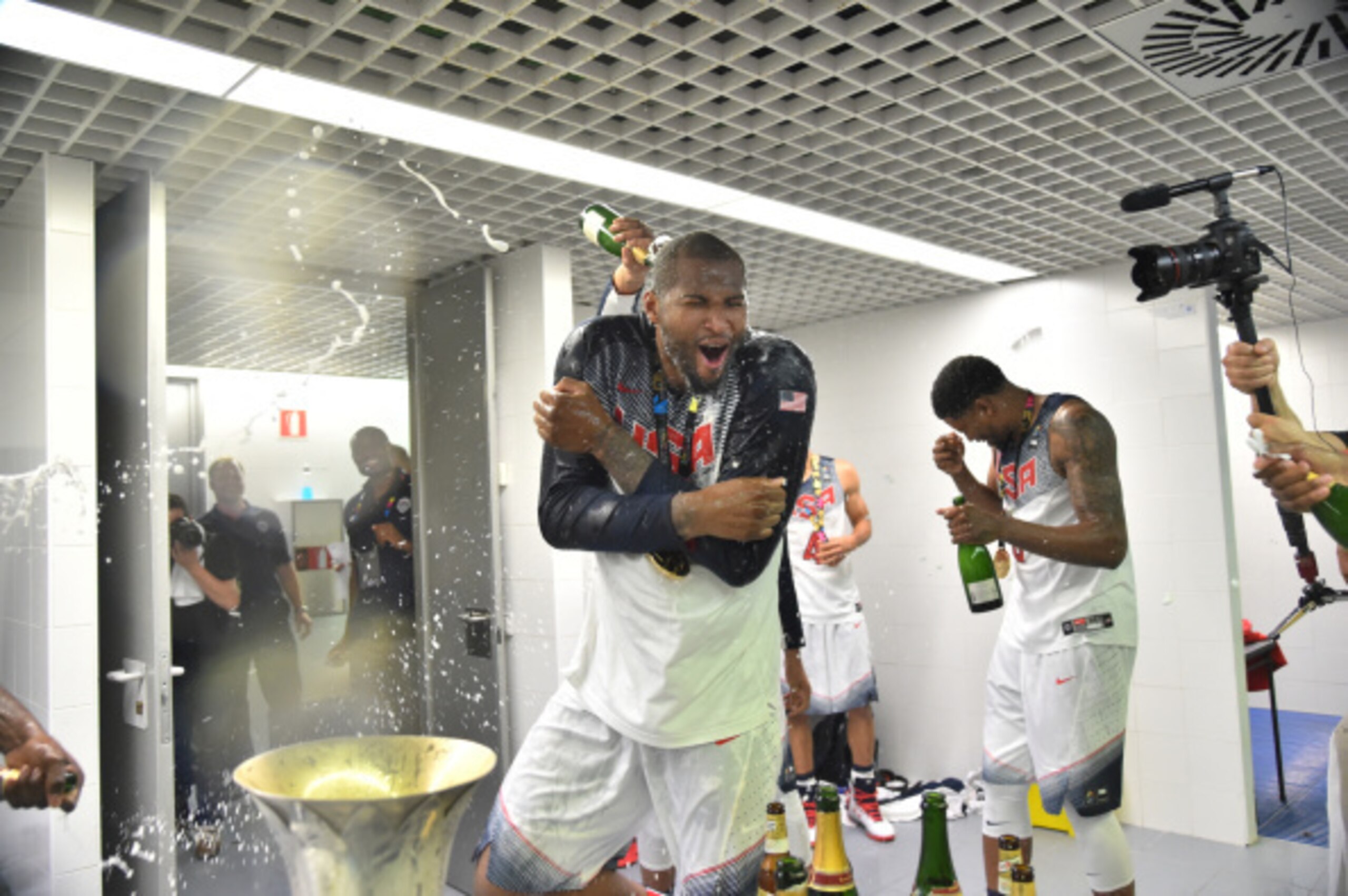
The thing you know you’re getting from DeMarcus Cousins is that you have no idea what you’re getting from DeMarcus Cousins. If that makes sense.
Here’s the thing though: For all his unruly antics and stubble-short emotional fuse, DeMarcus Cousins truly does care.
“I would be crushed,” Cousins told the Sacramento Bee’s Ailene Voisin about the prospect of being cut from Team USA prior to the World Cup. “Everyone knows how much I want to do this. This is my third year here (two with Select Team), and I don’t run from any challenge. I would be crushed, but I’m not a quitter. I would come back and try again.”
To be sure, Cousins had his fair share of run ins, most infamously with Lithuanian star and fellow NBA mate Jonas Valanciunas in Team USA’s semifinals romp.
Two days later, with both Faried and Davis in early foul trouble, Cousins entered the gold-medal game and immediately made his presence known at both ends of the floor. Serbia has absolutely no answers for Cousins’ dynamic skill set, helping the mercurial Sacramento King cap off what hopes to be a truly transformative summer.
Just remember the next time Cousins gets a bit chippy on the block or shoots a scowl the way of the opposing bench that he’s not doing it to get attention; he’s doing it because he cares—even if it's a bit too much at times.
Derrick Rose Might Not Be the Bulls' Best Player Next Season
7 of 12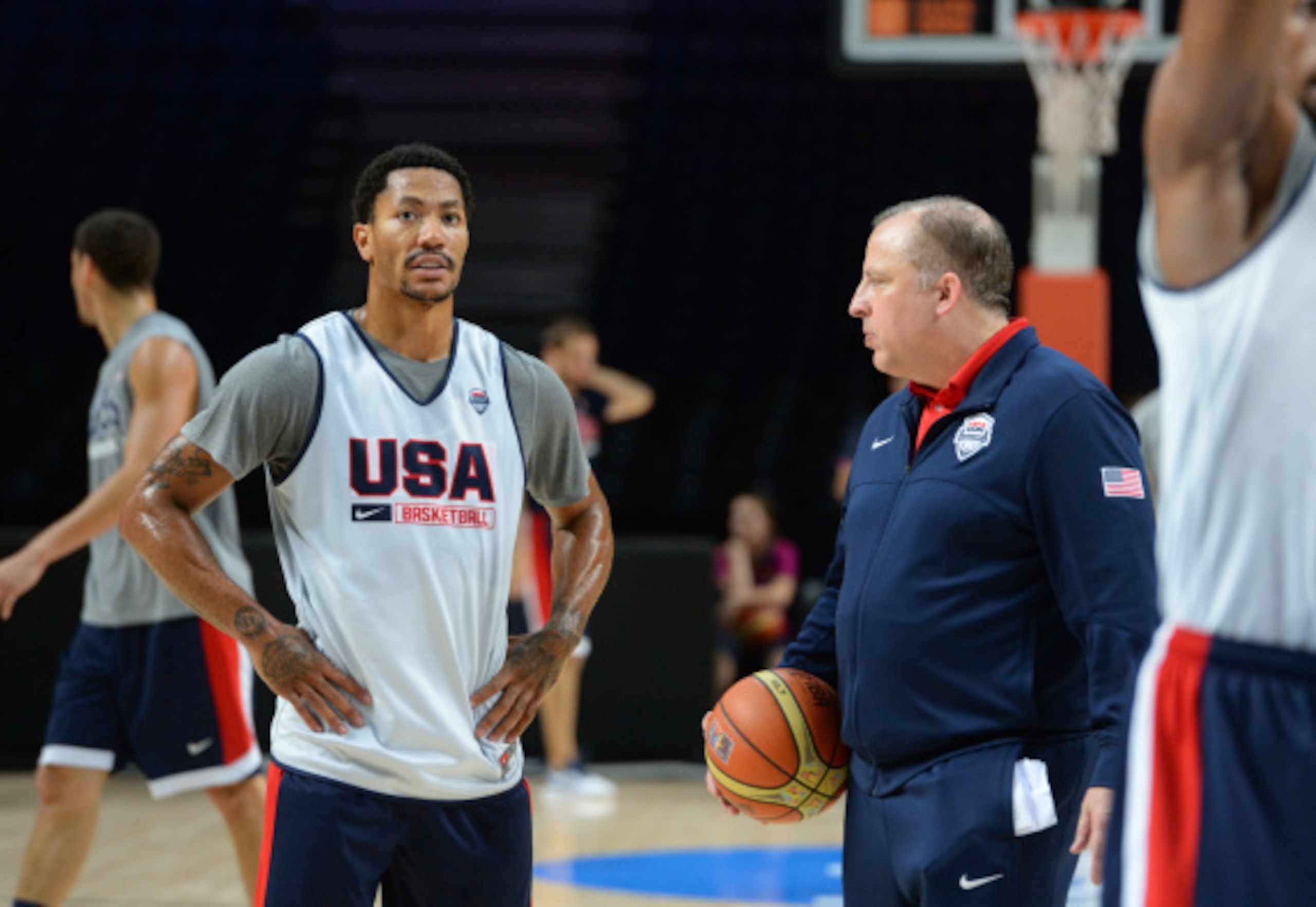
“I feel great right now,” Derrick Rose told Sam Smith of Bulls.com shortly after Team USA’s gold-medal victory. “I got a gold without even scoring, man It feels good.”
That’s all well and good for Team USA. But Rose’s shaky FIBA performances underscores what could become one of the upcoming season’s most intriguing storylines: the emergence of Pau Gasol as the Chicago Bulls’ best two-way player.
After weeks of hype pointing to a breakout performance by the former MVP point guard, Rose instead struggled to forge a consistent offensive rhythm, often settling for defended jump shots or getting caught in no man’s land in what used to be routine trips to the tin.
Of course, this was never meant to be much more than a high-stakes training camp for Rose, who’s spent the better part of the past two seasons recovering from a pair of knee injuries. That Krzyzewski armed himself with a bevy of top-tier point guards only reinforces this suspicion.
No one would be surprised if midseason found Rose healthy and hell-bent on ascending the NBA ladder anew. But given Gasol’s jaw-dropping productivity (20 points and 5.9 rebounds on 64 percent shooting), it might be in Chicago’s best interest to consider running more of its offense through the multifaceted Spaniard.
James Harden Will Be a Better Leader for the Houston Rockets
8 of 12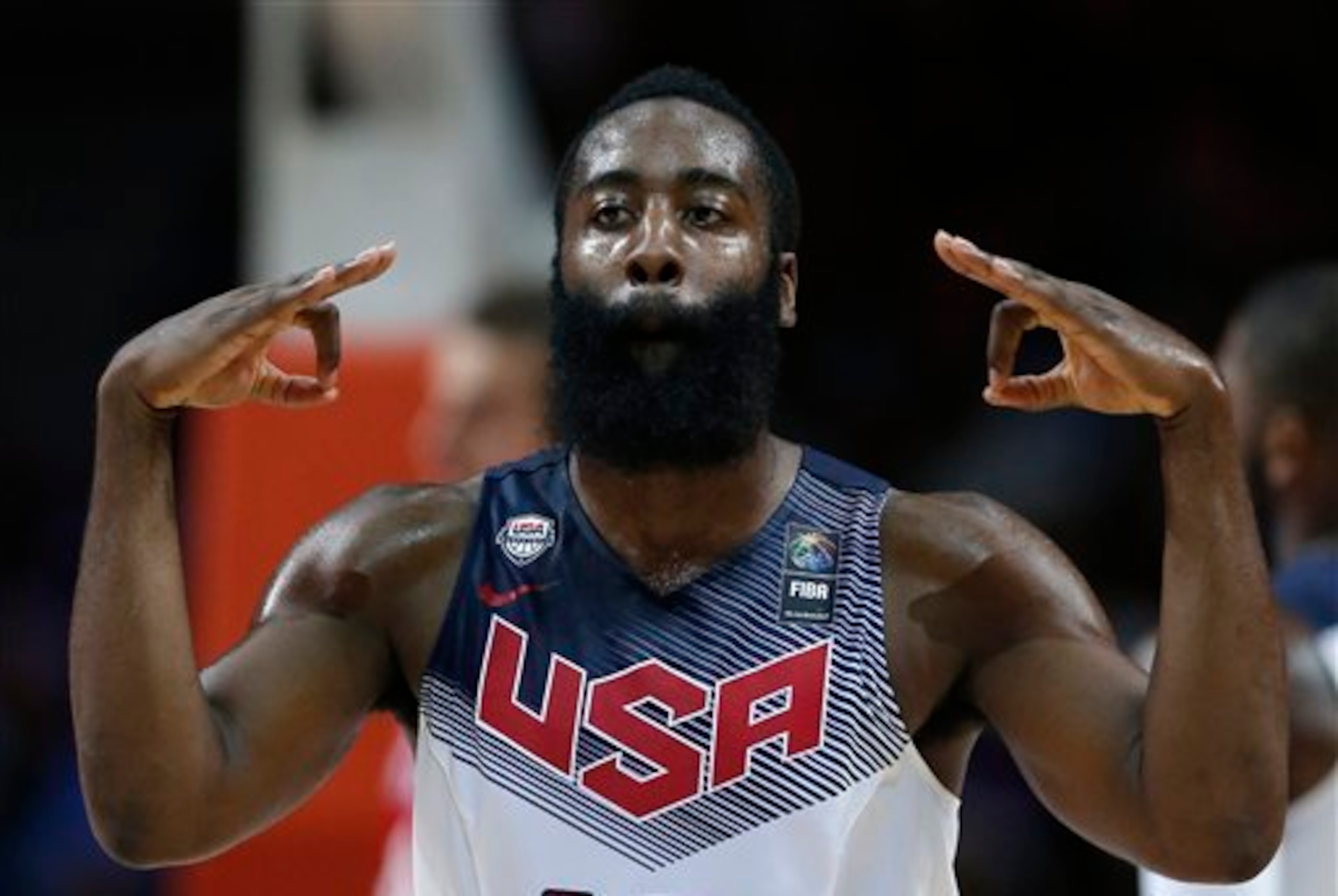
There’s something about James Harden’s on-court demeanor—call it a loud nonchalance—that suggests a player not particularly concerned with being his team’s emotional or spiritual linchpin.
Team USA’s FIBA run didn’t turn Harden into Michael Jordan. What it might’ve done, however, is prove the Houston Rockets scoring sensation is, in fact, cognizant of what’s at stake. Commitment to defensive effort notwithstanding.
“This is a different platform,” Harden told The Washington Post’s Michael Lee in an August 27 interview. “A platform that I haven’t really been on before, but I think most of us haven’t been on it, either. I think we’re all kind of figuring it out together. That’s what’s going to be so special about this team. We figure it out together and we come out with a gold medal, it makes it that much more special.”
As one of only two holdovers from Krzyzewski’s 2012 Olympics squad (Anthony Davis being the other), Harden arrived at Team USA training camp as a de facto leader already. Now, with another gold medal and the team’s scoring title to his credit, Harden is poised to show he has what it takes to be more than just Houston’s shameless gunner.
Stephen Curry Is Still Stephen Curry
9 of 12
Of Team USA’s 12 participants, none seemed a more seamless strategic fit than Stephen Curry, who’s uncanny shooting prowess was tailor made to the global game.
The Golden State Warriors sharpshooter didn’t disappoint, hitting on a crisp 44 percent from behind the arc. The flip side: Curry connected on just 35 percent of his two-point attempts (although he only attempted 23 of them, or less than three per game).
As part of Team USA’s three-headed point guard monster (along with Harden and Kyrie Irving), Curry only solidified his status as one of the world’s hardest covers, finding cracks and crannies in opposing defenses and coming up with momentum-turning buckets aplenty during Team USA’s unblemished eight-game run.
Anthony Davis Is Team USA's Cornerstone of the Future
10 of 12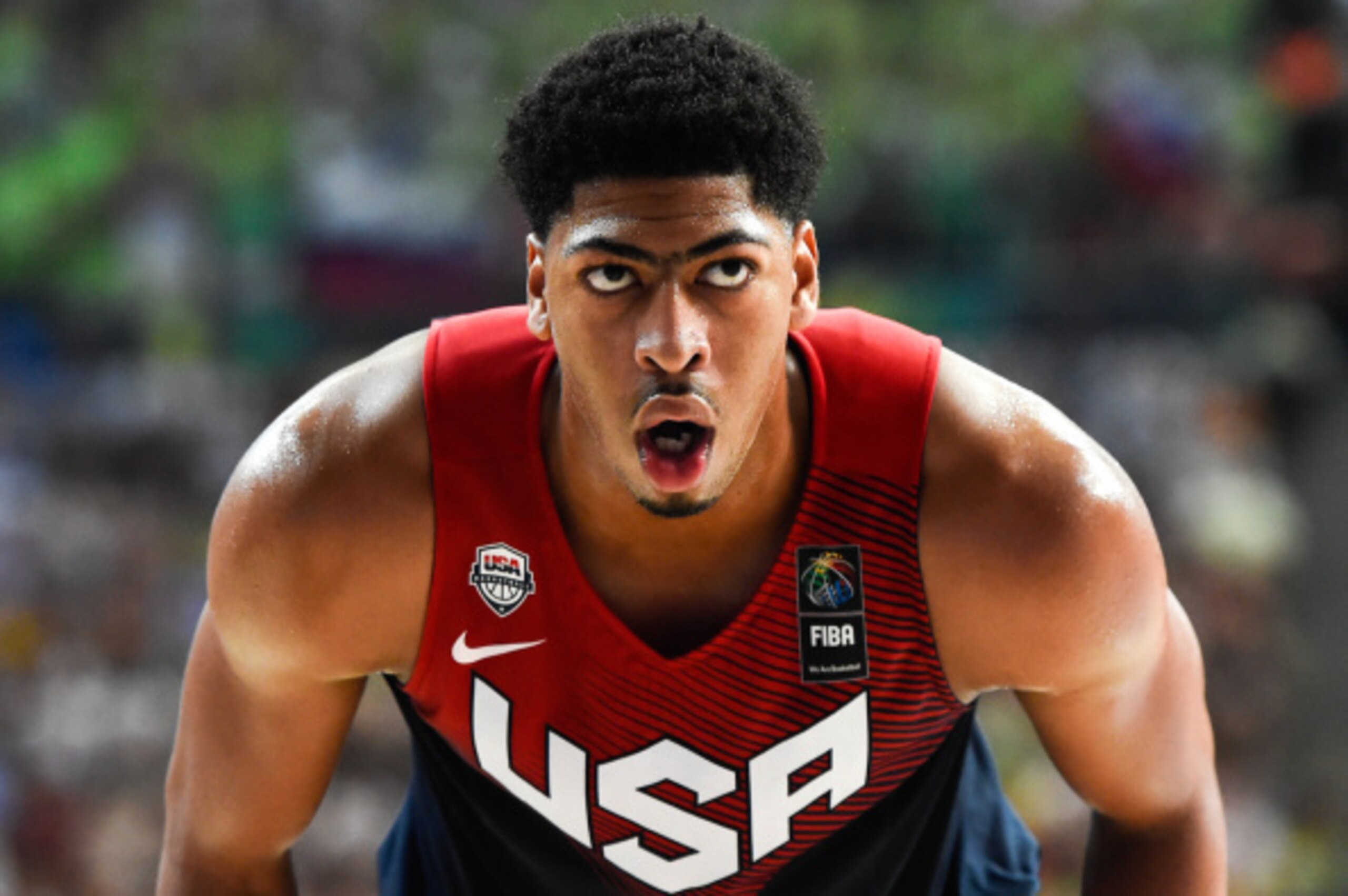
Dream as we might, it seems unlikely Anthony Davis will ever evolve into a full-time small forward. Barring some miraculous development in Davis’ three-point stroke, of course.
However, should Davis continue to extend his range, there’s no reason to believe he can’t become a viable threat from behind the international arc. That, coupled with his already insane defensive versatility—there were a number of positions where Davis guarded up to four different players—makes the New Orleans Pelicans forward an absolute must for Krzyzewski going forward.
Here’s Bleacher Report’s Grant Hughes on the unique superlatives Davis as brought to the table for Team USA:
"It's a rare player who can initiate a takeover effort without stealing shots or commandeering possessions, but Davis does it. His buckets come in transition, and even his half-court scoring is never the result of a forced shot.
Often, his high-flying finishes conjure up memories of days from Team USA's past glory. The way he finishes some of those lobs on the break has a tendency to demoralize opponents.
"
The scary part: Davis is just 21 years old. Even scarier: If and when he’s invited to be part of Team USA’s run at Rio in 2016, he’ll still be a full four or five years from his prime.
Yeah, you could say American basketball is in pretty good hands.
Kyrie Irving Has No Problem Taking a Back Seat
11 of 12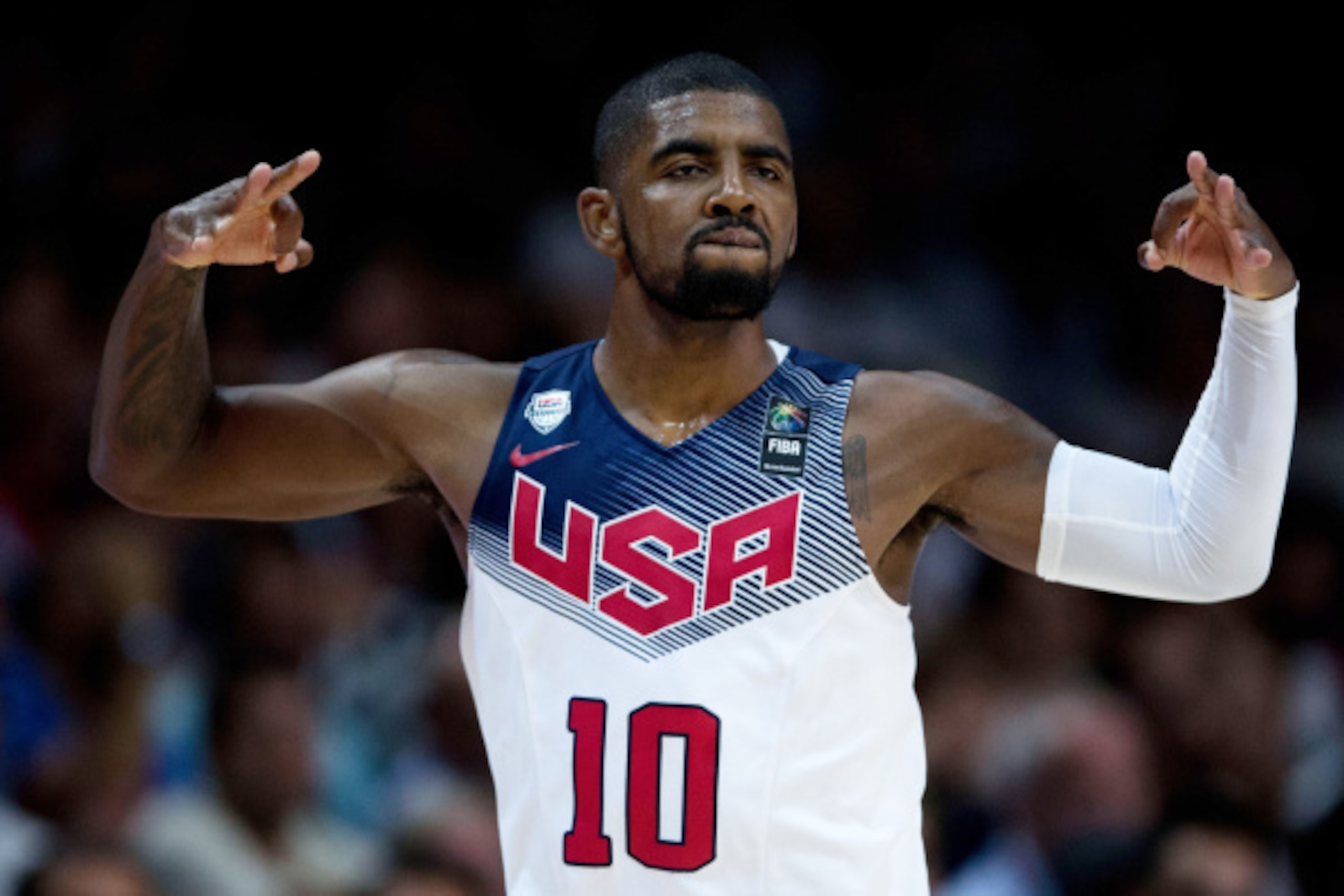
No one better personified Team USA’s quiet dominance better than Kyrie Irving, who won the FIBA Basketball World Cup Most Outstanding Player award despite logging more than 20 points only once, in the gold-medal game.
More important for the Cleveland Cavaliers, Irving’s hyper-efficient performance emerged as the brightest of bellwethers for a team suddenly flush with three superstar talents.
Over eight FIBA games, Irving hoisted more than 10 shots only twice—a far cry from the 17.4 shots per game the former No. 1 pick sent aloft last season. Paired with Harden and Curry, Irving didn’t have to worry about being his team’s principal playmaker, instead letting the offense come to him. The results were positively encouraging: 12.1 points and 3.6 assists on 56 percent shooting, including an astounding 61 percent from distance.
Somewhere, LeBron James and Kevin Love are drooling.
Kenneth Faried Is About to Be Paaaaaaid
12 of 12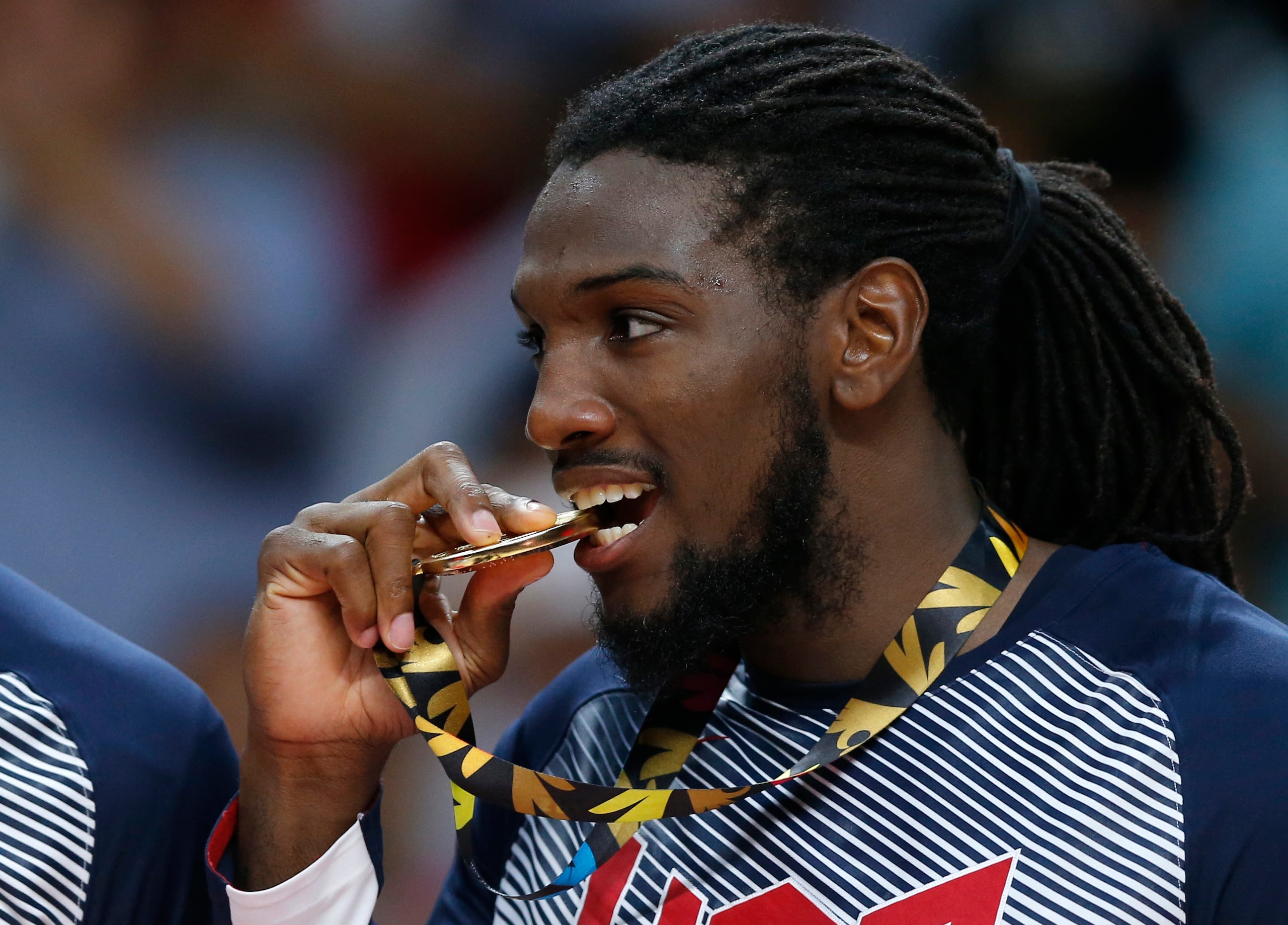
On a team with so little in the way of international experience, the Denver Nuggets’ Kenneth Faried emerged as Team USA’s unquestioned emotional leader—a source of boundless basketball energy brought to bear at both ends of the floor.
Never a top-tier defender, Faried’s rim-protecting prowess showed marked improvement over what we’ve seen from the former Morehead State standout during his first three NBA seasons. More importantly, his ability to get out in transition helped add a devastating element to Team USA’s already formidable transition game.
As Basketball Insiders’ Yannis Koutroupis recently underscored, Faried is about to be paid—big time. That is, of course, unless the Nuggets look to deal the high-energy forward while his value is at an all-time high.
But really, if one of your top two players just got done authoring that kind of blistering FIBA performance, would you seriously tempt the karmic fates by letting him go?
Neither would we.

.jpg?w=2560 "Rodgers Iced Out on Plane 💎")

.jpg?w=2560 "Raiders Could Start Mendoza")
.jpg?w=2560 "Packers Safety Slams Refs 🤬")
.jpg?w=2560 "🚨 Week 8 AP Top 25 Poll")