

How Did FIBA World Cup Win Prepare USA Basketball for 2016 Rio Summer Olympics?
The United States scored a tournament-high 129 points on Sunday, easily outpacing Serbia's 92 points en route to a gold medal at the FIBA World Cup in Spain. It was the club's 63rd consecutive victory and secured the team a spot at the 2016 Rio Summer Olympics.
Bleacher Report highlighted tournament MVP Kyrie Irving's performance in the win:
TOP NEWS

LeBron's Special Helicopter Deal

MJ Makes Record-Setting Donation 🙌
Report: Embiid Down to Rookie Weight
Team USA's latest rout comes on the heels of gold-medal victories at the 2012 London Summer Olympics, the 2010 FIBA World Cup in Istanbul and the 2008 Beijing Summer Olympics. The faces have changed, but the unrivaled results remain the same.
And with the lessons learned this summer, those results may be remarkably similar come 2016.
Only two members of the 2012 Olympic team joined Team USA this time around, but that didn't seem to affect the bottom line. Eight Americans scored in double figures on Sunday, and all but one member of the 12-man roster—Derrick Rose—scored in the contest. If this is a sign of things to come, the future of USA Basketball remains in good hands.
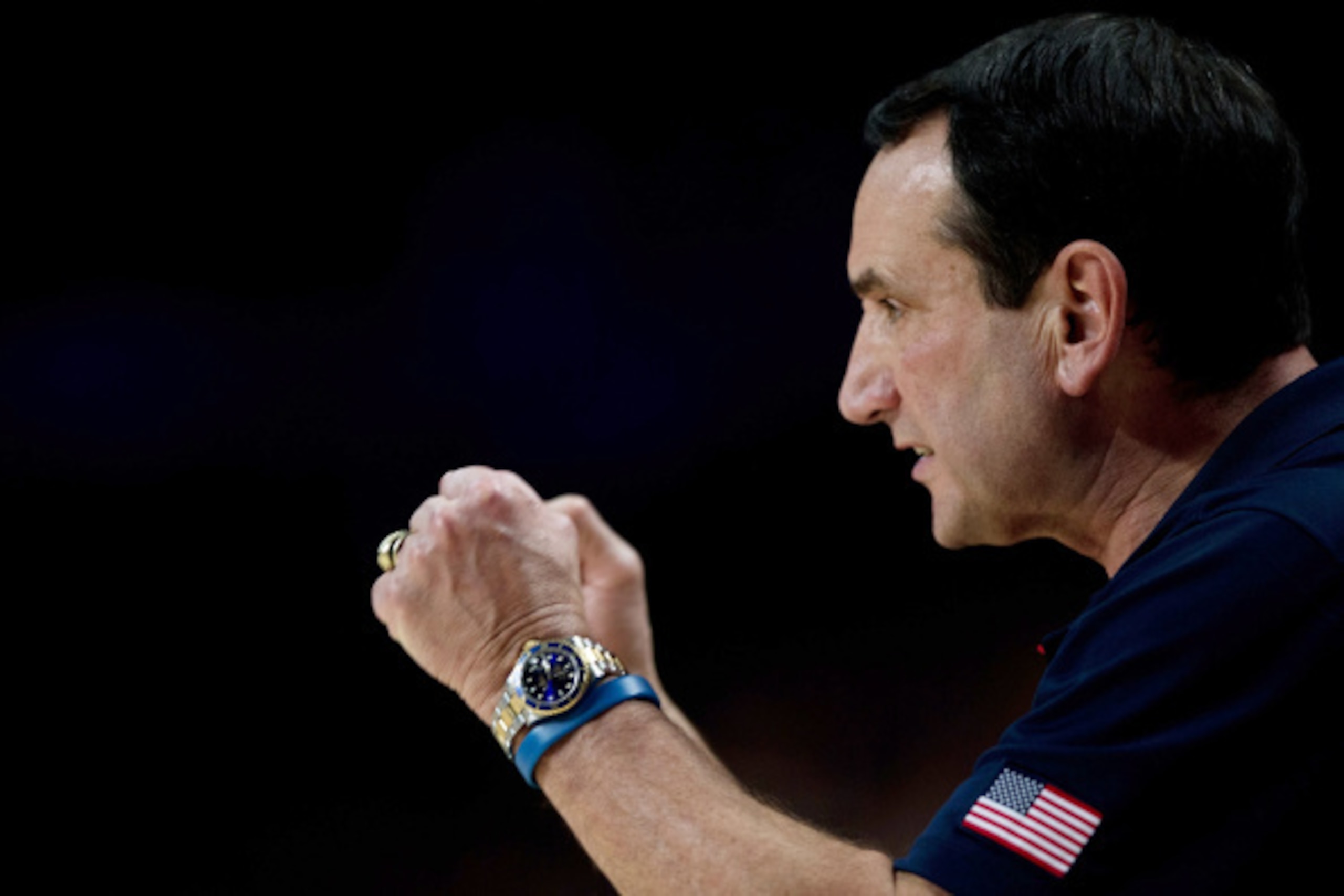
Much of the club's continuity can be attributed to head coach and college basketball legend Mike Krzyzewski, the closest thing to a common denominator in all of USA Basketball's recently sustained success.
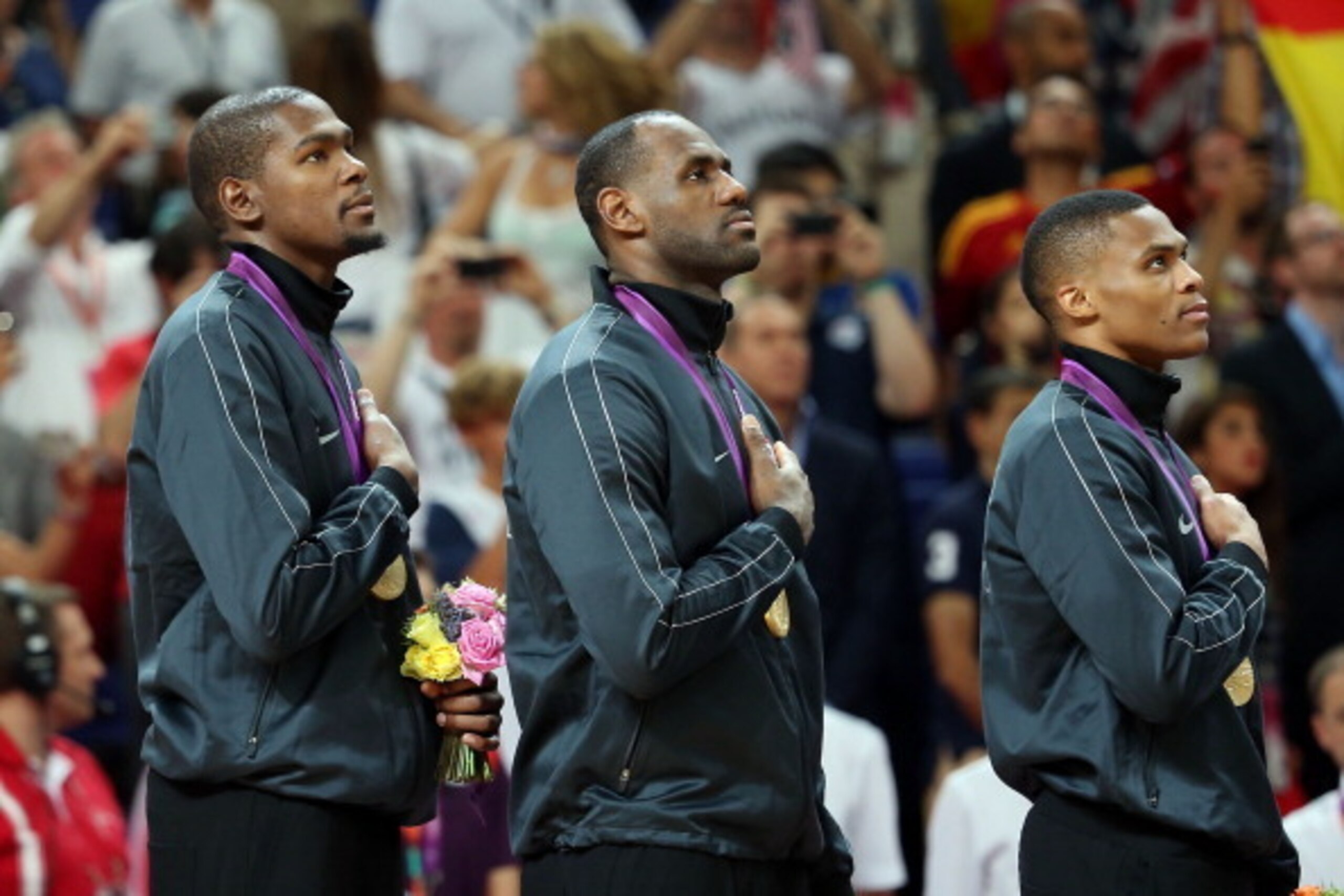
Indeed, the United States took gold this time without a slew of the NBA's most recognizable names—including LeBron James, Kevin Durant, Chris Paul, Carmelo Anthony, Blake Griffin, Kevin Love, LaMarcus Aldridge, Russell Westbrook, Paul George and others. One might have expected the Americans to take a step back without some of their most cherished weapons, but that was hardly the case.
In fact, Team USA managed to establish some firsts along the way after remaining undefeated during tournament play. ESPN Stats & Info and SportsCenter shared some historical stats:
Attempting to give credit where it's due isn't easy.
This was an ensemble effort drawing on major contributions from Anthony Davis, Kenneth Faried, James Harden, Klay Thompson, Stephen Curry and—especially in the final—Irving.
Even DeMarcus Cousins seemed to play with maturity that was—for him—unprecedented, especially against Serbia.
CBSSports.com's Matt Moore writes:
"The real story of the gold medal game, though, should be DeMarcus Cousins. Cousins...came in with Anthony Davis in foul trouble and made a huge impact. He protected the rim, disrupting all sorts of shots, crashed the glass and controlled the game. He also walked away from every brush-up and conflict, never overreacting to fouls or controls.
"
At the moment, there's no telling which of those standouts will join the 2016 effort in Rio. USA Basketball chairman Jerry Colangelo will make those decisions in due time.
But the first takeaway from the United States' adventures in Spain is that Colangelo should have some flexibility when making those decisions. Missing superstars had little impact on this squad's fortunes, and that could pave the way for a slightly less star-studded affair two years from now.
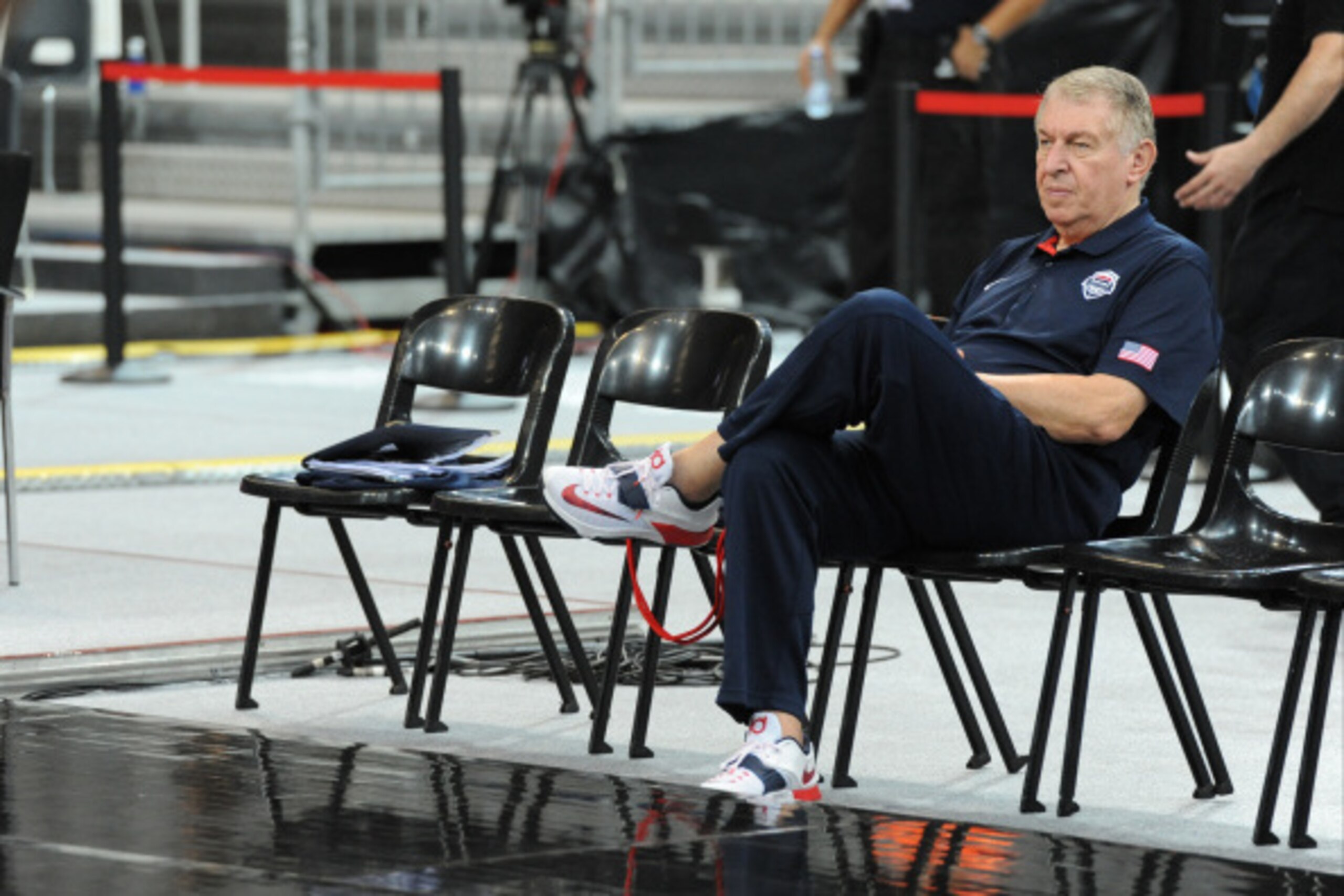
Colangelo recently told USA Today's Sam Amick:
"What we talked about (in 2006) was putting an infrastructure in place that could fend off a lot of things that would come your way.
It's the depth that we have with our national team concept, that we would accept players from that national team, which is a fluid roster of roughly 28 players, a fluid roster that we would delete and add depending on who's doing what and Select (team) players.
"
Irving, the latest hero, proves as much.
He was named the tournament MVP after making all six of his three-point attempts on Sunday. Through nine games, the 22-year-old averaged 12.1 points and 3.6 assists per contest—making him one of six players on the team to average double-figure scoring throughout the tournament.
Though the Cleveland Cavaliers point guard began cementing star credentials with MVP honors at the 2014 All-Star Game, he certainly doesn't boast the kind of veteran or winning pedigree as some of those absentee floor generals—such as Paul or Westbrook. Performances like this one against Serbia will change that before long.
Faried was an even more unexpected difference-maker. The Denver Nuggets forward averaged 12.4 points and 7.8 rebounds in 21.4 minutes per game during tournament play. His unyielding motor translated into 3.9 offensive rebounds per contest and made him a perfect fit for the club's up-tempo style of play.
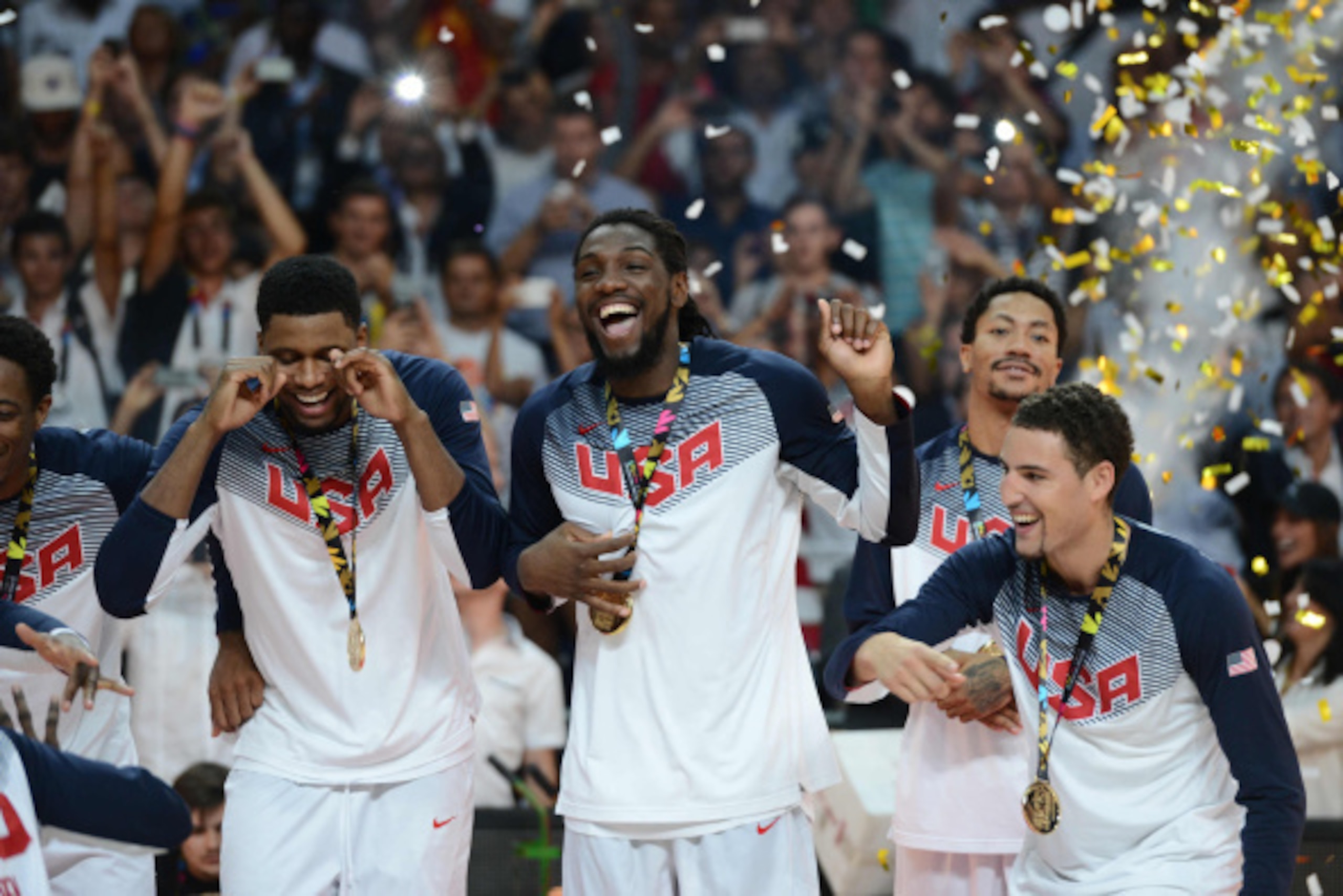
"I just love to play basketball," Faried told reporters earlier during tournament play. "Every time I step on the basketball court, you never know it could be your last game, so I like to play my hardest in every game. When you love the game like that it tends to reward you back."
That passion for the game catapulted the 24-year-old to the forefront of a roster he might not have made had big men such as Griffin, Love or Aldridge participated this summer.
The other breakout star who likely earned himself a ticket to Rio was Golden State Warriors shooting guard Klay Thompson.
Thompson averaged 12.7 points per game during FIBA play and converted on 52.3 percent of his field-goal attempts, including 41.5 percent of his team-high 5.9 three-point attempts per contest. To hear him explain his success in a journal entry published by the San Francisco Chronicle courtesy of Rusty Simmons, defense has also played a pivotal role. Thompson wrote in August:
"I thought I was competing for a spot on the team from the beginning, because there were so many good wing players. I think I earned it by the way I showed up every day.
I think my shooting ability helped – especially being able to stretch the floor in the international game – but I think my defense was the key. I've competed on every possession and proven that I can guard multiple positions.
"

These are Krzyzewski types through and through, hard-working players who've made names for themselves on a global stage while their respective NBA careers are coming into their own.
Perhaps the biggest revelation from this FIBA World Cup is that the United States boasts a wealth of leadership, even without MVP-caliber talent such as James or Durant on board.
Colangelo and Krzyzewski should both take something away from that, crafting and coaching the 2016 roster with a profound awareness of just how deep the NBA is. Perhaps it's time to rely on some motivated young up-and-comers rather than (or in addition to) the league's most established names.
The ostensible crisis of U.S. leadership has paradoxically served to highlight one of the United States' strengths: Its seemingly endless supply of top-shelf talent just waiting for an opportunity to shine.
"I like my team a lot," Krzyzewski told reporters prior to the final. "I trust my team. ... We've had a lot of interruptions and [these players have] never made any excuses. They should be in this position to play for a world championship."
Earning that trust may not have happened overnight, but when all was said and done, this team positioned itself to take Rio by storm—with or without LeBron, KD, CP3 and those of their ilk.
There's a strong case to be made that this was a learning experience all along.
As CBSSports.com's Zach Harper put it:
"Since Jerry Colangelo overhauled the program following the embarrassment in the 2004 Olympics, USA Basketball has been about continuity, chemistry and growth with the youth of the roster becoming the stars of international basketball.
The FIBA World Championship, which has now become the FIBA World Cup, is the perfect situation to foster that growth with the young players and help them adapt to the attitude and professionalism expected of USA Basketball.
"
From that perspective, mission accomplished.
Here's to hoping the guys who proved themselves in Spain aren't crowded out by USA Basketball's usual suspects in 2016. Some of those larger-than-life names will return to the fold, but we shouldn't forget the lesser names who picked up their slack in a bid to win FIBA gold.


.jpg?w=2560 "Viral Rams Coach Vid 🖕")
.jpg?w=2560 "Injury-stricken Seahawks signing veteran RB")
.jpg?w=2560 "2 NFL Officials Suspended")

.jpg?w=2560 "Mahomes' Wife Trolls Kubiak 💀")
.jpg?w=2560 "Grading WWE Raw 🔠")