New York Jets vs. Green Bay Packers: Breaking Down Green Bay's Game Plan
The Seattle Seahawks game didn't turn out great for the Green Bay Packers. In a 10-point loss, quarterback Aaron Rodgers averaged merely 5.7 yards per pass. In 2013, he threw for 8.7 yards per pass. That 5.7 average would have been his lowest in a season as a starter by almost two full yards.
This occurred for several reasons. One was the fact that Rodgers didn't throw the ball toward Richard Sherman even once during the game. While it's not always the best bet to take a shot at one of the best corners in the game, not testing him even once means allowing one player to shut down a side of the field voluntarily.
TOP NEWS

New NFL Power Rankings 📊
.jpg?w=2560 "Texans-Mixon Released Football")
Injury-stricken Seahawks signing veteran RB
.jpg?w=2560 "Commanders Eagles Football")
2 NFL Officials Suspended
Another reason was Earl Thomas, the now highest-paid safety in the league. The free safety shadows over the top of the defense in Seattle's Cover 3 defense.
As Danny Kelly of SB Nation's Field Gulls describes:
"This is what Kam [Chancellor] is talking about -- "We play man to man or Cover-3 -- not much more than that. It's not a secret." I'm sure there are numerous wrinkles therein -- blitzes, change-ups, looks meant to confuse, but by and large, when you watch the All-22, the most common thing you'll see is either Earl or Kam back-peddling down the middle of the field at the snap, making up the difference between outside receivers or minding a slot guy or tight end running up the middle of the field. Earl has to make up tons of ground, from the middle of the field to the numbers, and often must rely on anticipation or instinct, play recognition, reading the QB, and obviously scouting, to choose which receiver to break on.
"
Green Bay rarely tested Thomas' ability to keep the top on a play. This meant that the Packers really only tested the Seahawks defense with passes to tight ends or short to the receivers on the left side of the offense. This explains Rodgers' poor yards-per-pass average.
Against the New York Jets, Rodgers needs to change the direction of his passes. The Jets don't have an Earl Thomas or Richard Sherman.
Key on Offense: Test the Jets' Starting Corners
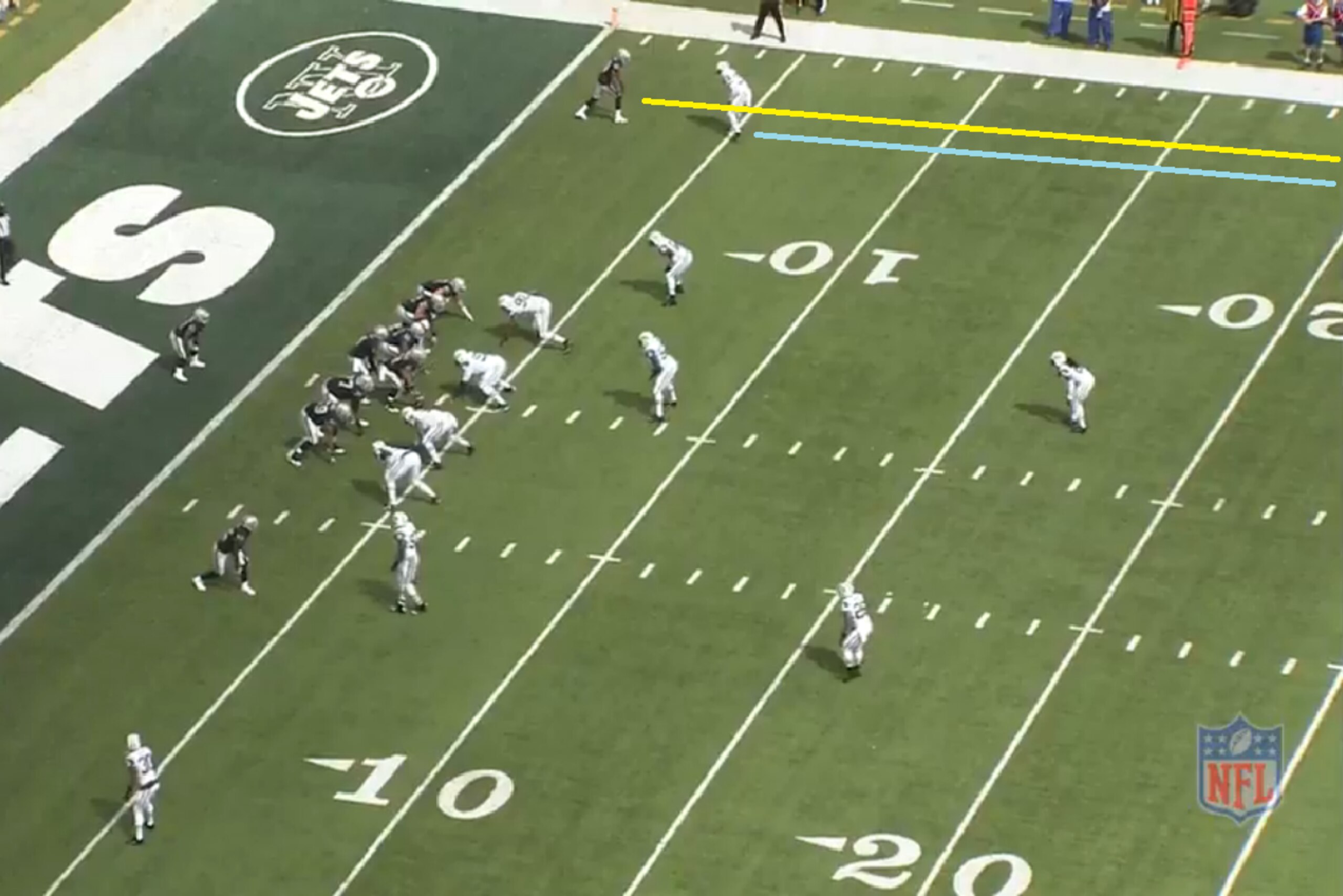
Here is a great example of why testing the Jets' defensive backs early and often is a good idea. On the left, Derek Carr has Rod Streater, a third-year undrafted receiver from Temple, on the top of the screen. Running a streak, Carr, the second-rounder making his first NFL start, connects with the receiver on the boundary.
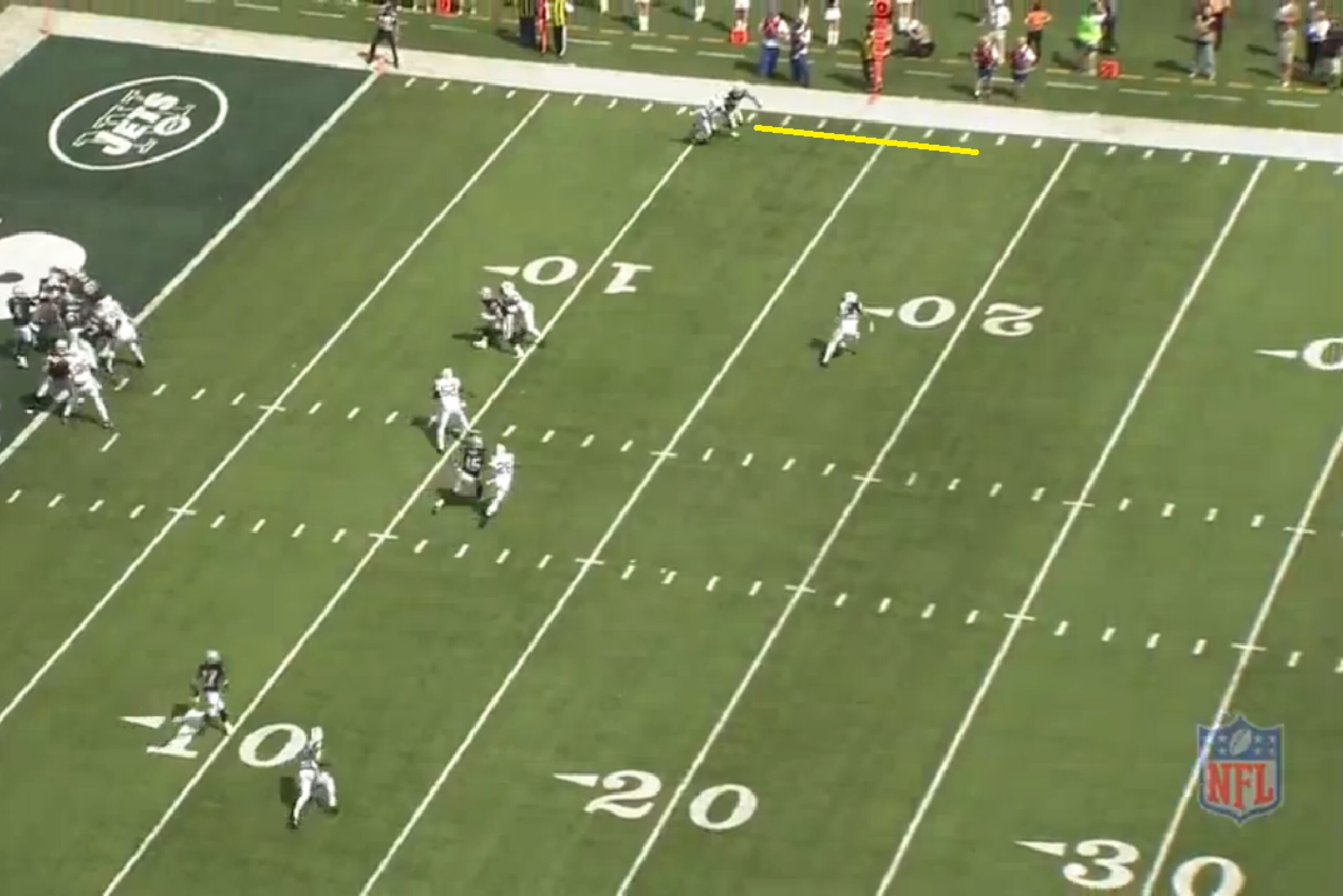
Getting too aggressive too early, Antonio Allen, the boundary corner for this play, gets a pass-interference call on press-man coverage. By the time he has to release his hips, Streater already has a lead on him downfield. The rookie makes this throw with his back in the end zone.
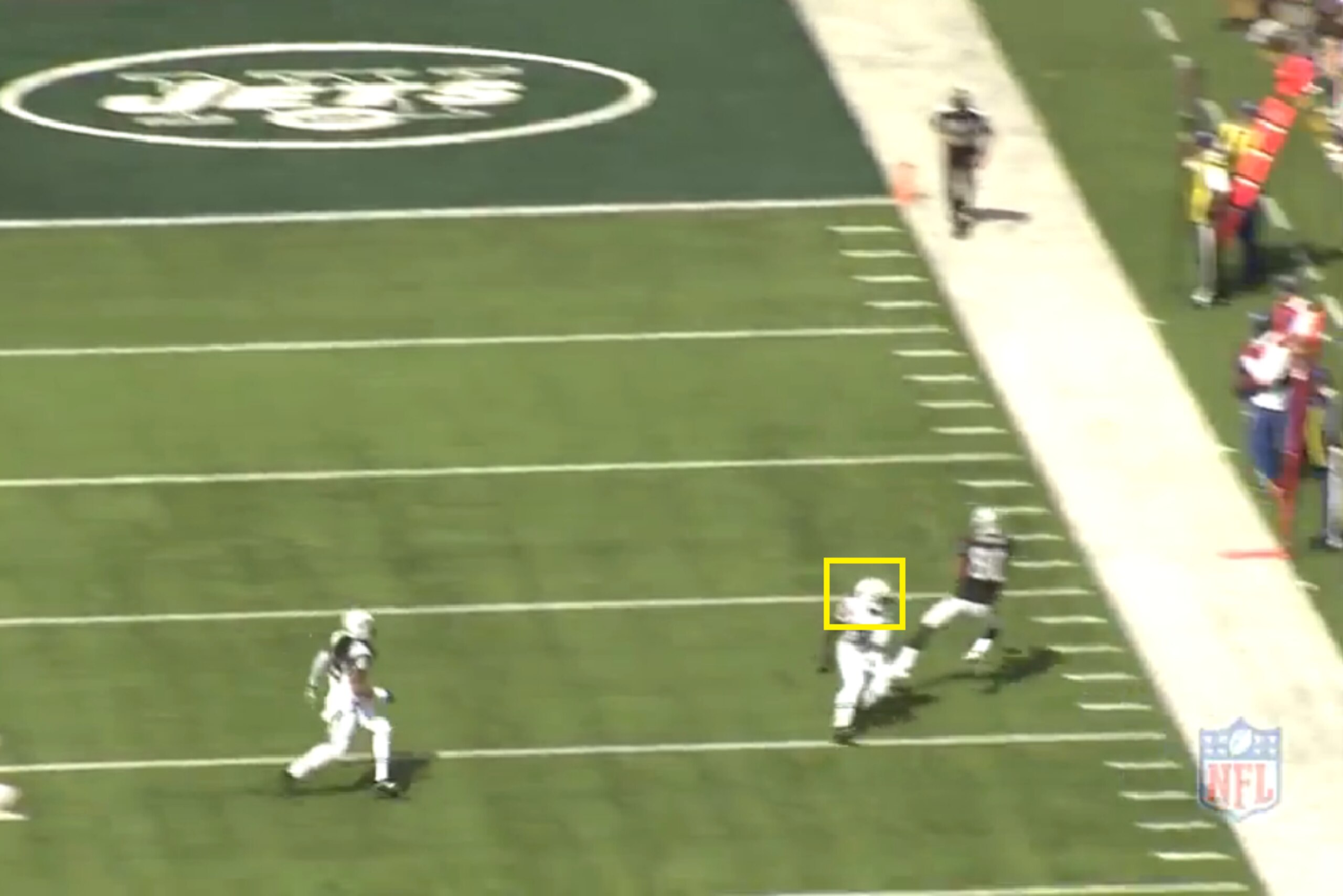
Just trying to catch up to Streater, Allen completely loses track of the football. When Streater goes up for it, Allen has no opportunity to make a play on either the receiver or the ball.
With either of Rodgers' three top receivers, Jordy Nelson, Randall Cobb, or Jarrett Boykin, it wouldn't surprise if he hits a handful of long plays against broken press-man coverage on Sunday. All three of those receivers are capable of making the same play Rod Streater did against the Jets.
According to Pro Football Focus (subscription required), Allen was targeted six times last Sunday for four completions. He's no Richard Sherman.
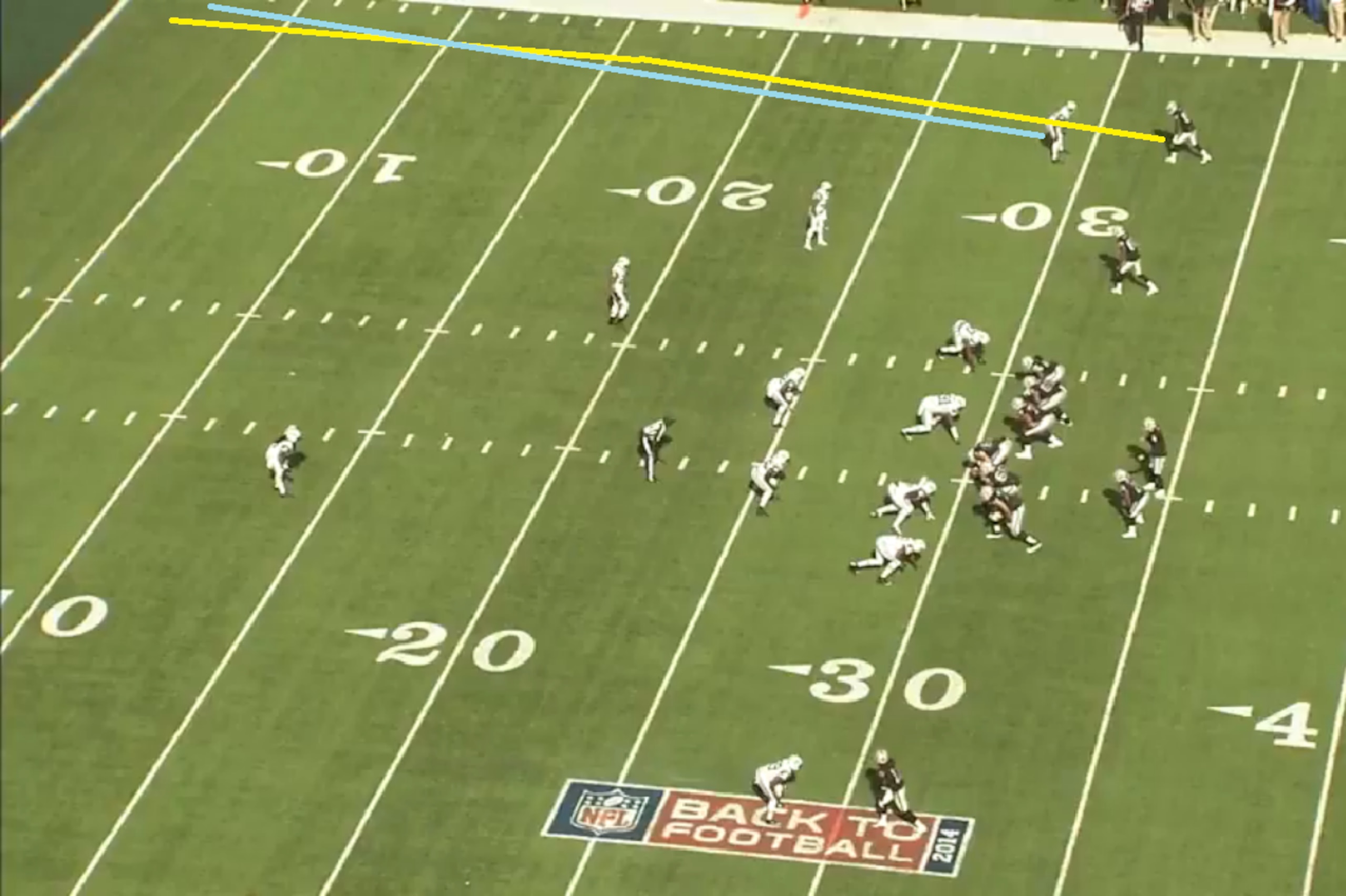
It's not just Allen, though. The New York Jets secondary is overall a unit made of average or young players. This time Allen is at the bottom of the screen, while former Packer James Jones is running a vertical route at the top.
Instead of sticking with the boundary here, Jones actually moves inside to the ball when his cornerback gets sucked into the sideline. He was deep into Jets territory with no one between him and the ball against air.
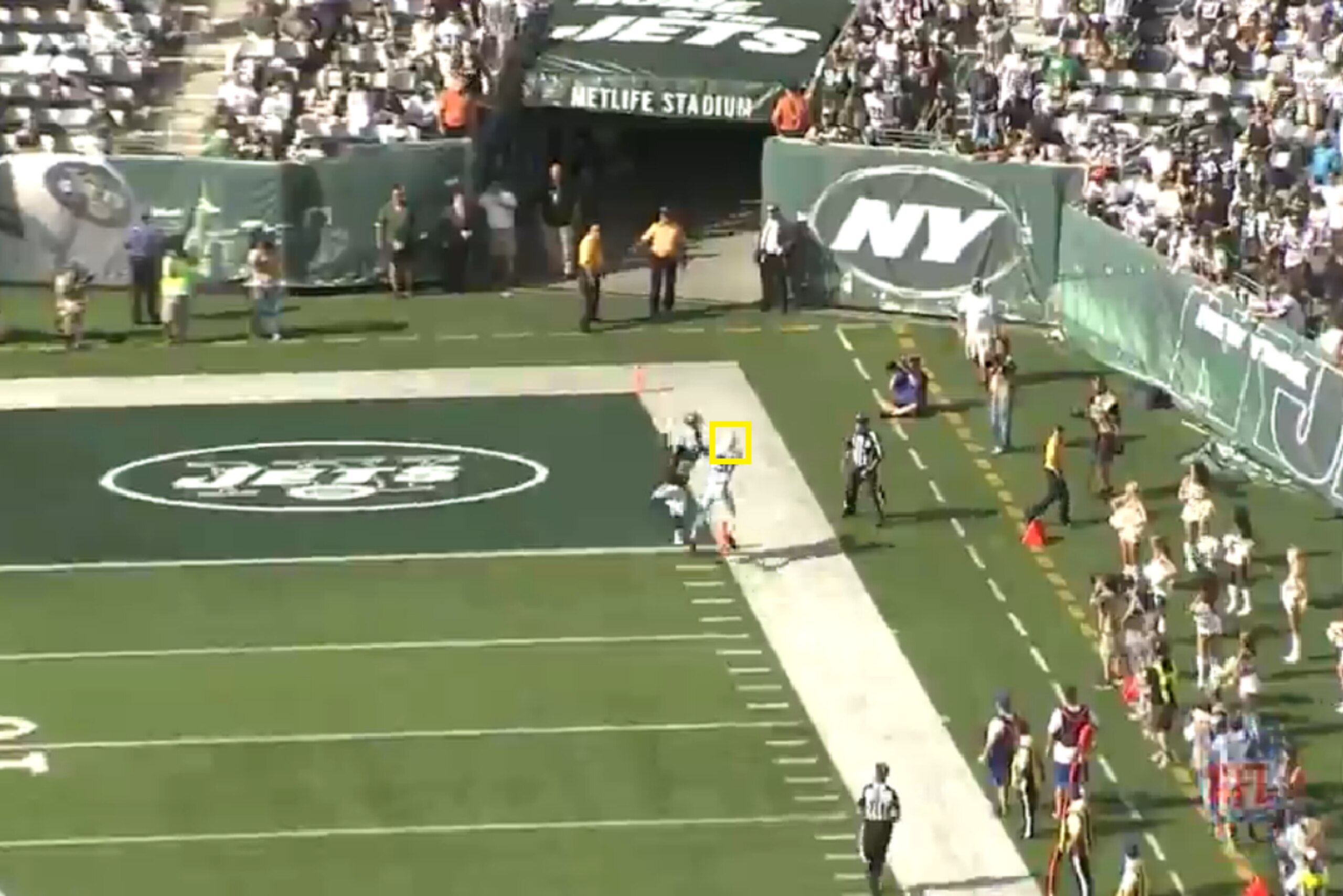
Here was the result of the play: a touchdown. The undisciplined cornerback couldn't beat him in jam, wasn't fast enough to stay on top of him and got sucked into the sideline to try to make up for the poor coverage. Instead, Jones, who was trained under the Packers' watch for seven NFL seasons, adjusted on the ball and made him pay.
To help Green Bay out of an offensive funk. To help spread the defense's coverage out. To help kick-start the team's hopeful 2014 playoff run. To help keep pressure off the defense. The Packers must test New York and Rex Ryan deep.
Key on defense: Linebackers Must Fill and Tackle
"Based on @PFF numbers, #Packers defense missed 18 tackles. Rest of NFC North combined for 16.
— Packer Report (@PackerReport) September 11, 2014"
The Packers haven't been a team that has tackled well in previous seasons. Even in 2014, we've seen some issues. In the open field, rookie safety Ha Ha Clinton-Dix missed on a tackle that would have saved Green Bay from a touchdown on a pop pass. In the preseason against the Oakland Raiders, the Packers missed running back Maurice Jones-Drew several times before he scored.
The New York Post's Mark Cannizzaro even wrote a piece titled "Jets out to follow Seahawks plan and run down Packers" on Wednesday. Here's an excerpt:
"The Packers’ defense yielded 207 rushing yards to the Seahawks, good for a 5.6-yards per carry average.
There is an age-old axiom in football that states: “The tape doesn’t lie.’’
This is what the Jets saw on tape: Seattle’s lead back, Marshawn Lynch, who ran for 110 yards, looking like he was being treated to a spa day while roaming through the belly of the Green Bay defense. By one published account, the Packers’ defense missed 16 tackles in the game and 50 of Lynch’s 110 yards came after the first hit.
Surely, those 16 missed tackles must have Johnson and Ivory salivating at the possibilities Sunday.
"
Against the Raiders, the Chris Ivory, the former New Orleans Saint, carried the ball for 102 yards, while Chris Johnson, a former 2,000-yard runner, ran for 68 more. Most of Ivory's yardage came off one play though.
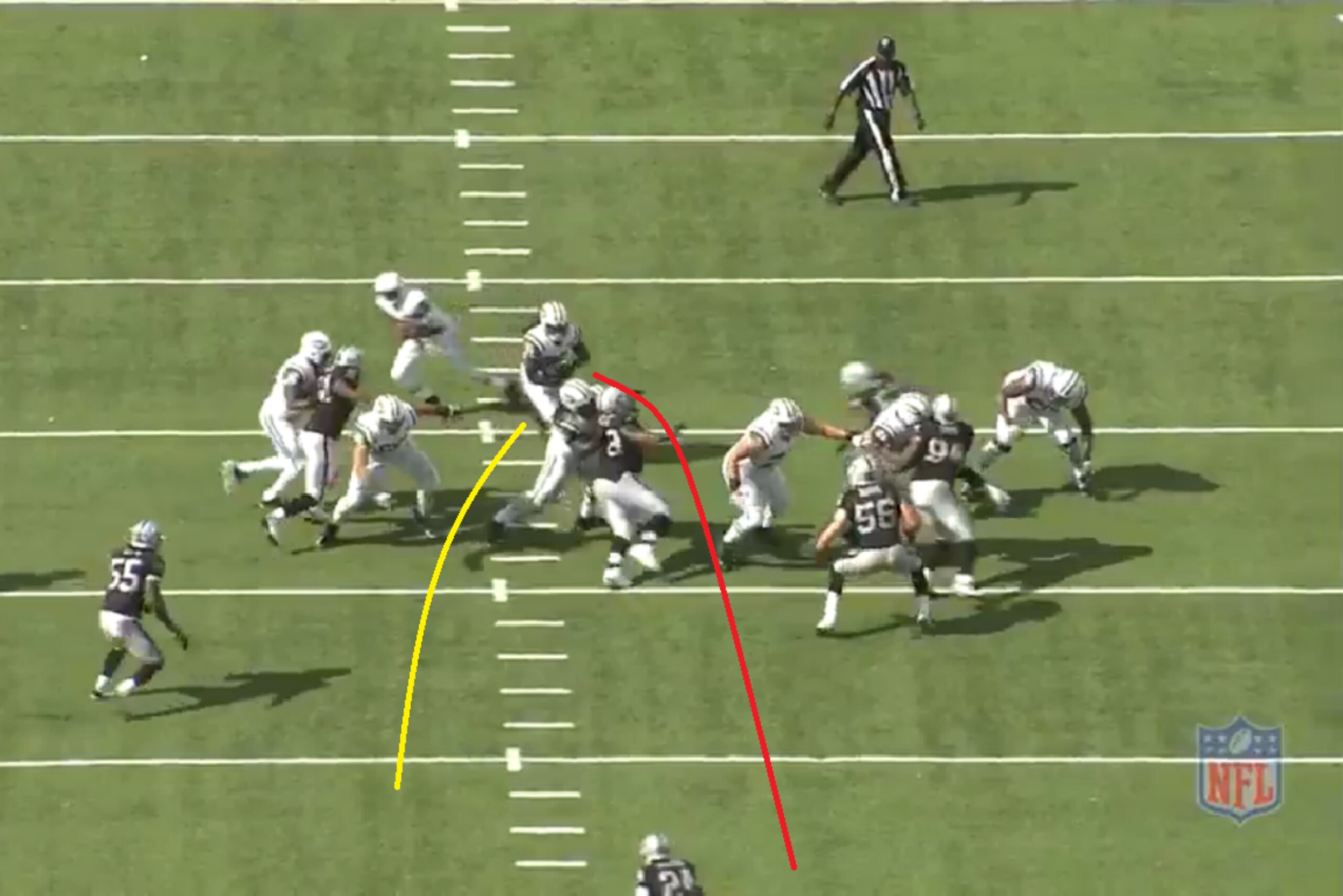
Here's where Chris Ivory needed to make a decision of where to go with the ball. With his original path (highlighted in red) blown, he moved to his cutback lane (highlighted in yellow.) The offensive line didn't do a great job on this play. Only two defenders have solidified blocks on them, meaning the linebackers should be able to make a play near the line of scrimmage.
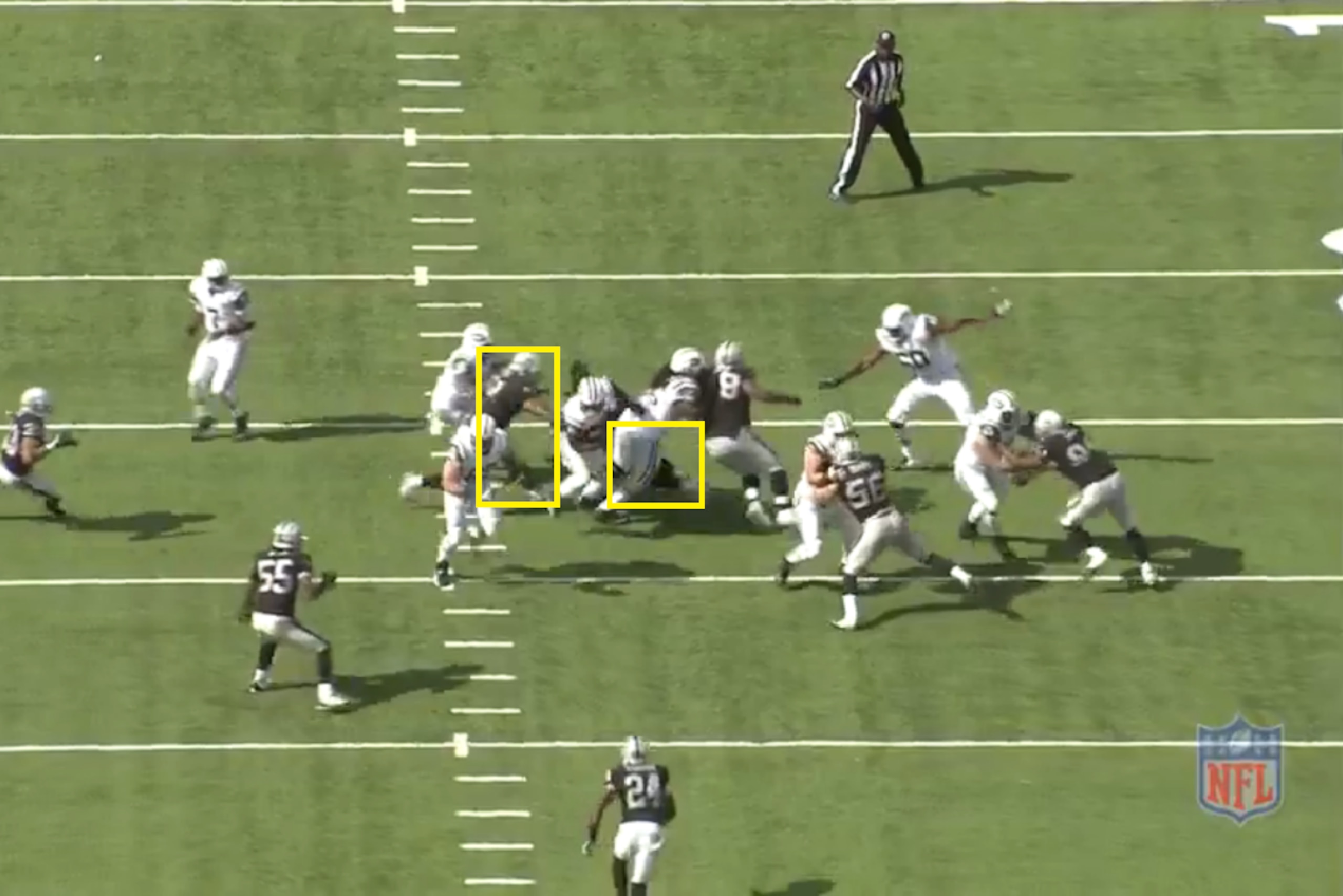
Two defenders miss early, though. Chris Ivory keeps going. The play is similar to Jones-Drew's against Green Bay in the preseason already.
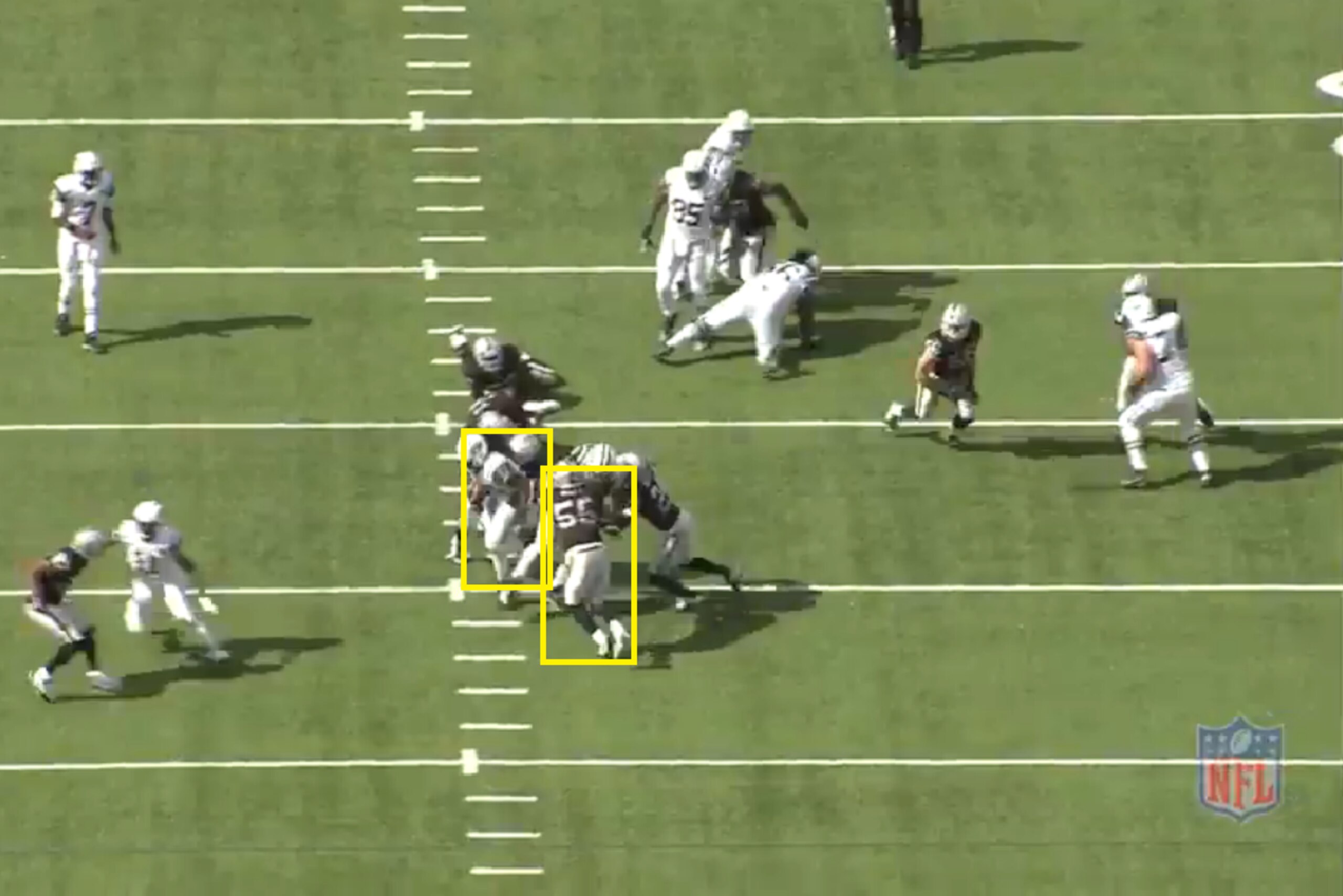
Three more defenders get at least one more hand each on Ivory, who still stays up.

Finally with only grass in front of him, the running back scampers in for a touchdown of over 70 yards.
Green Bay's interior triangle isn't great. The team is missing nose tackle B.J. Raji, and its linebackers, A.J. Hawk and Brad Jones, have been scrutinized for a long time. The triangle of defenders doesn't have to be great against the Jets, though. It simply needs to be consistent and play assignment football. Avoiding long runs is a must, and New York proved it could break them off early in the season.
Parting Thoughts
As far as an overall roster outlook, Green Bay will be the most talented team on the field on Sunday. The keys to the game come down to a handful of choices in its game plan. Will the Packers' front seven defenders play assignment football? Will the offense use the entire field, stretching it when given good odds? We'll find out on Sunday together, with the result of the game likely hinged on those factors.

.jpg?w=2560 "Chiefs Dolphins Football")


.jpg?w=2560 "Viral Rams Coach Vid 🖕")