Will Eric Bledsoe Contract Standoff Derail Phoenix Suns' Bright Future?
It was supposed to be the easy part of Phoenix Suns general manager Ryan McDonough's offseason.
Attracting premier talent, handling three first-round picks for a roster that doesn't need to get any younger, that was the hard stuff. But sitting back and letting Eric Bledsoe's restricted free agency settle his present and his future? That should have been effortless executive work if there is such a thing.
Yet for all the items marked off McDonough's summer to-do list—adding four players on draft night, landing Isaiah Thomas and Anthony Tolliver in free agency, keeping P.J. Tucker around—Bledsoe's box remains unchecked. With weeks left until the start of training camp, the Suns' simplest summer task is still not completed.
TOP NEWS

Buzz: Bron Chopper Part of Deal 🚁

MJ Makes Record-Setting Donation 🙌
Shams: KAT, Hart Could Be Trade Names
The story hasn't changed since the first sign of trouble.
ESPN The Magazine's Chris Broussard reported in July that a wide gap existed between the money Bledsoe wanted ($80 million for five years) and what the Suns were willing to offer ($48 million for four). Last month, ESPN.com's Brian Windhorst and Ramona Shelburne wrote that Bledsoe was still seeking max money either from the Suns (five years, $85 million) or in a sign-and-trade (four years, $64 million).
Then again, it's hard for the parties to make any type of progress when they aren't even on speaking terms:
"Bledsoe has not spoken with Suns staff since the season ended," wrote Paul Coro of The Arizona Republic. "Talks with his representation have been limited and unproductive. He also has not signed another team's offer sheet, which the Suns were expected to match to keep him if he did."
Both sides have stubbornly refused to rework their numbers. And both are correct for acting as such.
Professional athletes have a finite earnings window. Bledsoe and his representatives can and should seek as much money as they can possibly get.
The Suns, meanwhile, have their own reasons for steadfastly refusing his requests.
"Taking the long view, Phoenix's hardball approach to the Bledsoe negotiations makes perfect strategic sense," wrote Bleacher Report's Jim Cavan. "From its perspective, Bledsoe's stellar season was, at this point, less a bellwether than a promising outlier—a hint rather than a guarantor of things to come."
Each camp has numbers supporting its view.
On Bledsoe's end, the number is nine, as in the amount of players other than Bledsoe to average at least 17 points, five assists and four rebounds last season. There are two notable numbers for the Suns: 78 (career starts) and two (surgeries to repair a torn meniscus in his right knee since 2011).
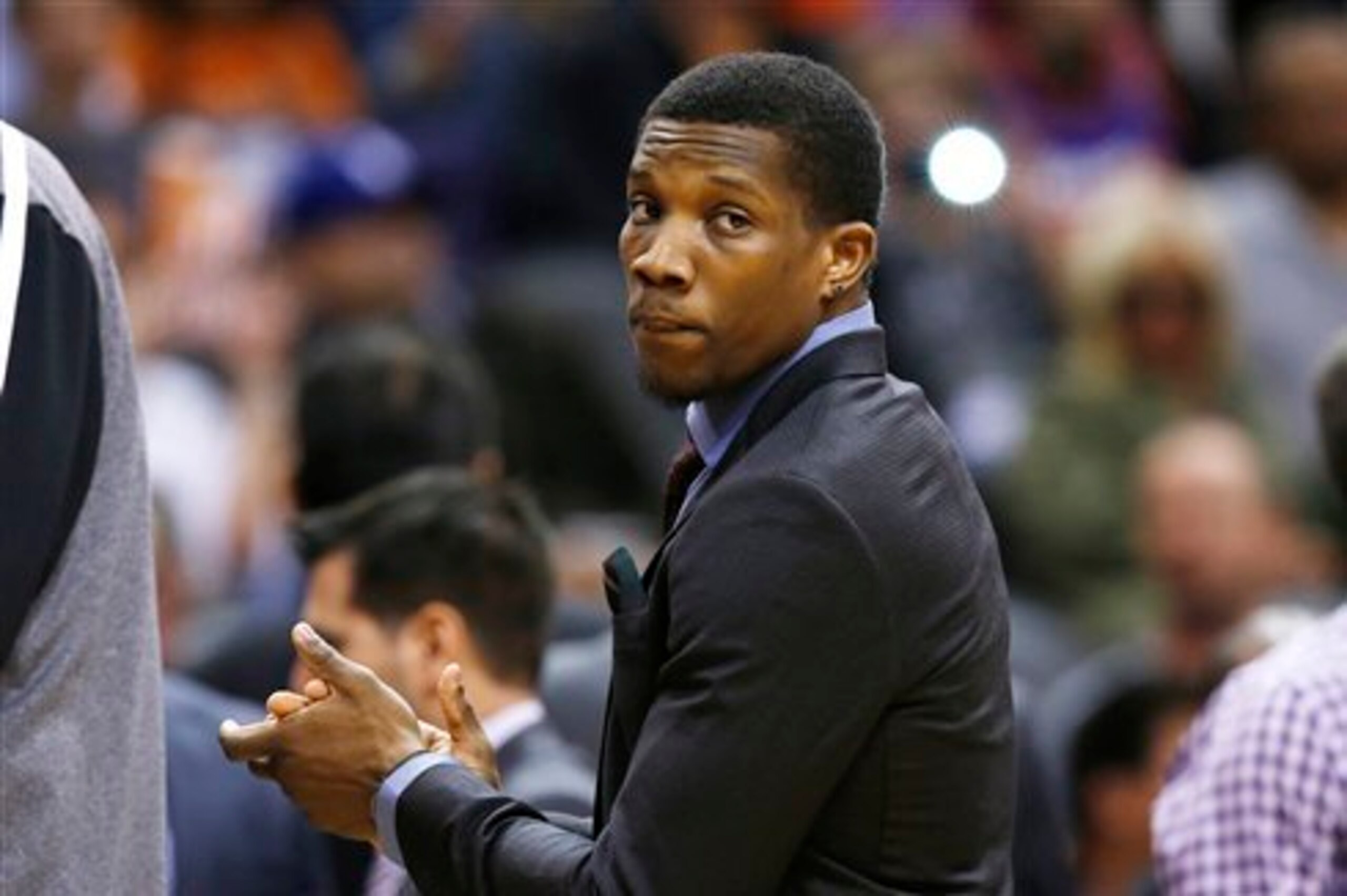
If the two came together on a surprise last-minute contract agreement, one side would need to risk something. Either Bledsoe would commit to a future where he could easily wind up outperforming his wages, or the Suns would bet the farm on a player with a limited track record and a troubling medical history.
At this stage of the game, reconnecting on his one-year, $3.7 million qualifying offer feels like the only logical ending still in play.
Except this wouldn't be the end of the story. There's still another chapter to be written, one sure to start on rough terrain given how poorly this process has played out.
The qualifying offer isn't a one-year commitment so much as an eventual ticket out of town. Bledsoe's 2014-15 campaign will suddenly shift to a season-long tryout for the potential suitors with max money to spend next summer, coin that backcourt mate Goran Dragic could also collect once he declines his bargain $7.5 million player option for 2015-16.
Whatever money the Suns saved this summer, they'll need to part with the next. That or risk watching both backcourt stars bolt and bring back nothing in return.
As ESPN.com's Marc Stein explained, teams are ready to chase the Suns' guards on the open market:
"If Bledsoe elects to go the rare qualifying offer route, Phoenix would suddenly face the very real possibility of losing both of its two best assets without compensation in 2015 free agency.
"
The Lakers, for example, are just one team league sources say would likely make a hard run at both of them, based on the premise that the Suns couldn't afford the cost of paying both at that point, theoretically making either Bledsoe or Dragic gettable. Sources say that Houston, furthermore, has Dragic on its list of potential targets next summer given how he's blossomed since leaving the Rockets for Phoenix in the free-agent summer of 2012.
If Bledsoe signs the qualifier, furthermore, you can pretty much bank on him leaving Phoenix as soon as he gets the chance, because players don't take that sort of gamble and then bury the bad feelings months later to re-sign with the incumbent team. And that would naturally increase Dragic's leverage in the process, because Phoenix simply couldn't stomach losing its two most valuable players, who both happen to play what is routinely regarded as the most important position on the floor in the modern NBA.
That's obviously a worst-case scenario, and the stat sheet captures what a crushing blow that would be.
Dragic (20.3 points per game) and Bledsoe (17.7) contributed more than 36 percent of the Suns' nightly offense (105.2) off their scoring alone. The pair also dished out a combined 11.4 assists per game, nearly 60 percent of the team's total distributing (19.1).
The Suns can credit the bulk of last season's 48 wins to their efficient offense, and no players ignited this attack better than these two.
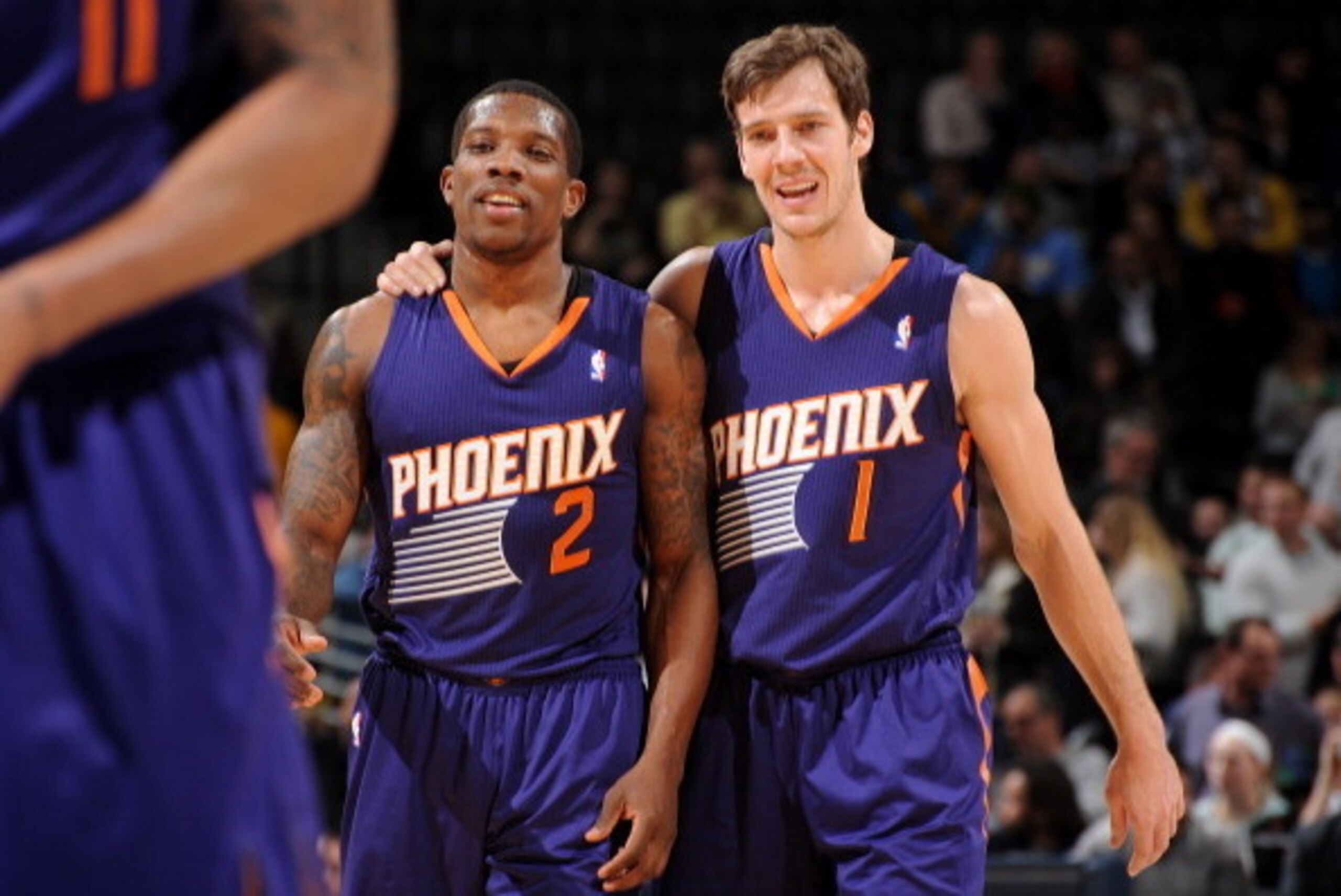
Losing both would be a deathblow in terms of what the Suns are aiming for now and what they're trying to build down the road.
It's also probably not going to happen. Dragic seems content to stick around in the desert, provided Phoenix ponies up the appropriate offer.
But that means he has a major contract to earn this season. Ditto for Bledsoe, even if his will likely come from outside. Thomas, now a member of coach Jeff Hornacek's three-headed point guard monster, has 82 games to prove he can handle a starting role in the future as opposed to serving as a complementary spark plug.
Moving outside of the backcourt doesn't quiet Phoenix's free-agency questions.
Gerald Green is working on an expiring deal and could be looking to parlay another career year into a jackpot payday. The Morris twins (Markieff and Morris) are slated for restricted free agency next summer, their first chance to really strike it rich since they will no longer be bound by the rookie-contract scale.
A lot of players on this team have incentive to do well in 2014-15, but the motivation to succeed together will only be as strong as they allow it. There is a ton of money at stake, along with the chance there isn't enough of it around to keep everyone happy.
The Suns' chemistry, which looked spandex-tight last season, could be at risk if players let different priorities pull them in opposite directions.
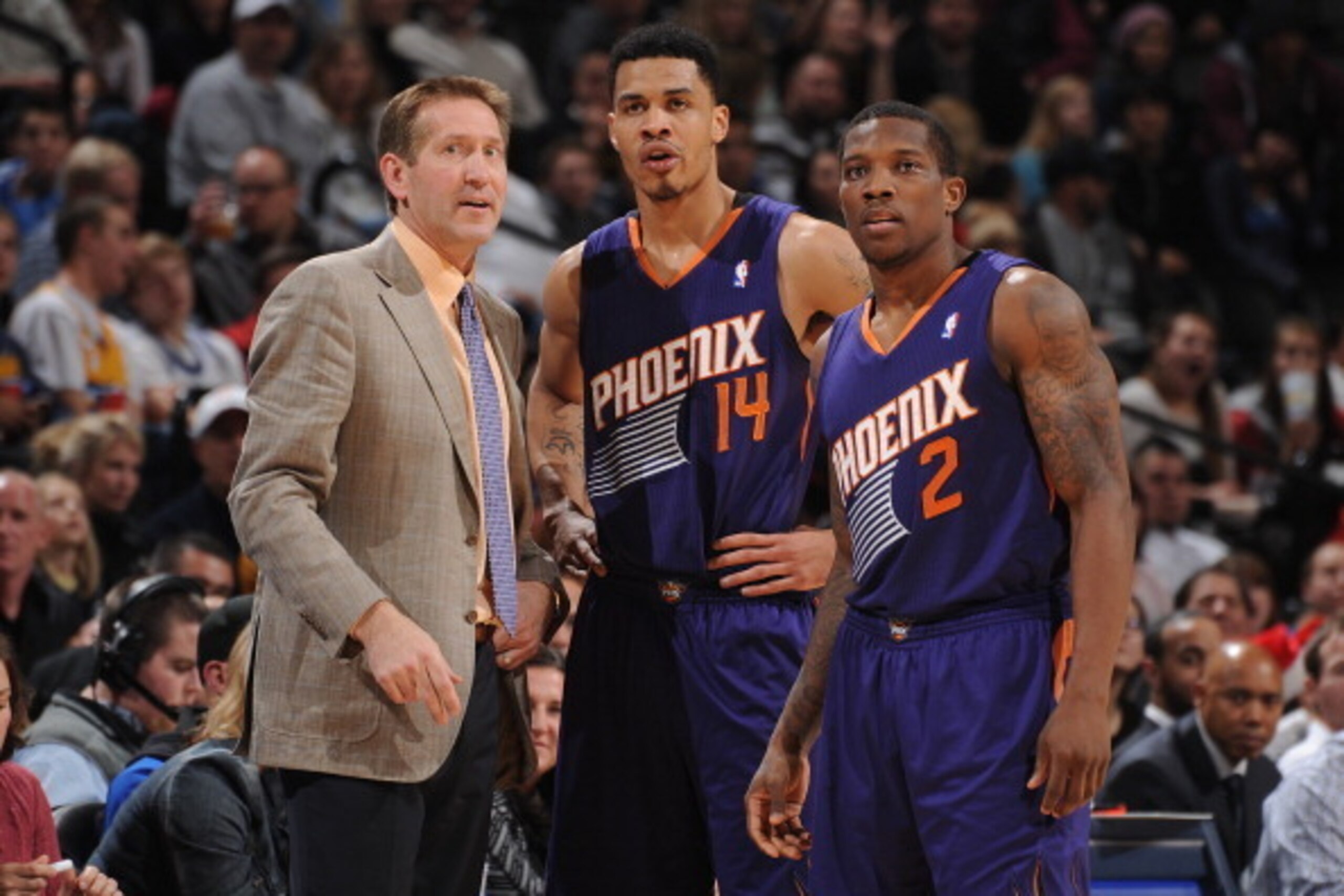
Phoenix sounds confident that won't happen. Or as confident as it can sound without its full array of talent on hand.
Thomas, the backcourt's third wheel until proven otherwise, told Basketball Insiders' Alex Kennedy he's ready to fit the puzzle however he's needed:
"People always ask me, 'What’s going to happen with you, Eric Bledsoe and Goran Dragic?' At the end of the day I’m going to play, we’re going to play together, we’re going to have fun with it and we’re going to figure it out. I mean whatever happens, it’s for the best, and that’s how I’m going about it. We’re going to compete each and every day, we’re going to make each other better and we’re going to do what’s best for the team.
"
That sentiment sounds nice for now, but is it one shared by all his teammates? Is everyone willing to sacrifice in pursuit of a common goal with the knowledge it could impact their bottom line?
The Suns can only hope they are. Given the incredible depth of the Western Conference, the slightest bit of friction could sink this playoff ship before it ever sets sail.
Phoenix is likely looking at a future without one of its primary building blocks, but it needs that foundation to hold together for one more season.
Collective success may not impact every individual the same way, but a collapsed structure would help no one. Whether that message sticks will determine how bright the Suns' present and future really are.
Unless otherwise noted, statistics used courtesy of NBA.com and Basketball-Reference.com.


.jpg?w=2560 "2 NFL Officials Suspended")

.jpg?w=2560 "Mahomes' Wife Trolls Kubiak 💀")
.jpg?w=2560 "Love's Body Already 'Tired'")