

All-Overrated NBA Team, 2015 Pre-Training Camp Edition
Popular perception is not always correct, especially in the NBA.
For many reasons, the hype can exceed the actual production, leaving a certain player in the realm of the overrated.
Maybe he plays a flashy game that doesn't always correlate with success. Maybe his statistics are misleading, inflated by a system, opportunity or volume shooting at the expense of efficiency. Maybe he's being paid far too much money by his team, indicating that his skills are overvalued by at least one of the NBA's front offices.
It's also worth noting that overrated players can still be great ones.
If you're viewed as a fringe starter who should actually be coming off the bench in a minor role, you're overrated. At the same time, you're overrated if you're really "just" an All-Star when you're viewed as a strong MVP candidate.
In that same vein, this All-Overrated squad would actually be a terrific team. It just wouldn't be as good as you think.
Note: All statistics, unless otherwise noted, come from Basketball-Reference.com.
Starting Point Guard: Michael Carter-Williams
1 of 8
Team: Philadelphia 76ers
Age at Start of 2014-15: 23
2013-14 Per-Game Stats: 16.7 points, 6.2 rebounds, 6.3 assists, 1.9 steals, 0.6 blocks, 15.5 PER
Michael Carter-Williams was a deserving winner of Rookie of the Year, but that doesn't make him a fringe All-Star or anything close to that class of point guard, even in the weak Eastern Conference. He benefited from playing during a season that produced a historically awful class of rookies, and his stats were largely manufactured by the pace and overall ineptitude of the Philadelphia 76ers.
There's no denying Carter-Williams was one of the NBA's best rebounding 1-guards as a first-year player. That much is indisputable, but the rest of his game is rather questionable.
His scoring looks decent because he averaged 16.7 points per game, but he did so while shooting 40.5 percent from the field, 26.4 percent beyond the arc and 70.3 percent at the charity stripe.
According to Basketball-Reference.com, there were 58 qualified players who averaged at least 15 points per game last season. Of those, only Josh Smith had a worse true shooting percentage than this Syracuse product, which means Carter-Williams found himself behind such efficiency luminaries as Brandon Jennings and Gordon Hayward.
He scored a lot because he shot a lot, just as he stole the ball a lot because he gambled a lot, often at the detriment of Philadelphia's defensive efforts. Plus, he was clearly playing for Rookie of the Year at the end of the season, forcing involvement in possessions, showing complete disregard for quality defense and trying to steal away rebounds.
"I'd love to be Rookie of the Year," he told The Intelligencer's Tom Moore (subscription required) late in the season. "If I'm not, I'd be a little disappointed. That's just me being competitive."
It showed.
Carter-Williams is on track to be a high-quality point guard with a unique set of skills, but let's not jump the gun here. His rookie season was highly overrated, the combination of so many external factors and the piling up of losses in Philadelphia.
Starting Shooting Guard: Avery Bradley
2 of 8
Team: Boston Celtics
Age at Start of 2014-15: 23
2013-14 Per-Game Stats: 14.9 points, 3.8 rebounds, 1.4 assists, 1.1 steals, 0.2 blocks, 12.7 PER
There's certainly merit to specific aspects of Avery Bradley's game. After all, calling a player "overrated" is not akin to calling him worthless.
The Boston Celtics combo guard is one of the premier defensive standouts in the NBA, capable of hounding his man up and down the court as he makes it hard to gain spots on either side of the half-court line. That in and of itself makes him valuable, though the Boston Celtics still gave him a contract that was worth quite a bit more than Bradley's all-around game would indicate.
If the 23-year-old can prove that last year's 39.5 percent shooting from beyond the arc was no fluke, he'll start justifying his new salary. But even that might not be enough, as he's an extremely limited offensive player—a guard who has trouble creating his own shots and distributing the ball out to his teammates.
So what exactly is his role on the Celtics? He has to have a big one in order to justify the four-year, $32 million deal he signed this offseason, but there's no telling what the specifics will be.
Bradley struggled against bigger shooting guards, even on the defensive end, and he's not going to be playing the point ahead of Rajon Rondo and Marcus Smart. Even if the former leaves, Smart will just take over, and Bradley will still be left without a floor-spacing teammate.
His defense is incredibly valuable, but only when his offense isn't holding back the team. And until he proves his shooting chops over a larger sample or develops better handles, that's problematic.
Starting Small Forward: Chandler Parsons
3 of 8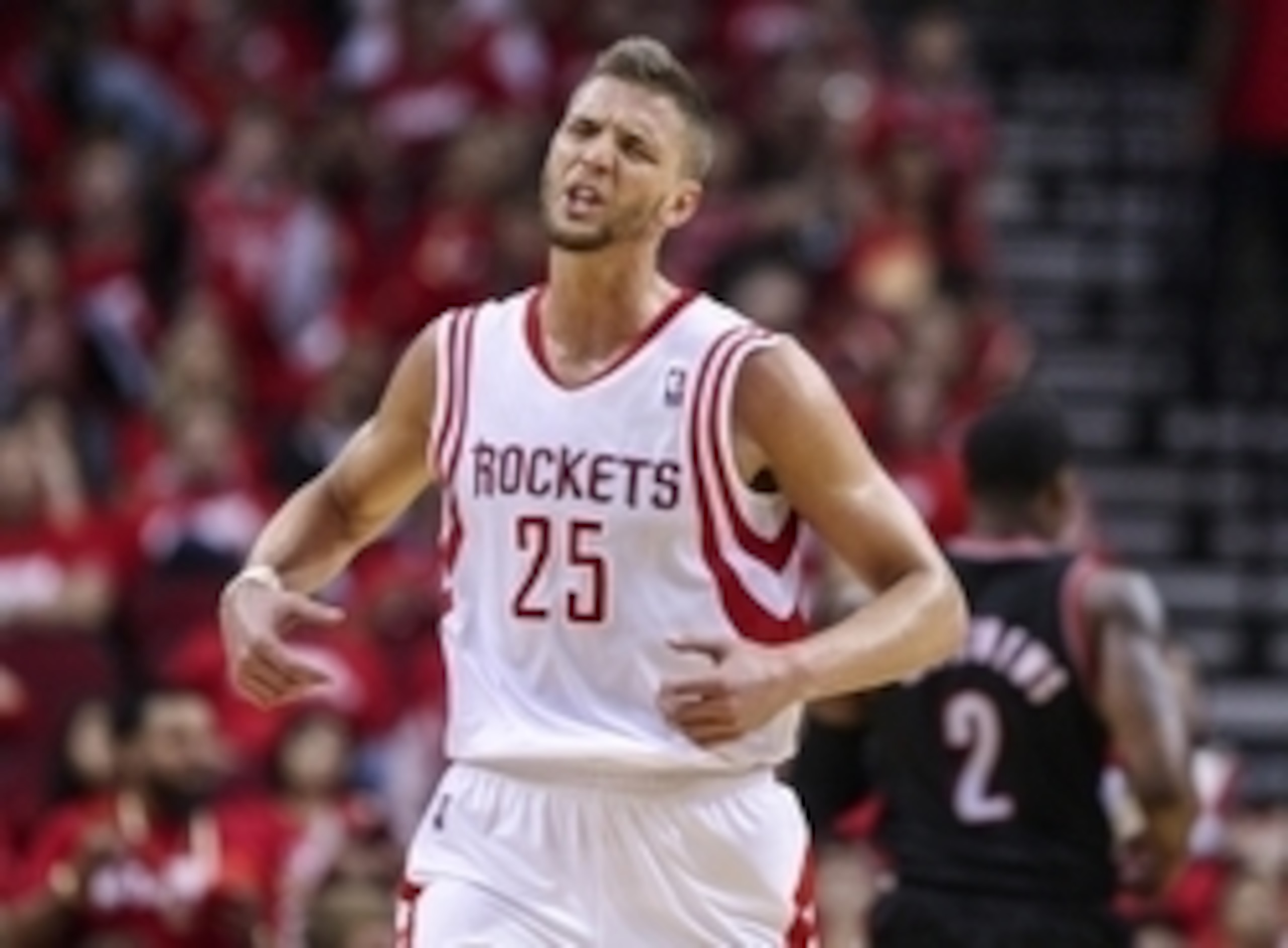
Team: Dallas Mavericks
Age at Start of 2014-15: 26
2013-14 Per-Game Stats: 16.6 points, 5.5 rebounds, 4.0 assists, 1.2 steals, 0.4 blocks, 15.9 PER
As John Wilmes wrote for Bleacher Report back in early April, there was a legitimate chance Chandler Parsons would become overrated this offseason:
"But restarting (even at one position) often takes tons of time, so unless the Rockets are able to trade for Carmelo Anthony or another experienced wing better than Parsons, it's likely they'll suck it up and give him that $12 million a year.
But if Parsons gets any more than that from a team chasing a title—without displaying significant growth beyond his current game—we should consider it a mistake of communal perception. It would mean we allowed Parsons to become overrated.
"
Turns out, the Houston Rockets weren't willing to meet the asking price, instead opting for a failed pursuit of Chris Bosh and attempting to pick up the pieces by signing Trevor Ariza. That asking price? Three years and $36 million right at that aforementioned mark of $12 million per year.
The problem is, Parsons is no longer in as much of a position to thrive.
He's still playing with ball-dominant players, but he no longer has an inside presence like Dwight Howard to suck in the attention of a defensive scheme and allow for either open shots on the perimeter or—at the very least—single coverage. Instead, he'll have to contend with Dirk Nowitzki for space on the perimeter.
Additionally, Parsons can't cement his much-ballyhooed reputation of versatility until he starts exerting constant effort on the less-glamorous end of the court. He has the tools necessary to become a high-end defender, but his lackadaisical proclivities have been far too dominant up to this point.
According to Synergy Sports (subscription required), Parsons allowed 0.88 points per possession during his final go-round with the Rockets, a mark that was topped by 189 players throughout the Association.
He was particularly vulnerable in post-up situations (bad news for his stretch 4 hopes in undersized lineups), allowing opponents to shoot 47.4 percent and giving up 0.94 points per possession (No. 204 in the NBA).
Parsons is still improving and could easily prove that these problems were passed down to him by James Harden through osmosis. But remember, these selections are based on what we know heading into training camps.


Starting Power Forward: LaMarcus Aldridge
4 of 8
Team: Portland Trail Blazers
Age at Start of 2014-15: 29
2013-14 Per-Game Stats: 23.2 points, 11.1 rebounds, 2.6 assists, 0.9 steals, 1.0 blocks, 21.8 PER
LaMarcus Aldridge is a bona fide All-Star. He's a top-20 player in this league, almost without question.
So, how is he overrated?
Well, his per-game numbers—impressive as they admittedly are—are misleading. As I've discovered this summer while delving deeper into his rebounding and scoring skills, they give off the false impression that he should be considered part of the debate for the No. 1 spot at the power forward position.
That's a conversation that should be reserved for Anthony Davis, Blake Griffin and Kevin Love at this point, with no disrespect meant to any of the jilted competitors.
First, the rebounding.
As I broke down while revealing his Rebounder Rating (No. 25 overall), only 27.4 percent of Aldridge's rebounds were of the contested variety. He benefits from the Portland Trail Blazers' defensive scheme, one that has him isolated in the paint and rarely stepping out to challenge jump-shooters.
Additionally, the pace used in Rip City, as well as the shooting percentages, gave Portland more rebounding opportunities than any other team in the league, which artificially inflates Aldridge's traditional rebounding numbers.
When it comes to his scoring, Aldridge requires assists on a lot of his made buckets. In fact, 59.9 percent of his makes in 2013-14 came after receiving a pass from a teammate, which is problematic for a player who shoots a low percentage from the field (45.8 percent) and doesn't get to the charity stripe as often as such a highly involved player should.
Aldridge is a fantastic power forward, and he's even more entertaining to watch. Those mid-range jumpers are unblockable, and each make creates a distinct feeling that he's heating up. However, that doesn't change the fact that popular perception—often based on those misleading per-game numbers—outpaces his actual impact.
Starting Center: Brook Lopez
5 of 8
Team: Brooklyn Nets
Age at Start of 2014-15: 26
2013-14 Per-Game Stats: 20.7 points, 6.0 rebounds, 0.9 assists, 0.5 steals, 1.8 blocks, 25.4 PER
Brook Lopez has now injured the same foot three times—including two season-ending breaks—and there's no guarantee he'll ever be the same. As Will Carroll, B/R's injury expert, told me in an email after the most recent fracture occurred, recurrence is even possible:
"Recurrence is relatively common and is the result of not changing. Maybe he can't. It could be something intrinsic—a bone weakness, the way he moves, something. I'm sure they're trying. This recalls Bill Walton for a lot of people, but fractures heal up. He isn't losing much mobility during the healthy interims.
The fifth metatarsal is the hardest to come back from. He'll use it to make lateral cuts and often takes more stress of stops, depending on foot strike. It's definitely a short- and long-term concern for Lopez.
"
Lopez will have to change the way he plays the game, yet the Brooklyn Nets—and parts of their fanbase—seem to be relying on him to come in and play the role of savior. Paul Pierce and Shaun Livingston are gone. Major parts of the roster are aging (cough, Kevin Garnett, Joe Johnson and Deron Williams, cough).
But he's going to keep this team in a strong playoff spot nonetheless.
Except he's probably not going to do so.
Lopez already wasn't the most mobile player on defense, and his impressive rim-protecting stats are largely due to cherry-picking opportunities and focusing on only that facet of his defensive game. His offensive game is spectacular, but even that has to be questioned after coming back from the latest devastating injury.
When he was healthy, Lopez might actually have been underrated by the general public during the 2013-14 campaign. But now that he's attempting to come back from this malady, potentially changing everything from the way he plays to the way he runs, the opposite has become true.
Backcourt Reserves
6 of 8
Bradley Beal, Washington Wizards
The Washington shooting guard is a special talent, but we're getting a bit ahead of ourselves when discussing his development. Rarely has one set of playoff games been allowed to matter so much, as his stellar postseason now seems to be trumping a regular season in which he was a volume-shooting scorer with a sub-15 PER.
Beal should eventually move up toward the top of the 2-guard totem pole, but he has to continue developing before he's anointed as the heir apparent.
Once the body of work involves more than three-point shooting and he begins to create his own shots, put the ball in the basket in various ways and settle down on the defensive end, he'll live up to the hype, and maybe be more productive.
Kyrie Irving, Cleveland Cavaliers
For Kyrie Irving, it's all about defense and efficiency.
The talented 1-guard is a ridiculously good ball-handler who can create his own shot at will, as we've seen during his stints with both the Cleveland Cavaliers and Team USA. However, he tends to force up looks far too often, diminishing the value of his scoring, and he's always been a lackluster defender.
Fortunately for the Cavs, all of this could change very soon.
With LeBron James and Kevin Love joining him, he'll be taking better—and more limited—shots, and he'll finally have motivation to play quality defense. After all, the problems have always revolved around effort and somnambulance, not physical tools.
Jodie Meeks, Detroit Pistons
Three years and $19 million.
Those are the terms of the contract Jodie Meeks signed with the Detroit Pistons, and they leave little doubt that he's become overrated. Maybe not by the general public, but certainly by a Detroit organization that was utterly desperate to add some shooting to the roster...which it later did in abundance, thereby mitigating some of Meeks' value.
Meeks is a tremendous shooter who became more capable of driving and scoring last season, but his numbers were also inflated by playing for the Los Angeles Lakers. The team was virtually devoid of high-quality wing players throughout the year, and Mike D'Antoni's systems always tend to provide an artificial boost for shooters who can play uptempo offense.
Frontcourt Reserves
7 of 8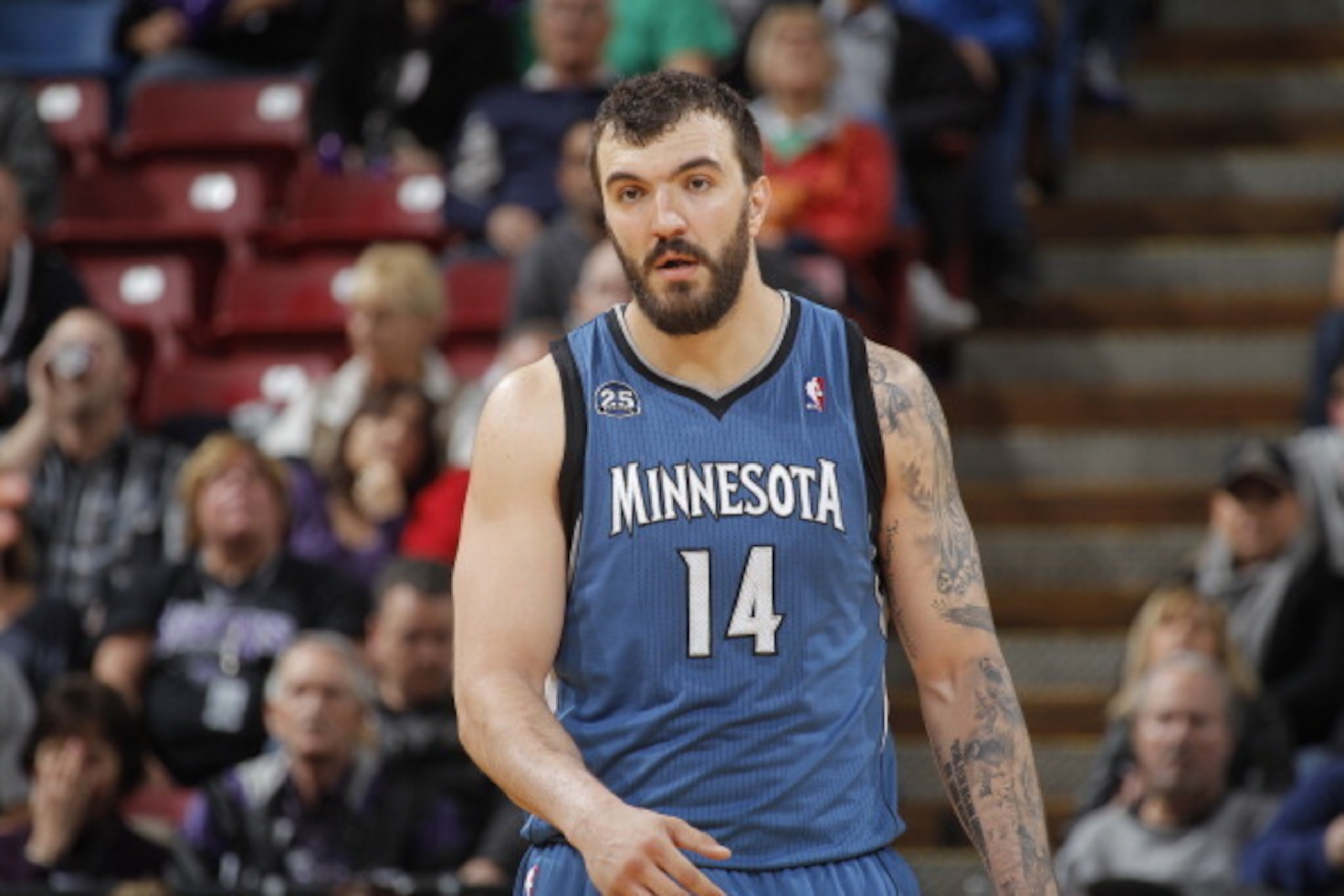
Trevor Ariza, Houston Rockets
During the 2013-14 season, Trevor Ariza shot 40.7 percent from beyond the arc while taking 5.7 downtown attempts per game for the Washington Wizards. Both numbers were career highs.
Prior to his final season in D.C., Ariza's best three-point season came in 2012-13, when he drilled 36.4 percent while lofting up 3.7 attempts per contest. There's a huge gap between those two campaigns, and much of the credit has to go to John Wall, who's a flat-out master at finding open shooters in the corners.
Well, Ariza is now going to be playing with the Houston Rockets, a team he struggled on earlier in his career and one devoid of a distributor of Wall's caliber. He's going to be exposed, and he's no longer thought of as just a defensive specialist.
Luol Deng, Miami Heat
Breaking news: Luol Deng was not very good after he departed the Chicago Bulls and joined the Cleveland Cavaliers. Not only did he struggle with his shot, but it seemed as though every facet of his game—especially his vaunted defensive skills—declined as well.
Is it possible Deng is just tired?
The Miami Heat have to hope that's not the case, but there's not much evidence he'll be able to rebound to his former levels in his new home. After all, the Heat are going to be relying on him for scoring, especially during Dwyane Wade's inevitable maintenance days, and that hasn't worked well for him in the past. He's best served as a third or fourth option at this stage of his career, after all.
Even if Tom Thibodeau didn't put too much wear and tear on Deng's tires, he's still going to have trouble justifying his new deal with the Heat.
Gordon Hayward, Utah Jazz
Is Gordon Hayward really worth a max contract?
Maybe, but he won't be able to prove his worth until he's surrounded by a lot more offensive talent. Hayward was exposed once Paul Millsap and Al Jefferson went to the Atlanta Hawks and Charlotte Bobcats/Hornets, respectively, as he was the subject of undue defensive pressure. His shooting percentages dipped dramatically, and he was unable to play positive basketball all that often.
A 16.2 PER doesn't usually go hand-in-hand with a max deal, but such is the case for the Jazz centerpiece. He has a high enough ceiling to excel once he's surrounded by more talent, but Utah is still too young for that to happen.
Nikola Pekovic, Minnesota Timberwolves
It's hard to excel as a scoring big who doesn't bring much else to the table. Especially when two important facets of the game are so detrimental.
First is Nikola Pekovic's rim protection. According to NBA.com's SportVU data, the big man faced 6.2 shots per game at the basket and allowed opponents to shoot 55.1 percent. Among the 50 players who played at least 20 games and faced six or more shots per game, only Kevin Love, Spencer Hawes (during his Cleveland tenure) and Nikola Vucevic were worse.
Then there's his passing. When you average 0.9 assists and 1.6 turnovers per game—essentially becoming a basketball black hole—there's only so much value your scoring can hold.
Gorgui Dieng is ready to take over.
Head Coach: Scott Brooks
8 of 8
There were just so many problems with Scott Brooks' management of his Oklahoma City Thunder last year, especially during the playoffs. Nevertheless, he has maintained a solid reputation and still doesn't seem to be anywhere remotely close to a hot seat.
His rotations have been inexplicable at times, as he's steadfastly kept Kendrick Perkins in the lineup while refusing to give his young players all that much time on the floor. Jeremy Lamb in particular hasn't received enough run, and it's shocking how little impact his positive performances have had on his playing time.
Additionally, Brooks relied way too heavily on Kevin Durant and Russell Westbrook. Even when they'd racked up 40 minutes, they stayed in games far too long, regardless of whether things were already out of hand.
"But he [Brooks] can be better. He should be better," wrote B/R's Dan Favale during the early portion of the 2014 postseason. "Games and series are never lost because of one man, but Brooks has continuously shown his late-game chops aren't good enough."
That's more problematic than anything else.
As good as Durant is, throwing him the ball and hoping for magic isn't good coaching. There aren't enough set plays, nor are there late-game adjustments when strategies clearly aren't working against a well-prepared opposition.
Brooks was once viewed as an elite coach, but now it's time for him to earn such a distinction once more. He's lost access to it with his mind-boggling decisions, some of which may have cost his Thunder a shot at a championship.


.jpg?w=2560 "2 NFL Officials Suspended")
.jpg?w=2560 "Mahomes' Wife Trolls Kubiak 💀")
.jpg?w=2560 "Love's Body Already 'Tired'")