

Time for Oklahoma City Thunder to Embrace Young Front Line of the Future
The time has come for the Oklahoma City Thunder to unleash their crop of young big men and put their aging veterans out to pasture.
In Serge Ibaka, Steven Adams, Perry Jones III and rookie Mitch McGary, the Thunder have arguably the best collection of frontcourt talent in the league. The problem is the growth of most of that group is blocked by the presence of diminished veterans such as Kendrick Perkins and Nick Collison.
At one point in their careers, Perkins and Collison were serviceable role players. Perkins was once a solid defender in the post, but he has become more of a liability as the league has transitioned away from traditional centers.
TOP NEWS

LeBron's Special Helicopter Deal

MJ Makes Record-Setting Donation 🙌
Shams: KAT, Hart Could Be Trade Names
Meanwhile, Collison will turn 34 years old in October. His days as a tenacious rebounder and occasional interior scoring option are coming to a close. Last season, the former Kansas star contributed 4.2 points and 3.6 rebounds in 81 games. Someone like Jones or McGary could easily match those numbers in the 16.7 minutes Collison was logging each night.
Thunder head coach Scott Brooks has been stubborn to a fault, especially when it comes to lineup changes. During last year's playoffs, it took him a while before he decided to take defensive specialist Thabo Sefolosha out of the starting lineup and replace him with offensive spark plug Reggie Jackson.
Brooks' attachment to Perkins has been even more mind-boggling. While never much of a scorer, Perkins' offensive numbers were his worst since the 2004-05 season. He averaged 3.4 points per game and shot a career-low 45.1 percent from the field. Perkins also faded on the boards, grabbing 4.9 rebounds per contest.
Despite the lack of production, Brooks still thought it was a good idea to have the 29-year-old Perkins start 62 games in the regular season and all 19 playoff games. In both instances, he played 20 minutes per game.
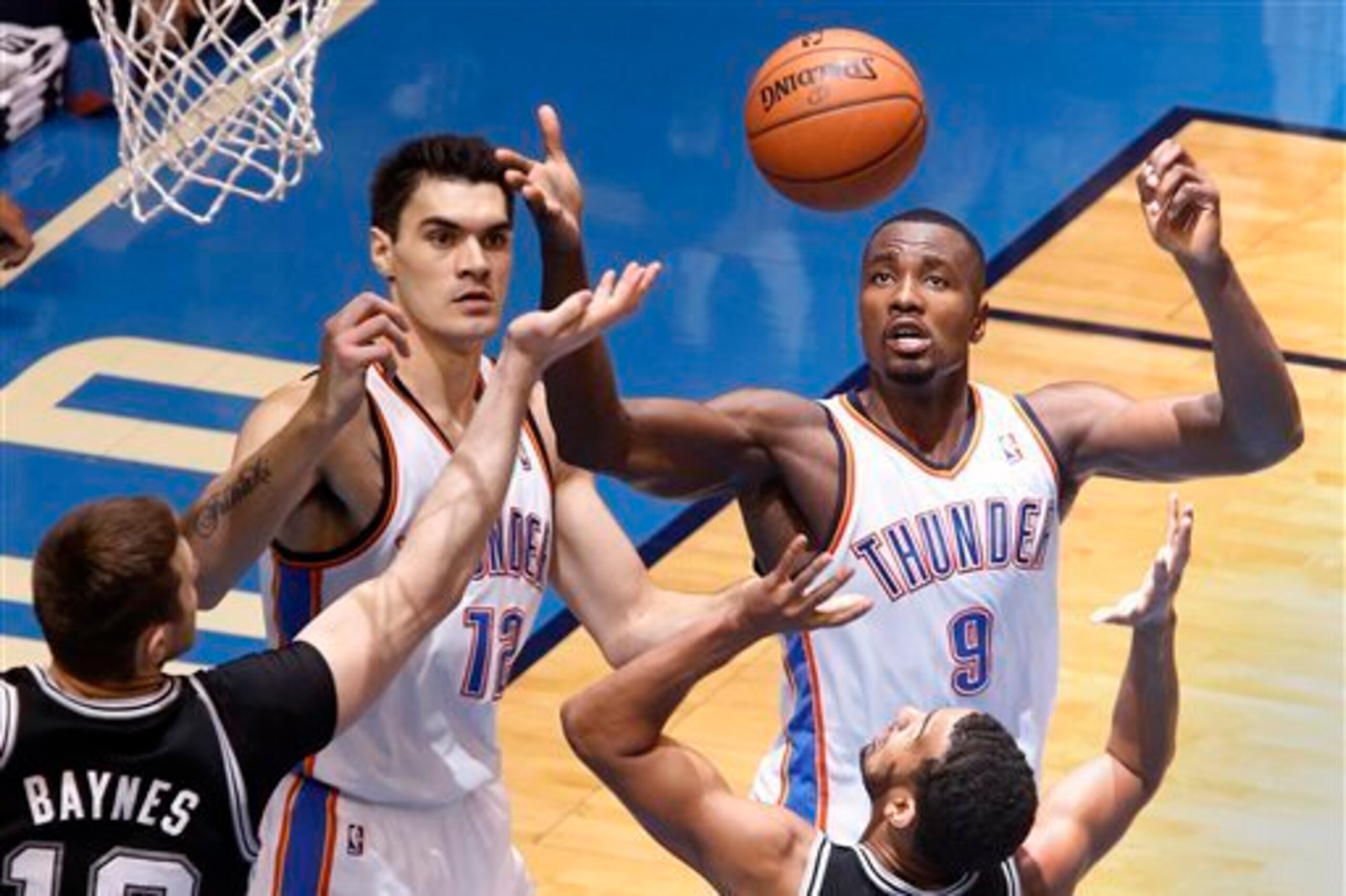
On the flip side, Adams played 14.8 minutes a game in the regular season, and his numbers were comparable to Perkins' (3.3 points, 4.1 rebounds). Unlike Perkins, though, Adams turned it up in the postseason. He averaged 3.9 points, 4.1 rebounds and 1.3 blocks in 18.4 minutes (as opposed to Perkins' 3.2 points, 5.4 rebounds and 0.3 blocks in 20.3 minutes).
In his exit interview following the Thunder's elimination at the hands of the San Antonio Spurs, Brooks said that "positions are available" this upcoming season. He also said that he wouldn't let outside criticism dictate how he'll coach, per ESPN.com's Royce Young.
"I don't listen to 'they.' I always focus on what I do and try and do it to the best ability I can. I'm not looking from nobody other than doing my job and living with the results. I love what I do, and I love the team I'm with. I know I have to get better and I know the team has to get better," Brooks said.
While Brooks' ability to tune out the naysayers is admirable, his reluctance to change could lead to his upheaval. Brooks will be entering his seventh season as the Thunder head coach. He's won Coach of the Year honors (2010) and helped lead Oklahoma City to an NBA Finals appearance (2012).
However, despite having the league's best one-two punch in Kevin Durant and Russell Westbrook, Brooks hasn't been able to bring a championship to Oklahoma City. While the team's failure to win a title doesn't fall solely on Brooks or his reliance on guys like Perkins and Collison, his decision-making deserves a fair share of the blame.
That all becomes moot if Brooks embraces the youth movement this season. The team already has a star on the front line in Ibaka. The 24-year-old (he'll turn 25 this month) seems to get better every year. Last season, he averaged career highs in points (15.1) and rebounds (8.8) per game.

While he's not exactly Kevin Love from the perimeter, Ibaka has started to come along as a three-point shooter, as well. He shot a career-high 38.3 percent from behind the arc last year. Ibaka initially came on the scene as a shot-blocker, leading the league in swats twice and earning All-Defensive First Team nods three times.
Now, with his offensive game evolving, Ibaka has become more well-rounded and gives the Thunder a legit third scoring option. With Ibaka now established, the next Thunder breakout star should be Adams, the second-year man out of Pittsburgh (by way of New Zealand).
Adams was a raw prospect when Oklahoma City drafted him with the No. 12 overall pick in last year's draft (acquired from the Houston Rockets in the James Harden trade). However, the 21-year-old was able to contribute sooner than expected and showed flashes of being a solid starting center.
The highlight of Adams' rookie campaign came in the Thunder's series-clinching win over the Los Angeles Clippers. The big man played 40 minutes, finishing with 10 points, 11 boards and a block. That game was Exhibit A in the case to make Adams the starter over Perkins.
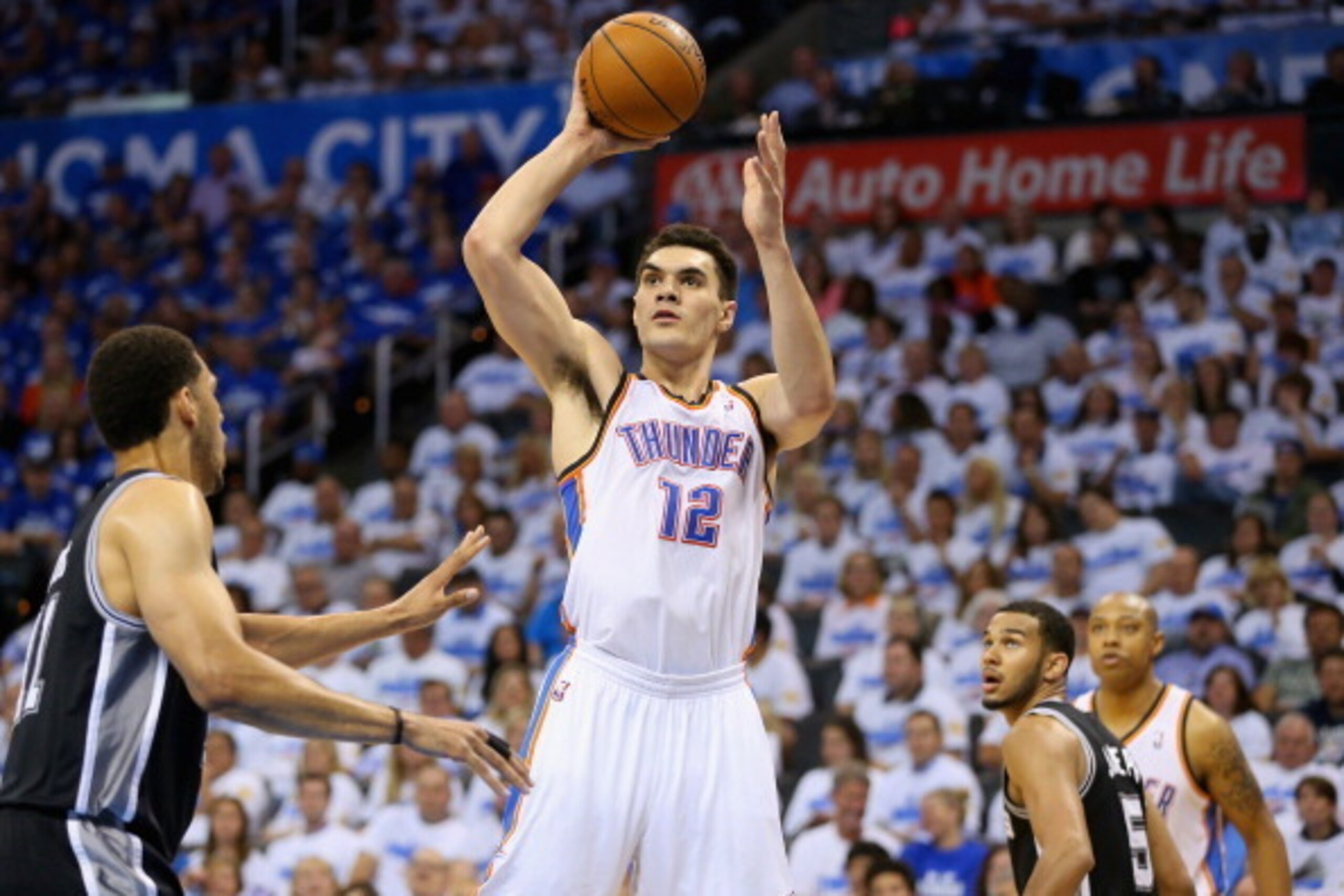
Adams still has a long way to go, obviously. Offensively, he's still a work in progress, as even he admitted to The Oklahoman's Darnell Mayberry in a recent interview:
"I’ve definitely seen improvements now from summer league. But there’s still a long way to go. I’m on the right track, though, I guess you could say that. But as I’ve said before, it’s still a part of what I’m learning. They’re still developing it [his offensive game]." Adams said.
Even if Adams' contributions this season come mostly on defense, he's still a better play at center than Perkins. He's a superior athlete with good strength and quickness. He has a 7'5" wingspan and has already flashed the capability to be a shot-blocking presence inside.
With Durant, Westbrook and Ibaka already in the starting rotation, the Thunder don't need Adams to contribute much offensively. He can spend this season continuing to get adjusted to the pro game and learning from the guys around him.
There will still be occasional moments where he puts it all together, which is more than we can say for Perkins at this point. The upside to putting Adams in the starting lineup clearly outweighs any potential downside that would stem from his lack of experience.
Lastly, there's McGary and Jones. Jones has been woefully underutilized since being selected with the No. 28 overall pick in 2012. The former Baylor standout has averaged just 10.5 minutes per game during his first two seasons in the league.

Jones' skill set is different from the other members of Oklahoma City's future frontcourt. At 6'11 and 235 pounds, he has the size to play power forward, but he has the outside jumper to play the 3 as well. During his time in the Orlando Summer League, Jones went 9-for-19 from three (47.4 percent).
With the Thunder in need of depth and scoring on the second unit, it seems only right that Jones gets an extended look. His versatility on the offensive end could come in handy, and he has the length to contribute defensively. All he needs is the opportunity.
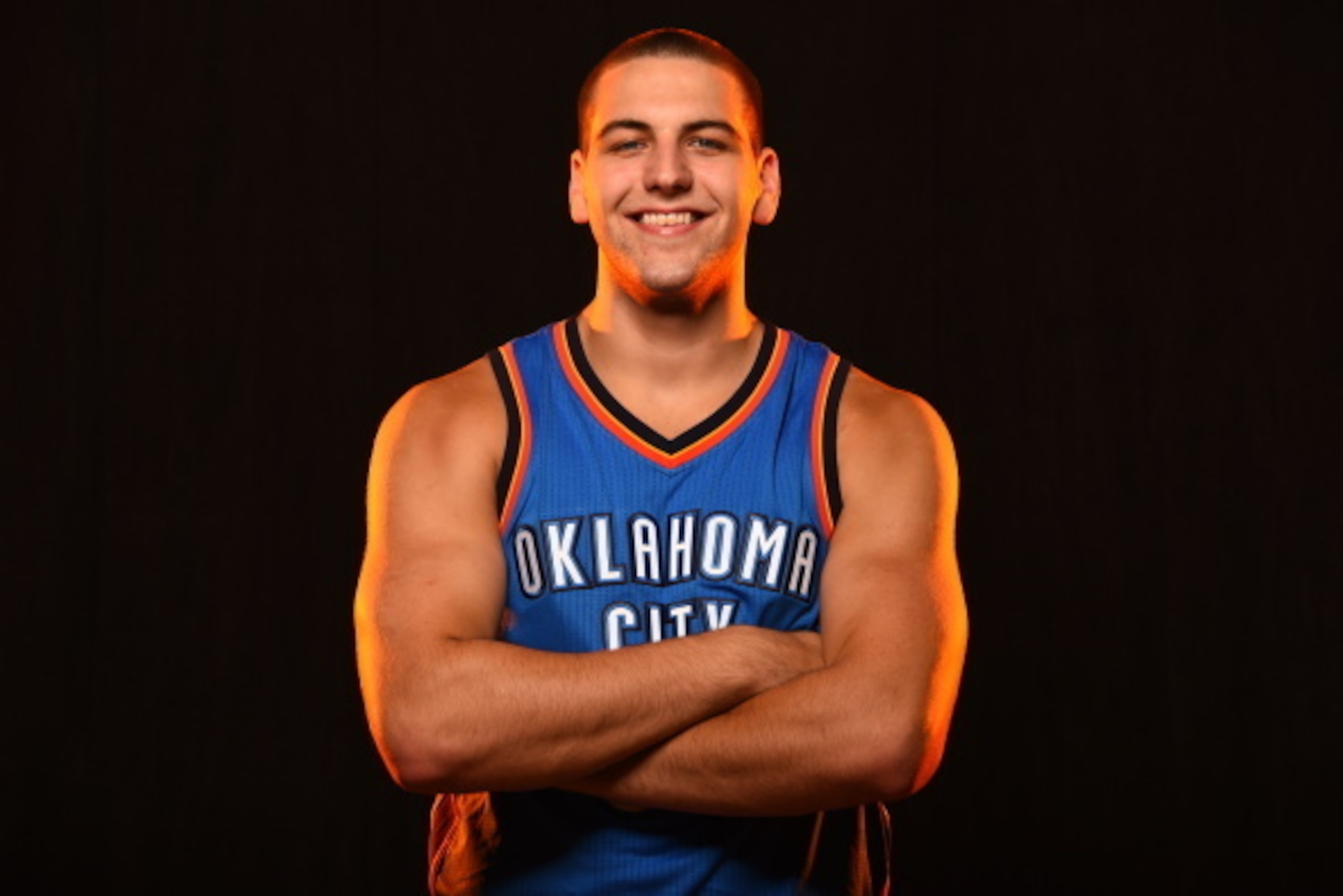
As for McGary, one of his main obstacles will be maturity. The Michigan man declared for this year's draft after the NCAA was preparing to suspend him for the entire season after testing positive for marijuana (per Yahoo Sports' Dan Wetzel).
In McGary's defense, he's handled the situation well. After being drafted by the Thunder with the No. 21 overall pick this past June, he seemed somewhat contrite in his interview with Vice Sports.
"I get people on Twitter and Instagram still commenting and stuff saying, 'Oh, You did drugs,'" McGary said. "Well, you know what? I did. Whatever. So what? I learned from it."
The other issue for the 22-year-old big man will be health. A back injury kept him out for all but eight games during his sophomore season with the Wolverines. He managed to put together a solid showing in Orlando during the summer league, averaging 14.8 points, 5.8 rebounds and 1.8 blocks.
Provided his health isn't an issue, McGary could be a decent contributor as a rookie. He's similar to Collison in the sense that he's a limited athlete who plays with a lot of energy. He can be a factor on the boards and could offer something on the defensive end as well.
He'll probably never be a star, but he could eventually inherit Collison's role as the second unit's frontcourt linchpin.
Perkins and Collison will make a combined $11.35 million this season (per Spotrac). Both are in the final year of their contracts, and neither has much trade value. Perkins could be an interesting trade target for a team wanting a decent post defender, while Collison's $2.2 million salary makes it justifiable to leave him at the end of the bench.
The Thunder will never know what they have in their young players if they don't give them the opportunity to show what they can do. Even in a deep Western Conference, the tandem of Durant and Westbrook should be good enough to make up for any growing pains and still make the playoffs.
The team has tried to get by with guys like Perkins and Collison for years. It hasn't worked out. With Brooks' job potentially on the line, the future is now. It's time to throw caution to the wind and see what guys like Jones, Adams and McGary can do.



.jpg?w=2560 "Grading WWE Raw 🔠")
.jpg?w=2560 "Viral Rams Coach Vid 🖕")
.jpg?w=2560 "Injury-stricken Seahawks signing veteran RB")
.jpg?w=2560 "2 NFL Officials Suspended")

.jpg?w=2560 "Mahomes' Wife Trolls Kubiak 💀")