
NBA Draft 2014: Biggest Boom-or-Bust Prospects
For the most part, Duke's Jabari Parker and Kansas' Andrew Wiggins and Joel Embiid are seen as sure things in the 2014 NBA draft—at least as sure a thing as any rookie coming out of college after one year can be.
Sure, there are concerns about Embiid's back, but injuries aside, you'll struggle to find anyone who doubts the big man's talent or ability to thrive in the NBA.
The same can't be said for all of the prospects in the draft.
TOP NEWS
Broadcaster sorry for false LeBron rumor
76ers HC Addresses Bron-Embiid Rumors

Moves That Could Backfire 😨
Some could turn into surprise stars, and that would be their ceiling, of course. But even at their floor of potential, these players will still be serviceable NBA players.
Guys like Duke's Rodney Hood, Indiana's Noah Vonleh and Michigan's Nik Stauskas fall into this category.
There is a smaller group of prospects who are perhaps the most intriguing. They possess either dynamic athleticism that is curtailed by raw and unrefined skills or a tool chest of talents that could be hindered by a lack of run-and-jump dynamics.
Behold...the boom-or-bust prospects of the 2014 NBA draft.
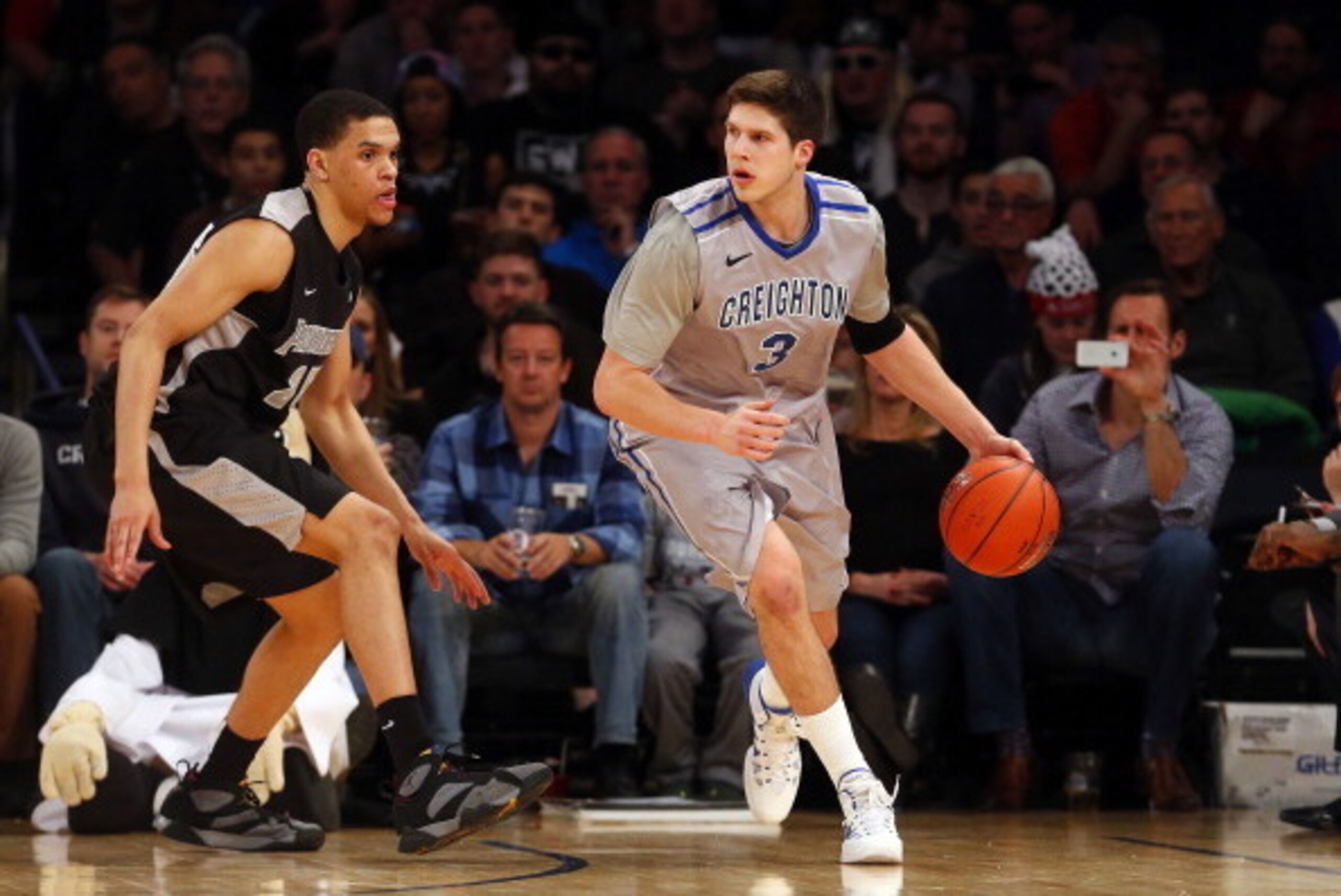
Doug McDermott, Creighton, SF, 6'7.75", 218 pounds

We've all seen the less-than explosive prospect who uses his shooting ability, high basketball IQ and hoops instincts to light up the collegiate ranks.
There's always the question as to how his game will translate to the NBA.

UCLA Bruins coach and former Indiana Hoosiers standout Steve Alford is one example. He averaged 22.5 and 22 points, respectively, in his last two seasons at Indiana but never scored more than 5.5 points per game in a four-year NBA career that saw him appear in only 169 games.
Former Charlotte Bobcat and Los Angeles Laker Adam Morrison is another example.

He drew Larry Bird comparisons while starring for Gonzaga from 2003 to 2006. He won the John Wooden Award in 2006 after pouring in 26 points per game.
In the NBA, he scored 11.8 points per game as a rookie but missed his entire second season due to injury. His numbers descended along with his confidence from there.
By the end of the 2009-10 season, he was out of the league.
Want a small-school reference? Harold Arceneaux averaged 22.3 and 23 points per game from 1998 to 2000 for Weber State. He was never drafted and didn't play in the NBA.
All of these players had scoring ability, but their collegiate offenses centered on them. None of the three possessed the athletic prowess to beat NBA-level defenders off the dribble.
Is McDermott another one of those guys, or is he something special?
In four years at Creighton, he scored 21.7 points per game. He culminated his college career by averaging 26.7 per game and winning the Wooden Award.
Awards and college accomplishments are nice, but can he accomplish anything in the NBA that's remotely close to those lofty standards?
He is not going to be able to score in the same ways he scored in college, but that doesn't mean he won't score.
Blessed with an understanding of the game that equals Alford's, McDermott is fortunate enough to stand just less than 6'8". Lack of height was one of the major issues for Alford in the NBA.
At 6'2", Alford had to play point guard, but he didn't have those skills and had no prayer of checking his man on the other end.
McDermott is mentally stronger than Morrison. The former Gonzaga star seemed to crumble under the expectations of being a high lottery pick.
Dougie McBuckets is also a little more athletic than most originally thought.
He proved that when he registered a 36" max-vertical leap at the NBA combine. He is not Aaron Gordon of the Arizona Wildcats, but he's not a complete stiff as a run-and-jump athlete.
That said, he'll still be Kyle Korver-like on defense in the NBA. He doesn't have the lateral quickness to be a good on-ball defender.
Because he understands the responsibilities required in team defense, he can be less of a liability if he's on a team with stud defenders who cover tons of ground, like the Miami Heat's LeBron James or Oklahoma City's Serge Ibaka.
If not, McDermott's defensive deficiencies may somewhat dull what he's capable of accomplishing on the offensive end.
For him, his bottom-line projection depends a lot on who drafts him. If he lands with a great defensive team, he could become a surprise star. If not, he'll likely be a three-point gunner who toils in relative obscurity for a bad team.
Kyle Anderson, UCLA, PG/F, 6'8.5", 230 pounds

Anderson is one of the most interesting players in the draft. At just less than 6'9" in shoes, he could easily play small forward. He also has the bulk and rebounding prowess to play power forward, should a team go small.
As a sophomore for the Bruins last season, he grabbed 8.8 rebounds per game.
There isn't anything too strange or intriguing about that. But he becomes a fascinating prospect to debate about when you look at his ability to handle the ball and play point guard.
To go with his per-game rebound average, Anderson also scored 14.6 points and dished 6.5 assists per game.
He was college basketball's best bet for a triple-double on a nightly basis.
Like McDermott, he doesn't possess great foot speed. He refrained from participation in any of the agility drills, which was a bad sign considering there were already concerns about his athleticism.
The thing is, for a player like Anderson who will ideally have the ball in his hands, his size and skill allow him to slow the game down—at least on offense.
If you're wondering whether he can make teams respect him from deep, that shouldn't be a major concern.
He shot 48 percent from three-point range last season. Granted, he only took 1.6 threes per contest, but that percentage is enough to ease worries about a broken jump shot.
Even with a lack of foot speed, he'll still be a potential matchup nightmare.
Not many point guards will be able to check him, which means a small or power forward will have to take the responsibility. That leaves an issue for the opposing team's point guard on the other end.
If he's a normal size or small for the position, whom does he guard?
There's the beauty of having a player like Anderson.
(Video has music that contains explicit, NSFW language.)
Here's the ugly side...
Anderson won't be able to stay with most point guards in the NBA on defense. He'll also struggle with the quicker small forwards.
If you have a player like James, Washington's Trevor Ariza, Indiana's Paul George and others who can guard multiple positions, Anderson can be somewhat hidden like McDermott.
It helps that Anderson has a great feel for the passing lanes. He averaged 1.8 steals per game for UCLA.
Even still, his slow feet could be a problem. A brave head coach who truly believes in him will have to give him the keys to a team as a point guard in order to see his full potential.
He won't be 21 until September, so he still has room to improve. But if he's asked to play a traditional small forward role, we'll never see how versatile he can be.
Again, the landing spot is key to help his bottom line.
Zach LaVine, PG/SG, 6'5.75", 181 pounds

Unlike McDermott and Anderson, athleticism is not the sticking point with LaVine.
Pay no attention to the fact that he is clearly shy of the 200-pound mark. The weight will come with age. LaVine just turned 19 in March.
Aside from Andrew Wiggins, this young man is probably the best pure athlete in the draft. He posted a 41.5" max-vertical leap at the NBA combine and ran the lane agility drill in just 10.42 seconds. The latter was the fastest time at the combine this year.
His jump shot has beautiful form, and he can handle the ball well enough to play both guard positions. You might be saying, "Where's the bust potential?"
He was very erratic as a freshman last year while playing for Alford at UCLA (coincidentally).
In 37 games, LaVine averaged 9.4 points and 1.8 assists per contest.
As freshman years go, that's not too bad as a building block. But LaVine isn't set to continue construction in college—he's taking his promising little house to the Association.
Will he become a mansion or a fixer-upper that no one ever got around to fixing?
There's a definite chance he could blossom into one of the best guards in the NBA. His game is similar to that of former Bruin and current Oklahoma City Thunder star Russell Westbrook.
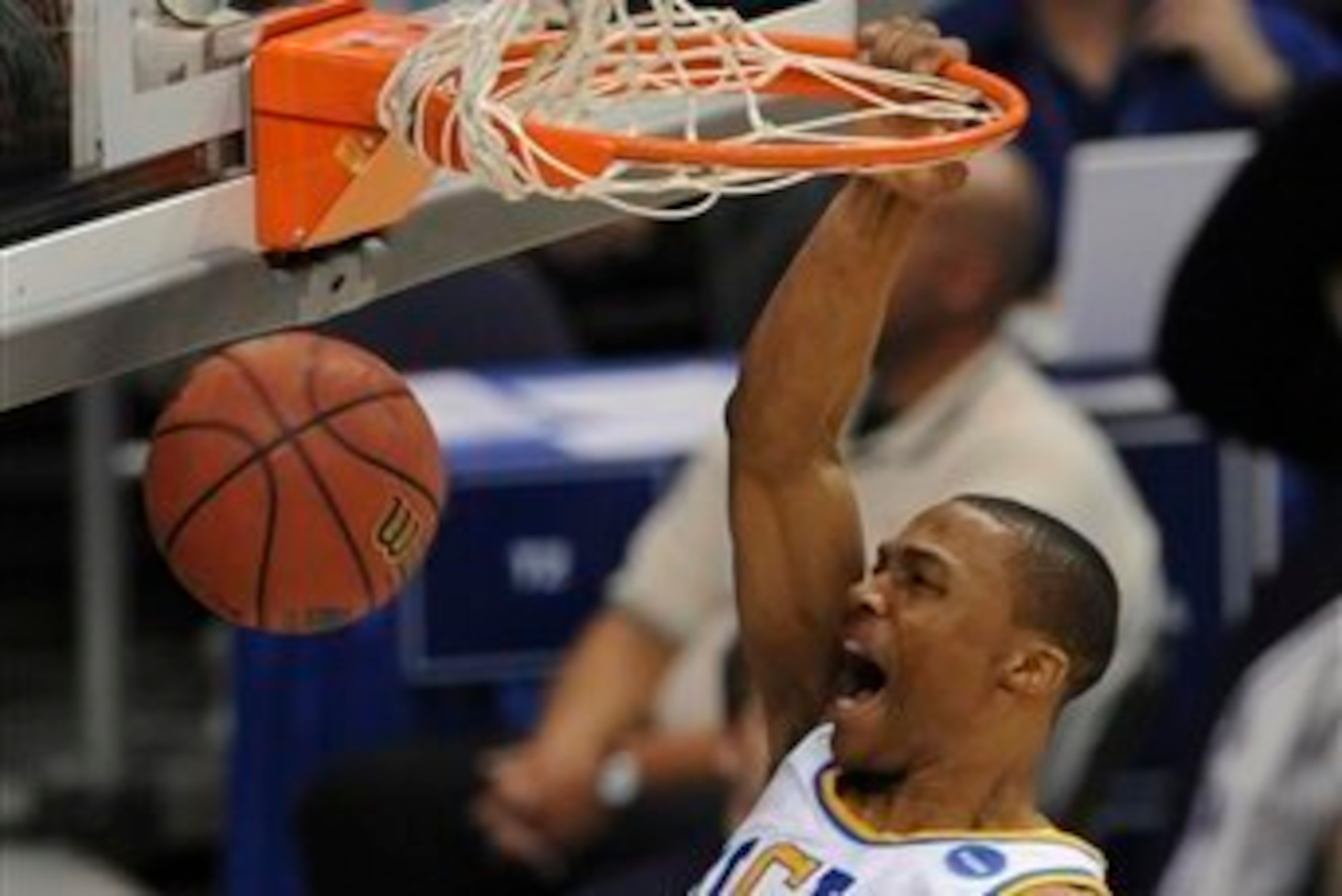
Westbrook booked after two years at UCLA, but it's possible that his second collegiate year when he played 33.8 minutes per game helped prepare him for the NBA.
LaVine only logged 24.4 minutes in his lone year in school.
Most troubling of all is the way he finished his college season. One-and-done players like Derrick Rose got better as their freshman seasons progressed.
LaVine was the exact opposite.
He scored double figures in nine of his first 10 games of the season. All of those games were against nonconference opponents, and most weren't considered top-notch programs.
In his last six games, which were all postseason contests, he cracked double figures just once. In the other five games he scored zero, one, two, three and five points.
Is he ready to be more than just a spectacular athlete?
It seems logical that he'll take awhile to develop, but will the team that drafts him have the time and resources to invest in him long term?
Here we go again—it all comes down to the landing spot.
LaVine needs to be devoted to his own development, and his team has to be patient as he learns how to actually play the game in the NBA.
All height, weight and strength and agility numbers per NBA.com. All statistical references per Sports-Reference.com
Follow me. I'm passionate about basketball.


.jpg?w=2560 "Dak to Stroud: Get Some Wins 💯")
.jpg?w=2560 "5 NFL Players Getting Trade Buzz")