

Ask LeBron James. Ask Dwyane Wade. Hell, ask Kevin Durant. They'll all tell the Los Angeles Lakers the same thing—it takes time.
What takes time, exactly?
Developing team chemistry, more specifically, star-studded team chemistry.
TOP NEWS

J-Dub, Wallace May Miss Entire Season
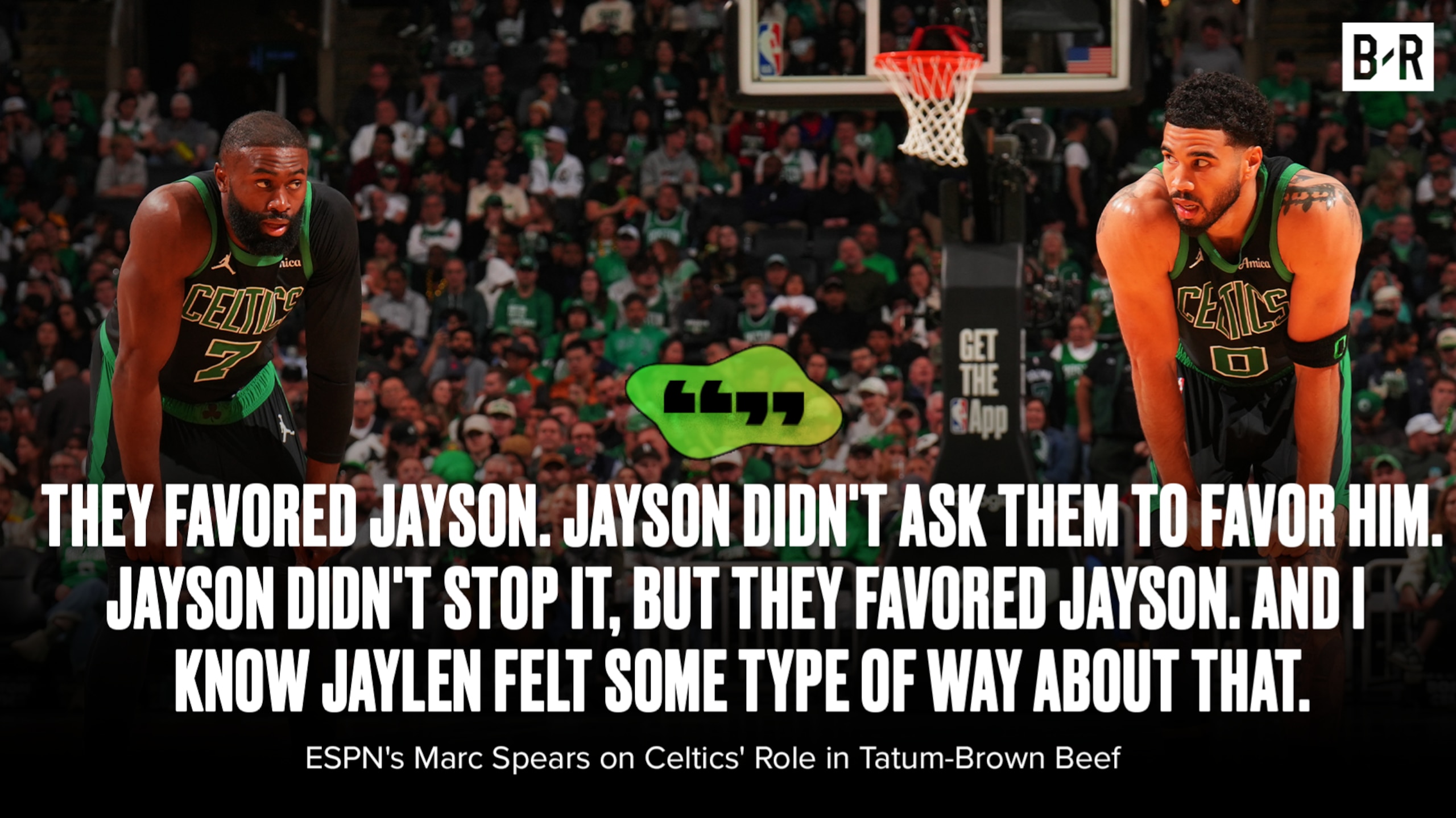
Celtics at Fault for JT-JB Beef? 🤔
Melo's Quote on Confidence 😎
It takes time to go from a mere force on paper to a dominant entity on the court. It takes time for a 10-plus year veterans to step outside their comfort zones and thrive.
It takes times for these assemblies to work.
But how much time? How long must Los Angeles attempt to bask in the glory on paper because the on-court attack is chaotic and underwhelming at best? How long until this "works?"
Well, if you ask the New York Knicks, they'll tell you nearly two years and counting.
Don't fret, though, because the Lakers didn't mortgage their financial future on a set of degenerative knees or their tangible future on a superstar who has become nothing less than a captive of his own potential.
Simply put, the Lakers—even with Dwight Howard's back and Kobe Bryant's foot injuries—are not the Knicks. They're something more, something better.
Something that resembles the Miami Heat.
One could argue that Los Angeles is, in fact, attempting to integrate a heavier dose of star-caliber egos into one system, and one would be correct.
But that's not what's important here.
What's important is the Lakers convocation of superstars is of the same magnitude and potential of the Heat's. And congregations of such extensive talent take time to mesh, they take time to iron out the kinks and become a semblance of a coherent and synchronized unit.
Like Los Angeles, Miami lost its first game of stars gone wild era. And like the Lakers, the Heat struggled to put points on the board, to execute efficiently, scoring just 80 points on 36.5 percent shooting—in that first game.
And you know what, the struggles continued, well into the season, in fact.
The Heat—Big Three and all—began their inaugural campaign by losing eight of their first 17 games. That's correct, the star-studded trio that convened in Miami to render all other opponents inferior struggled to keep its head above .500 through the first 17 games.
By that point, South Beach's prolific formation was a failure. They staged the biggest free-agency coup in league history for nothing.
But then, the tides began to shift. Things started to change.
After opening up the season 9-8, the Heat went on to win 21 of their next 22, including a 12-game winning streak.
What changed? What allowed Miami to go from a star-laden team in turmoil that routinely gave up 100 points a game to one that allowed such a feat just three times in 22 games?
To put it simply, the Heat changed.
Sure, they had time to become accustomed to one another's talent–which helped a great deal—but their attitude changed as well. They ditched the sense of entitlement that prompted LeBron to make his infamous "not one, not two, not three..." proclamation and replaced it with a monstrous chip on their shoulder like they had something to prove.
Because they did have something to prove.
And so do the Lakers. In fact, judging by Kobe Bryant's pre-opening-night-game sentiments (via Greg Beacham of NBA.com), the Lakers have more to prove than any of us ever imagined:
""As you know, we have a lot of expectations this season," Bryant said. "We're trying to live up to the expectations. We're trying to bring another championship back to where it belongs, back to Los Angeles."
"
That's the Lakers problem right there.
More so than Howard's sorry free-throw shooting and more so than their attempt to eradicate Steve Nash's creativity within the confines of a structured offense, their greatest potential downfall is assuming the expectations of a championship favorite.
Can title attainment be the team's ultimate goal?
Of course, but to assume before opening tip, before this group proved much of anything that they were indisputable title contenders was premature.
And as we saw with the Heat, and have already seen with the Lakers this year, such a mindset was also detrimental.
What failed the Heat two years ago, more than their lack of chemistry, was their attitude, their refusal to acknowledge they had a target on their back before anything else.
With the Lakers, it's the same story different binding.
Until they realize that they proved nothing, they'll achieve nothing.
I'd like to tell you it will take Los Angeles just 17 games to start winning. I'd like to tell you it may even take less time.
But I'd be lying.
Because the Lakers aren't going to be a superteam until they stop playing like one, until they assume that "us against the world" attitude that won the Heat 58 games in their first season together, that won them an NBA championship only last year.
That same attitude Los Angeles currently lacks.
That same one standing between them and building the reputation they already expect to uphold.
And, yeah, that same attitude the Lakers must embrace and subsequently personify if they wish to become a superteam.
.jpg?w=2560 "Chiefs, Steelers Eye WR Trades")



.jpg?w=2560 "WWE Raw Live Grades 🔠")