
Pittsburgh Pirates: Looking for the Next "Jose Bautista" Behind the Plate
I can't be sure because of small sample size, but there appears to be at least one hitter emerging on the Pittsburgh Pirates not named Andrew McCutchen. And the candidate is not Neil Walker, or Pedro Alvarez or the other vaunted young players signed by the team. Instead, it is a "re-trade," Michael McKenry, who has started off the season as possibly the "next Jose Bautista" (formerly a "journeyman" Pirate, now a star in Toronto).
McKenry is hitting well for his position (catcher) with two hits, one of them a homer, in seven at-bats (hence the problem of "small sample size."). Even so, he's well above the "Mendoza line," which, so far, is more than can be said for Alvarez, Walker or certain other team members. But there is another metric, which is the one that largely defines Bautista himself, in which McKenry excels.
TOP NEWS

Yankees Sloppy in Game 2 Loss 😬

Realistic Offseason Trade Ideas 💡

Players Who Were Worse Than You Think in 2026 ⚾
McKenry has walked four times so far this season (more than any other Pirate, including some with three or four times as many at-bats). More to the point, these walks aren't even counted as at-bats. Instead, one adds the walks to at-bats to get plate appearances.
This, meaningfully, enlarges the sample size from seven to 11. And any way you measure it, four walks in 11 trips to the plate (the league average is less than one) is a huge number.
No one is going to walk at that rate for a whole season. But if McKenry HALVES his current walk production rate to two in 11 (a "stress test" to compensate for small sample size), he would still be very productive in this regard, and put up numbers similar to what Bautista did all of last season.
Walks are useful for two reasons:
1. They are a means of getting on base, just a single might be, and
2. They are a measure of pitch selection, or a batter's "eye" for the ball.
The ability to get on base, which is a measure of hits and walks, is measured by on base percentage. That is: hits plus walks divided by plate appearances.
While McKenry's batting average of .286 is unremarkable (given the small sample size), his on-base percentage of .545 is remarkable, even in this context. Put another way, even allowing for regression, McKenry might have the ability to get on base nearly half the time that he steps up to the plate (as Bautista did last year, with an on base percentage of .443).
"But McKenry hasn't shown that he can hit home runs like Bautista (of today)," someone might protest. But neither could Bautista of 2008. His current home run hitting ability is a combination of a swing, which he developed in 2009 in Toronto, and his "eye," which he always had. McKenry has been showing a similar eye. And the fact that he has hit one home run so far this season (as many as any other Pirate) suggests that he might have the swing as well.
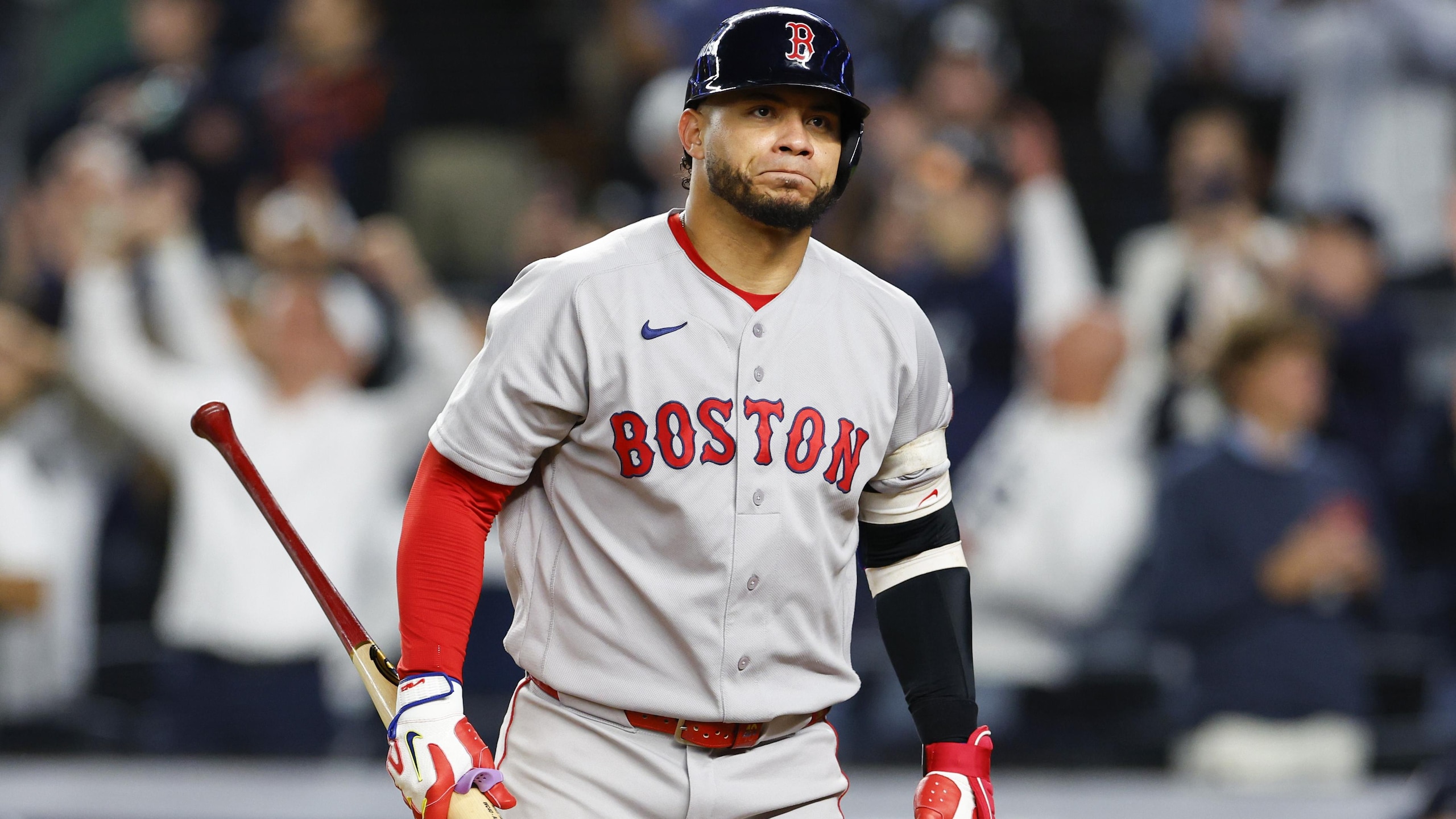
It is interesting that neither McKenry nor Bautista were highly regarded players until they made their mark. McKenry was traded to the Pirates by the Boston Red Sox for a player to be named later, the ultimate insult. Bautista was also traded BY the Pirates for a player to be named later (catcher Robinzon Diaz). Bautista was originally taken by the Pirates in the 20th round of the draft; McKenry was a higher, seventh round pick.
The Pittsburgh Pirates draft and trade for slugging ability (e.g. Pedro Alvarez, and before him Jason Bay), and sometimes overlook on-base percentage. But they might to focus on on-base percentage and the "Jose Bautistas" of this world as a way of "getting there."

.jpg?w=2560 "Grading WWE Raw 🔠")

.jpg?w=2560 "Viral Rams Coach Vid 🖕")


.jpg?w=2560 "Injury-stricken Seahawks signing veteran RB")
