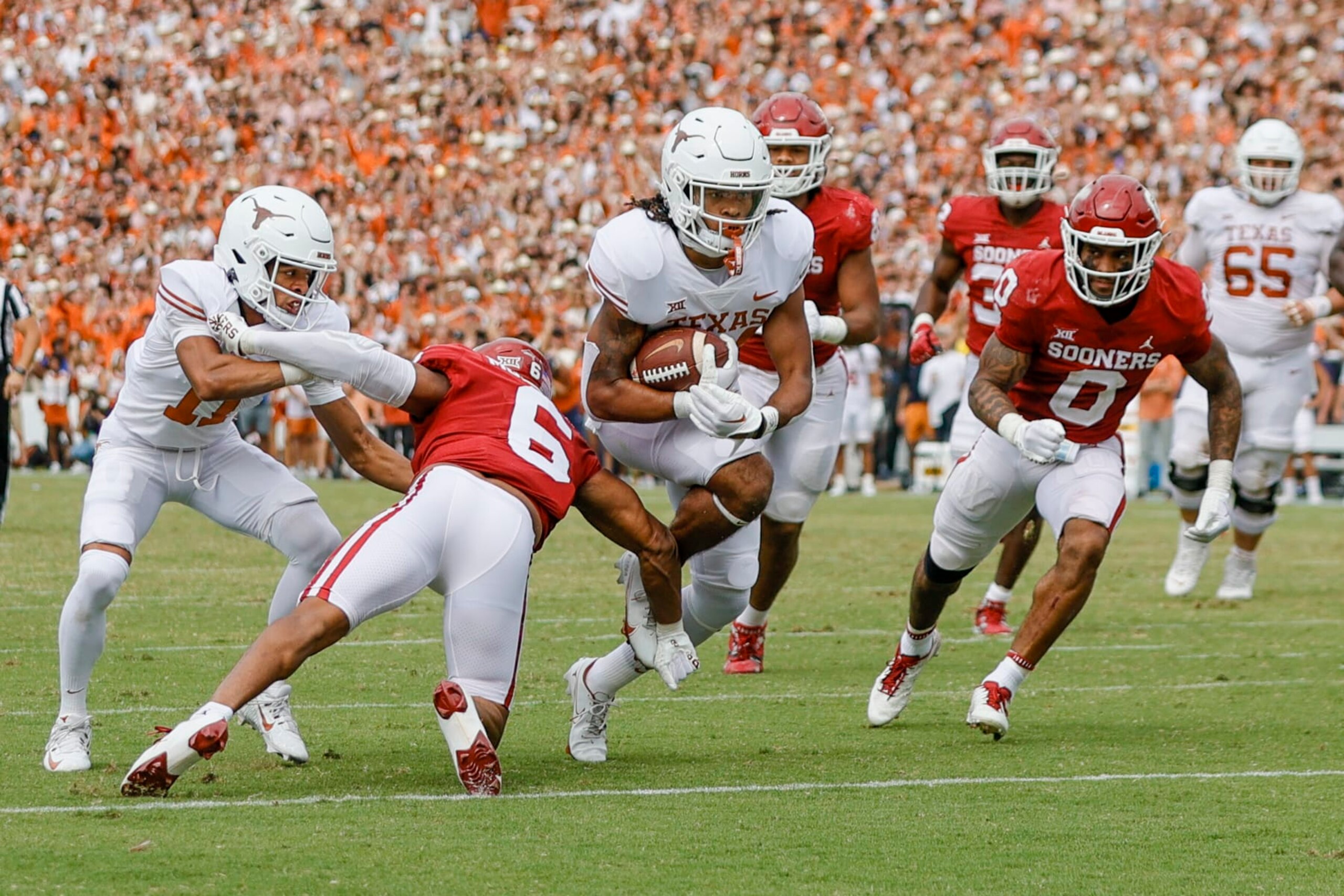


In a word: Finally.
Nearly eight months have passed since the Georgia Bulldogs rolled to a second straight national championship, and college football is (almost) back! By the time you're reading this sentence, the first matchup of the 2023 season will be less than seven days away.
Well done, my friends. Your reward is four months of our beloved sport...and the season debut of B/R's Weekly Awards.
If you're new here, first of all: Welcome to the party.
The next thing to know is that I try not to take myself too seriously in this space. B/R's college football crew, myself included, will be sharing our analysis and predictions throughout the season. But here at Weekly Awards, the target is remembering why we love the sport.
We'll be serious and informative. We'll also share some oddities and fun moments with plenty of subpar humor along the way.
The first edition of the 2023 season features superlatives that have stemmed from the surge of conference realignment.
Best Line Leader: SEC
1 of 7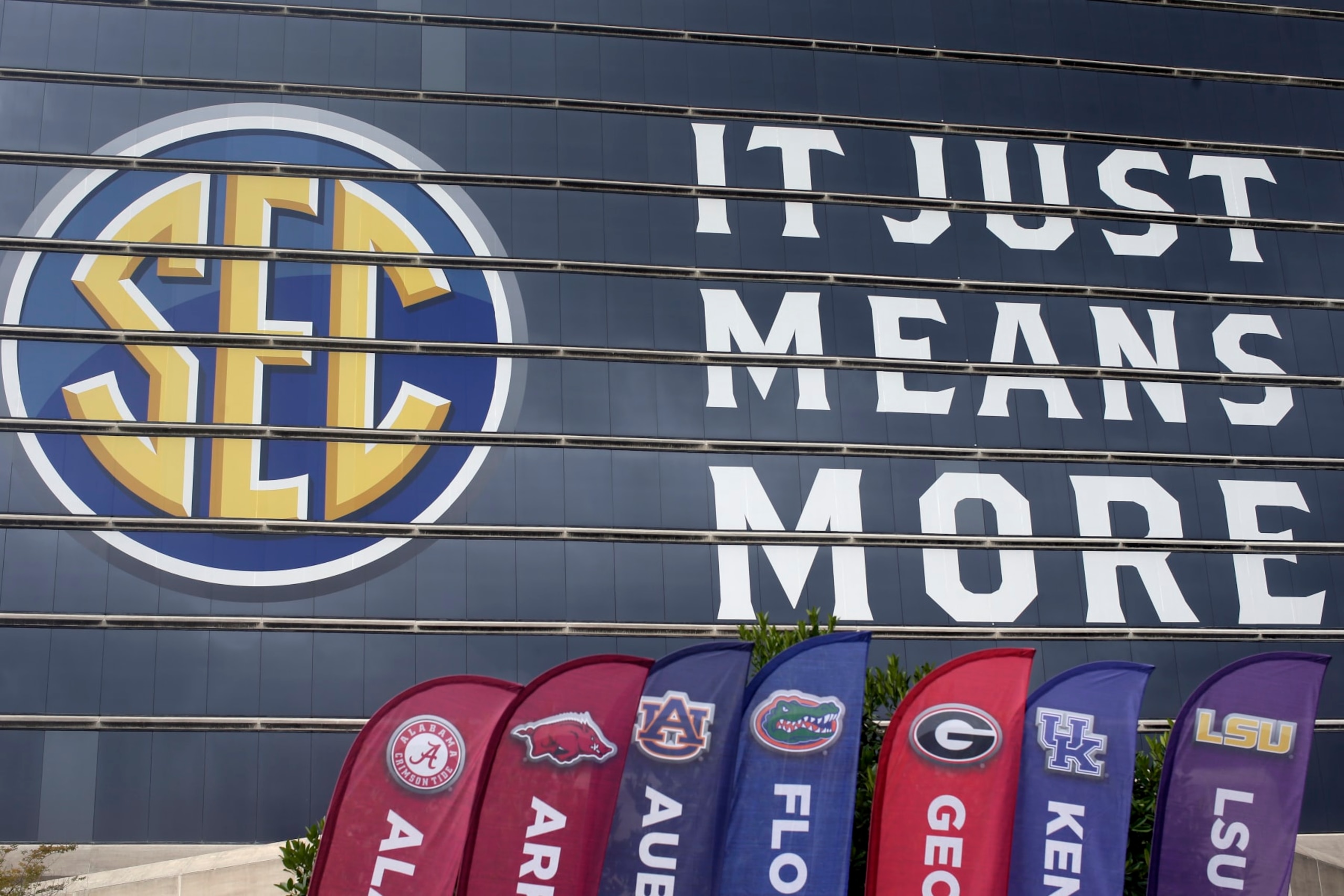
Thanks a lot, SEC. You started this whole thing.
Honestly, it's hard to believe the news of Oklahoma and Texas leaving the Big 12 broke two years ago. The ensuing wave of realignment has been an absolute whirlwind and has changed the sport.
Perhaps you're a huge proponent of the changes. Maybe you're bummed to see a bit of tradition disappear. Could be a mix of both, too.
The scramble to increase revenue has come at the expense of rivalries and geographical logic, yet that financial aim is justifiable. The desire to keep college football as a regional game is understandable, but major movement is nothing new to the sport.
No matter where you land, though, history will remember that the SEC served as the catalyst in this round of realignment.
Life of the Party: Big 12
2 of 7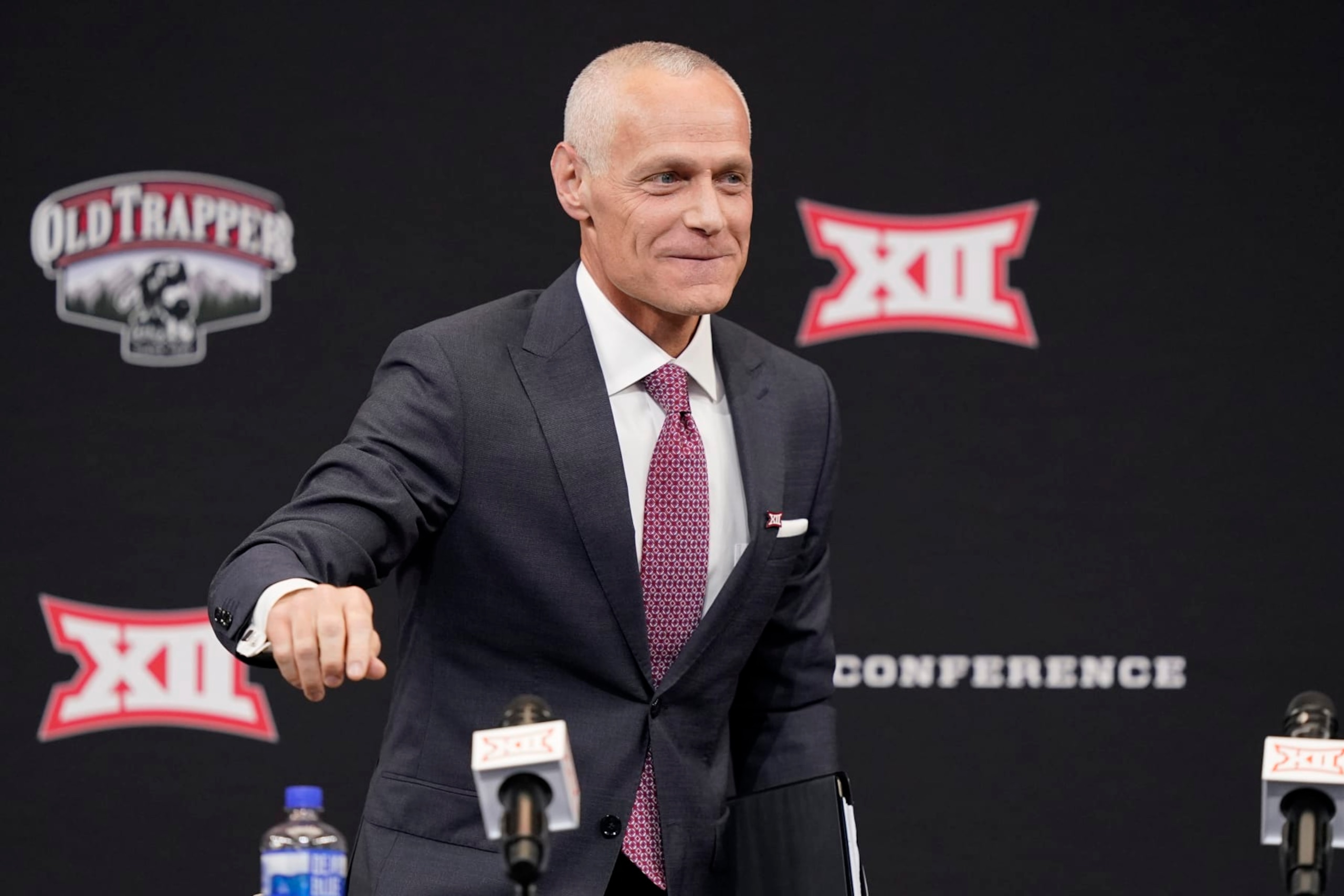
Within his first 13 months of becoming Big 12 commissioner, Brett Yormark has ignited a once-flailing conference.
Two words have described his tenure: proactive and aggressive.
Most importantly, Yormark jumped the Pac-12 in line for a television deal. Despite his league's contract not expiring until 2025 while the Pac-12's expiration loomed in 2024, he worked out a six-year, $2.3 billion arrangement with ESPN and Fox.
That contract brought stability to the Big 12 and allowed the conference to add Colorado and then Arizona, Arizona State and Utah this summer.
Yormark has expanded the league's visibility, too.
The conference reached an agreement to host basketball camps at Rucker Park in New York City. The league also established "Big 12 Mexico" to hold exhibitions in men's and women's basketball, women's soccer and baseball in the country.
Innovation and foresight have saved the busy Big 12, and Yormark has been the driver of this aggressive, impressive year.
Most Popular: Big Ten
3 of 7
No league has changed more—in a positive way, that is—than the Big Ten, a name only growing in the level of inaccuracy.
How about that Big Eighteen, huh?
Last summer, the conference pulled off a stunner when it swiped USC and UCLA. In the aftermath of that bombshell, it considered adding Oregon and Washington. Ultimately, the league decided not to pursue them—until a window of opportunity forced a recalculation this year.
Thanks to a nudge from the aggressive Big 12, it whipped a metaphorical dagger into the heart of the Pac-12 (again). Oregon and Washington are now headed to the Big Ten next summer.
Between the volume and prestige of incoming schools, the Big Ten is set to emerge as the nation's most improved conference.
.jpg?w=2560 "AP Poll Top Five Week 9")
Most Dramatic: ACC
4 of 7
Although the ACC made plenty of headlines during the offseason, very little has actually changed.
In May, the so-called "Magnificent 7" schools—Clemson, Florida State, Miami, North Carolina, North Carolina State, Virginia and Virginia Tech—explored the feasibility of breaking the ACC's grant of rights. The league is locked into its television contract through 2036.
The only fallout from the meetings, however, is that the ACC created a success initiative to reward teams for postseason performance.
Later on, Florida State publicly flirted with leaving the league. But the university didn't find much traction for an exit, so this realignment can is, basically, just being kicked down the road.
After the Big Ten and Big 12 broke the Pac-12, the ACC thought about inviting Cal and Stanford. Nothing came of that, either.
Don't be so dramatic, ACC. Ugh.
Best Worst Goodbye: Pac-12
5 of 7
From a narrow lens, know what the worst part is for the Pac-12? This conference should be incredibly fun in 2023.
USC is a national championship hopeful with the reigning Heisman Trophy winner. Washington, Utah and Oregon—all Top 15 teams in the preseason AP poll—return a star quarterback. Oregon State won 10 games last year and should be strong again, and so on
However, the league's failure of leadership is unmistakable.
What would you like to discuss first? The problematic Pac-12 Network and lack of foresight in Larry Scott's era? The lack of action last summer when the conference could have dented the Big 12? Rejecting a media deal and not securing one after that? Not inviting San Diego State?
And those are simply the easy lowlights to mention.
While the upcoming year should be among the Pac-12's most interesting seasons in recent memory, it might be the league's last one. Ever.
Most Generous: AAC
6 of 7
Ah, these kind-hearted souls in the AAC. Want to add a couple of programs? We've got 'em!
Since its inception in 2013, the league has become a gateway to a power conference. Louisville and Rutgers left for the ACC and Big Ten in 2014, respectively. Cincinnati, Houston and UCF are headed for their Big 12 debuts this fall.
SMU and Memphis, meanwhile, are two of the most attractive remaining options that could make the Power Five leap.
Yes, the quality of the league has dropped in 2023. Still, the conference is welcoming Charlotte, Florida Atlantic, North Texas, Rice, UAB and UTSA to membership this season, so the AAC's outlook is sound.
I cannot confidently say what the future holds for the AAC, but I know the future of college football includes the conference.
Most Changed: Conference USA
7 of 7
Those six newcomers to the American all departed Conference USA, a league that has constantly fought valiantly for survival.
Sweeping changes are nothing new to C-USA, which watched a mass exodus in each of 2005, 2013 and 2014. Heck, the entire current 12-team AAC previously belonged to Conference USA.
Yet, the league soldiers on.
Returning teams are Florida International, Louisiana Tech, Middle Tennessee, UTEP and Western Kentucky. This year, new schools are Jacksonville State, Liberty, New Mexico State and Sam Houston. It's an eclectic group that, as you can see, spans from Florida to New Mexico.
It's not the most prolific conference. It's not drawing national headlines with regularity. It's not producing a stream of elite NFL talent.
But it still exists. In this era of realignment, that's no small feat.
.jpg?w=2560 "Colts Texans Football")
.jpg?w=2560)

.jpg?w=2560 "Rodgers Iced Out on Plane 💎")
.jpg?w=2560 "Raiders Could Start Mendoza")
.jpg?w=2560 "Mahomes Told Teammate to Leave Meeting")


.jpg?w=2560 "Lamar Being Out Shocked Ravens")
.jpg?w=2560 "Packers Safety Slams Refs 🤬")