USA vs. Ghana 2010 World Cup: Our Affair With Heartbreak Is Our Beacon of Hope
It truly is amazing how quickly things can turn from its zeniths to its nadirs, from the moments of joy and ecstasy and euphoria to the moments of dear sadness and dejection, how uniting excitement and patriotism generated from soccer—ready to shed its niche tag— can quickly wane into the dog days of summer and soon be near-forgotten.
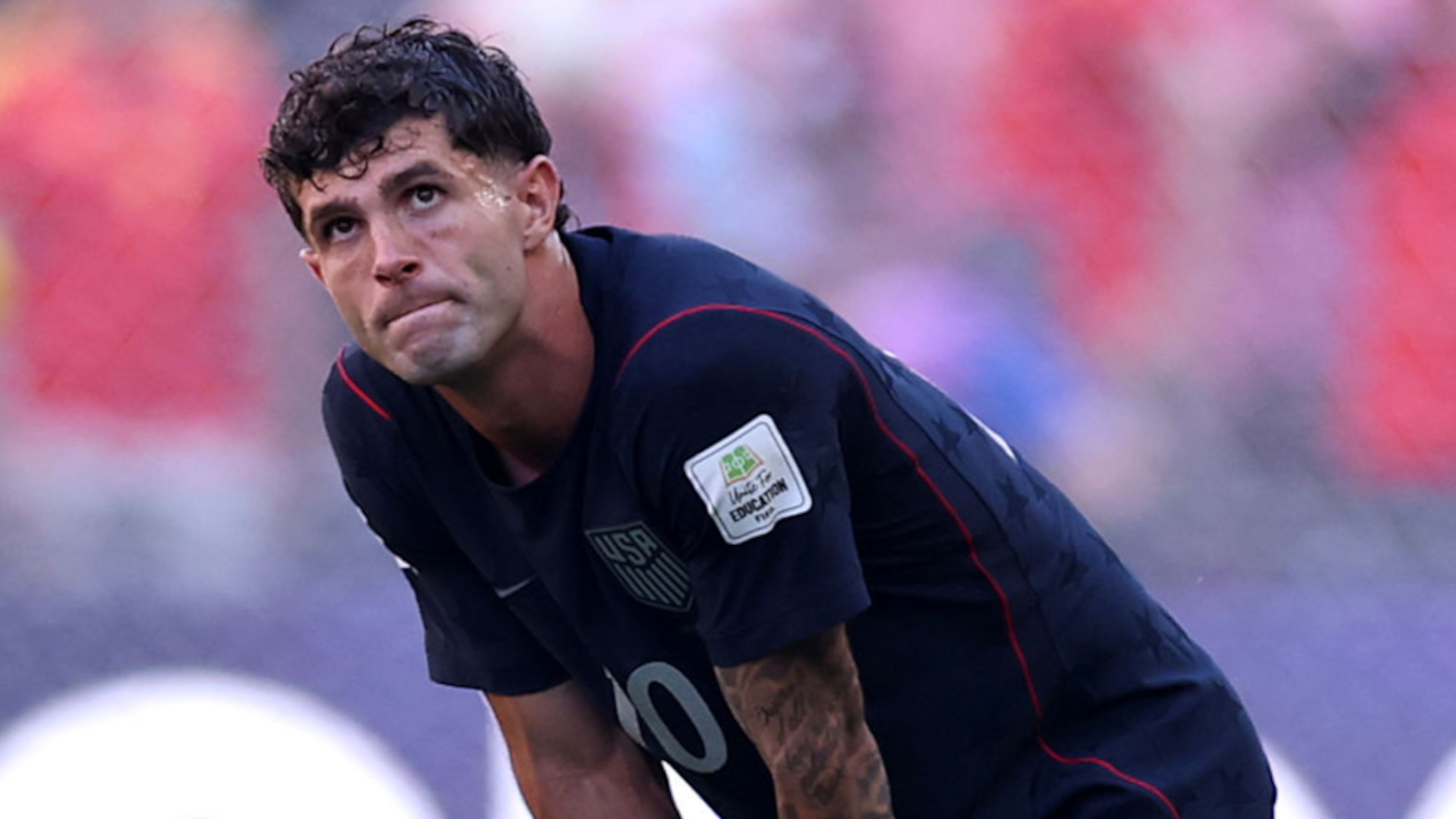
The United States men’s national team on Saturday had an amazing opportunity to not only advance to the quarterfinals against a team not necessarily out of its league, but sustain the fledgling momentum towards soccer appreciation in mainstream America. The national team’s match against Ghana was an opportunity for transcendence, but it just wasn’t meant to be. Hours of tears, moments of isolation, and coarse, raspy voices away; hours of staring in front of my computer screen unable and fantasizing of what could have been away, our victory was just not meant to be.
Even though the American team provided this nation with brilliant moments of excitement and spirit, I am realistic enough to understand that soccer will soon fall under the radar again. I survey the bars where crowds gather, squares where wanderers congregate and understand that for every fan that knows that Watford recently parted ways with its skipper—Jay DeMerit—the rest probably couldn’t tell you how many teams are in the Premiership let alone name the name the Big Four.
The national soccer brass knows that it has made amazing strides and captured the hearts and minds of the American public, but they surely understand that that’s simply not enough. There will be a collection of fans that will become soccer converts—much like journalist Michael Sliver did, per se, after his visit to Madejski a year or so ago—find a club to follow, and become amazing fans.
Rest assured I know that is amazing progress. But it’s so hard to acknowledge such slow progress when we know things could be much better. When you realize that the English Premier League has gargantuan television contracts comparable with the NFL, that the sport has icons and global appeal and drama and flow and aesthetic beauty, it’s disappointing to know that soccer hasn’t been able to tap into the American market that possesses immense potential.
But as I list these disappointments and negatives, I understand that there are so many positives as well. To the angry and disappointed and dejected fans who share the same sense of pain and agony and heartbreak, a look into the mirror of perspective provides a glimmer of hope for the advancement of soccer in the United States.
Soccer is a sport that in the American perspective is both concurrently old and new, a sport that originated in 1930—in regards to international competition and our third place finish in that World Cup—and in 2009.
The American public and ESPN will be committing tomfoolery if they believe that the World Cup and events surrounding it will advance the state of soccer in the United States. Perhaps I am simply misguided, but I’m sure we all can agree that momentum cannot be sustained with a four-year hiatus. America hosted the World Cup in 1994, yet acceptance of the sport did not come to fruition. The American squad advanced to the quarterfinals in 2002, yet acceptance of the sport did not come to fruition. Yet America advanced to the round of 16 in 2010, and things might be different this go around.
ESPN’s affirmation to broadcasting the premier club competitions may be the factor that thrusts soccer into mainstream America. The momentum and interest for soccer built in this World Cup campaign can be continued in the upcoming Premiership and La Liga seasons. Open-minded fans interested in watching the beautiful football they heard Martin Tyler or Ian Darke talk about can glimpse at the beautiful and positive football of Arsenal and passion of the local derbies.
These fans will eventually develop club affiliations and understand the game—tactical and mental aspects—better, and will create a base that can sustain and build soccer’s popularity in America better. People will tune to ESPN for tea-time kickoffs once interest is built, and hopefully things will grow from there.
Soccer will never become an elite, mainstream sport in America until we host the World Cup again and develop a league that attracts quality competition and promotes the essence of the game—perhaps that is promotion and relegation—but at least we can appreciate and understand the sport better.
Fans will eventually understand about the different identities of the different teams, the brilliance of certain players versus others, the power of fans and singing and passion, and everything else that makes soccer such an amazing game. In a self-sustaining manner, they’ll understand the aspects of the game—on- and off-season—that make the sport comparable to American sports.
We’ll become more knowledgeable about the game and eventually perceive and understand what when wrong with the 2010 American World Cup campaign. We can hold Thomas Rongen accountable for letting Neven Subotic get away, when we could have valuably used him marshalling the defense, that Giuseppe Rossi would have done the impossible and given us the rose over the much more attractive Italy, that luck didn’t go our way with Jermaine Jones’ fitness poor and Charlie Davies’ life on the line at one point.
We can reflect and truly understand what made our World Cup campaign unfulfilling. Americans aren’t naïve enough to think that we could seriously win the entire competition— let alone beat Ghana—but we should look back, reflect on expectations, and move towards the future. Every World Cup campaign follows with attrition, considering it follows with a four-year hiatus that allows plenty of time to think, tinker, and change.
Probably foremost, the long layoff will allow the US to figure out whether to retain Bob Bradley or not. Much maligned throughout his tenure as national team manager, he has won with this squad and restored pride and the winning spirit with this American squad after the 2006 disaster. He has provided discipline to the side, and opportunities for youth to grow into the national setup. He has won and taken this team to new and unforeseen heights.
But he has also failed to capitalize on an amazing opportunity to thrust American soccer into the international spotlight and that “easy path to the semi-finals”. He stuck with his favorite-inclined intuitions, fantasized of what-could-have-been rather than what-would-be, and held to long to his trust in players by selecting Ricardo Clark and Robbie Findlay. He rigidly stuck to his 4-4-2, when a formation shift—major or minor—could have been beneficial.
But with the end of this World Cup cycle, things will change and Bradley will probably leave on his own will. I truly hope Bradley will find a good club job in Europe and earn a top position he deserves.
I don’t personally place the shoulder of the blame on the manager Bradley because the positives have far exceeded the negatives during his tenure. He was second-fiddle to Jurgen Klinnsman and still maintained a great amount of professionalism. He got to business, like he did at Princeton, New York, Chicago, and Los Angeles, and built the national setup from the bottom-up. He left the American squad in a much better holistic state than he inherited.
He stressed the importance of youth, and someday another manager will reap the rewards of Bradley’s persistence. If the next manager builds off the positives Bradley implemented and works on the negatives that the Americans maintained, this American squad just might be something on the international scene.
We’re going to need to develop and unearth players with better technical skill, concentration, and vision. We need better players competing at the highest levels, something we are slowly doing.
But as we move forward and develop our setup with things we have never had, we must not forget our roots and our identity. It may be that never-say-attitude we think we have, or that Kardiac Kids-persona we held throughout the tournament.
Or it’s just the fact that we are Americans, and we never give up and refuse to go down without our best fight. That we love not only our country, but our cause and our people and the essence of what’s right in the world.
Jurgen, figure that out and you’ll be my hero when we actualize Project 2014.
Allen J. Kha is a featured columnist at Bleacher Report. He is a student at the University of Virginia that also contributes to The Cavalier Daily, SoccerNation.com, and other Olympic sports publications. He can be contacted at allen.kha@gmail.com.
.jpg?w=3840 "Biggest FA Mistakes of the Century 💸")