El Clasico: As Barcelona Finally Falter, Real Madrid Find Structure and Identity
You had to look twice, three times, and even once you had, you still questioned it. Quickly, replays were consulted. So was clarification from other sets of eyes. Puzzled, curious, you glanced around looking for confirmation, for the eyebrows-raised nod.
Surely not? Can't have been, can it?
Was that them?
.jpg?w=2560 "Sterling Dangerous Driving Soccer")
Half-time was approaching in Saturday night's Clasico at the Camp Nou, and Barcelona's Sergio Busquets had played the ball into the feet of Lionel Messi just beyond the centre circle. Turning onto his left foot, Messi quickly drifted into a pocket of space in front of Real Madrid's midfield; it was a characteristic move, but then something very uncharacteristic happened.
From the left, Gareth Bale—yes, Gareth Bale—tracked Messi's run, pressing the Argentinian and denying him time. Quickly, Messi hit the pass he would have hit anyway but did so under pressure. His chipped ball to Jordi Alba flying into the box from the left flank was still dangerous but wasn't inch perfect and gave Madrid's defenders a look in.
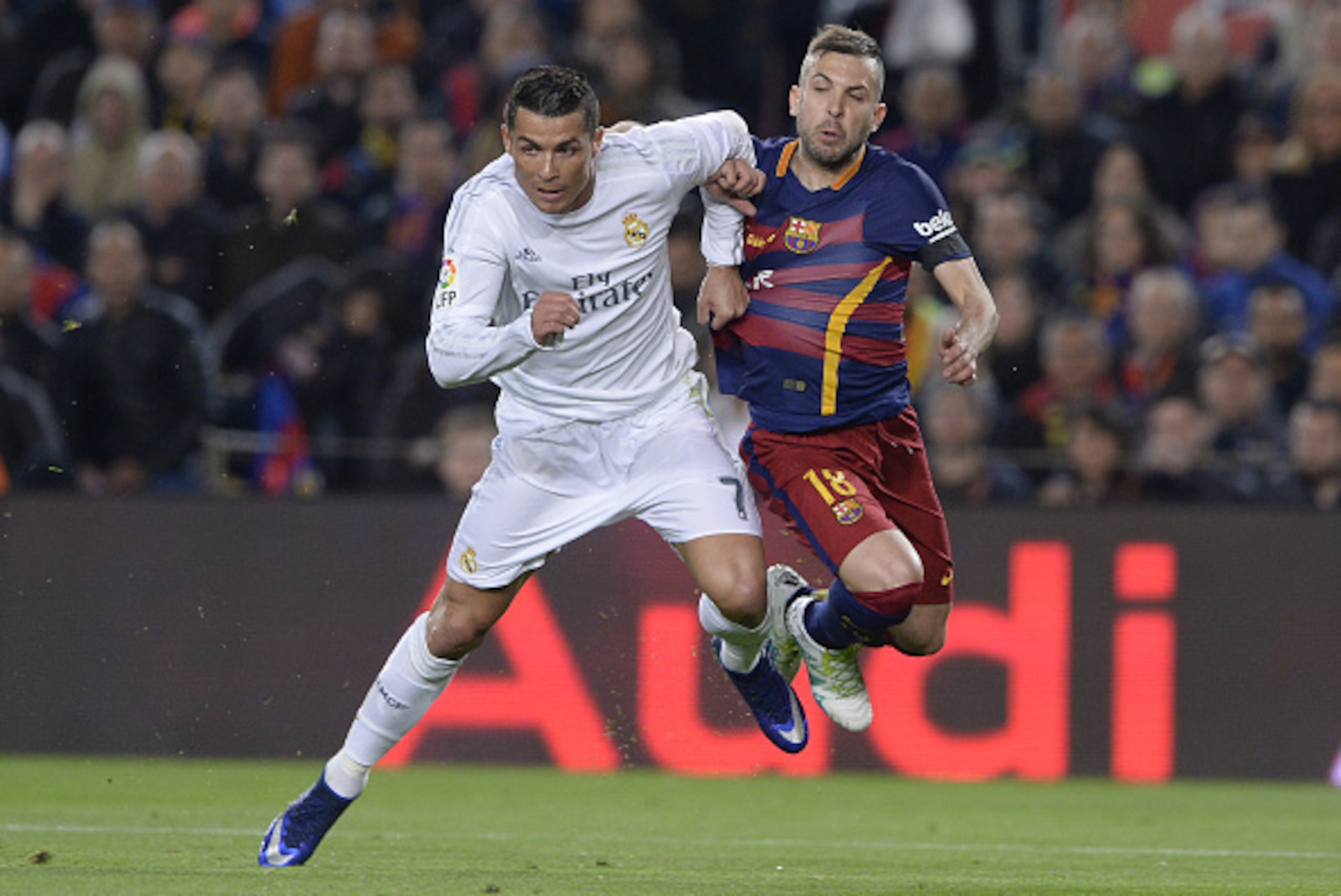
Defenders? Well, no, not a defender at all: Cristiano Ronaldo.
Matching Alba stride-for-stride, Ronaldo for an instant became Madrid's right-back. Fighting for position, the Portuguese held off Alba. He stayed goal side. He won a foul. When he got to his feet, he was standing on the corner of his own six-yard box.
Ronaldo and Bale had just combined in the same defensive sequence.
Yep, them.
On a night when Madrid showcased the sort of unity, commitment and structure that's been missing all season to defeat Barcelona, 2-1, in Saturday's Clasico, this five-second passage summed it up.
Fighting, scrapping, defending, working, everyone and not just some, Madrid's players did what's typically alien to them and tapped into a collective conscience. Suddenly, they no longer looked disjointed, rudderless and reliant on talent alone. Instead, there was a plan, an encompassing idea.
An identity.
Soon after half-time, Messi and Alba looked to combine on the left side of Madrid's penalty area, but there to break up the move was Bale. The ball then worked its way across the box to Ivan Rakitic. There to steal it from him was Ronaldo, the resulting counter-attack culminating in a corner and a shot on goal.
From seemingly nowhere, Madrid had discovered it: This wasn't just the usual faces working to instructions while others did their own thing; here, Madrid's stars had listened and adhered, buying into an idea to take Madrid beyond the sum of their parts.
The difference was profound.
After a cagey first half, Zinedine Zidane's men grew stronger and stronger as the game progressed. On 56 minutes, Gerard Pique's opener was a blow, but the structure and intention never wavered. With Bale and Ronaldo tucking in and Casemiro sitting between lines, Madrid's defensive shape was an all-hands-on-deck 4-1-4-1, from which they looked to pick their moments, breaking with speed. Purpose.
Minutes later, a move of lethal precision from exactly that setup led to Karim Beznzema's equaliser. It was vintage Madrid, and it was the turning point. Suddenly, Madrid were breaking again and again like it was 2012. In midfield, Casemiro was winning the battles; ahead, Bale and Ronaldo were running in space.
Soon, the Welshman had what looked like the winner. It was wrongly disallowed. Ronaldo then went and got it anyway.
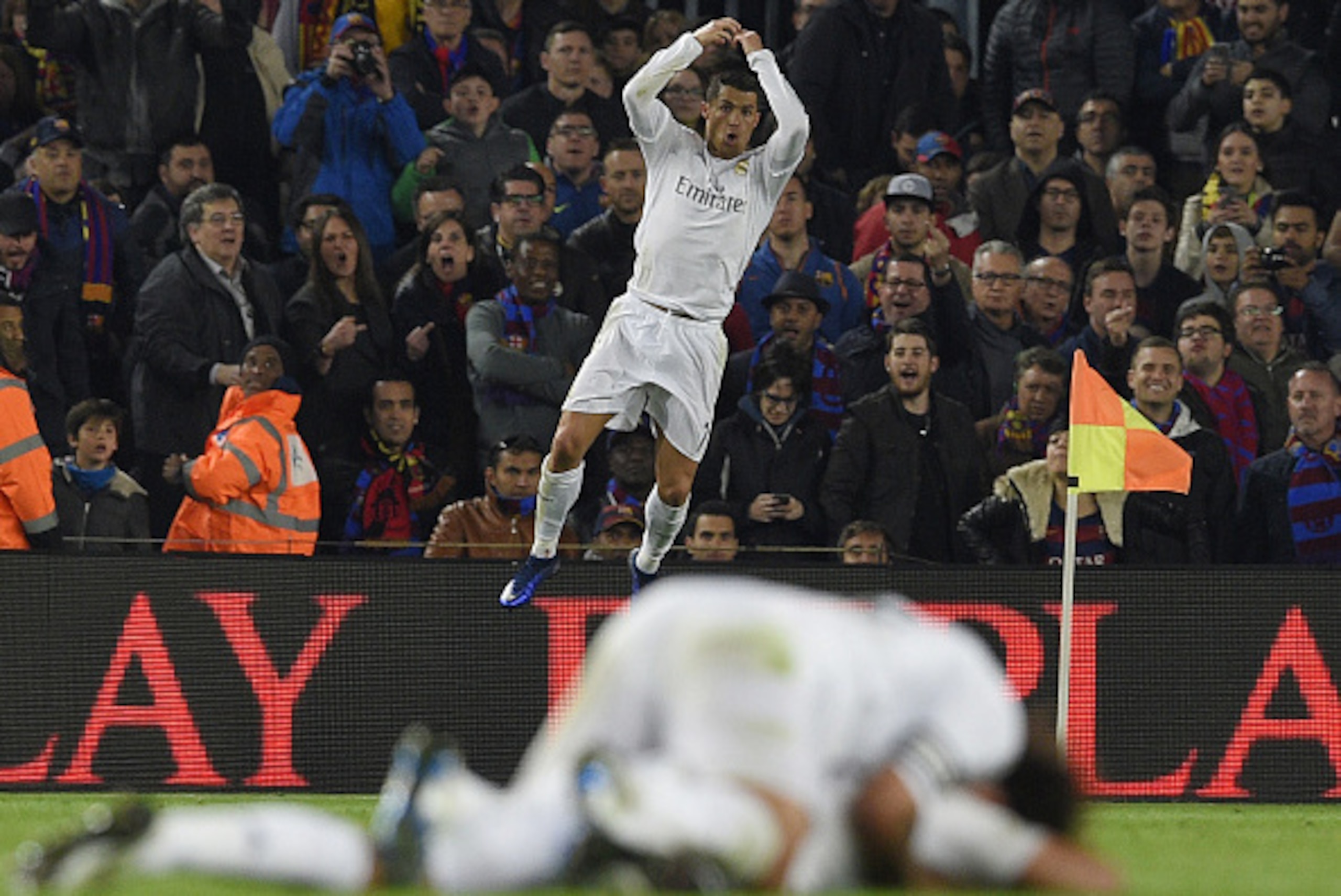
"A Real raid," said Marca.
"Remarkable rally," said AS.
"Madrid deserved it," said Pique to Movistar (via Sport).
This was a raid alright. Rather than some sort of smash-and-grab, this was an assault carried out with clarity, one that has a significance that goes well beyond this night in isolation.
For Zidane, his first Clasico was pivotal. Before him, five predecessors—Juande Ramos, Manuel Pellegrini, Jose Mourinho, Carlo Ancelotti and Rafa Benitez—had been irrevocably scarred by maiden outings in this fixture. Not since Bernd Schuster in 2007 had a Madrid manager won the Clasico at the first attempt, and in doing so, Zidane has given his side both a template and belief.
"I liked everything about my players' performance," he said late on Saturday night. "When I see a team that's united and all together, with everyone fighting for their teammates and for their coach, there's nothing better."
That Zidane mentioned "fighting for their coach" was telling. Previous Madrid managers will testify that that hasn't always been the case. Benitez was the most recent to experience as much. But here, Zidane had asked for something and got it. His players, all of them, responded. It showed his status means something to them. That he has authority.
That they will follow him because he is Zidane. And because of it, Madrid's whole season suddenly looks different.
In the league, this victory didn't really alter anything, but in an emotional sense, it alters everything. A Clasico victory under their belt, momentum and belief all of a sudden with them, Madrid now have something to work with. In Europe, their hunt for an 11th title no longer looks fanciful; rivals will acknowledge their threat. Suddenly, Real Madrid look more Real Madrid.
They've found an identity.



.jpg?w=2560 "Consensus Mock Draft 📋")
.jpg?w=2560 "NFL Panic Meter for Every Fanbase's Anxiety Levels")

.jpg?w=2560 "NFL Clarifies CFB Return Rules")