What Does David Moyes' Failure at Sociedad Say About British Managers Abroad?
The idea was that he would change them and that they would change him. In both cases, it was hoped for the better, the anticipated journey one of mutual evolution.
But it didn't quite work out that way.
When David Moyes took over at Real Sociedad last November, he inherited a team that lingered just above the relegation zone, their record two wins from 11 games; when he left them 363 days later this November, they lingered just above the relegation zone, their record two wins from 11 games.
TOP NEWS

Sullivan, Hall Lead USMNT to Big Win 💥
Int'l Break Goals and Highlights 🔥
.jpg?w=2560 "Titans Giants Football")
OBJ Calls Out Giants After Release
More stagnation than evolution, then? Probably, but this is a case that, like many others, goes beyond the raw facts.
Though history might eventually use numerical indicators to briefly assess Moyes' tenure in San Sebastian, his Spanish adventure can't be defined in such a manner. Instead, his time at Real Sociedad should be viewed through a prism of culture, language, habits, style, assimilation and change—more specifically, the difficulties involved in each, and what the Scot's stint in the Basque Country says for British managers and spells abroad.
When Moyes arrived at the Real Sociedad, he wanted to instil a somewhat British character in his new team. "Can we play a 'British' style? I hope so," he told the Guardian's Sid Lowe back in May. "I want to play fast, the ball moving, energy." The club wanted that too.
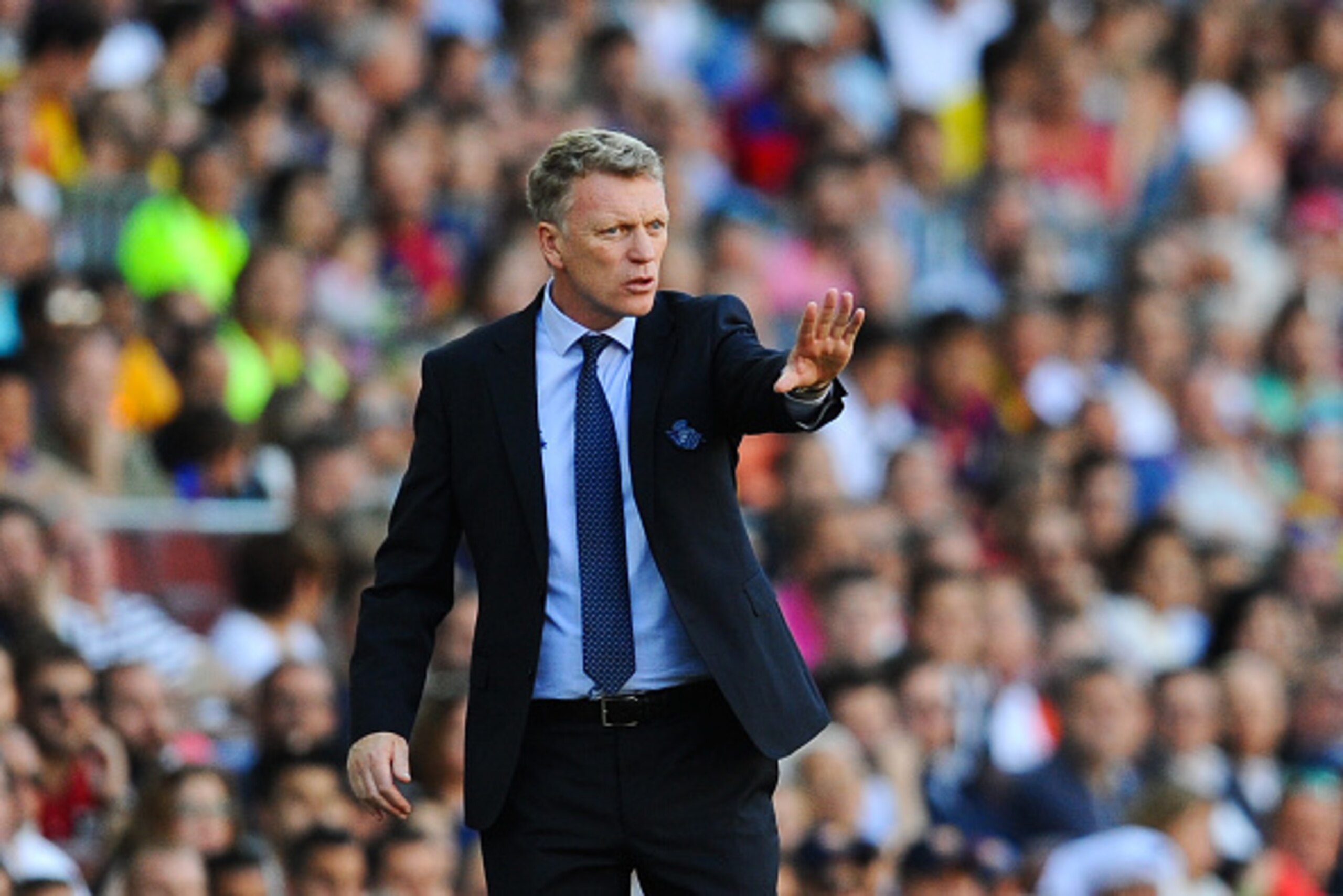
One of the reasons behind his appointment wasn't just that he'd previously managed a colossal club in Manchester United, or that he'd compiled a sterling record at Everton; it was that La Real had lacked a really distinguishable identity. A bit passive, uninspiring, a lack of verve affecting them, Sociedad didn't feel as though they stood for anything on the pitch. As a team, they needed personality more than anything. A trademark.
In theory, Moyes would give them that. He'd give a Spanish outfit a British twist, and thus, a point of difference. But that never really happened.
Instead of becoming dynamic, La Real became sort of confused, as we noted just prior to his sacking:
"Watching Real Sociedad right now is a difficult experience. Though the team is organised, though they're hardly shambolic, there's an unshakeable sense of confusion in attack, muddled thinking becoming paralysis. The ball goes sideways more than it does forward. Their motion is stagnant more than it is fluid. The buildup is painfully slow. Invention is absent.
According to WhoScored.com, Moyes' side ranks fifth in the league for possession but 14th for shots on goal. For shots on target it's worse: 20th. Dead last.
"
Moyes had wanted fast and direct, and his players tried, but that's not who they were or how they'd been trained and developed. It had been hoped that a fusion of cultures and ideas would lead to positive change, but rather than getting a fusion, La Real got a clash. "Moyes came in with the intention of improving and changing things and it hasn't worked out so well," defender Inigo Martinez said at the end of last season.
In September, midfielder David Zurutuza added that the team needed "an idea." The suggestion was that they didn't have one, that a philosophy wasn't there to embrace, reinforcing the perception that Moyes hadn't been able to adapt to the more tactical Spanish game after struggling to instil the British essence he'd originally intended.
In short, change proved difficult, but the manager wasn't the only one at fault.
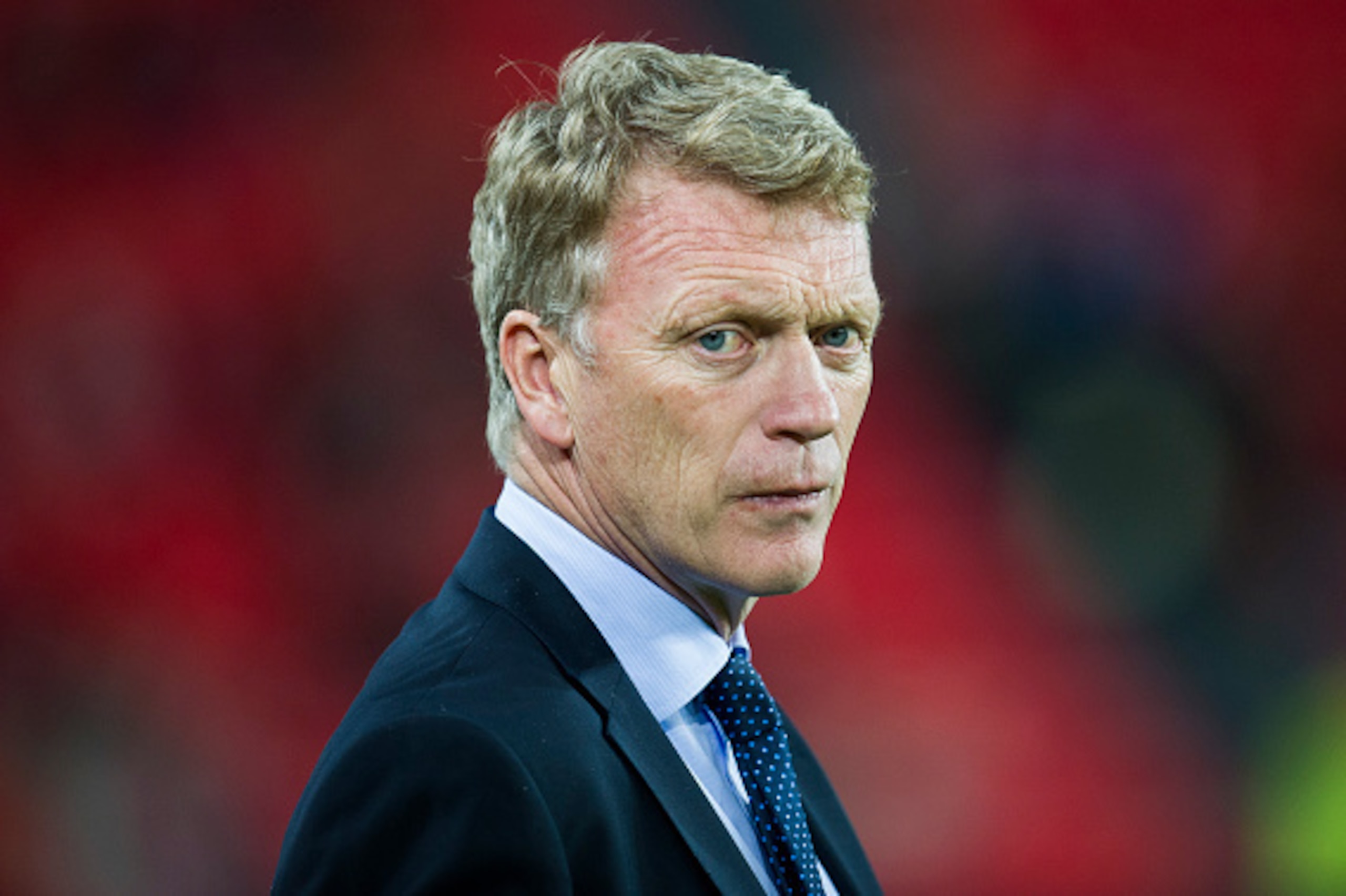
Throughout his career, the Scot's great strength has been his ability to build sides thanks to a prodigious work ethic. Relentlessly, he travels to games to scout talent, and his commitment to working harder than the next guy to unearth players is matched by few, as illustrated in Michael Calvin's wonderful The Nowhere Men. Consequently, though Moyes' best sides have never been particularly renowned for their invention, they've always had a reliability about them because of the reliability of his squad construction.
But Real Sociedad didn't let him do that. Not quite.
In May, AS indicated that the former Everton boss had wanted to perform a squad overhaul in his first summer. With targets in mind, he'd wanted to reshape the team in his image to give it a new identity, but the club resisted such a change in policy, president Jokin Apperibay and sporting director Loren preferring to stick more closely to the method they knew.
Compromise was the result, but what it meant was that Moyes' distinguishing feature was blunted. Without a squad he built, without his sort of players, Real Sociedad were asking him to give his own twist to a team not suited to taking that twist on—perhaps unwilling, too. In a foreign country, surrounded by a foreign language and culture, in a league he was still getting to grips with, Moyes couldn't turn to the pillar of his management.
Consequently, the difficulties presented by those foreign aspects were heightened. And reinventing oneself at 52 isn't easy.

Despite attempts to learn the language, Moyes' progression in that regard was minimal, complicating his communication with staff and players while also contributing to a sense of isolation. Such a situation wasn't helped by the fact that the staff around him weren't his own, or by the fact that a hotel was his place of residence in San Sebastian.
Such elements, that feeling of a coach who went on an adventure but quickly grew lonely, made building a rapport difficult and can't have helped his authority. What's more, it gave the impression he wasn't connecting with the area, or understanding the fiercely proud Basque region in the way John Toshack and Howard Kendall had done before him.
Indeed, Toshack and Kendall are both fondly remembered for their spells in Spain. The former, whose use of British idioms translated literally into Spanish became legendary, successfully embraced his surroundings and propelled Real Sociedad to the capture of the Copa del Rey in 1987; the latter, who arrived at Athletic Bilbao in the same year, lived at his club's training ground and embedded himself in the environment similarly.
But timing and differences in eras are important here.
When Toshack and Kendall went to northern Spain, the stock of British managers as a collective was strong. On the back of the successes of Liverpool, Aston Villa, Nottingham Forest and Everton in European competition in the preceding years, British football was viewed favourably on the continent, its talent in demand. Then the Heysel disaster occurred in 1985, seeing English clubs banned from competing in Europe, prompting an exodus of that talent, managers and players alike tempted abroad.
So much so that, as noted by Nick Miller for the Guardian, "in the summer of 1987, seven of the 20 managers in the Spanish top flight were British."
As such, even if just for a short time, British managers carried a helpful authority built on perception. On collective success. Many of them were also considered to be at the very pinnacle of their craft, too.
But not anymore.

The wider perception of British football now is that it's grown dated. With English clubs in particular struggling in Europe, with the England national team enduring similar difficulties, the game in Britain is seen as lagging behind, its structure viewed as failing, its coaching perceived as limited and short-sighted.
Consequently, the stock of British managers may have never been lower, the reality of their collective standard perhaps the same. And a look around this season's Champions League group stage says it all: There isn't a single British manager to be seen. What's more, before his sacking, Moyes was the only Briton managing abroad in one of Europe's top 10 leagues by UEFA's rankings.
Now there are none. (For the sake of comparison, there are five Spanish managers holding positions abroad in those leagues at present; there are also five Portuguese managers and three Frenchmen, too.)
Perhaps contributing to that is a reluctance among Brits to move away, but for men like Moyes who do seek such a challenge, the perception becomes problematic. Before they've even started, cynicism exists for their appointment. Their tactical acumen is doubted. They don't command the confidence and authority others might.
Of course, perception can be altered, but does it mean that British managers are short on time from the beginning? Might the lack of collective success reduce one's margin for error? Might a flying start in a new club abroad not just be desirable but actually a necessity?
It's possible. And if true to even some extent, it heightens the need for any adaption process to be rapid. For British managers, there isn't time to burn in learning the language. In embedding oneself in the culture. In getting to grips with the league. In growing accustomed to a club's workings and internal structure.
Was Moyes on the way to achieving those things? He might say yes; Real Sociedad might say no.
But perhaps the bigger question with the more concerning answer is: Will others now be willing to follow his path?

.jpg?w=2560 "Saints Lions Football")

.jpg?w=2560 "Report: Baker May Miss Up to 6 Weeks")
.jpg?w=2560 "EVERY Fantasy Football Update")