

Can La Liga Replicate the NFL and NBA in Taking Games Abroad?
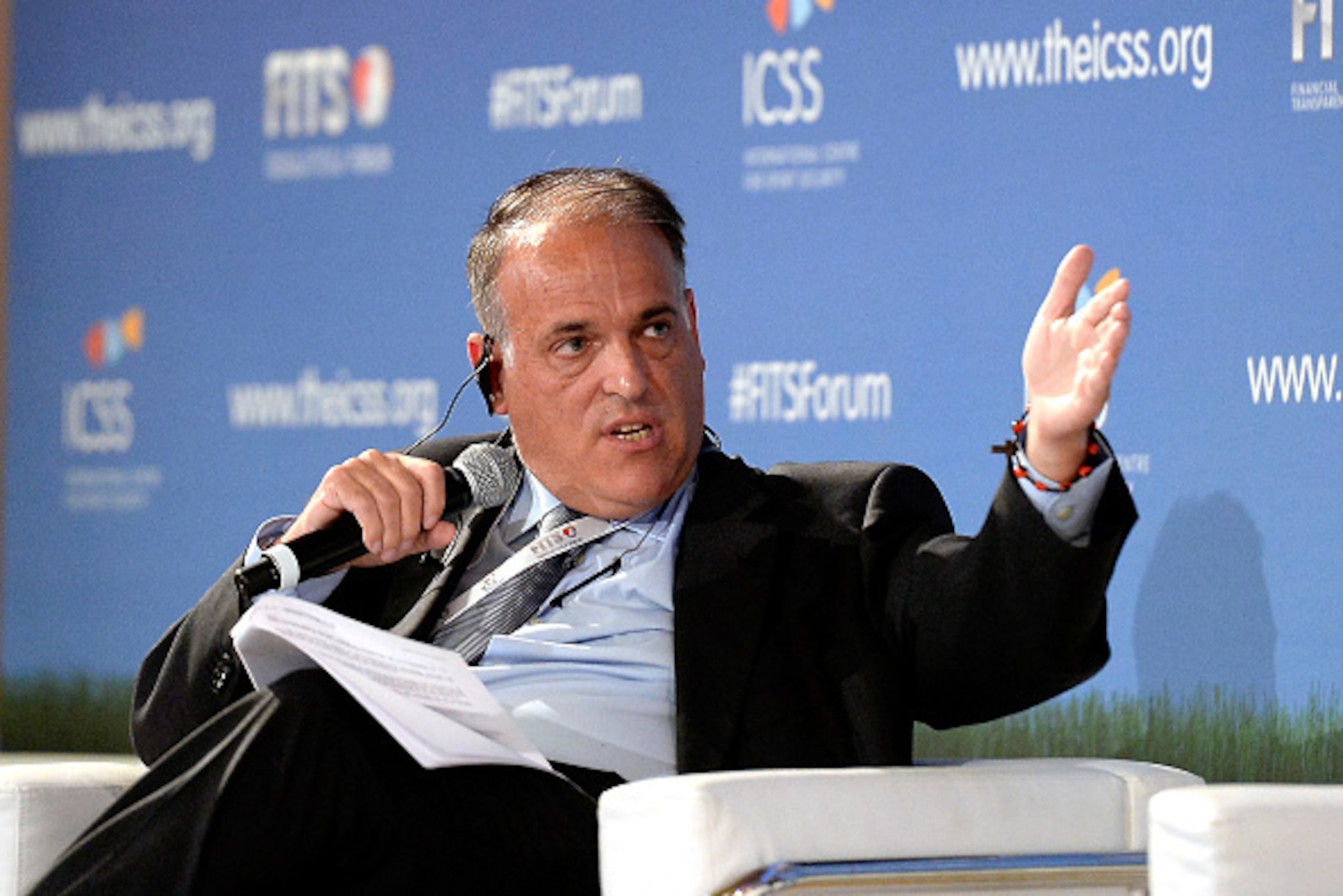
In early October, at the Sport Business Summit in London, Liga de Futbol Profesional (LFP) president Javier Tebas suggested La Liga games could be taken overseas "in the medium-term [future]," as the governing body of Spain's top two leagues continues to look for ways to compete with the financial power of the Premier League.
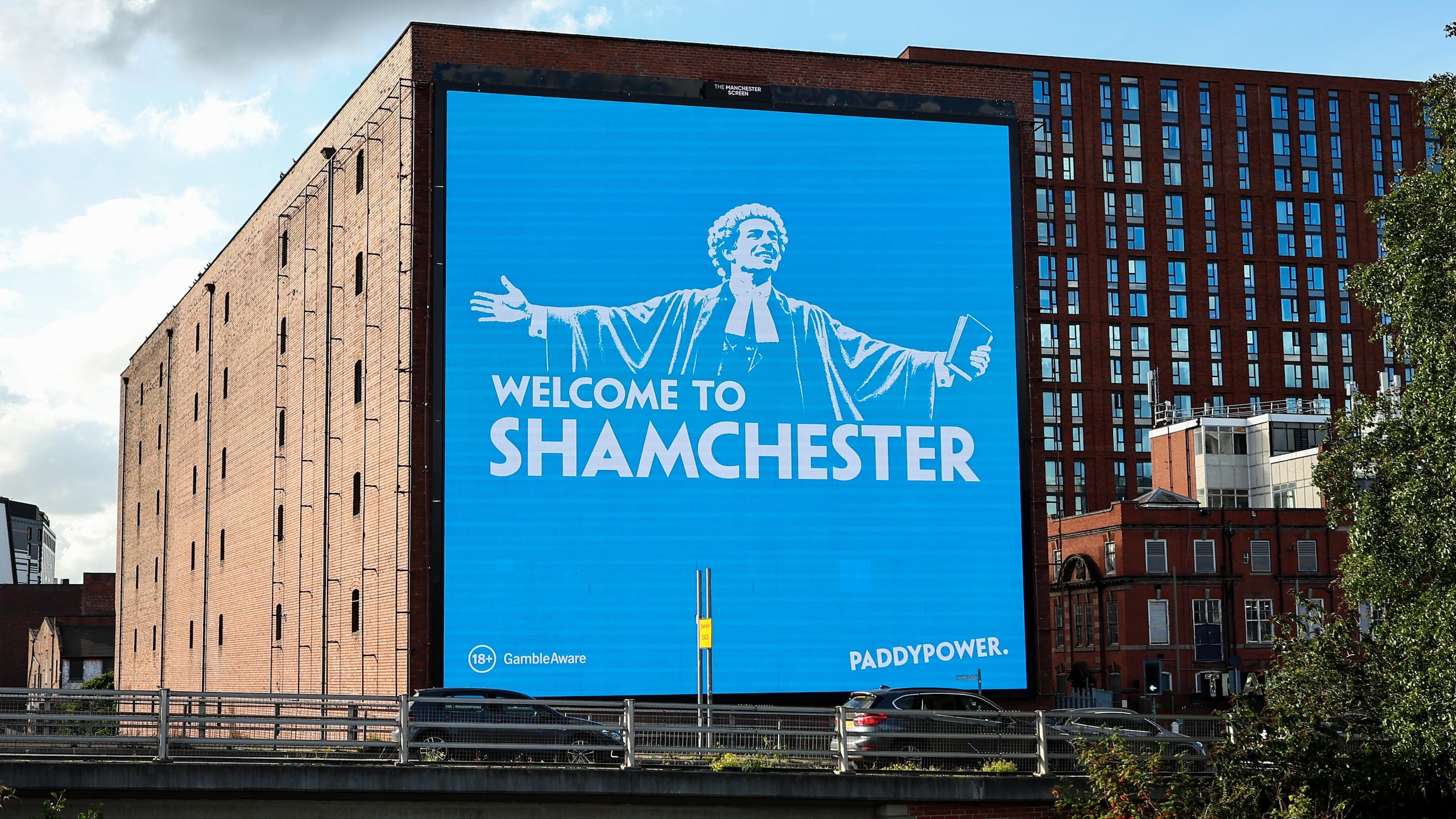
From Tebas and the LFP, it's an ambitious plan but not one without precedent: The NFL has been taking regular-season games abroad since 2007, while the NBA first played a regular-season game outside U.S. and Canada borders back in 1990 and has maintained an international presence since.

.jpg?w=2560)
The former now has the "NFL International Series;" the latter has the "NBA Global Games.”
So here we seek to understand the basis of that success and subsequently ask: Can La Liga replicate it?
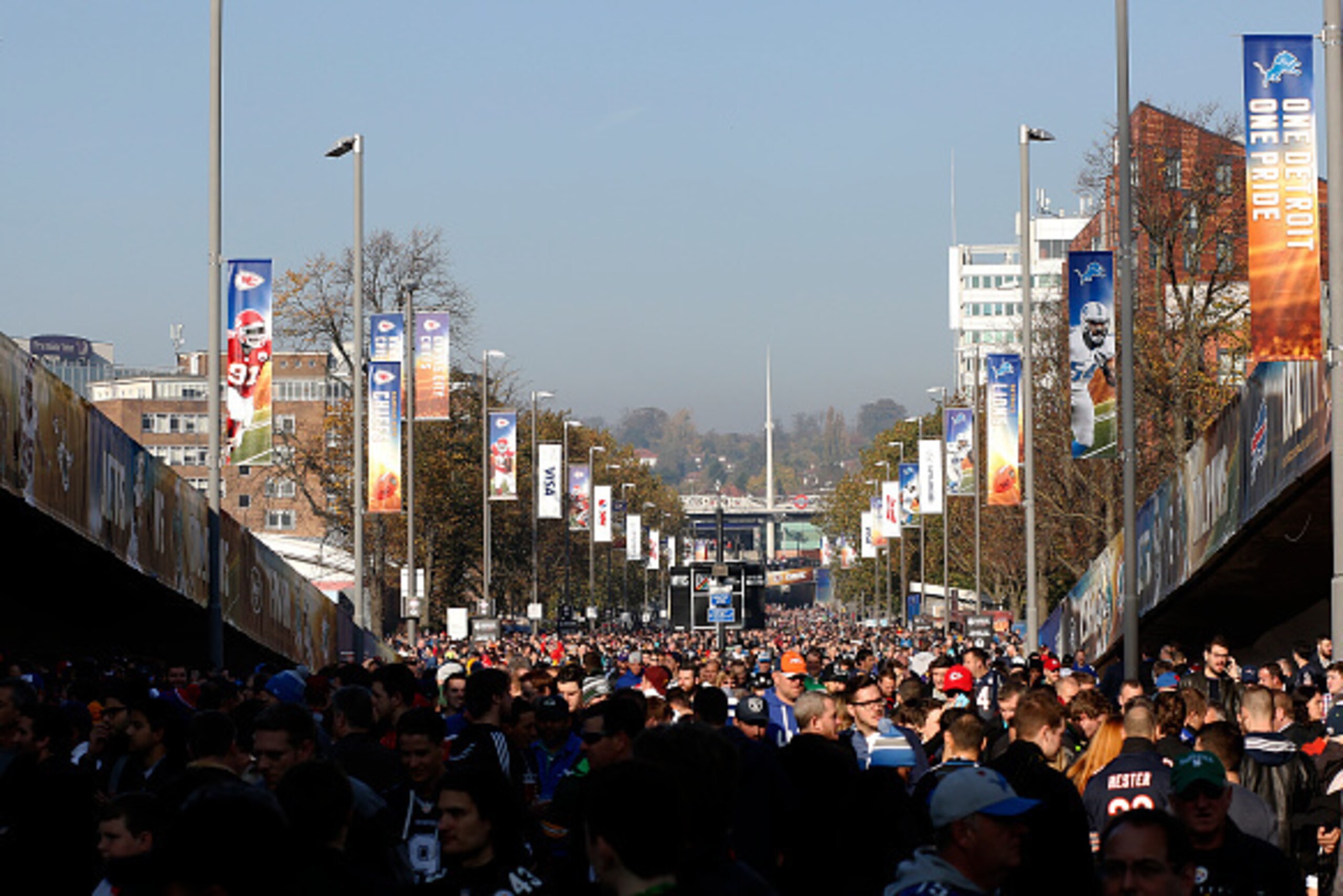
WEMBLEY STADIUM, LONDON—It's the home of English football, but today it isn't. Today, it's something else entirely, as though it's been transported in from a different world.
Outside, barely 100 metres from the turnstiles, a five-a-side game of the local code is being played—the only part of the scene that reminds you that this is still London—but surrounding the players on all four walls of the enclosed pitch are huge signs that read: "GRAB SOME BUDS."
And you know what? People are.
Budweiser is being sold at stalls practically everywhere outside Wembley, the queues at some nearly 100 people deep. Many who haven't purchased beer at these points are approaching the ground with cans bought elsewhere, thousands of pieces of shiny aluminium covered by the words "Bud Light" and "Coors Light."
Along the road from the Tube station to the stadium, the hotdog, nachos and burger vendors are abundant (frighteningly busy, as well), churros are available to wash them down, and in the background there are hundreds of gridiron balls flying through the air while the Red Hot Chili Peppers serve as a soundtrack.
It's as if a sort of stereotypical America has been transported in. But more than that, it's not just here—it's being genuinely embraced.
The NFL is, too.
"The first game was dreadful, but last week was really good," says a man in his 30s with a rather sophisticated London accent on the Tube on the way to the ground. This is his third trip to Wembley in a month, and he isn't the only one talking excitedly. Nor is his accent the only one to be heard.
Around him you can hear Scouse and Mancunian, Cockney and Brummie, Scottish and Welsh; the NFL's appeal is evidently broad, and this is a diverse bunch in lots of ways.
"Everyone is wearing a different colour top," says a lady to the rest of her family, both her sons wearing Seattle Seahawks jerseys to a game featuring the Detroit Lions and Kansas City Chiefs. And she's right; almost every top is a different colour.
On one carriage alone, the jerseys of 13 teams are being worn. On the next carriage along, it's the same story. By the time this writer has reached the gates, he's counted 27 of the league's 32, and the Nike store within close proximity is bursting with new fans buying replica jerseys of countless teams.
It was at this point that it became so obvious why this whole exercise works, why its appeal is so strong, and seconds later it was put into words. "We're not here to see Detroit, we're not here to see Kansas," says a fan in his mid-20s to two friends, summing it up perfectly, "we're here to see the NFL."
Bang on.
It's an important difference.
For those outside the U.S., particularly those with only a very general awareness of American Football, the first thing that comes to mind when you think about the NFL is the league as a whole. Its spectacle. Its environment. Its culture.
Immediately, you picture helmets and padding, you picture tackles and drives, hotdogs and beer, cheerleaders and music, razzle and dazzle. Even the logo. In the minds of most here, the NFL isn't defined by those who compete in it but instead by the greater product being sold. The encapsulating show.
And at Wembley, that's what they're getting.
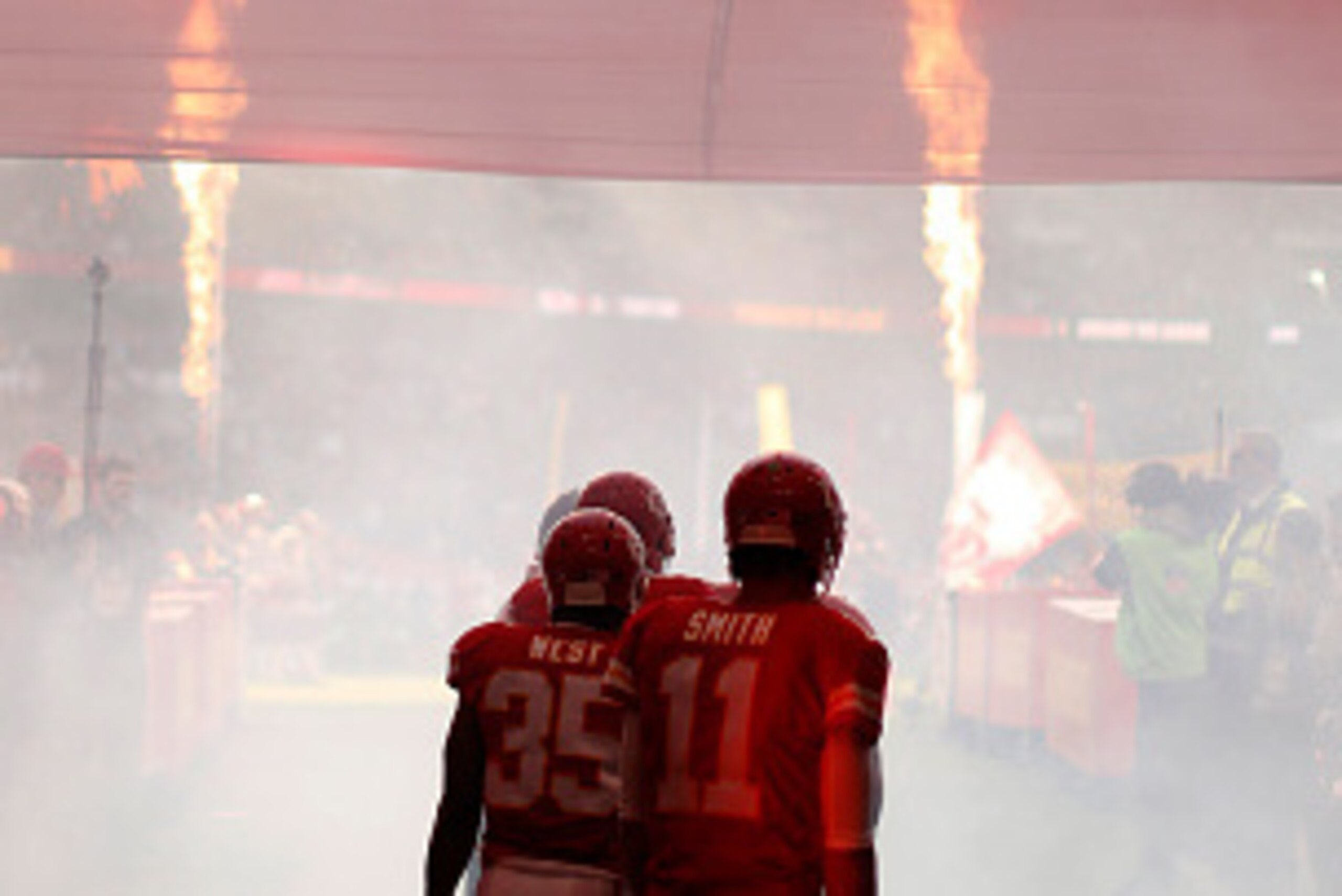
Inside the country's largest arena, more than 83,000 people are being served all of the above and more: There are flags, there are T-shirt cannons and there are dancers on bouncing stilts. There are flames, giant beach balls, social media screens, fans dancing in aisles, "Flex Cam" and an announcer who's instructing people to "MAKE SOME NOISE."
There's even a game being played, too.
Mr. 20-something, then—he was right: People aren't here to see these teams specifically (the fact that the teams are franchises rather than clubs inherently plays into this); they're here to see the NFL's product and all that it entails. And because the product is a largely manufactured one, its experience is easily transportable.
It's this that's the crucial part. And for La Liga, it's this that's a problem. A significant one.
Rather than being manufactured, European football's product is entirely organic. Without added fanfare, without constructed peripheral elements, without an accompanying "show," the game's matchday experience is completely conditioned by its local audience rather than by the product on offer.
Thus, transporting it becomes problematic: La Liga will never get close to replicating a raucous Mestalla in Florida; a boisterous Vicente Calderon can't be reconstructed in Shanghai. Football is what it is because of chants, because of segregated fans, because of the palpable edge that exists within a stadium's walls. You can take excellent sides like Valencia and Atletico Madrid abroad, but without anything close to the authentic environment, the product suffers. Badly.
It might lure an unfamiliar audience once, maybe twice, maybe even three times. But will it make that new audience a permanent one year on year? Can it convert them?
It's hard to believe so. Not to the extent that’s necessary for such an endeavour to be a perpetual success.
And there are other issues, too.

"La Liga needs to be more than Lionel Messi and Cristiano Ronaldo," said Tebas at September's Soccerex convention in Manchester. "We are selling this duel between them to the world, but we need to sell different concepts. We need to sell ourselves as an international brand."
Right now, La Liga isn't. Not in the way it needs to be.
Whereas the NFL—and perhaps to a lesser extent, the NBA—is defined by the collective, Spain's Primera Division has a two-player and two-team definition. To massive portions of an international audience (and whether this is strictly true or not doesn't matter), the league is Messi and Ronaldo, Barcelona and Real Madrid. Between them and on their own, they have a captivating show, but La Liga as a whole doesn't have a product it can take on the road.
Not like the NFL does.
Consider Sunday's encounter in London: Detroit owns the worst record in the league and Kansas City's isn't much better. Between them, they've won just a single Super Bowl, and Detroit has never appeared in one. As individual entities, they have limited global appeal, and yet it didn't matter: They sold out Wembley anyway.
Do you think La Liga could do that with Levante and Getafe? With Sporting Gijon and Granada? With Las Palmas and Espanyol? With Malaga and Rayo Vallecano?
It's a question that doesn't need answering.
Of course, at the heart of such an issue are the extreme inequalities that have existed within the Spanish game. While Barcelona and Real Madrid post annual revenue figures in excess of €600 million, the bulk of La Liga’s teams have an existence of survival rather than decadence.
Amid Spain's economic downturn, more than half of the teams in the country's top two divisions have passed through administration, the Spanish game is still plagued by debt, and Barcelona and Real Madrid continue to benefit from tax exemptions by being two of Spain's four clubs that aren't public limited companies and are instead run by members, or "socios."

Admittedly, such imbalances are beginning to be addressed and the league's complexion is altering itself somewhat, but significant change will take time and a total shift of landscape is unlikely.
Until now, La Liga's two giants have taken the majority of the league's broadcasting revenue because of a TV rights model that saw clubs negotiate with broadcasters individually rather than collectively. As recently as 2013-14, Barcelona and Real Madrid pocketed €140 million in revenue from such streams; Atletico Madrid and Valencia behind them took home roughly a third of that—less than relegated clubs in the Premier League—and don't even mention those at the bottom.
This season, however, the league's first collective deal was struck, and from 2016-17 such a process will be mandatory by law. Even though the country's pair of behemoths still dwarf those around them, football in Spain is slowly moving toward a more sustainable existence.
That, however, doesn't mean La Liga is ready to take itself on the road.
Along with the difficulty of attracting and maintaining an international audience for clubs who don't define the league, vast scheduling problems would need to be addressed.
With Tebas and the LFP having identified the U.S., China and Africa as "strategic locations" to take La Liga to, per ESPN FC's Dermot Corrigan, travel becomes a major issue. A stumbling block.
At the top, Barcelona and Real Madrid won't be willing to be La Liga's travelling show year after year, racking up the miles and the associated fatigue, compromising their own success both domestically and in the Champions League. These are teams, after all, that contest up to 60 games a season, with regular bouts of three outings in eight days throughout. Mid-season trips to China wouldn't help.
But it's not just the heavyweights who'd have concerns.
Unlike the NFL and NBA, La Liga is a place where relegation exists. For the likes of Levante, of Getafe, of any of the division's smaller clubs, venturing to Los Angeles or Beijing or Cape Town would temporarily place them at a disadvantage compared to their relegation-threatened rivals.
While the greater international exposure could prove beneficial, it's not if the performance-related issues associated with long-distance travel cost points. Cost league places. Cost relegation. Cost financial turmoil. Cost a slip toward non-existence in the cash-strapped Segunda Division.
Thus, even a rotation model by which different clubs are sent abroad each year would be difficult to implement, given that many clubs aren't guaranteed to be in the division one or two seasons from any given point and therefore could easily miss out on any long-term collective benefits.
Essentially, what good is it to them if La Liga is growing exponentially but they're not in it?
There's another problem, too.
At the time of writing, La Liga fans don't have exact dates and times for the games of Matchday 15. Right now, we're approaching Matchday 11; those still-to-be-scheduled matches are barely more than five weeks away. It's an LFP hallmark; future planning isn't a strong suit.
In contrast, the latest round of NFL games at Wembley in London were announced on November 6, 2014—11 months in advance. That's what's necessary to take such a product abroad.
And that's the problem for La Liga: In an organisational sense, it's not ready; in a scheduling sense, it's not ready; at the product level, it's not yet ready.
"We need to be present where our groups of fans are," said Tebas, and that's true. But there's a significant difference between being present and being successfully present.
La Liga has immense obstacles to overcome to be the latter.




.jpg?w=2560 "2 NFL Officials Suspended")


.jpg?w=2560 "Viral Rams Coach Vid 🖕")