
NHL 500: Ranking the Top 90 Right Wings
We recently introduced a new project, the NHL 500. So far, we have considered the league’s 50 best goalies and 150 best defencemen, and last time around we looked at left wings. Today we shift our focus to the starboard side of the ice.
What are we looking for here? We can explain it in one question: Taking into account the available evidence, what would a reasonable person expect from every player in the league in this coming year? Our analysis is primarily rooted in major-league work, which means we’re omitting new rookies. We don’t care about contracts or long-term trade value. We don’t care about what happened last year, except insofar as it predicts what will happen in the coming year.
Our process leans heavily on analytics, and involves creating a 100-point scale for every position. A grade of 50 indicates an average player at his position, with a higher total obviously being better. For the most part talent tends to cluster around the average, with elite players being relatively rare.
For forwards specifically, we’ve divided our analysis into three parts.
Offensive play (50 points) is exactly what it sounds like and is based primarily on point-scoring rates at even-strength and on the power play. Defensive play (30 points) is graded based on effectiveness in the defensive zone and on the penalty kill. Transitional play (20 points) is a category which traditionally has been undervalued but has taken on increasing relevance in modern analytic thought. For forwards, the majority of the score comes from how effective players were at carrying the puck over the offensive blue line. We also consider the work of these players on the backcheck
We hope you continue to enjoy our comprehensive assessment of the NHL’s players.
Other NHL 500 installments:
A Note on Sources and Methodology
1 of 51
There are just a couple of points that should be made about the process here. If you’d like to get to the list, feel free to skip this page; it explains how we’ve done what we’ve done and isn’t properly part of the list that follows. With that said, if you’re planning an angry comment reading this first may help.
First: The list which follows is heavily based on analytics. We use quality of competition metrics to get a feel for the kind of opposition each player faces, and we’ve taken into account items like starting a lot of shifts in the defensive zone. On-ice metrics like scoring chances and Corsi were consulted. We’ve also made use of manual tracking, particularly in the transitional play category
Statistics which follow come from several sources. War-on-Ice.com was our primary tool, providing numbers for every area of the game. The with or without you function on Puckalytics.com was extremely useful for identifying linemate effects, while hockey-reference.com was our go-to source for biographical information. Corey Sznajder’s incredible work manually tracking zone entries and zone entry defence was the primary source for information in that area.
Finally, while the list which follows is primarily built on analytics data, it is a subjective list. There is no consensus on exactly how various parts of the game should be weighed, or how much linemate, competition and team effects influence a player’s results. We’ve done our best to consider as many factors as possible and balance them correctly, but at the end of the day this is one interpretation and should not be mistaken for the consensus view of the hockey analytics community.
In other words, the list which follows is our own, as are any mistakes therein. We’ve also opted for a cautious approach; we’re trying to responsibly forecast the most likely outcomes, and so a breakout candidate who succeeds will be underrated on this list, as will any goalie that collapses entirely. There’s lots of room for reasonable people to disagree with these projections.
Nos. 90-86
2 of 51
90. Derek Dorsett, Vancouver Canucks
Offensive Play: 16/50; Defensive Play: 18/30; Transition Play: 8/20
In seven NHL seasons, Dorsett has scored more than the average major league forward just a single time in five-on-five play, and that was during a season in which he appeared in just 24 games. The value he does have is primarily defensive and physical; he kills penalties, starts more than his share of shifts at the defensive end of the rink and is always willing to land a hit.
89. David Clarkson, Columbus Blue Jackets
Offensive Play: 17/50; Defensive Play: 16/30; Transition Play: 10/20
Clarkson is one of the most spectacularly bad free-agent signings in recent memory. He recorded just 1.3 points/hour at evens in the year he earned his massive overpay from Toronto and in two seasons since has yet to match it. His power-play scoring, never all that good, has evaporated entirely, and he doesn’t kill penalties at all.
88. Curtis Lazar, Ottawa Senators
Offensive Play: 16/50; Defensive Play: 17/30; Transition Play: 10/20
So the big thing with Lazar is that he didn’t score at all last year. He was under 1.0 points/hour at even strength last season, which is just a wretched number for a non-developing forward, but Lazar is only 20 years old and did put up reasonably good numbers at the junior level, so we’re comfortable projecting a little bit here. More importantly, he has defensive zone value in the here and now; he even saw some time on the penalty kill as a rookie and projects as a top-level defensive player in his prime.
87. Jean-Gabriel Pageau, Ottawa Senators
Offensive Play: 18/50; Defensive Play: 16/30; Transition Play: 10/20
An undersized forward who can play either centre or the wing, Pageau’s one of the rare 5’9” players who looks like he might make it in the NHL despite underwhelming scoring totals. He did make strides offensively last season, notching 10 goals and 19 points in 50 games, but he also contributes in other areas, including the penalty kill.
86. J.T. Brown, Tampa Bay Lightning
Offensive Play: 14/50; Defensive Play: 20/30; Transition Play: 11/20
A random observer could be forgiven if his initial impression after looking at J.T. Brown’s shooting percentage was to conclude that the young winger is in fact a defenceman. Brown has seven career goals on 200 shots, for an awful shooting percentage mark of just 3.5 percent. Fortunately he has defensive value; Bolts coach Jon Cooper uses him both on the penalty kill and in shifts starting in the Lightning end at even strength.
Nos. 85-81
3 of 51
85. Josh Jooris, Calgary Flames
Offensive Play: 19/50; Defensive Play: 18/30; Transition Play: 8/20
The undrafted and late-blooming Jooris pushed his way into the NHL last season and was one of several inexperienced Flames forwards to distinguish himself. His five-on-five scoring rate was pretty weak; 1.3 points/hour is plainly bottom-six country, and he doesn’t have any professional history that suggests he’s going to set the world aflame offensively. What he does do is contribute on the other side of the puck, including on the penalty kill where he claimed a full-time job last season.
84. Dale Weise, Montreal Canadiens
Offensive Play: 24/50; Defensive Play: 15/30; Transition Play: 7/20
One of the rarely acknowledged truths about Weise, at least among analytics types, is that he’s been an awfully good scorer since he came to Montreal. We aren’t talking anything record-breaking and certainly nothing on the power play, but for two consecutive seasons now Weise has outscored the NHL forward average at even strength. The trouble is that while he knows what to do once he gets to either end of the rink, he’s wretched at playing a puck-possession game, meaning he spends too much time at the wrong end of the ice, even if he’s doing the correct things there.
83. Steve Downie, Arizona Coyotes
Offensive Play: 23/50; Defensive Play: 13/30; Transition Play: 10/20
It used to be that Downie was equal parts irretrievably undisciplined and promising offensively, but unfortunately the scoring has faded away with time and injury while the penchant for taking stupid penalties continues unabated. He has value as a physical presence and as a better-than-average bottom-six scorer, but much of that value is mitigated by the way he constantly puts other teams on the power play.
82. Steve Bernier, New York Islanders
Offensive Play: 21/50; Defensive Play: 15/30; Transition Play: 10/20
A half-decade had passed since the last time Bernier was a double-digit goal scorer, but he matched career highs in both goals (16) and points (32) in 2014-15, doing so in just 67 games for an offensively challenged New Jersey Devils team. Before getting too excited, though, it’s worth remembering that he’s 30 years old and that this is the first time since 2009-10 that he’s been even NHL-average as a scorer. It’s a nice feather in his cap, but it isn’t the kind of thing that should dramatically change expectations for the player.
81. Lauri Korpikoski, Edmonton Oilers
Offensive Play: 18/50; Defensive Play: 19/30; Transition Play: 10/20
The days of Korpikoski being an even-strength threat are long past now; he’s been below the forward average for three seasons now. He had a weirdly successful run on the power play last year, which he is unlikely to sustain, but his real value these days is defensive. He’s a solid penalty-killer and can be trusted to start shifts in his own end of the rink.

Nos. 80-76
4 of 51
80. Melker Karlsson, San Jose Sharks
Offensive Play: 22/50; Defensive Play: 15/30; Transition Play: 10/20
There aren’t many landings softer than the one Karlsson found last season playing next to Joe Thornton and Joe Pavelski. The rookie forward scored at a decent rate at even strength, but it’s worth placing a mental asterisk next to his work owing to his linemates. Also worth noting is this fact: His Corsi percentage fell from 59.0 with Pavelski to just 45.2 when taken off that top line. We like a lot of what he did last year, but we need to see more to be convinced.
79. Jiri Sekac, Anaheim Ducks
Offensive Play: 23/50; Defensive Play: 14/30; Transition Play: 10/20
It’s a little early to have a firm idea of Sekac’s offensive potential; he could blossom into a top-six forward, or he could wash out of the majors altogether. What he showed last season was that he was capable of scoring at what was basically an NHL-average rate even when consigned to a depth role. He’s only 23 years old, and last season was his first in North America; there’s definitely some promise here.
78. David Jones, Calgary Flames
Offensive Play: 20/50; Defensive Play: 17/30; Transition Play: 10/20
Jones was a slightly above-average even-strength scorer in the prime years of his career, so it’s no big shock to see him trending at just below average the past few seasons. He’s a non-factor on the power play, and though he’s spent some time killing penalties in previous seasons with Colorado, he’s only OK while short-handed.
77. Beau Bennett, Pittsburgh Penguins
Offensive Play: 22/50; Defensive Play: 14/30; Transition Play: 12/20
Last season might have been a breakout campaign for Bennett, but his scoring touch let him down rather badly; after two seasons in the double digits his shooting percentage fell to a miserable 4.9 percent. That sort of thing happens sometimes, though the timing could not have been worse for the 23-year-old Bennett, who is still trying to establish himself as an NHL regular. We like his scoring potential, but he needs to get and stay healthy and get and stay productive in a hurry or risk being discarded.
76. Erik Condra, Tampa Bay Lightning
Offensive Play: 18/50; Defensive Play: 20/30; Transition Play: 10/20
For the second time in his career, Condra topped the 20-point mark last season, and that alone should make it clear that his offensive game is not bullet point No. 1 on his resume. With that said, he’s an underrated offensive threat, coming in just a touch below the league average at even strength in three of his last four seasons. Besides that, he’s a very good defensive forward, not only killing penalties but taking on tough zone starts at even strength.
Nos. 75-71
5 of 51
75. Calle Jarnkrok, Nashville Predators
Offensive Play: 20/50; Defensive Play: 17/30; Transition Play: 11/20
A budding two-way forward, Jarnkrok doesn’t wow in any one area, but he contributes all over the ice. His offensive game could still use some work; at first blush he didn’t excel on the power play in the NHL, and this past season saw him score an unconvincing 1.3 points/hour in five-on-five play. With that said, his on-ice chance numbers were excellent in his rookie year and he’s already found a role on the Preds’ penalty kill.
74. Nail Yakupov, Edmonton Oilers
Offensive Play: 26/50; Defensive Play: 11/30; Transition Play: 11/20
All the potential that got Yakupov drafted first overall in 2012 is still mostly just potential. He’s capable enough in the offensive zone, having posted decent scoring totals in all disciplines over his NHL career (albeit ones that have faded since his rookie year), but he remains a train wreck in the defensive zone and his middling output isn’t nearly enough to compensate. He needs a big year like few other players in his age range.
73. Elias Lindholm, Carolina Hurricanes
Offensive Play: 23/50; Defensive Play: 15/30; Transition Play: 10/20
Don’t be fooled by a 39-point effort in 2014-15, which at first blush might look like a breakout performance. At even strength, Lindholm has yet to crack 1.2 points/hour, a lousy figure which in other circumstances would have him bound for the fourth line. He’s just 20 years old, and his physical skills are obvious, so it would be crazy to write him off—in fact, we have projected modest growth—but he still needs to figure out how to impact a game offensively at five-on-five.
72. Colton Sceviour, Dallas Stars
Offensive Play: 23/50; Defensive Play: 15/30; Transition Play: 11/20
Injuries and poor play above him opened up a world of opportunity to Sceviour last season, and he didn’t cash in. He’s a not-bad two-way player, a guy who generally does pretty well by the shot metrics and scores at a reasonable rate for the ice time he gets. One of the big problems he faces is that he’s already 26 and was drafted back in 2007; if he doesn’t grab a job soon, he risks being dismissed as a fringe NHL’er.
71. Mike Santorelli, Anaheim Ducks
Offensive Play: 21/50; Defensive Play: 16/30; Transition Play: 12/20
Santorelli’s numbers have bounced around a little bit the last few years, but 2014-15 marked the second consecutive year in which he scored at a league-average or better rate at even strength—this despite a dive in production following a move to Nashville at the trade deadline. He’s a decent two-way player who provides respectable production from the bottom six.
Nos. 70-66
6 of 51
70. Kyle Palmieri, New Jersey Devils
Offensive Play: 26/50; Defensive Play: 13/30; Transition Play: 10/20
An undersized scorer (5’10”, 185 lbs) with a reputation for middling defensive play, Palmieri nevertheless has one greatly redeeming virtue: He can score at even strength. Indeed, even with the caveat that he at times played on Anaheim’s top line, his numbers from 2012 to 2014 are remarkable, with Palmieri topping 2.0 points/hour in both seasons. He did fall off a bit last year, and he hasn’t got a long track record on the power play, but this looks like a player who just might surprise if given an opportunity offensively.
69. Shane Doan, Arizona Coyotes
Offensive Play: 22/50; Defensive Play: 18/30; Transition Play: 10/20
The age of Doan being a leading offensive light for the Winnipeg/Phoenix/Arizona Coyotes franchise is at an end. He fell to just 1.3 points/hour at even strength last season, and that was just the latest (albeit most depressing) data point in a long slide offensively. He can still chip in occasionally and is competent defensively, but he’s also 39 years old. The end is clearly in sight now.
68. Tomas Jurco, Detroit Red Wings
Offensive Play: 23/50; Defensive Play: 15/30; Transition Play: 12/20
The expectation is that at some point the 22-year-old Jurco will be an offensive threat, though three goals in his sophomore campaign won’t have convinced many (though any reasonable analysis will note his 3.3 shooting percentage as a probable aberration). However, in terms of overall points/hour, he’s already scoring at a respectable clip even with the shooting percentage issue, and the shot metrics like him a good deal.
67. Jannik Hansen, Vancouver Canucks
Offensive Play: 21/50; Defensive Play: 19/30; Transition Play: 10/20
Hansen has some specific limitations. He’s never, for example, likely to become a power-play ace. After some very encouraging offensive work from 2011-13 at what is likely to be his peak years offensively, Hansen has stepped back at evens to the point where he’s just an average to slightly above-average offensive producer. But that’s pretty good for a defensively responsible winger and a guy who can kill penalties; third lines across the league are crying out for players exactly like this.
66. Blake Comeau, Colorado Avalanche
Offensive Play: 22/50; Defensive Play: 17/30; Transition Play: 11/20
After three seasons of just slightly below-average even-strength scoring, Comeau (6’1”, 202 lbs) enjoyed a major revival, tallying 2.0 points/hour for the Penguins in 2014-15. He’s reasonably big, reasonably physical and competent on the penalty kill; there’s a lot to like in that package for any team looking for a bottom-six forward.
Nos. 65-61
7 of 51
65. Patrick Eaves, Dallas Stars
Offensive Play: 23/50; Defensive Play: 19/30; Transition Play: 9/20
Injuries and unspectacular play had largely derailed the career of Eaves until last season, when in just 47 games he posted 27 points. It was the highest point total he’d managed since 2007, and in terms of points/game 2014-15 was the best season of Eaves’ career. However, it’s reasonable going forward to expect Eaves’ value to his team to be primarily defensive; his history in recent years suggests he’s a below-average scorer, and at the age of 31 we’re getting pretty late in his career for road to Damascus moments.
64. Lee Stempniak, New Jersey Devils
Offensive Play: 22/50; Defensive Play: 18/30; Transition Play: 11/20
Stempniak notched at least 20 points at evens for the ninth consecutive season in 2014-15 and for the eighth time in those nine seasons scored at what is a pretty respectable second-line rate at even strength. He’s not good on the power play but is on the penalty kill. As a third-line wing, many teams are doing much, much worse.
63. Teddy Purcell, Edmonton Oilers
Offensive Play: 22/50; Defensive Play: 16/30; Transition Play: 13/20
Watch Purcell play and the thing that stands out is that he’s slow; he has trouble keeping up to the play offensively and he has trouble getting back defensively if he’s caught. When he gets to either zone, he’s not bad; defensively the puck tends to stick to him, and while his scoring totals have fallen off in recent years, he’s still capable enough from the blue line in.
62. Brad Boyes, Toronto Maple Leafs
Offensive Play: 26/50; Defensive Play: 15/30; Transition Play: 10/20
The one area where Boyes really struggled in Florida was the power play. He’s been a good fit (and, at times, a less good fit) in other NHL cities, but after over two years with the Panthers, he never quite clicked. He remains an above-average scorer at even strength, as he has been every season of his career save for a disastrous run in 2011-12 with the Sabres. He’s only middling in other areas of the game, but that offence has value.
61. Jimmy Hayes, Boston Bruins
Offensive Play: 26/50; Defensive Play: 14/30; Transition Play: 11/20
After a few tough years in Chicago, the mammoth Hayes had a breakout performance of sorts in Florida last season. His even-strength scoring was nothing to write home about—1.5 points/hour is about average and isn’t even the best mark of his career to date—but he did get a job on the power play and fared pretty well for himself. There is always going to be room in the league for 6’6” guys who can score a bit.
Nos. 60-56
8 of 51
60. Johan Franzen, Detroit Red Wings
Offensive Play: 28/50; Defensive Play: 15/30; Transition Play: 9/20
Franzen’s decline is obvious when one looks at his even-strength numbers. He’s topped 2.0 points/hour just once since 2009-10, and he hasn’t even been much better than average over the last three seasons. His transitional play (and possession numbers) have weakened considerably over that span, too. However, he’s still awfully good on the power play, where he picked up fully half his points last season. It’s only one dimension, but it’s an ice dimension to bring.
59. Chris Stewart, Anaheim Ducks
Offensive Play: 27/50; Defensive Play: 14/30; Transition Play: 11/20
In three of his past four seasons, Stewart has hovered around the NHL average in terms of five-on-five scoring, and as the exception was the lockout-shortened 2013 season, we should view it with a measure of suspicion. He’s shown some ability to contribute on the man advantage—and of course his physical game is formidable—but he needs to score more than he has to outweigh deficiencies in discipline and on defence.
58. Justin Fontaine, Minnesota Wild
Offensive Play: 26/50; Defensive Play: 16/30; Transition Play: 10/20
Although Fontaine’s overall point totals aren’t that impressive, the undersized winger (5’10”, 175 lbs) looks much better when one drills down to his scoring rates. After scoring 1.5 points/hour as a rookie, he rocketed up to 2.3 points/hour last season; on a per minute basis that’s almost as good as Corey Perry managed in 2014-15. He hasn’t been given any kind of opportunity to expand his game to the power play, although last season did see him earn a cameo on the penalty kill. Our only concern is that he’s already on the wrong side of 25, so while he may get opportunities to show more on special teams, he’s not likely to develop much further offensively at five-on-five.
57. Tommy Wingels, San Jose Sharks
Offensive Play: 23/50; Defensive Play: 19/30; Transition Play: 10/20
We seem to have reached the limit of Wingels’ scoring potential; he topped out at 1.6 points/hour at five-on-five in 2013-14 before falling down to 1.3 points/hour last season; he doesn’t produce enough to deserve a regular spot in the top-six at evens. He has carved out a niche on the power play with passable scoring rates there, but his real value is on the penalty kill.
56. Troy Brouwer, St. Louis Blues
Offensive Play: 23/50; Defensive Play: 19/30; Transition Play: 10/20
Last season saw Brouwer post his best even-strength scoring rate since 2007-08. Unfortunately, he didn’t exactly reach dizzying heights; his 1.6 points/hour was only the tiniest bit better than we would expect of the average NHL forward, and as it represents a seven-season high, it’s fair to say that Brouwer doesn’t contribute enough to deserve a job on a scoring line at evens. He can help on both special teams, though the Blues should probably be focused on the penalty kill rather than power play, given the way Brouwer’s production has dropped off in the latter field even with the potent Capitals.
Nos. 55-51
9 of 51
55. Dustin Brown, Los Angeles Kings
Offensive Play: 20/50; Defensive Play: 22/30; Transition Play: 11/20
Somebody killed Brown’s offensive game. Once a reliable 50-point man, the last two seasons have seen his production scaled back to 50 percent of its former levels. He’s very good defensively, excellent at drawing penalties and the kind of physical presence any team would be happy to have, but for three seasons now his scoring rates have looked more fourth line than first line.
54. Valeri Nichushkin, Dallas Stars
Offensive Play: 22/50; Defensive Play: 15/30; Transition Play: 16/20
The story of last season was hip surgery, which, as reported by Mike Heika of the Dallas Morning Newsin November, addressed a problem that had slowed him down early in the year and unfortunately ultimately cost him nearly the entire 2014-15 campaign. We’re bullish on his long-term potential, but losing a year at this age is a tough thing and we expect there may be an adjustment period as Nichushkin finds his legs again.
53. Kevin Hayes, New York Rangers
Offensive Play: 30/50; Defensive Play: 13/30; Transition Play: 10/20
Arguably the only thing keeping Hayes from ridiculous numbers last season was ice time. He scored very well on the power play in a tiny sample, and he posted 2.3 points/hour at evens as a rookie. Of course, it’s worth noting how Rangers coach Alain Vigneault deployed him, carefully inserting him into minutes where he had a chance to succeed. He’ll certainly take on a bigger role this year.
52. P.A. Parenteau, Toronto Maple Leafs
Offensive Play: 25/50; Defensive Play: 16/30; Transition Play: 12/20
The real secret to Parenteau’s struggles the last two years is the power play. At even strength he’s still an above-average scorer, a label that has been true for a half-decade now. The trouble is that after a career of strong power-play work, he was miscast both in 2013-14 in Colorado (1.3 points/hour) and in 2014-15 in Montreal (1.5 points/hour). That’s a quick route to the doghouse for any offensive player, regardless of the work he’s still doing at evens.
51. Nikolay Kulemin, New York Islanders
Offensive Play: 24/50; Defensive Play: 19/30; Transition Play: 10/20
Kulemin is a nicely well-rounded player who can step into a scoring role if necessary but whose natural role is probably a checking unit. He’s been killing penalties since his second year in the league and combines attention to defensive detail with a 6’1”, 225-pound frame. His even-strength scoring rates bounce around a little but generally stick close to the league average. He’s a quality two-way forward.
Nos. 50-46
10 of 51
50. Justin Abdelkader, Detroit Red Wings
Offensive Play: 25/50; Defensive Play: 20/30; Transition Play: 8/20
Ever wonder what a power-play opportunity can do for a player? Look no further than Justin Abdelkader. He hit a career-high 44 points in 2014-15, double all but one of his previous seasons, and the really crazy thing is that he did it with only the tiniest improvement at five-on-five (he went from 1.5 to 1.6 points/hour). His numbers on the man advantage were good, but not mind-blowing; 4.3 points/hour is pretty close to average, though at nearly three minutes of ice time per game, those points add up in a hurry. That’s how an admittedly fine checking line forward starts posting 40-point seasons.
49. Brian Gionta, Buffalo Sabres
Offensive Play: 22/50; Defensive Play: 20/30; Transition Play: 11/20
The last time Gionta was a clear difference-maker offensively was 2008-09 when he was playing for New Jersey. Since then he’s seen a slow decline in his five-on-five scoring rates, culminating in last season’s 1.2 points/hour performance with the Sabres. At this point in his career he’s an even-strength checker who can contribute on both special teams.
48. Michael Grabner, Toronto Maple Leafs
Offensive Play: 23/50; Defensive Play: 19/30; Transition Play: 12/20
We don’t ding for health problems on this list, and Grabner has missed his share of games the last two seasons, playing just 98 out of a possible 164. When he’s in the lineup, he’s useful in a variety of ways. He’s an above-average five-on-five scorer (the reason his overall totals never excite is that his career high in power-play goals is just two) and a reliable penalty-killer. He’s blessed with first-rate speed.
47. Alex Semin, Montreal Canadiens
Offensive Play: 26/50; Defensive Play: 14/30; Transition Play: 14/20
Is there a more controversial player in the NHL than Alex Semin? His talent is undeniable; this is a player who scored 2.2 points/hour or better in five consecutive seasons not all that long ago and who was once a potent piece of Washington’s power play. His stunning offensive collapse since signing a long-term deal in Carolina gave credence to complaints about his character (and breathed life into the hackneyed “enigmatic Russian” stereotype). At his best he’s a strong possession player and a brilliant finisher whose defensive problems are best overlooked; at his worst he’s the league’s favourite whipping boy. He’s on a one-year deal and facing the prospect of losing his NHL career should inspire a strong performance from him in 2015-16.
46. Ales Hemsky, Dallas Stars
Offensive Play: 27/50; Defensive Play: 14/30; Transition Play: 13/20
A lot went wrong for the creative Hemsky last season. He failed to carve out a role on the power play, posting career lows in a category that constitutes a good chunk of his bread and butter. He managed just an average scoring rate at five-on-five, which is death for a player who doesn’t contribute a lot defensively. Based on his past work, we expect that the 32-year-old can rebound to some degree, but it needs to happen fast.
Nos. 45-41
11 of 51
45. Joel Ward, San Jose Sharks
Offensive Play: 25/50; Defensive Play: 20/30; Transition Play: 9/20
We’re a little worried about what’s going to happen to Ward offensively away from Washington. Let’s start by acknowledging off the bat that he’s a fine two-way player, a rugged and defensively responsible winger who is a credit to his team. His offence the last few years, however, has been heavily impacted by playing on the ridiculous Alex Ovechkin power play in Washington. He also fell to just 1.0 points/hour at evens last year after a very strong run in 2013-14; that’s in line with his time in Nashville when he wasn’t much of an offensive threat.
44. Cam Atkinson, Columbus Blue Jackets
Offensive Play: 25/50; Defensive Play: 17/30; Transition Play: 12/20
It’s unfair to say that Atkinson needs to score in bunches to hang on to an NHL job; after all, he’s capable enough on the defensive side of things that he even got penalty-kill time last season. However, he could certainly stand to improve on his work of the last two seasons, which has seen him hover around 1.5 points/hour at even strength and come in south of 3.5 points/hour on the power play. A 5’8” forward, even an intelligent and defensively responsible one, can’t afford to spend too much time hanging around the league average on offence.
43. Ryan Callahan, Tampa Bay Lightning
Offensive Play: 24/50; Defensive Play: 20/30; Transition Play: 10/20
The trade that brought Callahan to the Bolts appears to have revived his play in some areas. After three consecutive years as an average offensive player at evens and a below-average scorer on the power play, Callahan bounced back to a very respectable 1.9 points/hour at even strength and even managed to improve slightly on the man advantage. It’s likely that this is a temporary bounce—at the age of 30, Callahan can mostly look forward to a slow decline—but in concert with his obvious defensive strengths it makes him a very valuable player in the here and now.
42. Matt Read, Philadelphia Flyers
Offensive Play: 22/50; Defensive Play: 21/30; Transition Play: 11/20
Read’s offence, weirdly, seems to have peaked in his rookie year. After debuting at better than 2.0 points/hour, he has seen it slip year after year until 2014-15, when for the first time it dropped below the NHL average. He’s not good on the power play, either. However, Read brings exceptional defensive value to the table; he can be trusted in any situation and against any opponent, and he is a foundation piece on the Flyers’ penalty kill.
41. Nino Niederreiter, Minnesota Wild
Offensive Play: 27/50; Defensive Play: 16/30; Transition Play: 11/20
There are a lot of lessons that can be taken from Niederreiter’s unorthodox development path—a guy who scored one goal in 55 games just two season ago hitting 24 last year has to be a teachable example—but that’s not what this is about. Still only 23 years old, Niederreiter is developing nicely and hit average points/hour totals at both even strength and on the power play last season. He’s back on track with the Wild after some ugly moments in New York.
40. Craig Smith, Nashville Predators
12 of 51
Offensive Play
For the second consecutive season, Smith topped 2.0 points/hour at even-strength, which is a respectable achievement and clearly denotes him as a top-six forward at five-on-five. His power play scoring fell off a little, despite increased ice-time, but as it’s the first time in four years that his numbers have fallen below what we’d like to see we’re inclined to dismiss that as an aberration.
Defensive Play
Smith has yet to earn minutes on Nashville’s penalty kill, but he’s not bad in his own end of the rink. He has a nice combination of speed, reach and strength which makes him better than average at winning puck battles. Discipline is at times an issue; he’s prone to unnecessary infractions.
Transition Play
He may be porridge at the defensive blue line, but Smith does very well when taking the puck through neutral territory. He prefers to carry it in rather than opting for the simpler (and less rewarding) dump-and-chase play; well over 50 percent of his entries in 2013-14 saw the Predators retain puck possession.
Overall
Smith is a nice option for Nashville’s coaching staff. He’s versatile enough to play centre or right wing, he’s offensive enough to help a line in that regard and he’s far from a liability defensively.
39. Drew Stafford, Winnipeg Jets
13 of 51
Offensive Play
As encouraging as Stafford’s late season performance with Winnipeg was, it’s going to take a bit of time before we forget about his last few seasons in Buffalo. Stafford got close to 2.0 points/hour at even strength in 2014-15 for the first time in three seasons, which was good but doesn’t erase less impressive performances in preceding years, and he’s still not a plus player on the power play. We’re hopeful that he’s turned a corner, but we need to see a little bit more.
Defensive Play
For three seasons now Stafford has been a regular on Buffalo’s penalty kill, and while his defensive play can slip at times, he’s big and strong and knows where to go on the ice.
Transition Play
Strong work at the offensive blue line is undermined somewhat by poor numbers at the defensive blue line. More than 50 percent of Stafford’s zone entries are carry-ins, but he’s rarely involved in breaking plays up entering his own end of the ice.
Overall
This ranking may ultimately prove to be a little low, and Jets fans who only saw a lovely run in Winnipeg may be scratching their heads. The trouble is that with Stafford, a 20-game run might mean he’s turned a corner and is about to get back to his more productive days, or it may just mean he had 20 hot games and the next 20 won’t be nearly so hot. We’ll give him a big bump next year if all goes well this season in Manitoba.
38. David Perron, Pittsburgh Penguins
14 of 51
Offensive Play
At even strength, Perron is an above-average scorer, and at times in his career he’s even been a good one. He topped 2.0 points/hour three times in his first four full seasons with St. Louis, but the last three years have seen him fall to the 1.6-to-1.9-points/hour range—good but not great. He’s never been especially good on the power play; his scoring rates there tend to be fine but not more than that.
Defensive Play
Perron came up with the St. Louis Blues, first under Andy Murray and later under Ken Hitchcock; no forward survives such coaching without at least picking up the basics. Having said that, Perron is at times prone to undisciplined penalties and could be more diligent about picking up his checks in the defensive zone.
Transition Play
Perron is just a touch better than average at the offensive blue line, and he’s unremarkable in terms of breaking up plays at the defensive end of the neutral zone.
Overall
A really nice complementary scorer who can play either side of the ice, Perron plays a tenacious physical game, holds his own defensively and chips in enough offence to survive in a top-six role. At age 27, there’s no reason to expect a significant downturn in the near future.
37. Joffrey Lupul, Toronto Maple Leafs
15 of 51
Offensive Play
Lupul’s offensive track record at even strength and on the power play is an interesting read because of the differences between the two. At five-on-five, Lupul has posted average points/hour numbers in back-to-back seasons, and while there may be other factors involved, it’s fair to say the 32-year-old isn’t what he once was. On the power play, Lupul has largely been above-average, but throughout his career he’s had seasons when things just fell apart—in Edmonton, in Anaheim in 2009-10 and in Toronto last year—and it’s a reasonable guess that this latest blip is another aberration rather than an indicator that he’s done as a difference-maker with the man advantage.
Defensive Play
Although he’s not likely to win a Selke Trophy anytime soon, Lupul’s defensive game has improved with age and experience to the point where it’s not a notable weakness. Last season even saw him starting a surprising percentage of his shifts in the defensive zone.
Transition Play
It may come as a surprise to those who only saw Lupul early in his career, but these days much of his best work is done at the defensive blue line. In 2013-14, he broke up 30 percent of all opposition entries he was involved with and forced dump-ins even more frequently. Combine that with a slightly above-average game at the offensive blue line, and he scores well in this category.
Overall
This is a projection, not an assessment of what in many ways was a disastrous year for both Lupul and the Leafs. The departure of Phil Kessel has opened up a gaping hole in Toronto’s attack, and there will be opportunity here for any player capable of seizing it. We think it’s reasonable to expect Lupul to bounce back, particularly on the power play, and so we’ve ranked him here.
36. David Pastrnak, Boston Bruins
16 of 51
Offensive Play
He never really clicked on Boston’s power play, but Pastrnak showed glorious potential at even strength. After scoring better than a point per game as an 18-year-old in an early-season AHL cameo, Pastrnak came to the NHL and scored 2.5 points/hour the rest of the way for Boston. That’s elite five-on-five production as an 18-year-old, and while it would be ridiculous for any player that age, it’s particularly so given that Pastrnak wasn’t even drafted until 25th overall the previous spring.
Defensive Play
Although he made significant strides in a single year, Pastrnak didn’t earn great defensive marks as a drafted prospect and clearly still has a lot to learn at the NHL level. A big part of the problem is simply having the size and strength to win puck battles; that, along with own-zone polish, will come with age and experience.
Transition Play
Of all Pastrnak’s tools, skating might be the most dynamic, and that’s one of the most important tools in either rushing the puck offensively or getting back in time to make a play defensively. He’s sneaky with the puck and in time should be a top zone-entry player.
Overall
We are reluctant to push Pastrnak any higher than this, just because lots of rookies hit a bit of a wall in their second years, and in Pastrnak’s case he’s also going to have to deal with a team around him that got weaker in the offseason. Long term, though, the sky is the limit; very, very few players can do what he did last season, and if he continues the way he’s started, he’ll be an elite right wing in no time flat.
35. Jakob Silfverberg, Anaheim Ducks
17 of 51
Offensive Play
We’re still guessing a little bit as to Silfverberg’s true level of offensive ability. He got power-play time in the 2015 postseason and made hay with it, but he hasn’t been afforded a lengthy audition on the man advantage during the regular season, at least not yet. He scores well at even strength; all three of his NHL seasons to date have seen him fall somewhere between 1.5 and 2.0 points/hour, which is above average and potentially a good deal better than that.
Defensive Play
Silfverberg entered the league as a competent checking forward, and he’s improved with time. He plays the kind of well-disciplined game that we’ve come to expect from Swedish-schooled forwards, diligently taking time and space away from opponents in the defensive zone. He’s played regular minutes on the penalty kill from the very start of his career.
Transition Play
A possession game comes naturally to Silfverberg; his default is to gain the offensive zone with the puck rather than to dump it in and hope to win it back.
Overall
It’s always a little risky to label a player “underrated” because if enough people do it of course it isn’t true, but Silfverberg seems like someone who deserves more recognition than he gets. He’s a shockingly capable two-way threat at a very young age, and if a) his scoring develops just a touch more at even strength and b) he produces when given a power play shot, he’ll emerge as a legitimate star.
34. Michael Frolik, Calgary Flames
18 of 51
Offensive Play
It’s important when setting expectations for Frolik not to think of him as a scorer, because he really isn’t. He had his moments last season on Winnipeg’s power play. His numbers there weren’t great, however, and they still managed to put most of his preceding career on the man advantage to shame. He’s competent at even strength, at times gusting to more than that depending on circumstances, but over most of his career he’s been just a touch better than the league average at five-on-five.
Defensive Play
The defensive side of the puck, however, shows Frolik at his strongest. He’s a mainstay on the penalty kill, and at even strength he can be tossed out against any opponent and in any zone without undue concern. He can even take the odd shift at centre, if it comes to that.
Transition Play
Despite his strong puck-possession numbers, Frolik isn’t a particularly spectacular player at either end of the neutral zone. He’s average to just above average in terms of carrying the puck in at the offensive blue line, and he’s slightly a little bit better at breaking plays up at the defensive blue line.
Overall
Obviously the Flames want Frolik to flourish offensively in Calgary, but the success or failure of his signing isn’t going to be judged primarily by point totals. He’s a pair of training wheels for an inexperienced forward group, a reliable veteran who can do a little bit of everything, help get the puck to where it needs to be and cover for the mistakes that inevitably come with youth.
33. Pascal Dupuis, Pittsburgh Penguins
19 of 51
Offensive Play
Before and early into his time in Pittsburgh, Dupuis was a pretty average even-strength scorer. Now, though, he’s topped 2.0 points/hour at evens for four consecutive seasons, and he even looked good on the power play in 2014-15, which was the first time he has been used on that unit in ages.
Defensive Play
A regular on the penalty kill, Dupuis combines speed and work ethic with a strong sense of positioning within the defensive zone. He plays tough competition at evens and despite pretty reasonable offensive totals has been asked to take on heavy defensive zone starts at times.
Transition Play
In a lot of ways, Dupuis is a cross between a traditional checking forward and an offensive player. Perhaps it shouldn’t be surprising that his zone-entry numbers are mediocre, or that he salvages them somewhat with stronger work at the defensive blue line.
Overall
We don’t count health in these rankings, but we do worry about the effects of missing 109 games over the last two seasons. The fact that Dupuis will miss 4-5 weeks with his latest injury—as per Dave Molinari of the Pittsburgh Post-Gazette—isn’t encouraging, either. He’s also 36 years old. We’ve docked him significant points here, anticipating that aging and injury are going to wear him down; we sincerely hope he exceeds our projection.
32. Reilly Smith, Florida Panthers
20 of 51
Offensive Play
Despite his reputation as an offensive whiz kid, Smith’s even-strength numbers haven’t been particularly good at any point in his career; in three NHL seasons he’s scored between 1.5 and 1.9 points/hour. That’s worrisome, because he’s had one good power-play year and one mediocre power-play year, so it might turn out that he’s not much more than an average scoring forward.
Defensive Play
Smith is an intelligent player and fairly competent defensively for a 24-year-old with just 200-odd games of NHL experience under his belt. He isn’t sheltered, though by the same token, Claude Julien never saw fit to deploy him full time in a tough minutes role, either.
Transition Play
Where Smith falls down is on the backcheck; he’s not a significant player at the defensive blue line. He is a strong puck-carrying option through the neutral zone, though.
Overall
Smith is an emerging two-way player, and his hockey sense and ability to contribute in multiple areas should certainly keep him in the NHL. The question here, though, is how high his offensive ceiling really is; after a 40-point campaign, a future as a top-six forward isn’t a certainty.
31. Brendan Gallagher, Montreal Canadiens
21 of 51
Offensive Play
Although Gallagher has yet to have much of an impact on the power play—in three consecutive seasons now, he has come in shy of 3.0 points per hour—his even-strength work is excellent. There has been a slight dip since Gallagher’s extremely impressive rookie performance, but on his career he’s just south of a very good 2.0 points-per-hour number.
Defensive Play
Gallagher competes, and that drive manifests itself in all three zones. Although he’s not yet at a point where he’s facing tough opposition night in and night out, Gallagher’s two-way numbers make up much of the gap. He drives scoring-chance differential when he’s on the ice.
Transition Play
Gallagher opts for the carry-in over the dump-in on nearly 60 percent of his entries, although he’s effective enough on the forecheck that dump-ins don’t hurt him as badly as they do other players.
Overall
There’s nothing to dislike here save for his size (5’9”, 184 lbs). Gallagher chips in offensively, consistently brings a physical game to the rink and spends far more time taking shots at the opposition net than standing there and watching shots be taken at Carey Price. The six-year contract he’s just starting, which pays him $3.75 million annually, looks like great value already.
30. Ryan Strome, New York Islanders
22 of 51
Offensive Play
One of the side effects of the Isles’ pursuit of depth in recent years has been that the emergence of Strome was a little more difficult and a little less obvious than it would have been on a weaker team. He scored 2.5 points per hour at even strength last year, which is a ridiculous figure, but he got less than 12 minutes per game of five-on-five deployment. His power-play scoring was OK for second-unit time.
Defensive Play
Like all young players, Strome is still developing defensively. However, the Islanders have felt comfortable starting him in the defensive zone at times, and last season saw him starting to get minutes on the penalty kill. He works hard to win puck battles, and he has significant upside in this area.
Transition Play
Already Strome is displaying the ability to back defenders off at the blue line; he gains good speed through the neutral zone, and he’s tricky enough to beat players if they aren’t careful. He’s less effective at the other end of centre, but he’ll grow there with time.
Overall
Strome just turned 22 in the offseason, so he’s barely scratching the surface of the player he’s likely to become. New York’s centre depth has forced him to the wing often early in his career, but long-term he’s an awfully appealing 1B pivot to John Tavares’ 1A.
29. Bobby Ryan, Ottawa Senators
23 of 51
Offensive Play
On the power play Ryan has never been particularly potent, and that hasn’t changed much in Ottawa; he scored a mediocre 3.6 points per hour last season, the third year in a row where he’s come in south of 4.5 points per hour. That’s not first-unit production—or at least not effective first-unit production. Last year also saw his lowest five-on-five scoring rate since 2009-10, with Ryan dipping below 2.0 points per hour.
Defensive Play
Even if Ryan were by nature a checking forward, he’d be limited by relatively slow startup speed. He’s not naturally inclined toward the defensive end of the game.
Transition Play
Ryan frequently carries the puck in when crossing the offensive blue line, which is good, as his team is almost three times as likely to record a shot when he carries in as opposed to playing a dump-and-chase game. He loses marks for indifferent work at the defensive blue line.
Overall
During his time in Anaheim, Ryan built up a deserved reputation as a high-end scorer, topping the 30-goal mark for four consecutive seasons. He’s barely averaged 20 goals and 50 points per year in Ottawa, and the NHL has always been a ‘what have you done for me lately?’ league.
28. Jarome Iginla, Colorado Avalanche
24 of 51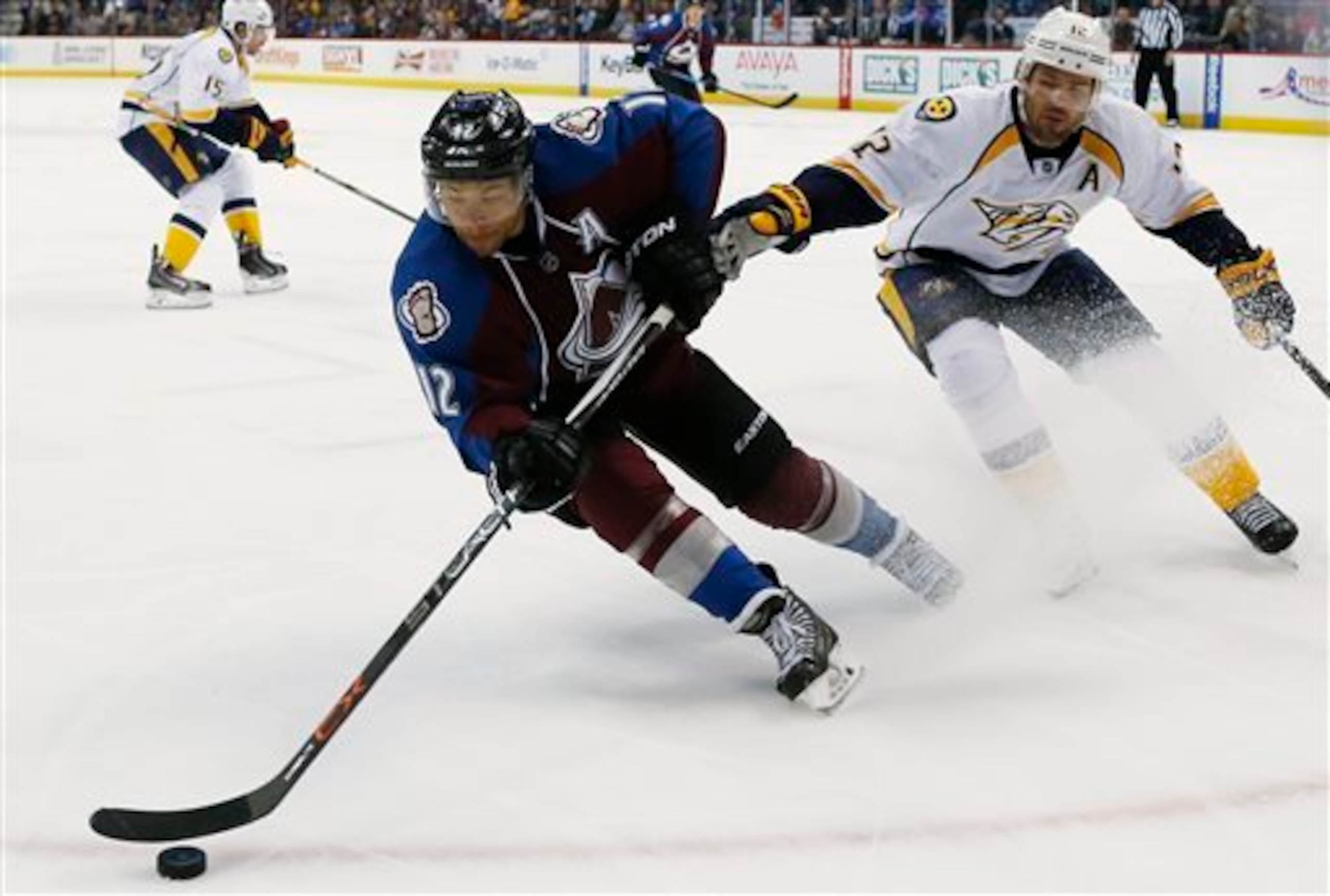
Offensive Play
Iginla’s even-strength scoring fell off pretty quickly once he hit 30, but he’s done a brilliant job of holding off Father Time since. He’s averaged roughly 2.0 points per hour at evens over each of the last four seasons and managed 2.1 in 2014-15. Like everyone else in Colorado he suffered a little from the club’s struggles with the man advantage, but he also showed he’s still able to contribute there.
Defensive Play
Age has yet to take a serious toll on Iginla’s offensive play. But he doesn’t drive the play the way he once did, and as a result, his defensive weaknesses tend to be emphasized. He’s never been a stalwart in his own end of the rink, but it was easy to miss that back in the day when he didn’t spend any time there.
Transition Play
Iginla could improve his work at both blue lines. He’s not all that active at the defensive blue line, and offensively he chooses to play a dump-and-chase game rather than one focused on possession a little more than one would like to see from a scoring forward.
Overall
Iginla turned 38 in the offseason, and the end is in sight. Having said that, even with nearly 1,400 major league games under his belt, Iginla still managed to put up 59 points for Colorado last season. We aren’t writing him off, just expecting him to fade a little.
27. Tyler Toffoli, Los Angeles Kings
25 of 51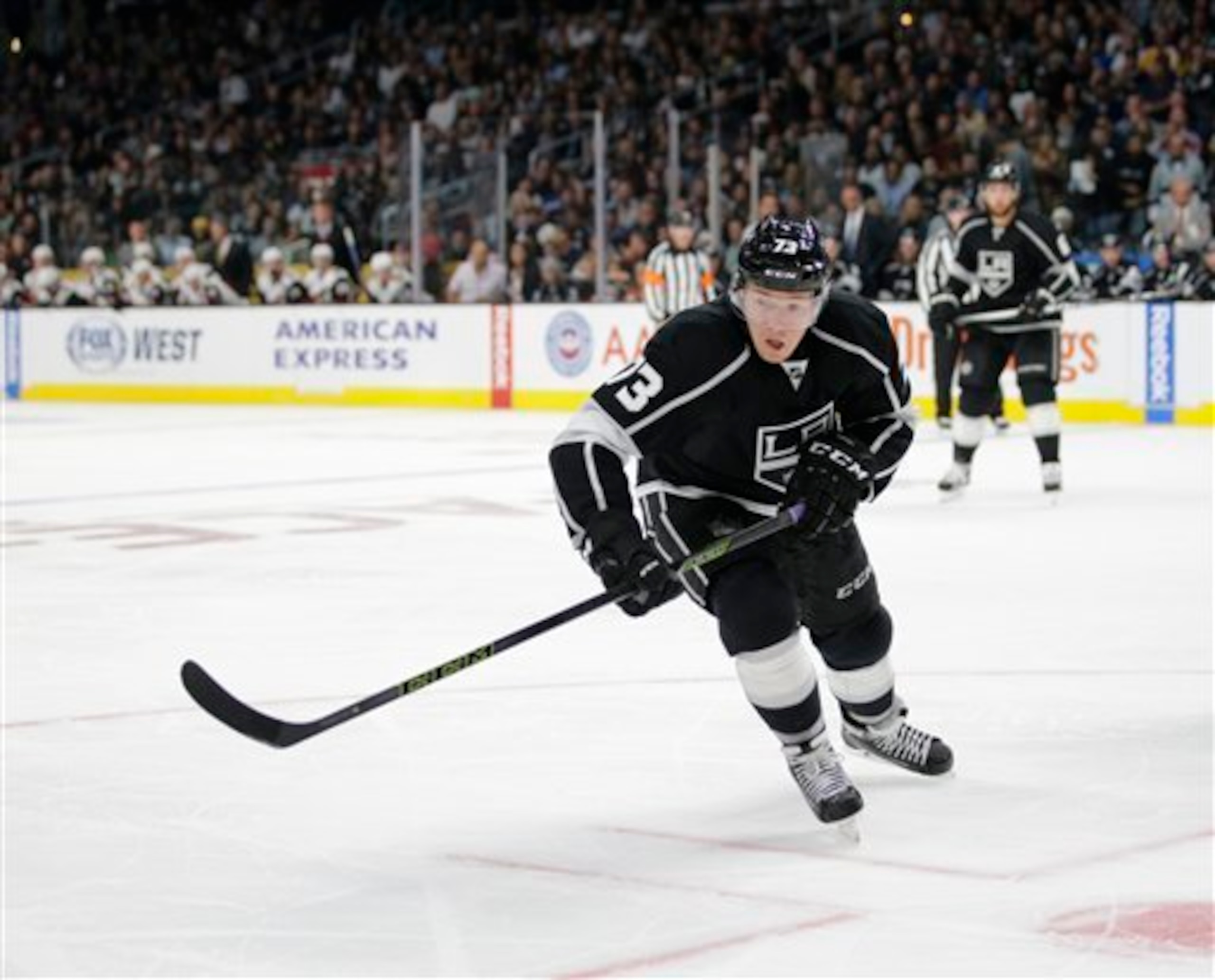
Offensive Play
Lost somewhat in a disastrous season for the Kings was the emergence of Toffoli as an impact offensive player. He has yet to score many points (or be given many minutes) on the power play, but in 2014-15 he progressed from a very good 2.0 points per hour all the way to a brilliant 2.5 points per hour at even strength. That’s not just first-line country; it’s elite territory. We take into account his power-play work here, and we hedge a little bit because this is the first time he’s hit that level. But it’s hard not to be impressed.
Defensive Play
Even as Toffoli was enjoying the most productive season of his career offensively, something else was happening too: Darryl Sutter was making him a member of the penalty kill. The object here seems to be to turn him into a true two-way threat, and so far the plan is working nicely.
Transition Play
Toffoli is involved defensively, getting back to his own blue line to break up plays and force dump-ins. He’s still evolving offensively, but he’s no slouch in that department either, carrying the puck in somewhat more than the average Kings forward.
Overall
The most important number here is one we haven’t mentioned yet. Toffoli only turned 23 in April; he’s still two to three years away from his offensive peak, and he may be even further away from his best years as a two-way threat. Already he’s legitimately a top-line talent, so when all is said and done he should be a very good one.
26. Loui Eriksson, Boston Bruins
26 of 51
Offensive Play
In his prime years Eriksson was a top-flight offensive layer, but in recent years his scoring has taken a major hit. Contrary to popular belief, the decline started even before he left Texas; he scored 1.5 points per hour at evens in his last year with the Stars and has equaled that in both of his years in Boston. He’s hit-and-miss on the power play but mostly puts in a creditable performance.
Defensive Play
Eriksson has a richly deserved reputation as a responsible two-way forward. He’s been an integral part of the penalty kill wherever he’s gone, and he’s trustworthy in either zone and against any opponent.
Transition Play
Although he’s a little too fond of making the simple play at the offensive blue line—often at the cost of creating scoring chances—Eriksson makes up for that on the defensive side of centre. He gets back responsibly and does his best to intercept opposition sorties before they arrive in the Bruins’ zone.
Overall
Though a diminished player from his heyday in Dallas, Eriksson is still a valuable NHL’er who plays a true 200-foot game. He’s still competent in the offensive zone, he’s reliable in the defensive end and he doesn’t waste any time getting from one to the other.
25. Mats Zuccarello, New York Rangers
27 of 51
Offensive Play
At even strength it’s inarguable that Zuccarello is an important offensive player. Last season saw the diminutive Norwegian hit 2.2 points per hour for the second straight season; that’s easily first-line production and pretty good first-line production. What we aren’t sure about yet is how he fits on the power play. He was splendid in 2013-14 but fell from a 17-point performance that year down to just six assists this past season. This next season should give us a better idea as to which of those performances was an aberration, although watching him play we’d be surprised if head coach Alain Vigneault couldn’t find a place on the man advantage where he was effective.
Defensive Play
Zuccarello gets an offensive push in a lot of ways. He does face a variety of opponents but rarely gets a steady diet of the toughest possible opposition; similarly, he starts a lot more shifts in the offensive than defensive zone. Having said all that, he is a responsible player and puts the effort in, and he’s even had some cameos on the penalty kill.
Transition Play
Zuccarello isn’t a bad guy to have at either blue line. Offensively, of course, he does a pretty decent job of carrying the puck in rather than relinquishing possession, but he’s also good at getting back to the defensive blue line in time to be involved there.
Overall
A lot of readers here, regardless of team affiliation, probably have a soft place in their heart for a 5’7”, 179-pound dynamo who provides enough offence to make it in a big man’s league. Zuccarello has demonstrated he’s able to do more than enough to offset any concerns about his size.
24. Mark Stone, Ottawa Senators
28 of 51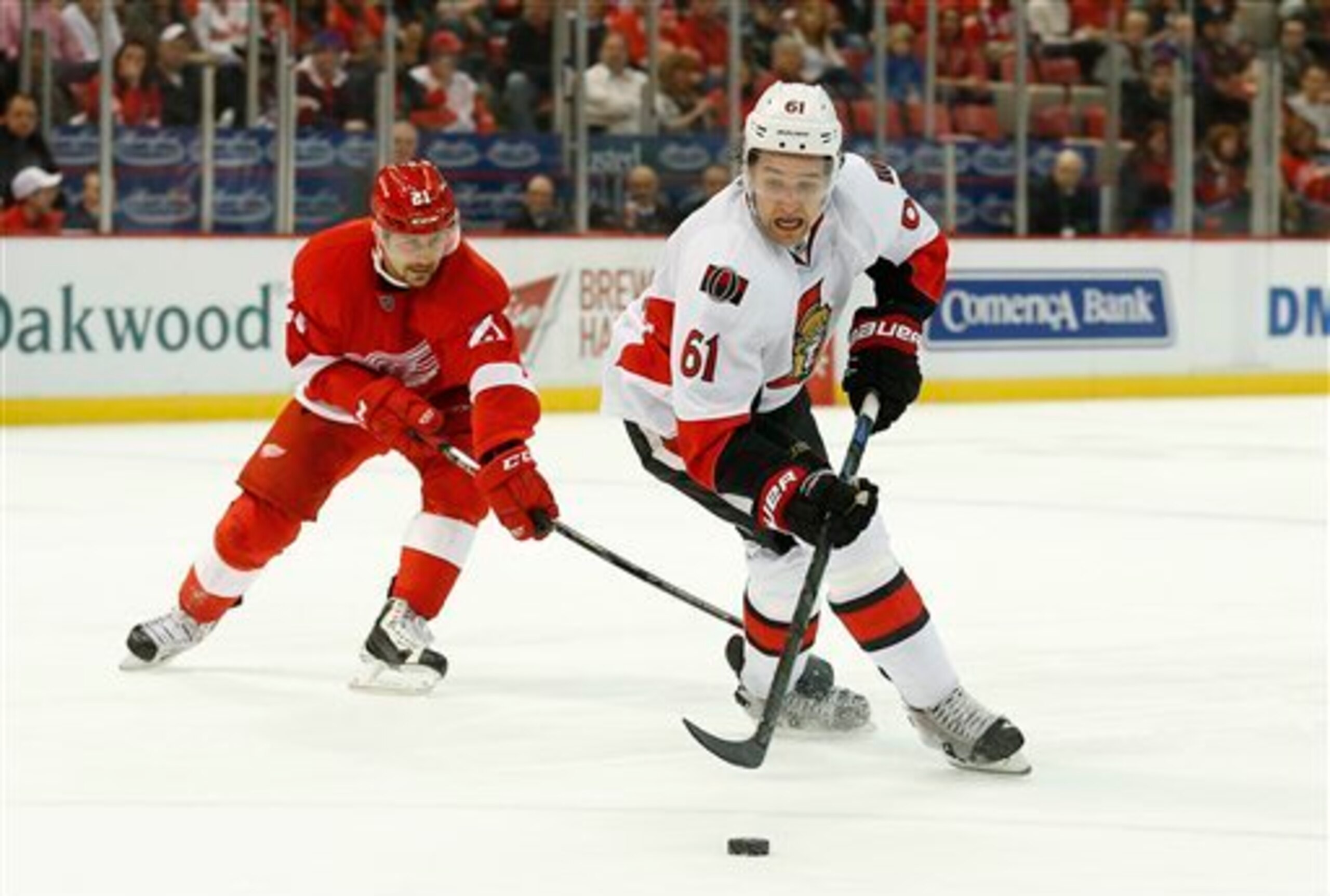
Offensive Play
Mark Stone has scored at every level he’s ever played. He topped 100 points twice at the WHL level, scored better than a point per game in his final AHL season and last year brought his talent for offence to the NHL, tallying 26 goals and recording 64 points. He was decent on the power play; he was better than that at even strength.
Defensive Play
One of those 26 goals was a short-handed marker because it turns out in his first full major league campaign the coaches found Stone useful on the penalty kill. Things didn’t always go well; as Ary M of SB Nation's Silver Seven noted, Stone’s shot-suppression figures were among the worst on the team. Still, the raw material is clearly there, and the polish will come with time.
Transition Play
Stone is an indifferent player in transition. He’s not all that good at carrying the puck in offensively, and he’s not often involved at the defensive blue line.
Overall
For years, it’s been obvious the Senators stole this player with the No. 178 pick of the 2010 draft, but last season Stone made it clear just how well Ottawa made out. It’s hard to find 6’3” forwards who can kill penalties and top the 60-point mark. Still, we’ll want to see him repeat the performance before pushing him any higher on this list.
23. Patric Hornqvist, Pittsburgh Penguins
29 of 51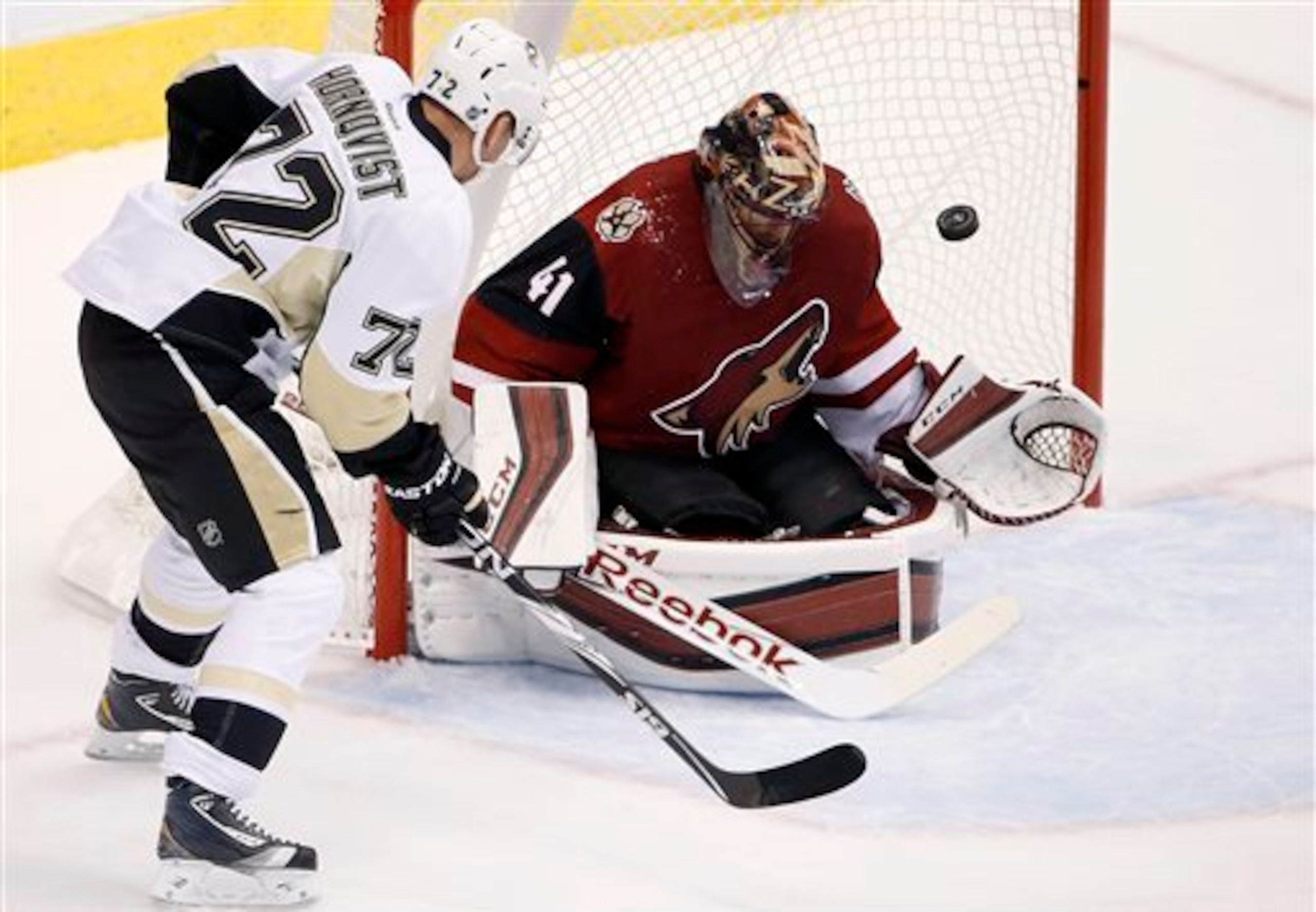
Offensive Play
As expected, a move to Pittsburgh was a positive for Hornqvist, though at even strength he saw only incremental gains. After three seasons at between 1.9 and 2.0 points per hour (excepting an injury-plagued 2013 campaign), he saw his offence jump to 2.2 points per hour with the Pens. His power-play production actually dipped slightly year-over-year.
Defensive Play
Undersized but solid, Hornqvist (5’11”, 189 lbs) wins his share of defensive battles and excels in the corners and along the boards. He plays a conscientious two-way game.
Transition Play
A lack of imagination costs Hornqvist at the offensive blue line, where he routinely opts for a dump-and-chase game rather than one based around possession. He’s good enough on the forecheck that it doesn’t cost him the way it does other players, but it’s still suboptimal.
Overall
There’s long been a generalization that Scandinavian players are well-suited to North America, and while it’s not true in all cases, Hornqvist embodies the stereotype. He plays a north-south game and contributes at both ends of the rink, but he lacks the creativity of a top-flight offensive weapon.
22. Nikita Kucherov, Tampa Bay Lightning
30 of 51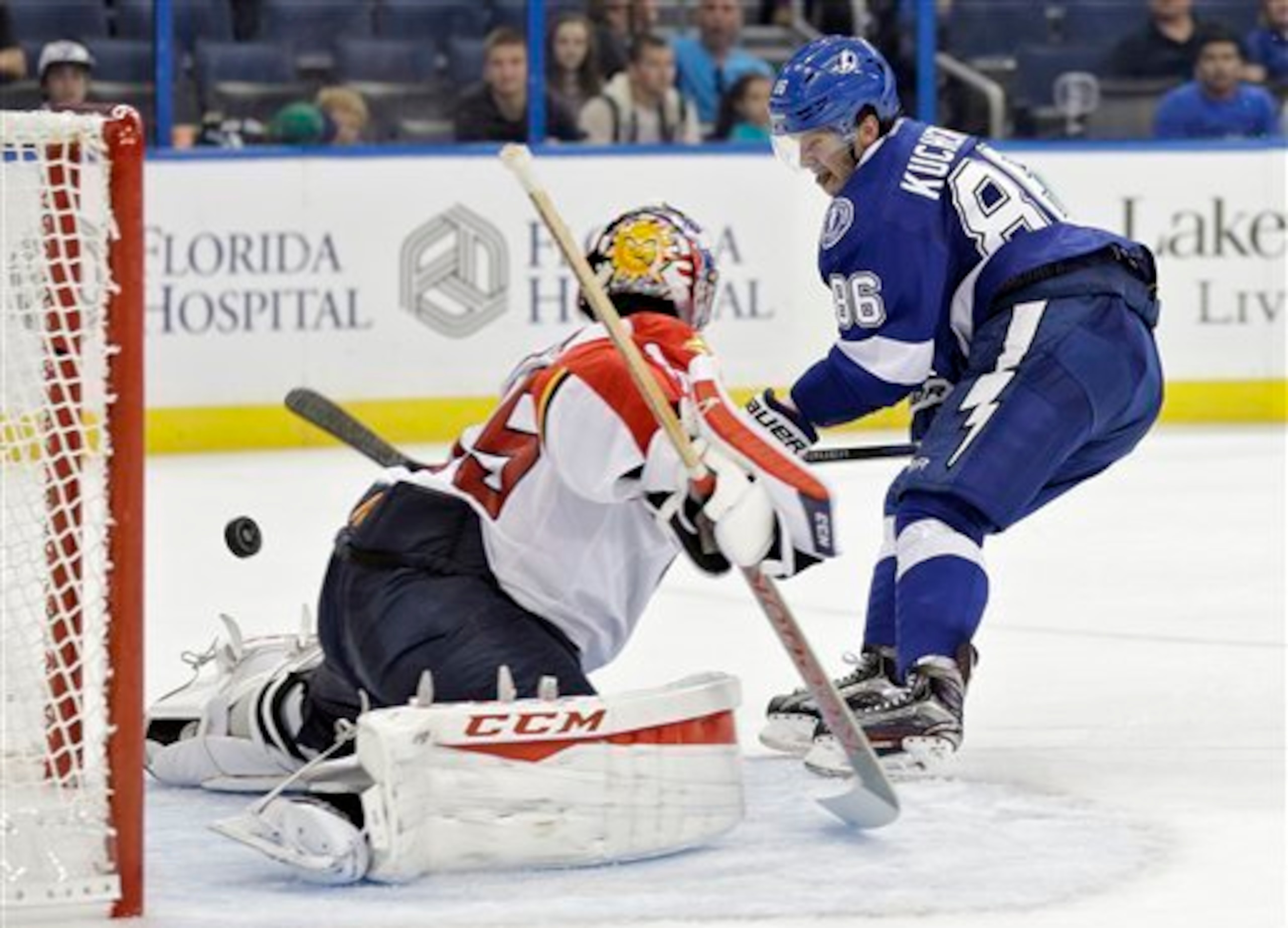
Offensive Play
After managing just 18 points as a rookie, Kucherov exploded last season for 29 goals and 65 points, even earning some All-Star votes in the process. He scored well on the power play in both campaigns, but he nearly doubled his even-strength production year-over-year, spiking from 1.4 points per hour to 2.6. He’s young enough that he might yet improve on that figure, but given that we have only one season of elite production, it’s probably best to be cautious for now on estimating his true talent level.
Defensive Play
Kucherov’s plus-38 rating earned him some Selke Trophy love. But as always, plus/minus is a garbage statistic, and the sooner it lands in the ash heap of history, the better. The Lightning routinely surrendered a pile of shot attempts against when Kucherov was on the ice and tellingly even more high-danger scoring chances. There’s no question Kucherov’s offensive contribution more than makes up the difference, but there’s also no question that like every other 22-year-old ever he’s not yet a polished defensive specialist.
Transition Play
As one would expect, Kucherov is encouraged to carry the puck in offensively and excels at it. Also as one would expect, Kucherov is below-average in terms of getting back and breaking up plays at the defensive blue line.
Overall
We love Kucherov’s game, but as responsible prognosticators, we want to see a little bit of sustainment offensively before we usher him into the upper echelon of NHL scorers. If he can do what he did last year again, he’ll climb our list; if he can improve upon it, he’ll climb even higher.
21. Radim Vrbata, Vancouver Canucks
31 of 51
Offensive Play
Age seems to have improved Vrbata’s work on the power play; the 34-year-old has topped 5.0 points per hour for three consecutive seasons after failing to do so for the entirety of his early career. Last year was also a rebound season for him at even strength, as he clawed his way back up to the 2.0 points per hour mark for the first time since 2011-12, though he may find it difficult to stay there.
Defensive Play
At points in his career Vrbata has been used to kill penalties, and while that’s not the primary strength of his game, he’s a responsible winger. His shot-suppression numbers in Vancouver last season were quite strong.
Transition Play
One positive of playing with the Sedin twins (Henrik and Daniel) in Vancouver is that both players are reasonably good at carrying the puck into the offensive zone; strangely that’s never been a particularly strong point for Vrbata.
Overall
The acquisition of Vrbata worked out splendidly in Year 1 for Vancouver, and there’s no reason to think that’s going to stop this season. Having said that, he turned 34 in June, and 2014-15 saw him defy some long-term downward trends. It wouldn’t be a surprise if he slipped a little this time around.
20. Jaromir Jagr, Florida Panthers
32 of 51
Offensive Play
It looked last season like Jagr’s offensive game was finally deteriorating to the point where it was no longer a real plus for him. But then the New Jersey Devils shipped him south, and he found new life in Florida. Away from the moribund Devils, Jagr’s scoring ticked up in a major way, and his five-on-five numbers came in only the tiniest bit lower than they had the last three years. He’s still big (6’3”, 230 lbs), strong and deceptive as anything with the puck.
Defensive Play
Maybe it was playing in New Jersey, but Jagr’s shot-suppression numbers were among the best in the league for right wings. He’s never been noted as a defensive stalwart, but it’s hard to argue with the fact that the opposition doesn’t get many shots when he’s on the ice.
Transition Play
Jagr just narrowly finished outside the top 10 in carry-in percentage league-wide in 2013-14, 12 percentage points higher than any other Devils forward. He’s less involved at the defensive blue line, but even so, that’s a glorious number.
Overall
We looked for excuses to rank this guy lower, and it’s very tough to do because he was still ridiculously good in 2014-15. The man is 43 years old, and presumably the bottom could fall out any day now. But he just keeps powering through much younger opponents like this is the most normal thing in the world to do.
19. Jiri Hudler, Calgary Flames
33 of 51
Offensive Play
Hudler, who had never before recorded 60 points in a season, exploded for 76 in 2014-15, setting career highs in both goals and assists along the way. His 2.6 points per hour at evens were a career-best mark, though he was surprisingly ordinary on the power play. It doesn’t take a rocket surgeon to figure out that at the age of 31 this past year was probably a result of all the planets lining up rather than a true breakthrough.
Defensive Play
Defence has never been a key selling point of Hudler’s game. He’s small (5’10”, 186 lbs), which means that even when he’s exactly where he needs to be, he risks being overpowered.
Transition Play
It shouldn’t be a surprise that Hudler is good at the offensive blue line. He’s quick, he’s crafty and he can do magical things with the puck. What may come as a surprise is his work at the defensive blue line, where he’s unexpectedly good at breaking up opposition rushes.
Overall
We’re aware Hudler put up 76 points and that he got votes for the Hart Trophy. We aren’t rating last year’s performance; we’re projecting ahead to next season, and the fact is Hudler is an established mid-50s point-scorer. When he fell to 37 points in 2010-11, it didn’t make as the new normal, and the same is true now that he’s climbed to 76.
18. Justin Williams, Washington Capitals
34 of 51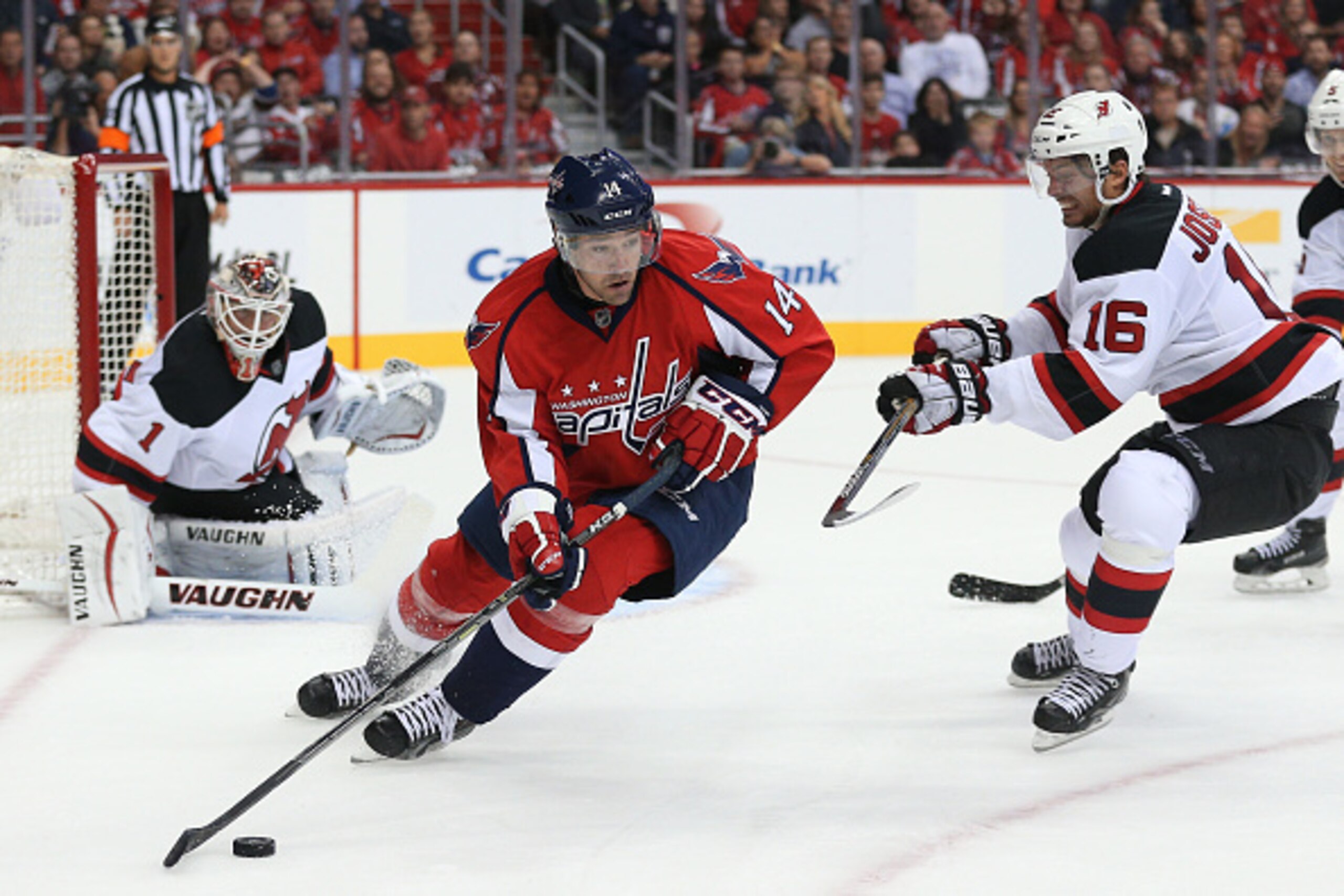
Offensive Play
It’s close to inarguable that Williams’ peak even-strength seasons are now in the rearview mirror. He fell to 1.5 points/hour in 2014-15, the second consecutive season he’s come in south of 2.0. Some of that relates to his role and linemates, of course, but the 30-goal days are gone and don’t seem to be coming back.
Defensive Play
Head coach Darryl Sutter has been able to lean on Williams against any opposition and in any situation, and along with T.J. Oshie, the 34-year-old injects some welcome defensive responsibility into a Washington defence corps that has at times lacked that reputation.
Transition Play
Despite his reputation as one of the major deities in the church of Corsi, Williams has somewhat pedestrian zone-entry numbers, though as one would expect, he’s a good soldier at the defensive blue line.
Overall
The decline in Williams’ offensive game is the only black mark against a brilliant two-way player.
17. Nick Foligno, Columbus Blue Jackets
35 of 51
Offensive Play
One of the most important things to know about Foligno is that at even strength his brilliant 2014-15 campaign wasn’t unprecedented. He scored 2.2 points per hour last season. But in 2013-14, he’s managed 2.0 points per hour, and in 2011-12 the number was 2.1 points per hour. In other words, there’s every reason to believe he won’t regress in that area. The other important thing to know is that he managed 8.3 points per hour on the power play last year, and there’s absolutely no precedent for that. He’s always been a high-percentage power-play shooter (though 36.7 percent is pushing it), but he’s rarely had a chance to take 30 shots in a season before.
Defensive Play
Foligno has always had some reputation as a two-way forward, but last season was the first time he was employed regularly on the penalty kill—and it’s worth remembering that prior to last season, nobody looked at Foligno and thought he absolutely had to be on the ice in offensive situations. He has a good combination of size and strength (6’0”, 210 lbs) and unsurprisingly for a coach’s son has a pretty good idea of where to be too.
Transition Play
The numbers we have for Foligno in 2013-14 leave him looking pretty ordinary; that year carry-ins constituted 51 percent of his zone entries, just 3 percent more than the average Jackets forward. He was better at the defensive blue line, but even so, he scores just a little above the NHL average here.
Overall
We’re skeptical of Foligno’s breakout season at the age of 27, but we aren’t entirely dismissive of it. He’s a good player in a lot of ways even if he doesn’t hang on to his power-play offence, and the year he just had ensures he’ll be given the minutes to show off his always-impressive even-strength scoring. We know we’re going to get a bunch of “31 goals!” arguments in the comments section; our answer to that is, “Yeah, but it’s also the first time he ever scored 20.”
16. James Neal, Nashville Predators
36 of 51
Offensive Play
After three seasons at 2.1 points per hour or above, Neal slipped to just 1.8 last season, the same figure he managed the year he was traded from the Dallas Stars to the Pittsburgh Penguins. Simultaneously, he went from 6.8 points per hour on the man advantage all the way down to 1.0. There has to be some kind of bounce on the power play coming, though it’s doubtful he’s going to get back to his Pittsburgh levels.
Defensive Play
Neal’s shot-creation numbers have always been very good. His shot-suppression numbers? Not so much, though it’s not like he’s a train wreck defensively or anything.
Transition Play
At both ends of the neutral zone, a team could do worse than lean on Neal. He’s a strong puck-carrying option offensively, and he’s actually quite involved in breaking plays up at the defensive blue line.
Overall
As expected, Neal took a hit following his departure from Pittsburgh, falling to just 37 points. Injury played a role in that, but even so, it was Neal’s lowest points-per-game season since his rookie campaign.
15. Nathan MacKinnon, Colorado Avalanche
37 of 51
Offensive Play
MacKinnon has played two seasons in the NHL, and twice now he’s scored at least 2.0 points per hour at even strength. His “sophomore slump” last year was almost entirely a power-play event, as his scoring fell by 50 percent on the man advantage as the Avs’ power play slumped in a major way.
Defensive Play
Like most young players, MacKinnon needs to work on defence. And despite a massive drop in plus/minus (say it with me: “plus/minus is a garbage stat”), he’s doing it. Patrick Roy sheltered MacKinnon less at evens in his second season, and despite this, he saw big drops in terms of on-ice shot attempts and scoring chances against.
Transition Play
Good numbers at the offensive blue line are undercut a little bit by an uninspired performance at the defensive blue line. The good news is the latter should improve as MacKinnon gains experience and that it’s awfully hard to find a player who can consistently gain the offensive zone with possession—a skill the 20-year-old already possesses.
Overall
In all of our projections we’ve opted to avoid predicting breakout performances. That resolution was sorely tested here; MacKinnon is entering his third season in the league, and basically every underlying metric points toward a big season in front of him. We fully expect him to be significantly higher on next year’s list.
14. T.J. Oshie, Washington Capitals
38 of 51
Offensive Play
At the most basic level, Oshie has been a pretty consistent producer whenever healthy, scoring between 18-21 goals and 30-40 assists. The wild card here is whether things change in Washington, particularly on a power play that is one of the most potent in hockey.
Defensive Play
What makes Oshie attractive isn’t just that he’s a scorer—as we just relayed, his totals in that department are good but not great—but that he’s a legitimate two-way player. Oshie played tough minutes at even strength, both in terms of opponents and where his shifts started, and he was a regular on the penalty kill. A forward who can play that role for Ken Hitchcock is likely to satisfy any coach.
Transition Play
Oshie lacks the elite speed necessary to back defenders off at the offensive blue line, and he doesn’t have the frame to power through them either. Perhaps that’s why the 5’11”, 189-pounder plays a dump-and-chase game as frequently as he does. Regardless, like every other forward in hockey Oshie generates more shots off entries where he retains possession, so the safe-and-simple game is in some ways costly.
Overall
There’s a lot to like about Oshie, a competent top-six forward who plays a 200-foot game. A little more creativity at the offensive blue line and in the attacking zone wouldn’t be amiss. But there’s no question he’s more reliable defensively than most comparable scorers, and that has real (and often overlooked) value.
13. Wayne Simmonds, Philadelphia Flyers
39 of 51
Offensive Play
One of the things we’ve endeavoured to do throughout this series is separate point production between even-strength and power-play scoring. Simmonds is a good example of why. At five-on-five, he’s a good but not great scorer; in three of four seasons in Philadelphia he’s come in at 1.7 points per hour. On the power play, though, he’s a dominant presence in front of the net. He tallied a very good 6.0 points/hour last year and he’s a key reason the Flyers have been so good with the man advantage in recent years.
Defensive Play
Because he’s mostly been used in a middle-six role, Simmonds doesn’t have to carry the load offensively the way some players do; he generally sees middle-tier opposition and gets a bit of a push in terms of zone starts. He’s good enough in this department to hold his own against that level of competition.
Transition Play
Like a lot of skaters who play with a crash-and-bang style, Simmonds relies on the dump-and-chase to gain the zone a lot of times, which unfortunately means he doesn’t get the chance to capitalize offensively on possession to the same degree a player who carried the puck in would. He’s not bad in this department; he could just be better.
Overall
Simmonds is a fun player to watch. There aren’t a lot of skaters in the game of hockey who combine scoring ability, speed and physical play the way he does. He’s been a very effective forward for the Flyers.
12. Kyle Okposo, New York Islanders
40 of 51
Offensive Play
Okposo had been quite good for years but really came into his own in 2013-14 with a 2.6 points-per-hour performance at evens. He slipped a little last season but still managed to put in 2.2 points per hour, which is basically identical to what Patrick Kane did in Chicago. Last season saw his best-ever performance on the power play, a traditional weakness for him.
Defensive Play
Some polish has come with time, but Okposo isn’t ever likely to be mistaken for a Selke candidate. His primary strengths are from the defensive blue line out.
Transition Play
At both blue lines, a team could do worse than to employ Okposo. He’s still well shy of John Tavares in terms of gaining the offensive zone with control of the puck, but his numbers in that department are solid. More surprising is his work at the defensive blue line; he’s improved at getting back and spoiling opposition entries.
Overall
This is a very good player. Okposo combines pugnacity with scoring punch, and that’s always a welcome combination in the NHL.
11. Marian Gaborik, Los Angeles Kings
41 of 51
Offensive Play
Time and the rigours of NHL hockey have taken a toll on Gaborik, and playing for the defensively minded Kings probably hasn’t helped either. With the exception of the lockout-shortened 2013 campaign, Gaborik had never tallied fewer than 2.2 points per hour at evens, but last season saw him fall down to 1.7. He did good work on the power play, shooting at a 25.6 percent clip to top 25 goals on the season overall.
Defensive Play
The knock on Gaborik all throughout his career has been that he doesn’t engage defensively, which is why his trade to Los Angeles caught some by surprise. Cam Cole of the National Post got some great quotes from former coach Jacques Lemaire—who said Gaborik had to think offence 90 percent of the time— and from new coach Darryl Sutter, who basically shrugged away concerns.
“In today’s game, it’s about who has the puck, it’s not about his defending,” Sutter said. “We’re the top two or three in league in terms of having the puck.”
Transition Play
Backchecking isn’t a strong suit of Gaborik’s, and as a result, he’s less involved when the puck heads south than he should be. That’s a shame because he routinely leads his teams in gaining the zone with possession and is basically one quality away from being an elite player in this department.
Overall
It wasn’t all that long ago Gaborik was scoring 40 goals in New York. We don’t expect him to get back to those levels. But he remains one of the league’s most skilled shooters, and he can certainly do better than last year’s 20 assists.
10. Jordan Eberle, Edmonton Oilers
42 of 51
Offensive Play
Eberle hasn’t lived up to the potential he flashed in 2011-12, when a big shooting-percentage year propelled him to the 34-goal mark, but he has still managed to score 2.0 points per hour or better at even strength every year since. He’s also been pretty good on the power play; a lot of Oilers struggled in that department over the last two seasons, but Eberle has had back-to-back years north of 5.0 points per hour.
Defensive Play
Intelligence can compensate for a lot of other weaknesses, and there’s no question as to Eberle’s hockey sense. However, he’s still 5’11” and 184 pounds, which makes winning battles more difficult than it is for most NHL’ers, and he’s still prone to lazy turnovers on the breakout.
Transition Play
Though he’s a strong puck-carrying option into the offensive zone, Eberle falls down a bit on the backcheck by our metrics. As a point of comparison, Taylor Hall (no defensive ace himself) broke up twice as many attempted entries per hour as Eberle did in our 2013-14 data.
Overall
Eberle’s reputation perhaps suffers a bit from the stigma of losing that surrounds the Oilers, but he’s a very capable scorer in his own right and without question a first-line right wing at the NHL level.
9. Blake Wheeler, Winnipeg Jets
43 of 51
Offensive Play
At even strength, Wheeler has hit or topped 2.0 points per hour for five consecutive seasons; that’s only one fewer than Patrick Kane and marks him as one of the game’s most reliable top-line scorers. The trouble with Wheeler’s game is the power play, where his results have generally been tepid and have held him back from posting the overall scoring totals other forwards manage.
Defensive Play
He doesn’t get the credit for it that he probably deserves, but Wheeler is a cut above competent defensively. He plays significant minutes on the penalty kill and puts his strength and long reach to good use in defensive situations.
Transition Play
The Jets’ likelihood of getting a shot more than triples when Wheeler chooses to carry the puck in rather than dump it, so it’s a shame that he takes the former course on just barely more than half of his opportunities. He is above-average when it comes to defending the Jets blue line.
Overall
Wheeler combines size (6’5”, 225 lbs), defensive responsibility and even-strength scoring punch into a single package. There isn’t a team in the league who couldn’t find a place for him in its top six.
8. Jason Pominville, Minnesota Wild
44 of 51
Offensive Play
This is where separating out team effects gets somewhat difficult. Pominville has seen his power-play production fade slightly since arriving in Minnesota, particularly last year when the whole team was struggling. It’s reasonable to guess he’d be better on more productive unit and that the drop-off in his point totals isn’t his responsibility alone. He has consistently hit the (very good) 2.0 points per hour mark at even strength since joining the Wild.
Defensive Play
Prior to his move out West, Pominville played a lead role on the penalty kill and did it well. His positioning in the defensive zone is solid, and he’s good at taking passing lanes away while short-handed.
Transition Play
Teammate Zach Parise is better known as the two-way threat, but Pominville’s breakup numbers at the defensive blue line were eerily similar in 2013-14. If there’s a criticism in this category, it’s that he could carry the puck into the offensive zone himself a bit more frequently than he currently does.
Overall
Smart, disciplined and capable at both ends of the rink, Pominville has been a nice addition to a deep Minnesota team. He’s at an age (32) where we should start seeing a gradual drop-off in production, but he’s still performing at such a high level that there’s no reason to expect his career to end any time soon.
7. Rick Nash, New York Rangers
45 of 51
Offensive Play
Nash has been alternating good and bad seasons at even strength for a while now, with the fluctuations primarily coming as a result of shooting percentage. At his best, he’s been as good as anybody in the league; last year he scored 2.9 points per hour, a number which trumps that managed by any other player at this position in the NHL. What hurts him are the down years—he managed just 1.8 points per hour in 2013-14—and his work on the power play, which has been ordinary or even south of that the last few seasons.
Defensive Play
In his heyday, Nash wasn’t just used on the penalty kill, but was a team leader in terms of minutes played. For three seasons in Columbus he averaged better than 2.0 minutes per game in the discipline. That work has tailed off in recent years, though Nash was a regular and scored four short-handed goals for New York last season.
Transition Play
It would be unfair to say Nash is an ordinary player in the neutral zone, but it would be fair to say that he’s not spectacular. He carries the puck in on just over 60 percent of his zone entries, which is an excellent number for the Rangers but a meh number league-wide. He’s good but not great at the defensive blue line.
Overall
Once one of the game’s most feared wingers, the shine has come off Nash a little thanks to age and some struggles in the postseason. The 31-year-old remains a formidable talent, however; 6’4”, 220-pound forwards capable of putting up 40 goals are a rare breed.
6. Phil Kessel, Pittsburgh Penguins
46 of 51
Offensive Play
For only the second time in seven seasons, Kessel scored fewer than 2.2 points per hour at even strength in 2014-15. His work on the power play was fine but nothing like the 8.0 points per hour he managed during the 2012-13 lockout year. He’s had ups and downs in Toronto as the team’s feature offensive player (while stapled to Tyler Bozak, no less), but it seems probable he’ll be back to elite levels of scoring with his new team.
Defensive Play
Kessel gets hammered as a defensive player and not without reason. We might note in his defence that he plays against top opposition, that his two-way numbers aren’t bad and that his zone starts relative to his team the last few years look a lot more like Marian Hossa’s than they do Patrick Kane’s. Even so, he’s not as good as one would like an elite player to be.
Transition Play
Elite-level speed is an awfully nice tool to have in transition play, and Kessel uses his brilliantly in gaining the offensive blue line. In 2013-14, he was a top-five NHL player by carry-in percentage and was clearly behind only the Colorado Avalanche’s Matt Duchene and the Washington Capitals’ Alex Ovechkin. He loses points on the defensive side of things, though; despite his speed, he’s not particularly good at breaking up plays on the backcheck.
Overall
There isn’t much doubt that Kessel is an incomplete player, an imperfect gem. Those imperfections combined with a lack of team success turned him into a whipping boy in Toronto. But, to mix and match metaphors here, all those Toronto columnists who harped on Kessel may well have been guilty of missing the forest for the trees. The hardest thing to do in the NHL is score, and Kessel is a genius offensively. It’s going to be fascinating to see one way or the other what he can accomplish with the Penguins.
5. Marian Hossa, Chicago Blackhawks
47 of 51
Offensive Play
Hossa’s offensive game was once one of the best in the NHL, and even at the age of 36, it’s nothing to sniff at. At even strength, Hossa has scored 2.0 points per hour or better in seven consecutive seasons, a run that includes the entirety of his time with the ‘Hawks. He remains a significant threat with the man advantage too.
Defensive Play
A perennial Selke Trophy candidate, Hossa is widely acknowledged as one of the best defensive forwards in the game of hockey and for good reason. head coach Joel Quenneville continues to use him on the penalty kill despite the fact doing so necessarily cuts back his efforts in other areas of the game. He’s strong enough to win battles (6’1”, 207 lbs) and sneaky enough to steal pucks from out of protection.
Transition Play
The 200-foot game Hossa plays very much includes the neutral zone. Offensively, he’s an excellent option, carrying the puck rather than dumping it in on nearly three-quarters of his zone entries. On the defensive end of centre he’s still a very capable backchecker and does his best to make life difficult for the opposition at the Chicago blue line.
Overall
The only thing that can be said against Hossa is that he’s 36 years old. He’s a complete player who does absolutely everything that could be asked of a right wing. In hindsight, it seems ridiculous his only major award win (other than the Stanley Cup) was a second-team All-Star berth in 2008-09.
4. Jakub Voracek, Philadelphia Flyers
48 of 51
Offensive Play
Voracek’s offensive explosion in 2014-15 may seem unprecedented, but it’s worth remembering that he also had 46 points in just 48 games during the lockout-shortened 2013 season. At even strength, Voracek scored 2.1 points per hour, which is pretty much right in line with what he’s done the past three years (if anything it’s a little on the low side). His power-play numbers hit a new level; after two seasons of scoring between 5.0 and 6.0 points per hour, Voracek exploded for 7.0 points per hour. The latter figure will probably dip a bit this coming year, but he may be able to do even more at evens.
Defensive Play
The big strengths in Voracek’s game don’t have much to do with his work from the defensive blue line in. He plays relatively tough minutes in terms of quality of competition, and he’s a dominant possession player. But when the other team has the puck in Philadelphia’s end, the Flyers have better options for getting it back.
Transition Play
Although he’s solid in transition, Voracek’s numbers aren’t elite-level. Some of that is no doubt team effects—the Flyers have been a weak transitional team for years, and like anything else, neutral-zone play isn’t a one-man job—but even so he’s a cut below the league’s best forwards in this department.
Overall
Voracek turned 26 in the offseason, and in that context his emergence as a top-level offensive producer isn’t a major surprise; most players come into their own in their mid-20s. Obviously, he benefits from a potent Philadelphia power play, but even so, on personal talent alone he’s among the league’s best offensive weapons on the starboard side.
3. Vladimir Tarasenko, St. Louis Blues
49 of 51
Offensive Play
Tarasenko built on an already-impressive 2013-14 even-strength performance, jumping to 2.8 points per hour at five-on-five last season, which was the fifth-best total of any forward in hockey. His work on the power play wasn’t quite so distinguished but still represented a career high in the category. He’s only 23 years old, so he may not yet have reached his peak level of production.
Defensive Play
There were a handful of times as a sophomore when Tarasenko was deployed while short-handed, something that isn’t particularly common for a player so young. A strong possession game means the Blues don’t face a lot of shot attempts against when he’s on the ice, but more telling is the fact that the rate of chances against isn’t much higher, suggesting the shots that do get through when Tarasenko is on the ice aren’t higher in value than the shots that get through when other forwards are out there.
Transition Play
No Blues forward is better at gaining the offensive zone with possession than Tarasenko; in fact, no Blues forward is even close. Where he loses points is on the defensive end; he’s average to below-average at breaking plays up at the defensive blue line.
Overall
Last year marked Tarasenko’s arrival as a top-end offensive weapon in the NHL and he’s likely to retain that distinction for the foreseeable future. His emergence doesn’t come a moment too soon for the Blues, a team which has long failed to convert regular-season achievement to postseason success; having a game-breaker like Tarasenko may make all the difference in a game or playoff series.
2. Patrick Kane, Chicago Blackhawks
50 of 51
Offensive Play
It’s a sign of how capable Kane is that the 2.2 points per hour he recorded at even strength last season is his worst performance since 2008-09; almost nobody consistently scores at the same level as he does. He’s also tallied 6.0 points per hour or better on the power play in five of his last seven seasons.
Defensive Play
Among regular Blackhawks forwards last season, only Ben Smith saw more shot attempts against per hour when he was on the ice than Kane did. The difference between the two is Smith routinely starts his shifts in the defensive zone, while Kane not only starts in the offensive end of the rink, but also (thanks to the presence of Jonathan Toews on another line) ducks the tough opponents most first-rate forwards face regularly.
Transition Play
It won’t come as a surprise to readers that Kane excels at gaining the offensive blue line with possession of the puck. What will be surprising is that he’s nearly the equal of Jonathan Toews at breaking plays up at the defensive blue line.
Overall
On the ice, there’s no question as to Kane’s talent. He’s a first-rate offensive weapon, and despite his defensive issues, he’s inarguably been a primary contributor to Chicago’s dominance of the last half-decade or so.
1. Corey Perry, Anaheim Ducks
51 of 51
Offensive Play
A two-time first-team All-Star, Perry is capable of remarkable offensive performances. He lacks the year-in, year-out consistency of a Patrick Kane at even strength, but at his best he’s hit higher peaks, such as in 2013-14, when he scored 3.0 points per hour for Anaheim. Last year struggles on the power play brought down his overall point totals—it was the worst season of his career—but it’s probably justifiable to look upon that as an aberration.
Defensive Play
Perry isn’t just a scoring machine; he’s also a very competent defensive player. Some of that is size and strength (6’3”, 210 lbs), but his positioning is such that at points he’s been asked to play big minutes on the penalty kill. Those minutes have been dialed back in recent years as part of an overall reduction in the amount Perry plays, but that shouldn’t be taken as a reflection on his talent in this area.
Transition Play
Perry’s good but not great in transition. He provides a strong presence at either end of the neutral zone, breaking up plays at the defensive blue line and gaining the opposition end with possession far more often than not, but in both cases he falls noticeably behind the best players in the game.
Overall
The reason Perry comes in ahead of Kane for the No. 1 slot on this list is because he’s a more complete player. He lacks quite the same offensive dimension as the Chicago star, but he’s far more physical and much more reliable defensively. We’re likely to see his offensive game slowly taper off as he enters his 30s, but it’s a little early to predict a big collapse this season.
.jpg?w=2560 "Marchenko Landing Spots")
.jpg?w=2560 "Von's Wild Offer for Jersey Number")
.jpg?w=2560 "Grading WWE NXT 🔠")

.jpg?w=2560 "Brock Rechsteiner Slams Cowboys Player in Fight Video")