
NHL 500: Ranking the Top 75 Left Defensemen
We recently introduced a new project, the NHL 500, by looking at the game’s top 50 goaltenders. We then turned to defencemen, starting with the top 75 right-side defencemen. In this slideshow, we finish our work on the blue line by turning to the 75 best left-side defencemen in the game.
What are we looking for here? We can explain it in one question: Taking into account the available evidence, what would a reasonable person expect from every player in the league in this coming year?
Our analysis is primarily rooted in major league work, which means we’re omitting rookies. We don’t care about contracts or long-term trade value. We don’t care about what happened last year, except insofar as it predicts what will happen in the coming year.
Our process leans heavily on analytics and involves creating a 100-point scale for every position. A grade of 50 indicates an average player at his position, with a higher total obviously being better. For the most part, talent tends to cluster around the average, with elite players being relatively rare.
For defencemen specifically, we’ve divided our analysis into three parts.
Defensive-zone play (45 points) will encompass both even-strength work and effectiveness on the penalty kill, with a primary focus being how good players are at preventing chances against once the puck arrives in their zone. It will also take into account contextual items like quality of competition.
Offensive-zone work (35 points) covers performance on both the power play and at even strength. Point-scoring rates are our primary measure here.
Transitional play (20 points) is a category which traditionally has been undervalued but has taken on increasing relevance in modern analytic thought. For defencemen, the majority of the score comes from how effective players are at preventing opponents from carrying the puck over the defensive blue line. We also consider how frequently these players carried the puck into the offensive zone.
We hope you continue to enjoy our comprehensive assessment of the NHL’s players.
Other NHL 500 installments:
A Note on Sources and Methodology
1 of 40
There are just a couple of points that should be made about the process here. If you’d like to get to the list, feel free to skip this page. It explains how we’ve done what we’ve done and isn’t properly part of the list that follows.
With that said, if you’re planning an angry comment, reading this first may help.
First: The list which follows is heavily based on analytics. We use QoC metrics to get a feel for the kind of opposition each player faces, and we’ve taken into account items like starting a lot of shifts in the defensive zone. On-ice metrics like scoring chances and Corsi were consulted. We’ve also made use of manual tracking, particularly in the transitional-play category.
Statistics which follow come from several sources. War-on-ice.com was our primary tool, providing numbers for every area of the game. The with/without you function on Puckalytics was extremely useful for identifying linemate effects. NHL.com was consulted for some basic numbers, such as size and age. Finally, Corey Sznajder’s incredible work manually tracking zone entries and zone-entry defence was the primary source for information in that area.
Finally, while the list which follows is primarily built on analytics data, it is a subjective list. There is no consensus on exactly how various parts of the game should be weighed or how much linemate, competition and team effects influence a player’s results.
We’ve done our best to consider as many factors as possible and balance them correctly, but at the end of the day, this is one interpretation and should not be mistaken for the consensus view of the hockey analytics community.
In other words, the list which follows is our own, as are any mistakes therein. We’ve also opted for a cautious approach. We’re trying to responsibly forecast the likeliest outcomes, and so a breakout candidate who succeeds will be underrated on this list, as will any goalie who collapses entirely.
There’s lots of room for reasonable people to disagree with these projections.
Nos. 75-71
2 of 40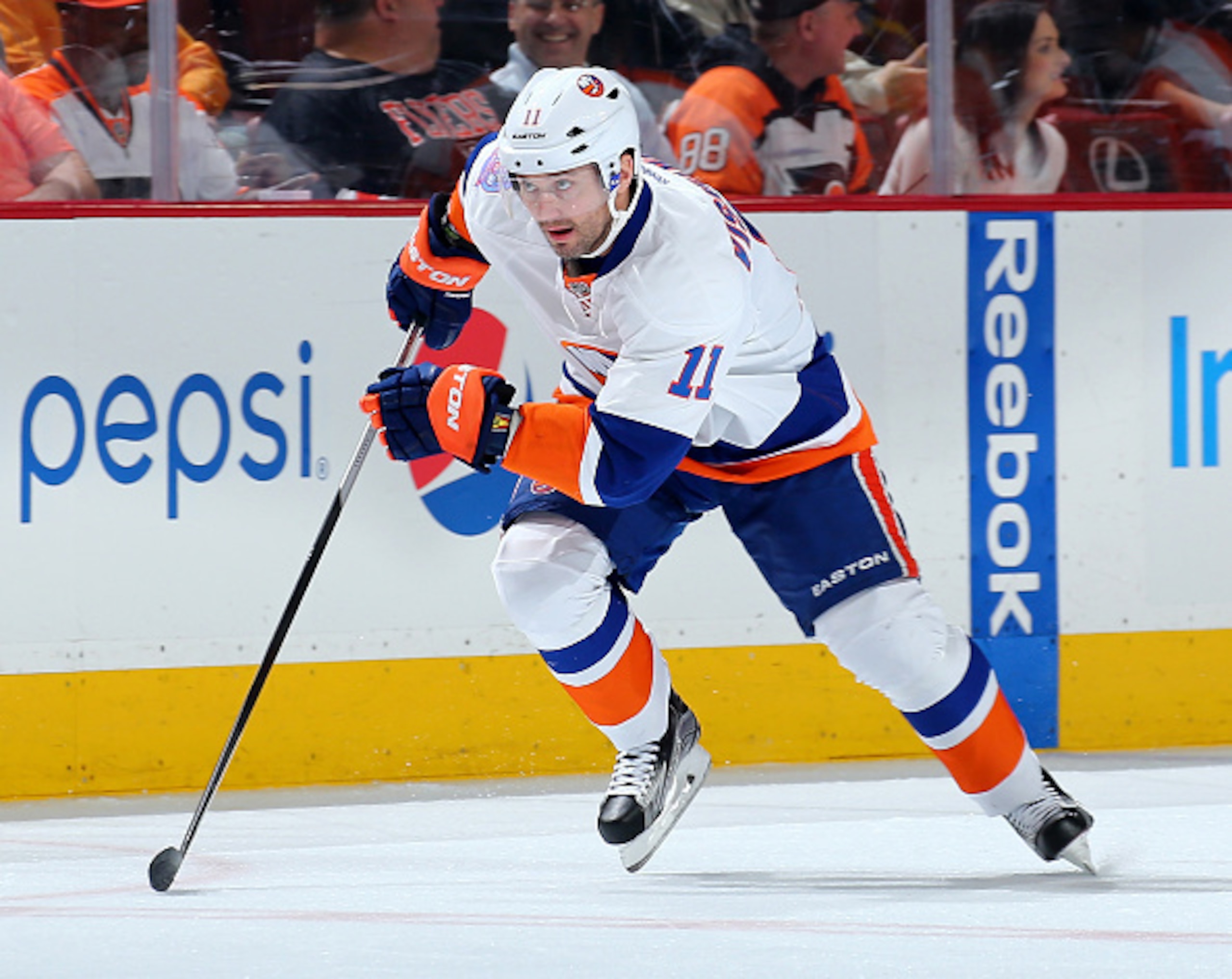
75. Lubomir Visnovsky, UFA
Defensive Play: 15/45; Offensive Play: 17/35; Transition Play: 10/20
As of this writing, Visnovsky hasn’t latched on with an NHL team and understandably so. He turned 39 in August, and it’s going to be just as easy for a lot of teams to say, "Thanks, but no thanks." Still, when he’s played in the last few years, he’s shown the ability to help the Islanders with his puck movement, which is still very good.
74. Derrick Pouliot, Pittsburgh Penguins
Defensive Play: 20/45; Offensive Play: 14/35; Transition Play: 10/20
The Pens look to be launching a youth movement on their blue line, and one of the beneficiaries is Pouliot. A talented offensive defenceman, he looked competent enough in a half-season cameo in 2014-15. There are going to be defensive bumps along the way and he has yet to translate his offensive game to the NHL, but we’re comfortable that he will establish himself as a regular this season.
73. Matt Irwin, Boston Bruins
Defensive Play: 19/45; Offensive Play: 19/35; Transition Play: 7/20
It’s easy to get excited looking at Irwin. He’s a 6’1”, 207-pound defenceman with mobility and some lovely offensive touch at even strength. The trouble is that he’s prone to running around in the defensive zone and spends a disproportionate amount of his time there because he’s not much good at holding the blue line.
72. Martin Marincin, Toronto Maple Leafs
Defensive Play: 21/45; Offensive Play: 9/35; Transition Play: 15/20
Tossed into the deep end at a young age, Marincin struggled in many respects early in his NHL career. He’s played some extremely tough minutes at even strength, but his defensive-zone play is not a particular strength. He’s good positionally but loses too many battles. He doesn’t generate a lot of offence. What he does do is excel between those two points. He defends less than others because he forces dump-ins at the blue line and gets the puck out of his own end in a hurry.
71. Ian Cole, Pittsburgh Penguins
Defensive Play: 21/45; Offensive Play: 16/35; Transition Play: 8/20
Cole may have turned a corner following his trade late last season to Pittsburgh, though of course it’s always possible that it was just a momentary aberration. It’s possible to see the vague outlines of a two-way threat in the 26-year-old, who has the size (6'1", 219 lbs) to be effective in the defensive zone and showed some surprising offensive edge late last year. For now, we’re expecting him to revert to a third-pairing role, but we’ll see what happens.
Nos. 70-66
3 of 40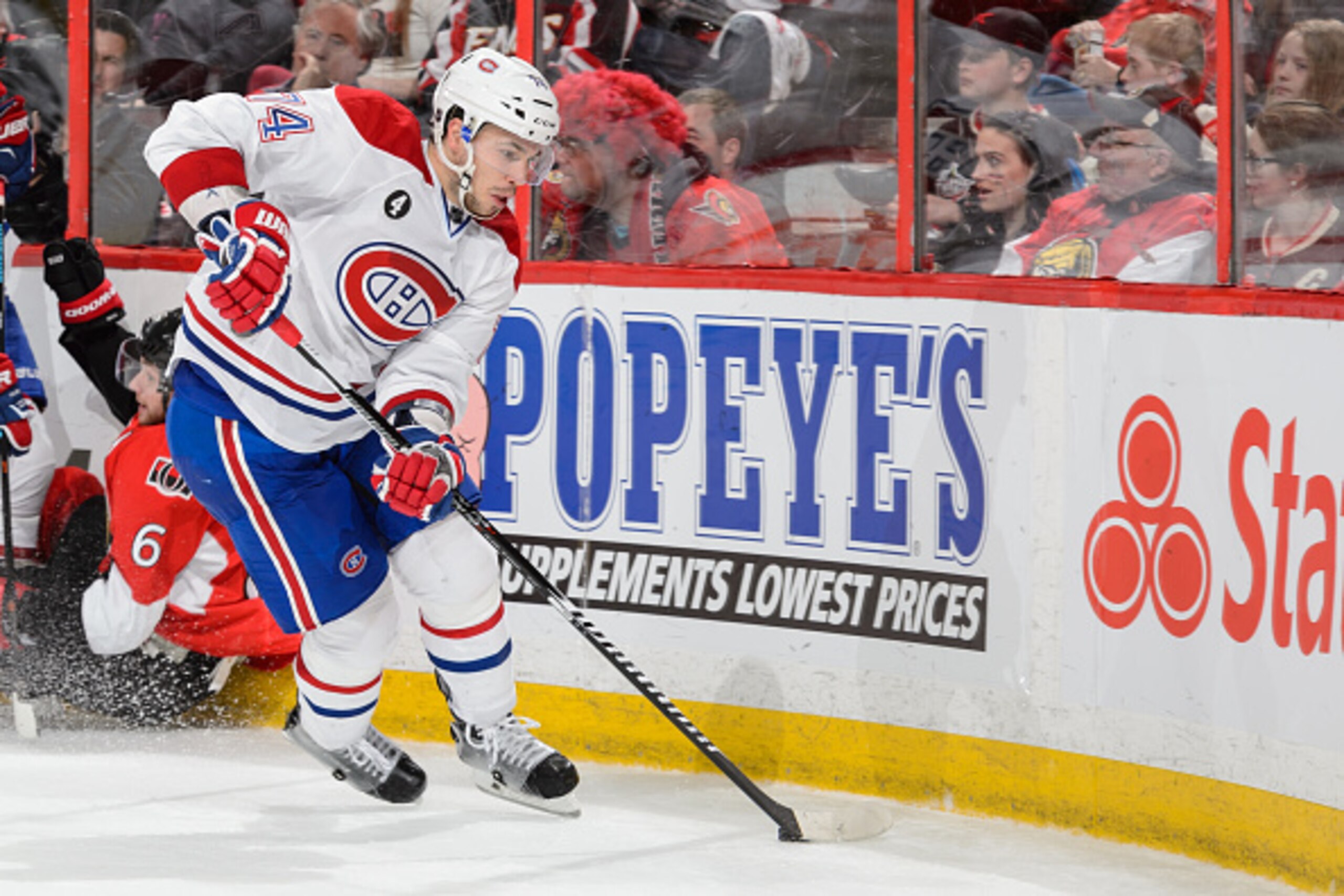
70. Jon Merrill, New Jersey Devils
Defensive Play: 24/45; Offensive Play: 11/35; Transition Play: 10/20
A second-round pick of the Devils in 2010, Merrill went the college route and only graduated to the pros (Albany Devils) late in 2012-13. Over the last two seasons, he has shown signs of becoming a two-way NHL defenceman, with his primary value coming in defensive situations. He’s only 23 and very much still developing. There’s untapped potential here.
69. Mark Stuart, Winnipeg Jets
Defensive Play: 26/45; Offensive Play: 10/35; Transition Play: 10/20
It’s important to just accept the fact that Stuart is (relatively speaking) irrelevant on the offensive side of the game. He doesn’t put up points, he doesn’t carry the puck and expectations should be kept to a minimum. With that said, he still has value as a defensive specialist, combining rugged and reliable play at his own end of the ice with strong work preventing opposition zone entries.
68. Jakub Kindl, Detroit Red Wings
Defensive Play: 18/45; Offensive Play: 17/35; Transition Play: 11/20
One of the things that can be said for Detroit is that the organization tends to put its players in positions to succeed. Kindl doesn’t kill penalties, doesn’t face top opponents and gets soft zone starts. Within those parameters, he consistently puts up reasonably strong numbers, which is all one can ask of a third-pairing defenceman.
67. Alexei Emelin, Montreal Canadiens
Defensive Play: 20/45; Offensive Play: 17/35; Transition Play: 9/20
Some will be surprised less by Emelin’s placement and more by our specific breakdown, but that’s what the results bear out. Montreal keeps deploying him in defensive roles and he keeps getting lit up. The Habs' penalty kill is pretty much at its worst when he’s out there. Despite modest point totals, at even strength his points/hour is also just better than the league average.
66. Jordie Benn, Dallas Stars
Defensive Play: 23/45; Offensive Play: 15/35; Transition Play: 9/20
Benn is a serviceable NHL defenceman. He delivers reasonable value in all three zones, coming in as average or just below it pretty much anywhere he’s used. At 28 years of age, there isn’t much upward mobility here, but as long as he stays at this level, he’ll be a useful third-pairing option.

Nos. 65-61
4 of 40
65. Jan Hejda, UFA
Defensive Play: 26/45; Offensive Play: 12/35; Transition Play: 9/20
Hejda was in his late 20s when he got his first crack at NHL employment, and he emerged pretty much right away as a shockingly capable shutdown defender. He’s toiled for years in relative obscurity on non-contenders like Edmonton, Columbus and Colorado, and now at age 37, he’s greatly diminished as a player. He still has value, though, as a third-pairing defensive specialist.
64. Calvin de Haan, New York Islanders
Defensive Play: 23/45; Offensive Play: 14/35; Transition Play: 10/20
The 24-year-old De Haan has yet to live up to the potential the Isles saw in him when they made him the No. 12 pick of the 2009 draft, but he’s making strides. He spent all of 2014-15 in the majors, the first time in his career that’s happened, and he showed flashes of developing into the two-way threat he always projected as.
63. Brenden Dillon, San Jose Sharks
Defensive Play: 25/45; Offensive Play: 9/35; Transition Play: 13/20
A physically imposing defenceman, Dillon’s value lies almost entirely on the defensive side of the red line. He’s good at maintaining the blue line and is a strong option inside his own zone at even strength and on the penalty kill. He has virtually no impact on the other side of the ice.
62. Ron Hainsey, Carolina Hurricanes
Defensive Play: 28/45; Offensive Play: 10/35; Transition Play: 10/20
Once upon a time, Hainsey was a two-way defenceman, but the last five seasons have seen him redefine himself as a primarily defensive blueliner. He was capable enough in that role last season, but now that he’s in his mid-30s, we expect a steady erosion in his ability to handle shutdown work.
61. Matt Bartkowski, Vancouver Canucks
Defensive Play: 23/45; Offensive Play: 16/35; Transition Play: 9/20
A reasonably good all-purpose defenceman, Bartkowski lacks high-end skills in any single category but can be deployed in a variety of situations. He does kill penalties and is reasonably effective in the defensive end of the ice both in short-handed and even-strength situations. Offence is not a particular strength, but his even-strength point production is only a touch back of the NHL average. He’s not particularly good nor is he glaringly ineffective when it comes to gaining or defending the offensive and defensive zones.
Nos. 60-56
5 of 40
60. Fedor Tyutin, Columbus Blue Jackets
Defensive Play: 23/45; Offensive Play: 18/35; Transition Play: 7/20
Tyutin has played more than 700 games at the NHL level as a two-way defender who could chip in offensively and be trusted to get the job done in his own end of the rink. At age 32, though, it seems he’s entered the twilight years of his career after long being one of the game’s most underrated workhorses. He’s still relatively capable in both the offensive and defensive zones, but he surrenders the blue line much too easily and isn’t a difference-maker at either end of the ice.
59. Carl Gunnarsson, St. Louis Blues
Defensive Play: 24/45; Offensive Play: 16/35; Transition Play: 8/20
Gunnarsson is a jack-of-all-trades blueliner who can be used in a complementary role on any sort of pairing. He has enough offensive ability to play in those situations, and his intelligent, cautious game works well in the defensive zone, too. The only thing really keeping him from stepping permanently into the top four is his transition game, which needs to improve.
58. Josh Gorges, Buffalo Sabres
Defensive Play: 29/45; Offensive Play: 9/35; Transition Play: 10/20
Nobody should expect a defensive defenceman to look good on a team as bad as Buffalo was last season. Granted, nobody looks good on a team like that, but a player like Gorges looks particularly bad. At the best of times, he’s close to irrelevant offensively—he didn’t score a goal last year—but all the good he does at the defensive end of the rink gets lost in the flood. That’s too bad, because he’s still putting in a creditable performance on the defensive side of centre ice.
57. Jared Cowen, Ottawa Senators
Defensive Play: 22/45; Offensive Play: 14/35; Transition Play: 12/20
When Cowen first broke into the NHL in 2011-12, there was a hope that one day he might be the perfect defenceman to pair with Erik Karlsson, an elite shutdown defenceman to complement the Senators’ offensive star. That hasn’t happened, despite some promising work on the penalty kill. Cowen has struggled through injuries and even-strength problems at both ends of the rink. He is, it must be said, very good at the defensive blue line and surprisingly capable of carrying the puck when the mood strikes him.
56. Clayton Stoner, Anaheim Ducks
Defensive Play: 27/45; Offensive Play: 9/35; Transition Play: 12/20
Stoner is a stay-at-home defenceman. He’s a big (6'4", 216 lbs), physical presence without the puck and excels in front of the crease and in situations like the penalty kill. He’s an offensive non-entity. He’s been a very solid third-pairing defender over the last few years, though at age 30, we’re likely to start seeing a decline in his overall game.
Nos. 55-51
6 of 40
55. Brooks Orpik, Washington Capitals
Defensive Play: 28/45; Offensive Play: 11/35; Transition Play: 10/20
The trouble with projecting Orpik is twofold. First, he’s a one-dimensional defenceman. His primary value comes in the defensive zone and without the puck. Second, he turned 35 in September, an age at which NHL players tend to fall off. Both factors make it difficult to rank him higher than we have here.
54. Tobias Enstrom, Winnipeg Jets
Defensive Play: 26/45; Offensive Play: 16/35; Transition Play: 7/20
The undersized (5'10", 180 lbs) Enstrom has missed 20 or more games in three of the last four seasons and will turn 31 in November, so we’ve projected some further declines in an overall game that has already eroded considerably from what was an awfully impressive peak. His once-terrifying offensive game has already fallen off significantly in recent years, and he’s no longer the player he once was in the neutral zone. His brain means that he’s still a very effective positional defender, though.
53. Kris Russell, Calgary Flames
Defensive Play: 20/45; Offensive Play: 21/35; Transition Play: 8/20
Russell’s play with the Flames hasn’t been all that better than it was earlier in his career with the Columbus Blue Jackets, but it seems to be getting significantly better press. A lack of size (5'10", 173 lbs) in the defensive zone and a poor transition game have hurt his effectiveness at even strength, but he’s getting regular deployment on the penalty kill and is a real asset to the power play.
52. Matt Carle, Tampa Bay Lightning
Defensive Play: 23/45; Offensive Play: 19/35; Transition Play: 8/20
Last season was a difficult one for Carle. Despite significant team success, his own role on the Bolts’ defensive depth chart diminished as the postseason went on. He’s still a plausible top-four option, possessing a range of skills that make him suitable for work on either special teams unit and in all three zones. At age 31, the question is whether he’ll bounce back or this is the start of a long, slow decline.
51. Johnny Oduya, Dallas Stars
Defensive Play: 24/45; Offensive Play: 14/35; Transition Play: 12/20
For years, Oduya was a wonderfully underrated two-way defenceman. Then he was a properly appreciated piece of the core in Chicago. Last season, he had a disastrous regular season which saw declines pretty much across the board. He rebounded in the playoffs, but at the age of 34 and with a much weaker Dallas team, we’re predicting another drop-off.
Nos. 50-46
7 of 40
50. Barret Jackman, Nashville Predators
Defensive Play: 27/45; Offensive Play: 13/35; Transition Play: 10/20
It’s strange to think of Jackman playing anywhere other than St. Louis, but the 34-year-old will take his talents to Tennessee this fall. Once one of the league’s best shutdown defenders, he has declined in recent years but still retains much of what once made him so formidable. He’s a mean and clever veteran in the defensive zone and is still reasonably competent in other areas of the game.
49. Nathan Beaulieu, Montreal Canadiens
Defensive Play: 22/45; Offensive Play: 15/35; Transition Play: 13/20
This looks like the year when Beaulieu will prove beyond doubt that he belongs in the NHL. He impressed last season in a lot of ways, but he can do a lot more. In 2014-15, he wasn’t used on the penalty kill and didn’t show off the offensive punch he’s displayed at other levels. The 2011 first-round pick should develop into a very nice two-way defenceman for the Habs.
48. Jack Johnson, Columbus Blue Jackets
Defensive Play: 21/45; Offensive Play: 20/35; Transition Play: 9/20
Nobody denies that Johnson possesses magnificent physical tools. It’s just that year after year, the results don’t reflect those tools. Outside of the power play, where he is legitimately excellent, his teams just don’t fare well when he’s on the ice. The Jackets and the Kings before them were shelled in his even-strength minutes. He’s never been a plus player, and while plus/minus lies at times, it doesn’t generally lie consistently for eight consecutive seasons. He’s never been more than an average scorer at even strength, either, and for the last couple of seasons, he hasn’t even been that. Johnson has his uses, but on the whole, he is one of the most overrated skaters in the game today.
47. Jake Gardiner, Toronto Maple Leafs
Defensive Play: 24/45; Offensive Play: 17/35; Transition Play: 9/20
There isn’t a standout quality to Gardiner’s game, but he’s competent in almost every area. He’s reasonably good in the defensive zone, reasonably capable of contributing offence and fair-to-middling in between. This sort of defenceman tends to get more credit than he deserves on a good team and more than his share of blame on a bad team, and Gardiner falls into that pattern nicely.
46. Morgan Rielly, Toronto Maple Leafs
Defensive Play: 22/45; Offensive Play: 18/35; Transition Play: 10/20
The great hope on Toronto’s blue line is developing nicely but hasn’t had a breakout campaign yet. This could be the year for the 21-year-old, though we’ve been cautious here and projected only modest growth. Hockey sense and skating are both strengths, and Rielly projects as a two-way defencemen when he enters his prime years.
Nos. 46-41
8 of 40
45. Mattias Ekholm, Nashville Predators
Defensive Play: 25/45; Offensive Play: 15/35; Transition Play: 10/20
The Predators have been a defenceman factory for ages now, and they’ve found another good one in Ekholm, a fourth-round pick back in 2009. The 6’4”, 215-pound rearguard already plays a competent defensive game and has untapped offensive potential to boot. If he follows the typical Nashville development curve, he’ll be a quality two-way, top-four defenceman any day now.
44. Michael Del Zotto, Philadelphia Flyers
Defensive Play: 20/45; Offensive Play: 23/35; Transition Play: 8/20
Del Zotto’s turbulent career found some clear skies last season, as an opportunity in Philadelphia opened up and he made the most of it. Always a threat offensively, Del Zotto also managed to button down his defensive game to an acceptable extent. The Flyers even used him (with mixed results) on the penalty kill. He’s only 25 and could yet have a long and stable career in an NHL top four.
43. Patrick Wiercioch, Ottawa Senators
Defensive Play: 19/45; Offensive Play: 23/35; Transition Play: 10/20 (Overall: 52/100)
There aren’t a lot of 6’5” defencemen who don’t kill penalties, and that says quite a lot about how Ottawa’s coaches evaluate Wiercioch’s defensive game. Whether that evaluation is fair or not remains to be seen. He’s improved in the defensive zone at even strength over the course of his career and now probably deserves a crack at some short-handed minutes. His real strength is at the attacking end of the ice. He’s good at putting points on the board at even strength and exceptional on the power play.
42. Torey Krug, Boston Bruins
Defensive Play: 16/45; Offensive Play: 27/35; Transition Play: 9/20
Krug is a specialist. Defensively, he struggles at even strength and Claude Julien has unsurprisingly opted to keep him away from the penalty kill. He’s not especially good at defending his own blue line, either. Where he excels is in the other half of the ice. He likes carrying the puck into the offensive zone, and once he’s there, he’s one of the league’s more lethal weapons.
41. Trevor Daley, Chicago Blackhawks
Defensive Play: 22/45; Offensive Play: 21/35; Transition Play: 9/20
After more than a decade in Texas, Daley is moving on to a new NHL franchise. The Blackhawks are likely to be happy with his offensive game, and given that they have three really good defencemen on the roster in front of him, they probably won’t be too disappointed with his defensive game, either. He was ill-suited to carry the load he was asked to carry by the Stars, but Daley should fit in fine in a less demanding role.
Nos. 40-36
9 of 40
40. Karl Alzner, Washington Capitals
Defensive Play: 31/45; Offensive Play: 13/35; Transition Play: 8/20
NHL third pairings are filled with shutdown defencemen who don’t contribute much in other areas of the game. Alzner’s not a total black hole elsewhere—he can handle the puck well enough and is okay at the defensive blue line—but his primary skill only comes into play once the opposition has already gained the zone and has the puck. That he’s a legitimate top-four defenceman is reflective of how good he is in those areas.
39. Dmitry Kulikov, Florida Panthers
Defensive Play: 26/45; Offensive Play: 14/35; Transition Play: 12/20
It’s hard to believe, but the 24-year-old Kulikov is closing in on 400 career NHL games. He’s entering his seventh season in the majors this fall. He’s reasonably gifted in all three zones, providing some offence—but less than his draft number hinted at—a good transition game and steadily improving defence. He probably hasn’t hit his peak yet.
38. Jay Bouwmeester, St. Louis Blues
Defensive Play: 24/45; Offensive Play: 18/35; Transition Play: 11/20
There’s nothing particularly wrong with Bouwmeester. He’s vanilla. It’s understandable too that he’s overrated, because there are few things the eyeball test loves more than a 6’4” defenceman who can skate. The results just aren’t there, though. He plays tough competition at even strength, but the Blues fare badly in terms of chances against even with that caveat. He’s not an impressive scorer. He’s not brilliant in the neutral zone, and the evidence suggests he’s ineffective on the penalty kill. He’s a competent NHLer who is generally made out to be more than that.
37. Keith Yandle, New York Rangers
Defensive Play: 17/45; Offensive Play: 25/35; Transition Play: 11/20
Yandle is largely a one-dimensional player. That dimension is offence, which means he generally makes big money, and even coaches who aren’t wild about his defensive shortcomings will put up with him for what he brings to the power play and as a puck-mover at even strength.
36. Brayden McNabb, Los Angeles Kings
Defensive Play: 21/45; Offensive Play: 21/35; Transition Play: 12/20
It’s easy to understand why the Kings have such high hopes for the 24-year-old McNabb. A big, physical defenceman with a surprisingly deft offensive touch, McNabb is capable of contributing in all areas of the game. He hasn’t been given much penalty kill work yet and still needs a little more polish in the defensive zone, but there’s a lot to like here—including some strong early work defending his own blue line.
Nos. 35-31
10 of 40
35. Ryan Murray, Columbus Blue Jackets
Defensive Play: 25/45; Offensive Play: 18/35; Transition Play: 11/20
The only real question with Murray seems to be health, and it’s a criterion we don’t use in these rankings. He’s a surprisingly polished defensive player for his age and has shown skill on both special teams. He’s a good puck-rushing defenceman and not bad at holding his own blue line either. There’s a lot to like here, and we’re bullish that the 22-year-old will have a big season if he can stay in the lineup.
34. Oscar Klefbom, Edmonton Oilers
Defensive Play: 23/45; Offensive Play: 18/35; Transition Play: 13/20
The finer points of defensive-zone play are still a work in progress with Klefbom, as they are with many young players, but other parts of his game are very mature. He’s excellent in transition, both when carrying the puck and defending his own blue line, and despite modest scoring totals overseas, he seems to have found the range offensively in the NHL at even strength.
33. Marco Scandella, Minnesota Wild
Defensive Play: 26/45; Offensive Play: 15/35; Transition Play: 13/20
The 25-year-old Scandella is just entering his peak years, and he gives the Wild a little bit of everything. At 6’1” and 205 pounds, he has a decent frame and can clear the crease. He can skate, move the puck and his aggressive nature lends itself well to playing in the neutral and offensive zones.
32. Brendan Smith, Detroit Red Wings
Defensive Play: 24/45; Offensive Play: 16/35; Transition Play: 15/20
Smith is one of those players who might blossom if given more of an opportunity. He’s been the fill-in defenceman on Detroit’s penalty kill for years and done well, but the team has a very strong top four in that discipline, so he’s waited in the wings. He’s done well in defensive assignments, but the Red Wings prefer veterans and he only just completed his second full NHL season. His transition game is shockingly good. Our view is that there’s potential here still waiting to be tapped.
31. Andrei Markov, Montreal Canadiens
Defensive Play: 22/45; Offensive Play: 24/35; Transition Play: 9/20
It’s frankly remarkable that Markov, who will turn 37 just before Christmas, is still contributing at the level he is—particularly since 2009-12 were almost entirely lost to injury. He’s missed all of two games in three seasons, and while he’s slowing down (particularly in the defensive zone), he’s still capable of doing things like putting up 50 points, as he did last season.
30. Marc Methot, Ottawa Senators
11 of 40
Defensive Play
It’s not hard to figure out how the Senators arrived at the conclusion that a Methot/Erik Karlsson pairing was a good idea. Methot isn’t close to being the equal of Karlsson in most areas of the game, but from the blue line in, he’s exceptionally good. In many ways, he’s the backbone of the Sens’ penalty kill and his presence in the defensive zone allows Karlsson to play a higher-risk game.
Offensive Play
While Methot has the reputation of being primarily a defensive defenceman, he’s actually pretty competent in the offensive zone. His even-strength scoring rates over the years have been just a hair below the league average.
Transition Play
Where Methot’s game falls apart is in transition. He never carries the puck in offensively. Instead he relies almost entirely on Karlsson to serve as the catalyst for the attack. At the defensive blue line, no 2013-14 Senators defenceman allowed the opposition to carry the puck in more frequently than Methot did.
Overall
Methot is a boon to Karlsson because he’s good at either end of the ice, but there’s no question which of the two is more essential. If not for Karlsson’s genius in transition, we might well be comparing Methot to Philadelphia’s Andrew MacDonald, whose overly conservative game has turned his contract into a millstone.
29. Olli Maatta, Pittsburgh Penguins
12 of 40
Defensive Play
As with most young players, Maatta has plenty of fine-tuning to do on the defensive side of the puck. He’s industrious, clever and competitive in the defensive zone, so it’s likely only a matter of time before he has the tricks of killing penalties and neutralizing opposition stars down to fine art.
Offensive Play
From the word "go," Maatta has been an effective power-play defenceman for the Penguins, but that isn’t as impressive as what he’s managed at even strength. He topped 1.0 points/hour as a rookie and had actually improved on that number through 20 games last season before being sidelined by injury.
Transition Play
From the moment he entered the league, Maatta seemed to have an intuitive grasp of this segment of the game. He carried pucks into the attacking zone more frequently than many players with 10 years of experience do, and on the defensive side of the puck, he was only a little below the team average in terms of turning away opponents coming at Pittsburgh’s blue line.
Overall
Maatta is terrifying, and we mean that in the best possible way. He just turned 21 in the offseason and has fewer than 100 regular-season games under his belt, but with what he’s already shown, he projects as a complete two-way defenceman for Pittsburgh for probably the next decade. He’s still a little raw in terms of how he handles assignments in the defensive zone, but he’s shockingly good offensively and already boasts a competent transition game.
28. Danny DeKeyser, Detroit Red Wings
13 of 40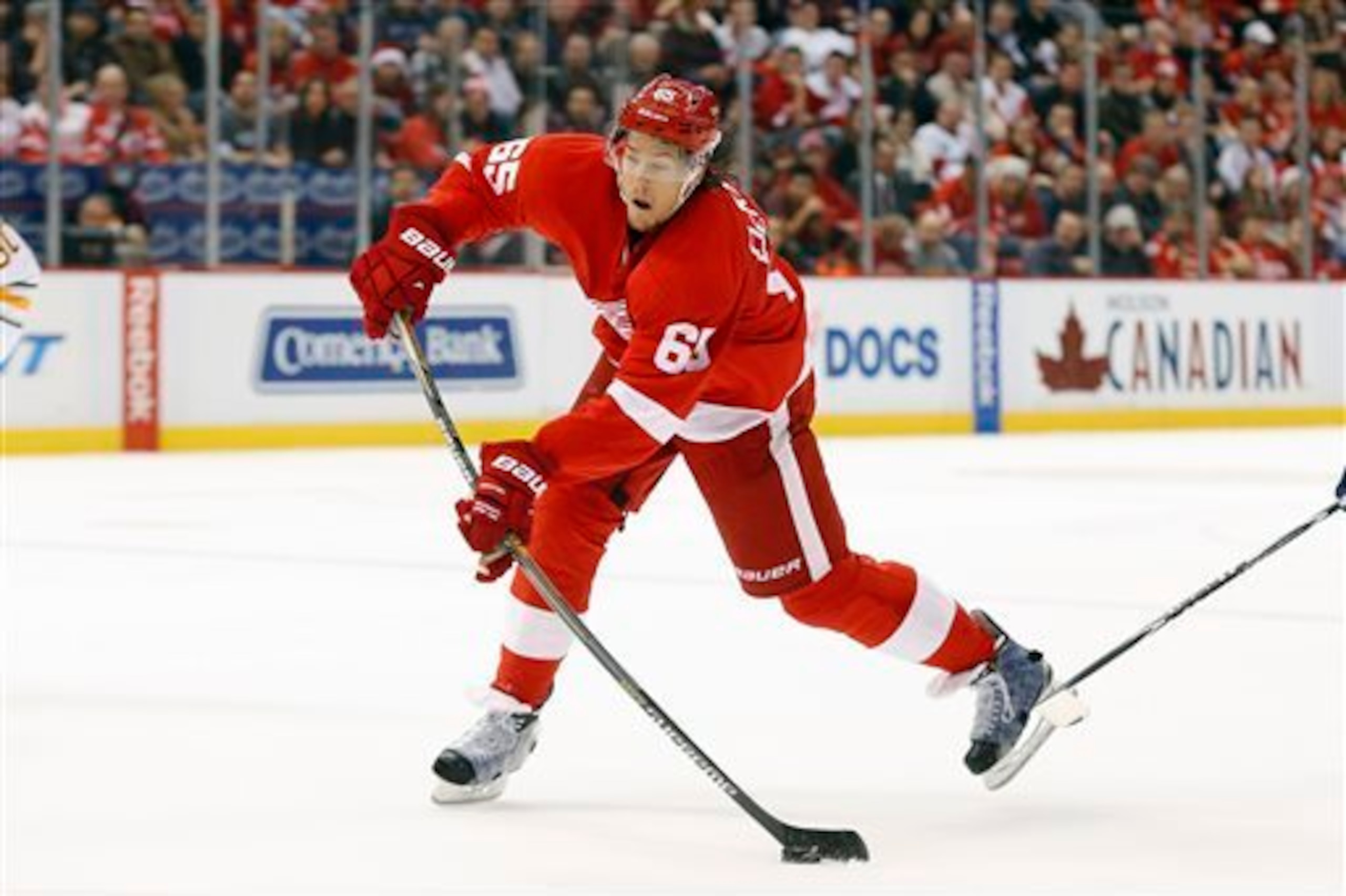
Defensive Play
It’s telling that DeKeyser was used on the Red Wings’ penalty kill right out of the box. Traditionally, the Red Wings are loath to use any young player—let alone a rookie—in such a crucial area of the game. He started off well and has taken on more responsibility both while short-handed and at even strength as his career has progressed.
Offensive Play
A strong even-strength scorer, DeKeyser has been less successful on the power play, though he took strides last season in that regard. Even if he never progresses beyond where he is now, he’s still a plus offensive player for Detroit.
Transition Play
Dekeyser is perhaps just slightly above average in terms of halting opposition rushes at the defensive blue line, and he certainly outperforms both members of Detroit’s incumbent top pair (Niklas Kronwall and Jonathan Ericsson) in that regard. He loses points for an overly cautious attacking game, however.
Overall
A top college free agent a few years back, Dekeyser opted to sign with Detroit, and the Red Wings have thus been the beneficiaries of a player who stepped into the NHL with a remarkably polished two-way game. It’s easy to forget that he only has two full seasons under his belt.
27. Cam Fowler, Anaheim Ducks
14 of 40
Defensive Play
Neither a standout nor a laggard, Fowler is humdrum as a defensive defenceman. He kills penalties and posts middling results, and at even strength, he sits right around the team average in terms of both shot and chance suppression.
Offensive Play
Fowler’s projected evolution into a top-flight offensive defenceman never happened. He’s useful—though not spectacularly so—on the power play and his even-strength points/hour tends to hover right around the NHL defensive average.
Transition Play
The strongest part of Fowler’s game is in transition, just like a lot of defencemen who look like they should be offensive threats but don’t put up a pile of points. He’s aggressive at the defensive blue line and when carrying the puck. In 2013-14, no regular Ducks defenceman carried the puck over the opposing blue line more frequently and no regular Ducks defenceman allowed the opposition to do so less frequently.
Overall
At either end of the ice, Fowler’s fairly ordinary. What elevates his game above the average is his unique ability to arrange things so that he spends more time at the right end of the rink. Offensively he’s a catalyst, making a good first pass or rushing the puck himself, and defensively his best quality is stopping the opposition before it ever gets to Anaheim’s zone.
26. Jonas Brodin, Minnesota Wild
15 of 40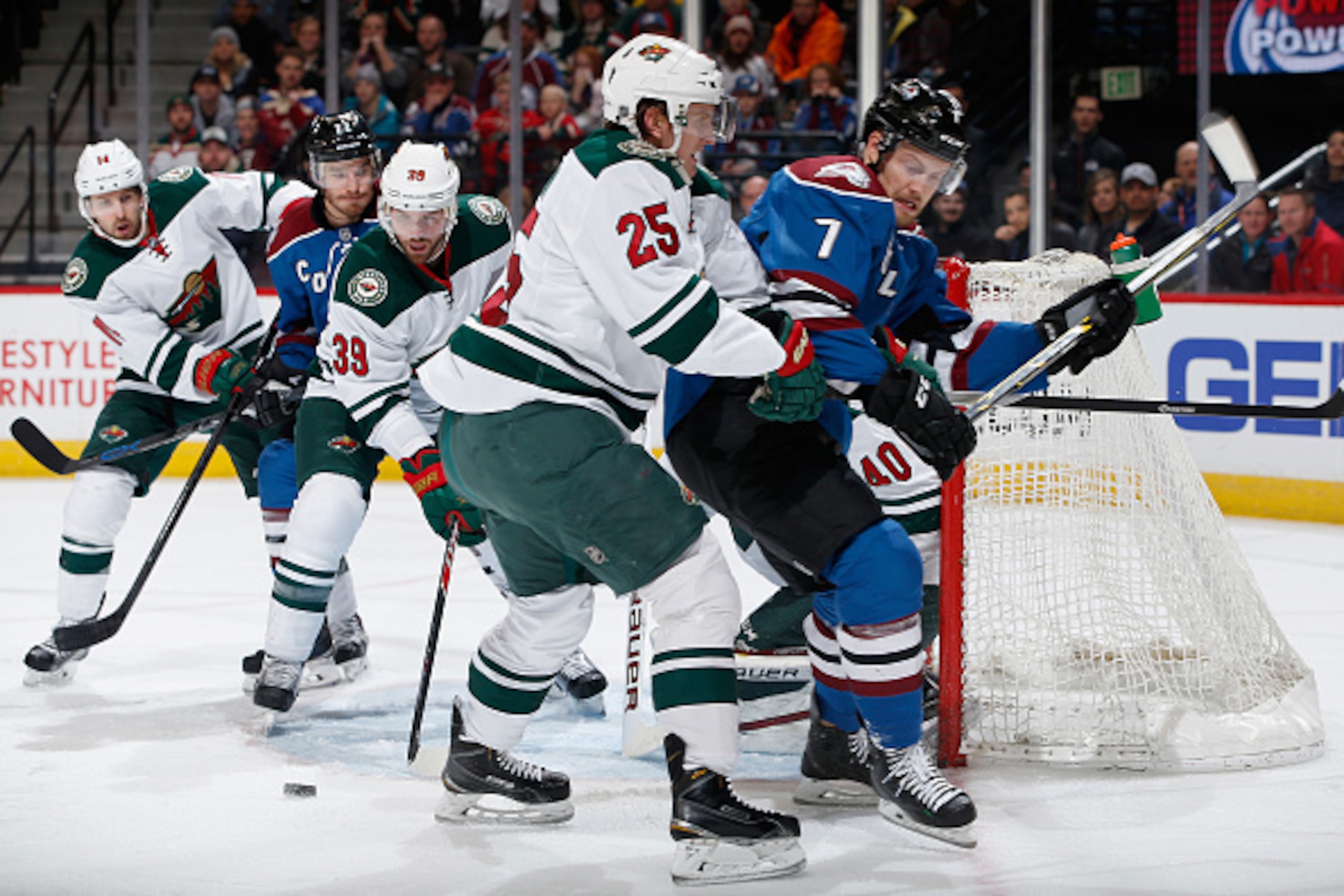
Defensive Play
There aren’t many NHL veterans who play as safe and sound a game defensively as Brodin does, and the Swedish defender is only 22 years of age. He’s a regular on the penalty kill and excels at making reads and reacting at five-on-five.
Offensive Play
Although an effective puck-mover, we’re still waiting on Brodin to develop an offensive edge to his game. He has averaged 18 points per season over his last two NHL campaigns.
Transition Play
As one would expect, Brodin provides value in the neutral zone, heading off opposition rushes and fostering offence through intelligent play with the puck.
Overall
Brodin is one of the top up-and-coming defencemen in the game. We’ll see maturation defensively as he continues to enter the prime seasons of his career, but the item that will really propel him to the top of lists like this will be offence. He’s a gifted puck-mover, and at some point, he’s going to translate that into production. It might even happen this year.
25. Christian Ehrhoff, Los Angeles Kings
16 of 40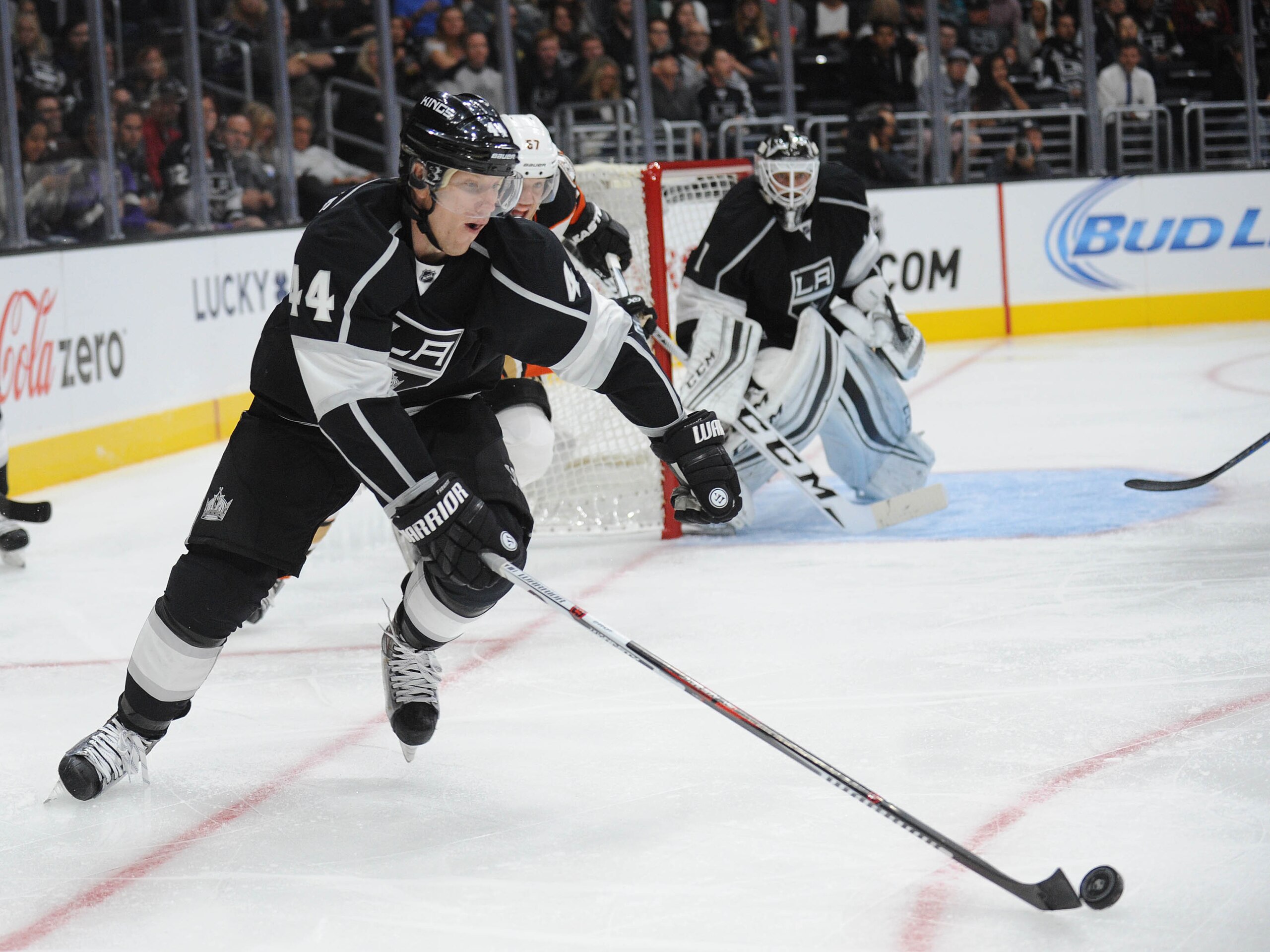
Defensive Play
Ehrhoff is not typically thought of as a defensive defenceman, and not without reason, but one must admit he’s done good work in some tough situations. He’s been effective on the penalty kill in the past, and at even strength, he’s held his own against top opposition.
Offensive Play
Ehrhoff is typically thought of as an offensive defenceman, but that side of his game has been declining for several years now. He’s not prone to putting up big totals at even strength and is probably best suited to second-unit power-play work at this point in his career.
Transition Play
Where Ehrhoff really excels is in the neutral zone. He’s still an effective catalyst for the offence, moving the puck accurately and carrying it himself when necessary. He also limits his responsibilities inside the defensive zone by playing an aggressive game at the blue line, forcing the opposition to dump the puck.
Overall
This is a very nice addition to a Los Angeles blue line that had some questions exiting last season. Ehrhoff will help to stabilize the second pairing and can be trusted by head coach Darryl Sutter in almost any situation.
24. Hampus Lindholm, Anaheim Ducks
17 of 40
Defensive Play
Despite being just 21 years old, Lindholm plays a strong defensive game. He’s used in tough situations, including on the penalty kill, and his combination of size (6’3”, 205 lbs), mobility and intelligence makes him tough to beat. We expect to see further development in this part of his game next year.
Offensive Play
Lindholm was an elite five-on-five producer out of the box, topping 1.0 points/hour in his rookie season and showing last year that it was no fluke by improving that number. He has yet to find the same measure of success on the power play, though he took strides in that regard last season.
Transition Play
Like most of the best young Swedish defencemen breaking into the game today, Lindholm excels in transition. He’s effective both carrying the puck into the offensive zone and defending his own blue line.
Overall
Sweden has been earning a lot of positive press for developing poised young defencemen, and Lindholm certainly fits the bill. He brought a shocking amount of poise and two-way competency the moment he stepped into the league and continues to evolve.
He’s quite strong defensively at the age of 21, he plays a calm and intelligent game in the neutral zone and he’s a lethal scorer at five-on-five. Give him a bit of time to develop on special teams, and there’s little doubt he’ll be a No. 1 defenceman.
23. Marc Staal, New York Rangers
18 of 40
Defensive Play
Intelligent, agile and physical, it isn’t surprising that Staal has rounded into an effective defender at the NHL level. He’s leaned on heavily in defensive situations at even strength and also plays a key role on the Rangers’ penalty kill.
Offensive Play
Staal shows offensive flashes, but for the most part he has embraced a low-profile defensive game at the cost of his scoring. He hasn’t scored at a league-average level at even strength over a full season since 2009-10 and seems to have been shut out of the Rangers’ power-play plans despite some successes earlier in his career.
Transition Play
The same qualities that make Staal effective in the defensive zone equip him to ward off opponents as they attempt to enter New York territory. He frequently breaks up rushes and significantly outperforms the team average in terms of forcing dump-ins.
Overall
When Staal started flirting with the 30-point mark in his early 20s, it seemed only a matter of time until he was a two-way threat who combined high-end defensive play with a significant scoring touch. That never happened, but he’s still a very useful player.
22. Mark Streit, Philadelphia Flyers
19 of 40
Defensive Play
Although he isn’t leaned on for penalty-killing work, Streit still logs heavy minutes at even strength and handles them effectively. He’s a disciplined and intelligent defender, leaning more on positioning and stickwork than brawn to keep opponents in check.
Offensive Play
Streit is one of the league’s better offensive defenceman and proved it again as an integral part of the Flyers’ lethal power play. His 52 points last season falls right in line with what he was doing a half-decade ago.
Transition Play
Streit is competent at the defensive blue line, turning aside a reasonable number of opposition rushes, but his true gifts lie on the other end of the neutral zone. He’s still a very capable puck-rushing defenceman.
Overall
It’s a little frightening the degree to which Philadelphia still relies on the 37-year-old Streit, but so far the Swiss defenceman hasn’t let the Flyers down. Still, it may not be wise to plan on him continuing as the team’s No. 1 defenceman.
21. Dion Phaneuf, Toronto Maple Leafs
20 of 40
Defensive Play
It must be acknowledged that Phneuf plays tough minutes, both on the penalty kill and at even strength. As an excuse, though, that only goes so far. The problem is that in both scenarios, the Maple Leafs get shelled. He simply may not be suited to the role of shutdown defenceman.
Offensive Play
There was a time when Phaneuf was one of the game’s top young offensive blueliners. These days, he struggles to post league-average points/hour numbers at even strength and is just competent on the power play.
Transition Play
If there’s one place where Phaneuf excels, it’s at the defensive blue line. His physical style of play, combined with a dogged determination, forces more dump-ins than most defencemen. He’s also capable of carrying the puck in offensively.
Overall
The days of Phaneuf being a Norris Trophy candidate are in the distant past, but the man still has a lot to contribute to an NHL team. He wouldn’t be hurt by a reduction in role, though his $7 million cap hit (per Spotrac) makes that difficult.
20. Niklas Kronwall, Detroit Red Wings
21 of 40
Defensive Play
In 2013, the Red Wings surrendered 88.6 shot attempts per hour on the penalty kill with Kronwall on the ice. Last year, it was 107.9, which is lousy. The team hasn’t gotten worse. Kronwall’s numbers have eroded even as other players have performed well. The 34-year-old simply isn’t the defensive rock he once was, and he’s probably going to be worse next season.
Offensive Play
Kronwall has been extremely effective in recent years on a lethal Detroit power play. His numbers on the man advantage compare really well to those of P.K. Subban and Kris Letang. Where he loses marks is at even strength, where his three-year scoring totals are essentially NHL-average.
Transition Play
Kronwall doesn’t hold his own blue line these days. The opposition is literally twice as likely to gain Detroit’s zone with possession of the puck as it is to dump it in when attacking Kronwall’s side of the ice. He isn't particularly gifted at carrying the puck into the offensive zone.
Overall
Much of the write-up above has been negative, and mostly that’s to explain why Kronwall comes in comparatively low on our list. He’s still a useful NHL player, but a reduction in role seems necessary.
19. Francois Beauchemin, Colorado Avalanche
22 of 40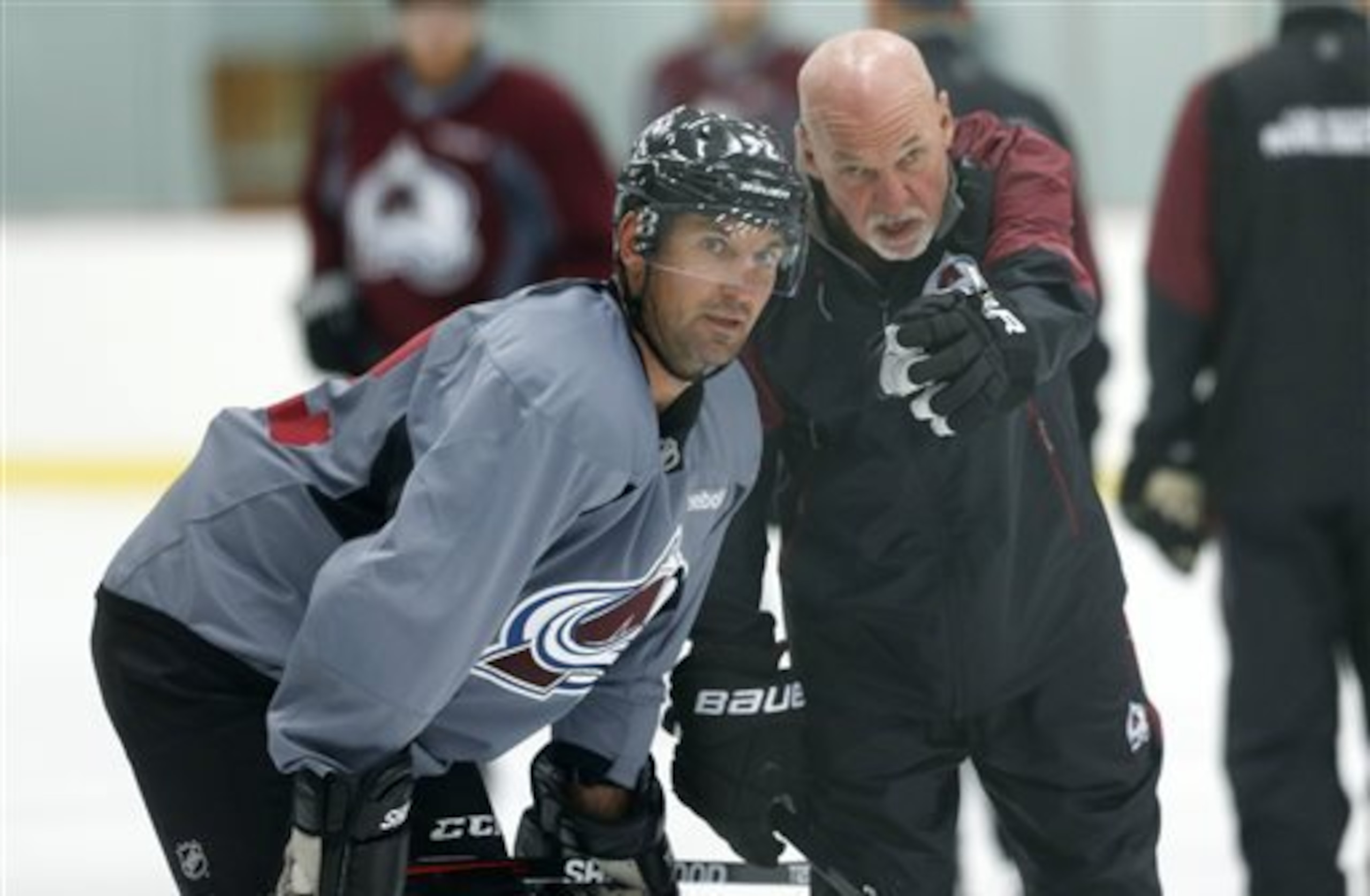
Defensive Play
In Beauchemin, the Avs are adding a solid veteran who brings a lot of value to the defensive zone. He was the Ducks’ best and most reliable penalty-killer and a player trusted to play the tough minutes at even strength.
Offensive Play
Beauchemin grades out as just slightly above average in terms of even-strength offence. On the power play, he’s a reasonable option but not a guy any team wants playing higher than the second unit.
Transition Play
Although not much of a puck-rusher, Beauchemin stands out as being quality in a more important area of the game for a defenceman: the defensive blue line. He did a good job of breaking up opposition entries.
Overall
At age 35, Beauchemin isn’t the player he once was, but he’ll still help stabilize a questionable Colorado defence corps. His most important work will be from the defensive blue line on back, where he’s still a first-rate NHLer.
18. Alexander Edler, Vancouver Canucks
23 of 40
Defensive Play
Maybe it’s being paired with Chris Tanev or maybe it’s the new head coach, but after a couple of difficult years, Edler enjoyed a fine 2014-15 campaign—particularly defensively. He was solid in his own zone at even strength and posted decent results with heavy usage on the penalty kill.
Offensive Play
As Edler enjoys a resurgence defensively, the same can’t be said for his offensive game. After four years in near-elite territory at even strength, Edler has fallen into the range of 0.5-0.6 points/hour in each of the last two years. He remains solid on the power play.
Transition Play
Edler provides competent play at both blue lines, but no more than that. His performance both as a puck-carrier and blue-line defender tends to mirror the team average.
Overall
The 29-year-old defender has eschewed point production for reliable defensive-zone play in recent years and on the whole has arguably become an improved player as a result.
17. Dan Hamhuis, Vancouver Canucks
24 of 40
Defensive Play
The numbers don’t quite match up to Hamhuis’ formidable reputation as a defensive defenceman. He’s quite competent on the penalty kill but hasn’t stood out in recent years when compared to the rest of Vancouver’s defence corps. His Corsi numbers are solid, but in terms of chances and high-danger chances against, they get much softer. He’s good but hardly a tower of power.
Offensive Play
Hamhuis is actually a remarkably competent offensive defenceman at even strength. He reliably scores above the league average in points/60 and at times comes in well above it. His 0.89 points/hour over the last three years is highly comparable to the totals of Oliver Ekman-Larsson, Ryan McDonagh and Justin Faulk. His power-play scoring has fallen off a cliff in recent years, though, hurting his grade.
Transition Play
Where Hamhuis does stand out as being well above average is at the defensive blue line. He’s the best of Vancouver’s workhorse defenders at denying zone entries. He’s not particularly aggressive at the offensive end of the rink.
Overall
We’ve seen Hamhuis fade just a little bit over the last few years as he gets into his 30s. With that said, he’s still a very solid hockey player today.
16. Andrej Sekera, Edmonton Oilers
25 of 40
Defensive Play
Sekera’s defensive numbers on the whole tend toward average, with some caveats. He plays more difficult opposition than most defencemen, starts more shifts in the defensive zone than most defencemen and takes fewer penalties from running around out of position than most defencemen. On the whole, these are good signs.
Offensive Play
There’s nothing particularly special about Sekera on the power play. He’s essentially a run-of-the-mill second-unit weapon there. He makes up for that by producing markedly above-average numbers at even strength.
Transition Play
Roughly average in terms of defending his own blue line, Sekera gets some bonus points here because he’s a willing puck-rusher.
Overall
The Oilers’ new No. 1 defenceman is certainly a poor man’s choice for the role, but he is a quality veteran and should help stabilize things on one of the game’s worst blue lines.
15. Brian Campbell, Florida Panthers
26 of 40
Defensive Play
Campbell always had a reputation as a smart hockey player, and it’s obvious why when one looks at the evolution of his defensive game over the years. There was some erosion last season, but over the last three years, he’s been wonderfully efficient at limiting shots and chances against at both even strength and on the power play.
Offensive Play
Once a top scoring defenceman, Campbell has seen the bite disappear from his offensive game. Some of that stems from playing for a Florida team that hasn’t been able to find the net with a map and compass in recent years, but some of it is also likely due to age. His numbers at even strength and on the power play are in steep decline.
Transition Play
Where Campbell’s intelligence and mobility really show is in the neutral zone. He remains one of the NHL’s most active puck-carrying defencemen, but more importantly, he’s also conscientious at the defensive blue line. He’s a tough player to gain the offensive zone against.
Overall
There were a few years when Campbell was regarded as an offensive specialist. Nothing could be further from the truth these days—the 36-year-old has reinvented himself as one of the game’s more reliable presences in the neutral and defensive zones. It’s a real shame that he’s been such a standout in such a forgotten market for so long, particularly since a decline is inevitable.
14. Zdeno Chara, Boston Bruins
27 of 40
Defensive Play
Even at his advanced age, Chara is still one of the NHL’s better defensive defencemen, but the gap between him and the rest of the league is closing steadily. He’s no longer one of the league's best at suppressing shots and chances against at even strength or on the penalty kill. Even measured against the rest of the Bruins, it’s now possible to make arguments for other players.
Offensive Play
Last season was the third consecutive year in which Chara’s offensive contribution at even strength shrunk. His power-play production was down again last year, too. The two worst seasons he’s had on the man advantage since 2005-06 both occurred in the last three years (impressive rebound in 2013-14 notwithstanding). At age 38, he’s clearly falling off here.
Transition Play
Chara only grades out to average here. He’s not much of a puck-rusher—not that he ever really excelled there—and his ability to break up plays at the blue line seems to have dropped off as he slows down.
Overall
Arguably the NHL’s most complete defenceman in the prime of his career, Chara used to be a franchise-defining player. As he nears the end of the line, he’s still a very good one.
13. Andy Greene, New Jersey Devils
28 of 40
Defensive Play
Even in New Jersey, a team which has long enjoyed had a reputation for stingy defensive play, Greene stands out. The undersized rearguard plays a highly intelligent defensive game, and it shows up in the numbers. Not only does he play tough minutes at even strength and excel at preventing chances against, but he’s an effective workhorse on the penalty kill, and that’s not a common thing for a 5’11”, 190-pound defenceman.
Offensive Play
Unlike most undersized defencemen, Greene isn’t in the NHL because he plays a particularly compelling brand of offensive hockey. He’s competent but not much more than that, posting mediocre numbers on the power play and coming in south of the NHL average in terms of points/hour. We’ve cut him a bit of slack because he plays in New Jersey, but even so, he’s not a special player in this area.
Transition Play
Unsurprisingly, Greene is also good in the neutral zone. The Devils don’t allow their defencemen to carry the puck into the offensive zone very often, but Greene sneaks the odd controlled entry in here and there. He’s also good at forcing breakups at the defensive blue line, though he allows controlled entries more than the game’s elite defencemen do.
Overall
In terms of getting attention, Greene suffers because he’s neither a crash-and-bang defender nor a great offensive producer. His career high in points is 37, and that’s the only year he got any awards love at all. Nevertheless, he’s a really good defenceman, combining intelligence and discipline and quietly eating up tough minutes.
12. Roman Josi, Nashville Predators
29 of 40
Defensive Play
It’s virtually impossible to get a true feel for Josi with current analytics because outside of his rookie year, he’s been welded at the hip to Shea Weber. That means lots of tough opponents and a fair amount of success, but it also makes it hard to figure which of the two is driving results. By eye, he’s solid.
Offensive Play
Josi is a solid even-strength scorer and has posted lovely numbers in the last two seasons, but his offensive prowess doesn’t seem to extend to the power play. He’s played a ton on the man advantage over the past three seasons and has been firmly mediocre.
Transition Play
At the offensive end of the rink, Josi’s excellent. He’s a strong puck-carrier and isn’t afraid to carry the puck into the offensive zone himself if an opportunity opens up. But for all his strength on that side of the game, he’s not been good when it comes to defending his own blue line. Opposition teams make a habit of targeting his side of the ice when entering the zone, and they generally gain it with possession.
Overall
Weber’s protege looked to come into his own last year. He’s a very good young defenceman, but it remains to be seen how he’d fare without one of the best defencemen in the game as his partner.
11. Jake Muzzin, Los Angeles Kings
30 of 40
Defensive Play
The key point working against Muzzin is that the Kings don’t trust him on the penalty kill. Other than that, the news is unambiguously good. With Muzzin on the ice at even strength, the Kings see very few shot attempts, chances or high-danger chances against (even by Kings standards), and that holds true whether he’s out there with Drew Doughty or not.
Offensive Play
Again, special teams don’t stand out in a good way. Muzzin hasn’t been particularly effective on the power play. He’s quite good as an even-strength scorer, though.
Transition Play
At both ends of the rink, Muzzin fares well. He’s good at defending his own blue line and exploiting opposition defences at the far end of the ice. His work in this area of the game is one of the reasons his underlying metrics are so favourable.
Overall
Increasingly, it’s possible to look at Muzzin as more than just Doughty’s regular partner. He stands on his own two feet and has been an excellent even-strength defenceman practically since the moment he stepped into the NHL.
10. Ryan Suter, Minnesota Wild
31 of 40
Defensive Play
Suter is the kind of player that every team wants in the defensive zone. His Corsi against numbers at even strength aren’t particularly spectacular for the team he plays on, but he gets progressively better when one looks at scoring chances and high-danger chances. He’s excellent on the penalty kill. From the blue line in, there aren’t many players in the game who have more value.
Offensive Play
With all of that said, Suter’s nothing special as an offensive talent. His scoring numbers at even strength and on the power play are virtually the definition of average. If, as is often suggested, Suter’s incredibly heavy usage is reducing his effectiveness, the Wild could probably stand to give him a bit less time on the man advantage.
Transition Play
As good as Suter is from the blue line in, he’d be a lot more effective if he spent less time on the defensive end. He surrenders the blue line too easily. In 2013-14, no Wild defencemen saw opponents carry the puck in more frequently than he did.
Overall
It’s hard to know if the conservative approach Suter takes at the blue line is really a fault in his game or simply a response to the fact that he seemingly never leaves the ice. Either way, it’s bringing down an otherwise wonderfully effective defender.
9. Nick Leddy, New York Islanders
32 of 40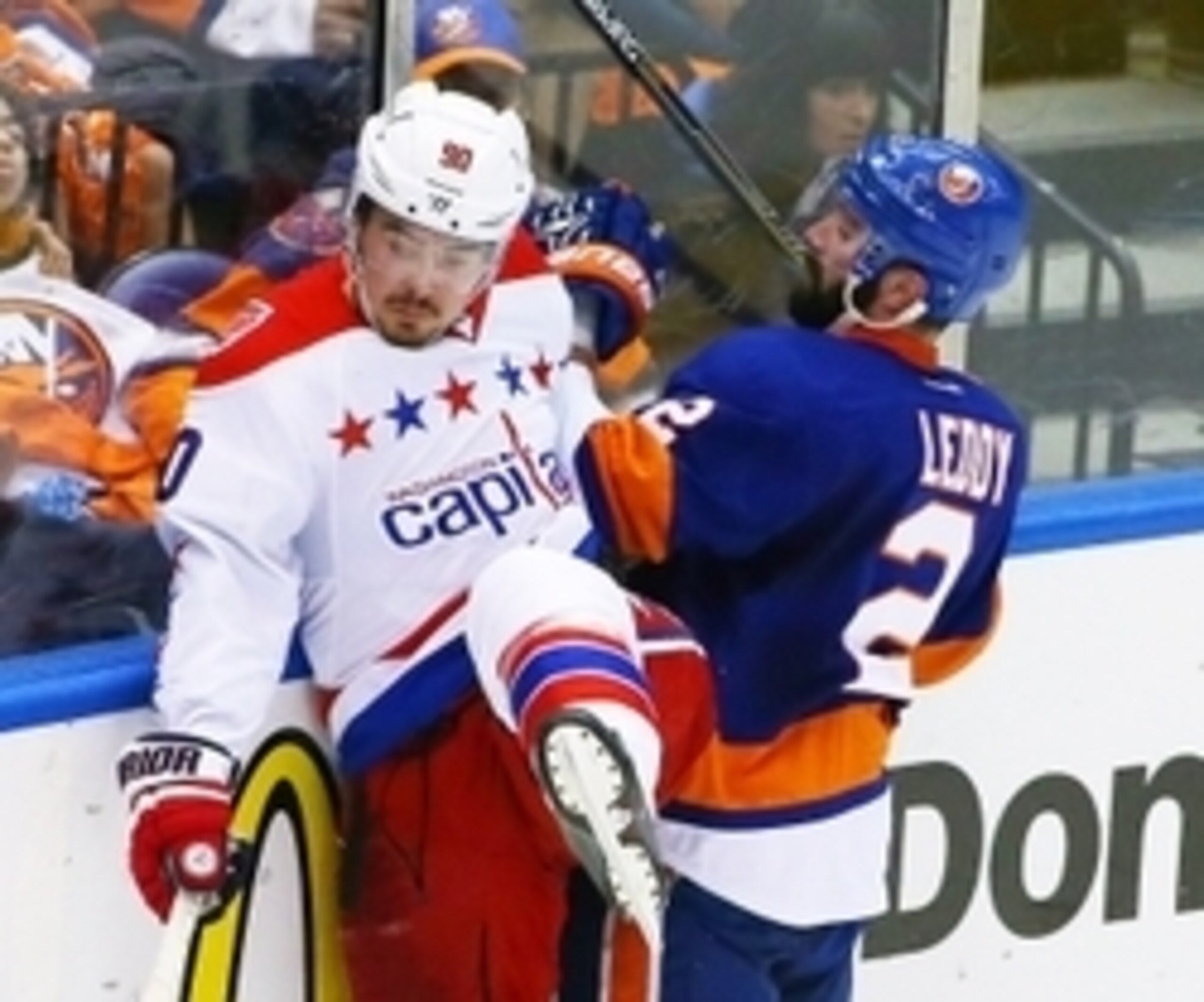
Defensive Play
There’s nothing overly impressive about Leddy’s resume at his own end of the rink. He’s not generally entrusted with penalty-killing work. His even-strength performance last season was a step forward from previous campaigns and may represent him turning a corner, but for now, it’s hard to grade him any better than average in this department.
Offensive Play
Leddy is one of just 18 NHL defencemen to play in at least 100 games over the last three seasons while simultaneously scoring at least 1.0 points/hour at even strength. He’s also solid on the power play. Last season was his most productive year at five-on-five, and at age 24, it’s reasonable to think he hasn’t peaked yet.
Transition Play
Where Leddy is positively spectacular is in the neutral zone. He’s brilliant at gaining the offensive blue line with possession, ranking near the top of the league in that category in 2013-14. During his time in Chicago, no defenceman was better at holding the defensive blue line than Leddy was, and while he was playing well down the depth chart, that’s still extremely impressive. He’s elite in this category.
Overall
The Islanders did extremely well landing Leddy last fall. He’s going to be a franchise cornerstone for many years to come.
8. Paul Martin, San Jose Sharks
33 of 40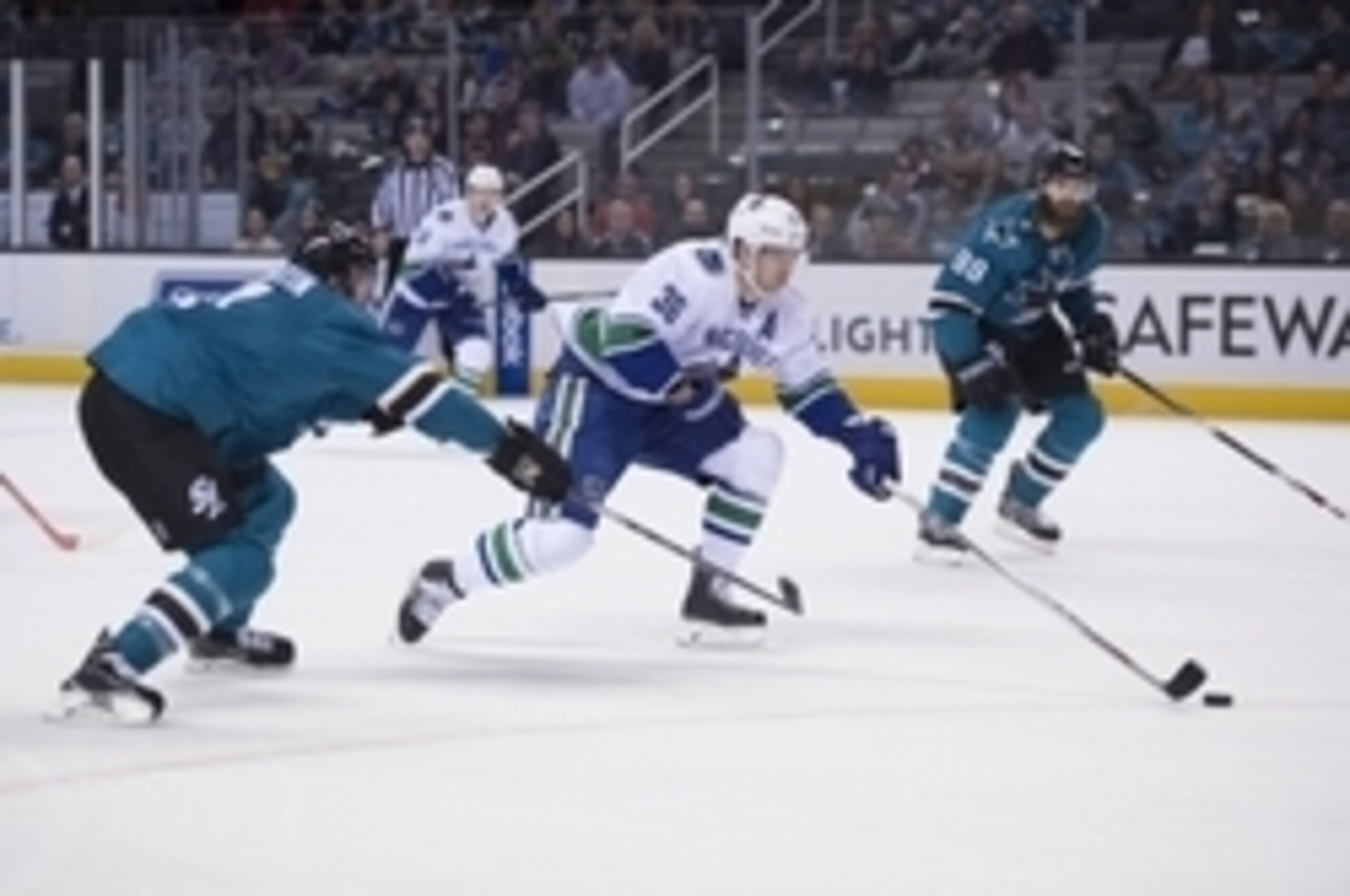
Defensive Play
Martin really doesn’t fit the typical idea of a defensive specialist, but in many ways, that’s what he is. He consistently plays tough competition and limits chances against at even strength. He plays regular minutes on the penalty kill, and his team’s performance improves markedly when he’s out there. He’s not a crease-clearing defencemen, but he’s nevertheless effective at neutralizing opposing teams.
Offensive Play
Although not a standout offensive player, Martin fares better in this category than the average NHL defencemen. He contributes offensively at even strength, scoring 0.85 points/60 in a league where the average contribution is closer to 0.74. He’s also capable of playing on the power play, though his numbers there are pedestrian.
Transition Play
What powers Martin to his prominent place on this list is his elite ability to prevent opponents from gaining his team’s zone with the puck. No full-time defenceman in the game does as good a job of both breaking up plays and forcing dump-ins. In terms of protecting the defensive blue line, he might be the NHL’s best defenceman. He’s less capable when it comes to entering the offensive zone, though again he’s above-average there.
Overall
One of the rare left-shooting defencemen who doesn’t just play his off side but actually excels at the position, Martin is one of those players hurt by our general tendency to focus on offence and our difficulty in measuring defensive contribution. The only red flags here are age and injury, as the 34-year-old Martin has missed significant time in three of the last six seasons. He is expected to move back to the left side with San Jose this season.
7. Niklas Hjalmarsson, Chicago Blackhawks
34 of 40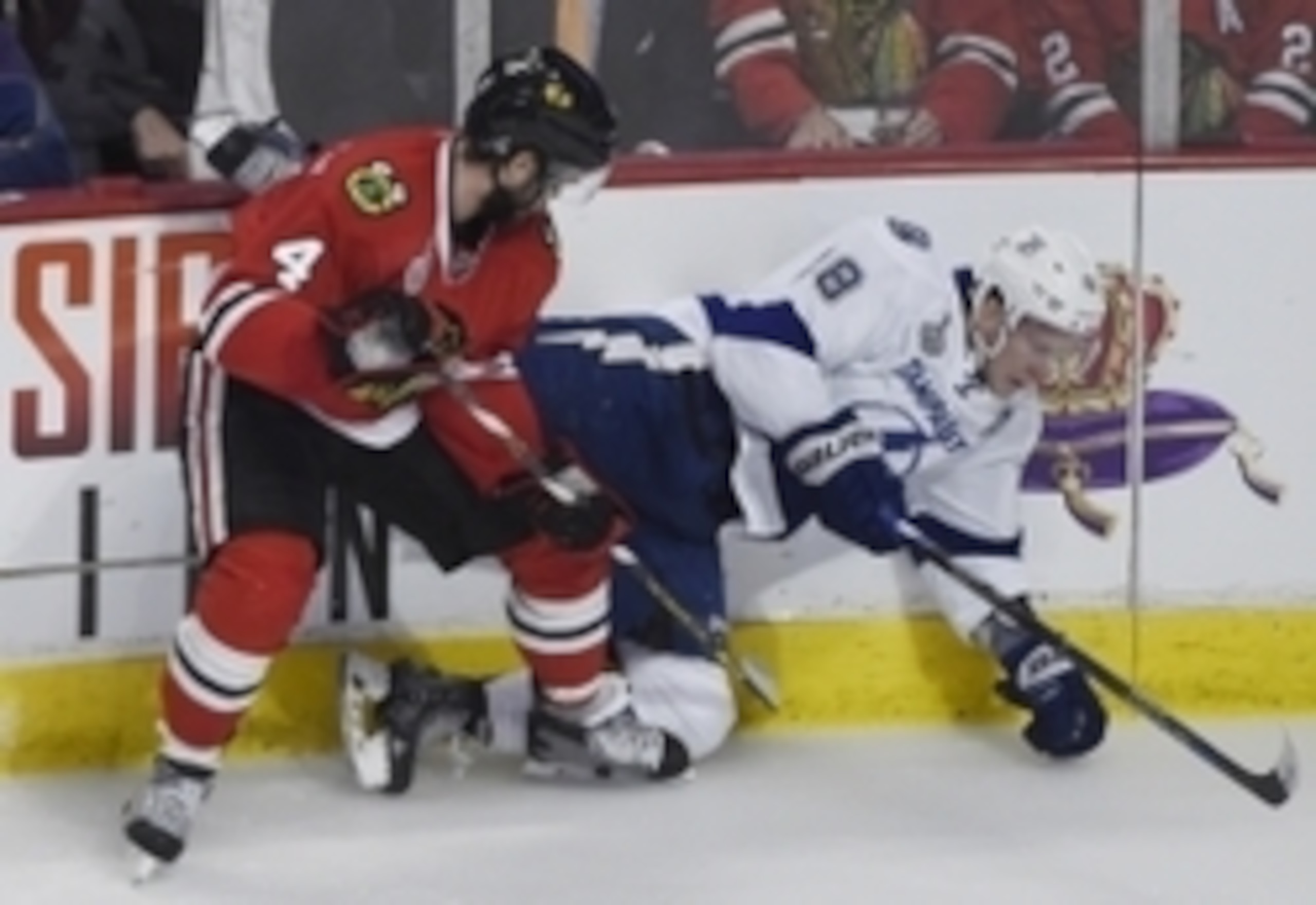
Defensive Play
Chicago has plenty of good defencemen, so it speaks volumes that it’s Hjalmarsson who plays the toughest competition and takes on the most severe zone starts on the team. It’s also telling that the Blackhawks surrender fewer chances with him on the ice than they do with Brent Seabrook, Duncan Keith or Oduya out there. He’s the team’s top penalty-killer, both in terms of ice time and results when he’s on the ice. He may be the best pure defensive defenceman in the league.
Offensive Play
One surprise is that Hjalmarsson is actually exactly NHL-average in terms of putting up points at even strength in the last few years. We did dock him some points because he’s not used on the power play at all.
Transition Play
There is absolutely nothing surprising in Hjalmarsson’s zone entry/zone exit data. He’s wonderfully effective at preventing the opposition from gaining Chicago’s end with the puck, as befits his defensive work in other areas. He’s also conservative when it comes to carrying the puck into the opposition zone, as befits his single-minded focus on defensive play.
Overall
Very, very few teams in the NHL have the luxury of playing someone like Hjalmarsson regularly on their second pairing. He’s been one of the key figures in Chicago’s successes in recent years.
6. Ryan McDonagh, New York Rangers
35 of 40
Defensive Play
McDonagh undeniably plays tough minutes. He sees lots of good opponents and starts a surprisingly large percentage of his shifts in the defensive zone. But while he contributes to a good Rangers penalty kill and keeps chances down to a reasonable level, he doesn’t move the dial in these categories as much as someone like Calgary’s Mark Giordano.
Offensive Play
Although better than the average NHL defenceman, McDonagh isn’t really an offensive difference-maker. His power-play numbers are ordinary and his even-strength point production dipped last year, bringing his three-year average down to just a bit better than the NHL median.
Transition Play
Transition work isn’t a weakness, but it isn't a particular strength for McDonagh either. He’s reasonably good at breaking up opposition zone entries, and he's also reasonably good at carrying the puck, but he’s not so far above the NHL average that he gets big points for his work.
Overall
One of the tougher items to measure here is the impact of playing regularly with one partner. McDonagh almost without exception plays with Dan Girardi, whose work seems to have fallen off over the last few years. It’s eye-opening to compare New York’s results with McDonagh/Girardi on the ice (50.8 goals for percentage, 49.5 Corsi percentage) to the team’s numbers with McDonagh and Anton Stralman (63.2 goals for percentage, 60.5 Corsi percentage). We’ve tried to work in the impact of Girardi on McDonagh’s numbers, but it’s something that’s hard to properly assess until we see the duo separated for a significant period of time.
5. Marc-Edouard Vlasic, San Jose Sharks
36 of 40
Defensive Play
Vlasic entered the NHL in 2006 after a superb year in the QMJHL, a season in which he scored better than a point per game in both the regular season and playoffs. So it’s a little ironic that he’s emerged as one of a handful of elite defensive defencemen in the game of hockey. It’s hard to think of a more perfect shutdown defencemen at even strength, where he goes against the best the majors have to offer and routinely frustrates their offensive efforts.
Offensive Play
We’ve mentioned Vlasic’s illustrious junior career already, but it seems he left his offensive game back in Quebec. Vlasic is flat-out bad on the power play and comes in just a touch below the league average in terms of five-on-five scoring.
Transition Play
One of the keys to Vlasic’s defensive success is that he’s lethal at the blue line. He’s one of the best players in the league at turning opposition rushes into dump-ins, and almost no defenceman in hockey is as good a stripping the puck away from the other team in these situations. Unsurprisingly, he’s less enthusiastic about rushing the puck himself.
Overall
It’s virtually a given that Vlasic will never win a major award because defensive defencemen don’t and he’s a specialist in that area of the game. But he’s also a genius in his chosen approach, and we wanted to recognize that here.
4. Oliver Ekman-Larsson, Arizona Coyotes
37 of 40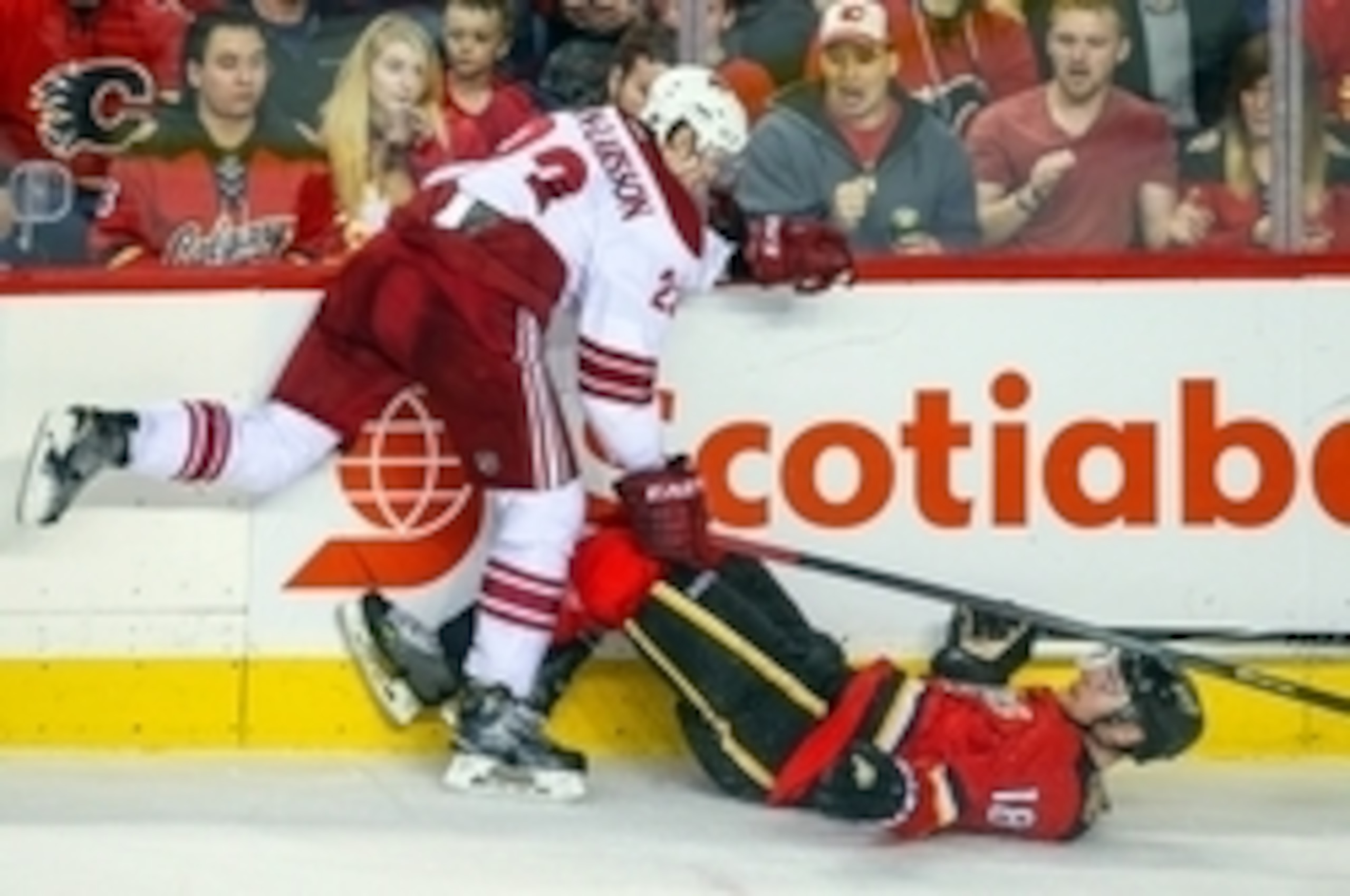
Defensive Play
Ekman-Larsson’s overall numbers hurt from playing for a poor Arizona team, but when we dig into them in the context of that club, they’re awfully impressive. The Coyotes are extremely good at suppressing shots and chances against when he’s on the ice, be it at five-on-five or on the penalty kill, and he plays brutally tough minutes.
Offensive Play
There’s a player earlier on this list who serves as a useful point of comparison: Ryan McDonagh. Like McDonagh, Ekman-Larsson is good but not great in terms of point production at both even strength and on the power play. His three-year averages come in just a touch north of his Rangers counterpart's.
Transition Play
As his offensive numbers would suggest, Ekman-Larsson isn’t a pure puck-rushing defenceman. He lacks the dynamic edge that sets apart the truly great scoring blueliners. However, he’s extremely good at keeping opponents from gaining the Coyotes’ zone, and that’s a more critical skill for a defenceman.
Overall
Analyses that focus on offensive production, a list which generally includes Norris Trophy voting, tend not to give Ekman-Larsson his full due as a defenceman because he simply isn’t an elite offensive weapon. He is, however, one of the great young two-way defenders in the game of hockey.
3. Mark Giordano, Calgary Flames
38 of 40
Defensive Play
As one of the league’s true two-way defencemen, Giordano doesn’t sacrifice defence for offence. Over the last three seasons, no Flames defenceman (minimum 60 games played) has been on the ice for fewer chances/hour than Giordano at even strength despite his assignment of covering the most capable opposition forwards and starting many of his shifts in the defensive zone. He’s also the cornerstone piece of Calgary’s penalty kill.
Offensive Play
Though not an offensive superstar, Giordano is more than comfortable on the attack. He averages better than 1.0 points/hour over the last three seasons, marking him as a top-20 NHL defenceman in terms of even-strength scoring. He’s also a reliable, albeit unspectacular, power-play weapon.
Transition Play
The Flames haven’t done a good job of defending their blue line in recent years, which hurts Giordano’s overall zone-entry numbers, but he’s pretty clearly Calgary’s best blueliner in this area. He’s not overly aggressive on the attack but still carries the puck in more frequently than the average NHL defenceman.
Overall
It’s a shame that an injury derailed Giordano’s chances at a Norris Trophy last season, but at least he’s now being recognized as one of the game’s better defencemen.
2. Duncan Keith, Chicago Blackhawks
39 of 40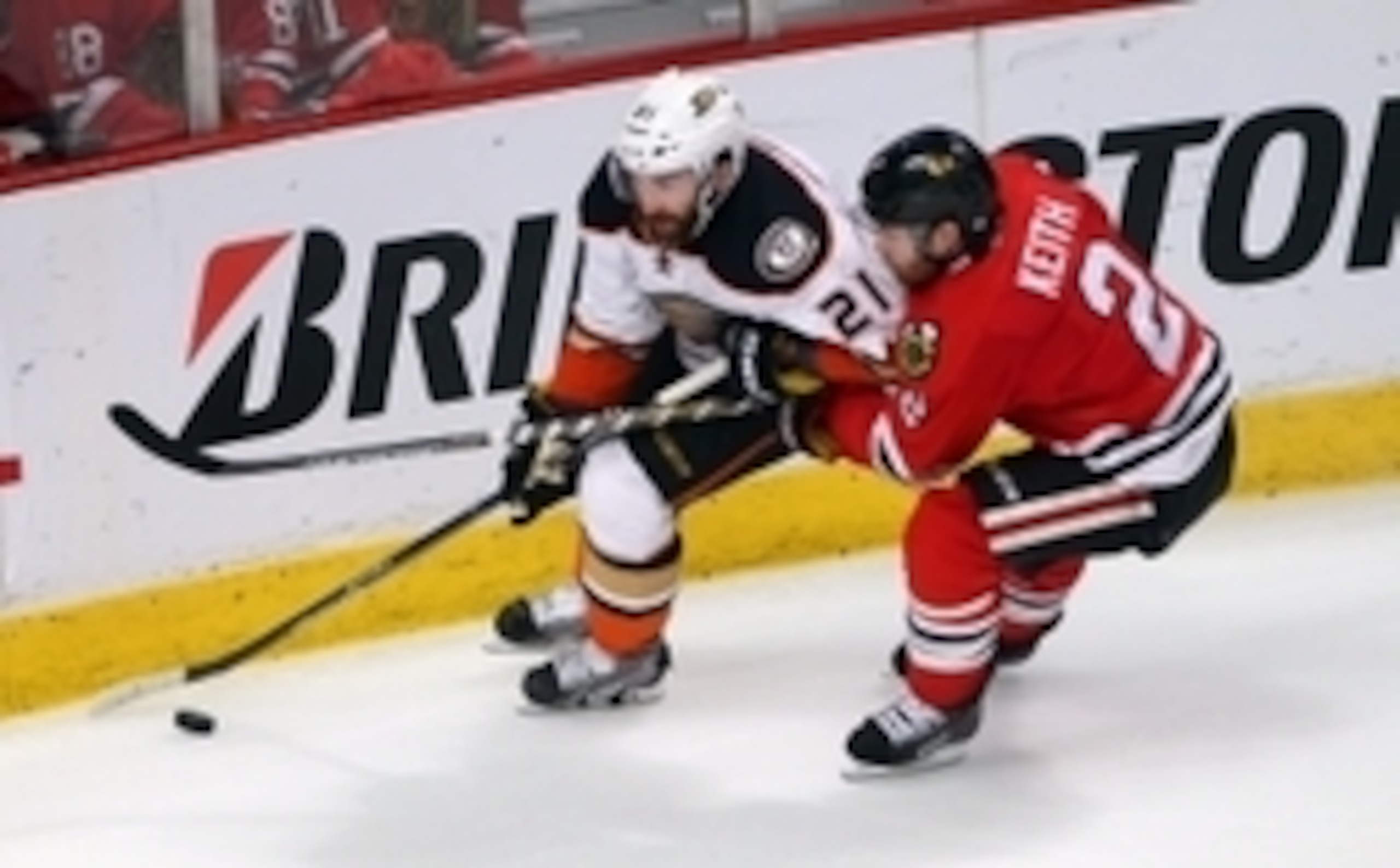
Defensive Play
Keith’s role has become more specialized over the years, not through any particular fault of his own but because the Blackhawks have two pairings capable of playing tough opponents. As a result, he’s played easier minutes than many of the game’s top defencemen and been allowed to take more chances. That’s hurt his numbers in our defensive metrics, though he’s obviously still very good.
Offensive Play
At even strength, there’s no arguing that Keith is one of the game’s top defencemen. One would assume that would translate to the power play, but Keith’s numbers in that department have been hurt a bit by Chicago’s weak performance in recent years. Despite its impressive collection of talent, the club has only been average at scoring goals on the man advantage.
Transition Play
Keith is less aggressive carrying the puck in than I really expected, though again he’s comfortably north of the league average in that category. He does a good job of defending his own blue line, forcing dump-ins and breaking up plays. In 2013-14, he ranked sixth in the NHL in terms of creating turnovers at his own blue line.
Overall
At age 32, Keith still has gas left in the tank, but we should expect to see some declines in his overall game as he continues to move out of his prime years. The two-time Norris Trophy winner remains one of the best defencemen in hockey, and his performance in the 2015 playoffs was one for the ages.
1. Victor Hedman, Tampa Bay Lightning
40 of 40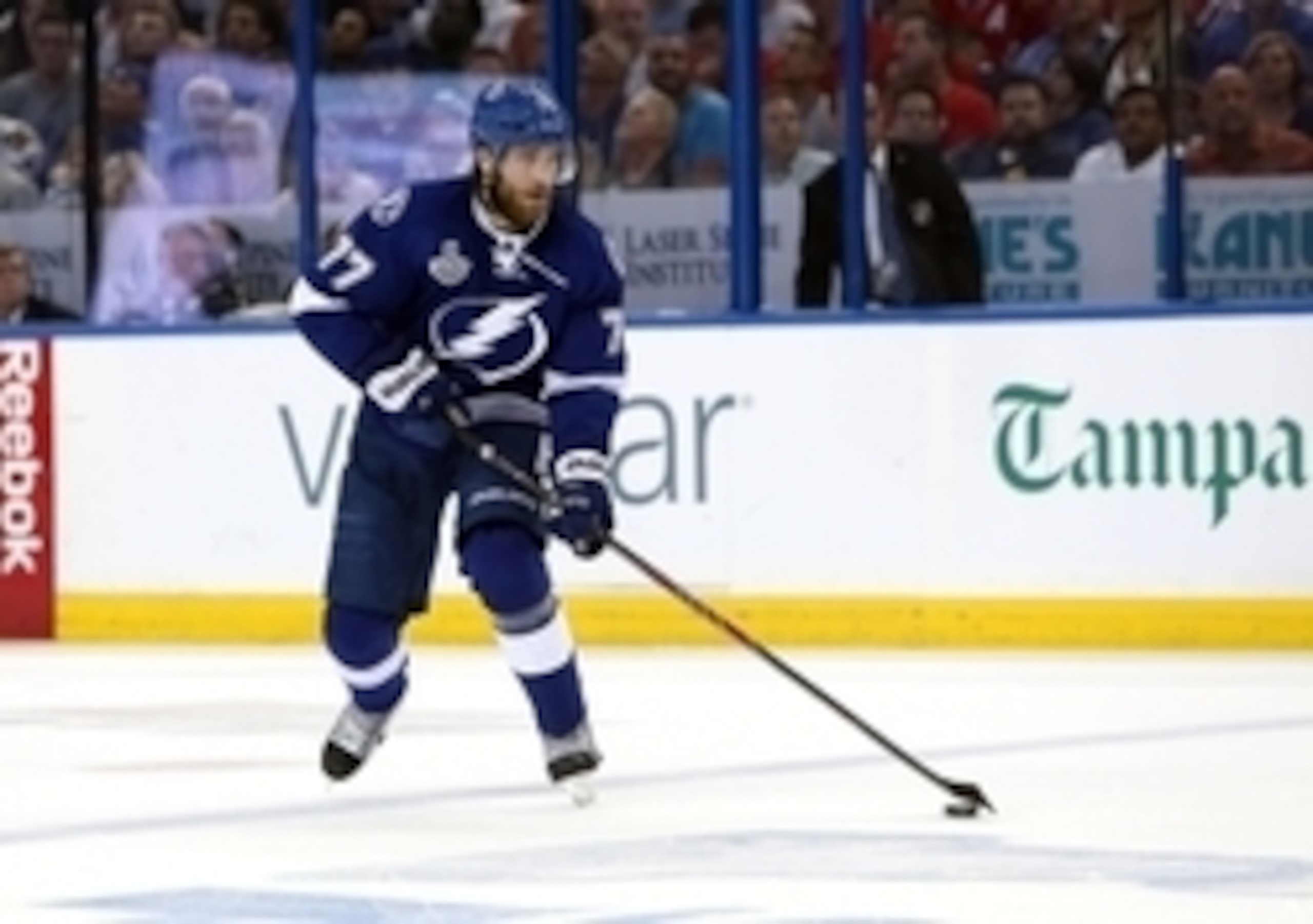
Defensive Play
Hedman has some significant advantages when it comes to playing defence. A mobile 6’6”, 223-pound rearguard isn’t going to find many opponents that he can’t match. Tampa Bay’s penalty-killing unit is better in terms of limiting shots and chances when Hedman’s on the ice than when he's not. That changes somewhat at even strength, as Hedman’s high-event style of play allows some opposition opportunities.
Offensive Play
Over the past three seasons, no NHL defenceman has scored more points/hour than Hedman. This was overlooked for a long time because of limited power-play opportunities and playing in a small market, but now that he’s a (very effective) regular on the man advantage and has enjoyed a brilliant playoff run, he’s getting the credit he deserves.
Transition Play
Unsurprisingly, Hedman is among Tampa Bay’s most effective defencemen at both creating offensive-zone entries and preventing defensive-zone entries. His work at the defensive blue line is particularly impressive, as he forces dump-ins and breaks up plays entirely at high rates. That’s where a long reach and mobility serve him particularly well.
Overall
The 2015 playoffs revealed to the hockey world that Hedman is the kind of cornerstone defenceman that every NHL team covets. He’s a complete player who can impact the game in a multitude of ways and is one of the finest rearguards in the game today.

.jpg?w=2560 "Rap: Lions, LaPorta End Contract Talks")

.jpg?w=2560 "Report: Baker May Miss Up to 6 Weeks")
.jpg?w=2560 "OBJ Calls Out Giants After Release")
.jpg?w=2560 "EVERY Fantasy Football Update")