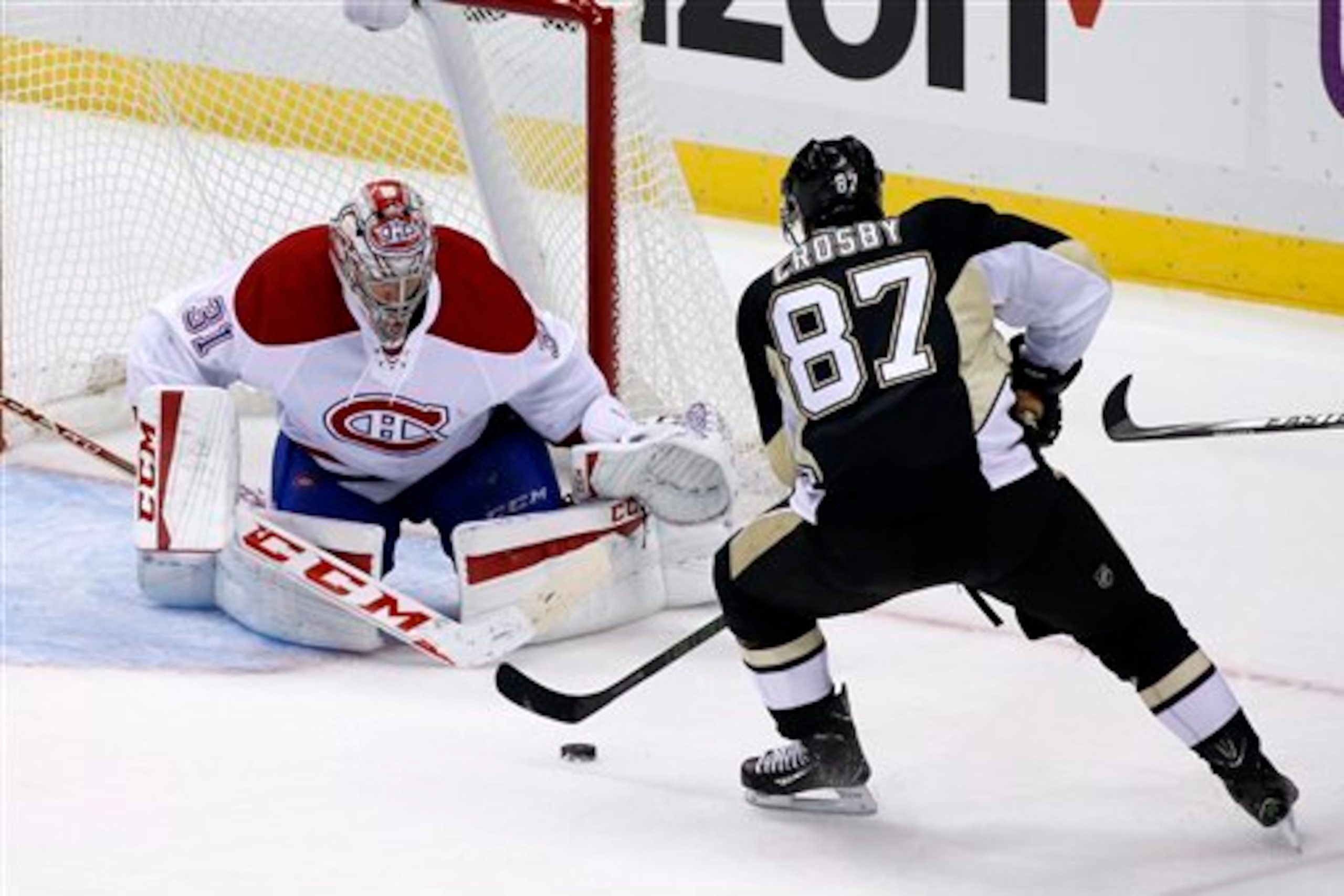

NHL 500: Ranking the Top 100 Overall Players
This is the final piece in our NHL 500 project, the most comprehensive ranking of its kind. We started with individual positional breakdowns—now we tackle the top 100 players in a single list.
For those who haven't followed the series, an explanation of what we are looking for here may be helpful. We can explain it with one question: Taking into account the available evidence, what would a reasonable person expect from every player in the league in the coming year?
Our analysis is primarily rooted in major league work, which means we’re omitting rookies, so don’t go looking for Connor McDavid or Sam Bennett. We don’t care about contracts or long-term trade value. We don’t care about what happened last year, except insofar as it predicts what will happen in the coming year.
Our process leans heavily on analytics courtesy of War-on-Ice.com, Stats.HockeyAnalysis.com and Corey Sznajder's work on zone entries, and involves creating a 100-point scale for every position. A grade of 50 indicates an average player at his position, with a higher total obviously being better. Ties were broken based on the preference of the writer.
For the most part, talent tends to cluster around the average, with elite players being relatively rare. So a player with a grade of 80 is actually elite—these numbers don’t function the way marks in school do.
For those who missed positional breakdowns or want to know where their favourite player outside of the top 100 ranked, we have included the following links:
Other NHL 500 installments:
(Note: Some text from previous installments appears in this article.)
Without further ado, we present the league's top 100 players. We hope you've enjoyed this series.
Nos. 100-96
1 of 60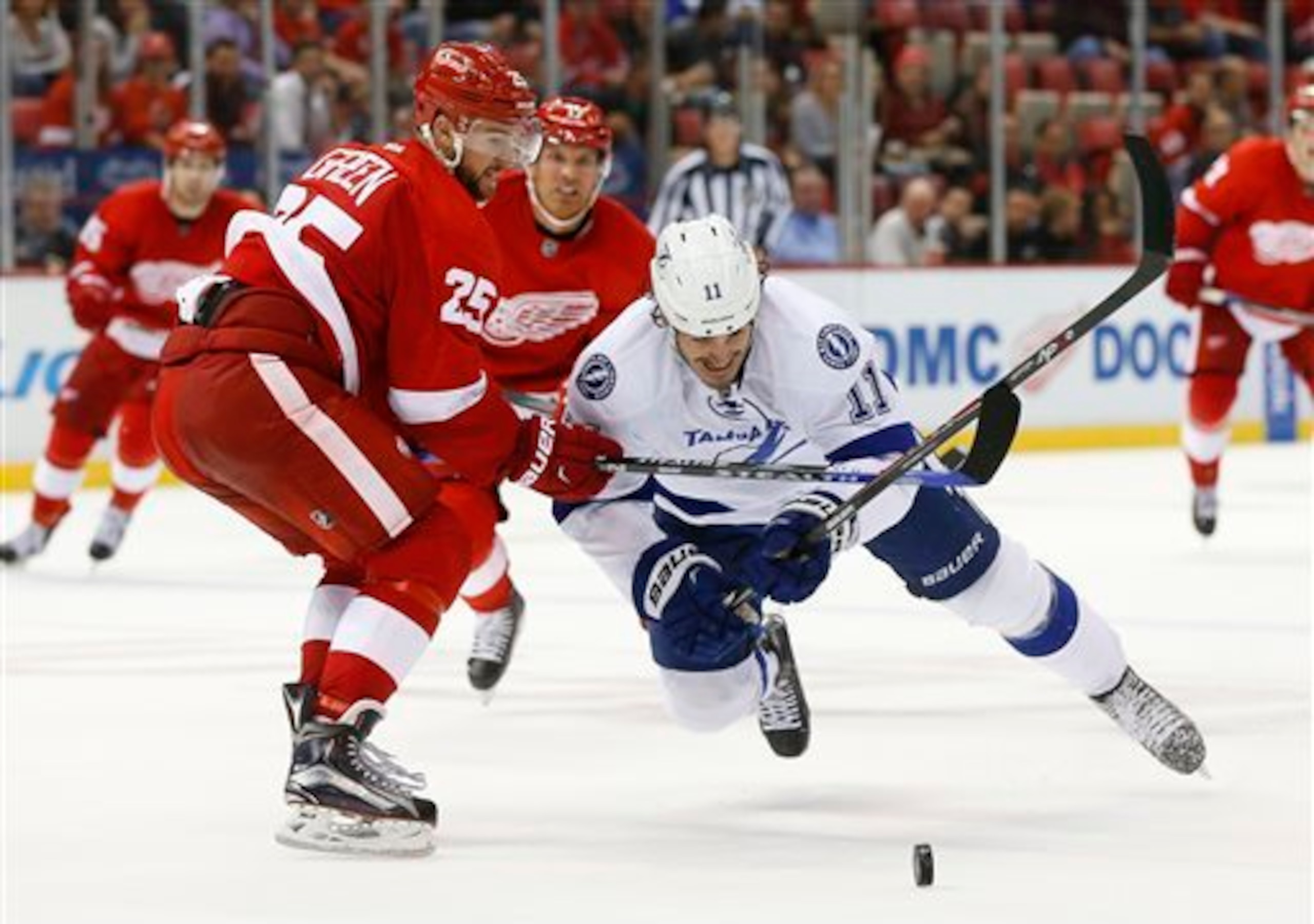
100. James Neal, RW, Nashville Predators
As expected, Neal took a hit following his departure from Pittsburgh, falling to just 37 points in 2014-15. Injury played a role in that, but even so, it was Neal’s lowest points-per-game season since his rookie campaign, aside from the lockout-shortened 2013 season. He won't put up the point totals he managed in Pittsburgh, but he's still an important offensive weapon.
99. Jordan Staal, C, Carolina Hurricanes
Staal isn’t a scorer, and the offensive side of his game is consistently overrated because he logs lots of minutes, including on the power play. He is, however, a first-rate defensive player, and that side of his game seems weirdly underrated now that he’s out of the national media spotlight that comes from playing in Pittsburgh.
98. Brent Burns, D, San Jose Sharks
This guy is a useful hockey player regardless of which position he plays. His first year back on the blue line was a little bumpy. We can probably expect better results now that he’s had a season to find his comfort level.
97. Mike Green, D, Detroit Red Wings
One can either choose to focus on Green’s limitations or instead embrace him for the creative, free-wheeling, riverboat gambler that he is. Lots of good teams have made use of this kind of specialist, and Green’s ability to advance the puck in a hurry is going to be good for Detroit in many ways.
96. Jonathan Bernier, G, Toronto Maple Leafs
So far, ex-general manager Dave Nonis’ decision to bring in Bernier from Los Angeles is looking like a wise one. As he’s just 27 years old, it’s reasonable to expect Bernier to provide the Leafs with competent starting minutes for some time to come.
Nos. 95-91
2 of 60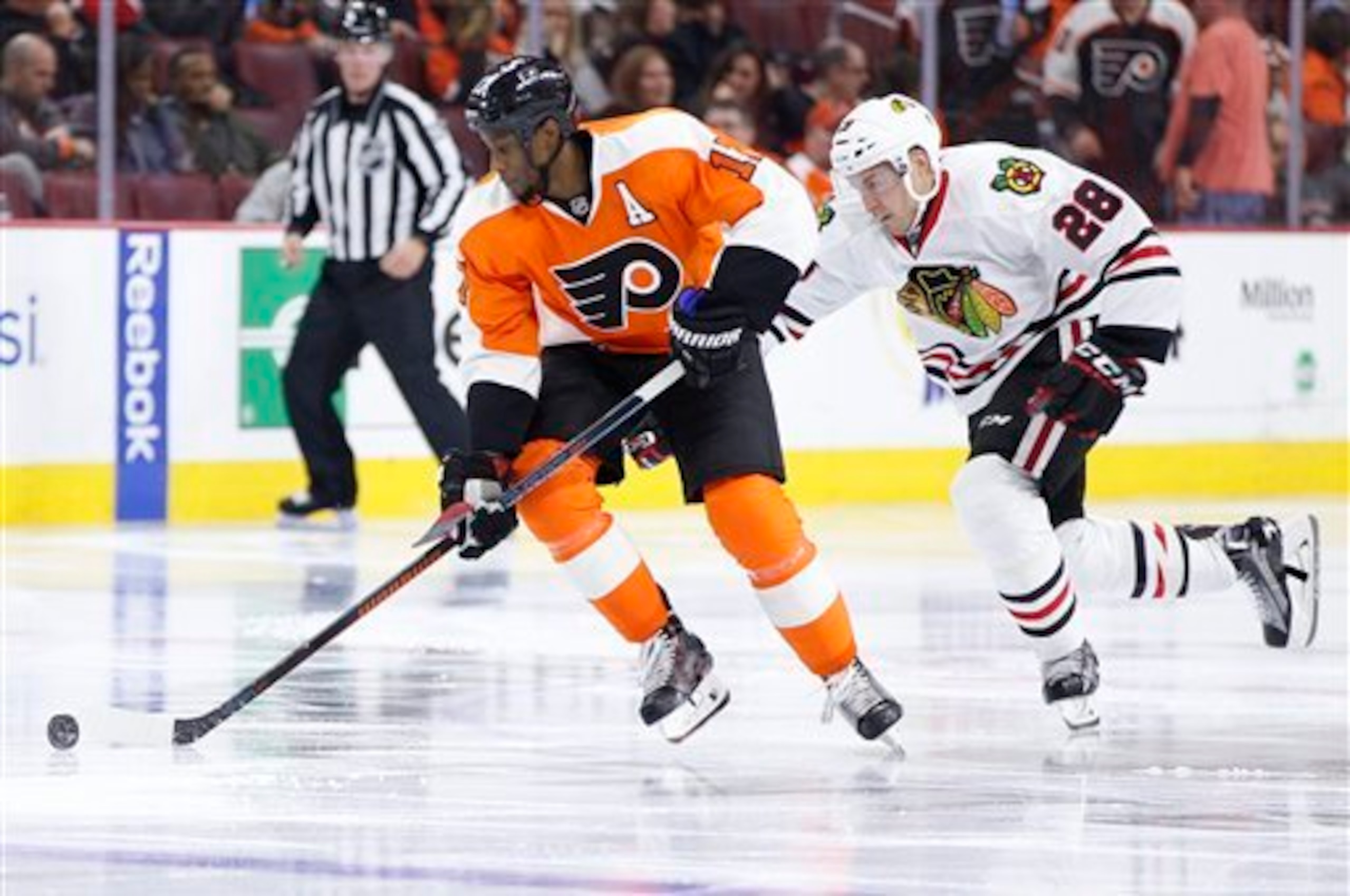
95. Alex Goligoski, D, Dallas Stars
One of the league’s underrated defenders, Goligoski would almost certainly look worlds better on a more established blue line. He delivers quality minutes in a number of roles and is one of just 18 NHL defencemen to play in 100 games and average over 1.0 points/hour at five-on-five over the last three seasons.
94. Nathan MacKinnon, C, Colorado Avalanche
In all of our projections, we’ve opted to avoid predicting breakout performances. That resolution was sorely tested here. MacKinnon is entering his third season in the league, and basically every underlying metric points toward a big season in front of him. We fully expect him to be significantly higher on next year’s list.
93. T.J. Oshie, RW, Washington Capitals
There’s a lot to like about Oshie, a competent top-six forward who plays a 200-foot game. A little more creativity at the offensive blue line and in the attacking zone would be welcome. But there’s no question he’s more reliable defensively than most comparable scorers, and that has real—and often overlooked—value.
92. Wayne Simmonds, RW, Philadelphia Flyers
Simmonds is a fun player to watch. There aren’t a lot of skaters in the game of hockey who combine scoring ability, speed and physical play the way he does. He’s been a very effective forward for the Flyers.
91. Kyle Okposo, RW, New York Islanders
This is a very good player. Okposo combines pugnacity with scoring punch, and that’s always a welcome combination in the NHL. He's far more than just John Tavares' wingman.
Nos. 90-86
3 of 60
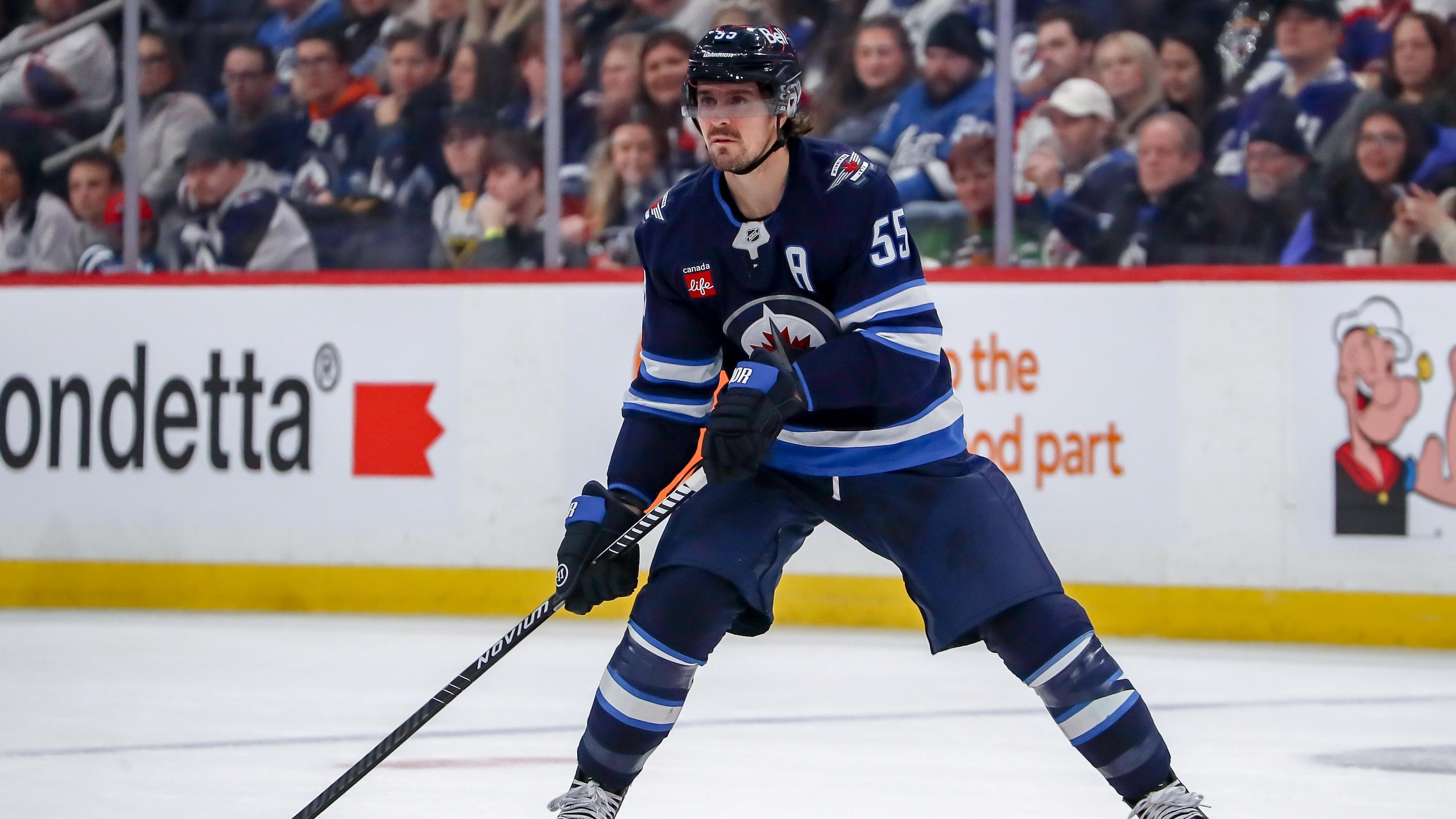
90. Andrew Ladd, LW, Winnipeg Jets
Ladd turns 30 in December, so the odds are that we’ve seen his peak performance and the next few years will be characterized by a slow decline in his overall skills. We don’t expect a big drop this coming season, though. He’ll still be one of the NHL’s finest two-way left wings.
89. Marian Gaborik, RW, Los Angeles Kings
It wasn’t all that long ago Gaborik was scoring 40 goals in New York. We don’t expect him to get back to those levels. But he remains one of the league’s most skilled shooters, and he can certainly do better than last year’s 20 assists.
88. Matt Niskanen, D, Washington Capitals
We really like Alex Goligoski, but how terrible was the trade the Stars made in 2011 that shipped Niskanen and James Neal to Pittsburgh for his rights? Washington found a good one here, an all-situations defender with exceptional five-on-five scoring ability.
87. Jordan Eberle, RW, Edmonton Oilers
Eberle’s reputation perhaps suffers a bit from the stigma of losing that surrounds the Oilers, but he’s a very capable scorer in his own right and without question a first-line right wing at the NHL level.
86. Jason Spezza, C, Dallas Stars
Spezza turned 32 in June, so we should expect to see some declines in his game this year. However, we’re really only a short time away from him being one of the top offensive players in the game. He remains highly dangerous.
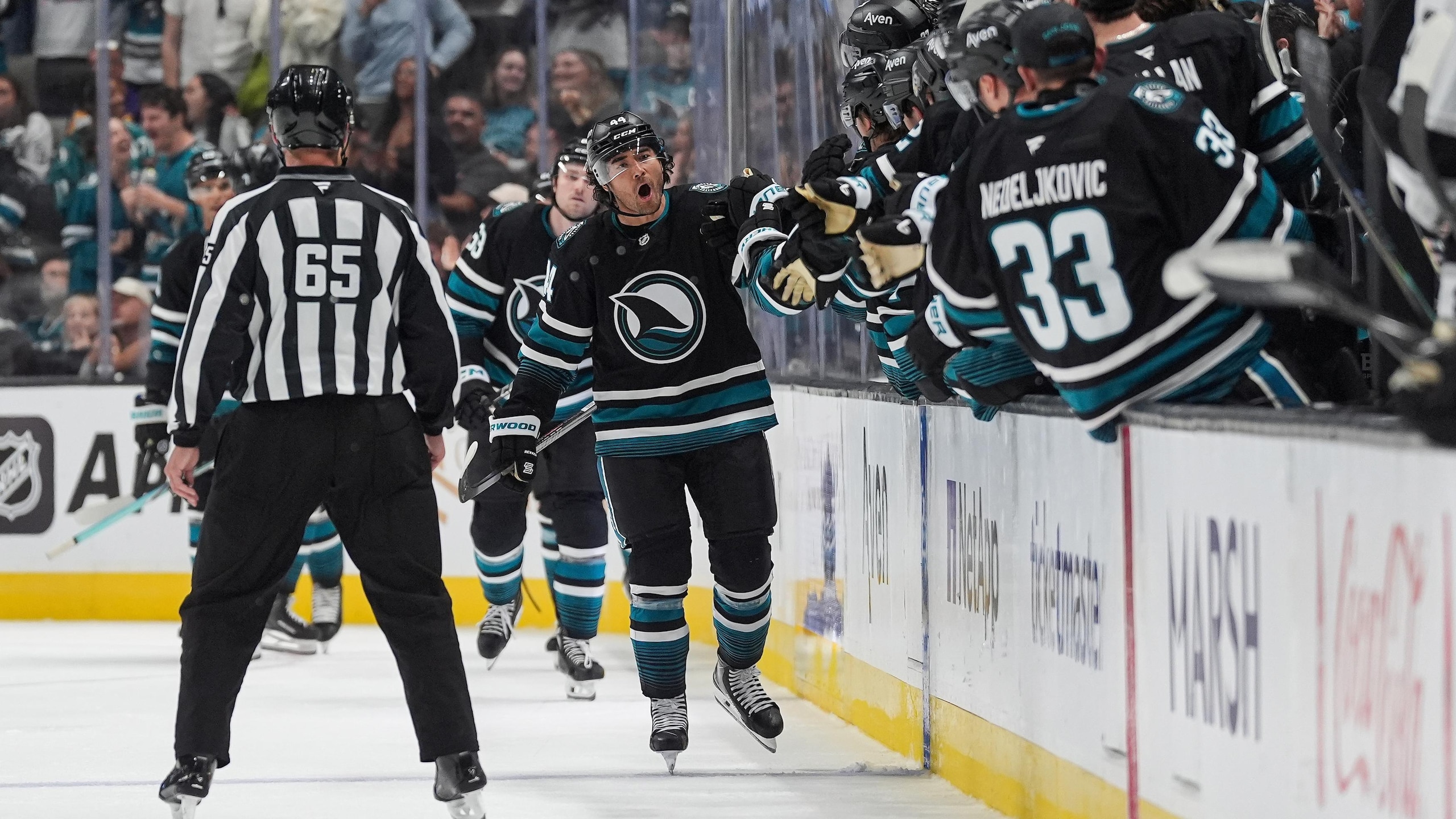

Nos. 85-81
4 of 60
85. Andy Greene, D, New Jersey Devils
In terms of getting attention, Greene suffers because he’s neither a crash-and-bang defender nor a great offensive producer. His career high in points is 37, and that’s the only year he got any awards love at all. Nevertheless, he’s a really good defenceman, combining intelligence and discipline and quietly eating up tough minutes.
84. Derek Stepan, C, New York Rangers
Stepan is a versatile player, the kind of skater who can be deployed in a checking or scoring role and be effective in either. If he were a little bit better on the power play, he’d be widely recognized as a top centre. If he were just a little more forceful defensively, he’d be a mainstay in Selke Trophy voting.
83. Blake Wheeler, RW, Winnipeg Jets
Wheeler combines size (6’5”, 225 lbs), defensive responsibility and even-strength scoring punch into a single package. There isn’t a team in the league that couldn’t find a place for him in its top six.
82. Jason Pominville, RW, Minnesota Wild
Smart, disciplined and capable at both ends of the rink, Pominville has been a nice addition to a deep Minnesota team. He’s at an age (32) where we should start seeing a gradual drop-off in production, but he’s still performing at such a high level that there’s no reason to expect his career to end any time soon.
81. Roman Josi, D, Nashville Predators
Shea Weber’s protege looked to come into his own last year. He’s a very good young defenceman, but it remains to be seen how he’d fare without one of the best defencemen in the game as his partner. That's the reason why this list ranks him lower than most would.
Nos. 80-76
5 of 60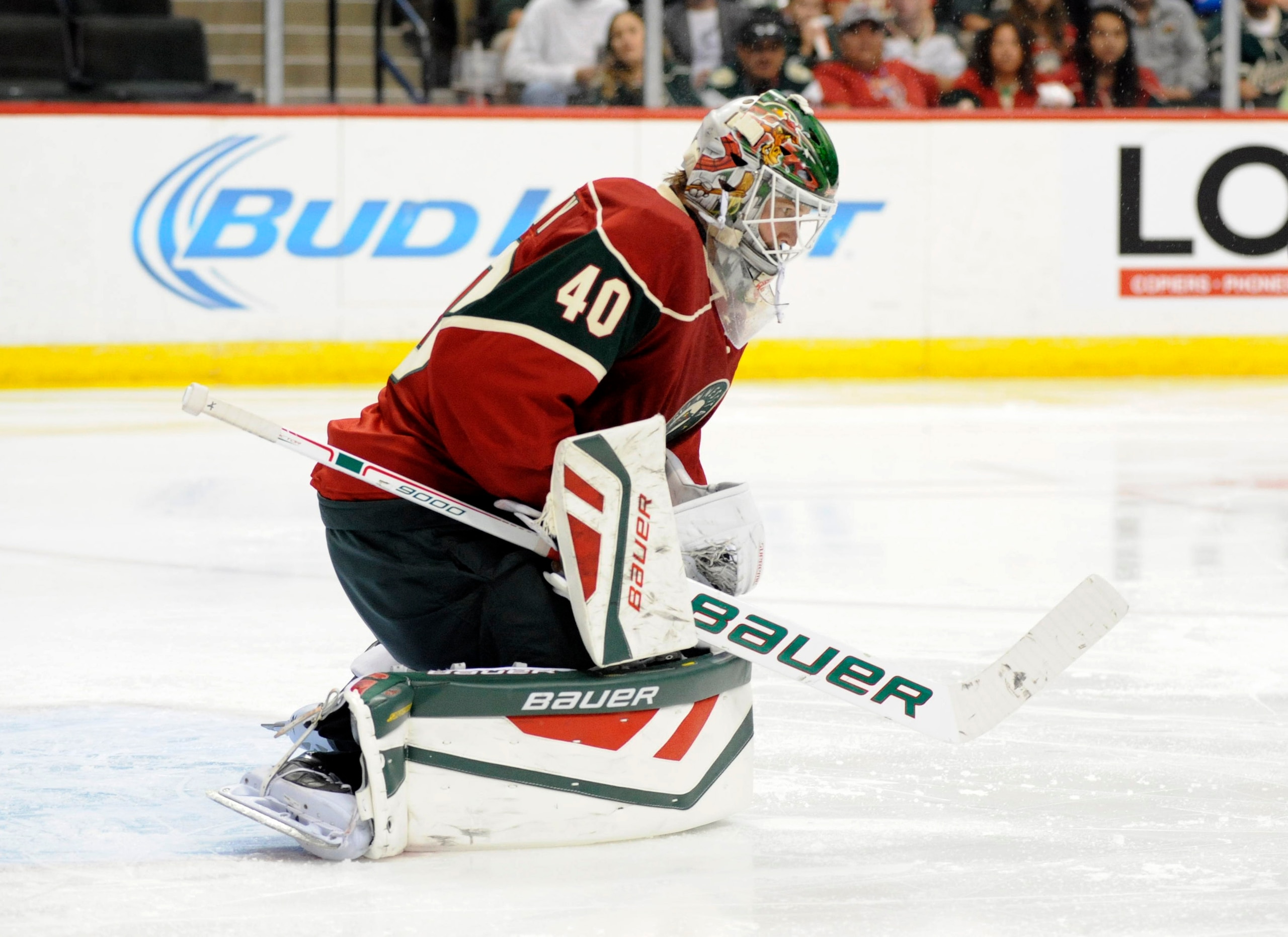
80. Jake Muzzin, D, Los Angeles Kings
Increasingly, it’s possible to look at Muzzin as more than just Drew Doughty’s regular partner. He stands on his own two feet and has been an excellent even-strength defenceman practically since the moment he stepped into the NHL.
79. Ryan Suter, D, Minnesota Wild
It’s hard to know if the conservative approach Suter takes at the blue line is really a fault in his game or simply a response to the fact that he seemingly never leaves the ice. Either way, it’s bringing down an otherwise wonderfully effective defender.
78. Pekka Rinne, G, Nashville Predators
This is going to be disappointing for those who, with some justification, see Rinne as a top-10 starter, but we couldn’t quite get past how much his adjusted save percentage differed from his official numbers. There’s no doubt that during his time with Nashville, the Preds have had a highly capable defence and have generally played a conservative style of game, so perhaps it would be more surprising if that had not had an impact.
77. Devan Dubnyk, G, Minnesota Wild
In some ways, the Wild had a tough decision to make with Dubnyk this summer when they signed him to a six-year contract. In others, they didn’t. In four of the last five seasons, he’s been a very good goaltender—and often in challenging circumstances.
76. Jeff Carter, C, Los Angeles Kings
On some teams, Carter would be a contender for the No. 1 centre role, and why not? He’s a 6’4”, 212-pound goal-scoring pivot who plays a reasonably responsible defensive game. In L.A., he forms one half of an extremely good one-two punch down the middle.
Nos. 75-71
6 of 60
75. Jaden Schwartz, LW, St. Louis Blues
Schwartz turned 23 in the offseason, and the year ahead should bring further development in his game. A breakout campaign is easily within the realm of possibility, which is both good news and bad news for the Blues. Obviously it’s good news on the ice, but off the ice, there’s just one season left on Schwartz’s two-year bridge contract, and he’s likely to be much pricier this time around.
74. Brent Seabrook, D, Chicago Blackhawks
Seabrook excels in the areas where defencemen have long been expected to excel: in front of his own net and in the defensive zone. He’s a competent offensive defenceman, but his reliability behind his own blue line is what makes him valuable.
73. Anton Stralman, D, Tampa Bay Lightning
To some degree, Stralman is a late bloomer. To a larger degree, though, plenty of teams just didn’t think he was capable of being a top-pairing defenceman until he went to Tampa Bay, was given the minutes and delivered in fine fashion.
72. Henrik Sedin, C, Vancouver Canucks
Both Sedin twins have enjoyed brilliant careers, but it’s impossible to ignore the decline, which is likely to continue this year. A successful power-play performance last season revealed 2013-14 for the aberration it was, but we expect another step back at even strength.
71. Justin Faulk, D, Carolina Hurricanes
Faulk is probably the best unknown defenceman in hockey. He's a workhorse who has improved in every area of the game, providing steady and impressive offensive production with a surprisingly capable defensive game. If Carolina goes on a playoff run, he’s going to open a lot of eyes.
Nos. 70-66
7 of 60
70. T.J. Brodie, D, Calgary Flames
Brodie has been living in Mark Giordano’s shadow, but a late-season injury to his partner allowed him to show his own quality. Down the stretch and into the postseason, Brodie provided the Flames with top-flight play. Every defender in the game playing with a more heralded partner would hope to do as well.
69. Zach Parise, LW, Minnesota Wild
We expect a modest drop-off in performance from Parise this season. He turned 31 in July, and the next three or four seasons should see his offensive game erode slowly. He’s still a good scorer and solid two-way citizen, and we don’t expect that to change for some while yet.
68. Ryan Nugent-Hopkins, C, Edmonton Oilers
A quality two-way centre, Nugent-Hopkins has yet to consistently score the way a No. 1 overall pick is expected to. He makes up for it with a strong defensive game, which is a rare asset on Edmonton’s roster.
67. Kevin Shattenkirk, D, St. Louis Blues
There’s nothing wrong with being a specialist, but it’s tempting to look at Shattenkirk’s defensive-zone metrics and wonder if he can’t be more than that. We aren’t wild about his work in the neutral zone, but with that exception, there’s a lot to like about this player.
66. Marc-Andre Fleury, G, Pittsburgh Penguins
Pittsburgh’s much-maligned starter isn’t quite worthy of the hyperbole he got early in his career, but he remains a solid choice as a No. 1 goaltender who is good in a lot of areas (puck-moving, penalty kill, shootout work) that get missed when one simply glances at five-on-five save percentage.
Nos. 65-61
8 of 60
65. Craig Anderson, G, Ottawa Senators
At age 34 and with a healthy pay raise, it is perhaps unrealistic to expect that Anderson will provide Ottawa with the same level of value that he did on his last contract. Given that his last contract was one of the great bargains in NHL goaltending (four years, $12.7 million), that’s not necessarily a criticism, however. It will be worth paying attention to see if/when Anderson’s game starts slipping, but for the time being, he’s a good bet to continue providing the Sens with quality starts.
64. Dustin Byfuglien, D, Winnipeg Jets
Byfuglien is not an elite defensive defenceman, but he’s nowhere near as bad as hyperbole occasionally makes him out to be. Despite those specific weaknesses, his successes offensively and in breaking up plays before they ever get to his end of the ice make him a valuable member of Winnipeg’s blue line and a legitimate top-pairing option.
63. Jonathan Quick, G, Los Angeles Kings
We’ve incorporated Quick’s outstanding career work in the postseason into our assessment here, and as a result, we rate him significantly higher than similar analyses that only use regular-season numbers. Even so, his regular-season play has at times just been ordinary. We like him better than most starting options but are not prepared to rank him alongside the handful of elite goalies at this point.
62. Nick Leddy, D, New York Islanders
The Islanders did extremely well landing Leddy in a trade from Chicago last fall. He's a spectacular transition player, excelling both as a dynamic puck-carrier offensively and at stopping opposition rushes before they reach his own end of the rink. He's also well known as a quality scoring defenceman. He’s going to be a franchise cornerstone for many years to come.
61. David Backes, C, St. Louis Blues
Although he lacks the offensive edge one typically expects from a top-tier centre, Backes remains a quality option in virtually any assignment. He’s incredibly valuable to his team and coaches because he can be used like a sponge to sop up the nastiest matchups the other team has to offer.
Nos. 60-56
9 of 60
60. Dougie Hamilton, D, Calgary Flames
This is a cautious projection based more on where Hamilton was last season than any projected breakthrough. He won’t turn 25 for three years, though, and won’t hit the 200-game mark until later this coming season. So a big jump forward into bona fide No. 1 territory shouldn’t surprise anyone if it happens.
59. Paul Martin, D, San Jose Sharks
One of the rare left-shooting defencemen who doesn’t just play his off side but actually excels at the position, Martin is one of those players hurt by our general tendency to focus on offence and our difficulty in measuring defensive contribution. The only red flags here are age and injury, as the 34-year-old Martin has missed significant time in three of the last four seasons. He is expected to move back to the left side with San Jose this season.
58. Ondrej Palat, LW, Tampa Bay Lightning
A true two-way threat, it’s hard to believe that just five years ago Palat was being passed over for the second time at the NHL draft. The Lightning eventually claimed him in the seventh round of 2011, and just four years later, he’s firmly established as one of the top left wings in hockey.
57. Niklas Hjalmarsson, D, Chicago Blackhawks
Very, very few teams in the NHL have the luxury of playing someone like Hjalmarsson regularly on their second pairing. He is almost entirely a defensive specialist and has afforded the Blackhawks the luxury of not hard-matching Duncan Keith against top opposition lines every night. He’s been one of the key figures in Chicago’s success in recent years.
56. John Carlson, D, Washington Capitals
Last season saw Carlson hit career highs in pretty much every offensive category and step forward as one of the Eastern Conference’s better defencemen. He’s just 25 years old, so there’s no reason he can’t stay at the top end of this list for a long time to come.
Nos. 55-51
10 of 60
55. Alex Pietrangelo, D, St. Louis Blues
One of the top up-and-coming defencemen in the game a year ago, Pietrangelo’s reputation as a cornerstone piece took a significant hit in 2014-15. If he rebounds, the slump will be forgotten in a hurry. If he doesn’t, the Blues may be in some trouble.
54. Ryan McDonagh, D, New York Rangers
One of the tougher items to measure here is the impact of playing regularly with one partner. McDonagh almost without exception plays with Dan Girardi, whose work seems to have fallen off over the past few years. It’s eye-opening to compare New York's results with McDonagh-Girardi on the ice (52.1 goals-for percentage, 50.0 Corsi percentage) to the team’s numbers with McDonagh and Anton Stralman (64.3 goals-for percentage, 57.5 Corsi percentage) during Stralman's time as a Ranger. We’ve tried to work in the impact of Girardi on McDonagh’s numbers, but it’s something that’s hard to properly assess until we see the duo separated for a significant period of time.
53. Brandon Saad, LW, Columbus Blue Jackets
There’s a reason why Chicago’s decision to send Saad to Columbus was so shocking. This isn’t a complementary talent like a Viktor Stalberg, Bryan Bickell or any of the other forwards who have experienced temporary success with the Blackhawks. He’s a very good individual talent who can contribute in every area of the game, and he’s only 23 years old.
52. Joe Thornton, C, San Jose Sharks
We’ve docked Thornton a few points here, anticipating further decline as a 36-year-old. He’s still a big (6'4", 220 lbs), powerful offensive threat who tends to tilt the ice in his team’s favour when he’s out there, though.
51. Sergei Bobrovsky, G, Columbus Blue Jackets
Fears that Bobrovsky would prove unable to replicate his Vezina Trophy-winning turn in the lockout-shortened 2013 season have been borne out to some degree, but he’s come nowhere close to a total collapse. In fact, his work since has helped to establish him as a top-10 NHL goalie.
50. Kris Letang, D, Pittsburgh Penguins
11 of 60
Defensive Play
Despite Letang’s reputation as a defensive liability, he gets heavy work on the penalty kill. Unfortunately, he’s not terribly effective in those minutes, with the Penguins’ shots and chances against climbing alarmingly when he’s on the ice. Pittsburgh’s chances-against figures when he’s on the ice aren’t great either, despite the amount of time he spends in the offensive zone. In fairness, though, he does play reasonably tough opposition.
Offensive Play
Letang ranks fifth among all regular NHL defencemen in points per hour over the last three seasons, reflecting his unique ability to create offence out of nothing. He’s also an integral part of one of hockey’s best power plays, ranking third among regular defencemen in points per hour on the man advantage.
Transition Play
One of the reasons why Letang gets away with being a little looser in the defensive zone than one wants in a No. 1 defenceman is because he’s so good at keeping the puck from getting there in the first place. Not only does Letang break up a high percentage of opposition entry attempts, but he’s also extremely good at forcing dump-ins. He’s not as active on zone entries as some of the game’s elite offensive blueliners, but he still carries the puck in more than most defencemen manage.
Overall
Letang isn’t a true two-way threat, but he’s so effective in the neutral and offensive zones that he’s still capable of impacting a hockey game in a positive way.
49. Marc-Edouard Vlasic, D, San Jose Sharks
12 of 60
Defensive Play
Vlasic entered the NHL in 2006 after a superb year in the QMJHL, a season in which he scored over a point per game in both the regular season and playoffs. So it’s a little ironic that he’s emerged as one of a handful of elite defensive defencemen in the game of hockey. It’s hard to think of a more perfect shutdown defencemen at even strength, where he goes against the best the majors have to offer and routinely frustrates their offensive efforts.
Offensive Play
We’ve mentioned Vlasic’s illustrious junior career already, but it seems he left his offensive game back in Quebec. Vlasic is flat-out bad on the power play and comes in just a touch below the league average in terms of five-on-five scoring.
Transition Play
One of the keys to Vlasic’s defensive success is that he’s lethal at the blue line. He’s one of the best players in the league at turning opposition rushes into dump-ins, and almost no defenceman in hockey is as good at stripping the puck away from the other team in these situations. Unsurprisingly, he’s less enthusiastic about rushing the puck himself.
Overall
It’s virtually a given that Vlasic will never win a major award because defensive defencemen don’t and he’s a specialist in that area of the game. But he’s also a genius in his chosen approach, and we wanted to recognize that here.
48. Eric Staal, C, Carolina Hurricanes
13 of 60
Offensive Play
Staal’s reputation has taken a bit of a hit as his offence has fallen off, but it wasn’t all that long ago that he was an awfully formidable force. In 2013, he put up 35 points in 48 games. Prior to that, he was a reliable 70-plus-point player. Our suspicion is that he’d be rejuvenated in a big way by an improved Carolina team. As things stand, he’s almost alone as a significant offensive threat for the Hurricanes.
Defensive Play
A competent penalty-killer who has had his ice time diverted into other areas, Staal takes on tough competition but no longer is asked to handle tough zone starts at five-on-five. His performance has generally been pretty solid. He typically outperforms the team averages in scoring chances to a significant degree.
Transition Play
No Hurricanes forward has a better track record in transition than Staal, who typically carries the puck on more than 70 percent of his zone entries. He is significantly above average in this area.
Overall
It’s almost hard to believe Staal is only 30. He’s been around for a long time, and it feels like he’s in a steep decline. It’s tough to know how much emphasis to place on his struggles. It’s been a very tough time for Carolina, and he might be rejuvenated with a stronger supporting cast.
47. Corey Crawford, G, Chicago Blackhawks
14 of 60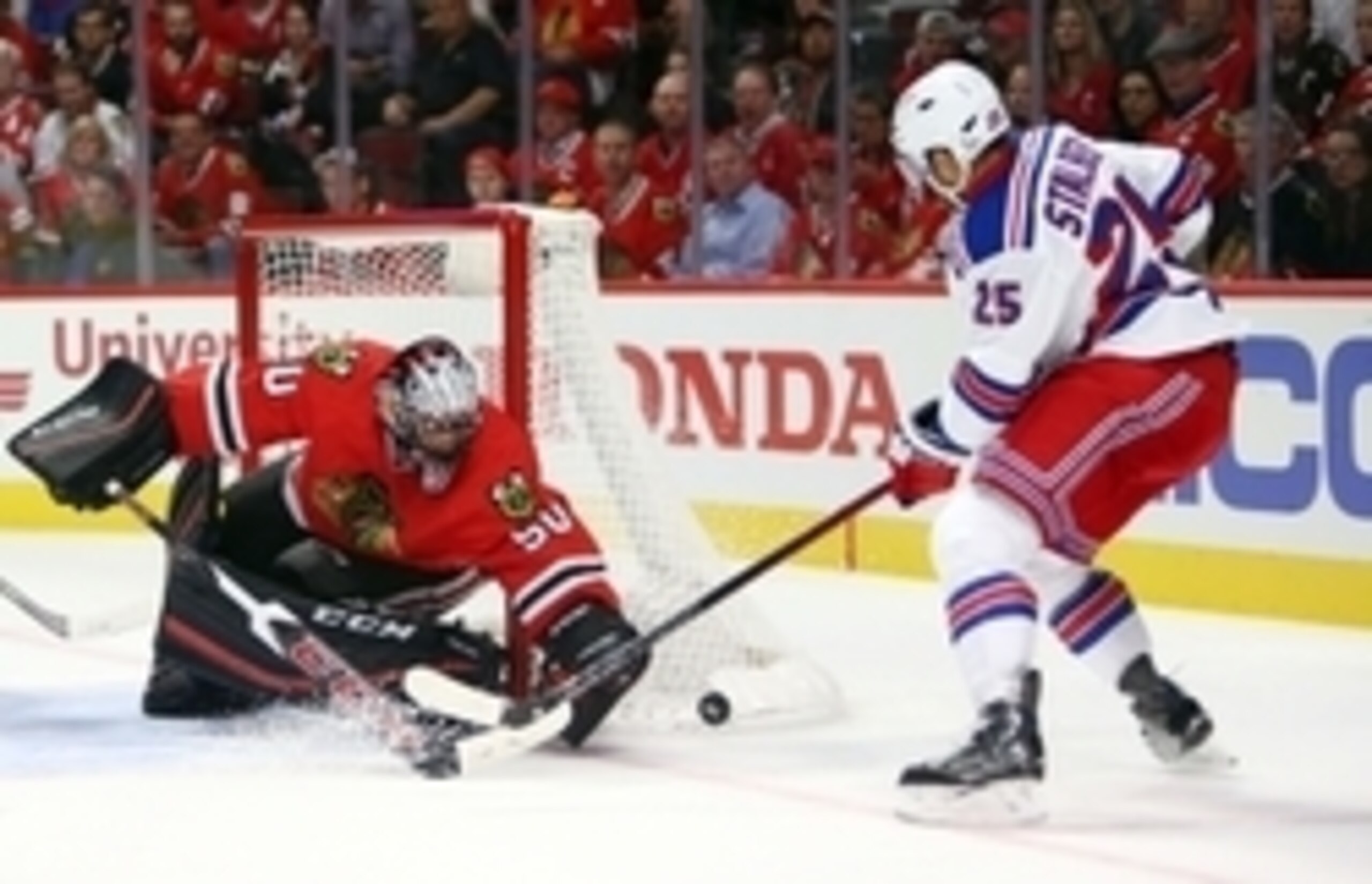
Even Strength
Crawford perhaps doesn’t get enough credit for his solid work at even strength. Except for a difficult 2011-12 campaign, he has managed .928, .933, .924 and, most recently, a .931 adjusted save percentage at five-on-five. The aforementioned 2011-12 campaign can’t just be brushed aside, but four out of five years at that excellent level is something most NHL teams would love to get from their starter.
Penalty Kill
Part of the reason Crawford doesn’t get that credit is because his numbers on the penalty kill haven’t been very good. Of the top 15 goalies on this list, the ones whom we might consider above-average starters, none has a less impressive save percentage than Crawford’s .865 over the last five seasons.
Other Areas
In contrast with his work short-handed, Crawford has helped the Blackhawks in the past few seasons with a strong performance in shootout situations. NHL.com indicates he'd turned aside 72.2 percent of the shots he’d faced entering 2015-16, which is much better than most goalies manage. He’s slightly below average as a puck-handler.
Overall
It’s true that the team in front of Crawford deserves most of the credit for Chicago’s two championships in the last three years, but it’s also true that Crawford has been considerably more than a mere passenger over the course of those runs. He’s a strong goaltender in his own right.
46. Alex Steen, LW, St. Louis Blues
15 of 60
Offensive Play
Steen is a reliable contributor on both the power play and at even strength offensively. He’s topped 2.0 points/hour at even strength in consecutive seasons and in five of six campaigns overall since arriving in St. Louis. He also hit career highs in points/hour on the power play last year at the age of 30.
Defensive Play
In five of the last six seasons, Steen has received votes for the Selke Trophy, given annually to the NHL’s best defensive forward. If anything, the token smattering of votes he garnered understate the matter. Steen kills penalties, regularly outperforms tough competition and does so while starting more than his share of shifts in the defensive zone. He’s probably the best defensive player at his position in the entire league.
Transition Play
If there is a weakness to Steen’s game, it’s through the neutral zone, though some of that may be related to playing for a conservative Blues team. He’s good but not great at carrying the puck into the attacking end of the rink.
Overall
This is a wonderful hockey player, a superb two-way talent who rarely gets the recognition he deserves as one of the NHL’s best left wings. Now that he’s in his 30s, we can expect a gradual decline in performance, but the real shame is that he was so overlooked while in his prime.
45. Gabriel Landeskog, LW, Colorado Avalanche
16 of 60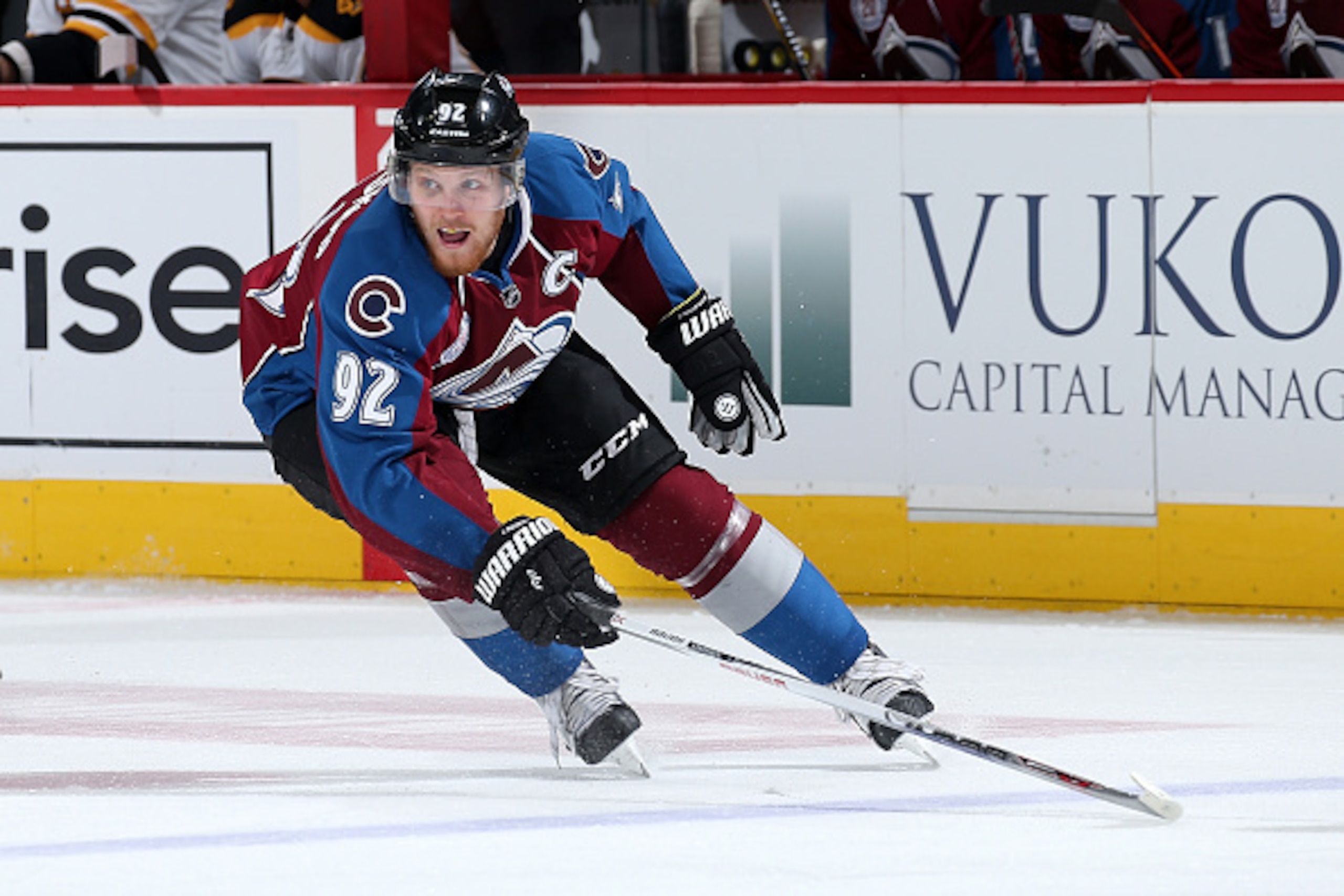
Offensive Play
We saw signs of real power-play life from Landeskog for the first time in his career last season. Unfortunately, those signs coincided with a 25 percent downturn in his point production rate at even strength. The knock on Landeskog has always been that he may not score quite as much as other players with similar draft pedigree (second overall in 2011), and in four seasons at the major league level, he’s had only one really high-end even-strength campaign and one high-end power-play season. If he manages to do both at the same time, he’s going to open a lot of eyes.
Defensive Play
A well-regarded two-way player from the moment he stepped into the NHL, Landeskog has continually shown the kind of attention to defensive detail that should make him a perennial Selke candidate in his prime years. He’s good at both even strength and on the penalty kill, though head coach Patrick Roy has oddly seen it fit to curtail his duties in the latter role significantly since he stepped behind the bench.
Transition Play
As one would expect, Landeskog’s two-way reputation applies in transition, too. He plays a strong possession game on the attack, and on defence he’s good at intercepting plays at his own blue line.
Overall
Landeskog is almost without peer in terms of how rounded his game is at the tender age of 22. He’s a big (6'1", 210 lbs) winger who thrives in traffic, can contribute on the attack and frustrates opponents to no end in the defensive zone. There are no significant holes in his game, and the only thing separating him from elite status is just that little extra bit of scoring. He still has time to find it.
44. Semyon Varlamov, G, Colorado Avalanche
17 of 60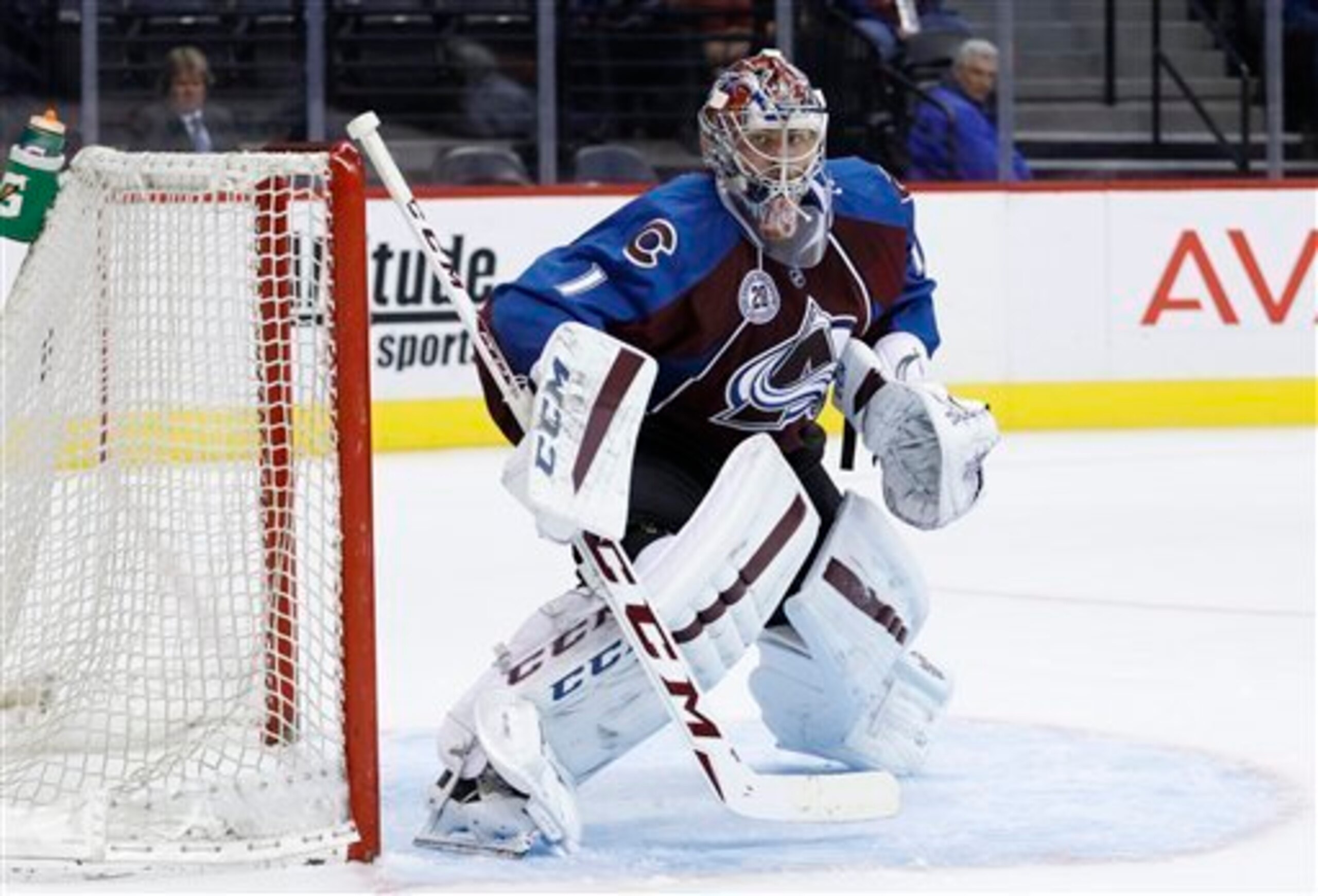
Even Strength
If there’s a reservation in placing Varlamov this high, it’s not because he isn’t capable of truly great performances. Rather, it’s because he’s also capable of surprisingly pedestrian outings. Twice in the last four seasons, Varlamov’s even-strength save percentage has fallen alarmingly below the NHL average. The bulk of his work has been great, but those slip-ups can destroy entire seasons.
Penalty Kill
Varlamov’s .941 save percentage on the penalty kill last season isn’t really reflective of his true talent—nobody is consistently that good at even strength, let alone when down a man—but it does put a bit of an exclamation point on a career during which he’s been better than average.
Other Areas
The shootout has been a strength for Varlamov over his career, with the Russian goalie turning aside nearly three-quarters of the shots he's faced entering 2015-16. He’s less skilled as a puck-handler, though he does have a modest level of ability in that department.
Overall
Overall, in three of the last four seasons, Varlamov has been a good starting goalie, and at the age of 27, there’s no reason to expect a decline any time soon.
43. Max Pacioretty, LW, Montreal Canadiens
18 of 60
Offensive Play
Let’s leave the rate statistics alone for a moment and just look at goals. Over the last four seasons, Pacioretty has scored 124 times. That’s the fifth-best number in all of hockey. Among left wings, only Alex Ovechkin has tallied more. Among all NHL forwards, only Ovechkin and Steven Stamkos are more than a single goal per season better than Pacioretty. His playmaking game isn’t as incredible, but the man clearly knows how to score goals.
Defensive Play
For the first time in his career, Pacioretty drew some Selke Trophy love, which is probably as much due to his league-leading plus-38 rating as it is more substantive factors—plus/minus, as always, being a largely garbage statistic. Of far more interest to us is his emergence as a regular penalty-killer. He scored three short-handed goals last season.
Transition Play
“Patches” really isn’t bad at gaining the offensive zone, though he’s nothing to write home about, either. In keeping with his work inside the defensive zone, he is good at breaking plays up near his own blue line.
Overall
Habs fans know what they have in Pacioretty, but the rest of the league has been slow to give the 6’2”, 213-pound winger the attention he deserves. That seems to be changing, and at the age of 26, he has plenty of years of strong production in front of him.
42. Shea Weber, D, Nashville Predators
19 of 60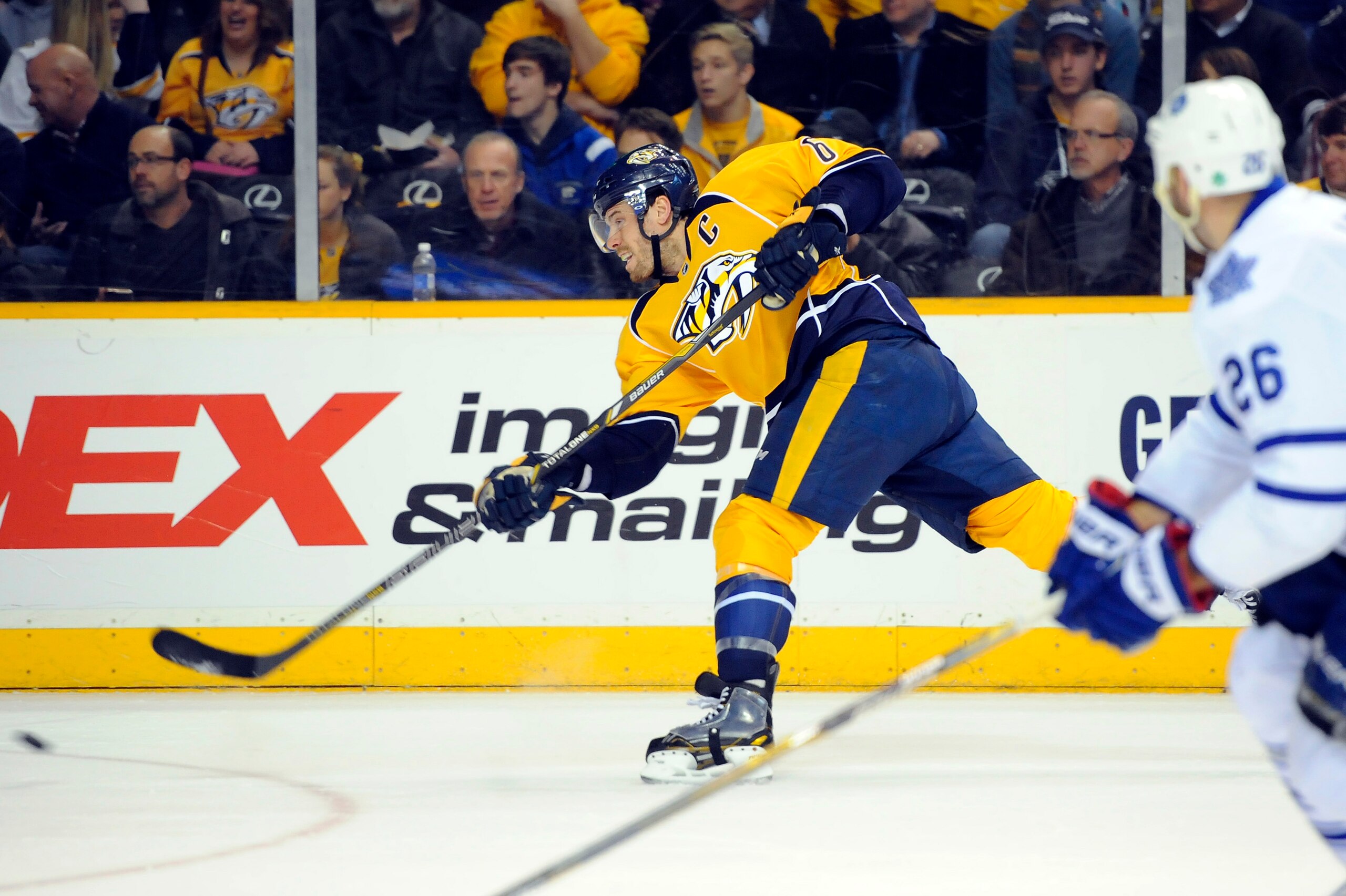
Defensive Play
Weber entered the league primarily as a defensive defenceman, but it’s interesting to note the way his reputation compares to his numbers. He does play brutally tough opposition to be sure, but the Predators tend to allow more chances when he’s on the ice than when he’s off it—though that may be related to his work at the blue line. The penalty kill gives us a chance to look primarily at his own-zone work, and there he’s magnificent, which matches what the eyeball test typically says about his own-zone work.
Offensive Play
Weber’s blistering slap shot is the stuff of legend, and he’s quite effective on the man advantage. His even-strength scoring numbers are good but a little south of elite-level.
Transition Play
In contrast with his work in the defensive zone, the job Weber does of defending his own blue line isn’t particularly spectacular. He allows the opposition to carry the puck in more frequently than one would like to see from an elite defenceman. He’s also not much of a puck-rusher offensively, at least when it comes to carrying it into the opposition zone.
Overall
Weber is a player who tends to divide stats writers because at first glance his numbers aren’t particularly good. Our metric likes him better than most but still tends to play him just outside the absolute upper level of NHL defencemen.
41. Ben Bishop, G, Tampa Bay Lightning
20 of 60
Even Strength
No goalie in our top 10 has a worse mark in this category than Bishop. It’s not that he’s been bad, but last season his adjusted save percentage was a very ordinary .922. He was better than that in the playoffs and was also better than that in his first season as a starter, but there’s not quite enough here for us to feel comfortable proclaiming him to be more than just good at even strength.
Penalty Kill
The only issue with Bishop on the penalty kill is that, ideally, we’d like to see a larger body of work. Entering 2015-16, he’s faced only 799 shots in this situation over the course of his NHL career. He’s been very good, and consistently so year to year, though, so we’re comfortable giving him strong marks here.
Other Areas
Outside of his size (6'7", 216 lbs), the other quality that was obvious right from the get-go with Bishop was his comfort level in handling the puck. He’s one of those rare goalies who can make an outlet pass all by himself, and that makes life difficult for opposing forecheckers. His .705 shootout save percentage is also very respectable.
Overall
We might term Bishop a “complete” goaltender. His even-strength numbers are good but not great, but he makes up for it in other areas of the game. He backstops the penalty kill, thrives in the shootout and is dangerous enough with the puck that he helps negate the value of dump-ins. All of that combined puts him pretty high up our list of NHL goalies.
40. Rick Nash, LW, New York Rangers
21 of 60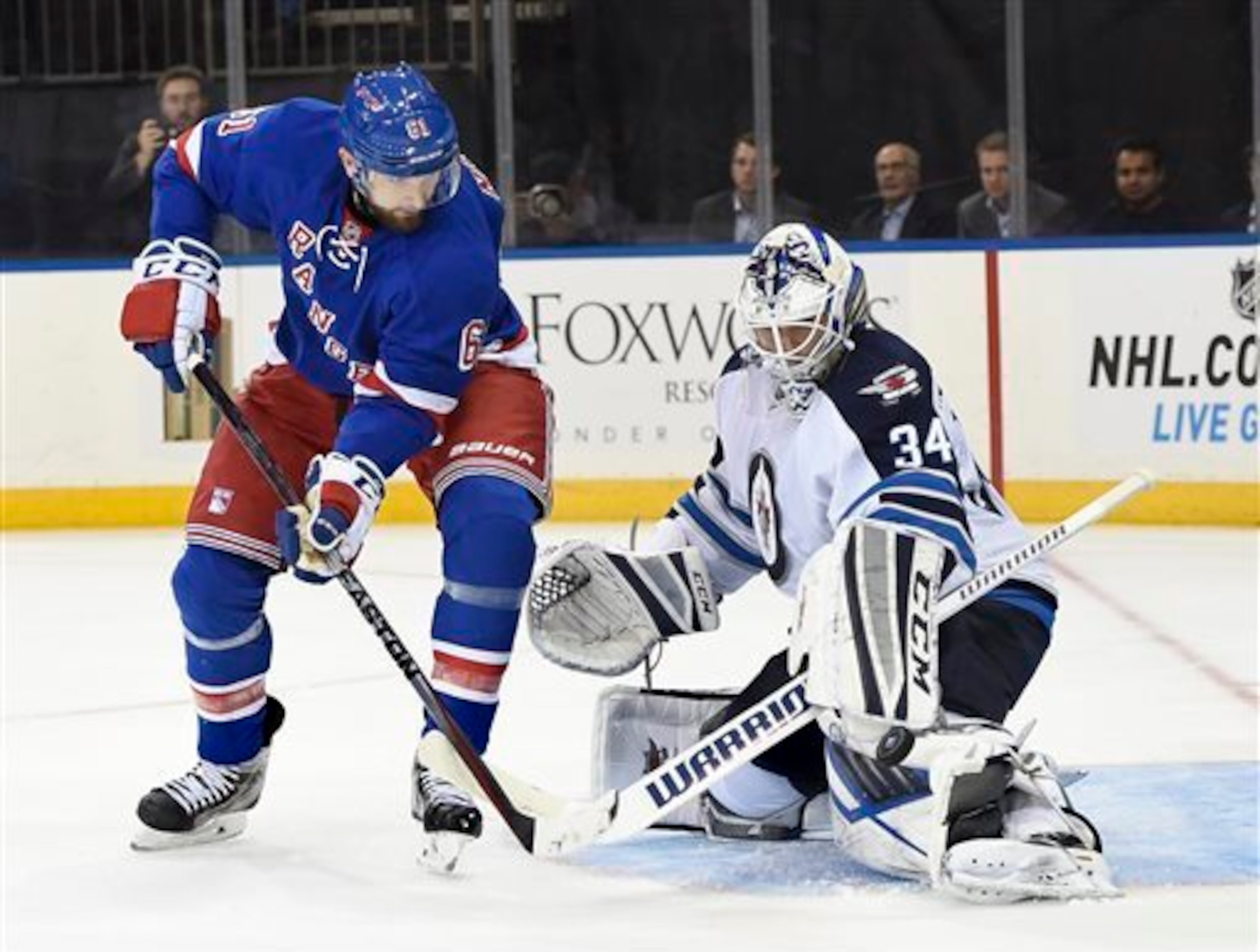
Offensive Play
Nash has been alternating good and bad seasons at even strength for a while now, with the fluctuations primarily coming as a result of shooting percentage. At his best, he’s been as good as anybody in the league. Last year, he scored 2.9 points per hour, a number which trumps that managed by any other player at his position in the NHL. What hurts him are the down years—he managed just 1.8 points per hour in 2013-14—and his work on the power play, which has been ordinary or even south of that in the last few seasons.
Defensive Play
In his heyday, Nash wasn’t just used on the penalty kill—he was also a team leader in terms of short-handed minutes played. For three seasons in Columbus, he averaged over two minutes per game in the discipline. That work has tailed off in recent years, though Nash was a regular and scored four short-handed goals for New York last season.
Transition Play
It would be unfair to say Nash is an ordinary player in the neutral zone, but it would be fair to say he’s not spectacular. He carries the puck in on just over 60 percent of his zone entries, which is an excellent number for the Rangers but a meh number league-wide. He’s good but not great at the defensive blue line.
Overall
Once one of the game’s most feared wingers, the shine has come off Nash a little thanks to age and some struggles in the postseason. The 31-year-old remains a formidable talent, however—6’4”, 220-pound forwards capable of putting up 40 goals are a rare breed.
39. Logan Couture, C, San Jose Sharks
22 of 60
Offensive Play
Couture turned 26 late last season, which puts him right in his offensive prime. His 67 points in 2014-15 is a career high, though in large part because he appeared in all 82 games. Over his career, he has scored between 1.7 and 2.3 points/hour at even strength, which is strong but not irresistible production, and he’s generally been somewhat north of average on the power play.
Defensive Play
Couture has a deserved reputation for strong two-way play. He plays tough minutes for the Sharks. Over the last three seasons, he actually tied for second among centres in terms of quality of competition (behind Chicago’s Jonathan Toews). He’s also a regular on the penalty kill. Two differences between Couture and others on this list are that he doesn’t generally see tough zone starts and doesn’t run up ridiculous scoring-chance differentials. Still, he’s done well in a tough role.
Transition Play
Although his numbers are good for the Sharks—who tended to play a dump-and-chase game under Todd McLellan—compared to other top forwards, Couture has only decent zone-entry numbers.
Overall
Couture is an intelligent, well-rounded player who can do a little bit of everything. He isn’t an elite offensive player, but he’s solid both at even strength and on the power play. He’s not quite an elite defensive player in the model of a Toews or Patrice Bergeron, but again, he’s very good.
38. Phil Kessel, RW, Pittsburgh Penguins
23 of 60
Offensive Play
For only the second time in seven seasons, Kessel scored fewer than 2.2 points per hour at even strength in 2014-15. His work on the power play was fine but nothing like the 8.0 points per hour he managed during the 2013 lockout year. He’s had ups and downs in Toronto as the team’s feature offensive player—while stapled to Tyler Bozak, no less—but it seems probable he’ll be back to elite levels of scoring with his new team.
Defensive Play
Kessel gets hammered as a defensive player, and not without reason. We might note in his defence that he plays against top opposition, his two-way numbers aren’t bad, and his zone starts relative to his team's in the last few years look a lot more like Marian Hossa’s than Patrick Kane’s. Even so, he’s not as good as one would like an elite player to be.
Transition Play
Elite-level speed is an awfully nice tool to have in transition play, and Kessel uses his brilliantly in gaining the offensive blue line. In 2013-14, he was a top-five NHL player by carry-in percentage and was clearly behind only the Colorado Avalanche’s Matt Duchene and the Washington Capitals’ Alex Ovechkin. He loses points on the defensive side of things, though. Despite his speed, he’s not particularly good at breaking up plays on the backcheck.
Overall
There isn’t much doubt that Kessel is an incomplete player, an imperfect gem. Those imperfections combined with a lack of team success turned him into a whipping boy in Toronto. But to mix and match metaphors here, all of those Toronto columnists who harped on Kessel may well have been guilty of missing the forest for the trees. The hardest thing to do in the NHL is score, and Kessel is a genius offensively. It’s going to be fascinating to see what he can accomplish with the Penguins.
37. Braden Holtby, G, Washington Capitals
24 of 60
Even Strength
There are those who would paint 2014-15 as a breakout year for Holtby, but his strong work really shouldn’t have been surprising to anyone paying attention. He posted a .925 adjusted save percentage in 2013 and was then inexplicably supplanted by Jaroslav Halak after managing a .926 adjusted save percentage in 2013-14. So a “breakthrough” that takes him all the way up to .927 is hardly any breakthrough at all. Holtby has consistently been one of the game’s better goalies for three consecutive seasons now.
Penalty Kill
As it happens, the strong even-strength goalie is also good on the penalty kill. Quelle surprise. Holtby’s .886 save percentage last season was quite good and represents modest improvement from past campaigns.
Other Areas
Holtby is an elite puck-moving goaltender who is also batting above .700 in the shootout at the NHL level. That last number, incidentally, is below what he did in any of his four AHL seasons, so we have good reason for confidence that he’s better than average in the shootout—even if he’s not quite at Marc-Andre Fleury levels.
Overall
Holtby, who only just turned 26 in September, still has plenty of open road in front of him. He remains a step back from the game’s truly elite goalies, but it’s really not much of a step.
36. Marian Hossa, RW, Chicago Blackhawks
25 of 60
Offensive Play
Hossa’s offensive game was once one of the best in the NHL, and even at the age of 36, it’s nothing to sniff at. At even strength, Hossa has scored 2.0 or more points per hour in seven consecutive seasons, a run that includes the entirety of his time with the Hawks. He remains a significant threat with the man advantage too.
Defensive Play
A perennial Selke Trophy candidate, Hossa is widely acknowledged as one of the best defensive forwards in the game of hockey, and for good reason. Head coach Joel Quenneville continues to use him on the penalty kill despite the fact that doing so necessarily cuts back his efforts in other areas of the game. He’s strong enough to win battles (6’1”, 207 lbs) and sneaky enough to steal pucks from the opposition.
Transition Play
The 200-foot game Hossa plays very much includes the neutral zone. Offensively, he’s an excellent option, carrying the puck rather than dumping it in on nearly three-quarters of his zone entries. On the defensive end of centre, he’s still a very capable backchecker and does his best to make life difficult for the opposition at the Chicago blue line.
Overall
The only thing that can be said against Hossa is that he’s 36 years old. He’s a complete player who does absolutely everything that could be asked of a right wing. In hindsight, it seems ridiculous that his only major accolade (other than the Stanley Cup) was a second-team All-Star berth in 2008-09.
35. Henrik Zetterberg, C, Detroit Red Wings
26 of 60
Offensive Play
At even strength, Zetterberg’s production has been oddly up-and-down in the past few seasons. One year he’ll score 2.5 points/hour, which is elite-level production, and then in another year he’ll fall down to 1.5 points/hour, which is roughly the league average for a forward. His true talent these days likely falls between those extremes, which is pretty nice territory. Of course, he also remains lethal on the power play.
Defensive Play
Once a top penalty-killer for the Red Wings, Zetterberg has seen his responsibilities in that department eased both as he ages and the NHL has awarded fewer and fewer power plays. He’s also seen the load he takes on at even strength reduced. Increasingly, Detroit entrusts others with defensive-zone responsibilities. Despite these reductions, Zetterberg remains a respected defensive forward.
Transition Play
In these twilight years of Zetterberg’s career, he’s merely a good rather than a great neutral-zone player. He takes his backchecking responsibilities seriously, and he’s still creative enough entering the attacking zone, but he’s behind the league’s best players in both areas.
Overall
We’ve forecast some slight erosion for Zetterberg here. He just turned 35, and as a rule, these are the years when the slow and steady decline of the early 30s picks up pace. However, the league’s best players can sometimes hold off Father Time a bit longer. We don’t really expect the bottom to fall out this season, but we also think that last year’s 66-point campaign may be the new normal for this player.
34. Jakub Voracek, RW, Philadelphia Flyers
27 of 60
Offensive Play
Voracek’s offensive explosion in 2014-15 may seem unprecedented, but it’s worth remembering that he also had 46 points in just 48 games during the lockout-shortened 2013 season. At even strength, Voracek scored 2.1 points per hour, which is pretty much right in line with what he’s done in the past four years—if anything, it’s a little on the low side. His power-play numbers hit a new level. After two seasons of scoring between 5.0 and 5.9 points per hour, Voracek exploded for 7.0 points per hour on the man advantage. That figure will probably dip a bit this coming year, but he may be able to do even more at even strength.
Defensive Play
The big strengths in Voracek’s game don’t have much to do with his work from the defensive blue line in. He plays relatively tough minutes in terms of quality of competition, and he’s a dominant puck-possession player. But when the other team has the puck in Philadelphia’s end, the Flyers have better options for getting it back.
Transition Play
Although he’s solid in transition, Voracek’s numbers aren’t elite-level. Some of that is no doubt due to team effects—the Flyers have been a weak transitional team for years, and like anything else, neutral-zone play isn’t a one-man job—but even so, he’s a cut below the league’s best forwards in this department.
Overall
Voracek turned 26 in the offseason, and in that context, his emergence as a top-level offensive producer isn’t a major surprise. Most players come into their own in their mid-20s. Obviously, he benefits from a potent Philadelphia power play, but even so, on personal talent alone, he’s among the league’s best offensive weapons on the starboard side.
33. Matt Duchene, C, Colorado Avalanche
28 of 60
Offensive Play
Offensively, Duchene has been up and down over the course of his career, and last season saw him fall to just 55 points after consecutive seasons near the point-per-game mark. It’s mostly a function of the power play. With the exception of an injury-plagued 2011-12 season, Duchene has scored between 1.7 and 2.6 points/hour, a very good rate for just about anyone. However, he dropped from 17 points on the power play to just seven last year.
Defensive Play
After stepping into a penalty-killing role in 2013, Duchene was taken off the unit upon Patrick Roy’s arrival as head coach. He’s steadily taken on an increased defensive role at even strength, however, and so far he has handled those responsibilities capably.
Transition Play
Duchene’s speed serves him well in each of these categories, but it makes him particularly lethal in transition—a category in which he might be the NHL’s best player. Using our league-wide 2013-14 data, no other player gained the offensive zone with possession on a higher percentage of his entries than Duchene did, with the Avs centre narrowly edging out Alex Ovechkin for the honour.
Overall
One of the game’s best skaters, Duchene is a quality two-way player who is just now entering his years of peak production offensively. He’s exceptionally good at breaking through neutral-zone defensive schemes, and that has value above and beyond his point production.
32. Ryan Johansen, C, Columbus Blue Jackets
29 of 60
Offensive Play
After an uncertain start to his NHL career, Johansen has hit his stride offensively, hitting first the 60- and then the 70-point mark. His even-strength numbers in those last two years have been good, but nothing to write home about. What has made all the difference has been his performance on the power play. He tallied 5.5 points/hour in 2013-14 and then jumped all the way to 7.0 points/hour on the man advantage last season.
Defensive Play
Drafted as a two-way player, Johansen has gradually taken on tougher assignments in the NHL. His offensive progress occurred simultaneously with his employment on the penalty kill, and he went from being a bit player in 2013-14 to an integral part of that unit in 2014-15.
Transition Play
It’s not hard to guess why Johansen is effective in the neutral zone. He’s deceptive with the puck, he’s a good skater, and at 6'3", 218 pounds, he has both the wingspan to make life difficult for the opposition when playing defence and the strength to power through opposition checkers.
Overall
One of the most important things to keep in mind about Johansen is that he just turned 23. He’s had two good seasons, but the odds are that we have yet to see him at his best. There aren’t a lot of players who can match his combination of size, offensive ability and two-way intelligence.
31. Vladimir Tarasenko, RW, St. Louis Blues
30 of 60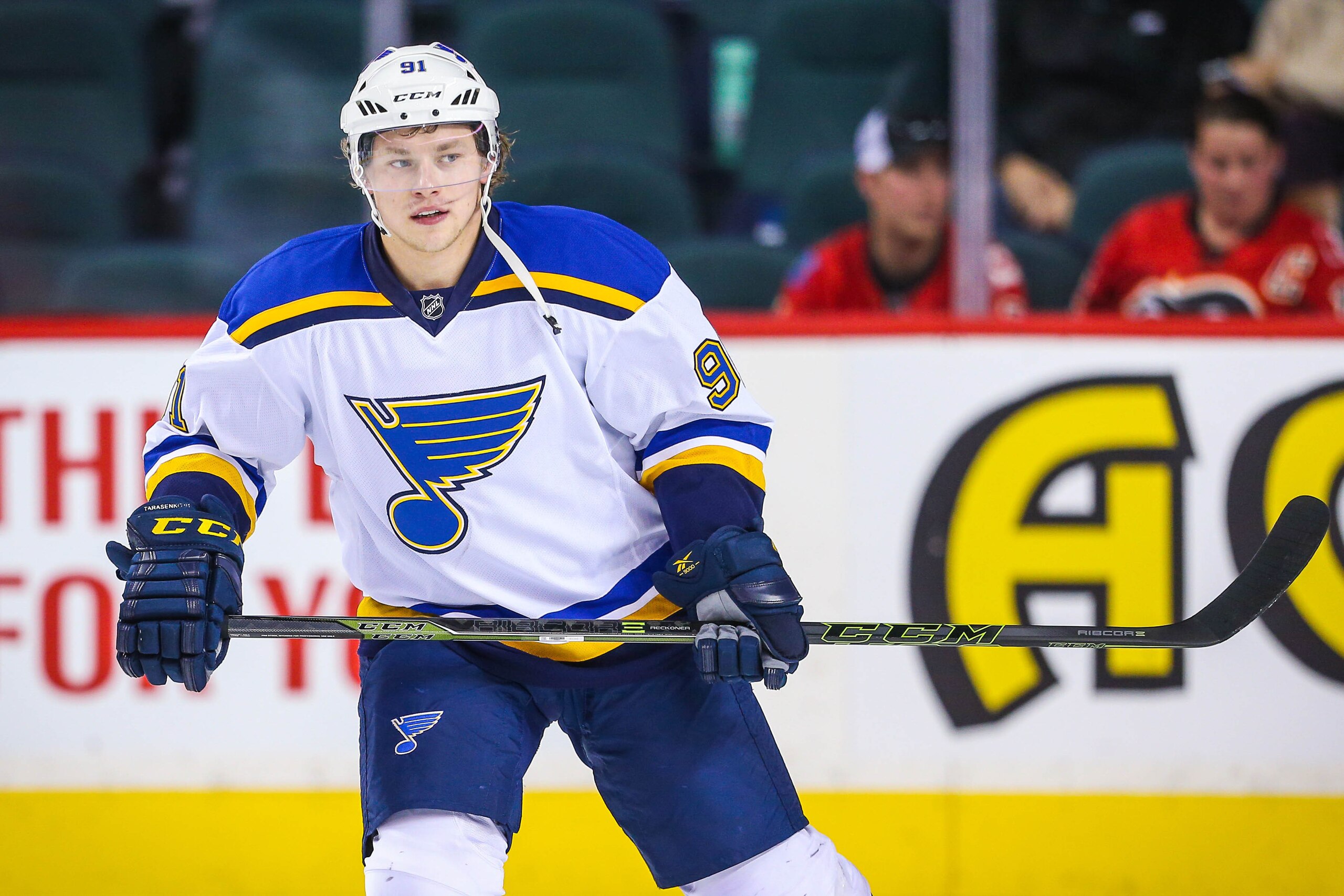
Offensive Play
Tarasenko built on an already impressive 2013-14 even-strength performance, jumping to 2.8 points per hour at five-on-five last season, which was the fifth-best total of any forward in hockey. His work on the power play wasn’t quite so distinguished but still represented a career high in the category. He’s only 23 years old, so he may not yet have reached his peak level of production.
Defensive Play
There were a handful of times as a sophomore when Tarasenko was deployed while short-handed, something that isn’t particularly common for a player so young. A strong possession game means the Blues don’t face a lot of shot attempts when he’s on the ice, but more telling is the fact that the rate of chances against isn’t much higher, suggesting the shots that do get through when Tarasenko is on the ice aren’t higher in value than the shots that get through when other forwards are out there.
Transition Play
No Blues forward is better at gaining the offensive zone with possession than Tarasenko. In fact, no Blues forward is even close. Where he loses points is on the defensive end. He’s average to below average at breaking plays up at the defensive blue line.
Overall
Last year marked Tarasenko’s arrival as a top-end offensive weapon in the NHL, and he’s likely to retain that distinction for the foreseeable future. His emergence doesn’t come a moment too soon for the Blues, a team that has long failed to convert regular-season achievement to postseason success. Having a game-breaker like Tarasenko may make all the difference in a game or playoff series.
30. Tyler Johnson, C, Tampa Bay Lightning
31 of 60
Offensive Play
Johnson’s rapid rise to offensive stardom has been stunning to behold. He scored 50 points as a rookie in 2013-14 and then rose to 72 points last season. The biggest driver of that jump was his play at even strength, where he spiked from a solid 1.8 points/hour to 3.0 points/hour, though he also improved his power-play scoring totals. The big question now concerns repeatability. He needs to show last season wasn’t a one-off.
Defensive Play
As a rookie, Johnson scored five short-handed goals. Head coach Jon Cooper continues to deploy him on the penalty kill and feeds him reasonably difficult zone starts relative to the Lightning average. He plays a reliable defensive game, though at 5'8" and 185 pounds, he can be overpowered at times.
Transition Play
Johnson isn’t quite in the elite forward class when it comes to carrying the puck over the offensive blue line, though his work there is considerably better than average. He’s also diligent about disrupting opposition rushes on the backcheck.
Overall
The undrafted and undersized Johnson has developed into a key player for the Bolts. He’s vital offensively and integral to the club’s defensive scheme. He just needs to keep performing at the same level to which he rose last season.
29. Joe Pavelski, C, San Jose Sharks
32 of 60
Offensive Play
Looking at his overall point totals, Pavelski would seem to be a late bloomer, as he only topped the 30-goal mark in his late 20s and didn’t hit 40 goals until the age of 29. That’s misleading, though. At even strength, Pavelski’s scoring actually peaked at 2.4 points/hour at the age of 25 and has mostly declined since then. Last season, it fell to 1.8 points/hour. What happened is his role on the power play changed, and the Sharks discovered a terrifyingly effective triggerman who has topped 6.0 points/hour in the last two seasons.
Defensive Play
Early in his career, Pavelski was entrusted with a lot of responsibility in the defensive zone. Over time, he has shifted toward a more offensive role at even strength because he’s shown ability in that area, but he’s still quite competent defensively. He’s been a key member of San Jose’s penalty kill almost from the start of his NHL career.
Transition Play
Pavelski is a solid enough player through the neutral zone, the kind of guy who does a better-than-average job both of entering the opposition end and preventing the opposition from entering his end of the ice, but his numbers in both areas are just a bit above average rather than truly spectacular.
Overall
It’s been fun watching Pavelski blossom into a truly lethal power-play weapon. He’s always been a diligent two-way forward with the ability to contribute in any of the game’s three zones—with the ability to do so while playing any forward position—so this new offensive level he’s found seems like a just reward for his work ethic.
28. Taylor Hall, LW, Edmonton Oilers
33 of 60
Offensive Play
Exactly one left wing in the entire NHL has been a better five-on-five scorer than Hall over the last three seasons, despite a difficult 2014-15 campaign. Where he has at times had struggles is on the power play. He still scores at a first-line rate but hasn’t posted the elite numbers he has managed at even strength.
Defensive Play
Like a lot of wingers with a one-way reputation, Hall’s contributions on the defensive side of the puck have less to do with being perfect in the defensive zone and more to do with matching up against top opposition and out-chancing it.
Transition Play
Hall’s blazing speed gives him an advantage on most players in the neutral zone. His ability to make plays at speed makes him one of the better wingers in hockey at gaining the offensive zone while retaining possession of the puck, and though not particularly known as a backchecking forward, he breaks up his share of opponents' entry attempts.
Overall
There is a tendency in hockey to judge the individual by the performance of the team, and that penchant has led many to underrate Hall over the years. If the Oilers’ seemingly endless rebuild gets on track, don’t be surprised to see Hall’s reputation improve markedly. As it stands, few wingers in the game can match his dynamism.
27. P.K. Subban, D, Montreal Canadiens
34 of 60
Defensive Play
The most underrated part of Subban’s game is probably his work in the defensive zone. It’s telling that he plays a regular shift on the penalty kill and more impressive that he does such strong work in those situations. The Canadiens get significantly better at preventing chances when he’s out there versus when he isn’t. Despite his willingness to jump into the attack and the frequency with which he plays against top attackers, Montreal doesn’t surrender many chances at even strength when he’s out there either.
Offensive Play
Offence is of course what Subban is most known for. Over the last three seasons, only Erik Karlsson has been better at putting up points on the power play. He’s an elite defenceman in that category. At even strength, Subban is also tough to top, and he’s been getting progressively better over the years. In 2014-15, he scored a career high of 1.22 points per hour. Only four regular NHL defenders have bettered that figure over the past three seasons combined.
Transition Play
Subban carries the puck into the offensive zone less than many other defencemen in the league, which in all likelihood says more about the strategy preferred by Michel Therrien than it does Subban himself. He easily leads all Montreal defencemen in this category. He’s also been effective at preventing opponents from gaining the Canadiens’ zone.
Overall
Subban is one of the great young defencemen in hockey. He just turned 26 in May and already outperforms most of the veteran rearguards in the league. He should be a fixture in Norris Trophy conversations for much of the next decade.
26. Oliver Ekman-Larsson, D, Arizona Coyotes
35 of 60
Defensive Play
Ekman-Larsson’s overall numbers hurt from playing for a poor Arizona team, but when we dig into them in the context of that club, they’re awfully impressive. The Coyotes are extremely good at suppressing shots and chances against when he’s on the ice, be it at five-on-five or on the penalty kill, and he plays brutally tough minutes.
Offensive Play
There’s a player earlier on this list who serves as a useful point of comparison: Ryan McDonagh. Like McDonagh, Ekman-Larsson is good but not great in terms of point production at both even strength and on the power play. His three-year averages come in just a touch north of his Rangers counterpart's.
Transition Play
As his offensive numbers would suggest, Ekman-Larsson isn’t a pure puck-rushing defenceman. He lacks the dynamic edge that sets apart the truly great scoring blueliners. However, he’s extremely good at keeping opponents from gaining the Coyotes’ zone, and that’s a more critical skill for a defenceman.
Overall
Analyses that focus on offensive production, a list that generally includes Norris Trophy voting, tend not to give Ekman-Larsson his full due as a defenceman because he simply isn’t an elite offensive weapon. He is, however, one of the great young two-way defenders in the game of hockey.
25. Pavel Datsyuk, C, Detroit Red Wings
36 of 60
Offensive Play
Once again, Datsyuk topped the point-per-game mark last season, rebounding somewhat from a difficult 2013-14. Mostly he was better on the power play, posting his best scoring rate there since 2008-09. He is, however, 37 years old and it is abundantly clear which way things are headed. Once again, he managed to hit 2.0 points/hour at five-on-five, but that is consistent of the trend of the last decade which has seen his scoring rates slowly erode from a high of around 3.0 points/hour. Even Datsyuk’s magic isn’t immune to the aging process.
Defensive Play
Datsyuk won three consecutive Selkes between 2007 and 2010, and he has remained competitive in the years since in the race for the title of the NHL’s best defensive forward. With age, however, his defensive responsibilities have been reduced. Where once he faced a fairly steady diet of defensive-zone starts, now he begins an increasing number of his shifts in the offensive zone. His penalty-killing work has been scaled back, too. He’s still a shockingly gifted takeaway artist and responsible two-way forward, but with age has come a reduction in what he’s capable of doing.
Transition Play
No Red Wings forward carried the puck into the offensive zone with greater frequency than Datsyuk did in 2013-14. He retained possession nearly three-quarters of the time when gaining the opposition blue line. His numbers at the defensive end of centre were good but somewhat less spectacular.
Overall
Our forecast here projects another slight dip as injuries and age continue to chip away at a player who was a legitimate Hart Trophy contender and perhaps the game’s most complete forward in his prime. It’s remarkable that he still ranks so high, really. The only time in the last five seasons that Datsyuk played close to a full schedule was in the lockout-shortened 2013 campaign. For an oft-injured forward getting close to 40 years of age, being this good at both ends of the ice is amazing.
24. Nicklas Backstrom, C, Washington Capitals
37 of 60
Offensive Play
One of the big surprises in researching this list was finding out how (relatively) pedestrian Backstrom’s five-on-five offence has been over the past few seasons. He fell from 2.3 points/hour in 2012-13 down to just 1.4 in 2013-14, and while he rebounded last season, he still came in south of the 2.0 points/hour mark. So why is he consistently near the point-per-game mark? Because he’s one half of Washington’s insanely good power-play duo. No player in all of hockey has been a more efficient point-producer on the man advantage over the last three seasons than Backstrom.
Defensive Play
Back when Washington was a consistently dominant regular-season team and Backstrom was just a young player still growing into his potential, he was a fashionable choice for the Selke Trophy (even getting some votes as a rookie). Those votes have (wrongly) become harder to find as his plus/minus has dropped, but Backstrom remains a very capable two-way presence and regularly deployed on the penalty kill.
Transition Play
Alex Ovechkin is undeniably Washington’s best player when it comes to gaining the offensive zone with possession. Backstrom’s own strong numbers look pedestrian in contrast. Where Backstrom takes the lead is on the backcheck. He’s frequently involved at the defensive blue line and is generally effective.
Overall
Though not a top-end goal scorer—Backstrom hasn’t hit the 20-goal mark in the last five years—Washington’s No. 1 centre is a brilliant playmaker and devoted defensive forward. He certainly benefits from playing with Ovechkin, but it’s hard to imagine a more perfect foil for the Capitals’ captain, as the strengths in Backstrom’s game almost perfectly mirror the deficiencies in Ovechkin’s.
23. Henrik Lundqvist, G, New York Rangers
38 of 60
Even Strength
Just four goalies in the NHL have played at least 100 games and managed a .930 save percentage or better at even strength over the last five seasons. Unsurprisingly, these four goalies finished at the top of our overall rankings. Lundqvist comes in fourth, and his adjusted save percentage suggests he’s had more help from his blue line over that period than the average, which hurts his ranking here. Even so, what he has accomplished is spectacular.
Penalty Kill
Lundqvist is a median No. 1 goalie on the penalty kill, ranking 15th overall in save percentage among goalies to play at least 100 games over the past five seasons. He moves up one spot if we limit the list to active goalies.
Other Areas
We’ve been tracking two different skill sets in this category, and Lundqvist finds himself on opposite ends of the spectrum for both of them. In the shootout he is one of the very best goalies in hockey, stopping three out of four attempts against over his career and helping the Rangers to a 50-36 record when he’s in net. As a puckmover, however, he’s decidedly limited, though to his credit he plays within those limitations.
Overall
One thing to remember about this ranking is that it is a projection, and we’ve docked Lundqvist a little bit because, at the age of 33, it’s reasonable to expect him to slowly decline over the rest of his career. Even so, he’s still firmly one of the best in the game, and over his distinguished career he’s been exceptional in pressure situations, too. He has yet to win the Stanley Cup, but he has helped the Rangers get close to it, posting .925-plus save percentages over each of the last four postseasons.
22. Claude Giroux, C, Philadelphia Flyers
39 of 60
Offensive Play
Giroux is a wizard with the man advantage and the driving force behind a potent Philadelphia Flyers power play. Over the last three seasons, he’s one of only two players to top 7.0 points/hour while out with the man advantage, and unlike the other (Nicklas Backstrom), he isn’t passing to Alex Ovechkin when he’s out there. His scoring drops off a bit at even strength, where he’s scored less than 2.0 points/hour in two of the last three seasons, but even so there’s no denying that he’s a marvelous offensive player.
Defensive Play
What Giroux probably ought to get more credit for is his work as a defensive player. The fact that he’s been a relatively regular penalty-killer for the entirety of his career doesn’t get a lot of attention. At age 22, for example, he put up a ridiculous seven points on the season while the Flyers were short-handed.
Transition Play
We touched on this in the section on offence, but one of the interesting points about Giroux is that one of the game’s two or three best power-play weapons doesn’t score at an elite level at even strength. Part of the answer may lie in his zone-entry numbers. In 2013-14, Giroux carried the puck in on 58 percent of his entries, which is a good number, but the really elite players score 15 to 20 percent higher. Giroux may not get the chance to show off his in-zone lethality as often because the Flyers simply don’t have enough offensive-zone possession for him to do so.
Overall
Giroux is a marvelous hockey player whose best years are being wasted on a Philadelphia team that isn’t capable of contending. He’s been better than a point-per-game player over his playoff career, putting up 21 points when the Flyers lost in the Stanley Cup Final in 2010 and 17 points in just 10 postseason games in 2012. If he played for a team like Chicago or Los Angeles, he’d probably get more love league-wide.
21. Mark Giordano, D, Calgary Flames
40 of 60
Defensive Play
As one of the league’s true two-way defencemen, Giordano doesn’t sacrifice defence for offence. Over the last three seasons, no Flames defenceman (minimum 500 minutes played) has been on the ice for fewer chances against/hour than Giordano at even strength despite his assignment of covering the most capable opposition forwards and starting many of his shifts in the defensive zone. He’s also the cornerstone piece of Calgary’s penalty kill.
Offensive Play
Though not an offensive superstar, Giordano is more than comfortable on the attack. He averages better than 1.0 points/hour over the last three seasons, marking him as a top-20 NHL defenceman in terms of even-strength scoring. He’s also a reliable, albeit unspectacular, power-play weapon.
Transition Play
The Flames haven’t done a good job of defending their blue line in recent years, which hurts Giordano’s overall zone-entry numbers, but he’s pretty clearly Calgary’s best blueliner in this area. He’s not overly aggressive on the attack but still carries the puck in more frequently than the average NHL defenceman.
Overall
It’s a shame that an injury derailed Giordano’s chances at a Norris Trophy last season, but at least he’s now being recognized as one of the game’s better defencemen.
20. Patrick Kane, RW, Chicago Blackhawks
41 of 60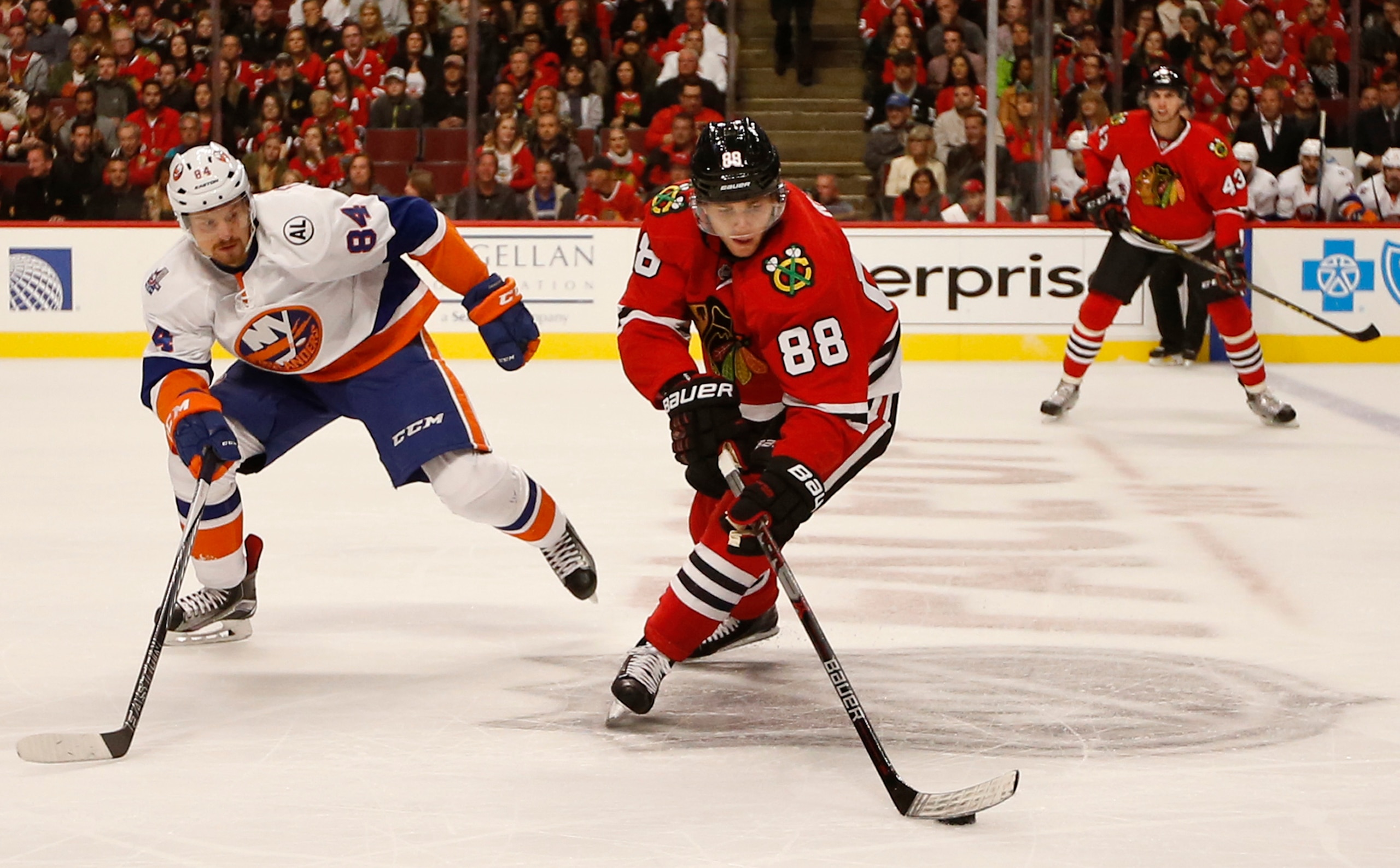
Offensive Play
It’s a sign of how capable Kane is that the 2.2 points per hour he recorded at even strength last season is his worst performance since 2008-09. Almost nobody consistently scores at the same level as he does. He’s also tallied 6.0 or more points per hour on the power play in five of his last seven seasons.
Defensive Play
Among regular Blackhawks forwards last season, only Ben Smith saw more shot attempts against per hour when he was on the ice than Kane did. The difference between the two is Smith routinely starts his shifts in the defensive zone, while Kane not only starts in the offensive end of the rink but also—thanks to the presence of Jonathan Toews on another line—ducks the tough opponents most first-rate forwards face regularly.
Transition Play
It won’t come as a surprise to readers that Kane excels at gaining the offensive blue line with possession of the puck. What will be surprising is that he’s nearly the equal of Jonathan Toews at breaking plays up at the defensive blue line.
Overall
On the ice, there are no questions surrounding Kane’s talent. He’s a first-rate offensive weapon, and despite his defensive issues, he’s inarguably been a primary contributor to Chicago’s dominance of the last half-decade or so.
19. Patrice Bergeron, C, Boston Bruins
42 of 60
Offensive Play
Bergeron is quite a decent five-on-five scorer, but the trouble from an offensive perspective is that he doesn’t make hay with the man advantage. He has, at best, largely been an average power-play scorer with Boston and some years he doesn’t even reach that level of distinction. He does generally score better than 2.0 points/hour at even strength, though he fell below that last year. Put it all together and he’s pretty reliably in the 55-65 point range.
Defensive Play
Depending on whom one talks to, Bergeron is either the very best or the second-best defensive forward in the NHL. He has won the Selke Trophy in three of the last four seasons and was the runner-up the other year. No top NHL forward faces tougher zone starts than Bergeron and very few face tougher competition. There’s a case to be made that nobody takes on tougher minutes overall. Despite this, Bergeron routinely posts obscene scoring-chance numbers.
Transition Play
Nobody can say that Bergeron doesn’t know his business five-on-five, but he does play a conservative game, dumping the puck in frequently for an offensive player of this calibre. He’s extremely effective n the backcheck, however, with one of the highest involvement rates in opposition zone entries of any NHL forward and an equally high break-up rate.
Overall
On the power play, or with a minute to go and needing a goal there are a fair number of better options around the league than Bergeron. On the penalty kill, or up a goal with a minute left, there is perhaps a handful and probably not even that. He, along with Chicago’s Jonathan Toews, is the gold standard for defensive play in the NHL.
18. Drew Doughty, D, Los Angeles Kings
43 of 60
Defensive Play
Doughty is one of the NHL’s most effective defencemen. He’s very good at both even strength and on the penalty kill at suppressing shot attempts and scoring chances against. His game took off after head coach Darryl Sutter took over the team, and now he has few peers around the league.
Offensive Play
In certain quarters, there’s a lot of hand-wringing over a defenceman as obviously good and successful in the playoffs as Doughty not winning a lot of individual hardware. The reason for that is he just isn’t an elite defenceman offensively. Six defencemen have played at least 100 games for L.A. over the last three years. Doughty ranks fourth in five-on-five scoring, and that’s where he’d stand on most NHL teams. He does have some power-play ability—which buoys his score—but nowhere near enough to make him elite in this category.
Transition Play
Much of Doughty’s success comes from the work he does in the neutral zone. He’s extremely good at defending his own blue line, even by Los Angeles Kings standards. Critically, he’s also one of the NHL’s elite defencemen when it comes to gaining the opposition zone with the puck. He doesn’t mind carrying it across the blue line himself, and that facilitates attacks.
Overall
Doughty is an elite puck-possession defenceman. He’s an effective defender, but he doesn’t have to defend as much as many players because he’s really good at getting the puck and not giving it back. The only thing separating him from dominance at his position is that he’s not a truly elite defensive scorer.
17. Corey Perry, RW, Anaheim Ducks
44 of 60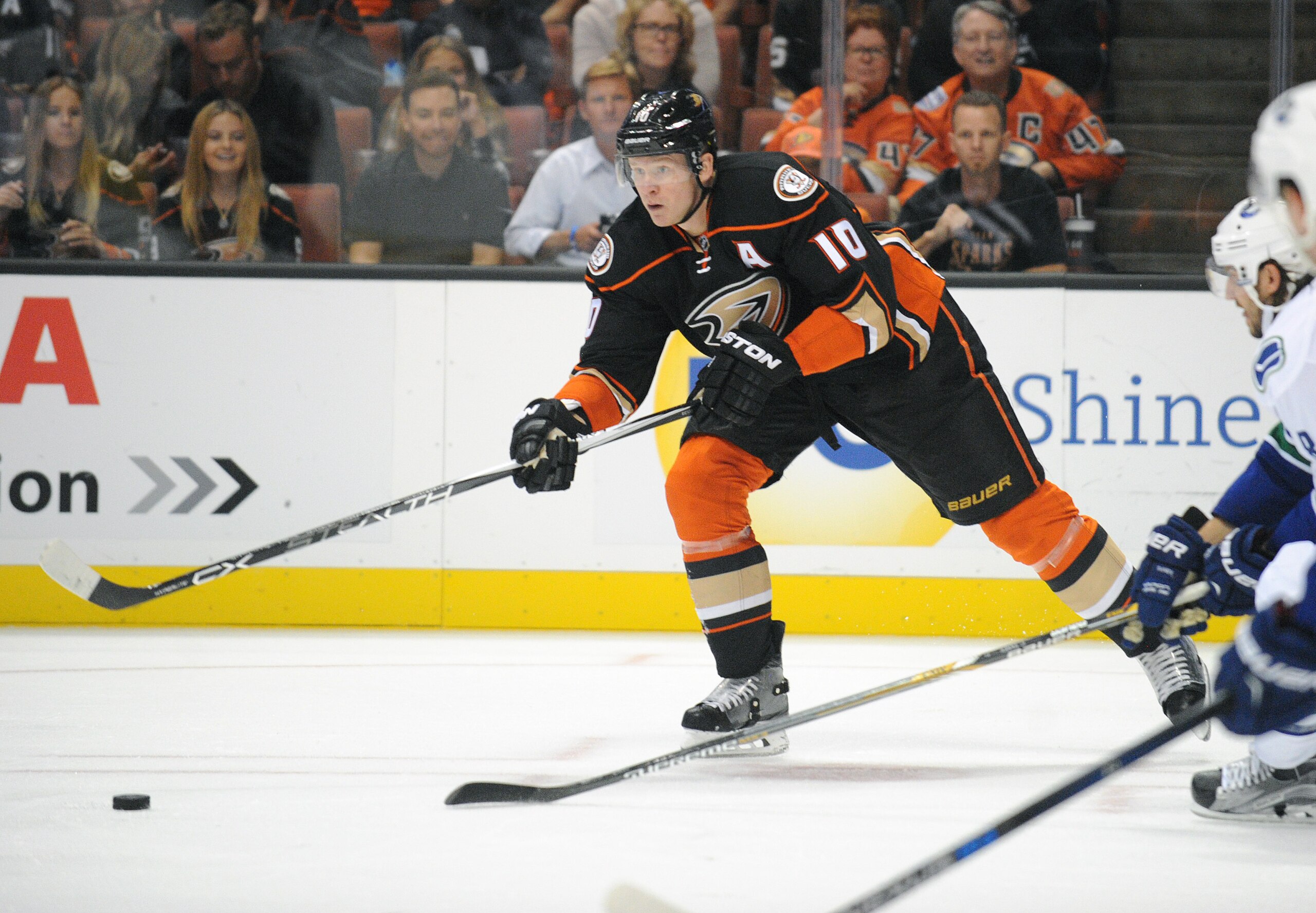
Offensive Play
A two-time first-team All-Star, Perry is capable of remarkable offensive performances. He lacks the year-in, year-out consistency of a Patrick Kane at even strength, but at his best he’s hit higher peaks, such as in 2013-14 when he scored 3.0 points per hour for Anaheim. Last year, struggles on the power play brought down his overall point totals—it was the worst season of his career in this department—but it’s probably justifiable to look at that as an aberration.
Defensive Play
Perry isn’t just a scoring machine. He’s also a very competent defensive player. Some of that is size and strength (6’3”, 210 lbs), but his positioning is such that at points he’s been asked to play big minutes on the penalty kill. Those minutes have been dialed back in recent years as part of an overall reduction in the amount Perry plays, but that shouldn’t be taken as a reflection on his talent in this area.
Transition Play
Perry’s good but not great in transition. He provides a strong presence at either end of the neutral zone, breaking up plays at the defensive blue line and gaining the opposition end with possession far more often than not, but in both cases, he falls noticeably behind the best players in the game.
Overall
The reason Perry comes in ahead of Kane for the No. 1 RW slot on this list is because he’s a more complete player. He lacks the Chicago star's offensive dimension, but he’s far more physical and much more reliable defensively. We’re likely to see his offensive game slowly taper off as he enters his 30s, but it’s a little early to predict a big collapse this season.
16. Anze Kopitar, C, Los Angeles Kings
45 of 60
Offensive Play
Kopitar put up 77 points in 82 games as an NHL sophomore in 2007-08. At that time, it looked like he was going to emerge as an offensive star, but almost a decade later, he has yet to reach the point-per-game mark in any single season. He’s still very, very good offensively, and there are some mitigating factors here, which we’ll get into momentarily. He fell below the 2.0 points/hour mark for the first time in years at even strength last season, though that was compensated for by an up year on the power play.
Defensive Play
Fans disappointed in Kopitar’s (still very good) offensive career arc can take solace in knowing that he’s one of the finest defensive forwards in hockey, a true two-way centre on a team which—even by NHL standards—places a heavy emphasis on defensive engagement. He plays tough competition, starts more than his share of shifts in the defensive zone and kills penalties with regularity.
Transition Play
A true two-way forward also does strong work in the neutral zone, and Kopitar certainly qualifies. He’s not quite in the elite category as a possession player on zone entries, but his numbers are very good, and he’s also engaged at the defensive blue line.
Overall
Kopitar has been a cornerstone piece of two Stanley Cup champions, centering L.A.’s top line, taking on the toughest matchups and contributing in all three zones. He’s never won a major league award, though he has contended for the Selke and Lady Byng, but he has consistently been among the best pivots in the NHL over the last half-decade.
15. Tyler Seguin, C, Dallas Stars
46 of 60
Offensive Play
It’s pretty hard to argue with back-to-back 37-goal seasons in an ultra-low-scoring NHL. Seguin’s points/hour rates at both even strength and on the power play have been excellent since his arrival in Dallas, and he and Jamie Benn are easily one of the most feared offensive duos in the league.
Defensive Play
Defensive involvement is a moving target at times for Seguin, which is one of the reasons it took so long for him to move from the wing to his more natural centre position. Despite spending much of his time in the offensive zone, Seguin is on the ice for a high number of dangerous scoring chances against relative to his teammates.
Transition Play
As with the rest of Seguin’s game, the strength of his work in transition really depends on if we look at offence or defence. He’s a good puck-carrier, though a touch below elite level in terms of gaining the offensive zone with possession. He’s not particularly good at breaking up opposition entries.
Overall
Seguin is a somewhat one-dimensional player, but what a dimension it is. Generating offence in today’s NHL is the hardest task for any player or team, and Seguin is the rare forward who can basically outscore any of the problems he has.
14. Duncan Keith, D, Chicago Blackhawks
47 of 60
Defensive Play
Keith’s role has become more specialized over the years, not through any particular fault of his own but because the Blackhawks have two pairings capable of playing tough opponents. As a result, he’s played easier minutes than many of the game’s top defencemen and been allowed to take more chances. That’s hurt his numbers in our defensive metrics, though he’s obviously still very good.
Offensive Play
At even strength, there’s no arguing that Keith is one of the game’s top defencemen. One would assume that would translate to the power play, but Keith’s numbers in that department have been hurt a bit by Chicago’s weak performance in recent years. Despite its impressive collection of talent, the club has only been average at scoring goals on the man advantage.
Transition Play
Keith is less aggressive carrying the puck in than was really expected, though again he’s comfortably north of the league average in that category. He does a good job of defending his own blue line, forcing dump-ins and breaking up plays. In 2013-14, he ranked sixth in the NHL in terms of creating turnovers at his own blue line.
Overall
At age 32, Keith still has gas left in the tank, but we should expect to see some declines in his overall game as he continues to move out of his prime years. The two-time Norris Trophy winner remains one of the best defencemen in hockey, and his performance in the 2015 playoffs was one for the ages.
13. Jamie Benn, LW, Dallas Stars
48 of 60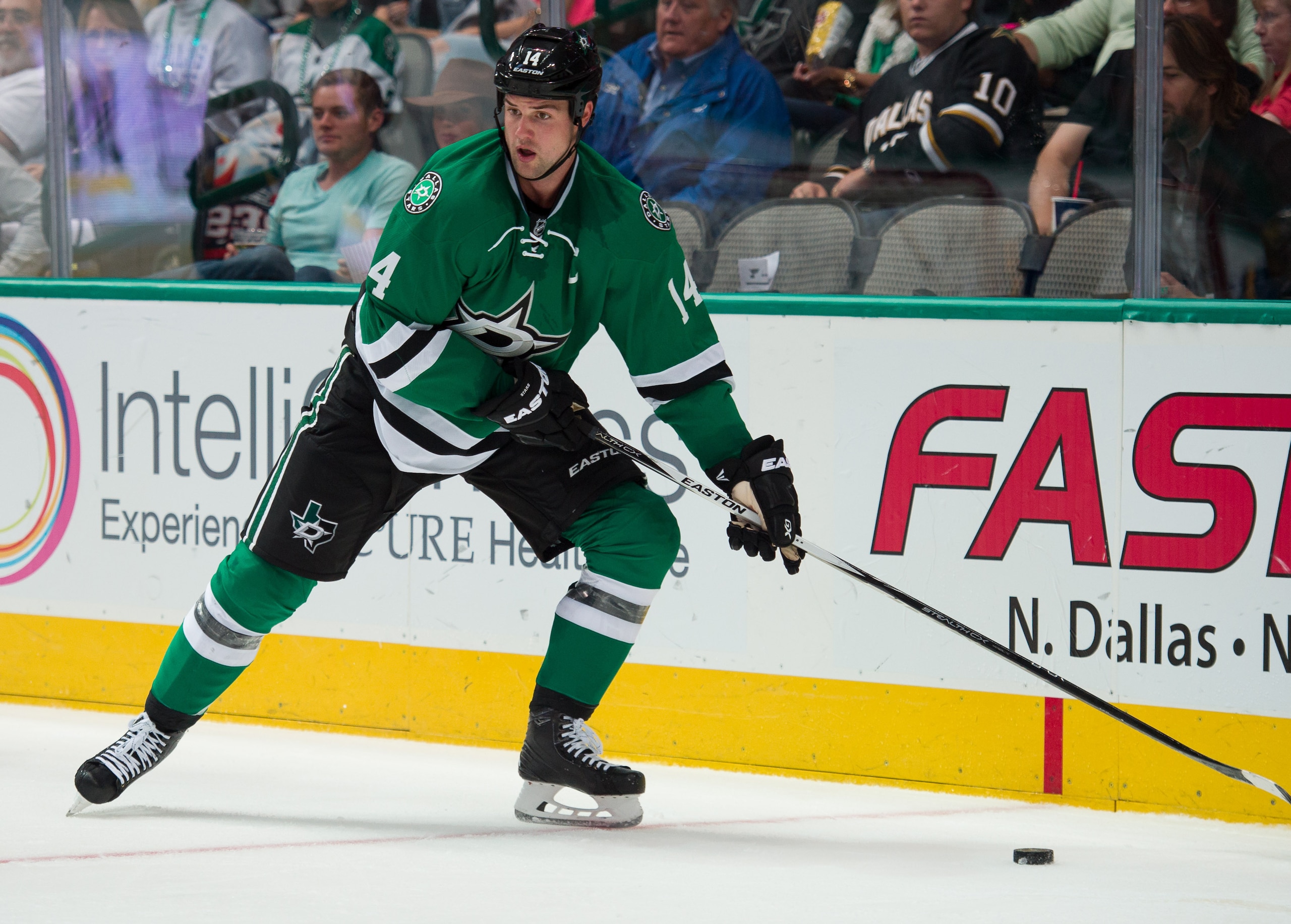
Offensive Play
Along with Tyler Seguin, Benn is at the heart of one of the NHL’s most effective five-on-five scoring lines. Last year, his performance reached a new level. Benn’s 87 points were enough to lead the league offensively, and he captured his first Art Ross Trophy as a result.
Defensive Play
For all the attention that Benn’s offensive game (rightly) attracts, he’s a long way from being a one-dimensional talent. He averaged 1.5 minutes per game on the penalty kill last season, and Stars head coach Lindy Ruff clearly trusts him to get the job done at that end of the ice as well. He even received some Selke votes in 2014-15.
Transition Play
Benn is excellent in the neutral zone, but his performance sits just a touch back of some of the game’s other elite forwards. Relative to the average NHLer, he’s excellent at gaining the offensive zone while retaining possession, and he’s competent at getting back to break up plays at the defensive blue line.
Overall
There aren’t many players in the league who can score as well as Benn does. Add to that his defensive acumen, 6’2”, 210-pound frame and willingness to engage physically, and he’s a truly unique talent. He just turned 26 in the offseason, so he should be a dominant player for years to come.
12. Tuukka Rask, G, Boston Bruins
49 of 60
Even Strength
One of the difficulties in determining goalie quality is separating the player from the defence in front of him. Rask’s performance in 2014-15 was reassuring in that regard, particularly because once Zdeno Chara went down with an injury early in the year, Rask delivered some brilliant work at even strength (.931 save percentage). Also compelling is his adjusted save percentage, which ranks second in the NHL over the past five seasons.
Penalty Kill
Boston has routinely had some of the NHL’s best goaltending on the penalty kill, with Rask marching almost in lockstep with predecessor Tim Thomas in these situations. Some of this undoubtedly owes to the outstanding work of the team’s forwards and defencemen, but even so, it’s reasonable to conclude that Rask is above average in this part of the game.
Other Areas
The shootout hasn’t been friendly to Rask. He has just an 18-23 career record, but that really has more to do with the Bruins shooters than Rask. His .713 save percentage entering 2015-16 compares favourably to the best in the game. He generally makes good decisions with the puck and is a good passer.
Overall
The most significant prize eluding Rask at this point is a Stanley Cup win as a starter (he won as a backup in 2011), but that shouldn’t be taken as a criticism of his abilities. He won the Vezina Trophy in 2014 and excelled in the Olympics that same year, helping injured and underpowered Finland to a bronze medal. Winning a Cup in the immediate future may be tough given that the Bruins appear to be heading into a retooling period, but on the bright side, any struggles in Boston should result in the removal of any concern that he’s just a system goalie.
11. Cory Schneider, G, New Jersey Devils
50 of 60
Even Strength
Schneider’s adjusted even-strength save percentage over the past five years is the best in hockey. It’s better than Carey Price’s, better than Tuukka Rask’s, better than Henrik Lundqvist’s. That’s the single biggest reason he ranks so high on this list. The number falls behind Price if we weigh recent results more heavily, but that's less because of any drop-off in Schneider’s performance and more because Price was so brilliant last season. The only item really working against Schneider at this point is a lack of playoff success.
Penalty Kill
A .915 save percentage at even strength isn’t terribly impressive, but the penalty kill is another matter entirely. Schneider has faced just under 1,000 shots over the last five seasons while his team was short-handed, and the .915 number he’s posted easily leads the league. No other player with more than 100 games played is even over .900.
Other Areas
Schneider’s 9-17 career record in the shootout appears to have been well-earned. His .610 save percentage entering 2015-16 is well below the league average. That may be misleading, as he was very good in the AHL (11-5, .747 save percentage), but even so, it’s hard to particularly rate him as a shootout goalie. He’s also only a middling puck-handler, despite improvements in his game since arriving in New Jersey.
Overall
This is going to be a controversial choice because this player simply doesn’t have the same reputation as some of the guys below him on this list, and his team isn’t likely to be good enough this year to give him a real push. Additionally, Schneider’s personal playoff numbers (.922 save percentage) are good, but his record (1-4) is uninspiring. He simply hasn’t found himself with an opportunity to show what he can do over an extended run in front of lots of eyes. His work at even strength and on the penalty kill is so brilliant, though, that when we did this analysis, we couldn’t help but rank him this high.
10. Victor Hedman, D, Tampa Bay Lightning
51 of 60
Defensive Play
Hedman has some significant advantages when it comes to playing defence. A mobile 6’6”, 223-pound rearguard isn’t going to find many opponents that he can’t match. Tampa Bay’s penalty-killing unit is better in terms of limiting shots and chances when Hedman’s on the ice than when he's not. That changes somewhat at even strength, as Hedman’s high-event style of play allows some opposition opportunities.
Offensive Play
Over the past three seasons, no NHL defenceman has scored more points/hour than Hedman. This was overlooked for a long time because of limited power-play opportunities and playing in a small market, but now that he’s a (very effective) regular on the man advantage and has enjoyed a brilliant playoff run, he’s getting the credit he deserves.
Transition Play
Unsurprisingly, Hedman is among Tampa Bay’s most effective defencemen at both creating offensive-zone entries and preventing defensive-zone entries. His work at the defensive blue line is particularly impressive, as he forces dump-ins and breaks up plays entirely at high rates. That’s where a long reach and mobility serve him particularly well.
Overall
The 2015 playoffs revealed to the hockey world that Hedman is the kind of cornerstone defenceman that every NHL team covets. He’s a complete player who can impact the game in a multitude of ways and is one of the finest rearguards in the game today.
9. Erik Karlsson, D, Ottawa Senators
52 of 60
Defensive Play
Despite his reputation as a one-way player, Karlsson is an extremely competent defender. One strong indicator is his work on the penalty kill, something he’s done less of in recent years as the coaching staff tries to get him out in more offensive situations. This may be a mistake because no Senators penalty-killer has been on the ice for fewer shots or chances against per hour than Karlsson. He isn’t forced to take penalties after being caught out of position in the defensive zone either.
Offensive Play
While his defensive game is generally underrated, there’s no question Karlsson’s primary calling card is in the offensive zone. Over the last three seasons, only Victor Hedman and Brent Burns have scored more points per hour among NHL defencemen at even strength, and Karlsson is also a top-10 per-minute scorer on the power play over that span.
Transition Play
Karlsson is one of the game’s better defencemen in the neutral zone too. The data we have makes a case for him as an elite puck-carrying defencemen. He carries the puck in on nearly half of his zone entries, which is an elite number for an NHL defenceman. He does a good job of defending the blue line too, breaking up opposition entry attempts roughly 10 percent of the time and forcing dump-ins an additional 30 percent of the time.
Overall
Because a player’s defensive game is generally harder to measure, hockey fans often fall into the trap of conflating offensive brilliance with defensive negligence. Nothing could be further from the truth in the case of Karlsson, who is strong in all three zones and one of the game’s most dynamic talents.
8. Evgeni Malkin, C, Pittsburgh Penguins
53 of 60
Offensive Play
It hasn’t been given much attention, but in a low-scoring league, Malkin has managed to top the point-per-game mark in four consecutive seasons. Even if we nix his 109-point performance in 2011-12 and just look at the last three seasons, he ranks second in the entire league in points per game. He’s topped 6.0 points/hour on the power play in each of the last four seasons and scored 2.4 or more points/hour in every year in that span save for an injury-plagued and lockout-shortened 2013 campaign.
Defensive Play
Malkin gets mixed reviews on defence. His coaches have certainly taken more care to give him offensive minutes at even strength than they have teammate Sidney Crosby. Despite this, he has been on the ice for a surprisingly high number of high-danger chances against.
Transition Play
Malkin’s numbers through the neutral zone are exceptional. He ranked fourth in the entire NHL in 2013-14 in terms of carrying the puck into the offensive zone, and he also posted surprisingly good numbers at the defensive blue line.
Overall
It’s strange to say, but Malkin may be underrated at this point. After winning a bunch of awards in 2011-12 he’s been shut out from voting despite (as we mentioned earlier) finishing second among all NHL players in terms of points/game over the last three seasons. Injuries are certainly a factor, but there’s absolutely nothing wrong with this guy when he’s healthy enough to play.
7. Alex Ovechkin, LW, Washington Capitals
54 of 60
Offensive Play
It is virtually undisputed that Ovechkin is the NHL’s most lethal power-play weapon. He has led the NHL in power-play goals scored for three years running and consequently also led the game in total goals scored in each of those seasons. If there is a criticism here, it’s only that Ovechkin has been diminished as an even-strength scorer over the last few years, scoring between 1.6 and 1.8 points/hour at five-on-five in three of the last four seasons.
Defensive Play
Ovechkin’s lack of defensive commitment is legendary, and while the criticism tends to be overplayed, it certainly has a basis in reality. Our metrics consider things like quality of competition and scoring-chance ratios, and by those metrics, Ovechkin fares pretty well. As a rule, Washington outplays some really good opponents when he’s on the ice. For the most part, the old line about a good offence being the best defence applies here, even if he did make strides last year under new coach Barry Trotz.
Transition Play
There isn’t another left wing in the league who carries the puck into the offensive zone as frequently as Ovechkin does. A lot of his value comes as one of the game’s most capable players carrying the puck up ice. While not known as a backchecker, Ovechkin is also surprisingly involved in breaking up plays at the defensive blue line.
Overall
Some will frown at our designation of Ovechkin as a left wing, as he has famously spent time on both sides, but he is indeed back at the position he entered the NHL in. He is not by any measure a complete player, but his robust game and unparalleled goal-scoring ability make him impossible to ignore. The hardest thing to do in hockey is score goals, and nobody is better at it than Washington’s captain.
6. Steven Stamkos, C, Tampa Bay Lightning
55 of 60
Offensive Play
No player in the NHL can match Stamkos’ combination of shot volume and shot accuracy. Over the last six seasons, he has scored 253 goals and fired 1,421 shots for a shot conversion rate of 17.8 percent. That’s 1.7 percent better than the next-best player with more than 100 goals in the same span (Curtis Glencross). The other two players with 200-plus goals are both well back, too. Corey Perry having converted on 14.3 percent of his shots and Alex Ovechkin having converted on 12.6 percent.
Defensive Play
Like a lot of top offensive players, Stamkos doesn’t get his due as a defensive presence. At times, the Lightning have even used him on the penalty kill. His shot-suppression numbers could be better, but outside of a handful of depth players who draw humbler matchups, no Tampa Bay forward is on the ice for fewer high-danger chances against.
Transition Play
Offensively, Stamkos has the kind of brilliant numbers that most of the players on this end of the list manage. He’s as good carrying the puck in as Jonathan Toews. He’s a little better than Sidney Crosby. He’s less active at the defensive blue line, though, rarely getting involved in preventing opposition entries.
Overall
A two-time Rocket Richard winner and two-time second-team All-Star, Stamkos is without question one of the game’s best players. However, only once has he seriously contended for the Hart Trophy—in 2011-12 when he scored 60 goals.
5. John Tavares, C, New York Islanders
56 of 60
Offensive Play
Tavares is a wonderful offensive player. He’s topped 6.0 points/hour on the power play in three consecutive seasons and hasn’t produced less than 2.2 points/hour in any of the last four seasons. The crazy thing is that he likely still isn’t at his peak. He only turned 25 in September, and we know most players have the most productive years of their career in the age 25-26 range.
Defensive Play
If there’s an area where Tavares doesn’t get his due, it’s on the defensive side of the puck. There’s still a tendency for people to get caught up in plus/minus, forgetting that Tavares is always on the ice when the Isles’ net is empty and that he plays heavy minutes on the power play—empty-net goals and short-handed goals against account for minus-46 of his career minus-40 rating—situations where it’s either impossible to be a plus player or virtually so. He’s matured defensively over the course of his career and is now very reliable.
Transition Play
It’s not a surprise to see that Tavares excels at gaining the opposition zone with possession of the puck. He carries it in on just under three-quarters of his entries, which is a very good total. What may be surprising is how strongly he fares on the backcheck. He’s been very effective at thwarting opposition rushes, breaking up nearly half of the attempts he faces and allowing his rivals to gain the zone with possession just one-third of the time.
Overall
The transition from potential to realized potential is almost complete here. Tavares was a first-team All-Star last season for the first time in his career and a Hart Trophy finalist for the second time. We expect him to take another step forward this year, and it might be enough to earn him the designation of league MVP.
4. Ryan Getzlaf, C, Anaheim Ducks
57 of 60
Offensive Play
There aren’t many players who can match Getzlaf at even strength. Last season, he managed 47 points (2.6 points/hour) at five-on-five, and that was a drop-off from an incredible 2013-14 when he put up 59 points (a whopping 3.2 points/hour). His power-play numbers bounce around a little bit but generally look quite good, too.
Defensive Play
One of Getzlaf's most attractive qualities is how hard he is to play against, not just because he can score and hit but also because he’s remarkably competent in the defensive zone. He’s one of those rare top scorers who gets heavy usage on the penalty kill and starts a high percentage of his shifts in the defensive zone every year.
Transition Play
A point of differentiation for Getzlaf from the rest of the NHL’s top offensive players is his neutral-zone play. Most forwards who end up near the top of the league in scoring carry the puck in on 70 percent or more of their zone entries. In Getzlaf’s case, it’s a respectable but unspectacular 59 percent. He’s heavily involved at the defensive blue line, getting back frequently, but he generally plays a conservative style that doesn’t result in a lot of break-ups.
Overall
Maybe it’s because he plays in Anaheim, but Getzlaf rarely seems to get the national attention that he deserves. There may not be another centre in hockey who combines size (6'4", 221 lbs), physical play, elite scoring and tough defensive minutes the way Anaheim’s captain does.
3. Jonathan Toews, C, Chicago Blackhawks
58 of 60
Offensive Play
It’s a little weird to describe offence as a weakness in a player who has scored 2.1 or more points/hour in every season of his NHL career, but scoring is the most imperfect part of Toews’ game. He’s a very strong even-strength performer (though there are stronger), but where he falls down a bit is on the power play. It’s the reason he is always just flirting with the point-per-game mark rather than demolishing the rest of the league. Despite playing major minutes on one of the best power plays in hockey, Toews has scored less than 4.0 points/hour in four consecutive seasons on the man advantage. Put another way, over the past four years, his 3.54 points/hour falls right between players like Tyler Bozak and Michael Ryder. It’s a weak point, though arguably his only weak point.
Defensive Play
Toews, along with Boston’s Patrice Bergeron, is the NHL gold standard for defensive play. Toews has been a top-four choice for the Selke Trophy in every season since 2009-10, save for 2011-12 when he lost 23 games to injury and wound up finishing sixth. His quality-of-competition rating is off the charts, and he kills penalties and is as close to completely reliable on the defensive side of the puck as an NHL forward gets.
Transition Play
Toews plays a masterful possession game, and that shows up in his neutral-zone numbers. He carried the puck into the offensive zone on 78 percent of his zone entries in 2013-14. That’s not only better than Patrick Kane, but it’s also better than all but a handful of NHL players. He’s tenacious on the backcheck, too. In 2013-14, he broke up 40 percent of opposition entry attempts that he faced and forced dump-ins on an additional 47 percent of those plays. He is close to perfect in the neutral zone.
Overall
There are those who believe that Toews is the best player in the NHL, and it’s understandable because he’s such a gifted two-way threat. In our view, he just lacks that little bit extra offensively to climb higher on this list. Some of that offence is sacrificed in the name of his defensive game, but that isn’t the case on the power play, and his less-than-elite results there show that he isn’t quite in the same range in that one department as the game’s finest scorers.
2. Carey Price, G, Montreal Canadiens
59 of 60
Even Strength
Price is in rarefied air as an NHL goalie. He’s one of just four active goalies over the past five seasons to play in a minimum of 100 games while posting an even-strength save percentage north of .930. He bettered that number last season with a ridiculous .943 even-strength save percentage in an era when a netminder who can consistently post .920 can be an NHL starter.
Penalty Kill
Price’s numbers on the penalty kill aren’t as impressive as those of some other goalies on this list, but they are respectable. His .882 save percentage while short-handed over the last five seasons ranks 11th among the 40-odd goalies to play at least 100 games over that span. That may not be elite-level work, but it’s still easily in starter-calibre range.
Other Areas
The shootout isn’t an area where Price dominates the way he does in other situations, but he’s still quite good. He ranks 13th among goalies to face at least 100 shots, with his .713 save percentage well clear of the league average. He ranks eighth among active goaltenders with 11 career assists and is a very capable puck-handler.
Overall
There just aren’t any significant weaknesses in Price’s game. The reigning Hart Trophy winner is in the prime of his career and falls somewhere between good and brilliant in every area of the game. Critically, it’s also easy to be confident in his record. Price has a heavier workload than almost any other NHL goalie, and he excels in pressure situations, with a long track record in the NHL playoffs complementing strong work at the Olympics, in the AHL postseason and at the IIHF World Junior Championships. He is the complete package.
1. Sidney Crosby, C, Pittsburgh Penguins
60 of 60
Offensive Play
In the past five seasons, only one player has managed to play at least 400 minutes at even strength and top 3.5 points/hour. Sidney Crosby has done it twice. He had a rough year in 2014-15, falling outside the top 10 in even-strength scoring rate for the first time, but it’s impossible to ignore his recent track record of out-scoring everybody else in hockey. He’s also consistently brilliant on the power play.
Defensive Play
Back in 2013, then-Penguins coach Dan Bylsma told Rob Rossi of the Pittsburgh Tribune-Review that Crosby’s work in the defensive zone generated roughly 10 scoring chances per game. That sounds like a generous count, but Crosby’s on-ice scoring chance rates have always been ridiculous. Pittsburgh’s been a good team for a long time, and over the past three seasons, Crosby’s on-ice high-danger-chance ratio is nearly 9 percent better than the team average.
Transition Play
Our transitional metrics say the same thing about Crosby that his on-ice scoring chances or point totals do. In a league where a forward who carries the puck in on half his zone entries is doing well, Crosby can boast that he does so three-quarters of the time. He’s highly involved on the defensive blue line, too, getting back early and often to break up opposition rushes.
Overall
Though injuries have taken a terrible toll on his career, Crosby remains hockey’s finest player. No other player currently in the league can match his offensive peak at five-on-five, he’s excellent on the power play, and he is the kind of two-way threat who tilts the ice in his team’s favour. The kinds of analysis that suggest otherwise are overly short-term (What did he do in 2014-15?), overly simple (a player is the sum of his Cup rings, praise be to Colin Fraser) or deliberately contrarian.


.jpg?w=2560 "Rap: Lions, LaPorta End Contract Talks")
.jpg?w=2560 "Report: Baker May Miss Up to 6 Weeks")
.jpg?w=2560 "EVERY Fantasy Football Update")
_0.png?w=2560 "Week 5 Winners & Losers 📊")

.jpg?w=2560 "Commanders May Change Logo 👀")