
NHL 500: Ranking the Top 120 Centers
This is it: The last of our positional breakdowns in our unparalleled NHL 500 project.
For those new to the series, an explanation of what we are looking for here may be helpful. We can explain it with one question: Taking into account the available evidence, what would a reasonable person expect from every player in the league in this coming year?
Our analysis is primarily rooted in major league work, which means we’re omitting rookies, so don’t go looking for Connor McDavid or Sam Bennett. We don’t care about contracts or long-term trade value. We don’t care about what happened last year, except insofar as it predicts what will happen in the coming year.
Our process leans heavily on analytics and involves creating a 100-point scale for every position. A grade of 50 indicates an average player at his position, with a higher total obviously being better.
For the most part, talent tends to cluster around the average, with elite players being relatively rare. So a player with a grade of 80 is actually elite—these numbers don’t function the way marks in school do.
For forwards specifically, we’ve divided our analysis into three parts.
Offensive play (50 points) is exactly what it sounds like and is based primarily on point-scoring rates at even strength and on the power play.
Defensive play (30 points) is graded based on effectiveness in the defensive zone and on the penalty kill.
Transitional play (20 points) is a category which traditionally has been undervalued but has taken on increasing relevance in modern analytic thought. For forwards, the majority of the score comes from how effective players are at carrying the puck over the offensive blue line, though we also consider their work on the backcheck.
We hope you continue to enjoy our comprehensive assessment of the NHL’s players.
Other NHL 500 installments:
A Note on Sources and Methodology
1 of 65
There are just a couple of points that should be made about the process here.
If you’d like to get to the list, feel free to skip this page. It explains how we’ve done what we’ve done and isn’t properly part of the list that follows. With that said, if you’re planning an angry comment, reading this first may help.
First, the list which follows is heavily based on analytics. We use quality-of-competition metrics to get a feel for the kind of opposition each player faces, and we’ve taken into account items like zone starts. On-ice metrics like scoring chances and Corsi were consulted.
We’ve also made use of manual tracking, particularly in the transitional play category.
Statistics which follow come from several sources. War-on-ice.com and Stats.HockeyAnalysis.com were our primary tools, providing numbers for every area of the game. The with/without you function on Puckalytics was extremely useful for identifying linemate effects, while Hockey-Reference.com was our go-to source for biographical information.
Corey Sznajder’s incredible work manually tracking zone entries and zone entry defence was the primary source for information in that area.
Finally, while the list which follows is primarily built on analytics data, it is a subjective list. There is no consensus on exactly how various parts of the game should be weighed, or how much linemate, competition and team effects influence a player’s results.
We’ve done our best to consider as many factors as possible and balance them correctly, but at the end of the day, this is one interpretation and should not be mistaken for the consensus view of the hockey analytics community.
In other words, the list which follows is our own, as are any mistakes therein.
We’ve also opted for a cautious approach. We’re trying to responsibly forecast the likeliest outcomes, and so a breakout candidate who succeeds will be underrated on this list, as will any goalie who collapses entirely.
There’s lots of room for reasonable people to disagree with these projections.
Nos. 120-116
2 of 65
120. Paul Gaustad, Nashville Predators
Offensive Play: 15/50; Defensive Play: 23/30; Transition Play: 5/20
Gaustad is a non-entity offensively, having come in below—in some cases well below—the league average in terms of scoring for four consecutive seasons, with the number trending downward over time. Nashville’s coaching staff doesn’t care. Any offence is gravy because Gaustad’s role is to take as many defensive-zone faceoffs as humanly possible at even strength and sponge up minutes on the penalty kill. He isn’t quite the worst transition forward in the league, but he’s certainly the worst on this list. There are defencemen out there who carry the puck in on zone entries more than twice as often as Gaustad does.
119. Casey Cizikas, New York Islanders
Offensive Play: 15/50; Defensive Play: 17/30; Transition Play: 12/20
Cizikas is a fourth-liner from the new school, which sees what used to be an energy unit deployed primarily in the defensive zone and on the penalty kill—though of course energy is not discouraged. He’s done well enough in the role, particularly given his young age (24), but it’s been a real slog to produce anything resembling offence from this position.
118. Alexander Wennberg, Columbus Blue Jackets
Offensive Play: 18/50; Defensive Play: 17/30; Transition Play: 9/20
Wennberg, a much-hyped prospect, made his NHL debut last season and wasn’t overly impressive. He was given a push at both even strength and on the power play and managed underwhelming point totals. He didn’t look any better by the shot metrics, either. He got penalty-killing minutes, too, and the Jackets got raked over the coals while he was out there. By eye, he’s an impressive prospect, but it’s debatable whether he was ready last season and it takes a leap of faith to project great things this year. This project doesn’t involve leaps of faith.
117. Victor Rask, Carolina Hurricanes
Offensive Play: 20/50; Defensive Play: 15/30; Transition Play: 9/20
Rask had a fairly solid rookie year for the Hurricanes. He’s still developing as an offensive forward and came in under the NHL averages for points/hour at both even strength and on the power play, but his two-way game was solid for a first-year player. He’s only 22 years old.
116. Cedric Paquette, Tampa Bay Lightning
Offensive Play: 17/50; Defensive Play: 17/30; Transition Play: 10/20
Tampa Bay’s largely unheralded rookie captured eyes in last season’s playoffs when he appeared in significant minutes en route to the Stanley Cup Final. He’s still a developing player, and he needs to improve in terms of shot metrics and scoring rates. He is, however, already showing defensive value and ended up logging big minutes on the penalty kill for the Bolts last season.
Nos. 115-111
3 of 65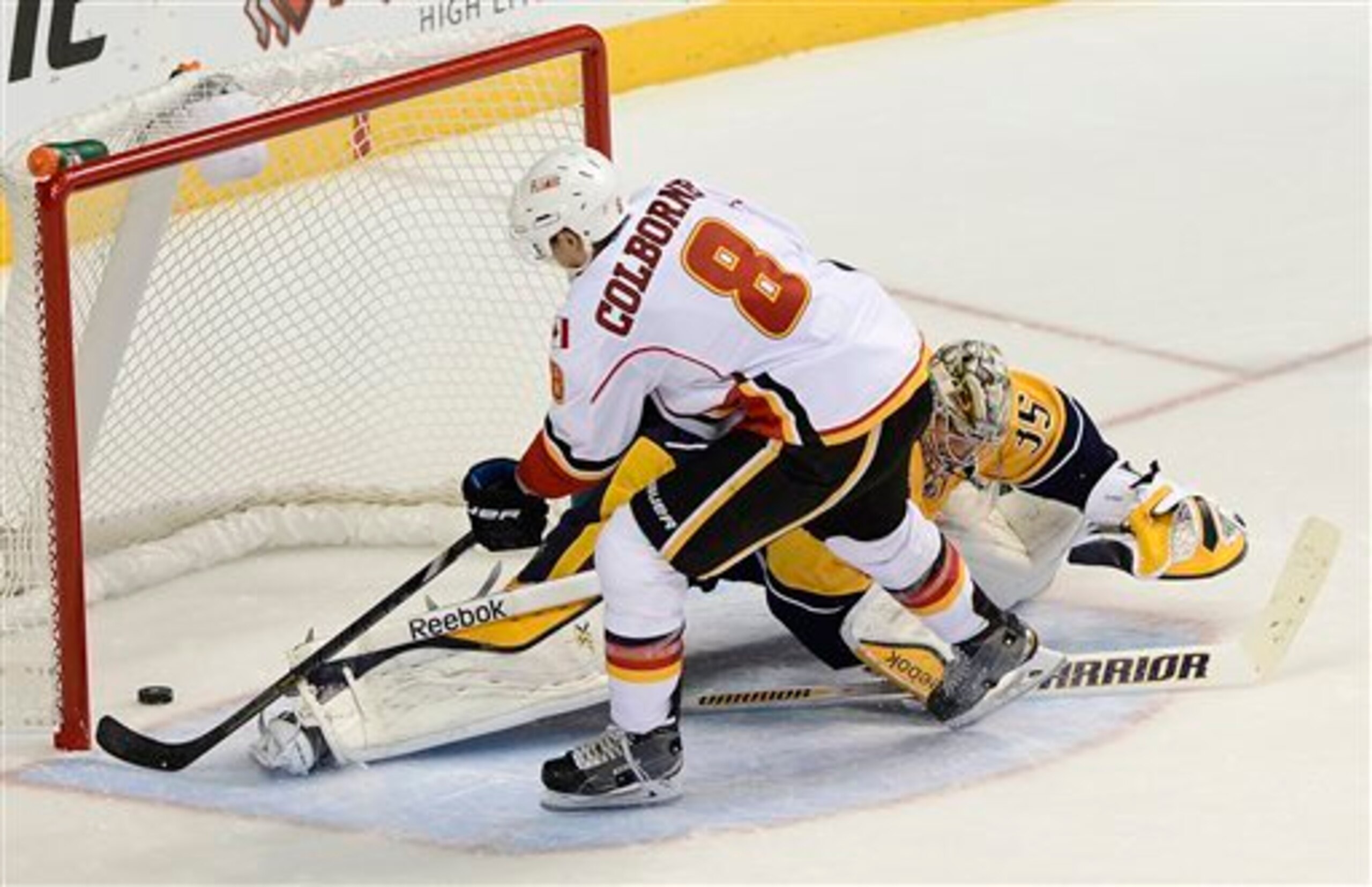
115. Brooks Laich, Washington Capitals
Offensive Play: 19/50; Defensive Play: 17/30; Transition Play: 9/20
Four seasons have passed since Laich last played in more than 70 games in a single season. Not coincidentally, it’s been four seasons since he scored 40 points, with last year’s seven-goal, 13-assist effort being his best performance in that span. Once upon a time, he was a big (6'2", 195 lbs), rugged middle-six forward who could play a supporting role offensively while killing penalties and providing responsible defensive play. These days, though, the 32-year-old is limited to a defensive specialist role, and he's lucky if he has a healthy campaign.
114. Erik Haula, Minnesota Wild
Offensive Play: 18/50; Defensive Play: 16/30; Transition Play: 11/20
Haula scored 15 points over 46 games as a rookie and then managed to fall one point short of that total over 72 games as a sophomore, so offence is clearly still a moving target. What makes him interesting is the way he’s settled into a defensive role right out of the gate, killing penalties and starting a large percentage of his shifts in the defensive end of the rink. If that offence stabilizes even in the NHL-average range, he’s going to be a very useful two-way player.
113. Jarret Stoll, New York Rangers
Offensive Play: 14/50; Defensive Play: 21/30; Transition Play: 11/20
It’s been almost a decade since Stoll was a better than NHL-average scorer at even strength, and in 2014-15, his 0.7 points/hour at five-on-five was less than half of what we would expect from the average league forward. It’s actually just a touch below the average for a defenceman. Historically, he has made up for his anemic scoring touch with strong defensive play. In that regard, he remains excellent in the faceoff circle, but a collapse in his on-ice numbers on the penalty kill last season suggests that we may be seeing a decline in this area too.
112. Scott Gomez, St. Louis Blues
Offensive Play: 21/50; Defensive Play: 14/30; Transition Play: 11/20
The 35-year-old Gomez has enjoyed a quality NHL career stretching over 1,000 games, a career which featured a Calder Trophy and two championships with the New Jersey Devils. We’re getting close to the end of that career. Gomez was always far more of a passer than a shooter, and these days, he’s almost entirely one-dimensional as an offensive threat. His two-way play isn’t particularly bad, but it isn’t good enough to keep him in the league once the scoring dries up.
111. Joe Colborne, Calgary Flames
Offensive Play: 21/50; Defensive Play: 13/30; Transition Play: 12/20
The 6’5”, 221-pound Colborne was a first-round pick in the 2008 draft because he promised to combine substantial scoring with an irresistible frame. He has, with time, developed into a reasonable offensive player, scoring at about the NHL average at even strength and earning depth power-play minutes (where he’s been vanilla). He lacks significant defensive value, however, and fares poorly by shot metrics.
.jpg?w=2560)

.jpg?w=2560 "Chiefs Buccaneers Football")
Nos. 110-106
4 of 65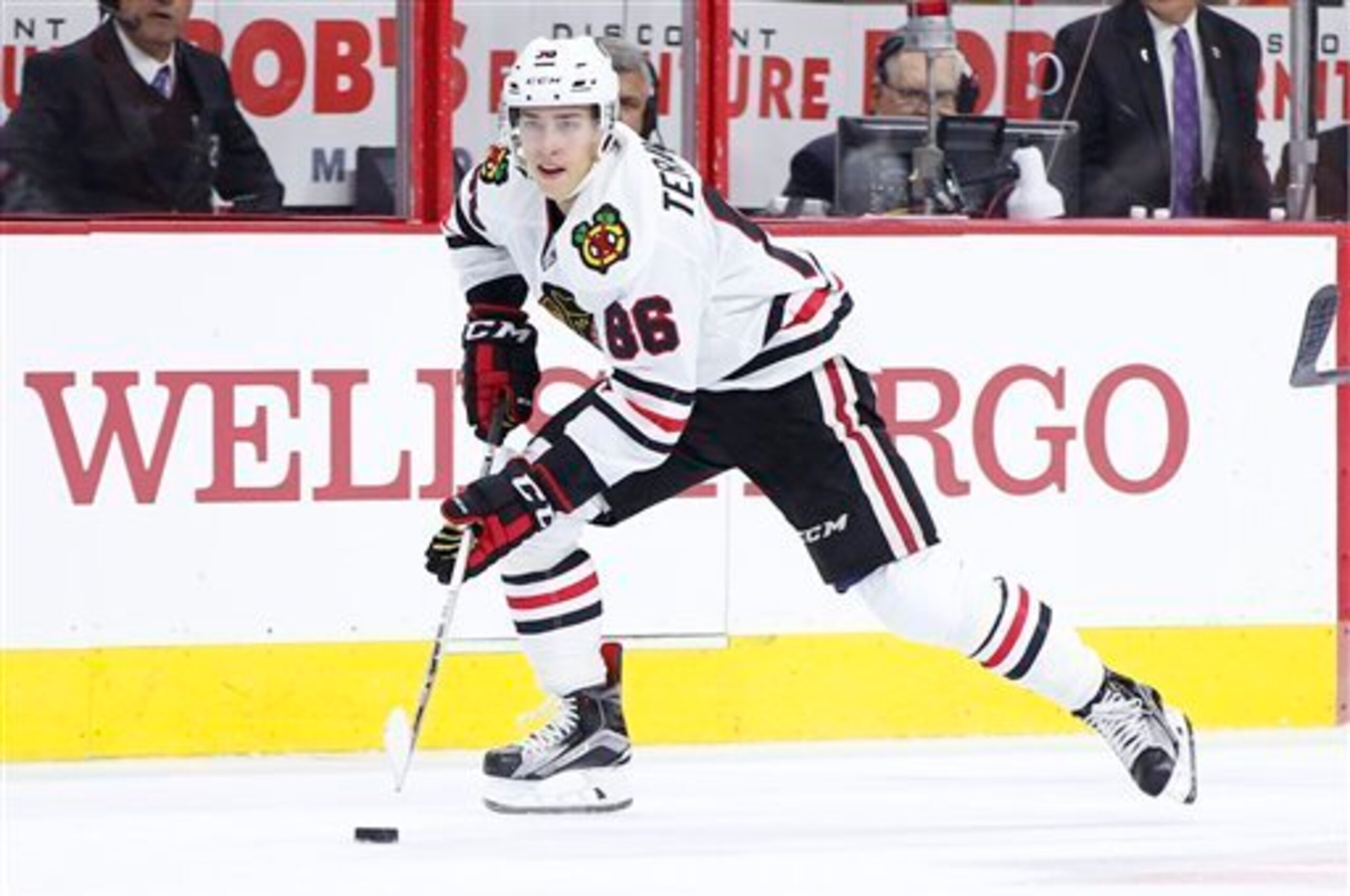
110. Ben Smith, San Jose Sharks
Offensive Play: 17/50; Defensive Play: 18/30; Transition Play: 11/20
Smith has played two NHL seasons and posted very different results over those campaigns. He was a revelation as a rookie with Chicago in 2013-14, stepping into a defensive-zone specialty unit and still managing to out-score the NHL average. However, his offence was cut in half as a sophomore. Either way, he’s a good defensive player, but the question of offence is going to determine whether he spends most of his career on a fourth line or not.
109. Matt Cullen, Pittsburgh Penguins
Offensive Play: 21/50; Defensive Play: 14/30; Transition Play: 11/20
In a summer when veterans struggled mightily to get contracts, the 38-year-old Cullen managed to draw a one-year deal. That’s because, eight teams and more than 1,200 games into his NHL career, he’s still producing. He topped the average scoring rate at five-on-five for NHL forwards last year, and while we expect his totals to slip a little bit, he’s still a quality five-on-five player. His role on special teams has been curtailed with age.
108. Shawn Horcoff, Anaheim Ducks
Offensive Play: 20/50; Defensive Play: 16/30; Transition Play: 10/20
This may be the 37-year-old Horcoff’s last NHL season, and the last few years have taken a major toll on his game—in particular his offensive ability. Once a plus scorer at even strength and competent on the power play, his numbers in both areas have fallen off. He shouldn’t be out with the man advantage and is average or worse at five-on-five. He’s still responsible defensively and capable enough on the penalty kill and in the faceoff circle, but he’s no longer a top-flight defensive forward.
107. Peter Holland, Toronto Maple Leafs
Offensive Play: 22/50; Defensive Play: 13/30; Transition Play: 11/20
He isn’t what Anaheim expected when the Ducks drafted him in the first round of 2009, but last year he did manage to produce the best season of his career, scoring 11 times and recording 25 points over the course of 62 games. It was the third season in a row that his points/60 at even strength has climbed, and he’s now above-average in that category. Though he has yet to carve out a role on the power play, he did graduate to the penalty kill last season.
106. Teuvo Teravainen, Chicago Blackhawks
Offensive Play: 22/50; Defensive Play: 14/30; Transition Play: 10/20
Teravainen’s long-awaited NHL debut took place last season, but the now-21-year-old struggled in many ways. Offence is going to be his calling card at the NHL level, but he only managed 1.1 points/hour at even strength and didn’t earn major minutes on the power play. We’re projecting growth, but only modest growth because we’re not in the business of predicting breakout seasons. We’re just trying to establish a reasonable benchmark while recognizing that he may well exceed it. He is not a significant defensive player at this juncture of his career.
Nos. 105-101
5 of 65
105. Brad Richardson, Arizona Coyotes
Offensive Play: 19/50; Defensive Play: 18/30; Transition Play: 10/20
Richardson won a Stanley cup with the Los Angeles Kings in 2012, which ironically was one of his weakest seasons in the league. At his best, he’s a reasonable bottom-six option who plays a strong defensive game and can chip in enough offence to help. He’s also a physical player and regular penalty-killer.
104. Dominic Moore, New York Rangers
Offensive Play: 18/50; Defensive Play: 19/30; Transition Play: 10/20
In his prime, Moore was a competent enough scorer, but those days are long in the past and he’s now below average in that category. The reality now for the 35-year-old is employment as a defensive specialist. Moore is an excellent faceoff man and is typically deployed in the neutral zone to win critical draws. He also gets significant use on the penalty kill.
103. Nick Spaling, Toronto Maple Leafs
Offensive Play: 23/50; Defensive Play: 17/30; Transition Play: 7/20
Spaling’s strength is his versatility. He can play all three forward positions, he’s not terrible in the faceoff circle and can perform cameo work on the power play and significant work on the penalty kill. He’s not a bad scorer and isn’t clueless in the defensive zone, though he generally ends up spending more time in the latter than he really should because he’s such a weak transition player.
102. Johan Larsson, Buffalo Sabres
Offensive Play: 21/50; Defensive Play: 16/30; Transition Play: 10/20
One of the key pieces acquired from Minnesota in the Jason Pominville trade, Larsson broke into the NHL in 2014-15 after an impressive half-season at the AHL level in which he nearly hit the point-per-game mark. He can play all three forward positions, saw at least some time on both special teams, scored at a league-average rate and significantly outperformed a miserable Sabres roster by shooting metrics.
101. Jay McClement, Carolina Hurricanes
Offensive Play: 17/50; Defensive Play: 19/30; Transition Play: 11/20
McClement is one of a breed of new defensive specialists who have cropped up across the league in recent years. With these players, offence is decidedly a secondary concern. Instead, the coach feeds them a steady diet of work on the penalty kill and even-strength shifts starting in the defensive zone, and the task is simply to bleed as little as possible. McClement didn’t do too badly. He wins more than his share of faceoffs and even managed to chip in a not-insignificant amount of offence.
Nos. 100-96
6 of 65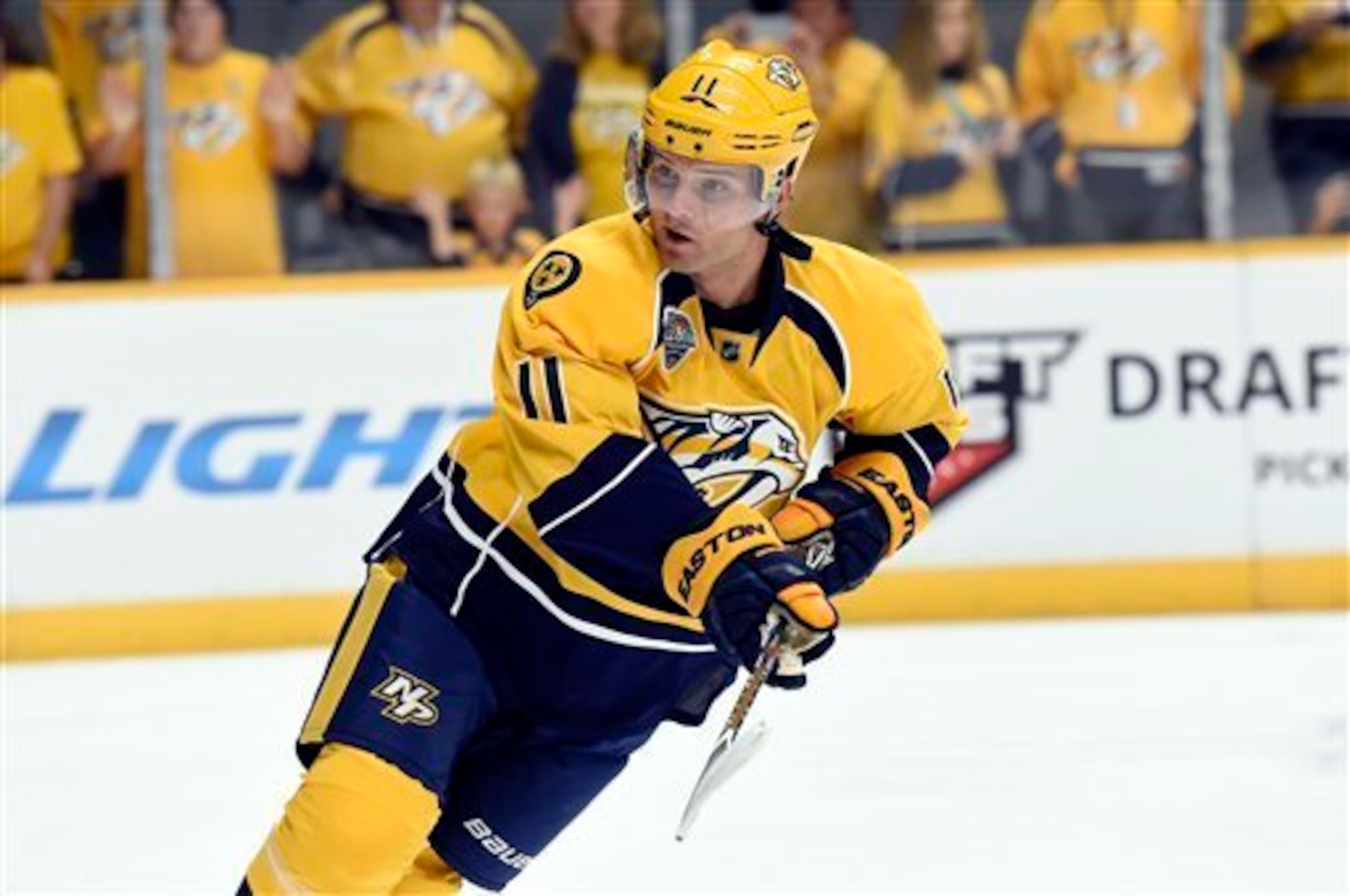
100. Vernon Fiddler, Dallas Stars
Offensive Play: 20/50; Defensive Play: 17/30; Transition Play: 10/20
Despite being 35 years old, Fiddler’s coming off a pretty solid season. Defensively, he’s tossed into tough situations by the Stars, as he’s both a regular penalty-killer and a defensive-zone specialist at five-on-five. Despite this, he consistently scores at a pretty reasonable rate and keeps the chances against down to a reasonable volume.
99. Adam Lowry, Winnipeg Jets
Offensive Play: 22/50; Defensive Play: 15/30; Transition Play: 10/20
Lowry is a bear of a forward, a 6’5”, 210-pound specimen who was credited with 255 hits as a rookie last season. He posted a respectable 23 points and even garnered a handful of votes for Rookie of the Year. He’s nothing to write home about offensively—he got surprisingly heavy usage for such a young player, but his scoring rate was a meager 1.1 points/hour—but his two-way game isn’t bad, and at 22 years of age, there is clearly still plenty of room for growth in all areas.
98. David Legwand, Buffalo Sabres
Offensive Play: 19/50; Defensive Play: 18/30; Transition Play: 11/20
After years of being an average—and before that, an above-average—scorer at even strength, the bottom fell out of Legwand’s offensive game last season in Ottawa. His 0.8 points/hour at even strength represents roughly half of what we would expect from the average NHL forward, and at the age of 35, it’s worth asking whether this is likely to be a permanent state of affairs for the veteran. He is, however, still useful on both special teams and a capable defensive presence at five-on-five.
97. Cory Hodgson, Nashville Predators
Offensive Play: 25/50; Defensive Play: 12/30; Transition Play: 11/20
When Buffalo first acquired Hodgson, the hope was that he would develop into an offensive leader. Instead, he ended up losing his way on a frankly terrible NHL team. He is young enough (25) to recover, however, and it wasn’t all that long ago that he was scoring in the 2.0 points/hour range at even strength and adding value on the power play. He may never be a true two-way player, but he might be able to recover to the point where he can centre an offensive line in some team’s middle six.
96. Kyle Brodziak, St. Louis Blues
Offensive Play: 19/50; Defensive Play: 18/30; Transition Play: 11/20
At times, it seems a little odd that Brodziak has been pigeonholed as a defensive specialist. In his prime, this was a guy who was an average-to-above-average scorer at even strength, and even last season, he managed 1.5 points/hour in a very difficult role (designated defensive-zone centre). He’s good on the penalty kill and just a hair below average in the faceoff circle.
Nos. 95-91
7 of 65
95. Ryan Spooner, Boston Bruins
Offensive Play: 25/50; Defensive Play: 13/30; Transition Play: 10/20
The jury is still out on Spooner, a slow-developing 2010 draft selection of the Bruins, but last season he gave Boston hope that he would yet emerge as a quality NHL option. His defensive and two-way play still need some work, but there’s no denying that the man has offensive gifts. We’ve really only seen him display these gifts for less than 30 games, though, so some caution is warranted. He may end up being either significantly better or significantly worse in 2015-16 than this projection gives him credit for.
94. Mark Letestu, Edmonton Oilers
Offensive Play: 21/50; Defensive Play: 18/30; Transition Play: 9/20
Another one of these jack-of-all-trades forwards, Letestu has at times plied his career as a scorer and more recently as a defensive specialist. He’s been surprisingly productive in the past on the power play, but his even-strength numbers have fallen off dramatically in the last two seasons. He’s a competent penalty-killer and a good defensive option at even strength. He’s also valuable as a right-shooting faceoff specialist.
93. Brian Boyle, Tampa Bay Lightning
Offensive Play: 15/50; Defensive Play: 25/30; Transition Play: 8/20
Boyle’s role these days is almost entirely defensive in nature. He takes on an extremely high number of defensive zone starts—and almost none in the attacking zone—he kills penalties and is basically expected to stem the bleeding and provide physical play in all situations. Offence is neither expected nor provided.
92. Boyd Gordon, Arizona Coyotes
Offensive Play: 15/50; Defensive Play: 25/30; Transition Play: 8/20
Gordon does exactly one part of the game well, but he does that part brilliantly. He is a truly first-rate defensive player. He wins faceoffs, kills penalties and can be handed an astonishingly difficult diet of opponents and defensive-zone starts. He keeps the bleeding to a minimum. The trouble is that he’s not helpful in the offensive zone.
91. Chris Tierney, San Jose Sharks
Offensive Play: 26/50; Defensive Play: 13/30; Transition Play: 9/20
Tierney had a splendid rookie campaign with the Sharks last season, putting up an impressive 21 points in 43 games and scoring just a hair less than 2.0 points/hour at even strength. Like most young players, he is a work in progress defensively, and we should probably wait to make sure he can sustain this kind of production before making any grand proclamations. But for a 20-year-old, he did very well indeed.
Nos. 90-86
8 of 65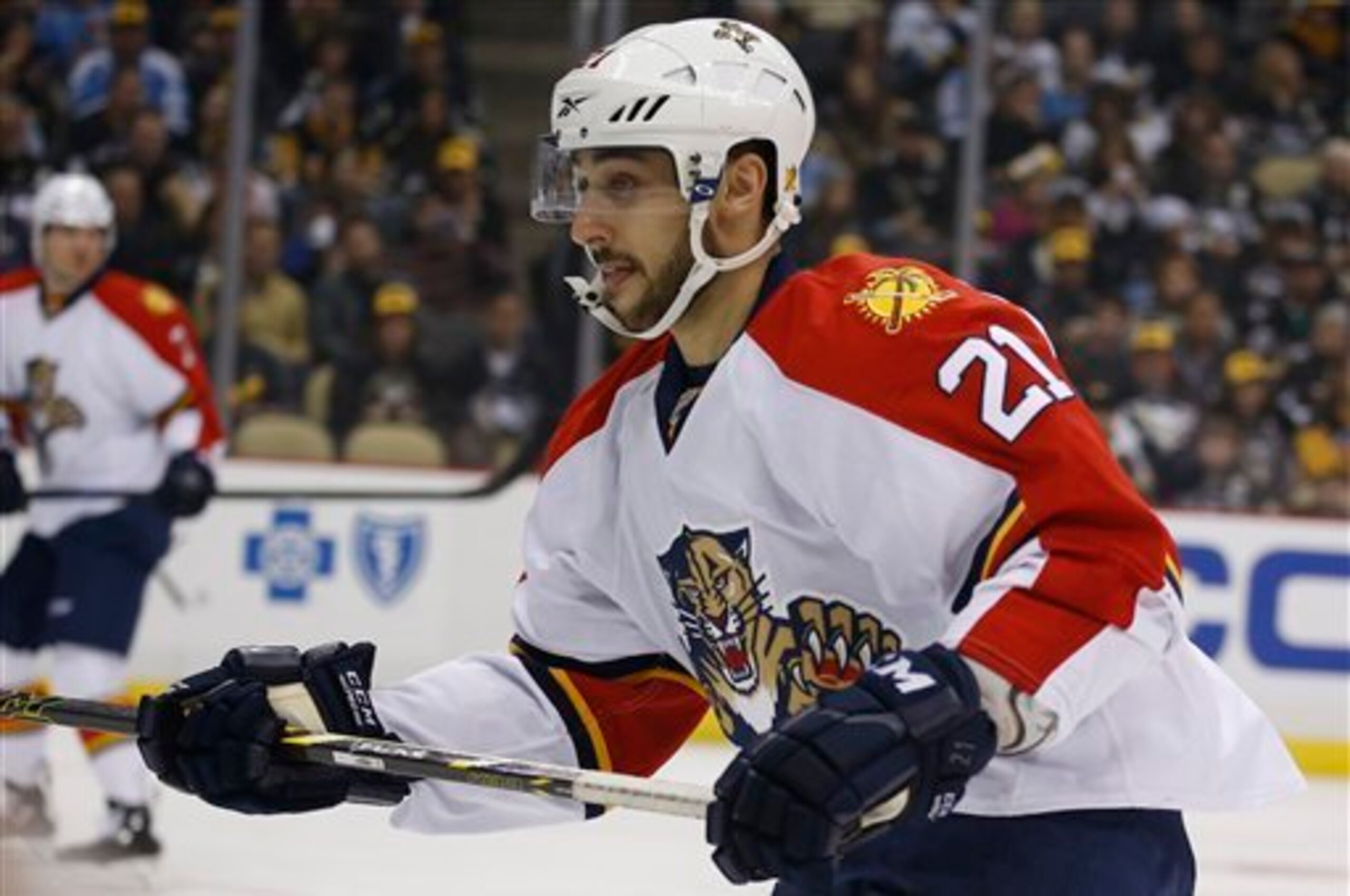
90. Bo Horvat, Vancouver Canucks
Offensive Play: 22/50; Defensive Play: 16/30; Transition Play: 10/20
Horvat broke into the NHL last season at the tender age of 19, and while he didn’t get much love from Calder Trophy voters, he did show enough to convincingly look like a critical player in Vancouver’s future plans. The only question is how long it’s going to take him to carve out a feature role. He’s already producing at an impressive even-strength rate and did unusual things for a rookie like win faceoffs and kill penalties. Head coach Willie Desjardins wasn’t afraid to start him on the defensive end, either.
89. Vincent Lecavalier, Philadelphia Flyers
Offensive Play: 27/50; Defensive Play: 12/30; Transition Play: 10/20
It’s been a steep fall for the former Rocket Richard Trophy winner. Although he remains capable in the offensive zone—scoring at slightly better than the average rate at even strength and providing value on the power play—he is a disaster in transition and on defence. At this point in his career, the 35-year-old is essentially an offensive specialist.
88. Vincent Trocheck, Florida Panthers
Offensive Play: 23/50; Defensive Play: 15/30; Transition Play: 11/20
Although he has yet to find the range on the power play, last season Trocheck showed that he was a scoring threat at even strength, putting up a robust 2.0 points/hour. That’s nearly double what he managed over 20 games as a rookie, and so perhaps a little skepticism is wise here, but if the 22-year-old can bring that kind of production long-term, it would go some distance to helping the Panthers overcome their anemic offence.
87. Zemgus Girgensons, Buffalo Sabres
Offensive Play: 20/50; Defensive Play: 19/30; Transition Play: 10/20
Famously Buffalo’s representative at the 2015 All-Star Game, Girgensons had a pretty good season on a lousy team. Like the rest of the Sabres, he had difficulties offensively—particularly on the power play—but he did manage to score at a league-average rate at even strength on a roster devoid of scoring punch. The 21-year-old Latvian also played major minutes on the penalty kill and projects as a quality two-way forward once he really hits his prime. He’s already a useful NHLer, and not just for a team as bad as Buffalo.
86. Chris Kelly, Boston Bruins
Offensive Play: 19/50; Defensive Play: 18/30; Transition Play: 12/20
It’s been a relatively graceful transition for Kelly from two-way threat to defensive presence as he has moved toward his 35th birthday. Once a solidly above-average even-strength scorer, that part of his game has slowly eroded to the point where he’s just below the league average. There weren’t any massive drops—just a long, gradual decline. He remains a quality defensive player, both at five-on-five and on the penalty kill.
Nos. 85-81
9 of 65
85. Riley Nash, Carolina Hurricanes
Offensive Play: 23/50; Defensive Play: 17/30; Transition Play: 9/20
Nash has been dependably subpar as an offensive layer in Carolina, but consistently so and not by much. That has value, particularly since he’s also capable of playing on special teams. He’s a competent enough fill-in on the power play and can take a regular shift killing penalties. Third lines across the league are littered with guys like this.
84. Brandon Sutter, Vancouver Canucks
Offensive Play: 20/50; Defensive Play: 20/30; Transition Play: 9/20
The consensus on Sutter seems to be that he’s a second- or third-line forward, but the trouble is that he doesn’t score enough to be worth playing on an offensive line. In the last five seasons, Sutter has scored between 0.9 and 1.3 points/hour at even strength. That’s significantly less than the average NHL forward. While he takes on reasonably tough defensive assignments, it’s worth keeping in mind that the last few years have seen his team hammered when he’s on the ice in that role.
83. Evgeny Kuznetsov, Washington Capitals
Offensive Play: 26/50; Defensive Play: 13/30; Transition Play: 10/20
There’s no denying Kuznetsov’s promise. The 2010 first-round pick has been a contender for the title of “best player outside the NHL” for years now. His first full season on this side of the Atlantic, however, deserves only mixed reviews. At even strength, he was below the team average in terms of on-ice scoring chances and was below the league forward average in points/hour. He had a quality year on the power play in limited minutes but didn’t kill penalties and struggled at the faceoff dot, which helped lead to significant time spent on the wing. His offensive potential is obvious and we expect and have forecasted growth in that department, but to this point, he’s a flawed gem.
82. Mark Arcobello, Toronto Maple Leafs
Offensive Play: 25/50; Defensive Play: 15/30; Transition Play: 10/20
Arcobello is another of these versatile centres who can do a bit of everything. What sets him apart is that he’s listed at just 5’8” and 172 pounds. That size kills him because if he were 6’3”, his relatively average scoring touch (both at even strength and on the power play), relatively average defensive play (he’s fine on the penalty kill, too) and relatively average faceoff work would guarantee him a middle-six job. NHL teams, though, generally take a while to warm up to do-it-all players like Arcobello when they are so obviously undersized.
81. Sam Gagner, Philadelphia Flyers
Offensive Play: 27/50; Defensive Play: 13/30; Transition Play: 10/20
Despite his reputation as a scorer, Gagner has fallen just below the NHL average in terms of points/hour at even strength in the last couple of seasons. He is, however, still a capable power-play option and is made more valuable in such schemes by being a right shot. He has played both centre and right wing over his NHL career, with the latter in some cases occurring because of deep questions about his ability to handle the defensive assignments that come with playing centre.
Nos. 80-76
10 of 65
80. Andrew Shaw, Chicago Blackhawks
Offensive Play: 21/50; Defensive Play: 16/30; Transition Play: 13/20
The way Shaw bounces around the Chicago depth chart, it’s a little hard to pin just a single position on him, but we’ve settled on centre. His scoring is a little hard to gauge. He’s had one season (his most recent one) where he managed just 1.0 points/hour, but he had another year (his rookie campaign) where he managed more than double that. He has, however, failed to pin down the No. 2 centre job so far in his career and struggled to put up points in a regular power-play role. He’s an energetic forward with decent puck-possession numbers.
79. Charlie Coyle, Minnesota Wild
Offensive Play: 21/50; Defensive Play: 17/30; Transition Play: 12/20
Last season represented solid progression for Coyle. He had modest gains in his scoring rates at both five-on-five (where he’s above-average) and on the power play (where he isn’t). That isn’t the whole story, though. Wild coach Mike Yeo increasingly trusted Coyle with shifts starting in the defensive zone at even strength, and Coyle managed to hold his own in the difficult assignment. The 6’3”, 221-pound centre/right wing is still developing as a player but looks like he’ll be a two-way workhorse once he hits his prime years.
78. Patrik Berglund, St. Louis Blues
Offensive Play: 24/50; Defensive Play: 16/30; Transition Play: 11/20
The earlier profile of Mark Arcobello can be lifted almost verbatim and pasted here. The difference is that whereas Arcobello is tiny, Berglund is 6’3” and 217 pounds. Otherwise, he falls into the same category. He’s a slightly lesser offensive player, a slightly superior defensive player and not quite as good in the faceoff circle, but we’re fiddling at the margins here. This is a good, quality middle-six forward in pretty much every way, but with the benefit of having size as a major plus.
77. John Mitchell, Colorado Avalanche
Offensive Play: 21/50; Defensive Play: 17/30; Transition Play: 13/20
Mitchell is a good, useful middle-six forward, even if he’s relatively little-known outside of Denver. He’s handy in defensive assignments, starting many shifts in his own end of the rink and playing a regular role on the penalty kill. He’s miscast as a power-play contributor but is a surprisingly effective even-strength scorer.
76. Rickard Rakell, Anaheim Ducks
Offensive Play: 25/50; Defensive Play: 15/30; Transition Play: 12/20
Rakell is an intriguing player because he does a bit of everything, and he showed that in his rookie year. He’s not a hulking brute but is involved physically and doesn’t shy away from traffic. Though he’s not a superlative offensive player, he chipped in at even strength and delivered in a big way in limited power-play minutes last season. Like a lot of Swedish-trained forwards, he’s well-schooled defensively. The challenge now is just to continue developing.
Nos. 75-71
11 of 65
75. Matt Stajan, Calgary Flames
Offensive Play: 22/50; Defensive Play: 18/30; Transition Play: 13/20
A consistently underrated player, Stajan never emerged as the scorer he was envisioned as early in his NHL career with Toronto. Instead, the Flames pivot has quietly turned into a highly competent two-way player. His strength is in transition. He spends more time in the offensive end of the rink than he does the defensive zone, at least relative to the rest of his team. He is a quality penalty-killer and actually pretty decent at putting up points at even strength, though in the past he has struggled when assigned to the power play.
74. Riley Sheahan, Detroit Red Wings
Offensive Play: 25/50; Defensive Play: 15/30; Transition Play: 13/20
Sheahan’s strength is in transitional play. Like many a Red Wing before him, he naturally plays a reasonable puck-possession sort of game. His offensive ability is still open to debate. In two seasons, he’s scored both significantly above and just below the NHL average at even strength, and he's been mediocre on the power play. We’ve taken all of that into account and decided that the likeliest explanation is that he’s a middle-of-the-road scoring threat by NHL standards.
73. Jori Lehtera, St. Louis Blues
Offensive Play: 27/50; Defensive Play: 15/30; Transition Play: 11/20
Lehtera’s rookie year in St. Louis was a massive success at even strength, where he added some offensive punch down the middle. If we’re being critical, we can nitpick at some thoroughly mediocre power-play production and a sheltered defensive role. However, the hardest thing to do in the NHL is score, and Lehtera did that splendidly. He’s been a nice addition.
72. Lars Eller, Montreal Canadiens
Offensive Play: 21/50; Defensive Play: 19/30; Transition Play: 13/20
Eller has played five seasons for the Habs since coming over as the principal return in the Jaroslav Halak trade. Outside of the lockout-shortened 2013 campaign, he has scored between 1.1 and 1.3 points/hour at even strength in each of them. It’s not surprising that he’s gravitated to an increasingly defensive role, with coach Michel Therrien increasing his responsibilities in Montreal’s zone and employing him regularly on the penalty kill.
71. Dave Bolland, Florida Panthers
Offensive Play: 23/50; Defensive Play: 20/30; Transition Play: 10/20
There is a lot of confusion about what, precisely, Bolland is. That’s because we don’t do a good job of breaking down where players produce. Bolland is excellent, for example, on special teams. He kills penalties and has scored at a surprisingly good rate on the power play in four of the last five seasons. At even strength, he’s almost purely a defensive forward, scoring below the NHL average in five of the last six seasons and generally being given tough zone starts and asked to stem the bleeding.
Nos. 70-66
12 of 65
70. Antoine Vermette, Arizona Coyotes
Offensive Play: 22/50; Defensive Play: 20/30; Transition Play: 11/20
Vermette has in the past been compared to Patrice Bergeron, and he’s sort of a poor man’s approximation of the superlative Boston centre. On the bright side, he’s a jack of all trades who can fill in on the power play, kill penalties and slot in on a line tasked primarily with either offensive or defensive work. His versatility and ability to affect the game at either end of the rink have value. However, he’s been a below-average scorer at both even strength and the power play over the last three seasons, and where a player like Bergeron dramatically outperforms his team in terms of most shot and scoring chance metrics, it is a challenge for Vermette to even maintain the club average.
69. Carl Soderberg, Colorado Avalanche
Offensive Play: 26/50; Defensive Play: 15/30; Transition Play: 12/20
It’s funny how a few extra minutes can camouflage a decline. As a rookie, Soderberg scored 48 points, and as a sophomore he managed 44. That seems pretty consistent, right? The difference is that in his second year in the league, Soderberg played nine more games and two minutes and 30 seconds more per game, with some of that increase coming on the power play. If last year’s numbers are reflective of his true talent level, he may not produce enough to hang on to all those offensive minutes he earned with his splashy debut.
68. Tyler Ennis, Buffalo Sabres
Offensive Play: 27/50; Defensive Play: 14/30; Transition Play: 13/20
It’s hard to say what would have happened to Ennis’ development on a better team, but it’s easy to recognize that things haven’t gone as hoped. The 5'9", 160-pound forward’s best point totals of his career came in his rookie campaign in 2010-11. His best points/game season was 2011-12. He’s played more minutes, gained more experience and reached the years which typically are any skater’s most prolific, and he’s still about a 40-point performer for Buffalo.
67. Aleksander Barkov, Florida Panthers
Offensive Play: 24/50; Defensive Play: 16/30; Transition Play: 14/20
What Barkov has already managed to accomplish as an extremely young player is impressive. He’s a strong puck-possession player and a pretty reasonable offensive force at even strength. He isn't clueless defensively either. He’s weak on the power play at the moment, though of course his team isn’t much help there, and he is not yet used on the penalty kill. He’s going to break out sometime soon, and if he does it this year, he’ll leave this projection in the dust.
66. Tyler Bozak, Toronto Maple Leafs
Offensive Play: 22/50; Defensive Play: 19/30; Transition Play: 13/20
In 2013-14, Bozak found lightning in a bottle and scored 2.3 points/hour at five-on-five. This represented an increase of more than 50 percent from what he had managed previously in his career, and last season it was cut almost in half as he fell down to just 1.2 points/hour. He’s been welded at the hip to Phil Kessel but still generally looks like an average-ish NHL scorer. He’s force-fed heavy minutes on the power play but has not once scored 4.0 points/hour despite playing a first-unit role. He’s a competent two-way player, however, and on most teams would be a fine fit as a checking-line centre in the middle-six forward group.
Nos. 65-61
13 of 65
65. Eric Fehr, Pittsburgh Penguins
Offensive Play: 25/50; Defensive Play: 19/30; Transition Play: 10/20
With the exception of an injury-shortened 2011-12 campaign, Fehr has been a steady offensive producer, posting between 1.4 and 1.8 points/hour at even strength in four of the last five seasons. What’s remarkable about that is he’s managed it even when employed in a tough defensive role, something he’s rather good at.
64. Brad Richards, Detroit Red Wings
Offensive Play: 27/50; Defensive Play: 15/30; Transition Play: 12/20
The last couple of seasons have seen a decline in Richards’ offensive production, both on the power play and in five-on-five situations. He’s probably past the point where he can be a difference-maker in those areas. These days, he’s simply competent. That leaves him best-suited to an offensive role on a middle-six line.
63. Marcus Kruger, Chicago Blackhawks
Offensive Play: 21/50; Defensive Play: 21/30; Transition Play: 12/20
Kruger’s five-on-five offence has bounced around a little bit and he really hasn’t been given a shot on the power play, so normally we wouldn’t project him as an offensive forward. What makes it difficult to say that with certainty is that he’s had some very good seasons in a very tough defensive role at five-on-five. Chicago was one of the teams that pioneered the idea of a fourth line which starts shifts almost exclusively in the defensive zone, and that—along with the penalty kill—has been Kruger’s domain.
62. Nick Bonino, Pittsburgh Penguins
Offensive Play: 27/50; Defensive Play: 18/30; Transition Play: 9/20
Bonino faded down the stretch last season, but it’s hard not to be impressed with the overall portrait of his work at five-on-five. He has now scored 2.0 points/hour in back-to-back seasons, which is of course an excellent number. His power-play work has been inconsistent, with one monster year in Anaheim bookended by a mediocre campaign with the Ducks and a lousy one with Vancouver. He does kill penalties and on the whole is trustworthy in any situation.
61. Darren Helm, Detroit Red Wings
Offensive Play: 24/50; Defensive Play: 19/30; Transition Play: 11/20
Helm is a pretty average offensive forward. His numbers at five-on-five have tilted toward that level in the last few seasons, and while he hasn’t been used often on the power play, when he has, he has been right around that level. What makes him special is his defensive play, which is a cut above what we see from the average NHL forward.
Nos. 60-56
14 of 65
60. Travis Zajac, New Jersey Devils
Offensive Play: 17/50; Defensive Play: 23/30; Transition Play: 14/20
The bad news for the Devils is that 30-year-old Zajac is being paid like a top two-way threat for a long time to come when the reality is that his offensive game has almost disappeared. On the power play, he’s been mediocre or worse in four of the last five seasons. In the last five seasons at even strength, he’s peaked around the league-average mark, and in three of those five campaigns, he’s come in significantly below that—including last year, when he scored just 0.8 points/hour. He is a very good defensive forward, but the decline in his offensive game is terrifying.
59. Mikael Backlund, Calgary Flames
Offensive Play: 23/50; Defensive Play: 18/30; Transition Play: 13/20
Backlund’s a bit of a weird case offensively. He’s been a very good scorer in a secondary role on the man advantage, but at five-on-five, his numbers have bounced around. At times, he’s been above average. At others, he’s been well below it. He is a quality two-way pivot, however, which makes up for that offensive inconsistency.
58. Mark Scheifele, Winnipeg Jets
Offensive Play: 26/50; Defensive Play: 15/30; Transition Play: 13/20
Scheifele’s even-strength offence actually dipped a touch from his rookie year to thoroughly middling levels in 2014-15, but that wasn’t widely noticed because he was so much better on the power play. He’s an offensive player still developing at the NHL level, and so it shouldn’t be surprising that defence remains a work in progress. We’re in the business here of making modest predictions, but we have to admit he looks primed for a breakout campaign in the third season of his NHL career.
57. Alex Galchenyuk, Montreal Canadiens
Offensive Play: 28/50; Defensive Play: 14/30; Transition Play: 12/20
The third overall pick in the 2012 draft and early front-runner as that year’s most productive forward is at a bit of a crossroads in his career. Three seasons in, he’s shown flashes of high scoring potential, he’s developed as a two-way player but isn’t a defensive stalwart yet, and it still isn’t totally clear if his major league future lies on the wing or at centre. One of the rules we established in writing this series was that we wouldn’t predict breakout seasons, but it’s sorely tempting here. Galchenyuk’s 21 and in a lot of ways looks primed to come into his own this season.
56. Mika Zibanejad, Ottawa Senators
Offensive Play: 26/50; Defensive Play: 15/30; Transition Play: 14/20
It’s always good to keep Zibanejad’s age in mind. The big Swede (6'2", 222 lbs) only turned 22 in April, and like most players that age, he’s still developing. He gained ground on the power play, and while we’re still waiting for a breakthrough at even strength, he has plenty of time. Anyway, what he is now is a long way from being bad. He’s very strong in transition, getting involved in positive ways at both ends of the neutral zone, and he’s at least competent once he enters either zone.
Nos. 55-51
15 of 65
55. Jussi Jokinen, Florida Panthers
Offensive Play: 27/50; Defensive Play: 16/30; Transition Play: 12/20
Jokinen defied expectations at even strength last year, managing his best offensive season (in terms of points/hour) since 2010-11. Given that he’s 32 years old, our belief is that this is an aberration and he’ll settle back into his just-above-average performance of the past few years. His numbers on the power play fell off, but we expect he’ll get back to being an average-ish option there, too.
54. David Desharnais, Montreal Canadiens
Offensive Play: 26/50; Defensive Play: 14/30; Transition Play: 15/20
Desharnais has been used as an offensive specialist over his career, but he’s never been secure in his role and isn’t now because he doesn’t produce enough to really be a featured scorer. His scoring rates at even strength have fallen from a high of 2.0 points/hour in 2012-13 down to just north of the NHL average, and on the power play he’s a fringe first-unit option. He is a good puck-possession player.
53. Adam Henrique, New Jersey Devils
Offensive Play: 24/50; Defensive Play: 19/30; Transition Play: 12/20
Henrique has scored 1.5 points/hour or more at even strength exactly once in his career. It happened in his rookie year, and ever since he’s been a subpar offensive player at five-on-five. He’s generally been an above-average power-play participant, which helps make up some of the gap, but his real value is as a quality defensive player. He’s a mainstay in short-handed situations and is trusted in the defensive zone.
52. Cody Eakin, Dallas Stars
Offensive Play: 23/50; Defensive Play: 19/30; Transition Play: 13/20
After flashing significant offensive potential during the lockout-shortened 2013 campaign, Eakin has seen his scoring rates at both even strength and on the power play fall off. He doesn’t score much with the man advantage, and the gains he’s made at even strength are caused by ice time increases rather than a substantial bump in his scoring rate. However, he’s also increasingly being used in defensive situations both at even strength and on the penalty kill and is handling those minutes very well.
51. Mike Ribeiro, Nashville Predators
Offensive Play: 29/50; Defensive Play: 13/30; Transition Play: 13/20
In a lot of ways, Ribeiro is a limited player. But it’s not really a surprise that he’s been so effective in Nashville. The one thing he does extremely well is score, and on a team prepared to use him as an offensive specialist, the results can be spectacular. A word of warning here: Ribeiro turns 36 in February, his results in Nashville far out-stripped his work in Washington and he’s no longer fighting just to stay in the NHL. There’s a better than decent chance he takes a step backwards.
50. Nick Bjugstad, Florida Panthers
16 of 65
Offensive Play
It isn’t easy to stand out offensively while playing in Florida in recent years, but Bjugstad has managed it. At even strength, he took a small step back last year, but he is still a cut above the NHL average and certainly young enough (23) to recover. On the power play, in contrast, he was one of the few Panthers to improve his totals.
Defensive Play
Last season was a year of incremental growth for Bjugstad, as head coach Gerard Gallant started taking the training wheels off. He’s still not a regular on the penalty kill and gets a bit of help in terms of starting shifts in the offensive end of the rink, but he’s progressing well.
Transition Play
Bjugstad is already Florida’s best player at gaining the offensive zone while hanging on to the puck, and he’s only going to get better at this with each passing year. He makes an honest effort to intercept opposition rushes, too.
Overall
Bjugstad isn’t in his prime yet, but he’s going to be scary when he reaches it. He’s 6’6”, 218 pounds and can skate, which is frightening all by itself. More importantly, though, he’s a decisive player who has both the desire and ability to play a 200-foot game.
49. Mikhail Grabovski, New York Islanders
17 of 65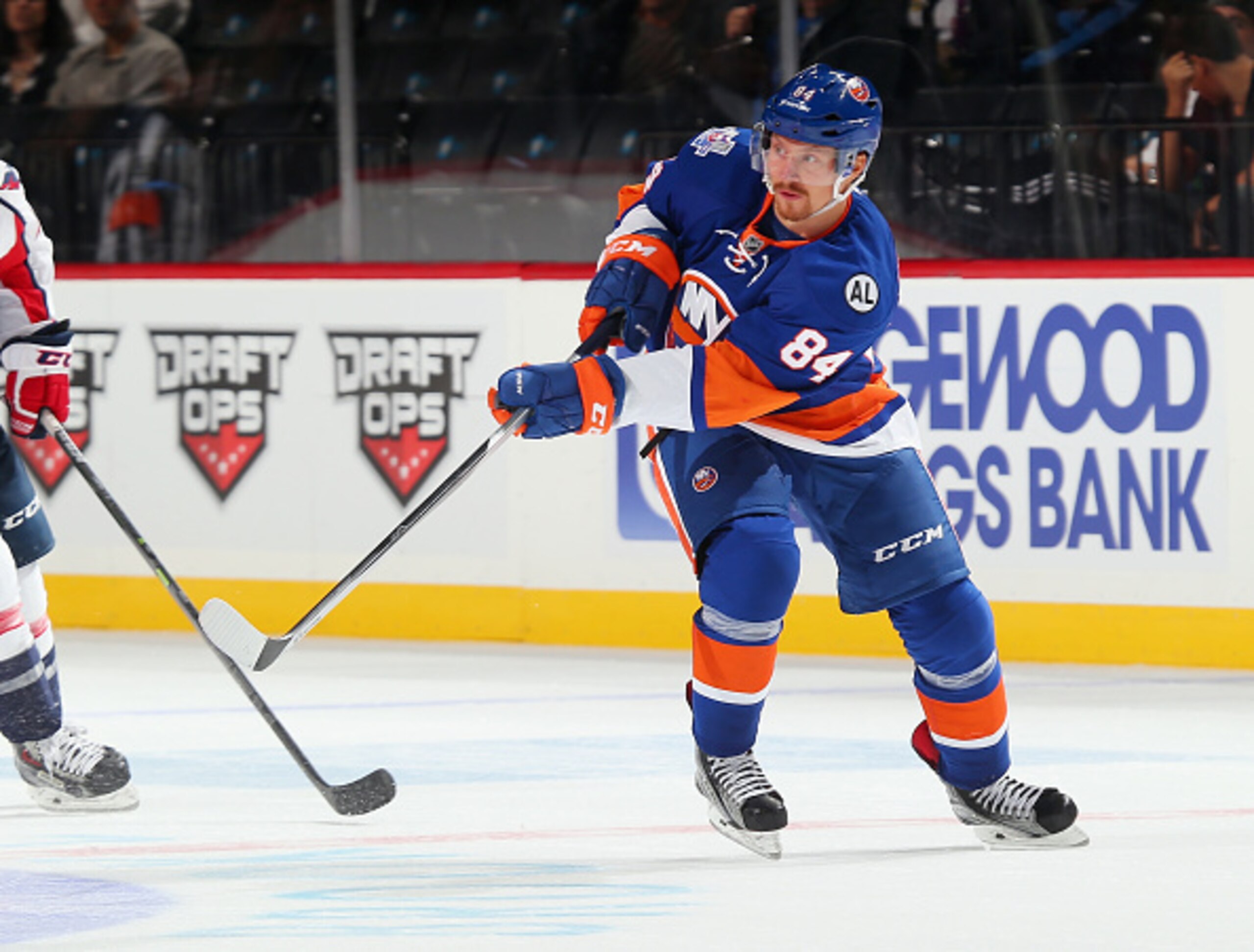
Offensive Play
Grabovski is a pretty classic case of why it’s valuable to differentiate between power-play and even-strength scoring rather than just looking at the overall results. He was actually quite good last season at five-on-five and has been for years. With the exception of a 2012-13 campaign during which coach Randy Carlyle’s usage of the player seemed deliberately designed to make him fail, we’ve mostly seen a gentle decline from the 2.0 points/hour range to just slightly below that. The trouble is that he’s wildly inconsistent on the power play, at some points (2013-14) putting up incredibly impressive totals and at others (last year) falling off the map entirely.
Defensive Play
For the most part, NHL coaches have decided that Grabovski isn’t really suited to tough defensive assignments. We mentioned the oddity that was 2012-13 earlier, when Carlyle fed Grabovski a steady diet of defensive-zone work, but this isn’t what he’s good at. However, his on-ice chance numbers are typically pretty decent.
Transition Play
Where Grabovski really excels is in the neutral zone, and more specifically on the attack. In 2013-14, the only year for which we have full league data, Grabovski finished inside the top 10 among all NHL forwards in the ability to keep possession when crossing the blue line—just ahead of Nathan MacKinnon and Sidney Crosby.
Overall
People will be down on Grabovski after an injury-plagued 2014-15 in which he struggled to break through a tough Islanders depth chart at centre. Mostly this was a power-play issue, and our projection is for him to bounce back significantly.
48. Artem Anisimov, Chicago Blackhawks
18 of 65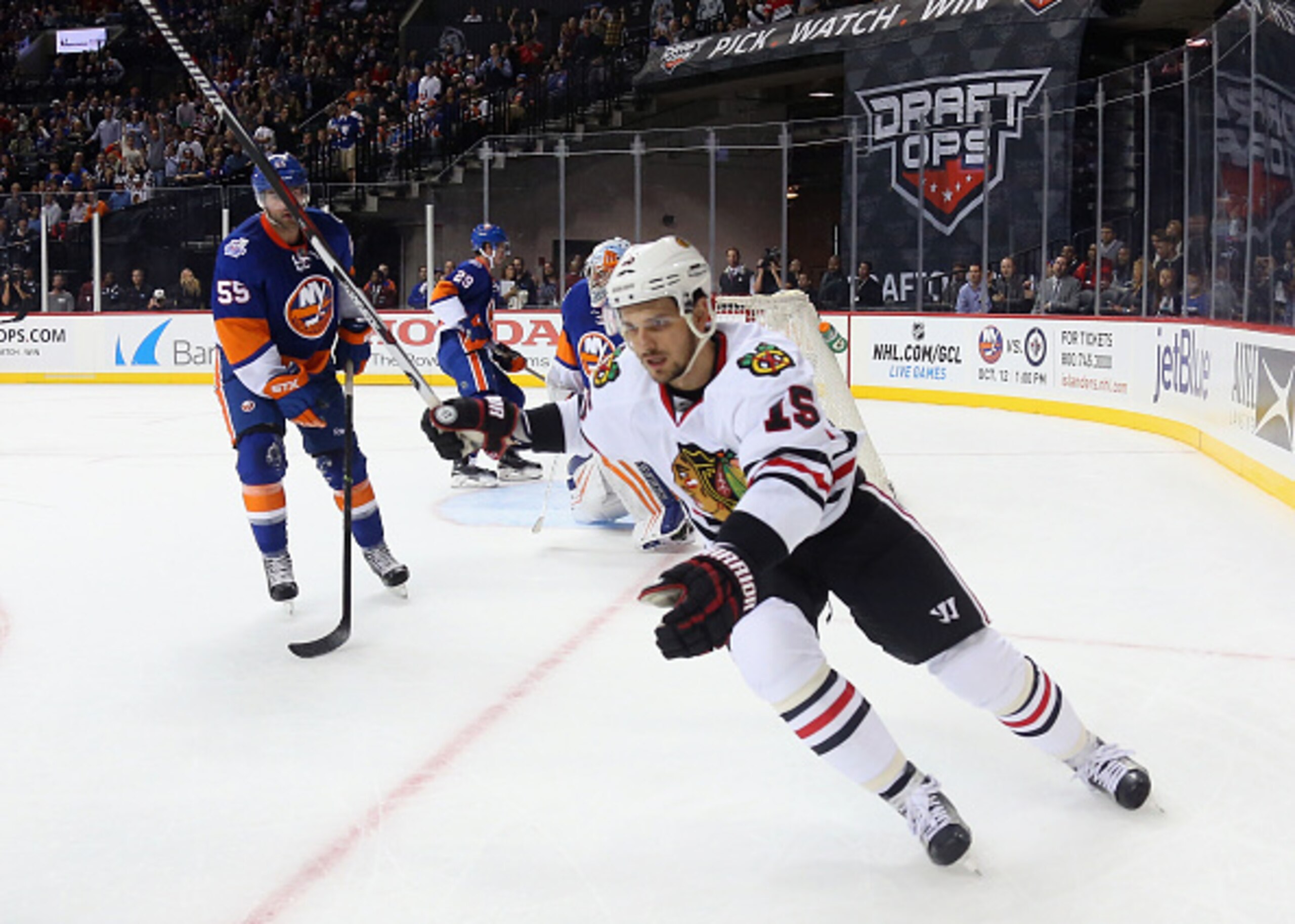
Offensive Play
The thing that kills Anisimov is a lack of power-play production. He just can’t seem to put points up on the man advantage. At five-on-five, he’s a quality offensive weapon and has been for his entire career, scoring between 1.7 and 2.1 points/hour in all six of his major league seasons.
Defensive Play
Anisimov is diligent and effective defensively. He’s been trusted time and again with tough defensive-zone assignments and done well in those. He plays a significant role on the penalty kill, too.
Transition Play
At both ends of centre, Anisimov provides value. He gets involved defensively, using his long wingspan to break plays up before they ever reach his team’s end of the ice, and he does a respectable job of carrying the puck through centre and into the attacking zone.
Overall
There aren’t any significant weaknesses to Anisimov’s game at five-on-five. He’s just a quality player in all three zones. The thing separating him from stardom is power-play work, as very few players manage impressive overall point totals without producing on the man advantage. That’s led to him frequently being underrated.
47. Derick Brassard, New York Rangers
19 of 65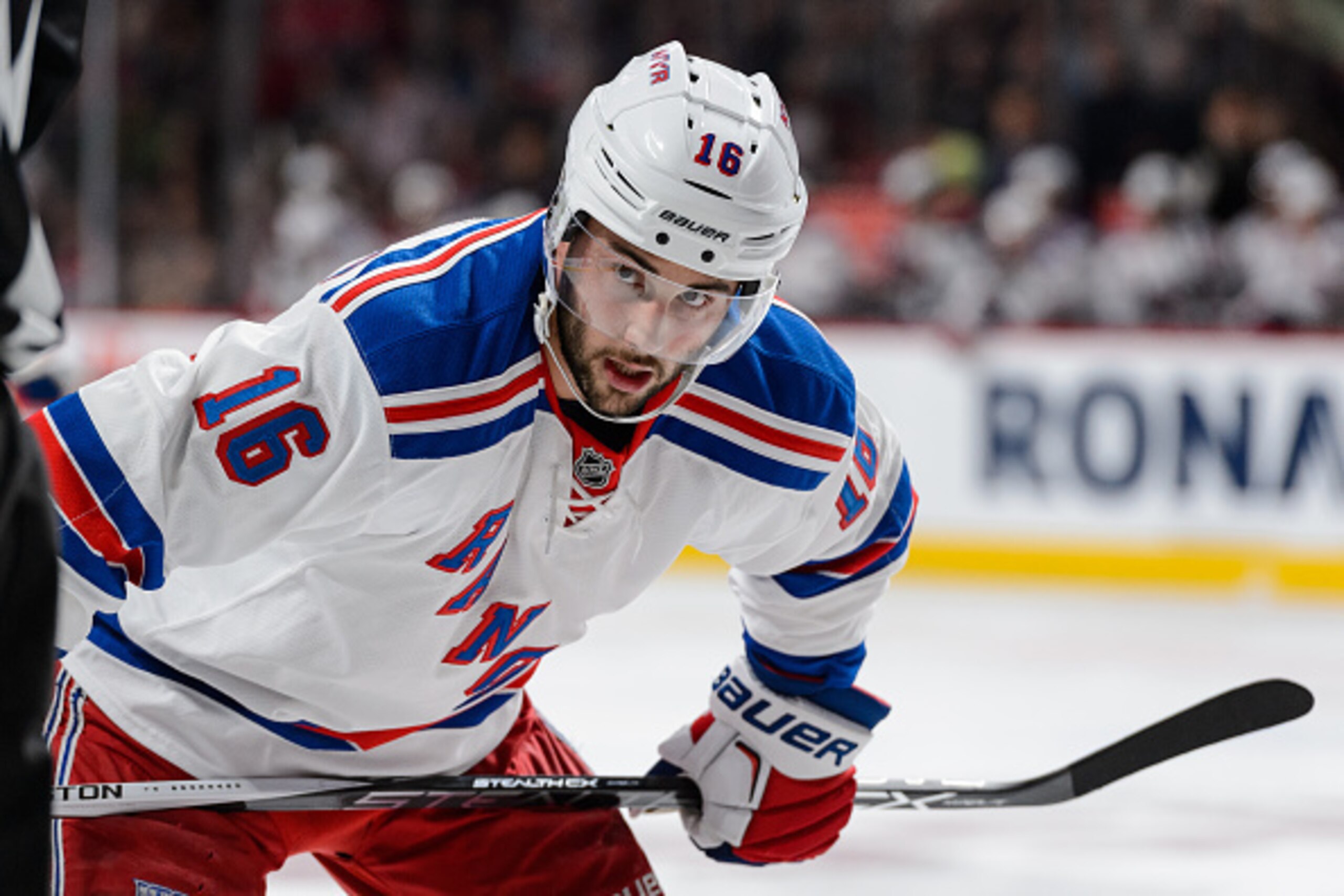
Offensive Play
One of the key things that changed for Brassard when he moved to New York from Columbus was his power-play numbers. He’d always been decent, but following the trade, he has consistently scored 5.0 points/hour or better, which is very strong. Last year saw him score 2.2 points/hour at even strength, well beyond his usual level. It might be a breakout, but we’re expecting at least some regression there.
Defensive Play
No NHL coach has ever cast Brassard in a primarily defensive role. For the most part, they have gone to some trouble to avoid it. It’s not that he’s bad per se, but he isn’t terribly strong and is good offensively, so why use him otherwise?
Transition Play
Brassard isn’t a special transition player. He’s just slightly above average at retaining possession when he crosses into the other team’s zone, and he’s almost totally average at getting back to the defensive blue line in time to give opponents problems.
Overall
Last season’s 60-point outing was a nice break from previous years, but we don’t buy it as a breakthrough just yet. Our guess is that Brassard will revert to what he’s been for most of his career: a slightly above average offensive player, an average defensive presence and on balance a handy guy to have kicking around a scoring line in the middle six.
46. Mike Fisher, Nashville Predators
20 of 65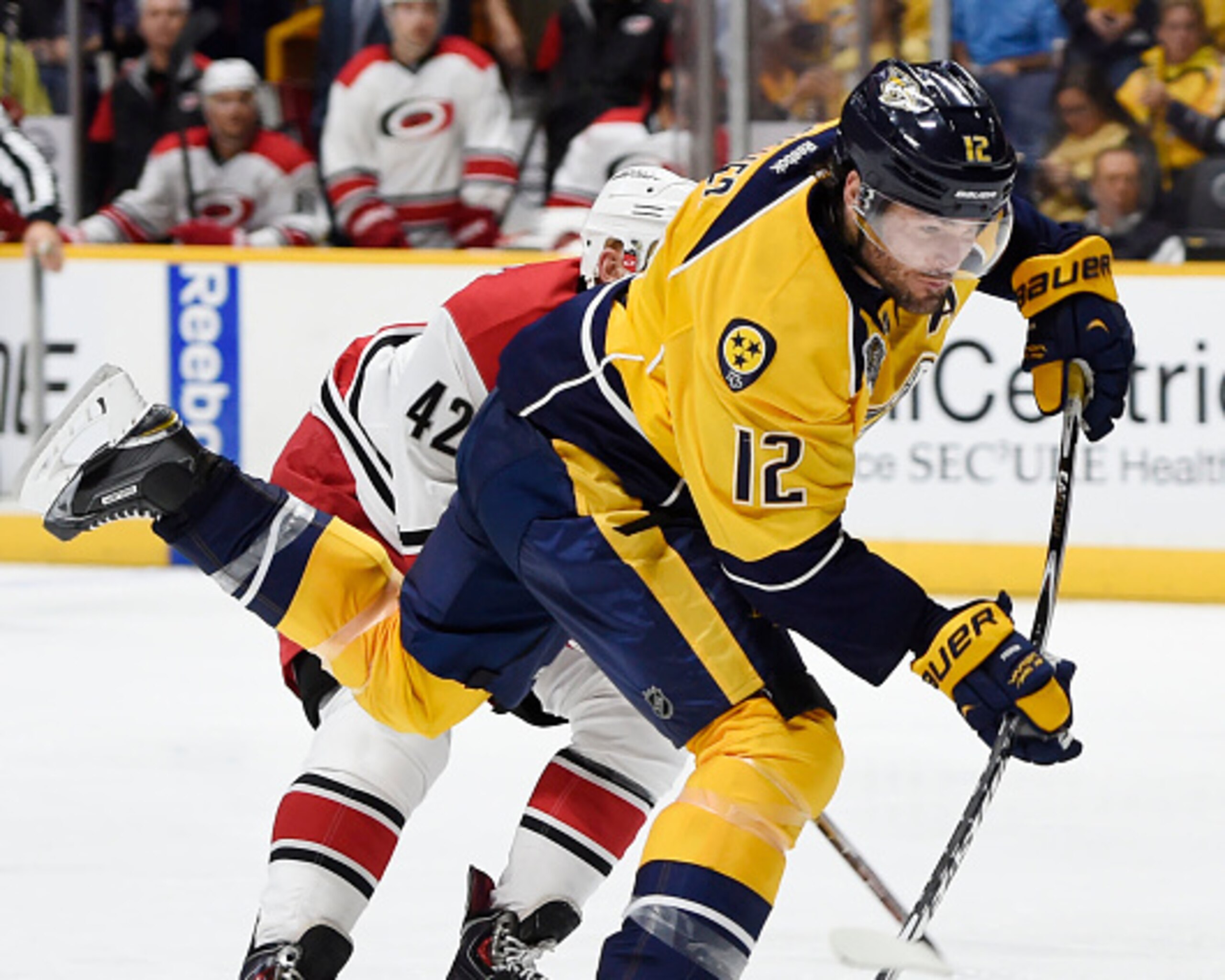
Offensive Play
Fisher has never posted massive overall point totals at any place in his career, but that’s mostly because he isn’t a high-end power-play option. He has at times been very good at even strength, and in back-to-back years for the Predators, he has hit 2.0 points/hour five-on-five.
Defensive Play
We’re probably starting to see the erosion of Fisher’s defensive game, at least a little bit. The 35-year-old has been shifted out of some of his toughest even-strength assignments, and his overall scoring-chance numbers are vanilla. He’s still a mainstay on the penalty kill.
Transition Play
One of the parts of Fisher’s game which makes him so effective is his play through the neutral zone. He has a reputation as a meat-and-potatoes player, but he carries the puck in frequently on the attack, allowing his team to start with the advantage of puck possession rather than having to win the puck back on the forecheck. He’s also good at thwarting plays in the middle of the ice before they ever get the opportunity to evolve into scoring chances.
Overall
At some point, the bottom is going to fall out for one of the game’s better two-way players over the last decade. We don’t think that it happens this year.
45. Sean Couturier, Philadelphia Flyers
21 of 65
Offensive Play
Although he was a big-time scorer in junior, we haven’t yet seen that from Couturier in the NHL. He’s an average enough producer at even strength and posts fairly generic second-unit power-play numbers. For people who only look at point totals, he’s going to be a little disappointing as a player.
Defensive Play
What makes Couturier unique for such a young player is that he’s already so good—and asked to do so much—defensively. He logs massive amounts of time while the Flyers are short-handed, and things don’t get much easier once the team goes back to five-on-five. Couturier starts an obscene percentage of his shifts in the defensive zone and often does so against top players. Somehow, he manages to keep his head above water.
Transition Play
Couturier’s work through the neutral zone explains much of his work at either end of the rink. He’s a defensive stalwart, and that comes across here. No player is as involved in breaking up opposition entries before they even get to the Flyers’ zone. However, we also consider the work a player does lugging the puck up the ice here, and Couturier plays a simple dump-and-chase game too frequently, sacrificing opportunities to generate offence.
Overall
At this point, the only thing that seems to be missing from Couturier’s game is a realization that pushing offensively doesn’t always mean letting the side down defensively. He’s mature beyond his years in his own end of the rink, and with a little more boldness on the attacking side of centre, he could be dazzling.
44. Mikko Koivu, Minnesota Wild
22 of 65
Offensive Play
Koivu’s best offensive seasons are now in the rear-view mirror. In the heart of his career, he put up 2.0 points/hour or better in four of five seasons, but the last time he managed the feat was in 2011. These days, he’s only slightly superior to the NHL average.
Defensive Play
At the heart of his career, in 2008-09, Koivu finished fourth in Selke Trophy voting. He hasn’t come close to winning the award since but still occasionally picks up votes, and not without reason. He does kill penalties and the Wild tend to do well by the shot metrics when he is on the ice. It’s worth noting, though, that Koivu really isn’t asked to do terribly heavy lifting these days by league-wide standards, either in terms of starting shifts in the defensive zone or hard-matching against a murderers' row of opponents.
Transition Play
Maybe it’s because he lacks high-end speed and maybe it’s because he plays a conservative game, but Koivu’s zone-entry numbers weren’t nearly as good as one would expect from a player with his possession totals. Less than half of his entries see the Wild retain possession, despite the fact that Minnesota’s shot rates are more than twice as good when he carries the puck in as when he dumps it.
Overall
For a half-decade or so in his prime, Koivu was a quality first-line centre. Now he’s best-suited to a lesser role.
43. Sean Monahan, Calgary Flames
23 of 65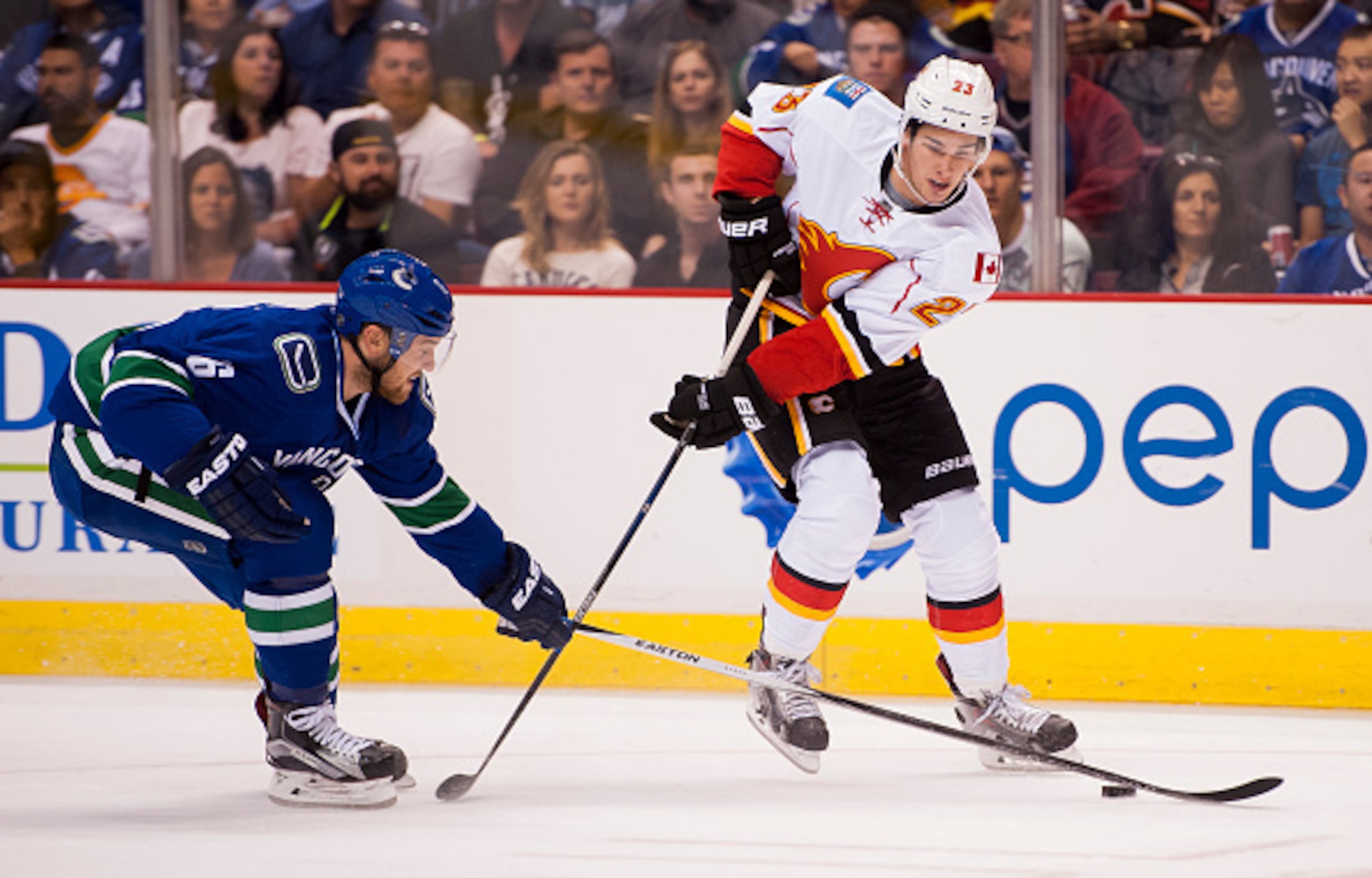
Offensive Play
After an impressive rookie season, Monahan made strides as a sophomore. He climbed at even strength, rising from a respectable 1.5 points/hour up to 1.6 points/hour. He simultaneously went from bit player on the power play to actually driving results. His personal shooting percentage has hovered around 16.0 percent for two seasons now, meaning either that he’s one of the most lethal one-shot scorers in the game or he’s managed to fake it for about 150 games.
Defensive Play
Monahan is an awfully gifted two-way player given his age (21). With that said, last season’s Selke votes were as premature as that serious Norris Trophy run Dion Phaneuf took at about the same age and with the same team. Monahan has a minimal role on the penalty kill, doesn’t start a lot of his shifts in the defensive zone and hasn’t yet consistently been hard-matched against the opposition’s best forwards. Let’s let him walk awhile before we start calling him Usain Bolt.
Transition Play
One of the reasons it’s easy to get ahead of ourselves with regard to Monahan is because he’s already such a strong player in transition. He’s in the places he needs to be even as the technique will be refined with experience. On defence, this means sustained commitment to the backcheck, while offensively it means serving as a catalyst by keeping puck possession when crossing into the attacking zone.
Overall
Although Monahan is perhaps a little bit overrated in the here and now, it’s easy to forgive that because the structure of an elite two-way game is already in place. He has scary-good potential. It’s fair to say we have no real idea right now as to how high his ceiling is.
42. Mathieu Perreault, Winnipeg Jets
24 of 65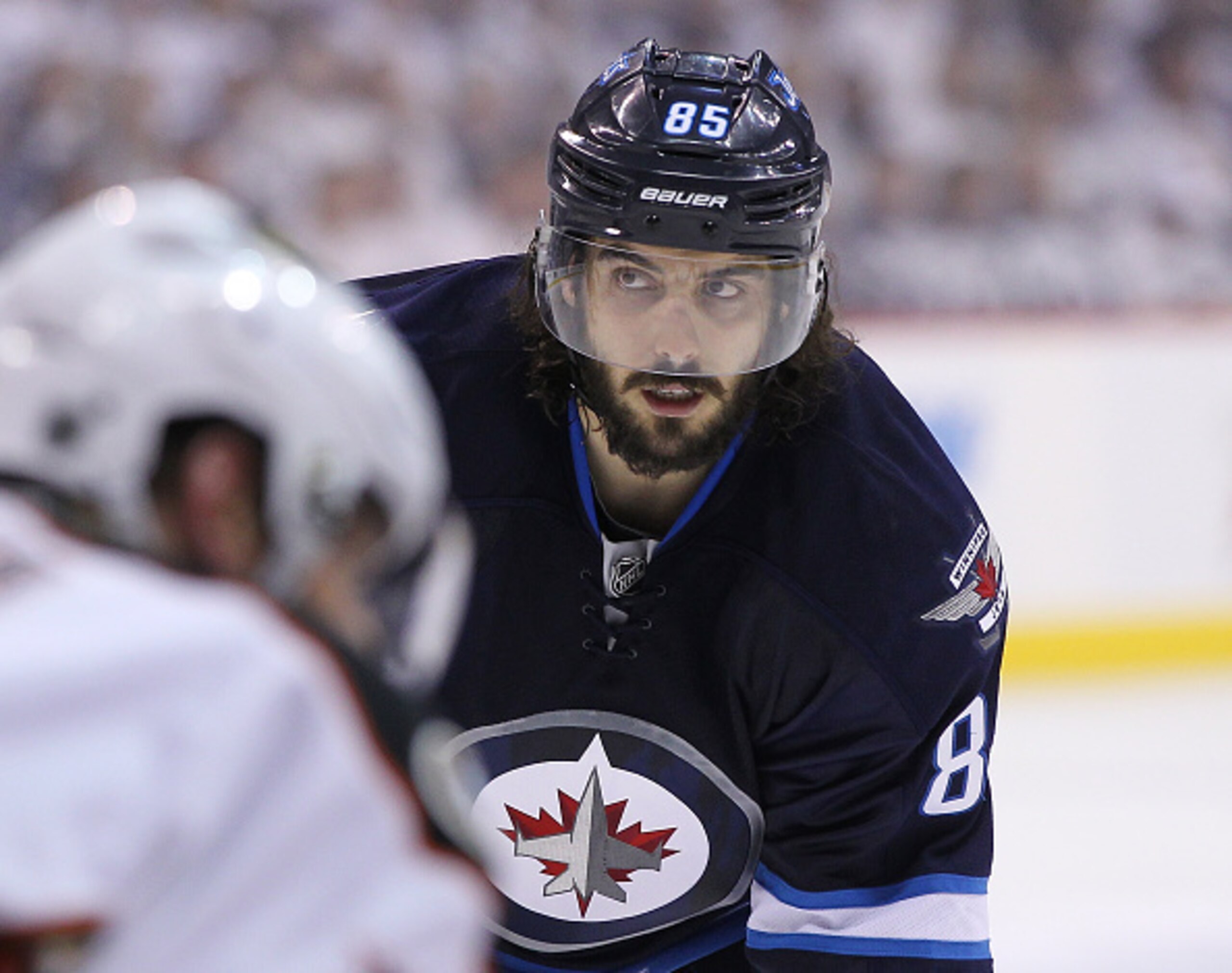
Offensive Play
Injuries and just a middling performance on the power play have served to obscure the fact that Perreault is among the most consistent and productive five-on-five scorers in the entire league. He’s tallied between 2.0 and 2.5 points/hour for five consecutive seasons now, and that’s first-line-level scoring. Naturally, there are big chunks to the game that aren’t five-on-five scoring, but for a forward, it’s arguably the sinlge most important thing to get right.
Defensive Play
We’ve seen some evolution in role since Perreault arrived in Winnipeg. Last season, for example, was the first time in his career that he’d started a higher percentage of his even-strength shifts in the defensive zone than his team’s average. Interestingly, that also coincided with the lowest number of on-ice chances against in his entire career. He’s not used on the penalty kill but does seem to be evolving as a two-way presence.
Transition Play
It’s interesting to compare Perreault with Ryan Getzlaf from their time together in Anaheim. Perreault and Getzlaf had identical carry-in/dump splits, and the Ducks actually generated more shots off Perreault’s entries in both cases—though that may speak to the quality defencemen Getzlaf inescapably draws. Getzlaf, it should be noted, was significantly more involved at the defensive blue line, but even being in the ballpark isn’t a bad thing.
Overall
Very few players in the game are as lethal at five-on-five as Perreault while simultaneously getting so little attention. He’s not a perfect centre, but his teams consistently out-chance the opposition when he’s on the ice and he buries his chances. Isn’t that the biggest part of the game?
41. Valtteri Filppula, Tampa Bay Lightning
25 of 65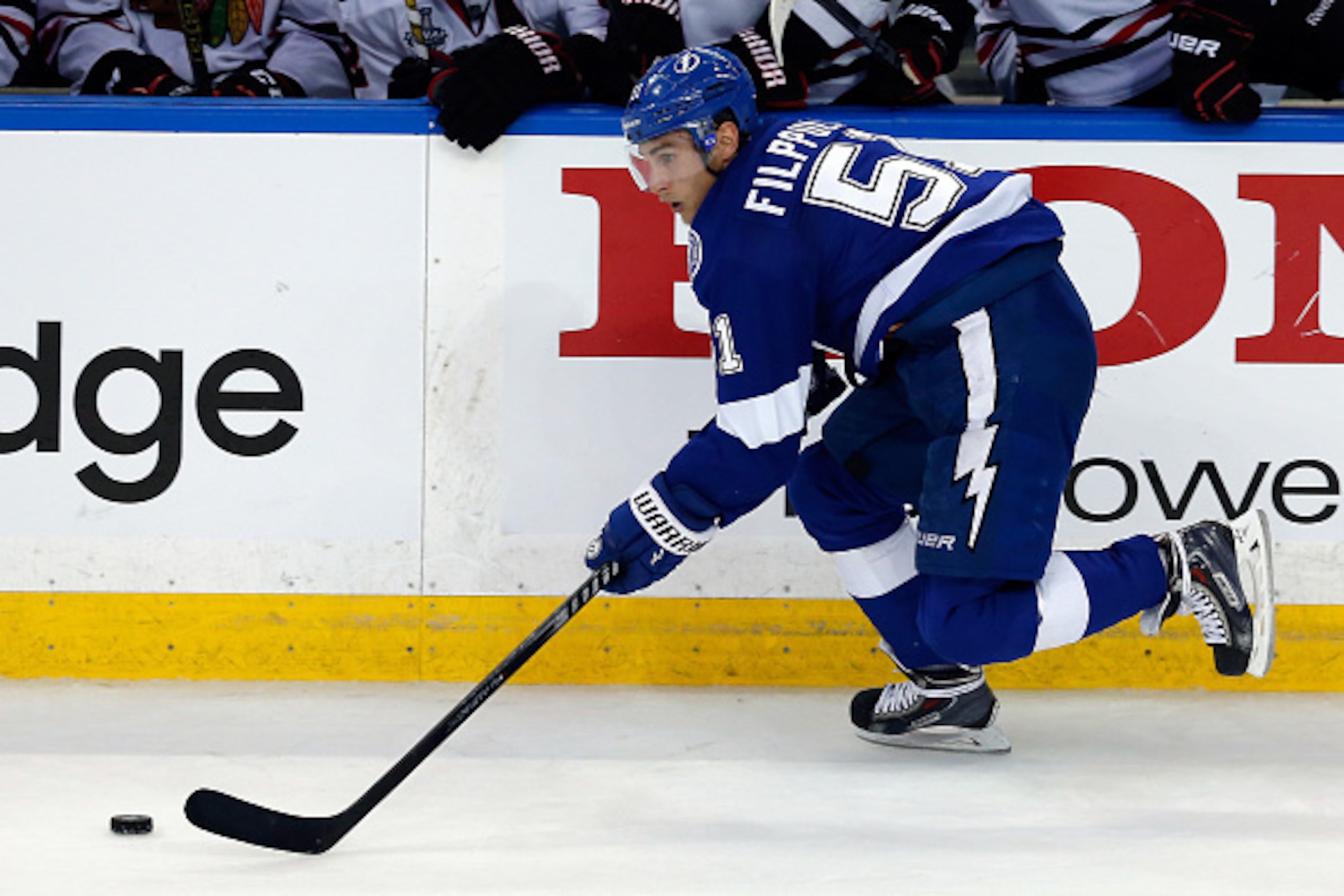
Offensive Play
Despite his formidable reputation, Filppula has almost never been a particularly dynamic even-strength scorer. Outside of a glorious performance in 2011-12, he has scored between 1.3 and 1.9 points/hour his entire career. Last year, he came in at 1.4 points/hour, and seeing as he’s 31 years old, we should probably expect him to stick to the lower end of that scale. He’s also been surprisingly average on the power play. Put it all together and it’s usually going to be a battle to get to the 50-point mark.
Defensive Play
Filppula is responsible enough in the defensive zone, and since coming to the Lightning, he’s even been included on the penalty kill. However, he could be harder on the puck and is not really the guy anyone wants taking on a steady diet of tough defensive assignments.
Transition Play
The one part of Filppula’s game that really stands out is his work in the neutral zone. He’s deceptive and determined when carrying the puck in offensively, and he’s extremely active on the backcheck through neutral ice.
Overall
Filppula has worked well in Tampa Bay as veteran spackle capable of being slapped down whenever a crack appears. He’s an experienced, Detroit-schooled forward, the kind of guy a young team can really benefit from as a stabilizing influence.
40. Nazem Kadri, Toronto Maple Leafs
26 of 65
Offensive Play
It’s easy to forget now, but in 2013 Kadri was just four points shy of the point-per-game mark. He had enjoyed a monster season (3.3 points/hour) at even strength and also done strong work on the man advantage. In the years since, his power-play work has actually improved, but his even-strength scoring rate has fallen by about 50 percent. He’s still young, but at this point if he can get up to regularly posting 2.0 points/hour, the Leafs should be happy.
Defensive Play
Kadri’s on-ice numbers are fairly good overall, but he is a high-event player. Stuff happens at both ends of the ice when he’s out there. His coaches have used him almost exclusively in offensive roles.
Transition Play
In Toronto in recent years, there have been four tiers of player on zone entries. Phil Kessel is dominant in a class all by himself. Almost 20 percent below Kessel is Tyler Bozak, who is nearly 10 percentage points better than anyone else on the roster, with the exception of Kadri, who slots in between the elite Kessel and the quite-good Bozak in this department.
Overall
Kadri turned 25 in October, and that puts him at an age where most players reach their offensive peak. Right now, he’s a quality second-line centre, but he needs to break out soon if he’s ever going to be more than that.
39. Martin Hanzal, Arizona Coyotes
27 of 65
Offensive Play
Although it isn’t his principal selling feature, Hanzal has increasingly emerged as an offensive threat in recent years. Last season saw him hit a career-high 2.1 points/hour at even strength, which is first-line production. While that was likely an aberration (only 37 games, career-high shooting percentage, etc.) he has shown himself capable of outperforming the NHL average. He’s tended to be slightly below average on the power play.
Defensive Play
Remember how we said offence wasn’t the key selling point here? In Hanzal’s case, it’s defence. A 6’6”, 226-pound monster, he’s extremely intimidating physically and also has the kind of long reach that’s tough to get around and allows him to make plays when it looks like he’s out of it.
Transition Play
It’s a little unfair to call Hanzal a plodding skater, but it takes a while for him to get up to speed and he isn’t particularly fleet even once he gets himself in gear. That’s probably one of the reasons he’s forced to dump the puck in so frequently. Having said that, he has phenomenal reach and uses it to good effect on the defensive blue line, which helps his mark here.
Overall
The hockey lexicon traditionally says that players like Hanzal are “200-foot” players, but that’s not really true here. What is fair to say is that Hanzal is quite effective at either end of the rink—perhaps surprisingly so in the offensive zone—but he’s not quite as good in the gap in between.
38. Brock Nelson, New York Islanders
28 of 65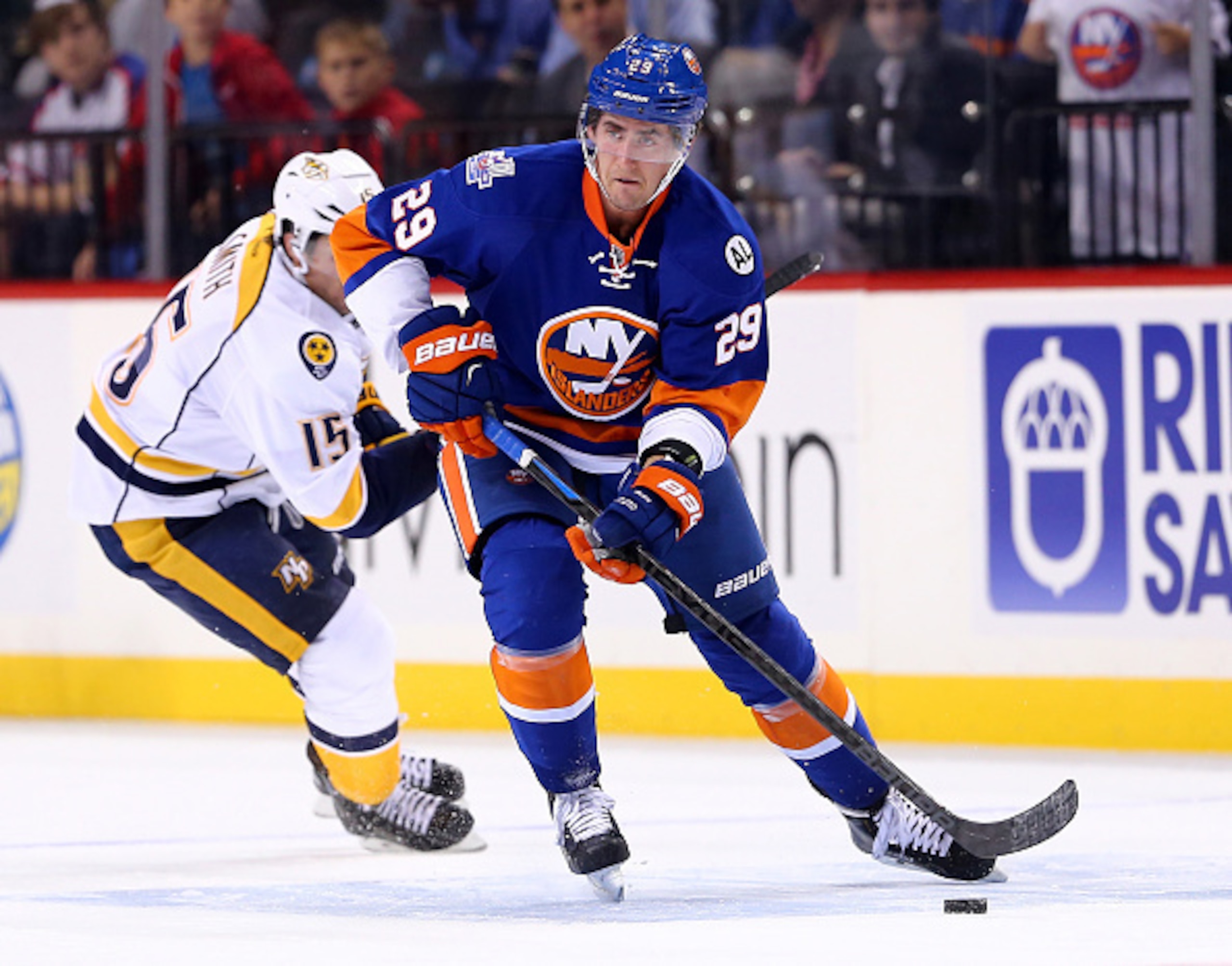
Offensive Play
Last season was a strong developmental year for Nelson. He made important inroads at even strength, advancing from 1.4 points/hour as a rookie up to 1.7 points/hour. On the man advantage, he pushed forward, too, posting 4.1 points/hour and making gains in minutes played.
Defensive play
In his first two seasons in the league, Nelson has already carved out a small role on the penalty kill, and that role is likely to expand as he gains experience and refines his defensive technique. Head coach Jack Capuano didn’t hesitate to start him in the defensive end last year, frequently employing him in a shutdown role. He didn’t just survive—he thrived.
Transition Play
Nelson is exceedingly good at retaining puck possession, and it shows in his neutral-zone play. On offence, he’s reluctant to simply dump the puck in, carrying it in when possible to the benefit of his team. Heading the other way, he gets involved in rushes by his opponents, fighting to get the puck back or at least force them to dump it in.
Overall
Every team in the NHL wants this kind of player. A 6’3” centre who can be trusted in all three zones and combines finishing ability with a strong possession game and stout defensive play is practically worth his weight in gold.
37. Ryan Kesler, Anaheim Ducks
29 of 65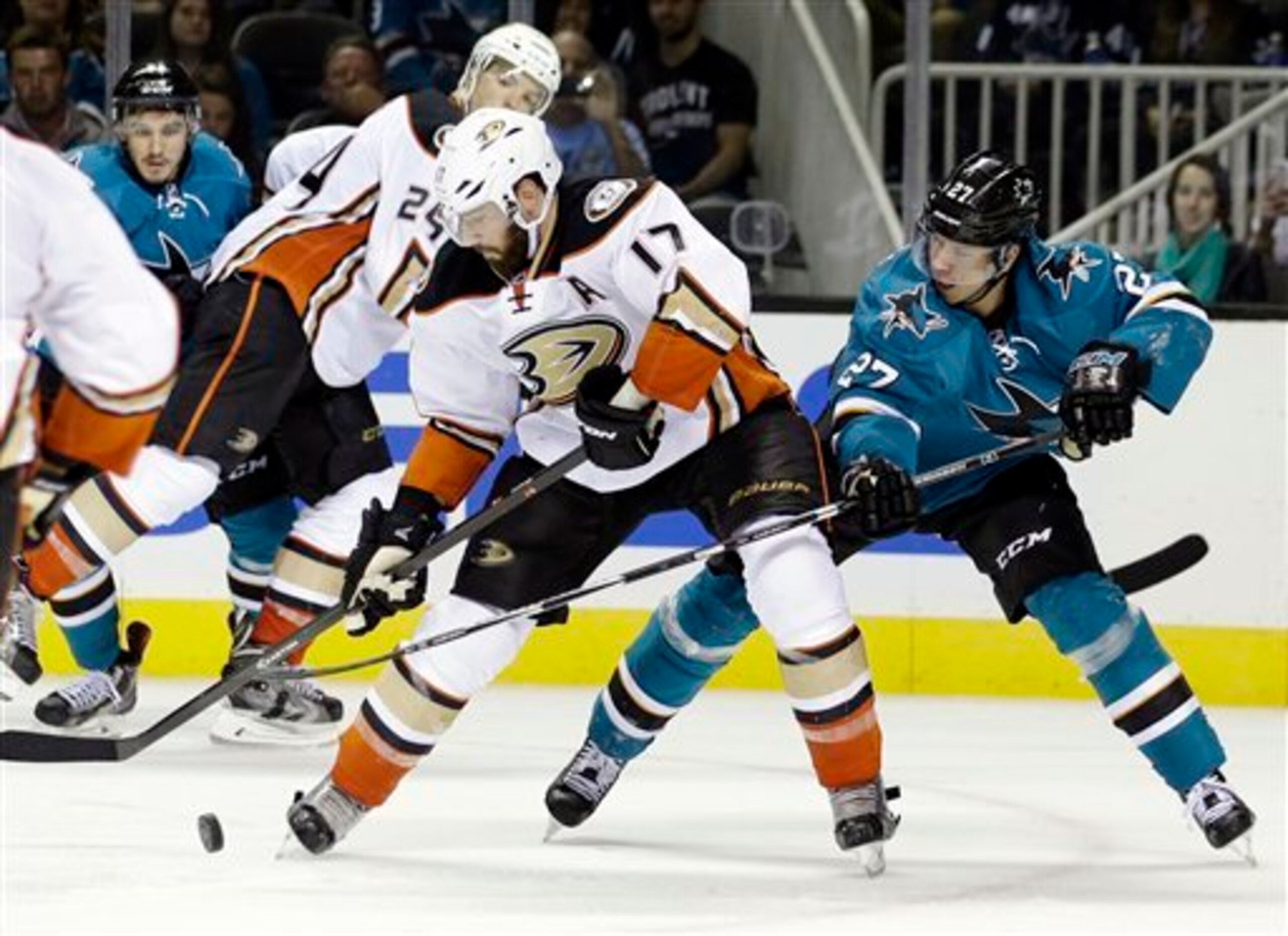
Offensive Play
Offensively, the last time Kesler played a full season and out-scored the NHL average at five-on-five was 2010-11—a half-decade ago at this point. He gets lots of power-play time, despite 2010-11 also being the last time he outperformed the league average by anything approaching a significant amount.
Defensive Play
Kesler isn’t deployed in a power-vs.-power role, so while he plays tough opponents, they aren’t the toughest opponents. Those go to Ryan Getzlaf and Henrik Sedin before him. He starts a high percentage of his shifts in the defensive zone, but the Ducks' on-ice chance rates dropped off significantly when he was on the ice last year. He is a strong penalty-killer.
Transition Play
One area where Kesler is pretty strong is through the neutral zone. He is involved at the defensive blue line and reasonably capable at the offensive blue line.
Overall
People are generally not going to like this ranking because Kesler is one of the most consistently overrated players in all of hockey. The truth is that he isn’t a strong two-way forward these days. He simply doesn’t score enough to earn that designation. He’s a strong defensive forward who keeps getting power-play time and offensive minutes because it takes time for the formidable reputation he deservedly established in his prime years to fade away.
36. Mikael Granlund, Minnesota Wild
30 of 65
Offensive Play
Granlund wasn’t immune to the pox which afflicted the Wild power play last season, but he was extremely good as a rookie and will likely be a plus player in this discipline again in 2015-16. He took a small step back as a point producer at even strength as a sophomore, too, but given the strides in his two-way game, it would be a mistake to read too much into that.
Defensive Play
To date, the Wild have chosen to give Granlund as much shelter as possible, deploying him mostly in offensive situations at five-on-five and keeping his role on the penalty kill to a minimum. The Finnish pivot plays a clever and dedicated defensive game, but at just 5’10” and 185 pounds, he can be overpowered.
Transition Play
Although Granlund is still growing as a player at either end of the ice, there’s nothing wrong with what he does in between. He gets back quickly when the puck starts heading in the wrong direction and is already Minnesota’s most gifted forward when it comes to leading the charge the other way.
Overall
We don’t include durability in these rankings, and that’s the one thing we worry might interfere with Granlund’s ascendance to star status. He has yet to play 70 games in an NHL season, and with his size, injury will always be a concern.
35. Kyle Turris, Ottawa Senators
31 of 65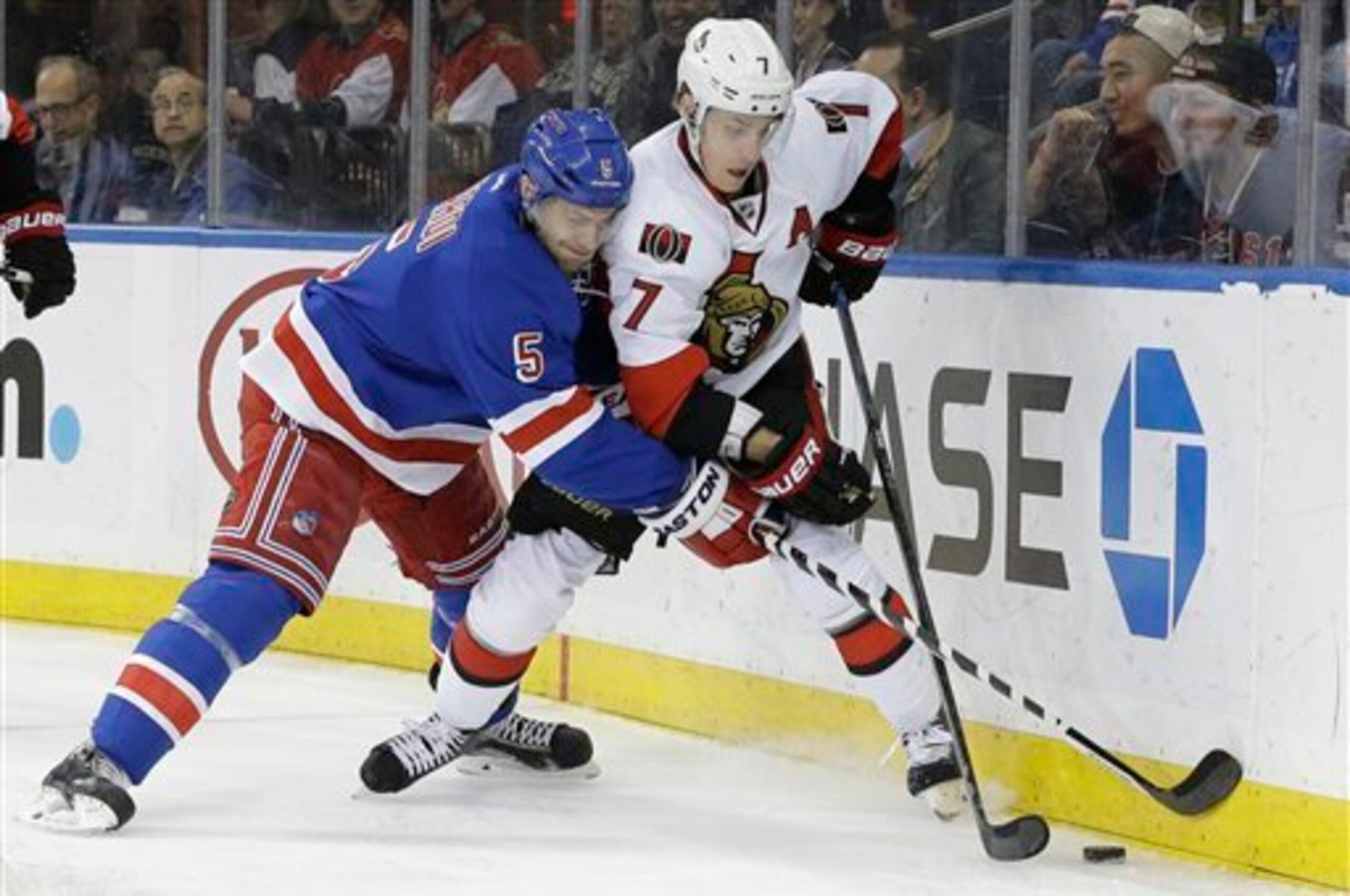
Offensive Play
Turris is now at the age where most NHL forwards hit their offensive peak, and his work is pretty decent. He’s scored at around 4.0 points/hour for three consecutive seasons on the power play, which is fine if unspectacular, and at even strength he flirts with the 2.0 points/hour mark.
Defensive Play
He isn’t a defensive specialist by any means, but Turris is a responsible two-way player. Ottawa’s coaches haven’t been afraid to deploy him in the defensive zone or against good opponents. He even played a significant role on the penalty kill in his first two seasons with the Sens, though that was scaled back last season.
Transition Play
One of Turris’ true gifts is gaining the opposition zone. He’s fast and crafty, traits which help him to break through the defensive schemes of the opposition. He’s OK at Ottawa’s blue line but could be more involved than he is.
Overall
Turris has inherited the No. 1 centre job in Ottawa by default, and he’s done pretty well in the role, though he lacks the dynamism that someone like Jason Spezza or Alexei Yashin brought in their prime years. The Senators, of course, have no reason for complaint. It’s not very often that this kind of player is available for a package built around David Rundblad.
34. Bryan Little, Winnipeg Jets
32 of 65
Offensive Play
Little is one of several players on this list who entered the NHL looking like an offensive star and has gone sideways as a scorer while developing elsewhere. It’s almost forgotten that he scored 31 goals as a sophomore in Atlanta, though that production was thanks in large part to a ridiculous 18.0 shooting percentage. These days, he’s reliable at even strength and on the power play but not especially dynamic by NHL standards.
Defensive Play
Twice now, Little’s defensive play has been acknowledged in the form of scattered Selke votes, and he deserves that recognition and perhaps more. He’s the centre tasked with taking on all the toughest opponents both on the penalty kill and at five-on-five for the Jets, and he does capable work.
Transition Play
The Jets tend to play a fairly straightforward north/south game, and most of the players on the roster (including Little) carry the puck into the opposition zone less frequently than they would in an ideal world. Little is surprisingly uninvolved at the defensive blue line.
Overall
Although he isn’t a prototypical first-line centre, Little has been carrying those responsibilities in Winnipeg for several seasons now, and it speaks to his quality in all areas of the game that he’s performed competently.
33. David Krejci, Boston Bruins
33 of 65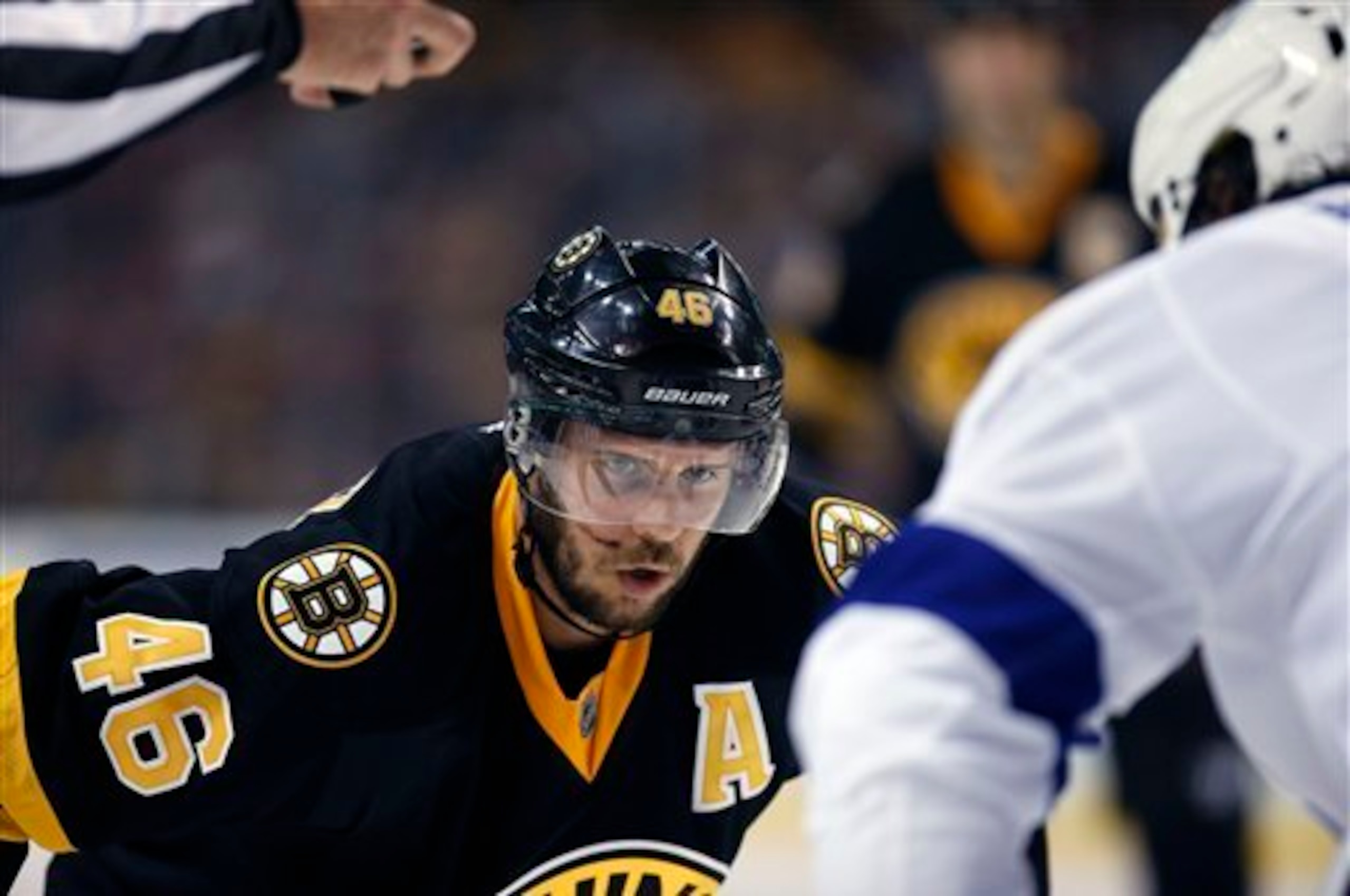
Offensive Play
Krjeci’s main calling card is offence, but he hasn’t hit the 70-point mark since 2008-09, though he came close in 2013-14. After four strong seasons at even strength, he fell to a very disappointing 1.7 points/hour in an injury-plagued 2014-15 season, while on the power play he has hovered around a respectable 5.0 points/hour the last few seasons.
Defensive Play
Although he has on multiple occasions received Selke votes thanks to a strong plus/minus, the truth is that Krejci has never been really put into the really tough situations defensively because the Bruins have always had Patrice Bergeron for that role. Despite this, he frequently comes in well below the team average in terms of chances against. His numbers here are actually pretty bad. There doesn’t seem to be much basis in reality for his reputation as a real two-way threat.
Transition Play
One area where Krejci is actually a pretty strong player is in the neutral zone. He’s good at getting into position to gain the opposition blue line. He carries the puck in on roughly two-thirds of his zone entries. His numbers are brought down a bit thanks to indifferent work thwarting opposition entries.
Overall
Krejci is a quality NHL centre, but he’s somewhat one-dimensional.
32. Brandon Dubinsky, Columbus Blue Jackets
34 of 65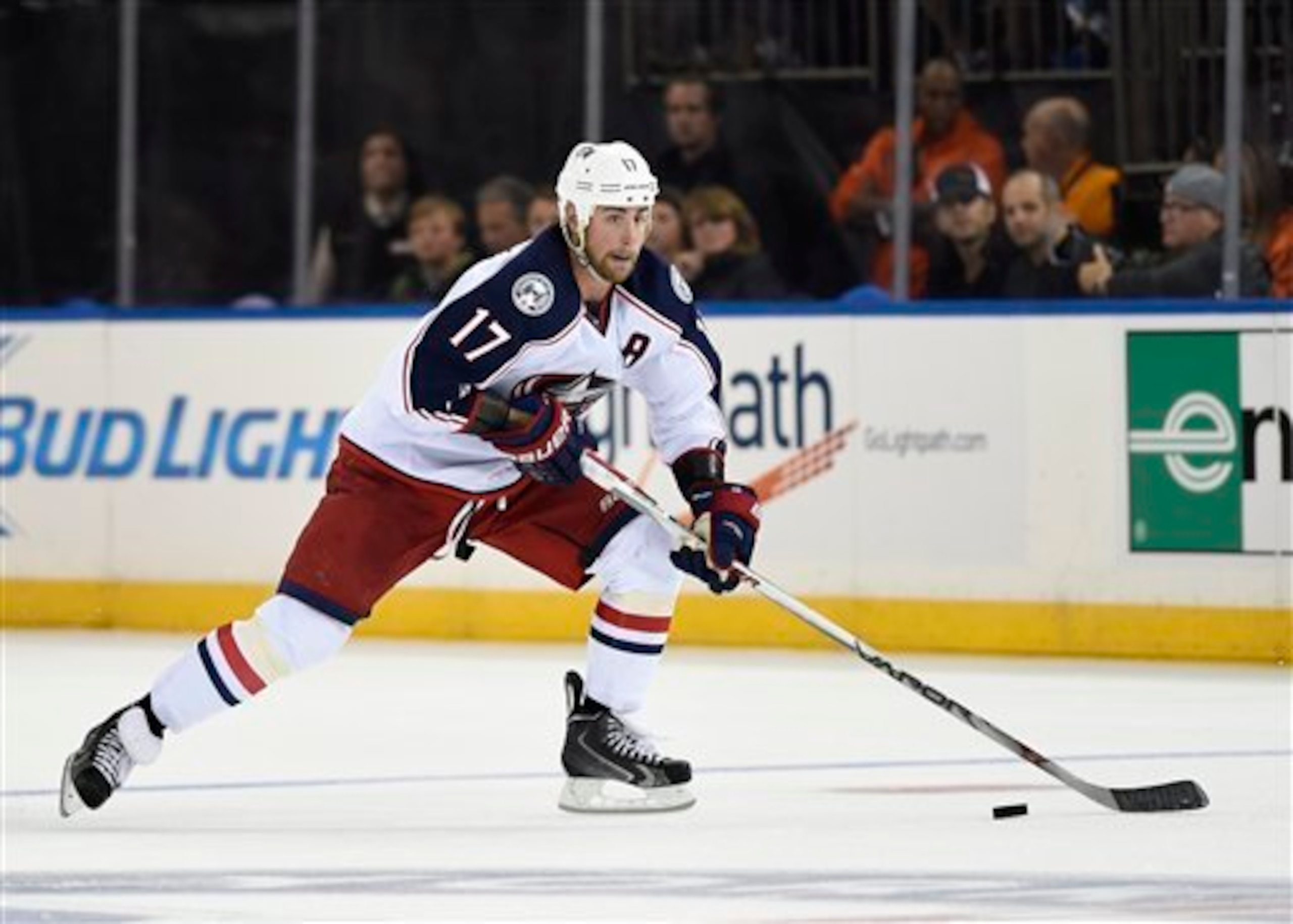
Offensive Play
The trade that sent Dubinsky from New York to Columbus revived his offensive game. He’d settled into a comfortable routine with the Rangers, scoring between 1.4 and 1.8 points/hour at even strength in four consecutive seasons. Last year, he hit a career-high at the age of 28 when he posted 2.3 points/hour. That marked the zenith of a steady trend of improvement since his arrival. A lot went right for that to happen, and our projection is that he’ll take a step back, but even so he’s better than he generally gets credit for.
Defensive Play
The only mark against Dubinsky here is that he doesn’t generally get a steady diet of top-line opponents when he’s on the ice. He’s trusted in the defensive zone both at even strength and on the penalty kill, and his on-ice chance numbers are highly encouraging.
Transition Play
Dubinsky goes to the dump-and-chase a little more frequently than we’d like to see. He lacks that little bit of extra imagination at the offensive blue line that the league’s really good scorers tend to have. He’s also just OK at the defensive blue line.
Overall
It’s almost guaranteed with any NHL team that a 6’2”, 216-pound centre who plays a ferocious physical game will find his way to the lineup if he’s even just barely passable as a player. Dubinsky is considerably more than passable, combining offensive skill with defensive reliability.
31. Paul Stastny, St. Louis Blues
35 of 65
Offensive Play
Stastny is one of the game’s most dependable power-play scorers, averaging between 4.9 and 6.6 points/hour for seven consecutive seasons now. Where he has been up and down is at even strength. He enjoyed a superb year as a pending free agent in 2013-14, but his scoring that season was double what he had managed the year before.
Defensive Play
At times in his career, Stastny has been employed as a defensive workhorse, but his more recent coaches have preferred to lighten his load on the penalty kill and in his own end of the rink. He’s still capable and responsible, and despite modest size (6’0", 205 lbs), his positional sense makes him hard to beat.
Transition Play
Early in his career, it looked like Stastny was going to evolve into a top-flight offensive weapon, but he proved unable to sustain that early fire. That’s reflected in his zone entries to a degree. While he puts up decent numbers, he settles for the perceived safety of the dump-in more frequently than one wants to see from a scoring centre.
Overall
It’s hard not to remember how good Stastny looked when he broke into the league and feel a litte disappointed by the kind of player he has evolved into. That’s not to say what he is isn’t very good. Stastny is a thinking man’s player who plays well at both ends of the rink. He’s just very good, though. He isn’t great.
30. Ryan O’Reilly, Buffalo Sabres
36 of 65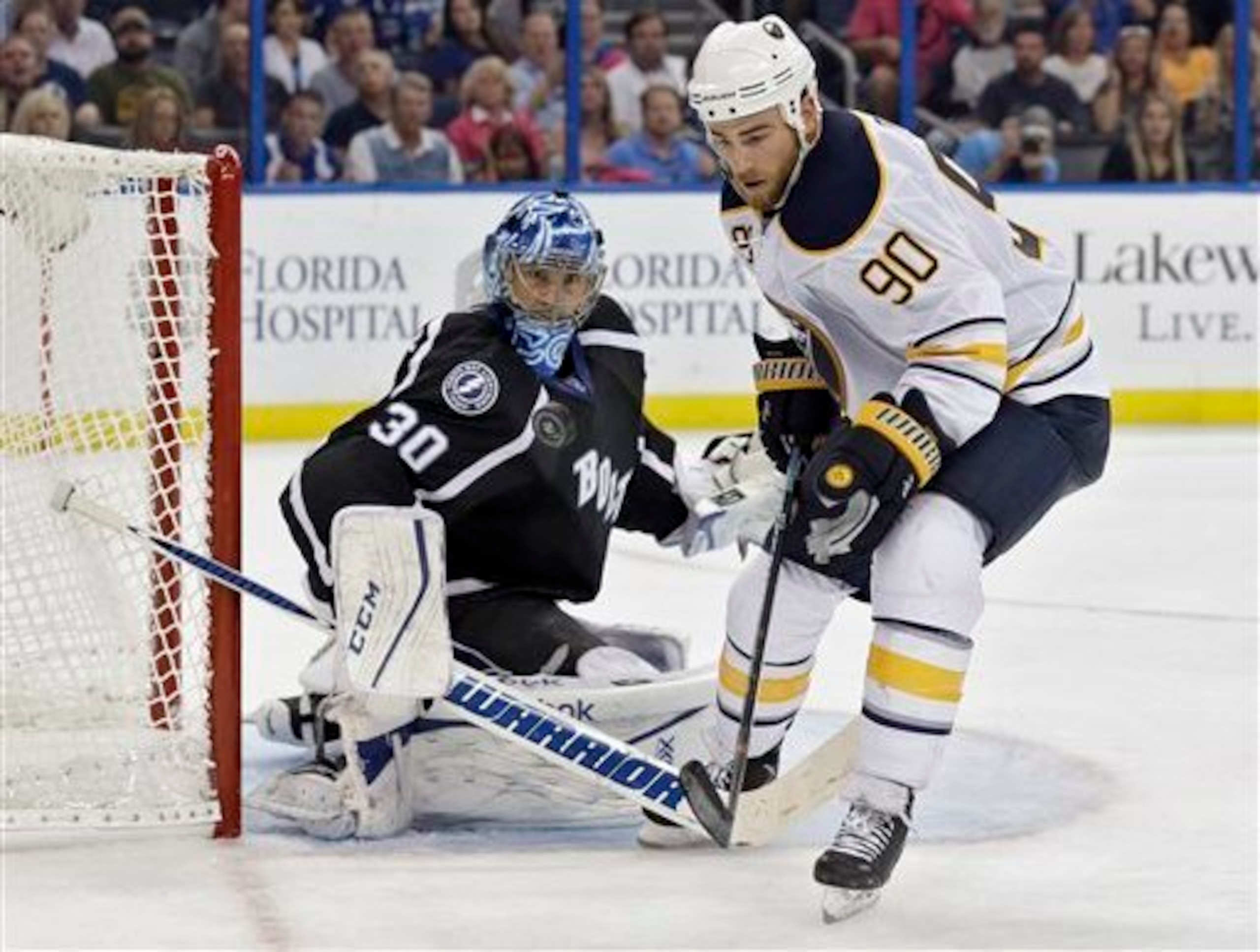
Offensive Play
Although not particularly known as an offensive centre, O’Reilly actually does quite strongly here. He’s hit 1.9 points/hour at even strength for three consecutive years now, which is fringe first-line territory. Prior to last season’s power-play collapse in Colorado, he had also enjoyed four consecutive seasons with strong numbers in that discipline.
Defensive Play
O’Reilly is known as a highly competent defensive player. He’s a regular in penalty-killing situations and is trusted to start shifts in his own end at even strength. He’s also highly disciplined, winning the Lady Byng Trophy in 2014 after taking just a single penalty all season.
Transition Play
One of the few real weaknesses in O’Reilly’s game is speed. He’s just not that quick, and it costs him in the neutral zone. He was actually below the team average in Colorado in terms of zone entries, despite generally playing with quality help.
Overall
O’Reilly doesn’t even turn 25 until February, which means he hasn’t hit his offensive peak yet. He’s also likely to continue developing his defensive game. He’s an excellent centre now and could still get better.
29. Tomas Plekanec, Montreal Canadiens
37 of 65
Offensive Play
Despite impressive overall totals, a closer examination of Plekanec’s offensive game shows him to be more of a supporting player than a true driver of events in his own right. In his prime, he was quite good at even strength. For four seasons now, he’s hovered between 1.4 and 1.7 points/hour, which basically puts him at the NHL average. He has been useful on Montreal’s power play.
Defensive Play
This part of Plekanec’s game is his claim to fame, and with good reason. At even strength, he makes life easier for every other player on the roster by taking on tough opponents and starting a high percentage of his shifts in the defensive zone—something which undoubtedly works to suppress his scoring totals five-on-five. He also logs more minutes on the penalty kill than virtually any other comparable centre.
Transition Play
Plekanec is strong in the neutral zone, too. He’s a true 200-foot player. He’s engaged at the defensive blue line, never making life easy for opposing teams moving through centre. He’s also slightly better than average at gaining the opposition blue line.
Overall
Plekanec is one of those guys who gets the “most underrated player in the league” moniker so frequently that it has ceased to be true. He is rightly appreciated as a high-end two-way talent, the kind of player every coach wants at his disposal.
28. Frans Nielsen, New York Islanders
38 of 65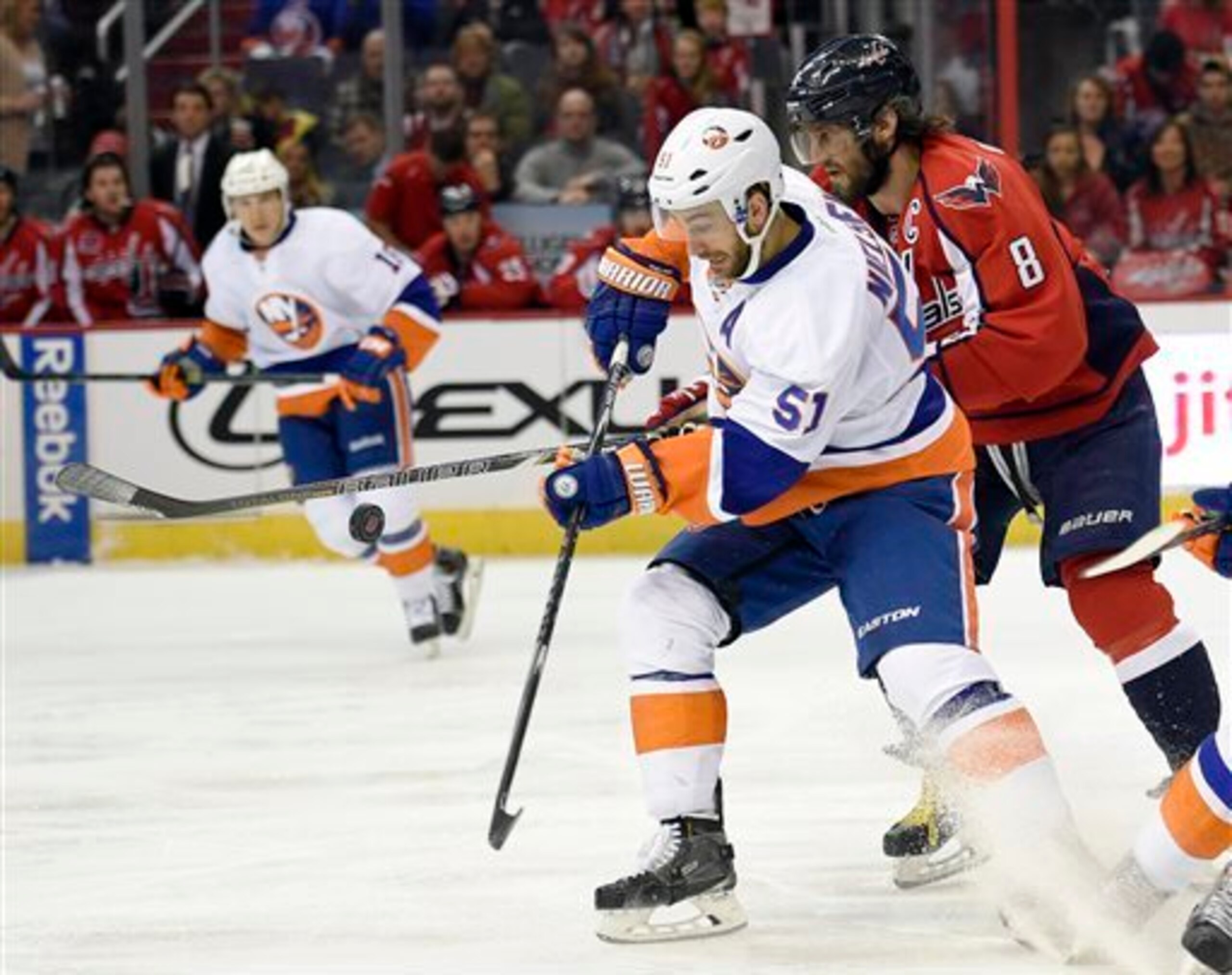
Offensive Play
Maybe it was a crowded depth chart or a more specialized defensive role or just age, but for whatever reason, Nielsen saw his scoring fall off last season, dropping from the 1.7-2.0 points/hour range he typically inhabits at even strength down to just 1.4 points/hour. He continues to put up big numbers on the power play, however.
Defensive Play
Nielsen has been a steady presence on the Selke ballot, earning at least some votes in each of the last six seasons and peaking in 2010-11 with a sixth-place finish. He’s consistently one of the game’s most effective two-way players.
Transition Play
Nielsen’s possession game is one of the reasons he’s so strong at both ends of the rink. He’s above average both as a puck-carrier steaming up ice and as a backchecker thwarting opponents desirous of doing the same.
Overall
It’s telling that Nielsen is so far hanging on to the No. 2 centre job. John Tavares, of course, is in the No. 1 role, but between Ryan Strome, Mikhail Grabovski and a host of emerging young players, there’s no shortage of challengers for Nielsen’s job. So far, his brilliant two-way play has held them off.
27. Jordan Staal, Carolina Hurricanes
39 of 65
Offensive Play
Staal may be the most famous forward in the league relative to how little he scores. The finest season of his career saw him hit the 50-point mark. In his last full season, he only managed 40 points. He has scored 1.2 points/hour at even strength in back-to-back seasons now. That’s literally half of what some first-line centres manage. He gets regular minutes on the power play which boost his overall totals, but the truth is that for most of his career, he’s been below average on the man advantage. He’s really not an impressive scorer by NHL standards.
Defensive Play
Where Staal does excel is on the defensive side of the puck. He logs major minutes on the penalty kill and has increasingly taken on tough minutes since coming over to the Hurricanes. Despite this, he posts really strong scoring chance numbers. It’s just a shame that Selke voters have forgotten about him now that he’s with a small-market team because he’s actually been better in the last couple of years than he was early in his career when he always picked up at least some votes.
Transition Play
Part of the reason Staal looks so good in terms of scoring chances is that he plays a possession game through the neutral zone. He doesn’t dump the puck when he can carry it in. He is also cognizant of opposition rushes forming and gets back in time to try to disrupt entries.
Overall
Staal isn’t a scorer, and the offensive side of his game is consistently overrated because he logs lots of minutes—including on the power play. He is, however, a first-rate defensive player, and that side of his game seems weirdly underrated now that he’s out of the national media spotlight that comes from playing in Pittsburgh.
26. Jason Spezza, Dallas Stars
40 of 65
Offensive Play
It wasn’t all that long ago that Spezza was scoring more than a point per game, really. In 2011-12, he scored 34 goals and added 50 assists, ultimately finishing sixth in Hart Trophy voting. Although his scoring has slid, particularly at even strength, he’s still a potent force and an awfully nice presence to have centering a second line.
Defensive Play
In his current role as a No. 2 pivot, Spezza hasn’t been asked to play tough defensive minutes. He generally misses the toughest opponents, starts a bunch of his shifts in the offensive zone and doesn’t kill penalties. Despite this, he’s on the ice for a high number of chances against.
Transition Play
Fully 70 percent of Spezza’s sorties into the attacking zone start with controlled entries. He’s excellent at finding holes at the offensive blue line where he can slip through with the puck. He’s less good at the defensive blue line, getting himself into position but rarely managing to disrupt opposition attacks.
Overall
Spezza turned 32 in the offseason, so we should expect to see some declines in his game this year. However, we’re really only a short time away from him being one of the top offensive players in the game and he remains highly dangerous.
25. Derek Stepan, New York Rangers
41 of 65
Offensive Play
We likely haven’t seen Stepan’s best yet. He just turned 25 in the offseason and most NHL players hit their scoring primes at this point. His even-strength offence has bounced around a bunch, but last season he put up 2.3 points/hour, which is excellent. Just one year earlier, he posted a significantly weaker 1.8 points/hour. He’s a fairly average power-play presence.
Defensive Play
He’s not terribly big (6'0", 196 lbs) or overly fast, but Stepan is effective in the defensive zone because he has strong hockey sense and positions himself intelligently. He plays relatively tough minutes at even strength and takes on a lead role on the penalty kill.
Transition Play
Stepan is at his worst in the neutral zone. He is not terribly active at the defensive blue line and not terribly creative at the offensive blue line either.
Overall
Stepan is a versatile player, the kind of skater who can be deployed and effective in a checking or scoring role. If he was a little bit better on the power play, he’d be widely recognized as a top centre. If he was just a little more forceful defensively, he’d be a mainstay in Selke voting.
24. Jeff Carter, Los Angeles Kings
42 of 65
Offensive Play
Los Angeles is one of those places where offence goes to die, right? With one significant caveat, that hasn’t been Carter’s experience. At five-on-five, he’s quietly enjoyed a resurgence in the last few years, rising from the mediocre 1.4 points/hour he recorded the year he was traded from Columbus all the way to 2.4 points/hour last season, a total which comes awfully close to his career high. The caveat is the power play. He was far more effective in Philly than he has been in L.A., but that likely has something to do with the rest of the talent on the unit, too.
Defensive Play
Anze Kopitar tends to get the credit as the Kings’ shutdown centre, and not without cause, but Carter’s work in this area isn’t half bad. It’s telling that head coach Darryl Sutter has opted to entrust him with a major role on the penalty kill and even more so that those are minutes he’s been playing since his sophomore season in the NHL.
Transition Play
Carter is just the slightest bit above average in this category. He’s skilled but not terribly creative on zone entries and his numbers at the defensive blue line are—if anything—just a touch below average.
Overall
23. Henrik Sedin, Vancouver Canucks
43 of 65
Offensive Play
The 35-year-old Vancouver captain enjoyed a rebound in his overall point totals, but as with his brother Daniel, it is somewhat illusory in that virtually all of it came on the power play. In 2013-14, he fell to a post-2005-lockout low of 1.9 points/hour at even strength. Last year, he slipped to 1.8 points/hour. We expect a further decline this season.
Defensive Play
The days of Sedin posting frankly ridiculous scoring-chance numbers appear to be over, though of course some of that is a result of playing for a coach who doesn’t start the twins in the offensive zone with the frequency that Alain Vigneault once did.
Transition Play
Sedin is reasonably strong in this category, but not for a high-end offensive player. At even strength, his carry-in ratio is lower than 60 percent, which is good but not great.
Overall
Both Sedins have enjoyed brilliant careers, but it’s impossible to ignore the decline, which is likely to continue this year. A successful power-play performance last season revealed 2013-14 for the aberration that it was, but we expect another step back at even strength.
22. Ryan Nugent-Hopkins, Edmonton Oilers
44 of 65
Offensive Play
After a strong rookie season offensively, Nugent-Hopkins has struggled to get back to that level. He almost reached his former prominence at even strength in 2014-15, posting a 1.9 points/hour performance, which is just a shade worse than the 2.0 points/hour he put up in his rookie year. That isn’t true on the power play, where Nugent-Hopkins’ numbers have steadily declined over the last few seasons, though they are still above the league average.
Defensive Play
Likely because he plays for the defensively inept Oilers, Nugent-Hopkins doesn’t get the credit he deserves as a two-way player. He kills penalties and plays a responsible game in the defensive zone.
Transition Play
Nugent-Hopkins plays a smart game in transition. He is active on his own blue line. No Oilers forward is as involved in defending against opposition rushes. He also carries the puck into the attacking zone on about 60 percent of his entries.
Overall
A quality two-way centre, Nugent-Hopkins has yet to consistently score the way a No. 1 overall pick is expected to score. He makes up for it with a strong defensive game, which is a rare asset on Edmonton’s roster.
21. David Backes, St. Louis Blues
45 of 65
Offensive Play
A reliable but not overpowering scorer, Backes has now just topped 2.0 points/hour in back-to-back seasons at even strength, recovering from a tough few years when he was down near the league average. He’s also hovered around the very respectable 5.0 points/hour mark on the man advantage over this span, which is relatively new territory for a guy who was never a big power-play scorer in seasons past. Overall, he’s pretty dependably in the 25-goal, 30-assist range.
Defensive Play
Backes has finished no lower than fifth in Selke Trophy voting over the last four seasons, and with good reason. He consistently plays tough competition at even strength and starts a large percentage of his shifts in the defensive zone. He kills penalties and wins faceoffs. At 6’3”, 221 pounds and with a nasty—and we mean that in the best way possible—disposition, he also tends to win puck battles in the defensive zone.
Transition Play
Backes is an ordinary player through the neutral zone. He has good reach and strength but lacks the top-end acceleration or creativity with the puck to post crooked numbers here.
Overall
Although he lacks the offensive edge one typically expects from a top-tier centre, Backes remains a quality option in virtually any assignment. He’s incredibly valuable to his team and coaches because he can be used like a sponge to sop up the nastiest matchups the other team has to offer.
20. Joe Thornton, San Jose Sharks
46 of 65
Offensive Play
It’s readily apparent that Thornton is slowing down. In three of the last five seasons, including 2014-15, he dropped down to 1.7 points/hour at even strength—this from a player who was topping 3.0 or even 4.0 points/hour in his prime. He does remain a threat on the power play, though he’s had three relatively weak (by his standards) campaigns in the last four years.
Defensive Play
Once a regular on the penalty kill, Thornton has largely been relieved of his duties in that department. At even strength, he’s still capable of taking on relatively tough minutes and the Sharks tend to dominate both the shot clock and scoring-chance counts when he’s on the ice.
Transition Play
Thornton is perfectly average in transition. He carries the puck in on roughly 50 percent of his zone entries, and he’s pretty average on the defensive blue line.
Overall
We’ve docked Thornton a few points here, anticipating further decline from the 36-year-old. He’s still a big (6'4", 220 lbs), powerful offensive threat who tends to tilt the ice in his team’s favour when he’s out there, though.
19. Eric Staal, Carolina Hurricanes
47 of 65
Offensive Play
Staal’s reputation has taken a bit of a hit as his offence has fallen off, but it wasn’t all that long ago that he was an awfully formidable force. In 2012-13, he put up 53 points in 48 games. Prior to that, he was a reliable 70-plus-point player. Our suspicion is that he’d be rejuvenated in a big way by an improved Carolina team. As things stand, he’s almost alone as a significant offensive threat for the Hurricanes.
Defensive Play
A competent penalty-killer who has had his ice time diverted into other areas, Staal takes on tough competition but is no longer asked to handle tough zone starts at five-on-five. His performance has generally been pretty solid. He typically outperforms the team averages in scoring chances to a significant degree.
Transition Play
No Hurricanes forward has a better track record in transition than Staal, who typically carries the puck on more than 70 percent of his zone entries. He is significantly above average in this area.
Overall
It’s almost hard to believe that Staal is only 30. He’s been around for a long time and it feels like he’s in a steep decline. It’s tough to know how much emphasis to place on his struggles. It’s been a very tough time for Carolina and he might be rejuvenated with a stronger supporting cast.
18. Logan Couture, San Jose Sharks
48 of 65
Offensive Play
Couture turned 26 late last season, which puts him right in his offensive prime. His 67 points in 2014-15 is a career high, though in large part because he appeared in all 82 games. Over his career, he has scored between 1.7 and 2.3 points/hour at even strength, which is strong but not irresistible production, and he’s generally been somewhat north of average on the power play.
Defensive Play
Couture has a deserved reputation for strong two-way play. He plays tough minutes for the Sharks. Over the last three seasons, he actually ranks second in terms of quality of competition (behind Chicago’s Jonathan Toews) among centres on this list. He’s also a regular on the penalty kill. With that said, he doesn’t generally see tough zone starts or run up ridiculous scoring-chance differentials. Still, he’s done well in a tough role.
Transition Play
Although his numbers are good for the Sharks—who tended to play a dump-and-chase game under Todd McLellan—compared to other top forwards, Couture has only decent zone-entry numbers.
Overall
Couture is an intelligent, well-rounded player who can do a little bit of everything. He isn’t an elite offensive player, but he’s quite good both at even strength and on the power play. He’s not quite an elite defensive player in the model of a Toews or Patrice Bergeron, but again he’s very good.
17. Henrik Zetterberg, Detroit Red Wings
49 of 65
Offensive Play
At even strength, Zetterberg’s production has been oddly up-and-down the past few seasons. One year, he’ll score 2.5 points/hour, which is elite-level production. Another year, he’ll fall down to 1.5 points/hour, which is roughly the league average for a forward. His true talent these days likely falls between those extremes, which is pretty nice territory, and of course he remains lethal on the power play.
Defensive Play
Once a top penalty-killer for the Red Wings, Zetterberg has seen his responsibilities in that department eased as he ages and the NHL awards fewer and fewer power plays. He’s also seen the load he takes on at even strength reduced. Increasingly, Detroit entrusts others with defensive-zone responsibilities. Despite these reductions, Zetterberg remains a respected defensive forward.
Transition Play
In these twilight years of Zetterberg’s career, he’s merely a good rather than great neutral-zone player. He takes his backchecking responsibilities seriously and he’s still creative enough entering the attacking zone, but he’s behind the league’s best players in both areas.
Overall
We’ve forecast some slight erosion for Zetterberg here. He just turned 35, and as a rule, these are the years when the slow and steady decline of the early 30s picks up pace. However, the league’s best players can sometimes hold off Father Time a bit longer. We don’t really expect the bottom to fall out this season, but we also think that last year’s 66-point campaign may be the new normal for this player.
16. Matt Duchene, Colorado Avalanche
50 of 65
Offensive Play
Offensively, Duchene has been up and down over the course of his career, and last season saw him fall to just 55 points after consecutive seasons near the point-per-game mark. It’s mostly a function of the power play. With the exception of an injury-plagued 2011-12 season, Duchene has scored between 1.7 and 2.6 points/hour, a very good rate for just about anyone. However, he dropped from 17 points on the power play to just seven last year.
Defensive Play
After stepping into a penalty-killing role in 2013, Duchene was taken off the unit upon Patrick Roy’s arrival as head coach. He’s steadily taken on an increased defensive role at even strength, however, and so far has handled those responsibilities capably.
Transition Play
Duchene’s speed serves him well in each of these categories, but it makes him particularly lethal in transition—a category in which he might be the NHL’s best player. Using our league-wide 2013-14 data, no other player gained the offensive zone with possession on a higher percentage of his entries than Duchene did, with the Avs centre narrowly edging out Alex Ovechkin for the honour.
Overall
One of the game’s best skaters, Duchene is a quality two-way player who is just now entering his years of peak production offensively. He’s exceptionally good at breaking through neutral-zone defensive schemes, and that has value above and beyond his point production.
15. Ryan Johansen, Columbus Blue Jackets
51 of 65
Offensive Play
After an uncertain start to his NHL career, Johansen has hit his stride offensively, hitting first the 60- and then the 70-point plateau. His even-strength numbers in those last two years have been good, but nothing to write home about. What has made all the difference has been his performance on the power play. He tallied 5.5 points/hour in 2013-14 and then jumped all the way to 7.0 points/hour on the man advantage last season.
Defensive Play
Drafted as a two-way player, Johansen has gradually taken on tougher assignments in the NHL. His offensive progress occurred simultaneously with his employment on the penalty kill, and he went from being a bit player in 2013-14 to an integral part of that unit in 2014-15.
Transition Play
It’s not hard to guess why Johansen is effective in the neutral zone. He’s deceptive with the puck, he’s a good skater, and at 6'3", 218 pounds, he has both the wingspan to make life difficult for the opposition when playing defence and the strength to power through opposition checkers.
Overall
One of the most important things to keep in mind about Johansen is that he just turned 23. He’s had two good seasons, but the odds are that we have yet to see him at his best. There aren’t a lot of players who can match his combination of size, offensive ability and two-way intelligence.
14. Tyler Johnson, Tampa Bay Lightning
52 of 65
Offensive Play
Johnson’s rapid rise to offensive stardom has been stunning to behold. He scored 50 points as a rookie in 2013-14 and then rose to 72 points last season. The biggest driver of that jump was his play at even strength, where he spiked from a solid 1.8 points/hour to 3.0 points/hour, though he also improved his power-play scoring totals. The big question now concerns repeatability. He needs to show that last season wasn’t a one-off.
Defensive Play
As a rookie, Johnson scored five short-handed goals. Head coach Jon Cooper continues to deploy him on the penalty kill and feeds him reasonably difficult zone starts relative to the Lightning average. He plays a reliable defensive game, though at 5'8" and 185 pounds, he can be overpowered at times.
Transition Play
Johnson isn’t quite in the elite forward class when it comes to carrying the puck over the offensive blue line, though his work there is considerably better than average. He’s also diligent about disrupting opposition rushes on the backcheck.
Overall
The undrafted and undersized Johnson has developed into a key player for the Bolts. He’s vital offensively and integral to the club’s defensive scheme. He just needs to keep performing at the same level to which he rose last season.
13. Joe Pavelski, San Jose Sharks
53 of 65
Offensive Play
Looking at his overall point totals, Pavelski would seem to be a late bloomer, as he only topped the 30-goal mark in his late 20s and didn’t hit 40 goals until the age of 29. That’s misleading, though. At even strength, Pavelski’s scoring actually peaked at 2.4 points/hour at the age of 25 and has mostly declined since then. Last season, it fell to 1.8 points/hour. What happened is his role on the power play changed, and the Sharks discovered a terrifyingly effective triggerman who has topped 6.0 points/hour in the last two seasons.
Defensive Play
Early in his career, Pavelski was entrusted with a lot of responsibility in the defensive zone. Over time, he has shifted toward a more offensive role at even strength because he’s shown ability in that area, but he’s still quite competent defensively. He’s been a key member of San Jose’s penalty kill almost from the start of his NHL career.
Transition Play
Pavelski is a solid enough player through the neutral zone, the kind of guy who does a better-than-average job both of entering the opposition end and preventing the opposition from entering his end of the ice, but his numbers in both areas are just a bit above average rather than truly spectacular.
Overall
It’s been fun watching Pavelski blossom into a truly lethal power-play weapon. He’s always been a diligent two-way forward with the ability to contribute in any of the game’s three zones—with the ability to do so while playing any forward position—so this new offensive level he’s found seems like a just reward for his work ethic.
12. Pavel Datsyuk, Detroit Red Wings
54 of 65
Offensive Play
Once again, Datsyuk topped the point-per-game mark last season, rebounding somewhat from a difficult 2013-14. Mostly he was better on the power play, posting his best scoring rate there since 2008-09. He is, however, 37 years old and it is abundantly clear which way things are headed. Once again, he managed to hit 2.0 points/hour at five-on-five, but that is consistent of the trend of the last decade which has seen his scoring rates slowly erode from a high of around 3.0 points/hour. Even Datsyuk’s magic isn’t immune to the aging process.
Defensive Play
Datsyuk won three consecutive Selkes between 2007 and 2010, and he has remained competitive in the years since in the race for the title of the NHL’s best defensive forward. With age, however, his defensive responsibilities have been reduced. Where once he faced a fairly steady diet of defensive-zone starts, now he begins an increasing number of his shifts in the offensive zone. His penalty-killing work has been scaled back, too. He’s still a shockingly gifted takeaway artist and responsible two-way forward, but with age has come a reduction in what he’s capable of doing.
Transition Play
No Red Wings forward carried the puck into the offensive zone with greater frequency than Datsyuk did in 2013-14. He retained possession nearly three-quarters of the time when gaining the opposition blue line. His numbers at the defensive end of centre were good but somewhat less spectacular.
Overall
Our forecast here projects another slight dip as injuries and age continue to chip away at a player who was a legitimate Hart Trophy contender and perhaps the game’s most complete forward in his prime. It’s remarkable that he still ranks so high, really. The only time in the last five seasons that Datsyuk played close to a full schedule was in the lockout-shortened 2013 campaign. For an oft-injured forward getting close to 40 years of age, being this good at both ends of the ice is amazing.
11. Nicklas Backstrom, Washington Capitals
55 of 65
Offensive Play
One of the big surprises in researching this list was finding out how (relatively) pedestrian Backstrom’s five-on-five offence has been over the last few seasons. He fell from 2.3 points/hour in 2012-13 down to just 1.4 in 2013-14, and while he rebounded last season, he still came in south of the 2.0 points/hour mark. So why is he consistently near the point-per-game mark? Because he’s one half of Washington’s insanely good power-play duo. No player in all of hockey has been a more efficient point-producer on the man advantage over the last three seasons than Backstrom.
Defensive Play
Back when Washington was a consistently dominant regular-season team and Backstrom was just a young player still growing into his potential, he was a fashionable choice for the Selke Trophy (even getting some votes as a rookie). Those votes have (wrongly) become harder to find as his plus/minus has dropped, but Backstrom remains a very capable two-way presence and regularly deployed on the penalty kill.
Transition Play
Alex Ovechkin is undeniably Washington’s best player when it comes to gaining the offensive zone with possession. Backstrom’s own strong numbers look pedestrian in contrast. Where Backstrom takes the lead is on the backcheck. He’s frequently involved at the defensive blue line and is generally effective.
Overall
Though not a top-end goal scorer—Backstrom hasn’t hit the 20-goal mark in the last five years—Washington’s No. 1 centre is a brilliant playmaker and devoted defensive forward. He certainly benefits from playing with Ovechkin, but it’s hard to imagine a more perfect foil for the Capitals’ captain, as the strengths in Backstrom’s game almost perfectly mirror the deficiencies in Ovechkin’s.
10. Claude Giroux, Philadelphia Flyers
56 of 65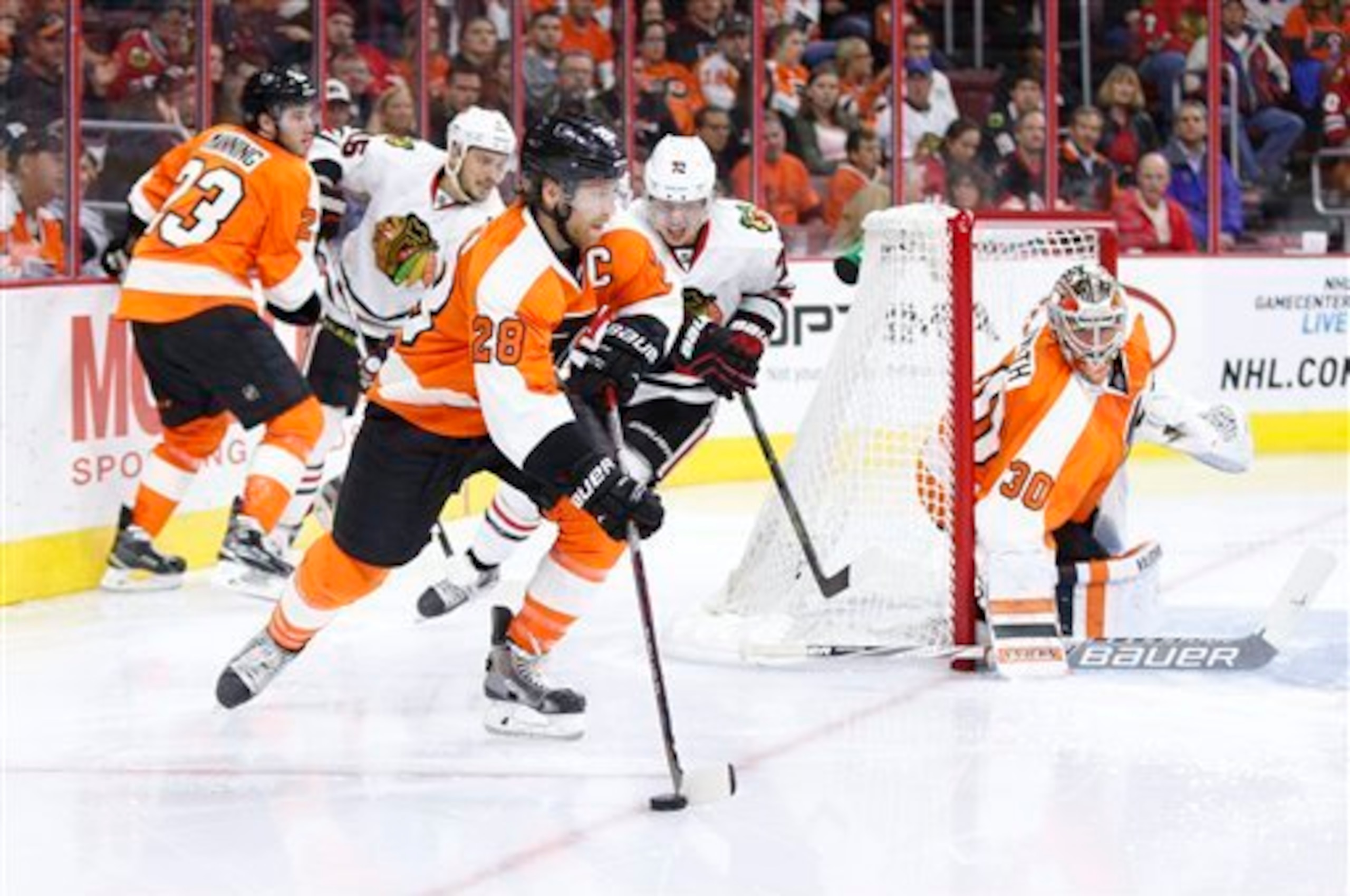
Offensive Play
Giroux is a wizard with the man advantage and the driving force behind a potent Philadelphia Flyers power play. Over the last three seasons, he’s one of only two players to top 7.0 points/hour while out with the man advantage, and unlike the other (Nicklas Backstrom), he isn’t passing to Alex Ovechkin when he’s out there. His scoring drops off a bit at even strength, where he’s scored less than 2.0 points/hour in two of the last three seasons, but even so there’s no denying that he’s a marvelous offensive player.
Defensive Play
What Giroux probably ought to get more credit for is his work as a defensive player. The fact that he’s been a relatively regular penalty-killer for the entirety of his career doesn’t get a lot of attention. At age 22, for example, he put up a ridiculous seven points on the season while the Flyers were short-handed.
Transition Play
We touched on this in the section on offence, but one of the interesting points about Giroux is that one of the game’s two or three best power-play weapons doesn’t score at an elite level at even strength. Part of the answer may lie in his zone-entry numbers. In 2013-14, Giroux carried the puck in on 58 percent of his entries, which is a good number, but the really elite players score 15 to 20 percent higher. Giroux may not get the chance to show off his in-zone lethality as often because the Flyers simply don’t have enough offensive-zone possession for him to do so.
Overall
Giroux is a marvelous hockey player whose best years are being wasted on a Philadelphia team that isn’t capable of contending. He’s been better than a point-per-game player over his playoff career, putting up 21 points when the Flyers lost in the Stanley Cup Final in 2010 and 17 points in just 10 postseason games in 2012. If he played for a team like Chicago or Los Angeles, he’d probably get more love league-wide.
9. Patrice Bergeron, Boston Bruins
57 of 65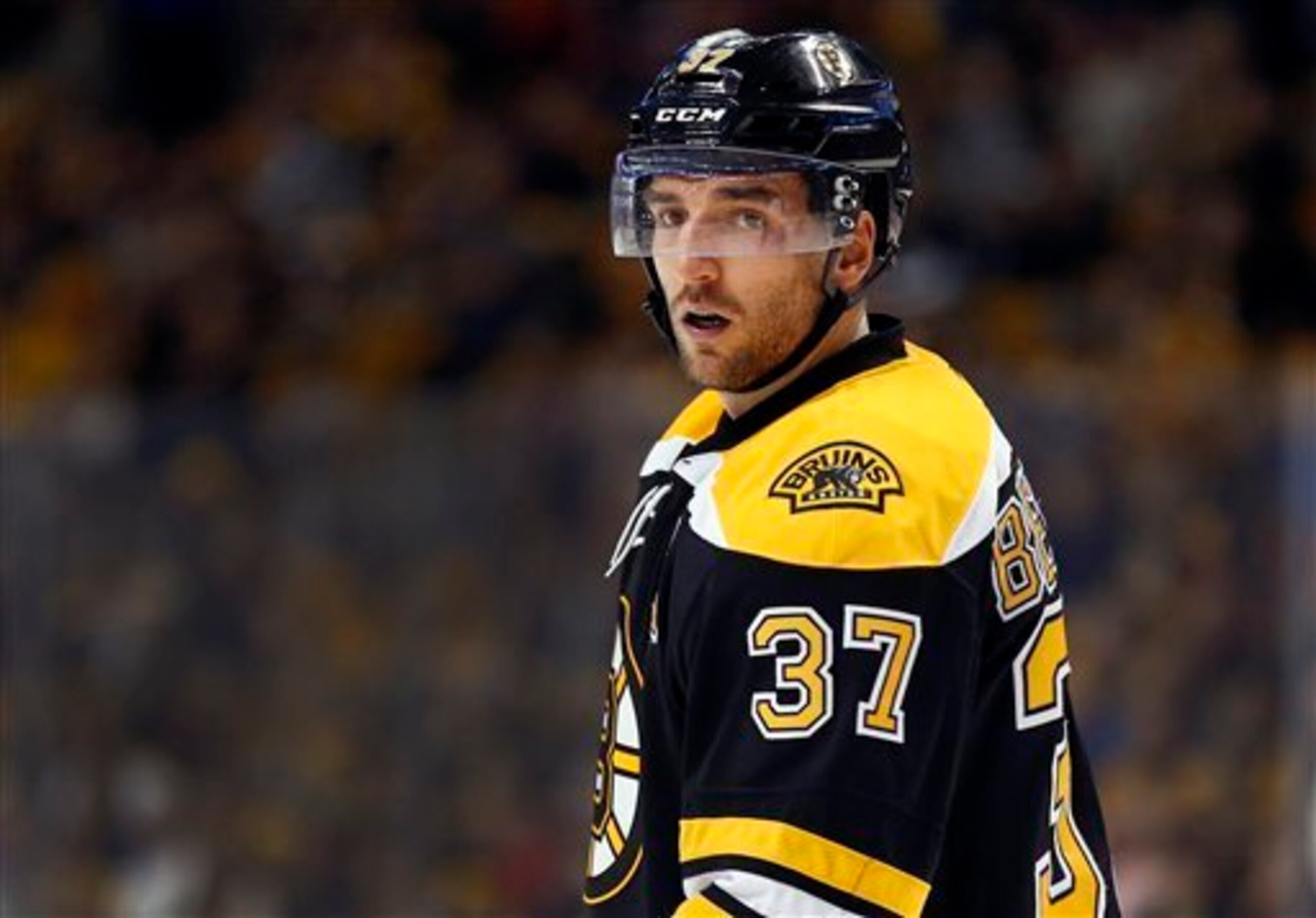
Offensive Play
Bergeron is quite a decent five-on-five scorer, but the trouble from an offensive perspective is that he doesn’t make hay with the man advantage. He has, at best, largely been an average power-play scorer with Boston and some years he doesn’t even reach that level of distinction. He does generally score better than 2.0 points/hour at even strength, though he fell below that last year. Put it all together, and he’s pretty reliably in the 55-65-point range.
Defensive Play
Depending on whom one talks to, Bergeron is either the very best or the second-best defensive forward in the NHL. He has won the Selke Trophy in three of the last four seasons and was the runner-up the other year. No top NHL forward faces tougher zone starts than Bergeron and very few face tougher competition. There’s a case to be made that nobody takes on tougher minutes overall. Despite this, Bergeron routinely posts obscene scoring-chance numbers.
Transition Play
Nobody can say that Bergeron doesn’t know his business at five-on-five, but he does play a conservative game, dumping the puck in frequently for an offensive player of this calibre. He’s extremely effective n the backcheck, however, with one of the highest involvement rates in opposition zone entries of any NHL forward and an equally high break-up rate.
Overall
On the power play or with a minute to go and needing a goal, there are a fair number of better options around the league than Bergeron. On the penalty kill or up a goal with a minute left, there is perhaps a handful and probably not even that. He, along with Chicago’s Jonathan Toews, is the gold standard for defensive play in the NHL.
8. Anze Kopitar, Los Angeles Kings
58 of 65
Offensive Play
Kopitar put up 77 points in 82 games as an NHL sophomore in 2007-08. At that time, it looked like he was going to emerge as an offensive star, but almost a decade later, he has yet to reach the point-per-game mark in any single season. He’s still very, very good offensively, and there are some mitigating factors here, which we’ll get into momentarily. He fell below the 2.0 points/hour mark for the first time in years at even strength last season, though that was compensated for by an up year on the power play.
Defensive Play
Fans disappointed in Kopitar’s (still very good) offensive career arc can take solace in knowing that he’s one of the finest defensive forwards in hockey, a true two-way centre on a team which—even by NHL standards—places a heavy emphasis on defensive engagement. He plays tough competition, starts more than his share of shifts in the defensive zone and kills penalties with regularity.
Transition Play
A true two-way forward also does strong work in the neutral zone, and Kopitar certainly qualifies. He’s not quite in the elite category as a possession player on zone entries, but his numbers are very good, and he’s also engaged at the defensive blue line.
Overall
Kopitar has been a cornerstone piece of two Stanley Cup champions, centering L.A.’s top line, taking on the toughest matchups and contributing in all three zones. He’s never won a major league award, though he has contended for the Selke and Lady Byng, but he has consistently been among the best pivots in the NHL over the last half-decade.
7. Tyler Seguin, Dallas Stars
59 of 65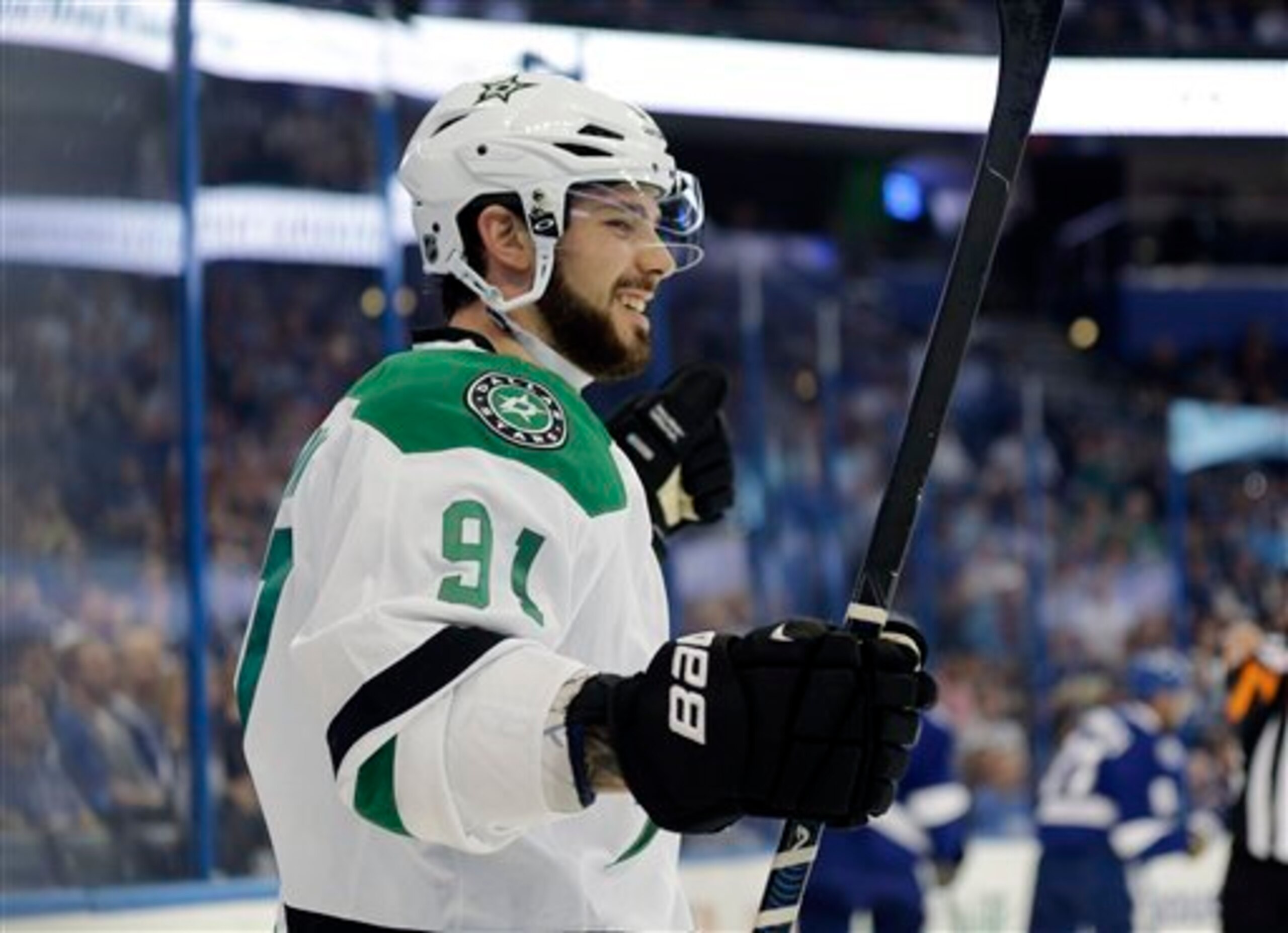
Offensive Play
It’s pretty hard to argue with back-to-back 37-goal seasons in an ultra-low-scoring NHL. Seguin’s points/hour rates at both even strength and on the power play have been excellent since his arrival in Dallas, and he and Jamie Benn are easily one of the most feared offensive duos in the league.
Defensive Play
Defensive involvement is a moving target at times for Seguin, which is one of the reasons it took so long for him to move from the wing to his more natural centre position. Despite spending much of his time in the offensive zone, Seguin is on the ice for a high number of dangerous scoring chances against relative to his teammates.
Transition Play
As with the rest of Seguin’s game, the strength of his work in transition really depends on if we look at offence or defence. He’s a good puck-carrier, though a touch below elite level in terms of gaining the offensive zone with possession. He’s not particularly good at breaking up opposition entries.
Overall
Seguin is a somewhat one-dimensional player, but what a dimension it is. Generating offence in today’s NHL is the hardest task for any player or team, and Seguin is the rare forward who can basically outscore any of the problems he has.
6. Evgeni Malkin, Pittsburgh Penguins
60 of 65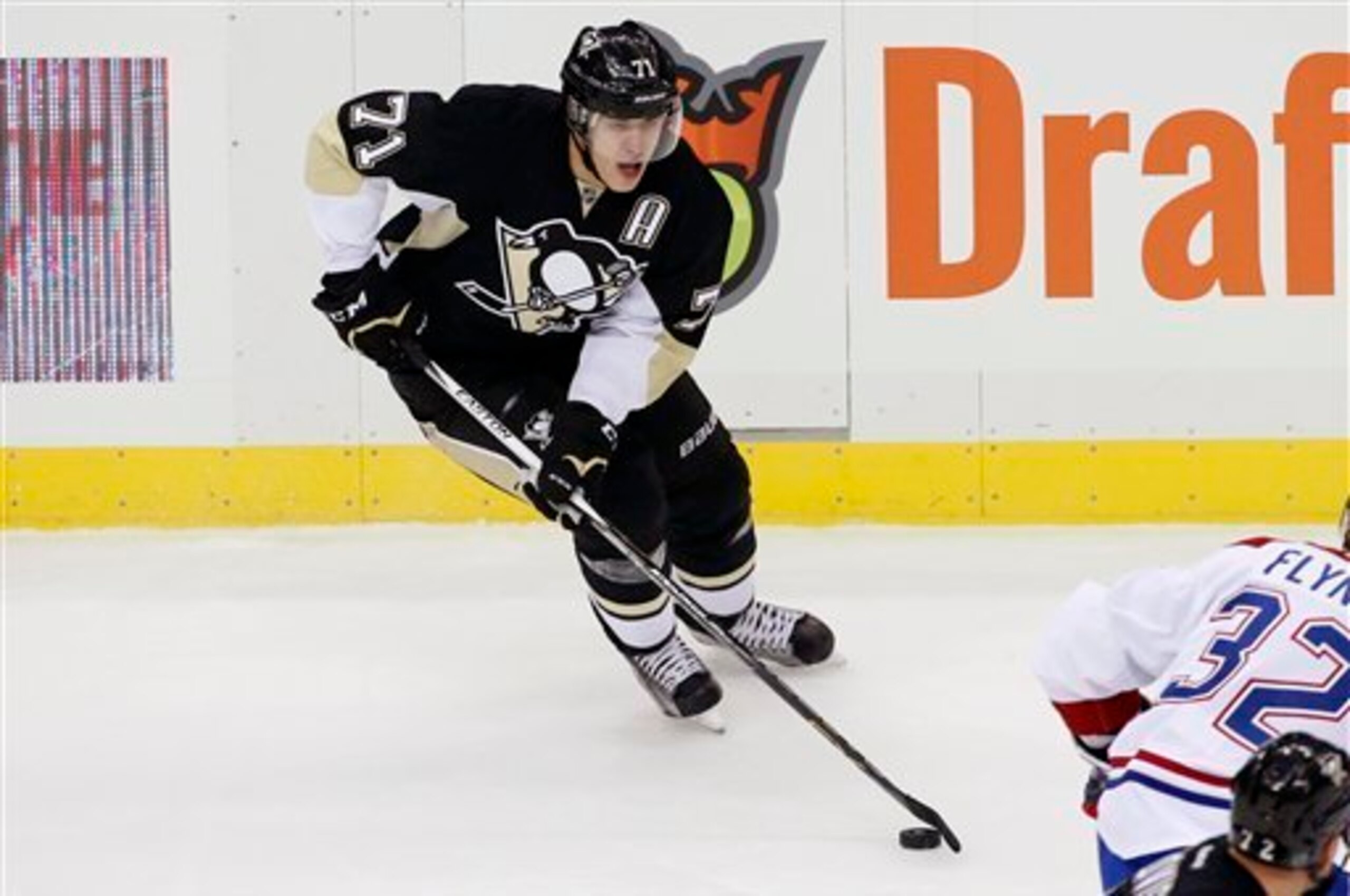
Offensive Play
It hasn’t been given much attention, but in a low-scoring league, Malkin has managed to top the point-per-game mark in four consecutive seasons. Even if we nix his 109-point performance in 2011-12 and just look at the last three seasons, he ranks second in the entire league in points per game. He’s topped 6.0 points/hour on the power play in each of the last four seasons and scored 2.4 or more points/hour in every year in that span save for an injury-plagued and lockout-shortened 2013 campaign.
Defensive Play
Malkin gets mixed reviews on defence. His coaches have certainly taken more care to give him offensive minutes at even strength than they have teammate Sidney Crosby. Despite this, he has been on the ice for a surprisingly high number of high-danger chances against.
Transition Play
Malkin’s numbers through the neutral zone are exceptional. He ranked fourth in the entire NHL in 2013-14 in terms of carrying the puck into the offensive zone, and he also posted surprisingly good numbers at the defensive blue line.
Overall
It’s strange to say, but Malkin may be underrated at this point. After winning a bunch of awards in 2011-12 he’s been shut out from voting despite (as we mentioned earlier) finishing second among all NHL players in terms of points/game over the last three seasons. Injuries are certainly a factor, but there’s absolutely nothing wrong with this guy when he’s healthy enough to play.
5. Steven Stamkos, Tampa Bay Lightning
61 of 65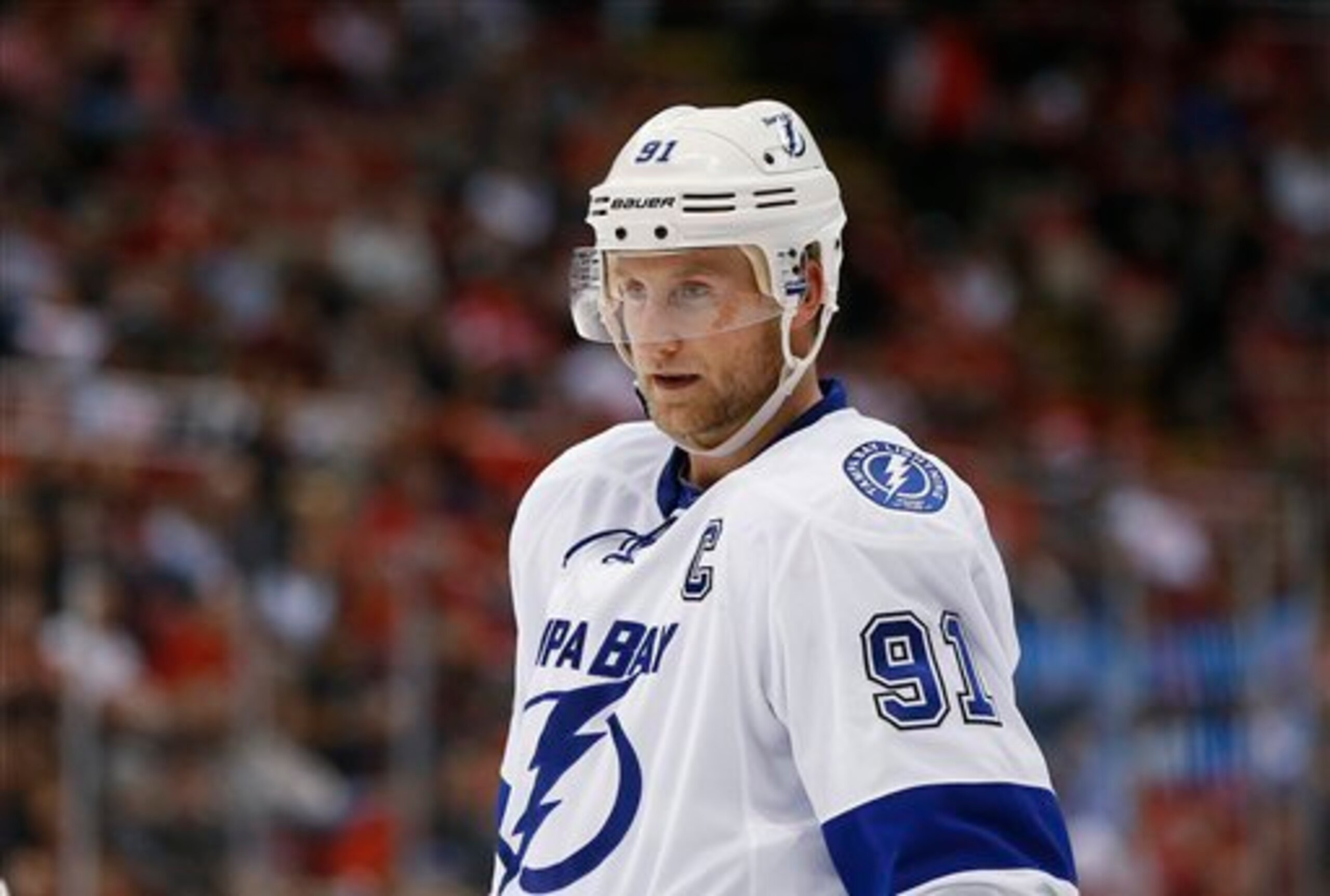
Offensive Play
No player in the NHL can match Stamkos’ combination of shot volume and shot accuracy. Over the last six seasons, he has scored 253 goals and fired 1,421 shots for a shot conversion rate of 17.8 percent. That’s 1.7 percent better than the next-best player with more than 100 goals in the same span (Curtis Glencross). The other two players with 200-plus goals are both well back, too. Corey Perry having converted on 14.3 percent of his shots and Alex Ovechkin having converted on 12.6 percent.
Defensive Play
Like a lot of top offensive players, Stamkos doesn’t get his due as a defensive presence. At times, the Lightning have even used him on the penalty kill. His shot-suppression numbers could be better, but outside of a handful of depth players who draw humbler matchups, no Tampa Bay forward is on the ice for fewer high-danger chances against.
Transition Play
Offensively, Stamkos has the kind of brilliant numbers that most of the players on this end of the list manage. He’s as good carrying the puck in as Jonathan Toews. He’s a little better than Sidney Crosby. He’s less active at the defensive blue line, though, rarely getting involved in preventing opposition entries.
Overall
A two-time Rocket Richard winner and two-time second-team All-Star, Stamkos is without question one of the game’s best players. However, only once has he seriously contended for the Hart Trophy—in 2011-12 when he scored 60 goals.
4. John Tavares, New York Islanders
62 of 65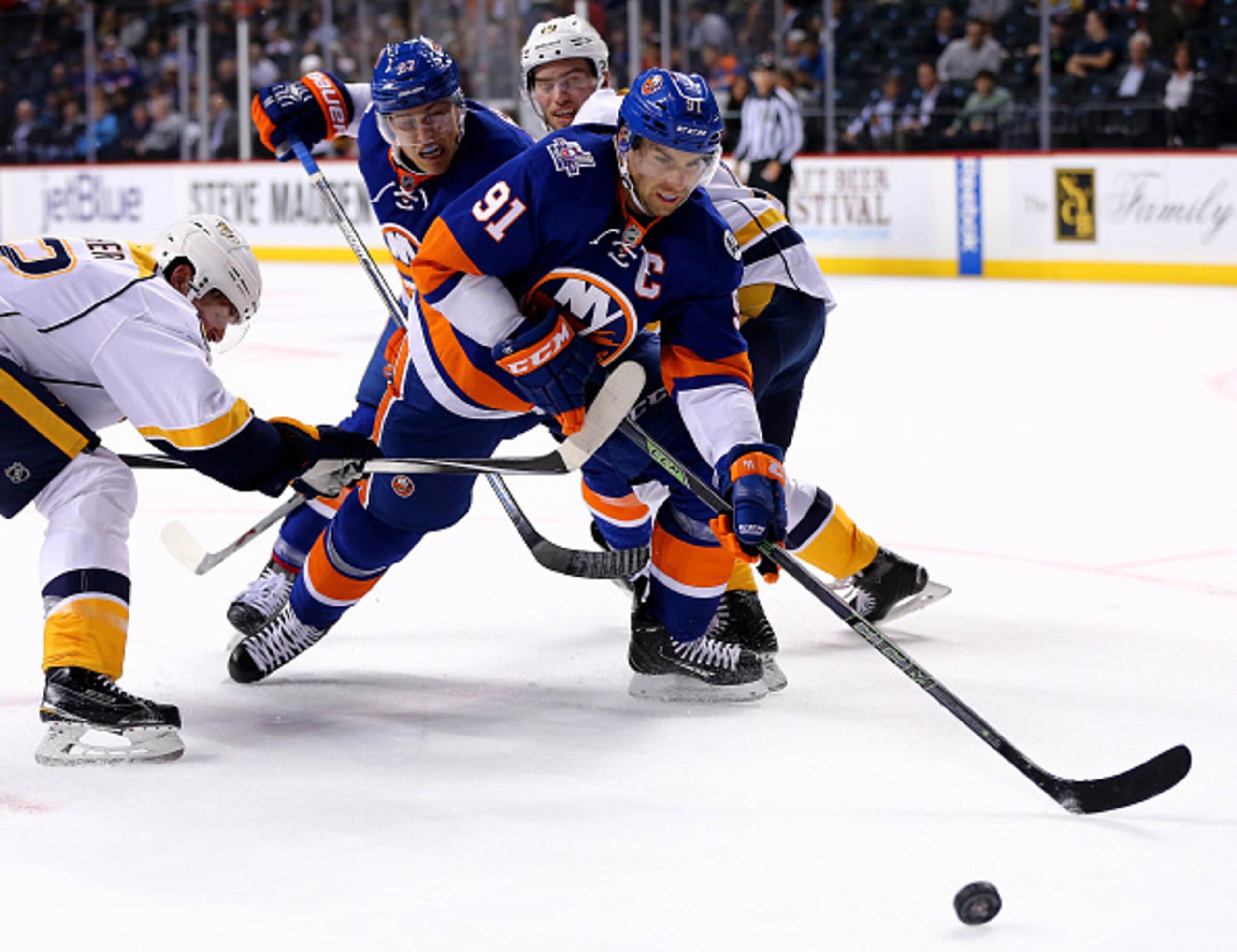
Offensive Play
Tavares is a wonderful offensive player. He’s topped 6.0 points/hour on the power play in three consecutive seasons and hasn’t produced less than 2.2 points/hour in any of the last four seasons. The crazy thing is that he likely still isn’t at his peak. He only turned 25 in September, and we know most players have the most productive years of their career in the age 25-26 range.
Defensive Play
If there’s an area where Tavares doesn’t get his due, it’s on the defensive side of the puck. There’s still a tendency for people to get caught up in plus/minus, forgetting that Tavares is always on the ice when the Isles’ net is empty and that he plays heavy minutes on the power play—empty-net goals and short-handed goals against account for minus-46 of his career minus-40 rating—situations where it’s either impossible to be a plus player or virtually so. He’s matured defensively over the course of his career and is now very reliable.
Transition Play
It’s not a surprise to see that Tavares excels at gaining the opposition zone with possession of the puck. He carries it in on just under three-quarters of his entries, which is a very good total. What may be surprising is how strongly he fares on the backcheck. He’s been very effective at thwarting opposition rushes, breaking up nearly half of the attempts he faces and allowing his rivals to gain the zone with possession just one-third of the time.
Overall
The transition from potential to realized potential is almost complete here. Tavares was a first-team All-Star last season for the first time in his career and a Hart Trophy finalist for the second time. We expect him to take another step forward this year, and it might be enough to earn him the designation of league MVP.
3. Ryan Getzlaf, Anaheim Ducks
63 of 65
Offensive Play
There aren’t many players who can match Getzlaf at even strength. Last season, he managed 47 points (2.6 points/hour) at five-on-five, and that was a drop-off from an incredible 2013-14 when he put up 59 points (a whopping 3.2 points/hour). His power-play numbers bounce around a little bit but generally look quite good, too.
Defensive Play
One of Getzlaf's most attractive qualities is how hard he is to play against, not just because he can score and hit but also because he’s remarkably competent in the defensive zone. He’s one of those rare top scorers who gets heavy usage on the penalty kill and starts a high percentage of his shifts in the defensive zone every year.
Transition Play
A point of differentiation for Getzlaf from the rest of the NHL’s top offensive players is his neutral-zone play. Most forwards who end up near the top of the league in scoring carry the puck in on 70 percent or more of their zone entries. In Getzlaf’s case, it’s a respectable but unspectacular 59 percent. He’s heavily involved at the defensive blue line, getting back frequently, but he generally plays a conservative style that doesn’t result in a lot of break-ups.
Overall
Maybe it’s because he plays in Anaheim, but Getzlaf rarely seems to get the national attention that he deserves. There may not be another centre in hockey who combines size (6'4", 221 lbs), physical play, elite scoring and tough defensive minutes the way Anaheim’s captain does.
2. Jonathan Toews, Chicago Blackhawks
64 of 65
Offensive Play
It’s a little weird to describe offence as a weakness in a player who has scored 2.1 or more points/hour in every season of his NHL career, but scoring is the most imperfect part of Toews’ game. He’s a very strong even-strength performer (though there are stronger), but where he falls down a bit is on the power play. It’s the reason he is always just flirting with the point-per-game mark rather than demolishing the rest of the league. Despite playing major minutes on one of the best power plays in hockey, Toews has scored less than 4.0 points/hour in four consecutive seasons on the man advantage. Put another way, over the past four years, his 3.66 points/hour falls right between players like Colin Wilson and Mike Fisher. It’s a weak point, though arguably his only weak point.
Defensive Play
Toews, along with Boston’s Patrice Bergeron, is the NHL gold standard for defensive play. Toews has been a top-four choice for the Selke Trophy in every season since 2009-10, save for 2011-12 when he lost 23 games to injury and wound up finishing sixth. His quality-of-competition rating is off the charts, he kills penalties and is as close to completely reliable on the defensive side of the puck as an NHL forward gets.
Transition Play
Toews plays a masterful possession game, and that shows up in his neutral-zone numbers. He carried the puck into the offensive zone on 78 percent of his zone entries in 2013-14. That’s not only better than Patrick Kane, but it’s better than all but a handful of NHL players. He’s tenacious on the backcheck, too. In 2013-14, he broke up 40 percent of opposition entry attempts that he faced and forced dump-ins on an additional 47 percent of those plays. He is close to perfect in the neutral zone.
Overall
There are those who believe that Toews is the best player in the NHL, and it’s understandable because he’s such a gifted two-way threat. In our view, he just lacks that little bit extra offensively to climb higher on this list. Some of that offence is sacrificed in the name of his defensive game, but that isn’t the case on the power play, and his less-than-elite results there show that he isn’t quite in the same range in that one department as the game’s finest scorers.
1. Sidney Crosby, Pittsburgh Penguins
65 of 65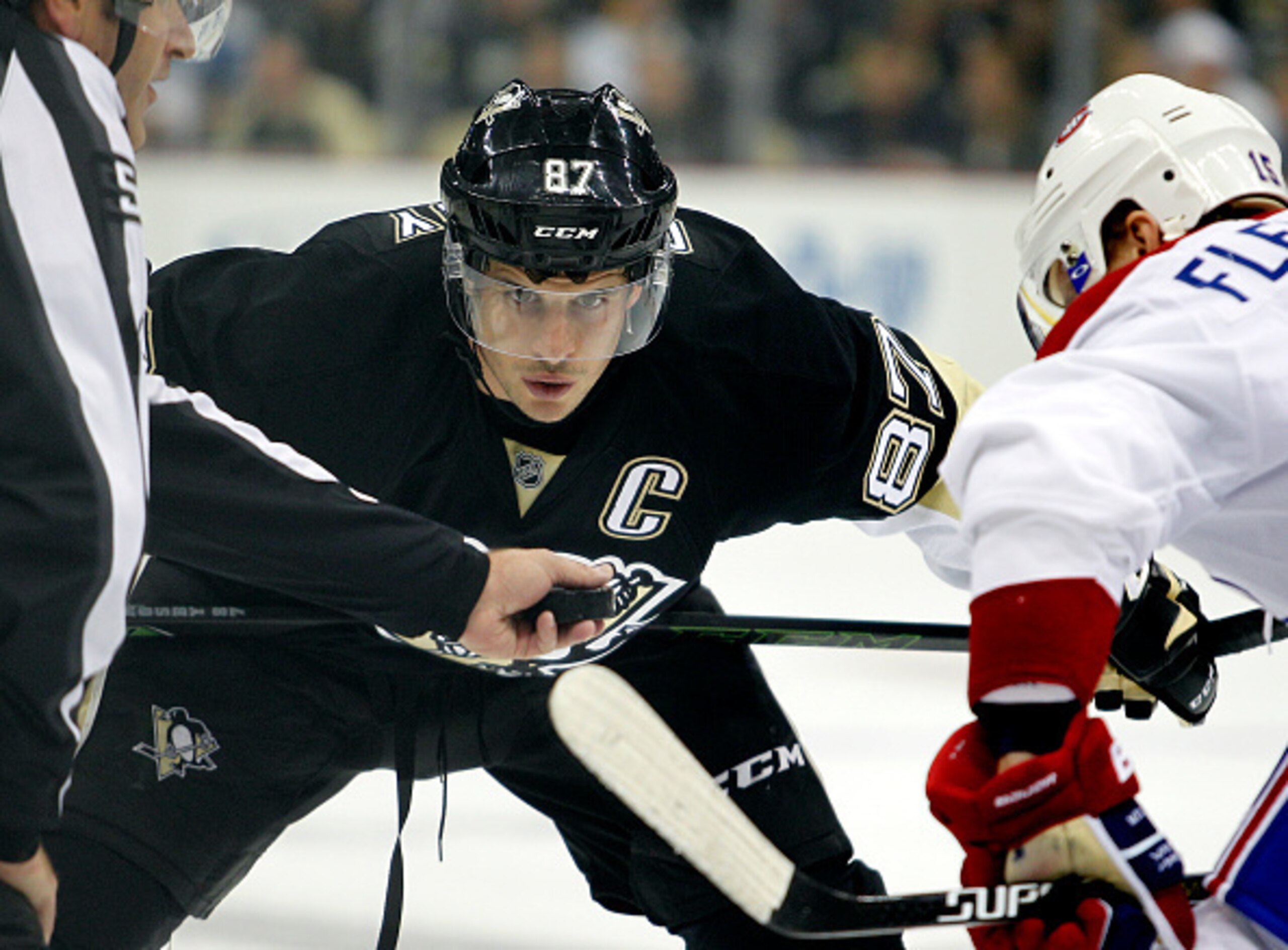
Offensive Play
In the past five seasons, only one player has managed to play at least 400 minutes at even strength and top 3.5 points/hour. Sidney Crosby has done it twice. He had a rough year in 2014-15, falling outside the top 10 in even-strength scoring rate for the first time, but it’s impossible to ignore his recent track record of out-scoring everybody else in hockey. He’s also consistently brilliant on the power play.
Defensive Play
Back in 2013, then-Penguins coach Dan Bylsma told Rob Rossi of the Pittsburgh Tribune-Review that Crosby’s work in the defensive zone generated roughly 10 scoring chances per game. That sounds like a generous count, but Crosby’s on-ice scoring chance rates have always been ridiculous. Pittsburgh’s been a good team for a long time, and over the past three seasons, Crosby’s on-ice high-danger-chance ratio is nearly 9 percent better than the team average.
Transition Play
Our transitional metrics say the same thing about Crosby that his on-ice scoring chances or point totals do. In a league where a forward who carries the puck in on half his zone entries is doing well, Crosby can boast that he does so three-quarters of the time. He’s highly involved on the defensive blue line, too, getting back early and often to break up opposition rushes.
Overall
Though injuries have taken a terrible toll on his career, Crosby remains hockey’s finest player. No other player currently in the league can match his offensive peak at five-on-five, he’s excellent on the power play and is the kind of two-way threat who tilts the ice in his team’s favour. The kinds of analysis that suggest otherwise are overly short-term (What did he do in 2014-15?), overly simple (a player is the sum of his Cup rings, praise be to Colin Fraser) or deliberately contrarian.
.jpg?w=2560 "Giants Jets Football")

.jpg?w=2560 "Projecting NFL Win Totals 🔮")
