

Weekly Why: Chelsea, Diego Costa and the Necessity of Compelling Villains
Welcome to Bleacher Report's Weekly Why, a place where we discuss world football's biggest questions that may go neglected and/or avoided. Ranging from the jovial to the melancholic, no subject matter is deemed off limits.
Why Aren't Great Villains Appreciated?
I could do without superhero movies. I realise they're massive attractions and millions enjoy being entertained by notions of superhuman speed, strength and other powers, but they aren't my cup of tea.


.jpg?w=2560)
When watching things like Spider-Man or Superman, I often question the veracity of whatever nonsense. It annoys those around me, and I try not to ruin people's experiences with unnecessary commentary, but it often gets out of hand—I've lost friends.
That background dropped, though, I do enjoy great stories.

Gripping crime dramas and thrillers are my preference. When, for example, machines start talking, I lose what Samuel Coleridge might call "suspension of disbelief"—but two equal-witted characters, in realistic confines, can hold my attention.
Great stories have strong protagonists, but captivating stories have strong antagonists.
The Premier League isn't a movie, but there are certain theatrical parallels that run concurrent between film and football: the need for complex, compelling villains being one such commonality.
Searching for English football's pre-eminent villain isn't too challenging at the moment.
One must simply locate London, find Stamford Bridge, enter the home dressing room, approach No. 19's locker, then wait. An imposing figure would likely arrive.
Standing 6'2" and weighing 185 pounds, he'd introduce himself as Diego Costa.

One of the Premier League's best centre-forwards, scoring 21 goals from 32 league appearances, the 26-year-old has quickly established himself as a brilliant antagonist.
Bought from Atletico Madrid for £32 million in the 2014 summer transfer window, manager Jose Mourinho knew exactly what he was securing with the Brazilian-born Spain international's signature. The Portuguese was purchasing a clinical centre-forward his squad lacked, but also tenacity, passion and someone whose proverbial tent is pitched on the limit of legality.
He hasn't disappointed in any respect.
Providing crucial goals in the 2014/15 Premier League campaign, and scoring in the 2015 League Cup final vs. Tottenham Hotspur, Costa was integral in Chelsea's domestic double—proving his hefty price tag commensurate—but his personal demons cannot be overshadowed by silverware.
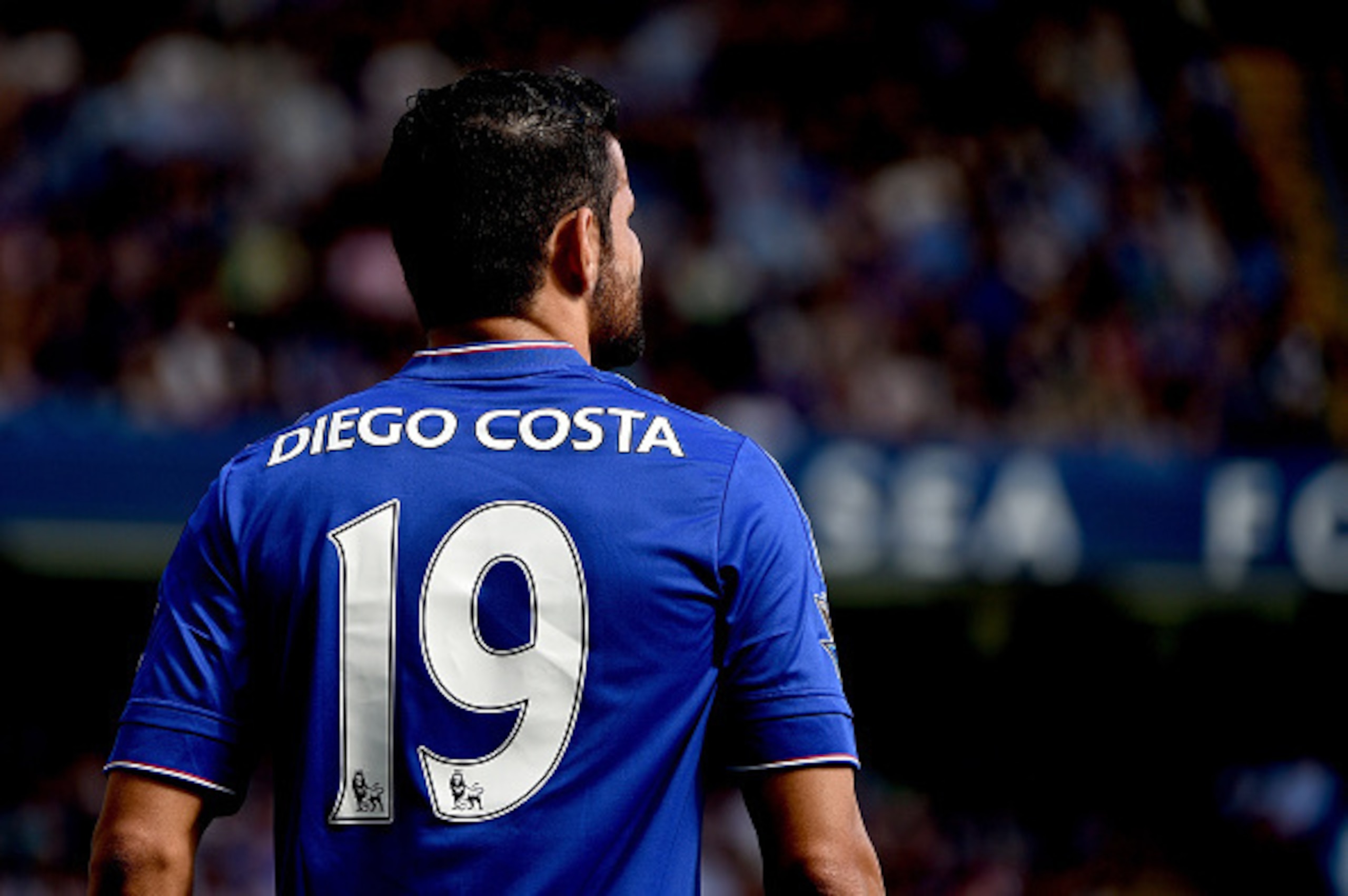
Involved in countless spats, numerous controversies and seemingly unending rows with officials and the opposition, Costa's disparaging reputation, which proceeded his arrival, has only grown.
A combination of factors have led to his increased vilification. Looming above him are Chelsea, Mourinho, the Premier League's popularity, his own conduct and the reality that minus people like him, football loses some if its intrigue.
I get the feeling Costa often prefers fighting to scoring, that somewhere deep in him is a forgotten pugilist. In times where the usual centre-forward might be thinking about which channel to choose or which defender to pin, the Spaniard is contemplating which centre-back is easiest to break.
Arsenal's Gabriel Paulista fell victim, finding himself red-carded in last weekend's London derby, following an intervention after Costa violently lashed out at Laurent Koscielny. The young defender lost his head when dealing with the Chelsea striker, and the man advantage provided the struggling Blues with an easier path to three points—which they eventually took.

What makes Costa such a compelling figure isn't necessarily his on-pitch persona, but how his colleagues view him off the field. From Cesc Fabregas and Thibaut Courtois to Kurt Zouma and Loic Remy, they all assert their bellicose striker is Chelsea's funniest dressing-room personality.
For a player with an out-of-control reputation, his team-mates give the impression Costa is simply a fantastic actor once the whistle blows.
His disciplinary record suggests likewise. Playing Universidad Las Palmas in November 2010, the then-22-year-old was given his last domestic red card during the Copa del Rey. There've been retroactive bans since—most notably last season after allegedly stamping on Liverpool's Emre Can—but one red card in five seasons of domestic football goes against all pervading logic.
Surely a reckless player would be caught. Generally, reckless thieves are in prisons and reckless drivers lose their licenses, so I have a hard time believing what Costa does is spontaneous—that he somehow loses perspective and disassociates from reality/morality.

No, what the Chelsea man does is almost certainly calculated, pre-meditated and ingeniously devious. It makes him one of the greatest villains in recent Premier League history. He has the mental capacity to diagnose weakness like a hunting lion, exploit the weakness for his club's benefit and not be captured in real time.
It's almost applaudable, were it not felonious.
As Earth's biggest domestic sporting competition, the Premier League suggests nearly five billion television viewers watch the English top flight—from over 200 territories—on an annual basis. Nothing is more popular, nothing is more loved.
Without players like Costa, however, I contend the EPL would become horribly vanilla.
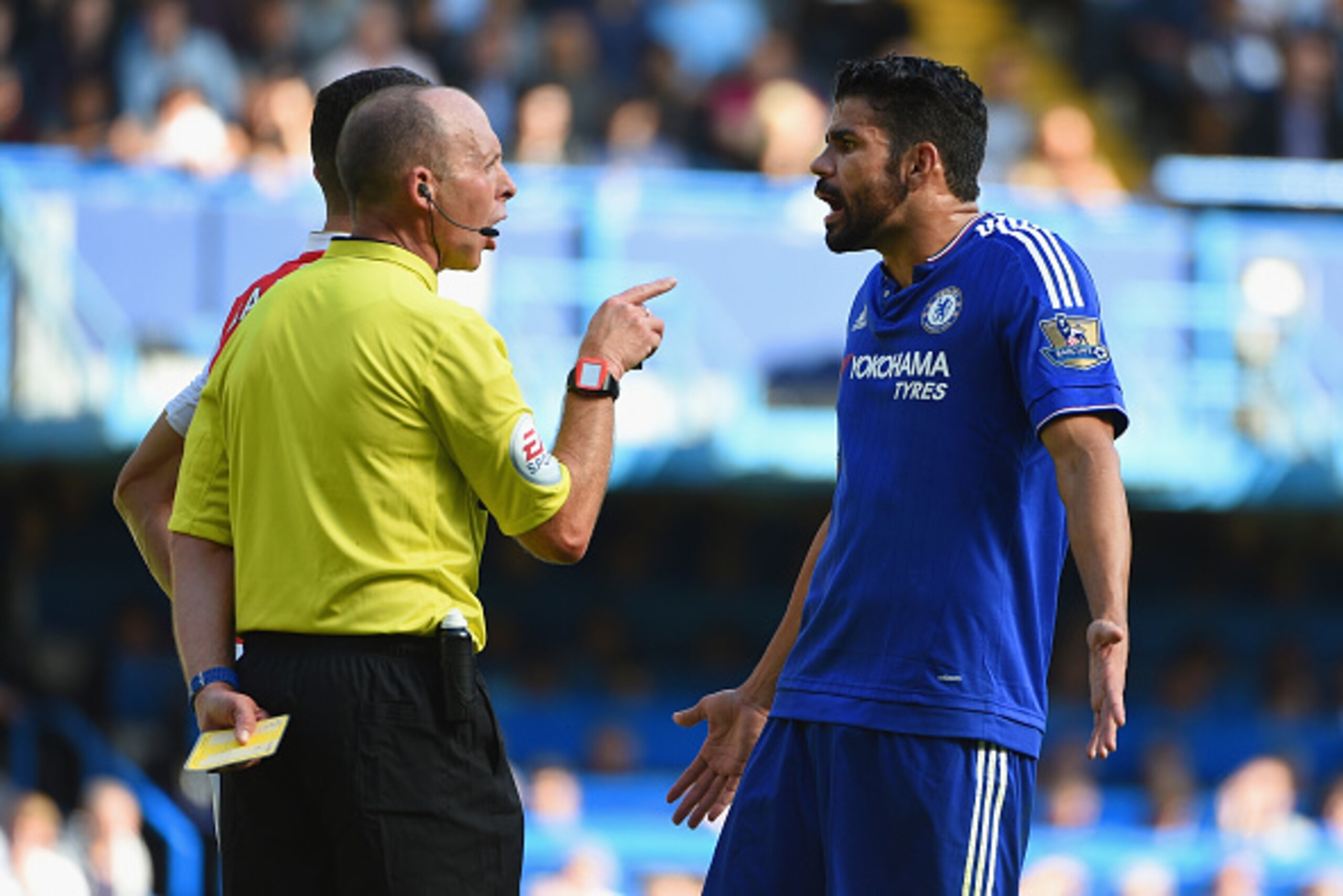
We need players to hate just as badly as we need ones to love. You cannot truly have one emotion without the other, lest it be empty. In the same fashion, one's hate for Tottenham as an Arsenal supporter defines their fanhood (and vice versa), that ire can be reduced into individual components.
If Costa wants to take the mantle as England's most hated player, the choice is his. I personally detest his antics, and think they're largely unbecoming of a professional athlete, but won't pretend for a second I don't enjoy watching him (and others with similar, malevolent characteristics) flirt with early showers on a weekly basis.
There's something captivating about a footballer who does everything in their power to win; whether that desire is expressed in positive or negative fashions makes little difference.
For every choirboy, one needs a rebel—for every saint, a sinner. Football requires balance like all else, thus, for every glorified hero, there must also be a villainous heel.
Last Weekly: Manchester United, Louis van Gaal and the Masquerade of Philosophy | Why Must Football Be Complicated?
*Stats via WhoScored.com; transfer fees via Soccerbase where not noted.




.jpg?w=2560 "2 NFL Officials Suspended")

.jpg?w=2560 "Viral Rams Coach Vid 🖕")