Women's World Cup 2015: Pivotal Factors to Decide Group D
Every World Cup has a Group of Death. In the 2015 FIFA Women's World Cup, that group is Group D.
For the United States, a two-time winner of the competition, making progress through Group D won't be easy. Sweden, Australia and Nigeria will put up a strong challenge, especially Sweden, a team coached by former U.S. boss Pia Sundhage.
At Fox Sports, Leander Schaerlaeckens called the group a "brutal lot." At Sporting News, Allie Davison wrote that the U.S. will face "arguably the most punishing group-stage schedule."
“Certainly we’re in the toughest group,” U.S. coach Jill Ellis said at the time of the draw, per Filip Bondy of the New York Daily News. “It’s going to be a physically challenging group. Our depth is going to come into play for us. It’ll prepare us for the knockout stages. We’ve got to hit the ground running.”
Which factors will prove pivotal to the outcome of the group? Flip through the following slides to find out.
Group D at a Glance
1 of 6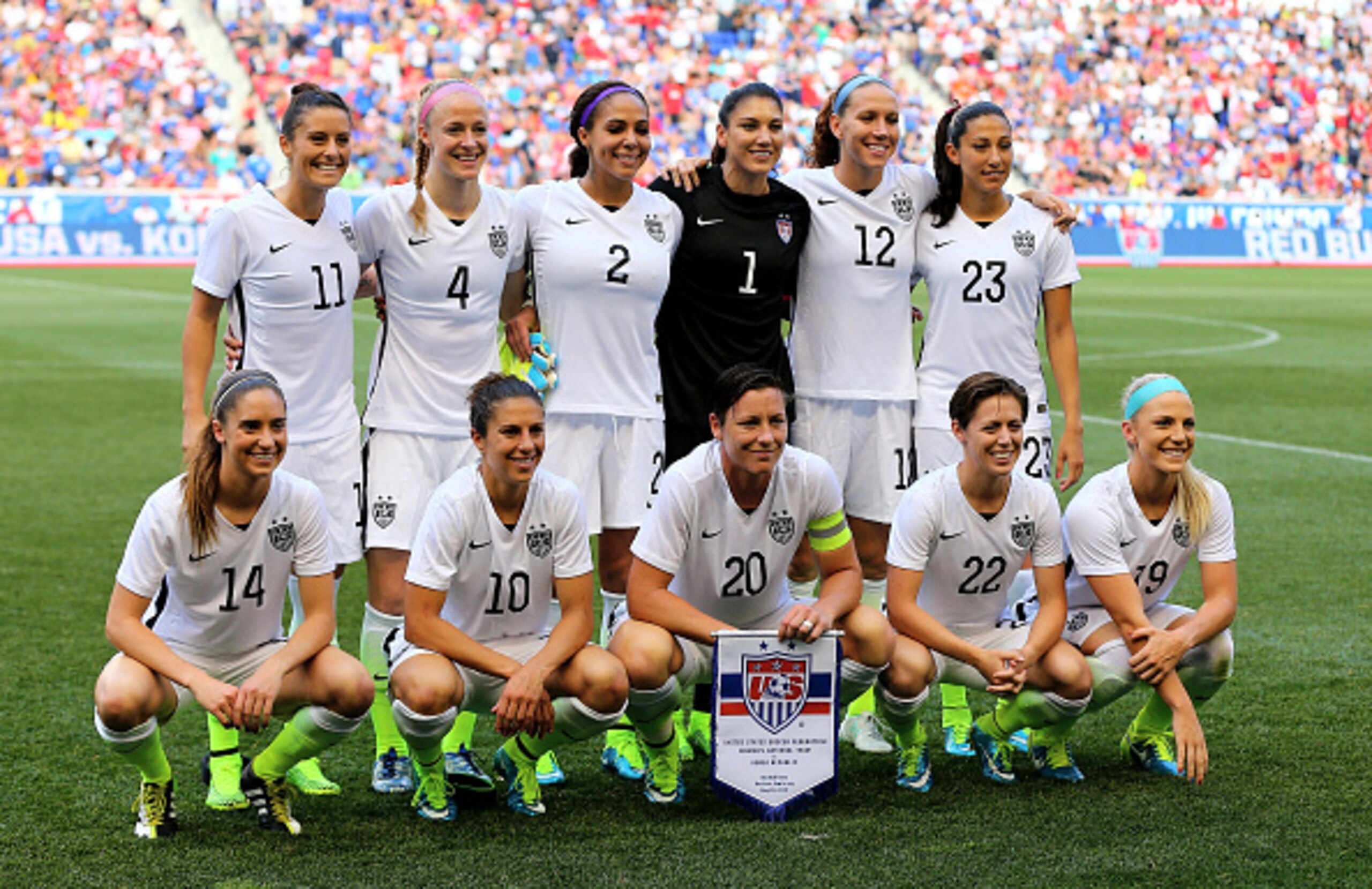
Here is a look at the match schedule for Group D.
All times listed are EDT. Match sites are in parentheses.
June 8
Sweden vs. Nigeria, 4 p.m. (Investors Group Field, Winnipeg)
United States vs. Australia, 7:30 p.m. (Investors Group Field, Winnipeg)
June 12
Australia vs. Nigeria, 5 p.m. (Investors Group Field, Winnipeg)
United States vs. Sweden, 8 p.m. (Investors Group Field, Winnipeg)
June 16
Nigeria vs. United States, 8 p.m. (BC Place, Vancouver)
Australia vs. Sweden, 8 p.m. (Commonwealth Stadium, Edmonton)
Here is a glance at the four teams in Group D
Team: United States
Qualified as: CONCACAF Women's Championship winner
Previous World Cups: 6
Best finish: Champion in 1991, 1999
FIFA rank: 2
Average age: 29
Team: Australia
Qualified as: AFC Women's Asian Cup runner-up
Previous World Cups: 5
Best finish: Quarterfinals in 2007 and 2011
FIFA rank: 10
Average age: 24
Team: Sweden
Qualified as: UEFA Group 4 winner
Previous World Cups: 6
Best finish: Runner-up in 2003
FIFA rank: 5
Average age: 27
Team: Nigeria
Qualified as: African Women's Championship winner
Previous World Cups: 6
Best finish: Quarterfinals in 1999
FIFA rank: 33
Average age: 23
Who Can Challenge the Top 2?
2 of 6
Group D is unusually strong in the context of this World Cup. At the time of the draw, the U.S. topped FIFA's world rankings, while Sweden came in at No. 5 and Australia at No. 10 (h/t Nancy Armour at USA Today). Those rankings have changed slightly since FIFA's most recent release, but the idea remains the same. At the time of the draw, no other group had two top-five teams, and only two others included two top-10 teams.
That said, the United States and Sweden are undeniably the favorites. The U.S. is one of only two nations to have won the World Cup twice, and the Americans are coming off a gold-medal performance at the 2012 London Olympics. Sweden reached the final in 2003 and finished third four years ago. Both teams have superior talent compared to the other two group members.
But Australia and Nigeria won't be pushovers, as Allison McCann notes at FiveThirtyEight.com:
"The bottom two teams here, Australia and Nigeria, are still very solid, with WSPI ratings of 88.7 and 85.7, both above the median tournament rating. The Aussies are strong and athletic, and who knows—maybe striker Lisa De Vanna has another bicycle kick goal or two she’ll unleash to increase the chances that her team makes it out of this group (it has a 58 percent chance now).
Nigeria won the African Women’s Championship and has a standout in youngster Asisat Oshoala, who recently won the BBC Women’s Footballer of the Year Award.
"
It's unlikely that Australia or Nigeria will win the group, but both teams are dangerous enough to cause an upset. If that is to be the case, it might need to happen early in the tournament, when the U.S. or Sweden might overlook an opponent. On June 8, the group's first matchday, Nigeria faces Sweden, and Australia plays the U.S. Both of the underdogs will be hoping to make a statement.
"In 2011, we went in with five players that were under 20 and an average age of just over 21," former Australia coach Tom Sermanni told Doug McIntyre in a special to ESPNW.com. "Those players have matured over the last four years."
Will Pia Sundhage Be a Factor?
3 of 6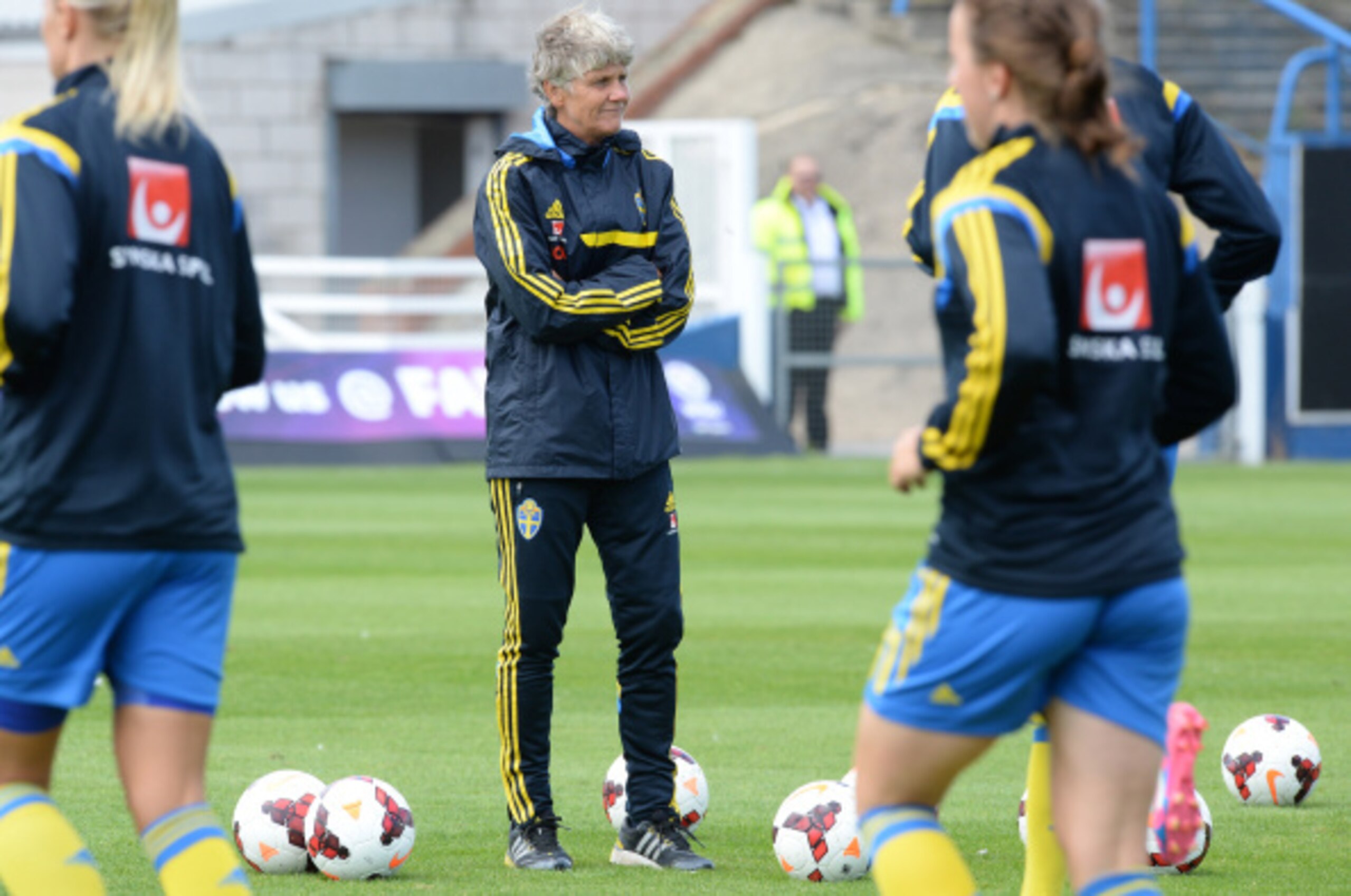
Fans of the U.S. women's national team should recognize the name Pia Sundhage. Four years ago in Germany, Sundhage was the woman in charge as the Americans reached the World Cup final. This summer in Canada, Sundhage will be coaching her native Sweden. Considering her familiarity with the U.S. players and program, her presence will be beneficial for the Swedes in their game against the Americans.
But will it be enough to hand Sweden the group?
Traditionally, Sweden is known for playing a direct style of soccer, and in the speedy Lotta Schelin, the team has a natural outlet for longer passes. But with Sundhage's arrival, the team has attempted to switch over to a more technical style. The transition has yielded "mixed results," according to an ESPNW.com special by Jeff Carlisle, so Sweden's ability to blend old and new styles could be crucial to the group's outcome.
.jpg?w=2560)

Can Anyone Outscore the U.S.?
4 of 6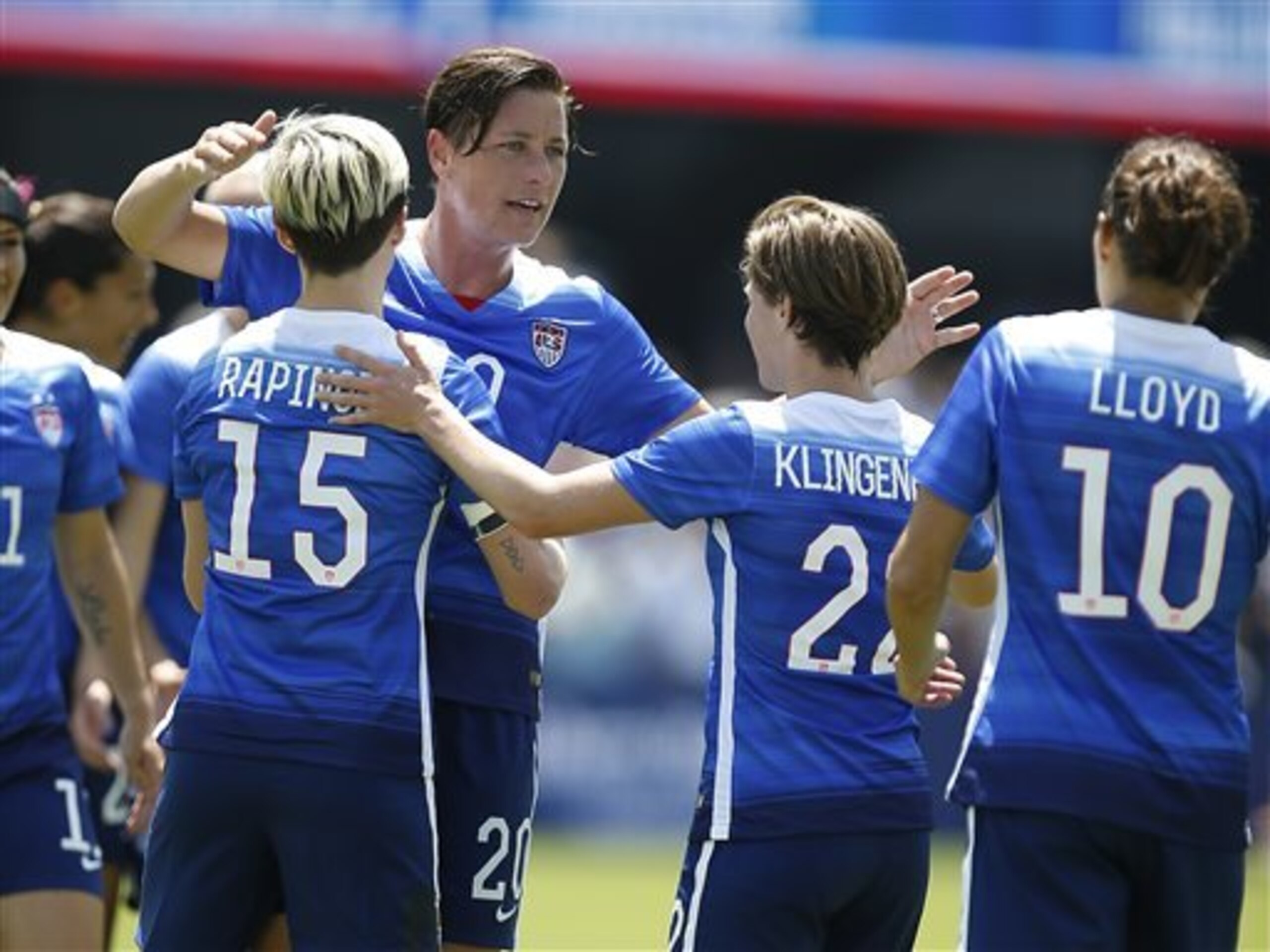
While Sweden's style is in transition, the same cannot be said of the U.S. As ever, the Americans will play fast, technical, attacking soccer, with plenty of passing and possession. In addition, superior athleticism and depth will benefit coach Jill Ellis' side.
The most obvious strength of the team is, of course, up front. Abby Wambach, the FIFA World Player of the Year for 2012, has scored 182 international goals. Wambach gives the team a physical aspect and is very strong in the air.
Alex Morgan creates a different type of danger with speed and constant running. Sydney Leroux and Christen Press offer further options in a loaded forward line, while Megan Rapinoe poses a threat with accurate crossing.
While the U.S. has plenty of talent across the pitch, the forward line stands apart. The back line is not quite as settled, though Julie Johnston and Becky Sauerbrunn are expected to be partnered in central defense. In addition, questions remain about the balance in midfield, but with so much firepower at its disposal, the U.S. has the potential to outscore any opponent.
Has Jill Ellis Had Enough Time?
5 of 6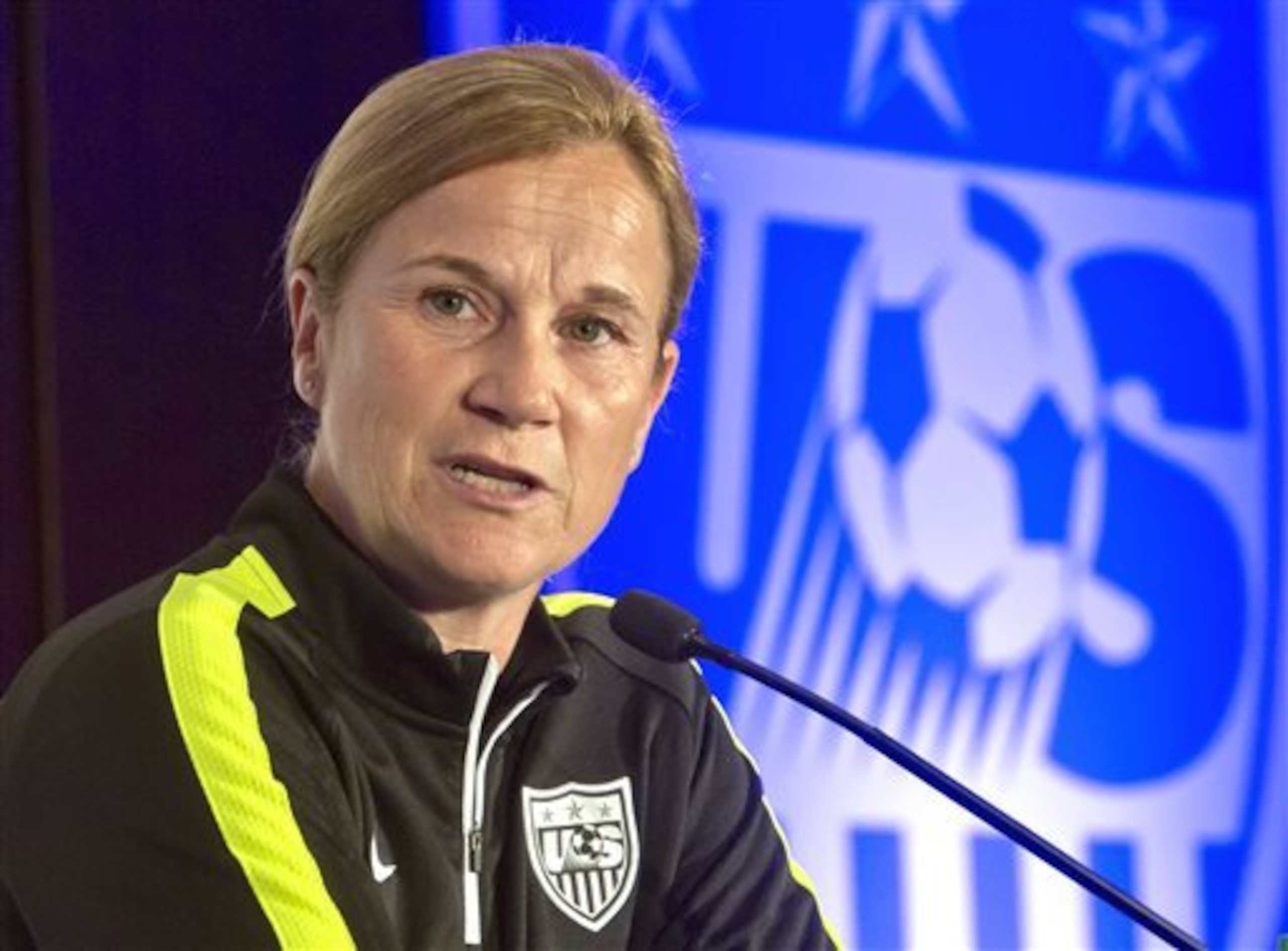
Jill Ellis took over as head coach of the U.S. women's national team on an interim basis in April 2014, following Tom Sermanni's dismissal. The U.S. Soccer Federation gave her the job full-time a month later.
Since then, the road has not always been smooth for Ellis. In February of this year, after a friendly defeat to France, Ellis drew strong criticism from U.S. great Michelle Akers. Speaking to Grant Wahl at Sports Illustrated, Akers said:
"When Tom Sermanni was fired, with so little time to prepare for the World Cup, I felt like we needed somebody who’s been there, done that. We need somebody who knows all the players, who’s been to World Cups, been to the Olympics and won them (as a head coach). Because we have a lot to do in a short amount of time. So there can’t be a learning curve.
"
Akers argued that Tony DiCicco should have taken over as coach instead of Ellis. DiCicco led the U.S. to the World Cup title in 1999. Continuing her critique, Akers added:
"(Ellis is) a nice person, and she’s obviously been in the U.S. women’s national team program a long time, so I have respect for her. I just think it’s very tough to be in the position she’s in with so little time, never having been there before (as a head coach), to put all the pieces together.
"
Ellis, it should be noted, served as U.S. coach Pia Sundhage's assistance at the previous World Cup. Her resume also includes more than a decade at UCLA, as well as coaching the U.S. at the U-20 and U-21 levels.
Akers' comments were clearly motivated by the 2-0 loss to France in February, a game in which the U.S. was decidedly second-best. But results have improved since then, and the Americans even defeated France a month later in the final of the Algarve Cup.
The critique might have some merit. Ellis took the job with just over a year to prepare for the World Cup, which is far from ideal. But with results improving, it appears Ellis has made the necessary adjustments to set her team up for success.
What Happens in the Showdown?
6 of 6
Assuming both the U.S. and Sweden win their opening matches, the second matchday will become pivotal in Group D. On June 12, the two group favorites will play each other in Winnipeg, and the winner of the match—if there is one—will almost certainly top the group.
But if, as is most likely, both teams enter the match with three points, both could be content with a draw. A point would suit both just fine, with the group potentially being decided later, on goal differential.
Then again, finishing second in the group could mean a matchup with Brazil in the round of 16, so both teams could have plenty of incentive to go for the win.
Either way, the match between the U.S. and Sweden should hold the most importance in the final group standings. For that reason, it will be a must-watch event.
Follow @MiguelCominguez

.png?w=2560 "CFB Top 25")

.jpg?w=2560 "Ex-NFLer BLASTS Fitzpatrick🤬")