

Serie A: Are Foreign Players Truly Harming Italian Football?
In the last few months there have been increasing calls to limit the number of foreign players in Serie A. It can smack of jingoism, and when some figures in Italy have expressed their opinion on the issue, they have caused some controversy. Despite this, these proposals don't necessarily come from a place of prejudice.
We live in a more global society, and it is the job of the club teams to get the best players possible in order to have the best chance of winning. Still, the proportion of foreign players in Serie A could be a cause for concern for the people whose business is winning internationals.
From a developmental standpoint, the more foreign players in a country's league, the less space there is for that country's young talent to gain first-team experience and eventually develop enough to make a major contribution to the national team.
When you look at recent history, it becomes a real point of concern. Since Fabio Grosso buried his penalty to give Italy their fourth world title on that triumphant July night in Berlin in 2006, the Azzurri have played in six major international competitions—two World Cups, two European Championships and two Confederations Cups. The Azzurri failed to pass the group stage in half those tournaments.
It hasn't been totally dismal. They thoroughly outplayed Spain in a group match at Euro 2012 and in the semifinal of the Confederations Cup in 2013—at a time when they were still Spain—but they were unlucky on both occasions, drawing at the Euros after a defensive error and going out on penalties after a goalless draw in Brazil.
The other four competitions all saw alarming results. They scraped through the group stage at Euro 2008 before going out to Spain on penalties in the quarters. The following year's Confederations Cup was a total disaster—a warning sign for the abject failure to come in South Africa in 2010, which has been recounted enough.
Last summer's FIFA showpiece in Brazil started off well enough for the Azzurri, with a 2-1 win over England, but a limp loss to Costa Rica and a controversial defeat against Uruguay saw them exit at the group stage for the second consecutive World Cup.
The similarity in all of those lackluster teams was the lack of young talent to invigorate the setup. Prandelli's forwards tended to be younger—only Antonio Cassano was over 26 going into the 2014 World Cup—but with the exception of Mario Balotelli, they were inexperienced. Alessio Cerci, Lorenzo Insigne and Ciro Immobile went into the tournament with 19 total caps, 12 of which belonged to Cerci.
The midfield was also sorely lacking in young blood. Twenty-one-year-old Marco Verratti, who impressed in the two games he played in the tournament, was the only player younger than 27. In defense, only full-backs Mattia De Sciglio and Matteo Darmian were younger than that. Aside from Verratti, there was no young player with both the ability to change the game and the experience to stay together in such a huge situation.
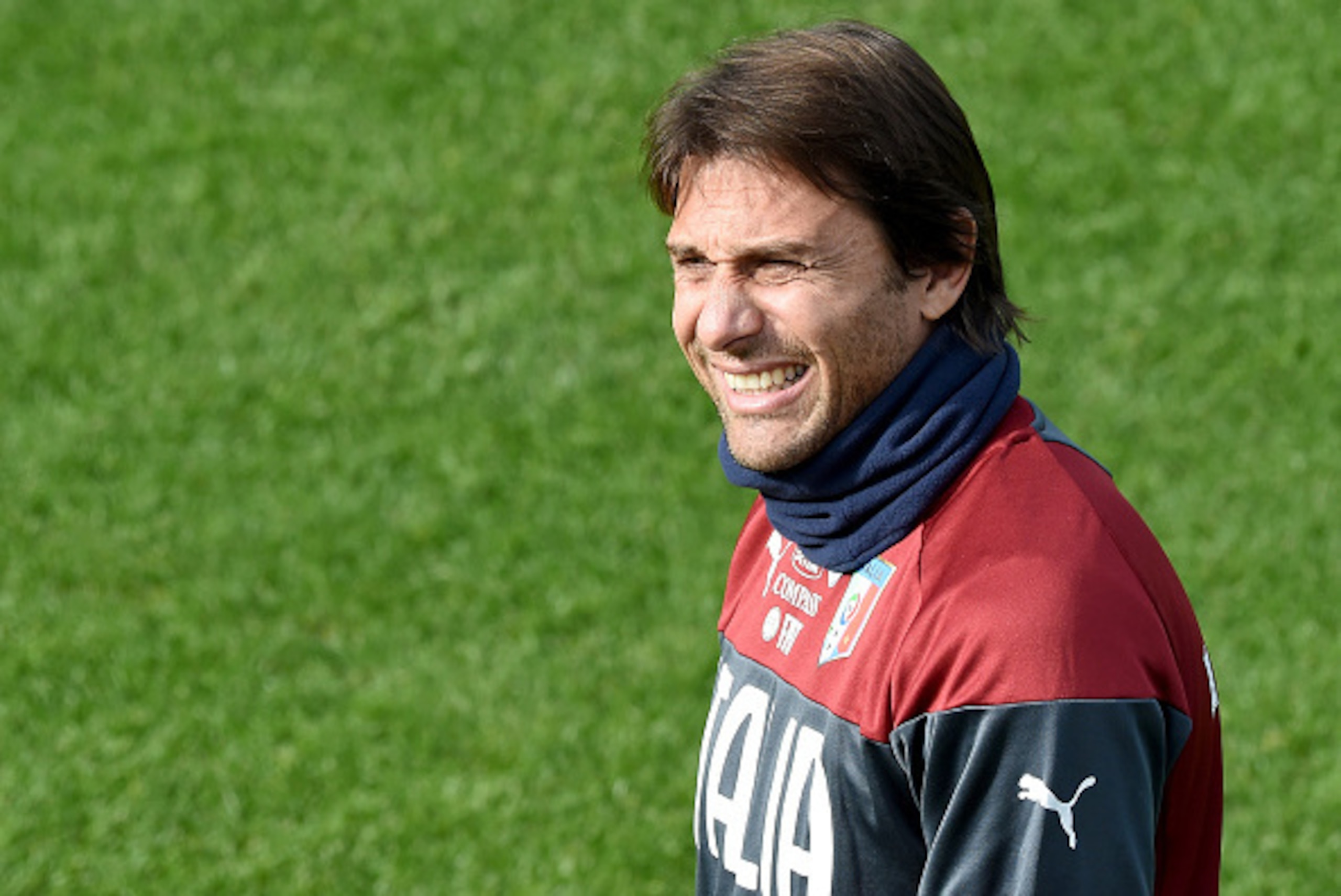
Since Antonio Conte took over following Prandelli's resignation, there has been a visible attempt to rectify that situation. Ciro Immobile, 25, immediately took over as the team's primary striker. He was joined by another youngster in Simone Zaza, 23. Empoli's Juventus-owned center back Daniele Rugani has been called up, though not capped, at the tender age of 20.

The problem for Conte is that his choice of players to add to that young mix is desperately limited. There are precious few top-class Italian youngsters playing in Serie A. Manolo Gabbiadini has finally blossomed after years of merely having potential. Domenico Berardi, with eight goals and six assists, is quietly having a good follow-up season to his breakout 2013-14 campaign. Beyond that, it's hard to name someone who hasn't already been mentioned.
Part of this problem has to do with Italy's soccer DNA. Serie A might be the most tactically sophisticated league in the world. Managers tend to be less inclined to trust younger players in the starting XI because they don't trust them with the tactics.
Here is where the problem lies. Rather than test a young player and trust that he will grow into the team's setup, teams will often buy older and more experienced players, and they often turn out to be foreigners. That limits the abilities of promising youngsters to play against top competition, harming the national team's growth.
The Azzurri end up unable to consistently inject youth into the squad, and junior teams end up relying on many players whose league experience is mostly—if not wholly—in the lower divisions.
How pervasive is this practice? A quick statistical analysis produces quite an alarming result.
The size of the first-team squads in Serie A are not standardized and vary, so it's better to compare proportion rather than raw numbers. If you run down the rosters of all 20 teams in Serie A, 307 of 551 players—55.7 percent—are not Italian nationals. Foreigners make up half of 11 of the league's 20 rosters. Five of those teams are made up of more than 70 percent foreign nationals. Inter lives up to its full name—Internazionale—as the most diverse squad in the league—84.6 percent of their players, 22 of 26, aren't Italian.
Teams such as Inter, Roma and Napoli—top-flight mainstays who historically compete for the title and places in Europe—tend to be more likely to have a higher number of foreign players in their roster. Conversely, two of the three smallest proportions were teams that were promoted from Serie B last season. The third—and the smallest number—was Sassuolo, promoted in 2013 and composed of 22 Italians and just five foreigners.
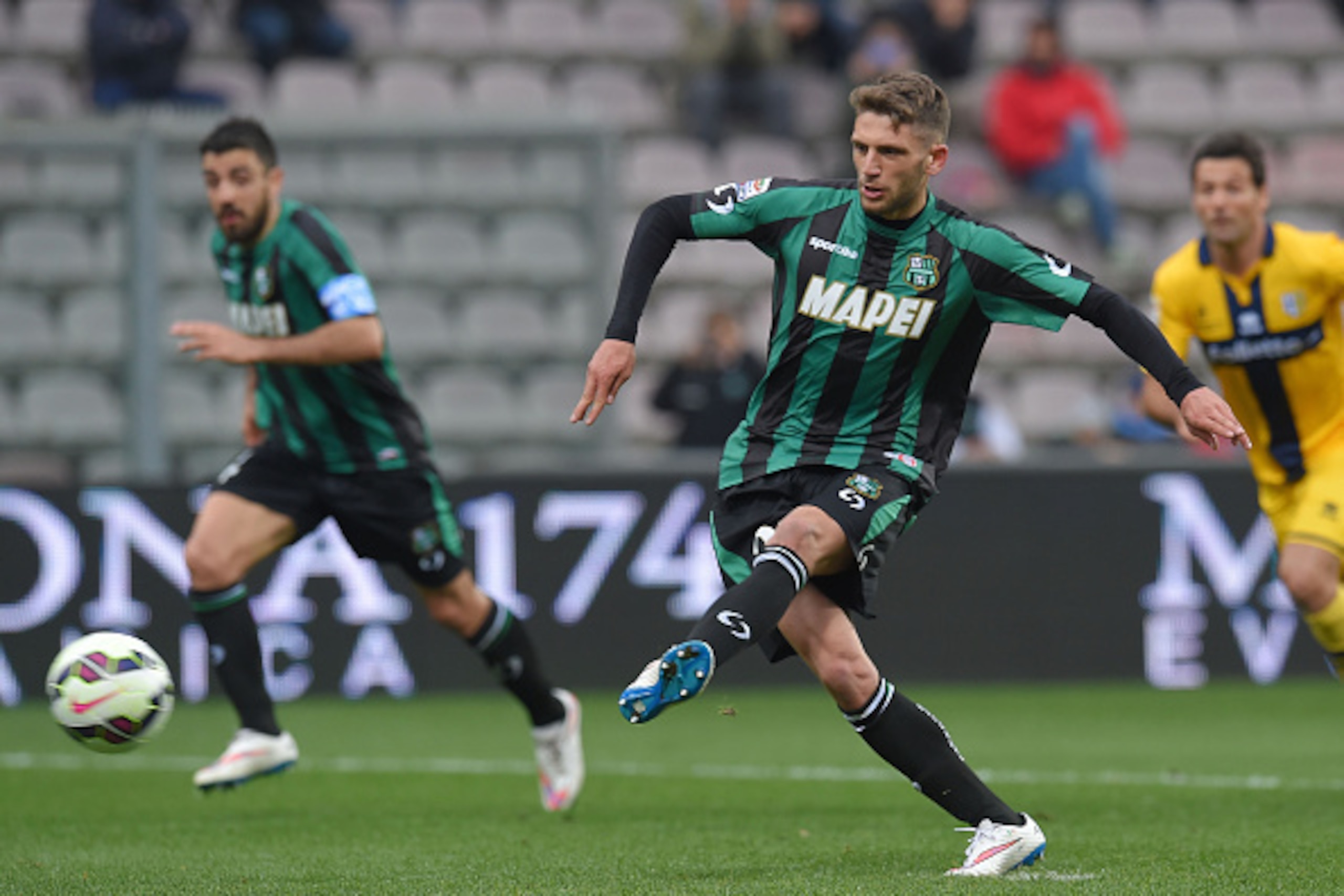
Of course, this is not to say that foreigners have no place in Italian soccer—they do. But perhaps Marcello Lippi said it best in 2013 when he was quoted by La Gazzetta dello Sport (h/t Goal).
"I don't have any problems with it if a team buys an important foreign player. But if they're buying someone foreign just because he has a different passport, I cannot support it," Lippi said shortly after Prandelli expressed a similar sentiment.
Buying someone such as Edinson Cavani is one thing. Buying an average older player who won't make that kind of impact is another.
Other men in Italian soccer have tried to articulate their arguments about this issue and created controversy. Legendary manager Arrigo Sacchi recently stepped in a hole when he used the word "blacks" instead of "foreigners" when talking about the dearth of young Italian players. FIGC president Carlo Tavecchio's infamous "Opti Poba" comments during last summer's presidential race were similarly ill-advised.
Whether either of those comments were genuinely racist or their speakers, who grew up in a generation that may consider such phrasing acceptable, simply made an incredibly bad choice of words while discussing the issue is a matter for another article—we hope it's the latter.
Tavecchio's comments may have been deplorable, but his proposal to introduce new squad rules, per SB Nation (h/t Yahoo Sports), could help matters. His proposal would hold Italian squads to the same rules that all teams must follow in European competition: 25 players, at least eight of whom must be "home grown" (trained in the academy of an Italian club) and at least four of those eight coming from the youth setup of the team itself.
These rules would eventually force teams to overcome their hesitancy of giving big minutes to young players. Not all these youngsters will be Italians but some certainly will, and that will benefit a national team in dire need of an injection of young talent.
It must be stressed that this space does not—and will never—advocate the exclusion of foreign players in Serie A. In the first place, European Union labor laws make it impossible to make rules that put a cap on the number of players from other EU nations an Italian club can sign. In the second, restricting a team's access to players such as Carlos Tevez, for example, is madness and would set Italy even further back from leagues such as the Bundesliga or La Liga.
This space has repeatedly condemned racism in the game and advocated the strongest of punishments for racist acts. But unfortunate comments from some figures aside, this issue does not have its genesis in racism. It comes from the desire to give young players in the Italian club system a better chance to get top-flight minutes and reach their potential. That would not only benefit the Italy national team but those of all nations represented in the league.
Hopefully new squad rules will begin to rectify this issue. If they do, they will allow so much exciting young talent to soar.

.jpg?w=2560 "Report: 49ers Bringing Back Deebo")
.jpg?w=2560 "Latest NFL Training Camp Updates")
.jpg?w=2560 "Best Spots for Diggs & Tyreek 🤔")
.jpg?w=2560 "Ranking Top Available Free Agents 📊")
.jpg?w=2560 "Panthers WR Out for Season")