LFP Treading Fine Line by Charging Barcelona over Cristiano Ronaldo Chants
"Cristiano es un borracho," sung a portion of Barcelona's fans at the Camp Nou during the club's weekend clash with Levante.
The translation? "Cristiano is a drunk," per ESPN FC.
Of course, Cristiano Ronaldo wasn't present at the time—he was 600 km west in the Spanish capital.
TOP NEWS
Billboard Trolls Man City 👀

New NFL contenders starting to emerge after Week 4
.jpg?w=2560 "Cardinals Giants Football")
NFL investigating 2 referees for separate viral exchanges
But that didn't deter the Blaugrana faithful, who sang enthusiastically of the Real Madrid star while appearing to mock his publicised 30th birthday celebration in the wake of his club's 4-0 defeat to Atletico Madrid the previous weekend.
In truth, chants directed at absent parties aren't uncommon in football.
For example, every matchday at the Emirates Stadium in London—a venue in close proximity to this writer—bears witness to the same chant from Arsenal fans: "If you hate Tottenham stand up," sing those on their feet inside the ground, regardless of the identity of the visiting team.
But the Liga de Futbol Profesional (LFP), the national body for the professional leagues in Spain, has moved with urgency in response to Sunday's Ronaldo chants, first launching an investigation into the matter on Monday before deciding to charge Barcelona on Tuesday.
This isn't the first time Barcelona has come under scrutiny in these circumstances. As noted by Marca, the club was reported in December for what were deemed offensive chants during a clash with Espanyol. On the same weekend, Real Madrid, Deportivo La Coruna, Rayo Vallecano and Granada were also reported for similar incidents.
Marca outlined the various chants that were reported to the league's Anti-Violence Committee:
"Real Madrid-Celta: Chants against Barcelona player Lionel Messi ("Messi, you retard") and against Barcelona y Catalonia ("F-----g Barça and f-----g Cataluña").
Deportivo-Málaga: Against Atlético de Madrid ("Atleti are s--t") and against Deportivo president Constantino Fernández ("Tino you b-----d, get out of Riazor" and "Tino , drop dead").
Rayo Vallecano-Sevilla: Chants against Betis (“So much Betis, so much s--t”).
Barcelona-Espanyol: Chants against Espanyol ("F-----g Espanyol" and "I hate Espanyol").
Granada-Valencia: Chants against Valencia player Álvaro Negredo ("Negredo, you gay").
"
The recent crackdown stems from the death of a Deportivo supporter in Madrid in late November, as explained by ESPN FC's Dermot Corrigan:
"The death of a Deportivo supporter, involved in fighting with Atletico Madrid fans before a La Liga match on Nov. 30, has led to a push to break links between radical supporters' groups and clubs by eliminating all forms of anti-social behaviour from the game.
LFP president Javier Tebas and government ministers Jose Ignacio Wert and Miguel Cardenal have said that insulting chants and songs constitute "symbolic violence," which can lead to physical violence, while the official aim is to rid stadiums of all racist and xenophobic expressions.
"
"Atletico and Deportivo ultras fighting and one dead: https://t.co/9dm5IOADAn
— mephobia (@mephobia8) November 30, 2014"
The intention to rid venues of racist and xenophobic references is a positive move. Ditto for a push to eradicate violence.
Such things are lamentable parts of society and have no place in football.
But the LFP has gone one step further here and is treading a fine line: Eliminating racism, xenophobia, extreme verbal abuse and physical violence is one thing; cracking down on chants that might be deemed somewhat distasteful is quite another.
Of course, there are two ways of looking at the "Cristiano is a drunk" chorus at the Camp Nou: Either that it was a humour-based stab at Ronaldo's much-criticised birthday celebration after the loss to Atletico, or that it contained a rather more nasty reference to the death of Ronaldo's father due to alcoholism when the player was 19—something he explained to The Mirror in 2011.
The first is playful; the second more sinister.
Naturally, there will be plenty who see it each way.

However, the move to charge Barcelona has left behind a delicate situation.
If the LFP's decision is based upon a firm belief that there was a menacing subtext to the chant at the Camp Nou relating to Ronaldo's father, then action is understandable. But if that conclusion hasn't been reached, if it has been deemed that the chant was instead directed at Ronaldo's birthday celebration, then the LFP is going down a potentially damaging path in its relationship with the game's fans.
As a result, it's important to note the reactions to the news from the watching public. Not to suggest they're absolutely correct, but to highlight the schools of thought that exist and the effect such decisions have on a fanbase.
"So I'm guessing whistling and booing will raise calls for sanctions next," said one commenter at ESPN FC when the story emerged.
"Preposterous. Once you start attacking free speech, [where] do you stop?" said another.
There was no shortage of critical sarcasm, either.
"They should just stop keeping score so everyone wins and no one is mean and we all hold hands and skip down the street on our way home to lollipop snowflake," was one comment. A similar sentiment was expressed by another: "In other news, fans WILL be allowed to hold hands and sing kumbaya, blow kisses to opposing players and bake brownies for visiting fans."
Interestingly, there were commenters who identified the possible subtext involving Ronaldo's father. But the overwhelming majority didn't make the link.
And that's important; the perceptions held by fans need to be noted here, because it's the fans who are at the centre of this issue. Football is nothing without its millions of followers, and the LFP, like other governing bodies, mustn't alienate its audience.
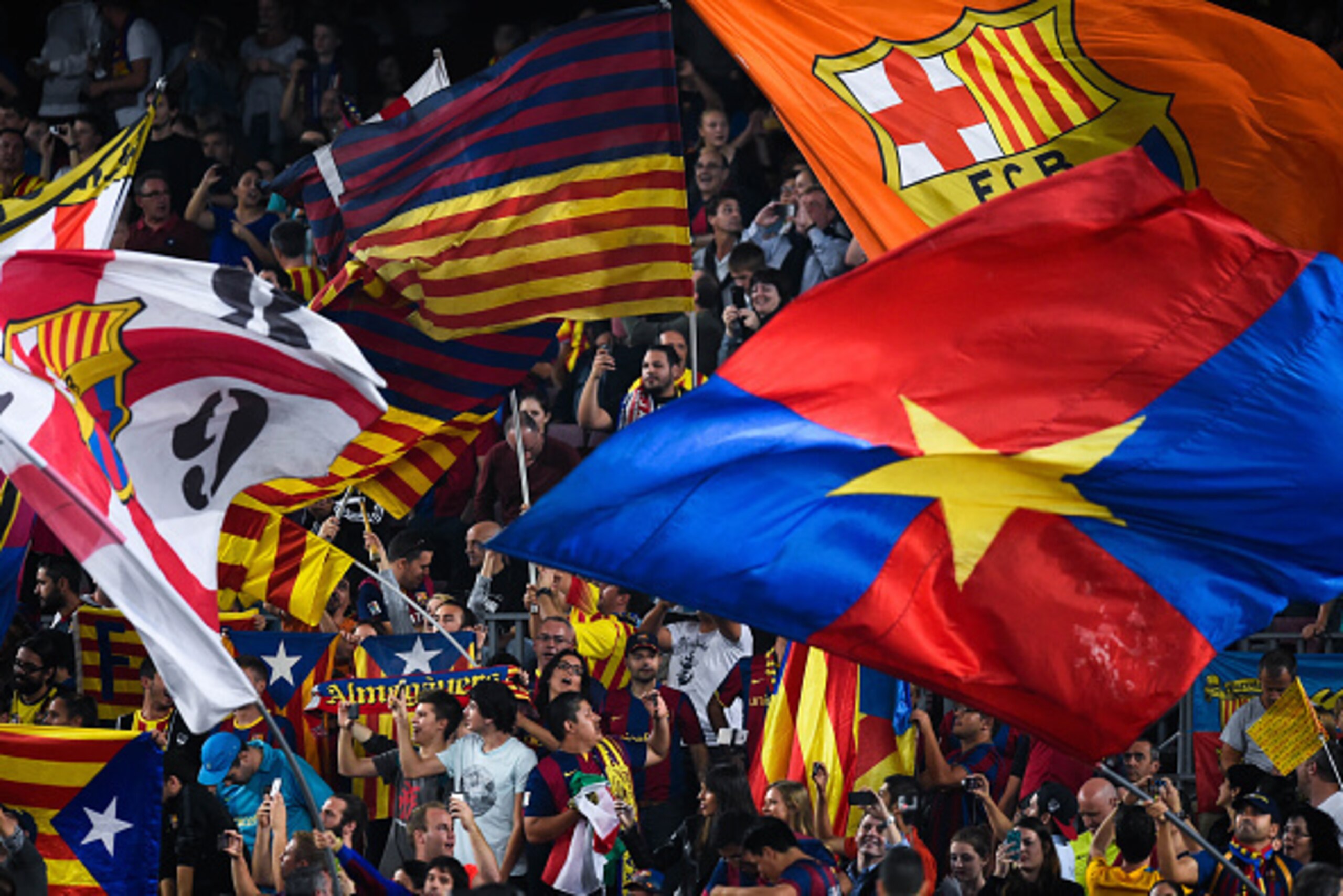
Across Europe, particularly in major cities and in centres for tourism, the gentrification of matchday crowds is already an issue. You don't have to search hard to find fans who feel major stadiums are becoming increasingly subdued.
It shouldn't be ignored, because the game's atmosphere is one of football's biggest appeals. Songs and chanting form a large portion of that—the game has always had a tribal undercurrent.
It's why, in a swift response to the violence between radical supporters, the LFP's decision to charge Barcelona and report other clubs in this context is a contentious one. Though the association's broad intentions are correct—addressing racism, xenophobia and violence—the move to come down hard on chanting is extremely difficult to do with consistency and without severing the game from its roots.
In response to the tragic death of a fan, there's a difference between punishing obscene behaviour and rushing to overly sanitise the matchday environment.
"While the moves have been broadly welcomed by many in Spanish football," wrote ESPN FC's Dermot Corrigan, "Espanyol president Joan Collet has warned about rushing through an unworkable system in an understandable wish to be seen to do the right thing."
That's the issue in a nutshell—the general idea is right but the process feels hasty.
If the LFP's decision to charge Barcelona over the Ronaldo chants is based upon the stance that the chorus had a sinister edge, fair enough. If it isn't, the LFP is treading an extremely fine line with its paying audience.

.jpg?w=2560 "Love's Body Already 'Tired'")
.jpg?w=2560 "OBJ Calls Out Giants 😳")
.jpg?w=2560 "Ward Nearly Walks Out of Presser ▶️")