
Tactics Are Key in High-Stakes Champions League Semi-Finals
If the recent Champions League semi-finals have shown us anything, it’s that, as important as it is to win games, when it comes to these intricate chess matches over two legs, initially, what really matters is not to lose them and to have a two-game plan.
I’ve recently been speaking with Pep Segura, the "Professor" as he is known in Spain. He is a former director at the Liverpool Academy; one of the men responsible for coaching the Spanish coaches in the '90s, the benefit of which you can see now.
His take on today’s Champions League football is that it has become more predictable, more tactical and far more orchestrated than ever before.

Both of the semi-final first legs were the first half of a two-act drama, and both games were played with more than a cursory eye on the second legs to follow.

Unlike Barcelona, for instance, who, perhaps wrongly, play the same way home and away. These days, managerial obligations are all about basically trying to pick a side that will control the way the whole tie is played.
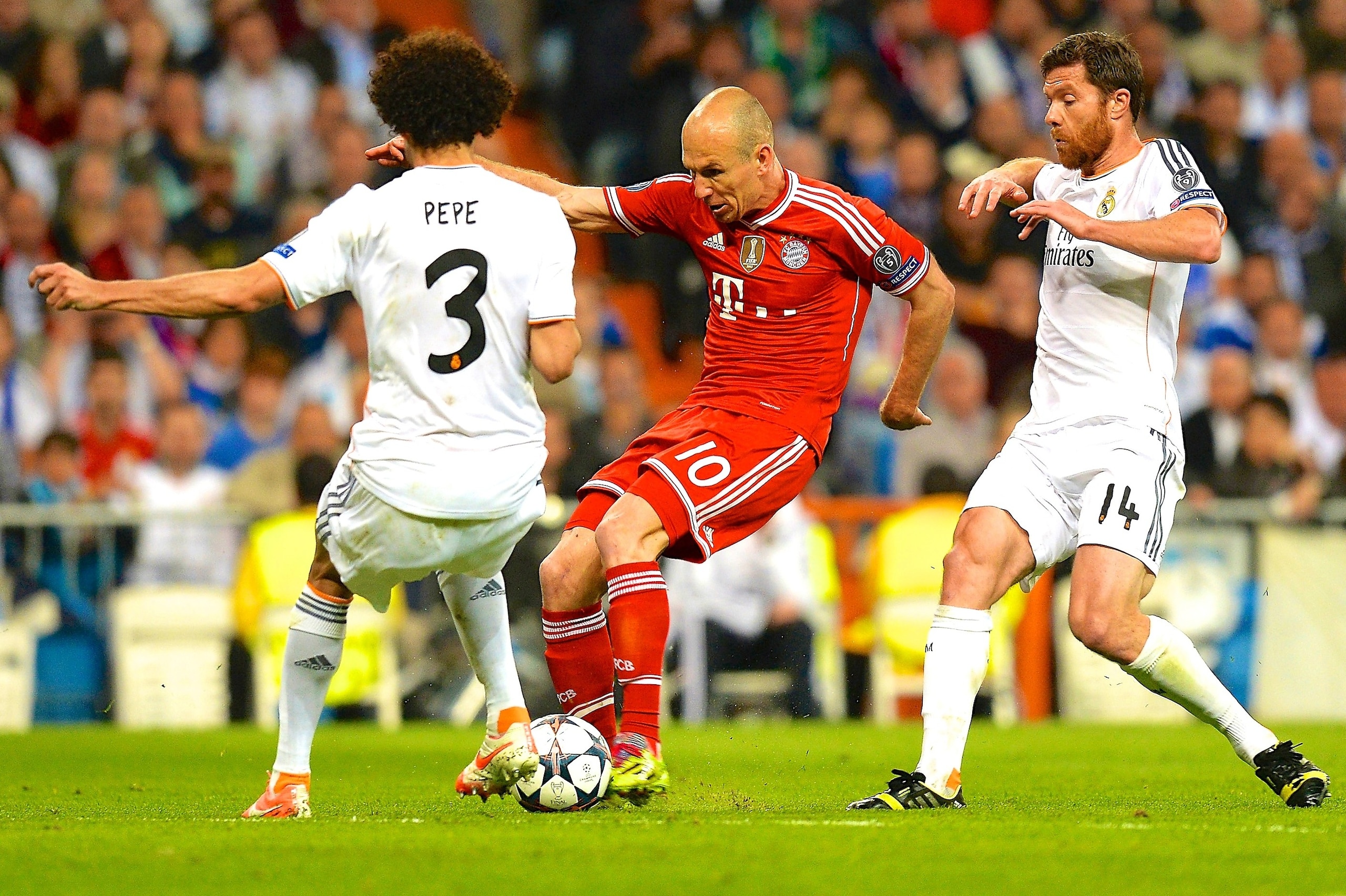
Take Bayern Munich and Real Madrid. Once Madrid scored, Bayern huffed and puffed as they enjoyed an embarrassment of possession, but possession is not goals, and apart from a late chance from Mario Gotze that Iker Casillas saved well, the Real Madrid keeper had precious little to do all evening.
The truth is, says Segura, in the last few years most teams have been based on a solid defensive foundation where tactics are king. Managers want to control games, eliminating as much freedom of behaviour as is possible—a tactical approach is first.
Two cases in point. Arjen Robben was always going to be one of the biggest potential threats for Bayern. Fabio Coentrao’s contribution was not to press him, but rather contain him, force him wide onto his weaker foot, because when he looked to cut inside dangerously, there was Xabi Alonso to snuff out any danger.
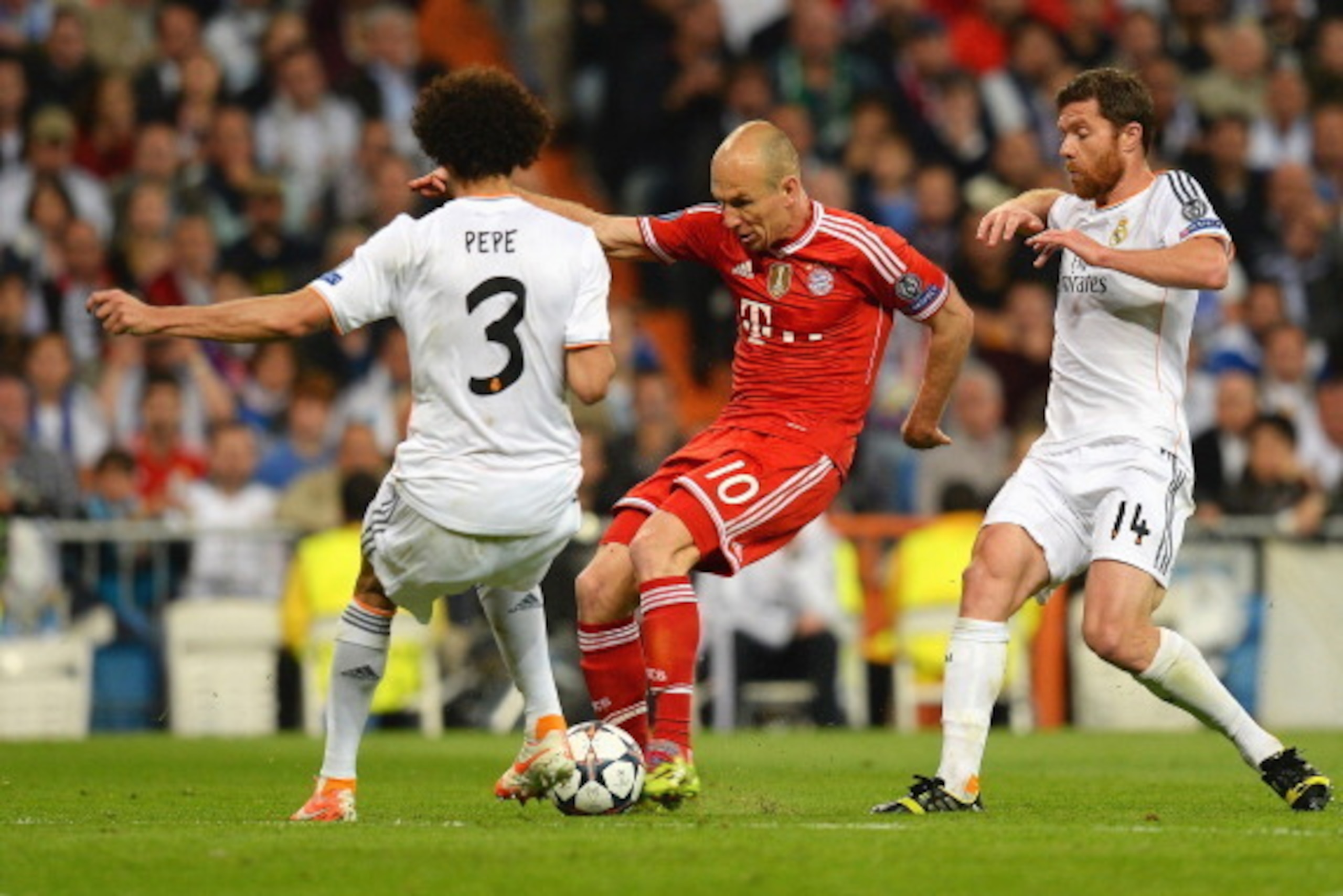
And here’s the rub. Despite not looking for possession and despite not forcing the issue, Madrid still had chances to effectively finish the tie off in the first half.
Point two brings me to the Atletico Madrid vs. Chelsea game, a match for the student of the science of football, rather than a passionate aficionado of the beautiful game. Nil-Nil always looked to be the most likely outcome with Jose Mourinho’s deep defensive qualities that plotted the blunting of the Diego Costa threat.
Costa’s calling card is all about speed and the space he manages to create for himself. Mourinho’s tactics were to stick John Terry and Gary Cahill close to him, and when Costa looked to create the space, he placed John Obi Mikel between the two defenders in precisely that area of the pitch that Costa was looking to run into.
For those who prefer their football exciting and almost out of control, this was the other end of the spectrum.
So it is all about control. Guardiola does it by possession. He keeps lines together to kill space and pass the ball around, dictate tempo, and if possession is lost, have players in place to recover it early. Control, control, control. Mourinho (and Diego Simeone and even Carlo Ancelotti) aims to control without the ball, by keeping lines together, killing space and recovering the ball to then counter.
Another type of control; Pep and Mourinho have got more in common than they think—they both want to impose lots of tactical obligations on their troops to kill spaces and keep control of the game. Both don’t particularly like games that have a life of their own.
Every style is legitimate—every single one. But I identify big clubs with possession as they have enough individual quality (and expensive) players to aim to be protagonists on the pitch.
But as for who’s going to come through, if you were to put a gun to my head, I’d probably still go for an Atletico vs. Bayern Munich final.


_0.jpg?w=2560 "2017 NBA Re-Draft Gives Teams the Ultimate Do-Overs 🏀")