Manchester United: Glazers Bring Success Despite MUST Opposition
Manchester United is the most valuable sporting organisation in the world and the sixth-most recognisable brand.
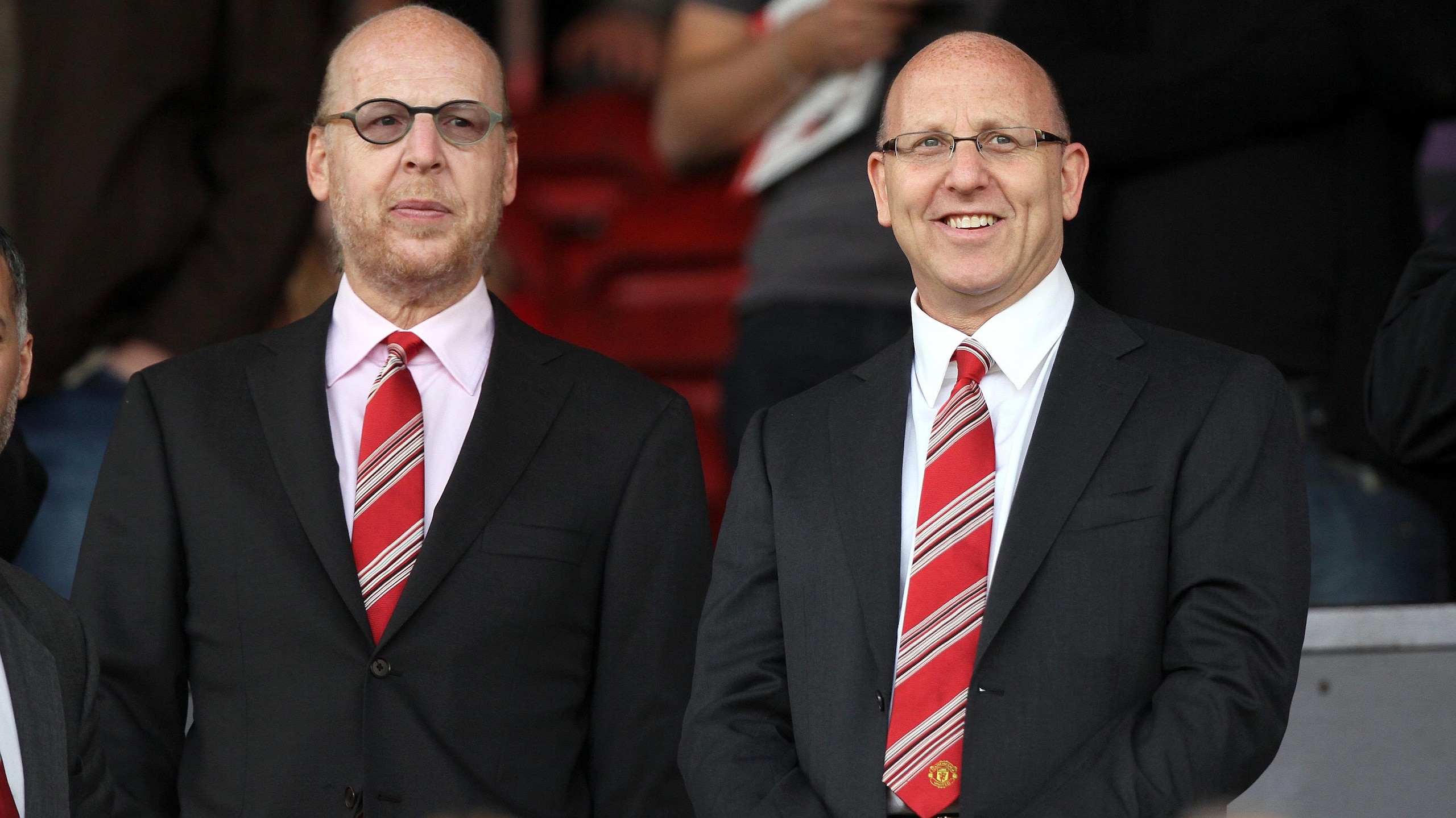
Despite what the Manchester United Supporters Trust (MUST) thinks, the Glazers have presided over the most successful commercial and one of the best footballing periods in United's history.
MUST are to be congratulated for their success in mobilising grass roots, largely Manchester based, support for their organisation, with over 175,000 members to date. The ultimate outcome of their campaign, if successful, would be supporter ownership of Manchester United.
TOP NEWS
Highlights and Viral Moments 🍿

Final Men's Ballon d'Or Rankings 📊

Carrick Replacement Options 📝
However, this is wholly unrealistic in economic terms unless United go into free fall and end up having to be rescued from financial oblivion. That's not going to happen.
Fading Green and Gold and Errant Red Knights
While the campaign was rampant, green and gold scarves were in abundance at Old Trafford. Armed with superficial analysis of United's financial performance and inspired by Red entrepreneurs and city gents, this minority group of supporters believed the dream that they could buy back the club.
The root cause of the rebellion was primarily twofold: The true supporters had been disenfranchised and the club had been bought by debt.
The scale of the protests and the growth of membership were impressive, fired by a genuine love of the club and its history. Higher ticket prices and 'absentee landlords' helped fan the flames.
But the scarves are hard to find now and the Red Knights are notable by their absence. Meanwhile, the owners have been planning a flotation on the Singapore Stock Exchange to realise substantial value and repay the debt.
The Glazers' Legacy
Despite what MUST argues, the period of Glazer ownership has been one of the most successful in the entire history of Manchester United. In the six years since, the club has won four Premier League titles, the UEFA Champions League, three Carling Cups and one World Super Cup. Not bad.
It is also the most valuable sports club in the world.
One of MUST's arguments, as stated by a member in this movie trailer, was that the group takes Manchester United back before the days of "exploitation and over-commercialism." In general, there is a feeling that the true Manchester United supporters have been disenfranchised.
Supporters Disenfranchised?
To take the latter first, it is true that the Glazers own all the shares and the supporters none. The seeds of disenfranchisement were really first sown when Martin Edwards floated United on the London Stock Exchange in 1991. This is when the biggest protests should have taken place, because of what has happened since.
Whilst it is true that supporters could have participated in that flotation or bought shares in the open market afterwards (and many probably did), this was the first major step in loss of control.
There were many disadvantages to being a public company. Ticket prices were hiked during that period, because especially institutional shareholders want to see progressive financial performance. Also, this must have imposed some restrictions on player transfers from time to time.
The biggest nuisance in the latter respect was that material transactions have to be reported to the market by RNS (Reuters News Service) and this was so with the purchases of both Rio Ferdinand and Wayne Rooney. If that situation still prevailed, it would make it very difficult to keep negotiations secret. This may also be true to some extent post a successful Singapore IPO. But fans will be able to buy shares.
And yes it's true that ticket prices have been hiked.
MUST claims that, as a consequence, a bigger proportion of ticket holders come from outside Greater Manchester. This seems ironic, as MUST organised a campaign for its members not to renew their season tickets after 2009/10, as a protest against the Glazers. The present writer is one of the many lucky beneficiaries of that policy, having previously given up hope after waiting in vain for 55 years!
Overcommercialised?
It is particularly hard to understand how United can be over-commercialised. Especially as the commercial and financial success that has ensued has not only put United at the top of the tree of commercial brands, but has also fuelled a progressive transfer policy that has seen the arrival of Anderson, Nani, Vidic, Evra, Berbatov, Valencia, Smalling, Hernandez, De Gea, Jones and Young, among others.
While MUST protested that United could not buy any players because of financial losses, David Gill and Sir Alex Ferguson insisted that he had complete freedom to buy, but he could not see the value in the market place.
The suggestion was that debt interest was draining the club of funds. What was hard to understand was how there could be cash in the transfer fund as Gill insisted, while losses were apparently being run up. Unfortunately, not even the national newspapers understood the accounting provisions on amortisation, which meant that any "goodwill" purchased by the Glazers and player values have to be written down on paper, whereas commercial revenues arrive in cash.
Irrespective of the above, it is now clear beyond doubt how commercially successful Manchester United really are.
On 1 September, the BBC announced the latest financial results:
Gross revenues of £334 million and operating profits of £111 million were records, largely because of commercial revenue up 25 percent, media up 15 percent and matchday eight percent. Pre-tax profit was £30 million.
So when Wayne Rooney apparently demanded to know if money was going to be invested in players before re-signing, Sir Alex and the Glazers told him. He signed and so did more than £50 million of new talent.
Soccer Is Big Business
So are baseball, American football, golf and several other sports, whether we like it or not.
While it started with the formation of the Football Association almost 150 years, the forerunner of the Premier League, the Football League, was created in 1888 and Newton Heath (now Manchester United) joined the First Division when it was increased to 16 clubs in 1892.
The tradition was working class, with men finishing work on a Saturday lunchtime and most walking to matches. Many regret the change to a more middle class customer base, including famously Roy Keane's reference to the "prawn sandwich" brigade.
In the process, the fanbase has spread across the world from its Manchester roots. Old Trafford holds almost 76,000 supporters but numbers an estimated 300 million followers worldwide.
While MUST may bemoan the dilution of local support, it's hardly the Glazers' fault. Alongside Barcelona, United play some of the most watchable football in the world. Lots of people want to identify with that.
While they may resent the US ownership of the club, it could be argued that a prospective Singapore IPO may act as a moderating influence on any worst fears. Corporate governance in the interests of all shareholders is tougher for a quoted company.
United's two major British competitors, Chelsea and Manchester City, are both at the behest of wealthy individuals who, if they lost interest, could leave their clubs in financial ruin. Anzhi Makhachkala and Paris St Germain have similar provenance.
Like the Glazers, Stan Kroenke, Randy Lerner and John W Henry have also brought US big business to the Premier League, despite the disaster of Hicks and Gillett at Liverpool.
But none of the others are remotely close to the success achieved by the Glazers at United.
Since 2005, when they took over, Forbes' estimated value of Manchester United has increased by 50 percent to $1.86 billion, making it the most valuable football club and sports club in the world, ahead of every American football and baseball team.
In the same period, Liverpool have halved in value and fallen out of the top 50. Real Madrid are fifth, Arsenal seventh (for the time being) and Barcelona only 26th.
In a report in the British newspaper, The Times, Manchester United are also the sixth-most recognised brand in the world. And if the Singapore IPO goes ahead, the estimates of the total valuation are in the range $2 billion-$3 billion, even more than Forbes.
Keeping Faith with Tradition
United have come a long way from their roots and lost something of their tradition along the way. It could be argued they became commercial as soon as Captain Henry Stafford found four businessmen to invest in them in 1902. The name changed and Manchester United were born.
In 1927, they were on the verge of bankruptcy and James Gibson saved them again with investment. They could not have survived the bombing of their ground or the aftermath of the Munich disaster without business support—and of course, the diehard supporters.
The Glazers may not have put much of their own money in, but they have overseen an overhaul of the commercial side that has produced 20 sponsors and the money for Sir Alex to invest in the future of the club. They have also left David Gill as chief executive and Sir Alex to run the club day to day, while Sir Bobby Charlton safeguards the footballing tradition as a non-executive director.
While MUST does not have representation, fans' views are shared through the Fans' Forum. Meanwhile, the 75,000 who pack the ground for every match have watched one of the best starts to a season ever.
The green and gold scarves may be melting away, but the football is great and the traditions seem to be in good hands—at least for the time being.
.jpg?w=2560 "Chiefs Giants Football")


.jpg?w=2560 "🚨 Week 8 AP Top 25 Poll")

.jpg?w=2560 "Updates from EVERY NFL Game 🏈")