

Dallas Mavericks-Miami Heat: Nowitzki, James and Five Trends to Watch in Game 5
After four close, awe-inspiring NBA Finals games, the Dallas Mavericks and the Miami Heat have developed team personalities and character traits and the series is tied at 2-2.
Many of these established trends should carry over to Game 5, but one or two could change, leading to a dramatic shift in the key game of the series that will conclude with one team facing elimination and another team one win away from the 2011 NBA championship.
From LeBron’s struggles to Dirk’s triumphs, these trends have been both essential and frustrating depending on your viewpoint.
Will the Mavericks ever slow down Dwyane Wade?
Is LeBron ready to cement his MVP reputation in the Finals?
Will Dallas continue to play its best basketball in the fourth quarter?
Dallas Knows How to Close out Games
1 of 5
With great free throw shooters, a bevy of savvy veterans and the versatile, clutch Dirk Nowitzki, the Mavericks have become great closers.
It doesn’t matter if they are down 1-0 in the series, 15 points in the fourth quarter and playing on the road in the NBA Finals in Game 2.
It doesn’t matter if they’re down 2-1 in the series, with the NBA championship slipping away as the Mavs face a nine-point deficit in the final period of Game 4.
The Mavs have ice water in their veins—in the fourth quarter—or they must talk to some type of magician during before the period begins because Dallas becomes an entirely different team in the fourth quarter.
Jason Terry lights the Heat up for eight points in the fourth.
Nowitzki burns the Heat for 10 crucial fourth-quarter points .
Still, Jason Kidd had one of the most remarkable, under-rated plays, though.
The stat sheet will say Kidd was 0-for-3 from the field, scoring zero points in the game while making four turnovers and dishing only three assists.
But with the score 82-80 with 30 seconds left, Kidd made a crucial play. Dwyane Wade broke free in front of Dallas’ defense, caught a great outlet pass and was about to dunk to tie the game.
Many players would have let D-Wade score.
Not Kidd.
He fouled D-Wade, who proceeded to miss one of the two ensuing free throws, changing the entire complexion of the game. The difference between a tie game and having the lead is enormous and Miami wouldn’t tie the game again.
Miami’s Great Defense—Something’s Not Adding Up
2 of 5
Miami's defense has been given most of the credit for its playoff run this year, and there’s plenty to like about the Heat's defense in the NBA Finals.
The Heat has played energized and all of Miami’s offensive superstars have played just as tough on the other end of the court. Miami has held Dallas—the best offensive team in the NBA playoffs this season—under 100 points in every game in the Finals.
But how do you explain Dallas’ two wins coming via a 15-point, fourth-quarter comeback in Game 2 and a nine-point, fourth-quarter comeback in Game 4?
If defense can win championships, can a lack of it lose them, too?
Some have already made the valid point that with some key fourth quarter stops and baskets, the Heat could—should?—have swept the Mavericks by now.
How and why is the Heat losing defensive focus at the most critical moments in the game?
The Heat seems to focus more on offense at the end of games, and it has no answer for the fourth-quarter version of Dirk Nowitzki.
Dallas’ offense down the stretch essentially becomes give it to Dirk and get out of the way.
It’s very predictable, but it has also been successful.
Miami has to find a way to play great defense for a full 48 minutes. The Heat bottled up Nowitzki and Jason Terry most of Game 4 before the dismal fourth quarter.
Sometimes a great offense can equal good defense, but the Heat has only scored 18 and 14 points in the fourth quarter of losses in Games 2 and 4.
Dallas’ Dirk Nowitzki: You Don’t Have to Be a Champion to Play Like One
3 of 5
Talk about the heart of a champion.
Dirk Nowitzki, playing with a torn tendon in the middle finger of his left hand and battling the flu, came through for his team with 10 fourth-quarter points to spark a comeback and tie the series at two games apiece.
Though he’s averaging 26.5 ppg in the Finals, Nowitzki is doing more than just scoring.
After failing to notch double-digit rebounds in a single game in the Western Conference finals vs. the Oklahoma City Thunder, the seven-footer has grabbed an average of 10.3 rpg in the NBA Finals, finishing with double-digits in rebounds in three of the four games thus far.
Nowitizki has only missed one free throw in the NBA Finals, going 33-for-34 (97 percent) from the line, and he’s shot 5-of-11 from the three-point line (45 percent) in addition to taking over the game in the fourth quarter for Dallas’ two wins.
The Mavericks are hoping Nowitzki’s incredibly efficient and clutch performance continues in Game 5.


Miami's Dwyane Wade Is Back in Finals MVP Form
4 of 5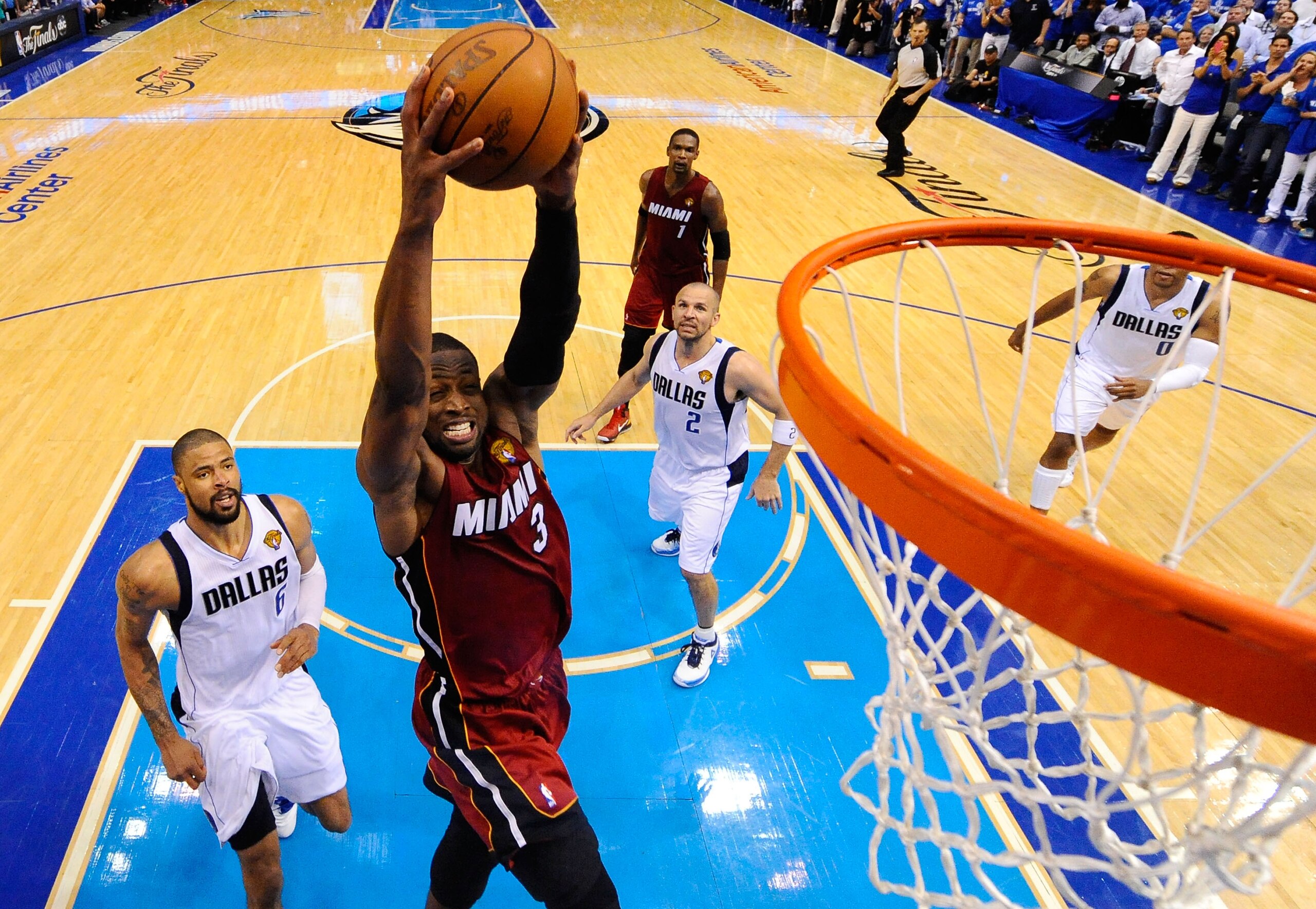
Dwyane Wade has been the Finals MVP so far, shooting a simply ridiculous 59 percent from the field and leading all scorers with 29.8 ppg.
Wade was amazing in his previous trip to the championship round, also vs. the Dallas Mavericks, earning the Finals MVP in 2006 after averaging 34.7 ppg while scoring at least 36 points in each of the last four games.
Accompanied by a steady and courageous showing from Chris Bosh (18.3 ppg, 6.5 rpg in the Finals), Wade has verified his leadership qualities after a rather ordinary—for Wade—Eastern Conference finals.
Wade relishes having the ball in his hands in the closing seconds, and although the Heat only scored 14 points in the fourth quarter and lost Game 4, Wade had seven points in the final period, scoring the team's final points and finishing with 32 in the game.
Wade’s excellent shot selection, his efficiency and his determination probably puts a brighter spotlight on LeBron James’ performance in those same areas, while Bosh has taken on the secondary role in the offense for Miami.
If Wade continues his exceptional output, he should win the Finals MVP—whether Miami wins or loses the series.
LeBron Struggles on Big Stage
5 of 5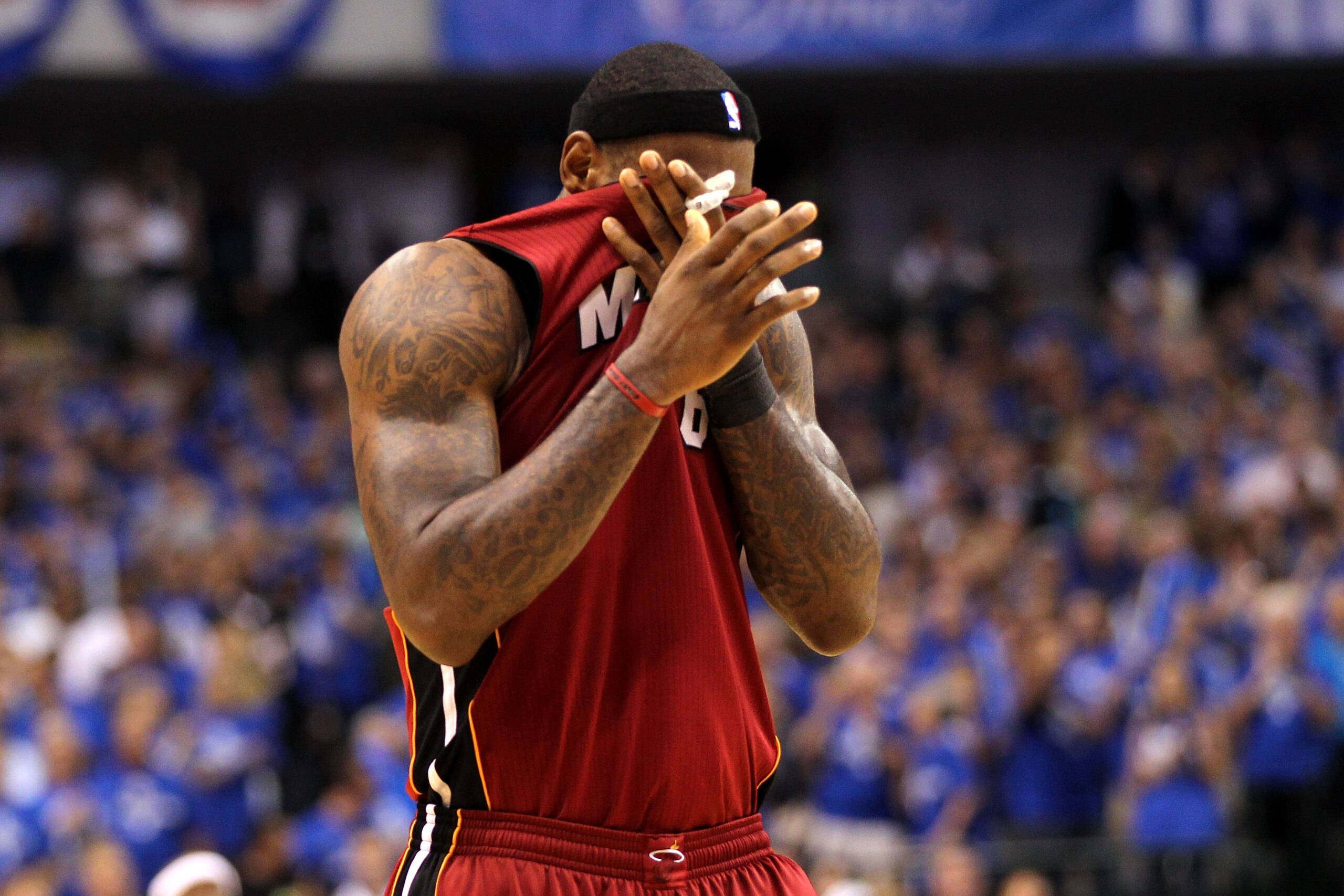
Despite Wade’s marvelous feats, the big story has been LeBron James’ lack of production.
In the Finals, James is averaging 17.3 ppg, 7.3 rpg and 6.3 apg—a good, well-balanced stat line.
But James’ biggest strength is scoring. That’s what made him an All-Star, a two-time NBA MVP and the best basketball player in the world. He led the Heat in scoring (26.7 ppg), assists (7.0 apg) and steals (1.6 spg) during the regular season.
We know all the clichés: James is getting his teammates involved. James is doing the dirty work. James is playing defense.
But if a great rebounder suddenly went from 15 rpg to 5 rpg, fans would be disappointed. If a great free throw shooter suddenly started shooting 25 percent from the line in the playoffs, fans would be astonished and angry.
So what’s up with LeBron?
There has to be something going on. LeBron averaged 22 ppg in the 2007 NBA Finals vs. the San Antonio Spurs when he was only 22 years old, so the theory that he’s overwhelmed or shocked by the pressure of the Finals can be dismissed.
He seems healthy on his highlight reel dunks and he’s played 44 minutes a game.
However, his scoring has decreased each game during the series, going from 24 points in Game 1 to 20 points in Game 2 to 17 points in Game 3 to a very uncharacteristic eight points in Game 4.
James took one shot in the fourth quarter of Game 4—a miss. LeBron’s awesome all-around play (nine rebounds, seven assists and two steals) was negated by his mistakes: four turnovers, four fouls, two missed free throws, and he shot 3-for-11 or 27 percent from the field.
He's still the best player in the NBA and capable of huge scoring performances in the remaining games of the series.
Next time, please don't beam him up, Scottie.
After the Heat defeated the Chicago Bulls in the Eastern Conference finals, Bulls great and six-time NBA champion Scottie Pippen compared James favorably to Michael Jordan, the best player in NBA history.
Hhhmmm. A little reverse psychology from Pippen, a Phil Jackson disciple?


.jpg?w=2560 "Grading WWE Raw 🔠")
.jpg?w=2560 "Viral Rams Coach Vid 🖕")
.jpg?w=2560 "Bijan's INSANE 1st Half 🤩")
.jpg?w=2560 "Injury-stricken Seahawks signing veteran RB")
.jpg?w=2560 "2 NFL Officials Suspended")
