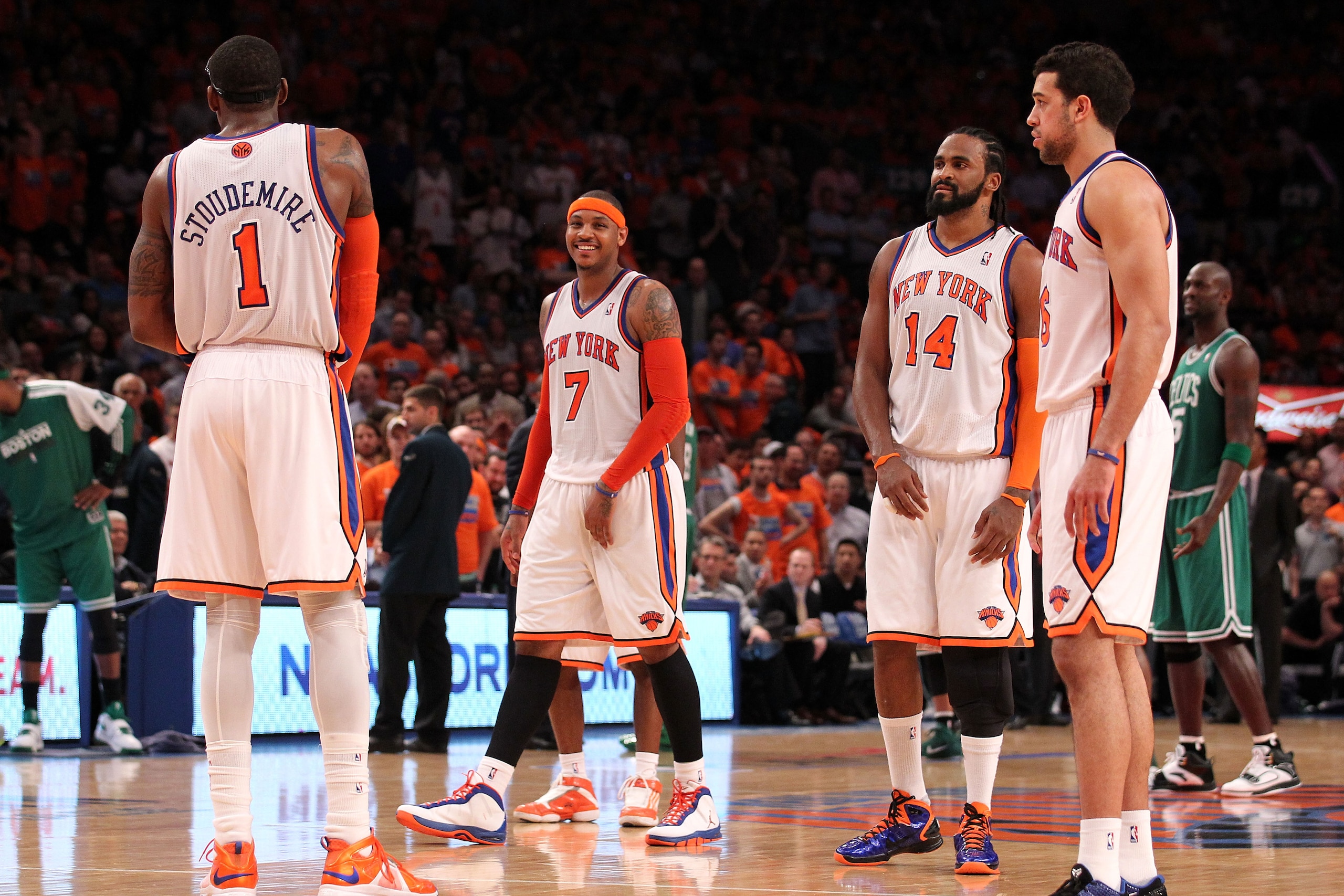

NY Knicks: Final 2011 Report Cards for Carmelo Anthony, Amar'e Stoudemire and Co

The Knicks season has been over for quite some time now, and now, the rumor mill regarding New York's possible roster moves are in full swing.
This past season was great for the New York in the sense that the team made the playoffs for the first time in nearly a decade. However, it was a disappointment in the sense that it became clear the Knicks are still not a championship caliber team.
And this is why the rumor mill is exploding.
Is New York's sights still set on Chris Paul?
Will the Knicks be able to obtain a capable big man?
Is Mike D'Antoni's job in jeopardy?
The aforementioned questions, and more, are all hot topics in the New York scene.
However, before we can look to the future, we must first examine the past. This is where we will find the answers to where the Knicks need to improve.
How do we do this?
By grading the Knicks players performances for this past season.
And on that note, here are the final report cards for Carmelo Anthony, Amar'e Stoudemire and company.
Carmelo Anthony
1 of 12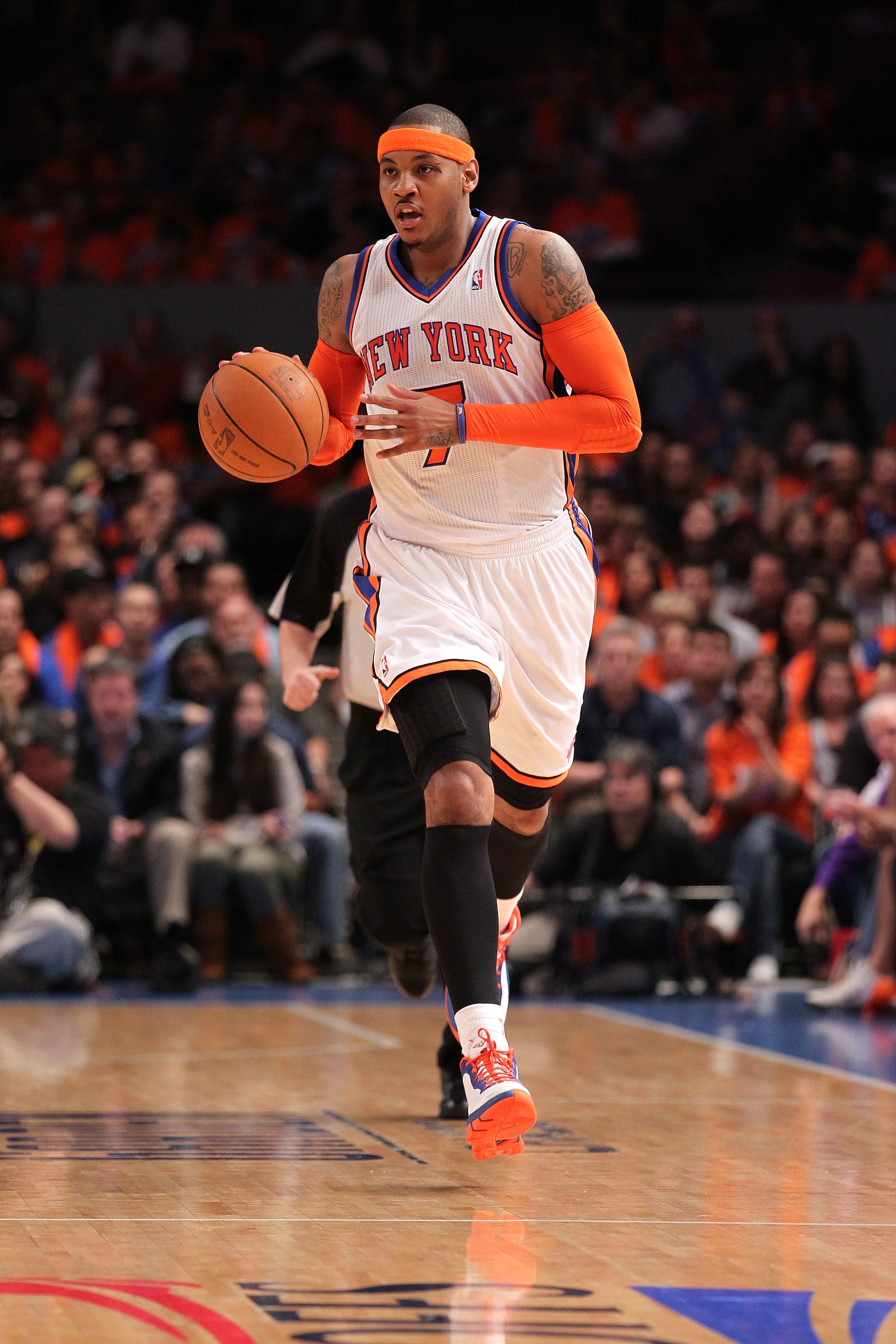
Carmelo Anthony arrived in New York to a mountain of expectations.
Many believed that he and Amar'e Stoudemire could lead the Knicks to a title almost instantly, but the transition would not prove to be this smooth.
Anthony struggled in the new system for quite some time. He was used to going one on one in Denver, and becoming acclimated into New York's seven seconds or less system proved to be difficult.
However, Anthony seemed to become more comfortable as the season progressed.
In 27 games with the Knicks, he averaged 26.3 points, 6.7 rebounds and three assists per game, consistent with his career numbers. What came as a surprise, though, was Anthony's improved three-point shooting ability. He shot over 42 percent from downtown after joining the Knicks, becoming a legitimate three-point threat for the first time in his career.
Anthony's downfall, though, was his defense. He has always been considered a subpar defender, but the pressure to transition into the Knicks offensive system effected him on the defensive end. He struggled to keep his man in front of him and could not fight over screens effectively.
If the Knicks are to drastically improve next season, they will need Anthony to adjust his defensive game substantially. Over the course of the season, Anthony showed flashes of the defender he has the potential to be, but he could not do it consistently.
Overall though, Anthony proved to be quite an addition for the Knicks. Many were skeptical regarding the trade that landed him in New York because of how much the Knicks gave up, but Anthony's scoring abilities won most critics over.
Anthony gave the team a go-to guy with the game on the line and proved he had the ability to single-handedly carry the team in the Knicks Game 2 loss to the Celtics, where the Knicks held the lead going into the final 20 seconds thanks to the skills of Anthony.
Additionally, Anthony began to move the ball around the floor a lot better as well as make quicker decisions. He did not constantly try and force the offensive action, which is promising looking toward next season.
If Anthony can continue his offensive progress and improve his defense, he should prove to be unstoppable next season.
Overall grade: B+
Chauncey Billups
2 of 12
Many considered Chauncey Billups to be a throw-in to the Carmelo Anthony trade, but he proved he was much more than that.
Billups gave the Knicks an experienced floor general who knows what it takes to win a title.
In 21 games with New York, Billups averaged 17.5 points, 5.5 assists and over three rebounds per game. He also shot over 40 percent from beyond the arc while with the Knicks.
Additionally, Billups gave the Knicks another guy capable of hitting the pressure shot. During his short time with the Knicks, there were numerous occasions where he hit a big shot to live up to his nickname, "Mr. Big Shot".
However, Billups came with his skeletons as well. Although his age gave the Knicks much needed experience, it also meant he was fragile. Billups proved to be increasingly injury-prone since joining the Knicks, and his injury in the playoffs truly brought light to how much of a liability he could be.
Furthermore, Billups, with all his experience, was thought to be the perfect point guard to direct an offense with two superstars in it. He proved to struggle in this aspect though.
Billups quickly grasped the seven seconds or less system, but he had problems getting Amar'e Stoudemire and Carmelo Anthony to play effectively with each other. Billups failed to set up enough pick and rolls and often allowed Anthony to handle the ball too much.
To be fair, though, Billups did a better job of directing the offense by season's end, but he was not on the court nearly enough in the playoffs to prove he could do it consistently.
Should Billups be able to stay healthy next season, he could be a great weapon for the Knicks. His defense is only average, but on a team like this, abilities like that are welcomed.
If this season was any indication, though, Billups may have too much wear and tear on his body to perform at a high level much longer.
Overall Grade: B
Anthony Carter
3 of 12
Anthony Carter proved to be quite an acquisition for the Knicks.
He only appeared in 16 games, but he played consistently once he proved what he was capable of.
Carter averaged 4.4 points, 2.3 assists and 2.1 rebounds while with the Knicks. The numbers do not scream game changer, but his defense is really where he shined.
Before playing the Heat on February 27, Carter proclaimed to coach Mike D'Antoni that he could effectively guard Dwyane Wade. D'Antoni gave him a shot and Carter delivered.
Carter held Wade to 12 points on 5-15 shooting from the field. It came as a surprise to many, but from thereon out, Carter became known as one of the Knicks few reliable defenders.
Another surprise with Carter was his ability to direct the offense. When Billups was sidelined by injuries, the Knicks mainly turned to Toney Douglas. But Douglas' inexperience got the best of him at times, and Carter proved to be quite capable of stepping up and taking the reigns.
Despite the shocking upside to Carter, his statistical liability cannot be denied. He is not a great scorer or passer, and opposing teams realize this, which is why they tend to play loosely on him.
This being said, though, Carter's defense more than makes up for it. Additionally, he may not be known as a great passer, but he makes smart decisions. He is not as turn over prone as the rest of the point guards in the league.
Carter's greatest attribute though was his ability to surprise the opposition with his effective play. He did more than the Knicks ever expected him to do, helping bolster his final grade.
Overall grade: B+


Toney Douglas
4 of 12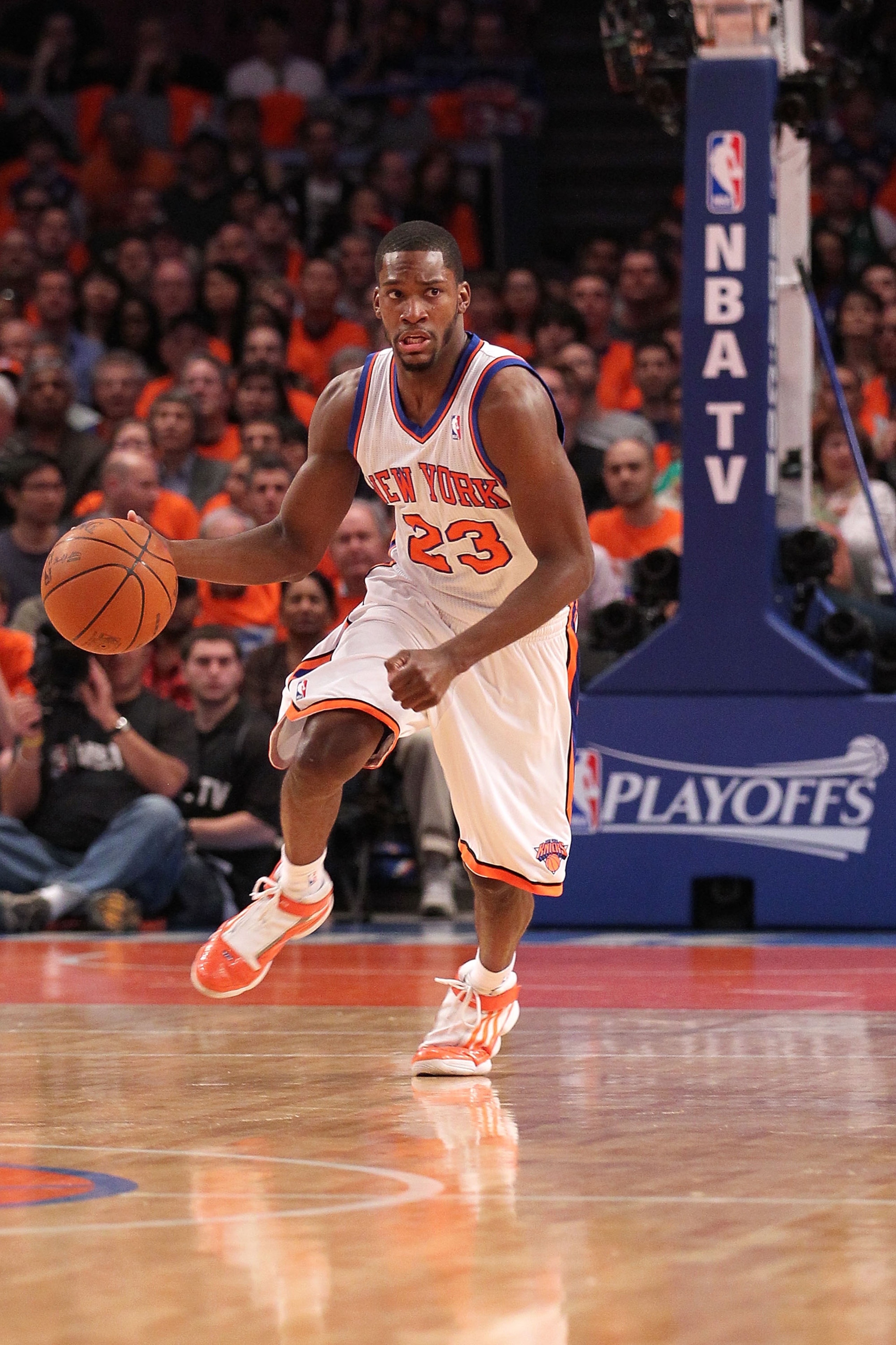
Toney Douglas entered the season with a number of questions marks surrounding his game.
Many viewed him as Nate Robinson like, in the sense that he was more of an undersized two guard, and not capable of running the offense like a true point.
At the beginning of the season, Douglas struggled. He could not seem to find his groove and was making a lot of the same mistakes he had the previous season. His greatest flaw was his inability to decipher between when to pass the ball and when to shoot it. Douglas simply tried to force the action too much on the offensive end.
However, after the Carmelo Anthony trade, Douglas flourished. He proved he was capable of running the offense and became one of the most lethal three-point shooters in the NBA.
Most importantly, though, Douglas began making smarter decisions with the ball. He was able to sense when he needed to pass the ball, and he let the offense come to him instead of forcing it.
Additionally, Douglas was one of the Knicks best defenders. His quickness and ability to make sharp lateral movements allowed him to keep pace with players like Dwyane Wade.
On the season, Douglas averaged 10.6 points, three rebounds, three assists and 1.1 steals per game, which are more than stellar numbers for a backup point guard.
Despite his success after the trade, Douglas' inexperience got the best of him at times.
After Billups got sidelined in the Celtics series, the Knicks turned to Douglas to take the reigns as the starting point guard. While Douglas found himself in similar situations during the regular season, his lack of playoff experience became evident right away, and he began to make a lot of mistakes that he had previously corrected.
Furthermore, while proving to be capable of running the offense, Douglas had problems getting Amar'e Stoudemire and Carmelo Anthony to play together. The pressure to direct two elite veterans was not something the second year Douglas was prepared to do.
Douglas' inexperience may have been problematic at times, but he still proved to have a lot of potential. His defensive prowess as well as his ability to dribble through the paint with almost Rajon Rondo like ease is a positive for New York.
If Douglas continues to improve going forward, the Knicks will be much better off. And if this season was any indication, it seems that Douglas has a bright future ahead of him.
Overall Grade: B+
Landry Fields
5 of 12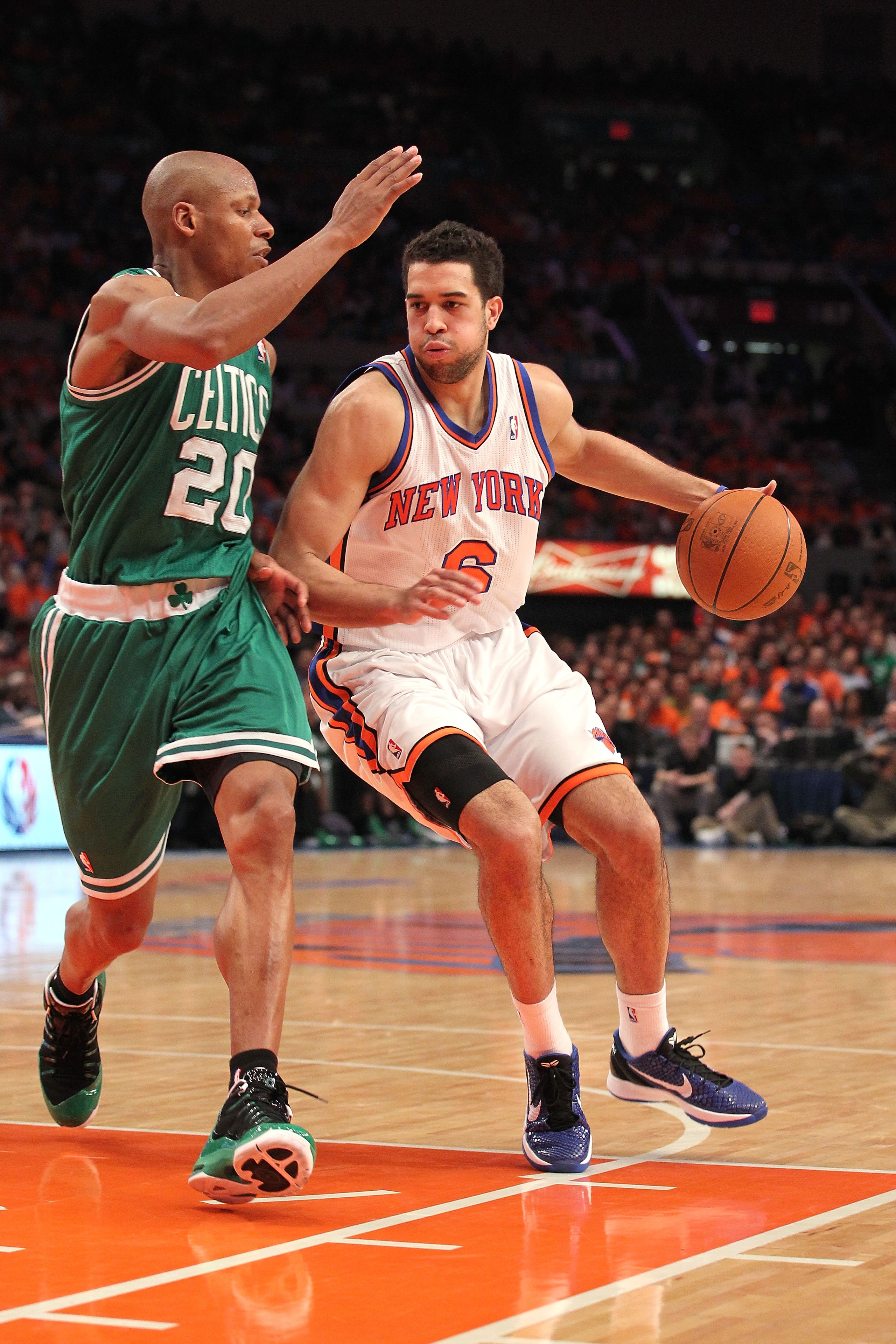
Landry Fields proved to be a steal in last year's NBA draft.
New York took Fields in the second round, and no one thought that the rookie out of Stanford would make any kind of impact.
However, Fields surprised everyone and became the Knicks starting shooting guard. His ability to make veteran like decisions on the court aided him in obtaining the starters role. For a rookie, Fields played with an abundance of confidence and flair that caught the attention of the not only the Knicks, but teams around the league.
Fields averaged 9.7 points and 6.4 rebounds on the season. His aggressiveness on the glass exceeded that of most of the other two guards in the NBA.
Additionally, Fields was an absolute work horse on both ends of the floor. He was one of the Knicks best offensive rebounders as well as one of their best defenders. Fields, along with Anthony Carter, contained Dwyane Wade quite effectively during the Knicks February 24 victory over the Heat.
Despite Fields' great play, he seemed to hit the rookie wall by the end of the season. After the Carmelo Anthony trade, he could not seem to find his place on the offensive end and his production dropped.
Fields also had a horrific postseason. He averaged only 1.8 points and 1.3 rebounds during the Celtics series. The combination of not being able to play along side Anthony and not being accustomed to an 82 game season proved to be a tough obstacle for the rookie.
However, it must be noted that although Fields' confidence was clearly shaken by regular season's end, he still maintained his hard work ethic. He was the only Knicks player to appear in all 82 regular season games, and his durability is very valuable to New York.
If Fields is able to regain his confidence and become more aggressive and efficient on the offensive end, he will be more than capable of continuing to handle the everyday shooting guard responsibilities.
Overall grade: B
Jared Jefferies
6 of 12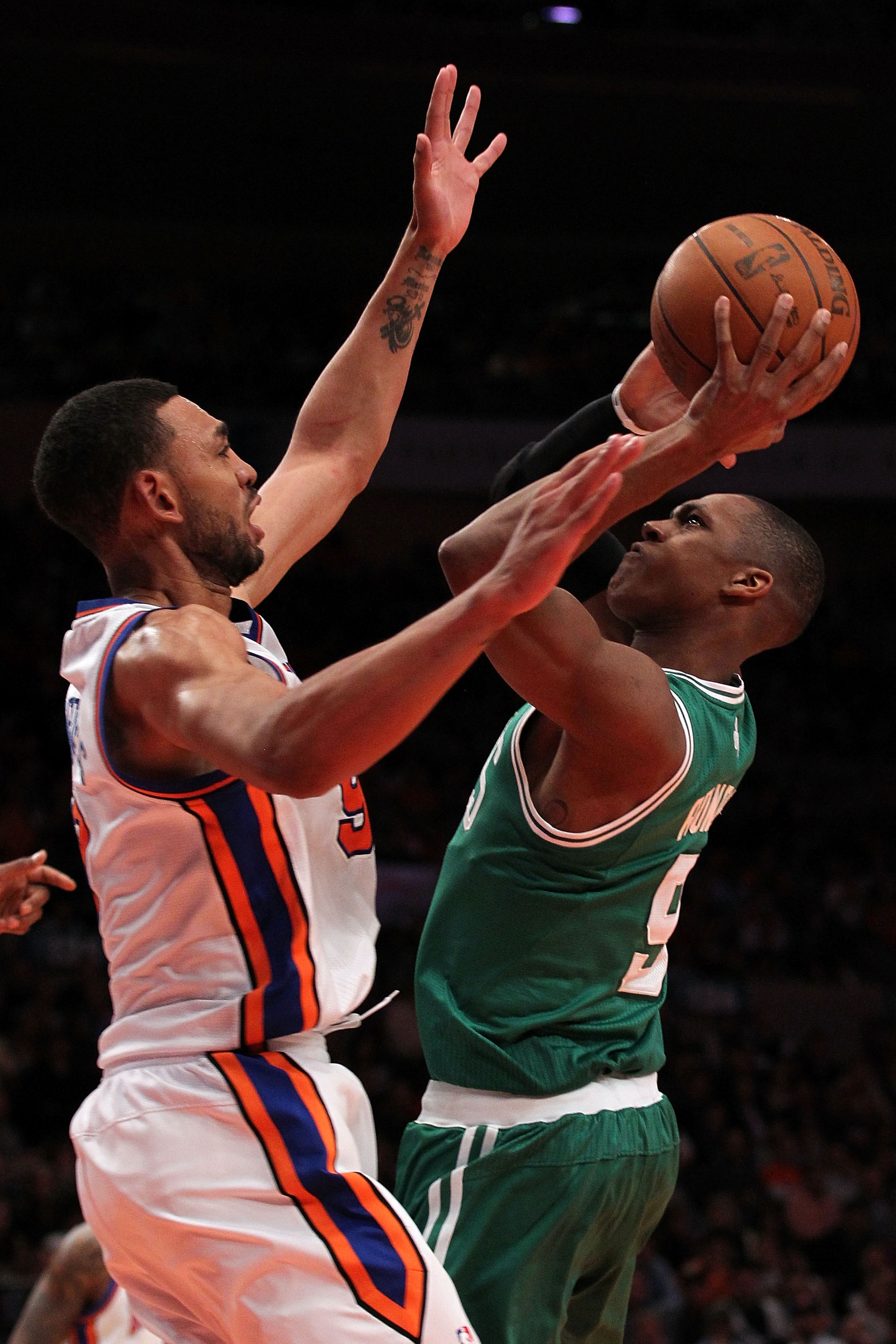
Jared Jefferies was only with the Knicks for 24 games this season, but his defensive abilities were welcomed.
New York signed Jefferies midseason to add a defensive specialist, and during his short stint with the Knicks, he proved to be quite effective in containing opposing centers.
However, Jefferies struggled tremendously in the playoffs. At times, he found himself going up against Kevin Garnett, while at other times, he found himself defending Rajon Rondo. His inconsistent defensive assignments led to major struggles, and as a result, he barely made an impact on that end of the ball.
Additionally, Jefferies still remained a liability on the offensive end. He cannot shoot the mid-range jumper nor can he post up. The only baskets he normally gets are off easy lay ins. His rebounding abilities are not up to par for someone his size either.
Jefferies only averaged 1.8 points and 2.8 rebounds per game, and the Knicks needed him to do much better than that while he was in the low post, especially in terms of rebounding.
He was welcomed for his defense, but his playoffs showing was less than stellar in that department, and as a result hurts his grade, considerably because he failed to do what the Knicks brought him in to do.
Overall grade: C
Roger Mason Jr.
7 of 12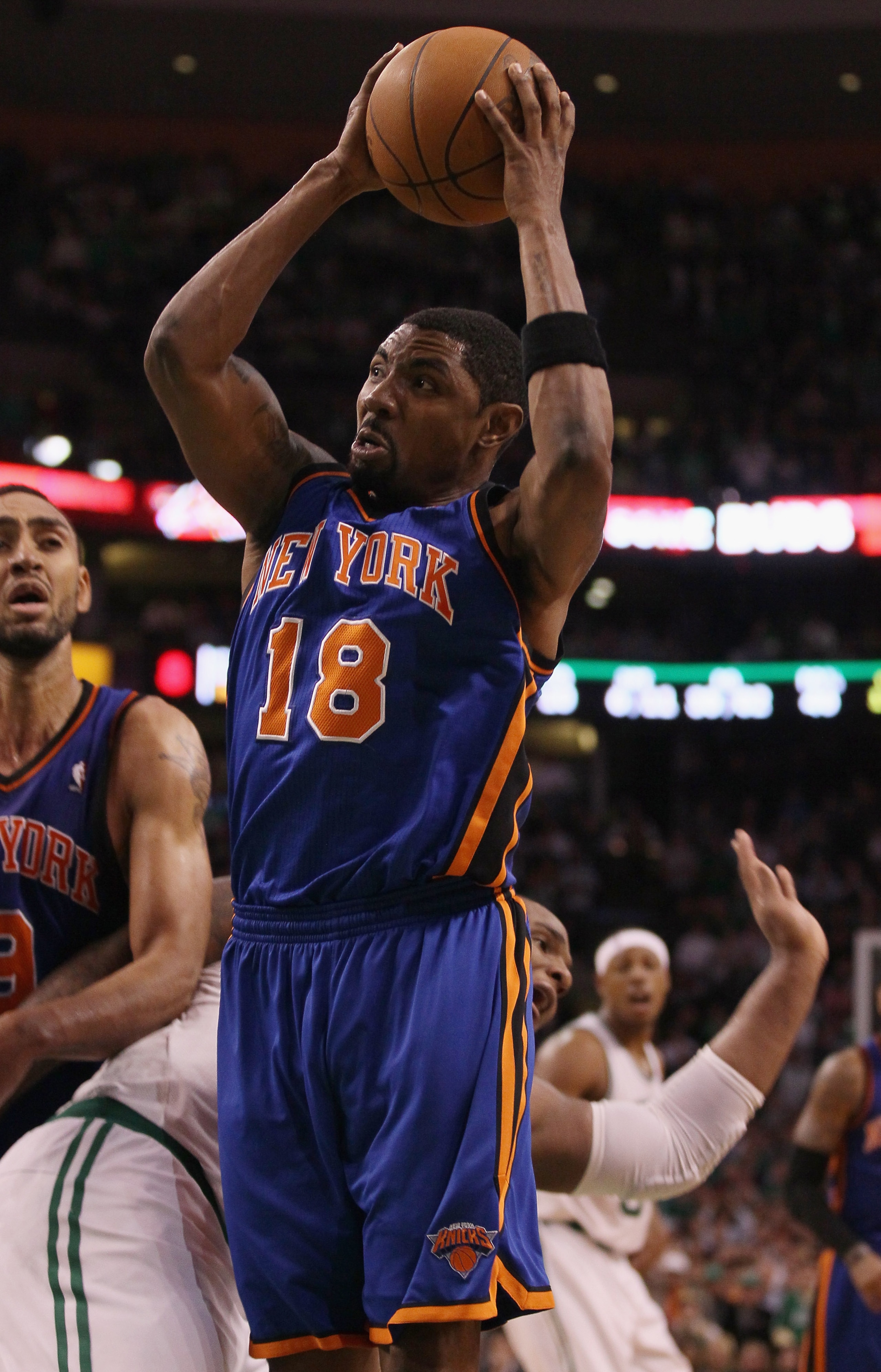
Roger Mason Jr. only appeared in 26 games for this Knicks this season, which came as a surprise to him.
Mason thought that he would be able to make more of a contribution to the team, and when it became clear that his role would not be as substantial as he perceived, he considered asking for a buy out.
However, Mason rode it out with the Knicks, and while he did not put up big numbers, he was a welcomed veteran presence in the locker room.
Mason averaged 2.8 points and 1.7 rebounds when he was on the floor, but what the numbers do not show is his leadership. He was always one of the first players on the floor before games practicing and was ready to play whenever the team needed him.
His attitude was a welcomed one, a scarce commodity in the NBA. So while Mason did not make much of an impact statistic wise, his hard work ethic and team first mentality made up for it.
It must be noted though that Mason's grade is hurt by the fact that the Knicks hoped he would play a more pivotal role when they first signed him. He was supposed to provided the team with a proven sharp-shooter while he was on the court, and could not exhibit such prowess consistently to stay in the rotation.
Overall Grade: B-
Amar'e Stoudemire
8 of 12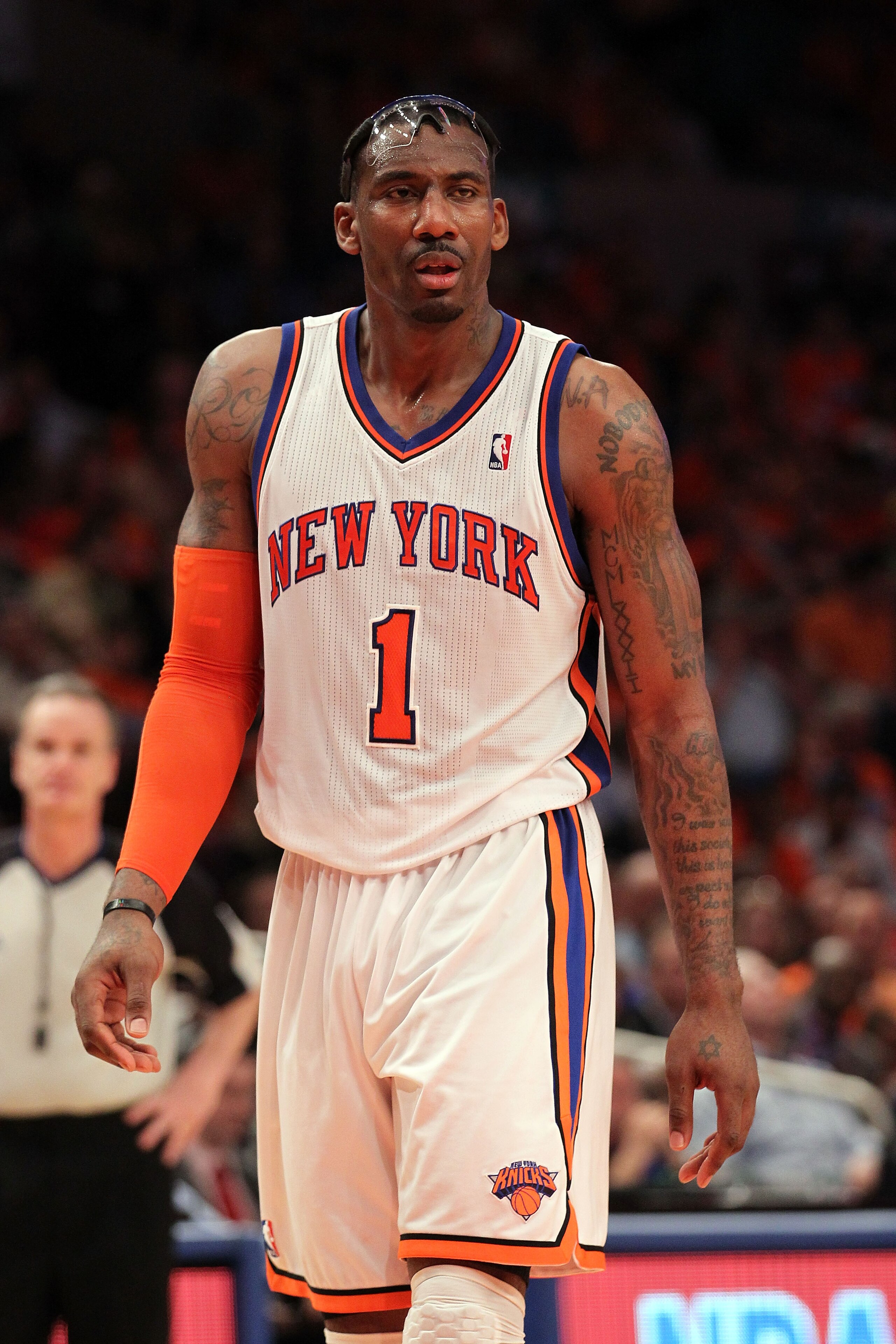
Amar'e Stoudemire was the MVP of this Knicks team.
Before the Carmelo Anthony trade, Stoudemire was prepared to lead New York to the playoffs. He carried the team on his shoulders at many points during the season and exhibited the kind of leadership that the Knicks have lacked for the past seven years.
On the season, Stoudemire averaged 25.3 points, 8.2 rebounds and nearly two block shots per game. Additionally, he added a mid-range jump shot to his game that made him near unstoppable on the offensive end.
What is most impressive about Stoudemire is the numbers he was able to put up while playing outside of his comfort zone. Stoudemire played a majority of the season at five because the Knicks lacked a true centerin the low post.
Routinely having to go up against players that were 30 or more pounds heavier than he was took a toll on his body, but he proved to be able to withstand such rigors. His quickness and outside game allowed him to actually have the advantage over most players at the five position.
Stoudemire also improved his shot blocking a great this season. Despite this, though, he became a liability on defense at times. He was either too aggressive or too soft; he could not find that consistent balance on that side of the ball.
Also, there were major health concerns surrounding Stoudemire coming into this season. The Knicks took at chance on giving him a long term contract because of his past health issues.
While Stoudemire only missed four regular season games, three of which were to give him rest before the playoffs, he suffered a back injury in Game 2 of the Celtics series that has many Knicks fans concerned.
Stoudemire played through the back pain during the postseason, but his production suffered as a result of the injury. Both Stoudemire and the Knicks have declared it a minor injury, but Stoudemire's history still warrants some skepticism on New York's part.
However, it must be noted that Stoudemire truly proved how tough a player he is when he played through his injury during the playoffs. The Knicks may have gotten swept by the Celtics, but Stoudemire's presence on the court spoke volumes about his dedication to this team.
Stoudemire led the resurgence of the Knicks, and he was an early on MVP candidate this season. His energy and self-proclaimed swagger propelled the Knicks back to relevancy in the league, and the organization, to date, is thankful that they took a chance on him.
If Stoudemire can remain healthy and improve his defense for next season, he will be as unstoppable a player as they come, and poised to lead the Knicks further into the playoffs.
Overall grade: A-
Ronny Turiaf
9 of 12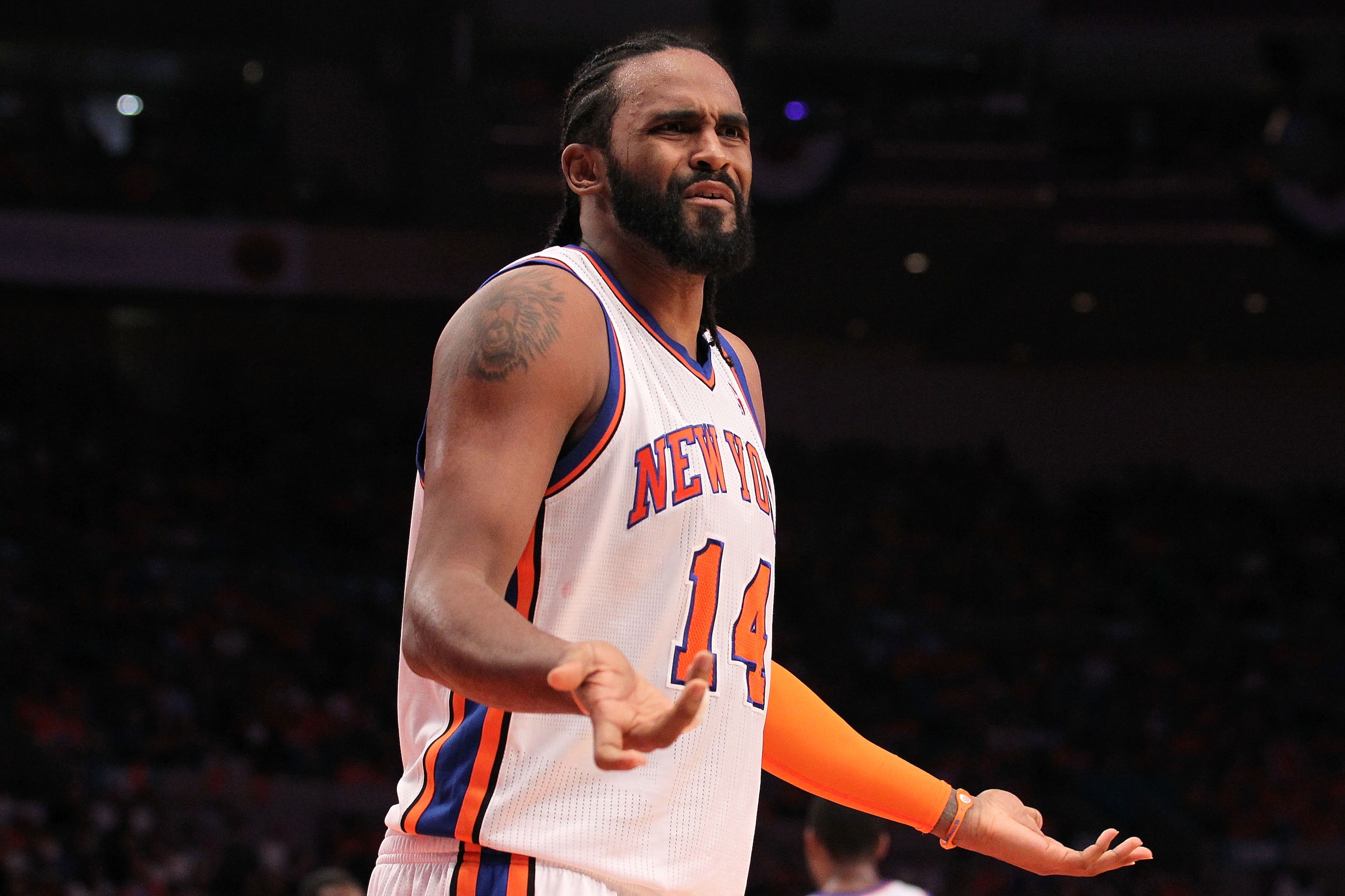
Ronny Turiaf proved to be the highlight of David Lee deal that the Knicks made last offseason.
Most believed that Anthony Randolph would prove to be the hot commodity as a result of that trade, but Turiaf was the only player the Knicks received that they were able to utilize.
Turiaf averaged 4.2 points, 3.2 rebounds and 1.14 blocks per game. He brought a certain energy to the floor that became a fan and teammate favorite.
At 6'10, Turiaf was not really a threat on the offensive end, but he was an effective defender. He was capable of guarding guys much bigger than he was while staying out of foul trouble. He was also an above average shot blocker.
One of Turiaf's flaws, though, was his rebounding. He is a very aggressive player overall, but at his size, you have to grab more than three rebounds per game. His rebounds are deflated a bit because he went up against guys who were a lot bigger than he, and therefore harder to box out, but he still should have grabbed more rebounds than he did.
Additionally, Turiaf, like Billups, proved to be quite injury prone. He sat out nearly 20 games this season, and although he was great for the Knicks defensively, he was not someone that they could rely on to make a contribution on a nightly basis.
If Turiaf is able to stay healthy and improve his rebounding, he would become an even better defender, something that the Knicks desperately need.
Overall grade: B-
Bill Walker
10 of 12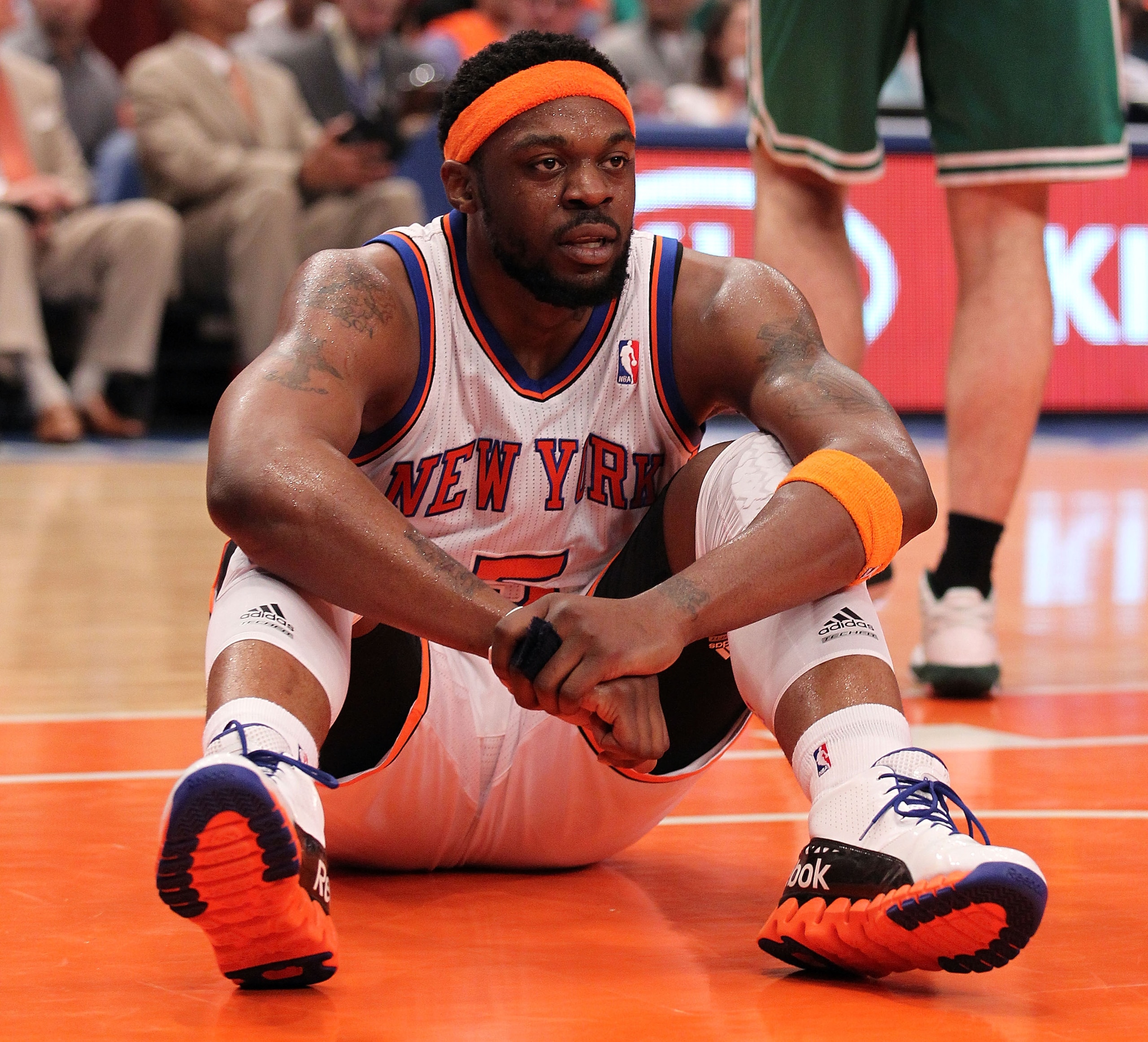
When Bill Walker came over from the Boston Celtics last season, no one really expected much production from him.
However, he turned heads with the energy he brought off the bench, and the Knicks had hope he would get better this season. Walker got his fair share of playing time this season, appearing in 61 games, but he only managed to average 4.2 points and two rebounds a night.
Walker still provided energy off the bench and was also an above average three-point shooter at 39 percent from beyond the arc.
The disappointment of Walker cannot be overlooked, though. New York had hoped he would provide an instant spark off the bench this season, but he never seemed to reach that level.
Walker never shied away from shooting the ball, but there were times that he inexcusably tried to force the actions. He would put up long threes that were just not high caliber shots, and often times, his shot was flat and would not even hit the rim.
Additionally, Walker was not a capable defender. He would allow opposing players to drive by him almost effortlessly and became a liability on the offensive end.
Yes, Walker was never expected to put up big numbers for the Knicks, but they did expect him to play a lot better and a lot smarter than he did this season.
Overall grade: C
Shawne Williams
11 of 12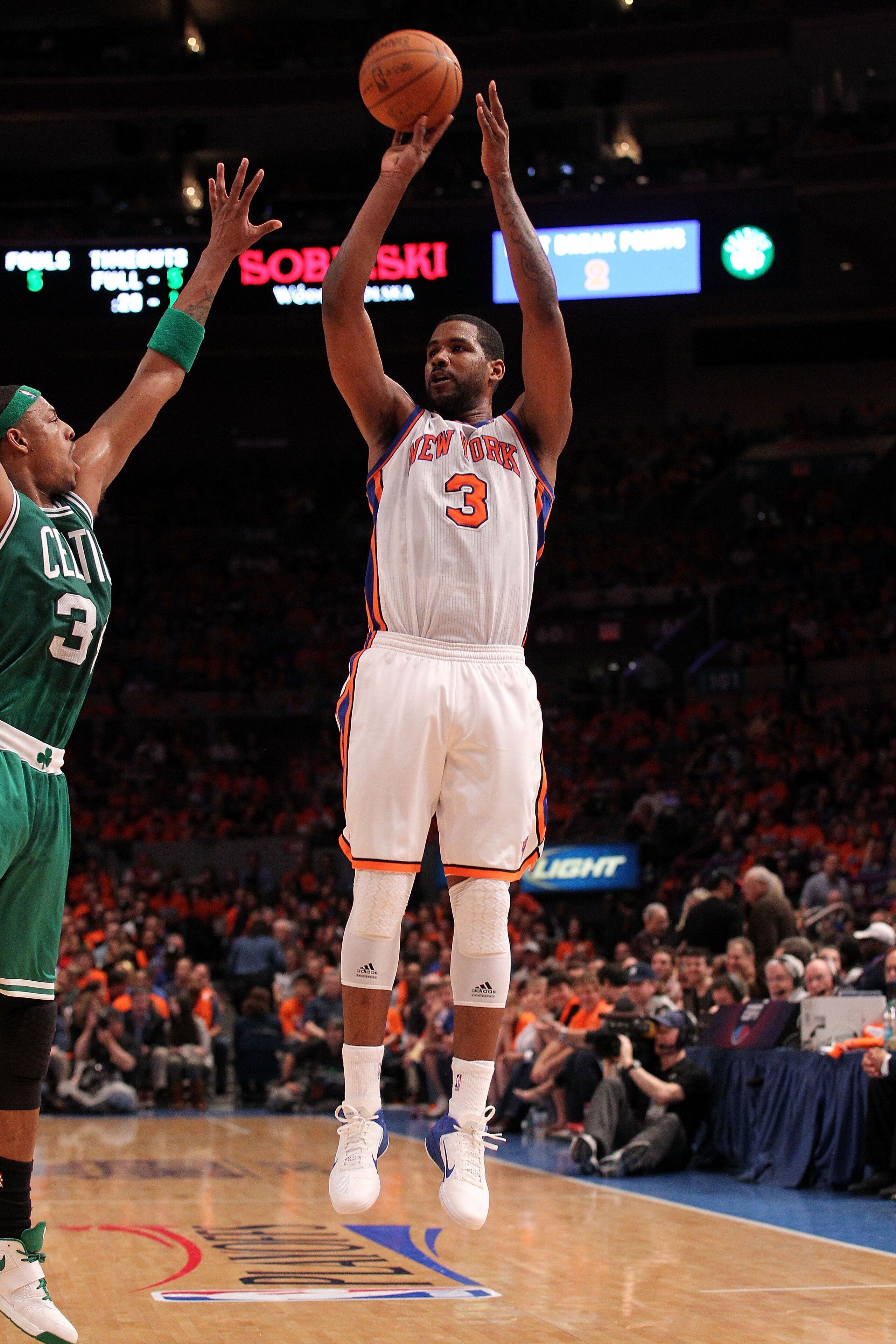
Shawne Williams was one of the biggest surprises of the entire league this past season.
Williams made the team over Patrick Ewing Jr., a decision many disagreed with, but one that would prove to be the right move. He was not supposed to become a rotation player or get any significant playing time, but he did just that.
Williams appeared in 64 games, starting in 11 of them, and averaged 7.1 points and 3.7 rebounds a night. He was also one of the league's most deadly three-point shooters at over 40 percent from downtown.
After the Carmelo Anthony trade, Williams flourished. He was the benefactor off of teams double teaming Amar'e Stoudemire and Anthony, and his accurate outside shooting would make opposing teams regret leaving him open.
No one thought that Williams would play like he did. He proved to be a guy the Knicks could rely on to provide instant offense off that bench, as well as someone who could hold his own defensively.
At 6'9", Williams should have been able to grab more than three rebounds per game, but his positives outweigh his negatives by far.
Against all odds, Williams battled his way onto this roster and managed to impress both coaches and players, which resulted in some big minutes this season. He went from being one of the most expendable player to a guy that played a pivotal role in helping the Knicks reach the playoffs.
Overall grade: B+
Coach Mike D'Antoni
12 of 12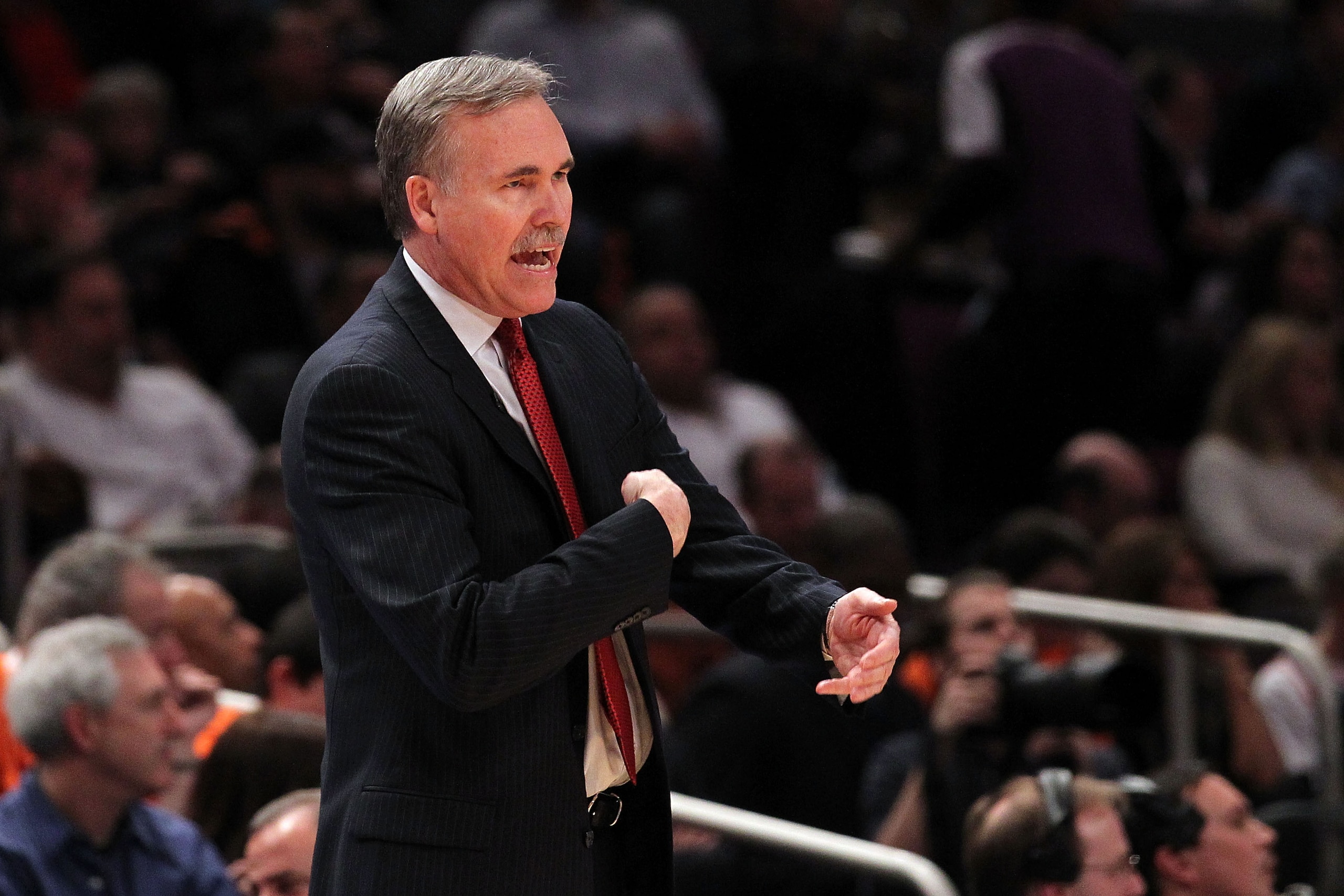
Last but not least, we have Knicks head coach Mike D'Antoni.
D'Antoni is saved for last because his grade depends on the grades of all of his players.
Coming into the season, the expectations were not incredibly high for the Knicks. Many doubted whether they would even make the playoffs with just Amar'e Stoudemire as the premiere talent. Additionally, many doubted whether D'Antoni's system could take this team to the playoffs.
Even before the Carmelo Anthony trade, the Knicks were a playoff team. D'Antoni coached them to the second highest scoring offense in the league, making New York an absolute offensive juggernaut.
However, D'Antoni has been criticized for his lack of emphasis on defense. The Knicks were one of the worst defensive and rebounding teams in the league. They were among the league leaders in blocked shots per game, but one shudders to think at how terrible defensively they would have been without being above average shot blockers.
Also, despite coaching one of the highest scoring offenses in the league, D'Antoni's team tended to disappear offensively in the fourth quarter. Numerous times, the Knicks blew fourth quarter leads because of their failure to knock down open shots.
Not all of the blame can be put on D'Antoni, though. This team underachieved at times, and after the Anthony trade, he was tasked with trying to fit both Anthony and Stoudemire into his system.
Many people have been calling for D'Antoni's job lately, but the fact is that he led this team to a playoff berth for the first time in seven years. Yes, they had Anthony and Stoudemire, but the Knicks were a playoff team before Anthony.
And as for the struggles the Knicks experienced after the Anthony trade, something of that nature has got to be expected after a team blows up its roster like that.
Calling for D'Antoni's job is premature. He coached the Knicks to a 42-40 record, their first winning record in a decade, and helped them become one of the most deadliest offenses in the league.
Next season, D'Antoni needs to have a defensive specialist on his staff that can motivate his players to play consistent defense. Additionally, after an entire offseason to work out the kinks, he has to ensure that Anthony and Stoudemire play together effectively, or the calls for his job will become warranted.
Overall grade: B
.jpg?w=2560)



.jpg?w=2560 "Latest Peyton-Colts Rumors")